


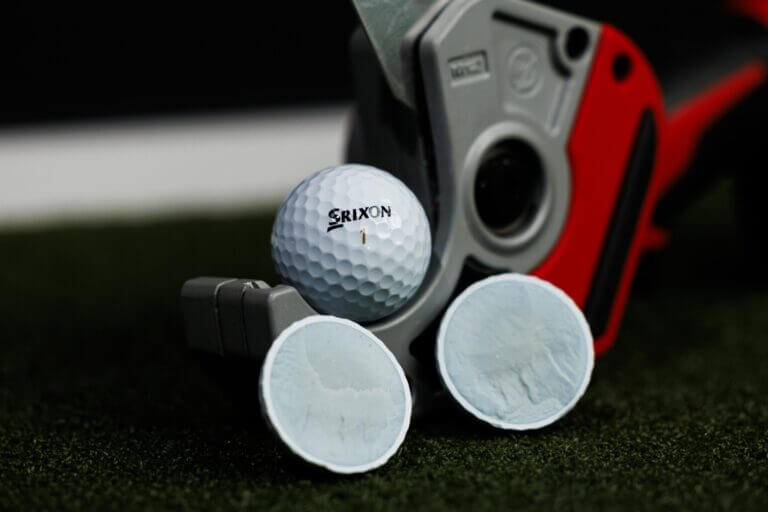
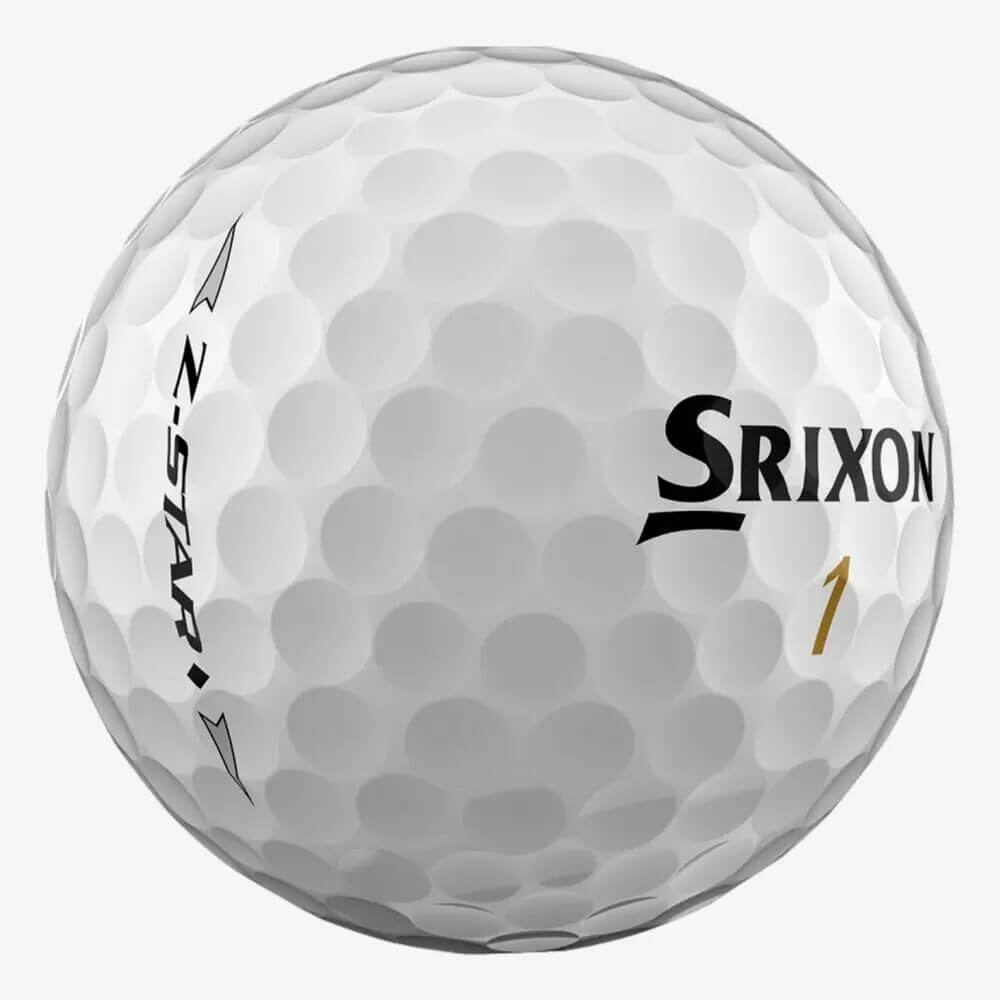
The Srixon Z-Star Diamond is a urethane, three-piece golf ball that sits in the premium segment at $54.99 per dozen. Srixon has quietly built a loyal following among serious golfers and the Z-Star Diamond sits at the top of their lineup. What Ball Lab can tell you is what’s happening inside the box. We measured weight, diameter, compression, roundness and balance across 36 balls and three boxes to give you the manufacturing side of that picture.
Here’s what the 2026 Srixon Z-Star Diamond looks like under the microscope.
Srixon Z-Star Diamond
 Pros
Pros
 Pros
Pros - Outstanding quality control — 100% good ball rate across all 36 balls, zero defects
- Compression symmetry graded B — each ball is internally consistent
Cons
 Cons
Cons - Compression consistency graded B- means measurable ball speed variation is possible across the sample
- Weight consistency graded B- with one outlier in Box 1 pulling the spread wider than the rest of the sample
Our Verdict
 Our Verdict
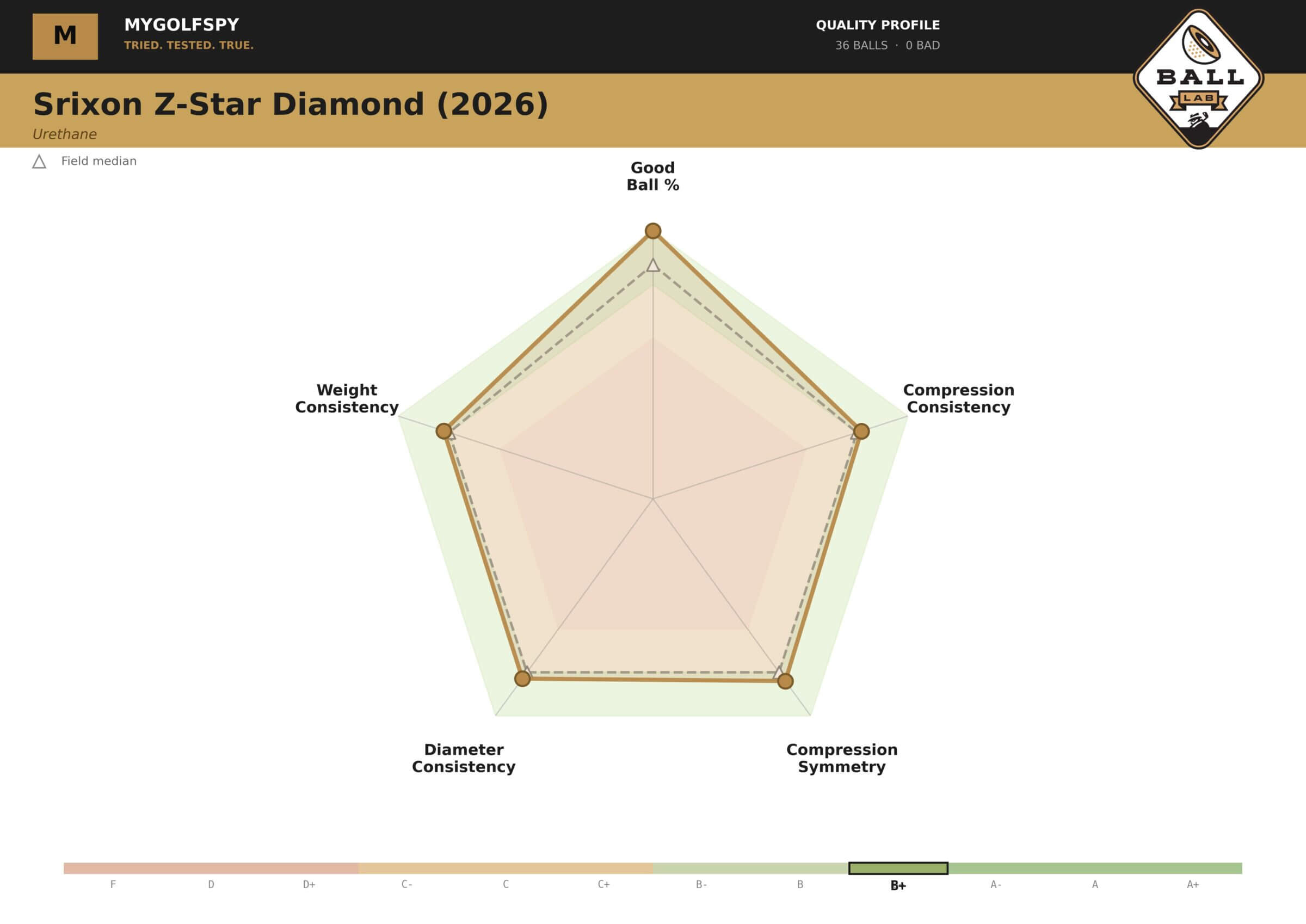
 The 2026 Srixon Z-Star Diamond earns a Quality Score of 89 and a B+ grade: Conditionally Recommended. Good Ball Rate came in at a perfect 100 percent with zero defects across all 36 balls. Every category graded between B- and B with no standout weakness and no exceptional strength. Compression consistency is the category that carries the most weight in our scoring and grading at B- is what keeps this from a higher score. At $54.99 per dozen, the Z-Star Diamond delivers solid manufacturing quality across the board.
Product details
- Price: $54.99/dozen
- Construction: 3-piece urethane
- Compression: 93 (Firm)
- Factory: Srixon, Cikampek, Indonesia
- Diameter: 1.6808 in.
- Weight: 1.6096 oz.
- Bad Balls: 0 of 36
Test results
The 2026 Srixon Z-Star Diamond scored 89/100 and earned a B+ grade: Conditionally Recommended. The score is built on a clean defect record and a consistent profile across all five categories.
Good Ball Rate came in at a perfect 100 percent. All 36 balls passed inspection with zero flagged defects across cores, layers and covers.
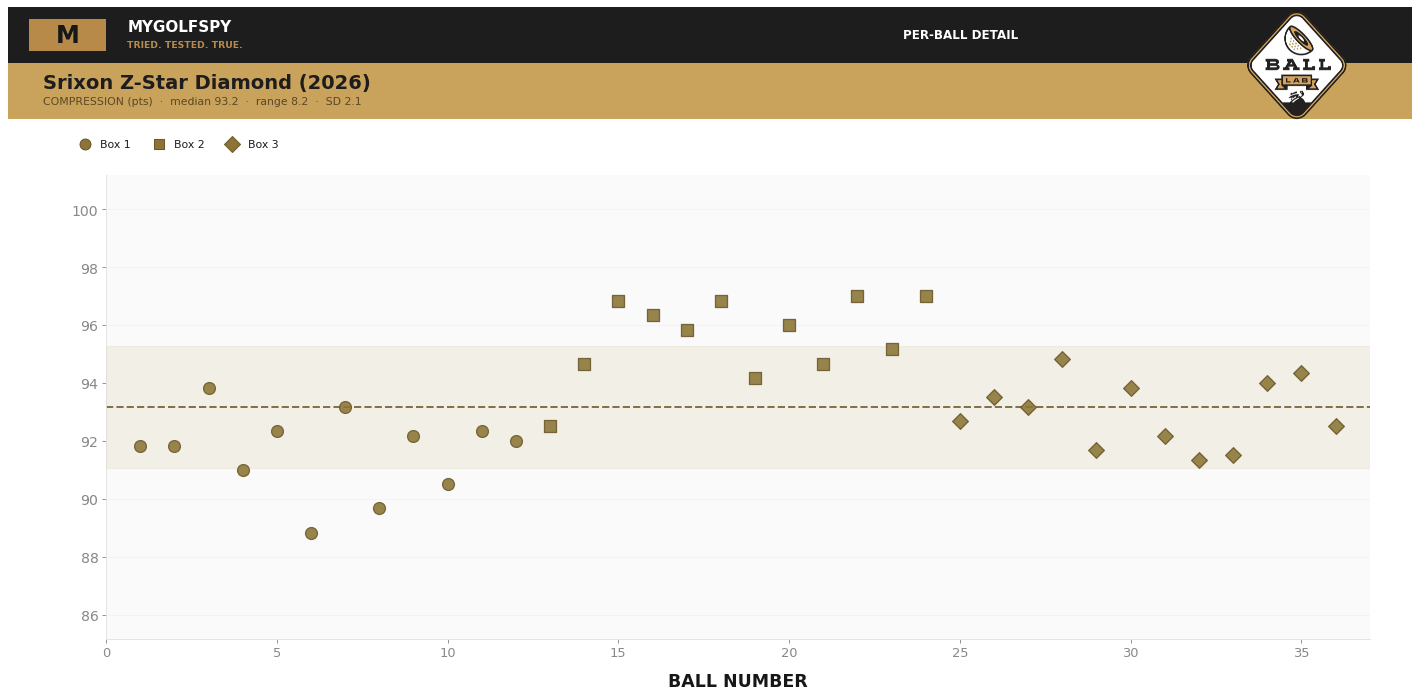
Compression consistency graded at B- with a delta of 8.2 points and a spread running from 88.8 to 97.0. One pattern worth noting: Box 2 ran consistently firmer than the other two boxes which accounts for much of the spread in the sample. If you’re pulling from a single box, your experience may be tighter than the full sample suggests.
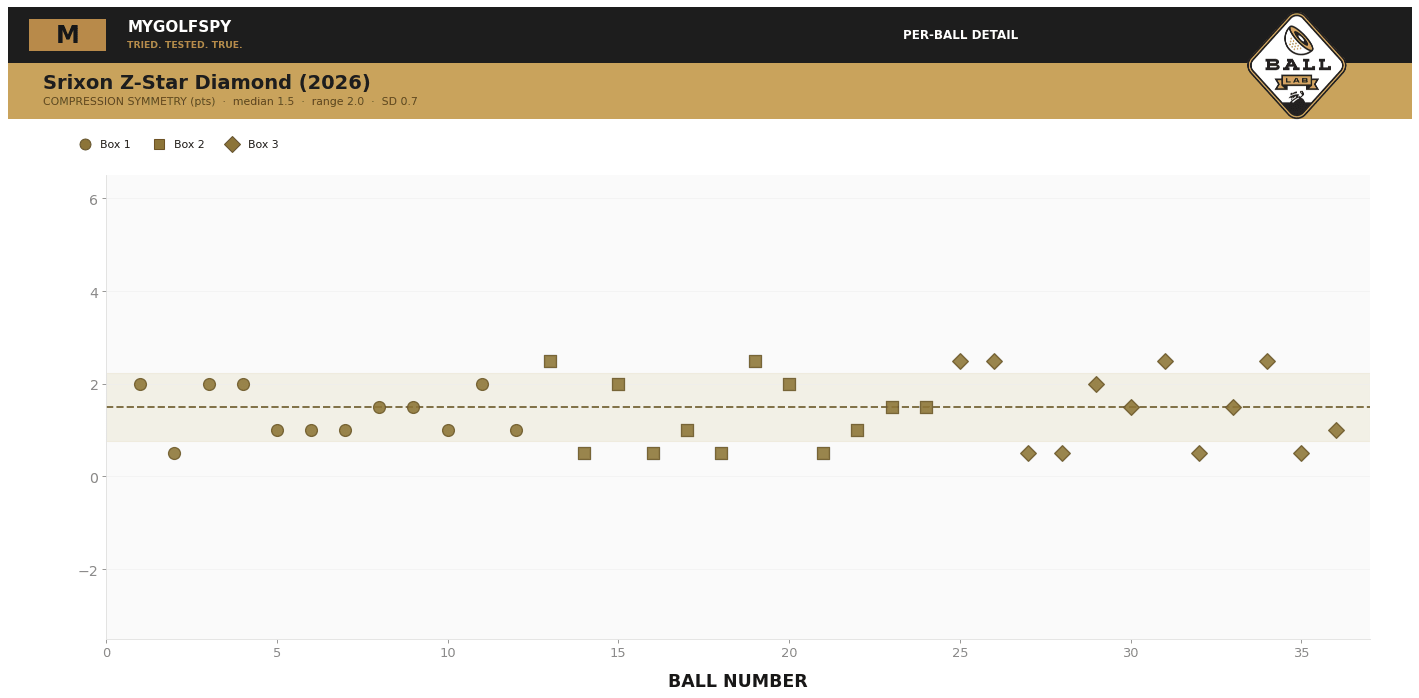
Compression symmetry graded at B with a median of 1.5 points against a field average of 1.9. Each ball is internally consistent across the three measurement points.
Diameter consistency graded at B. The sample showed no consistent pole-versus-seam pattern with 20 of 36 balls falling within gauge noise on that measurement. Weight consistency graded at B- with a range of 0.0117 ounces being the widest in the sample. It was largely driven by a single outlier in Box 1.
At $54.99 per dozen, the Z-Star Diamond delivers a consistent manufacturing profile across the board. The even grading across all five categories is what earns it a conditional recommendation at 89.
Use the MyGolfSpy Golf Ball Selector to compare 48 golf balls using data from our 2026 robot test. Filter by swing speed and see how each ball performs from driver to wedge to find the best fit for your game.

Compression
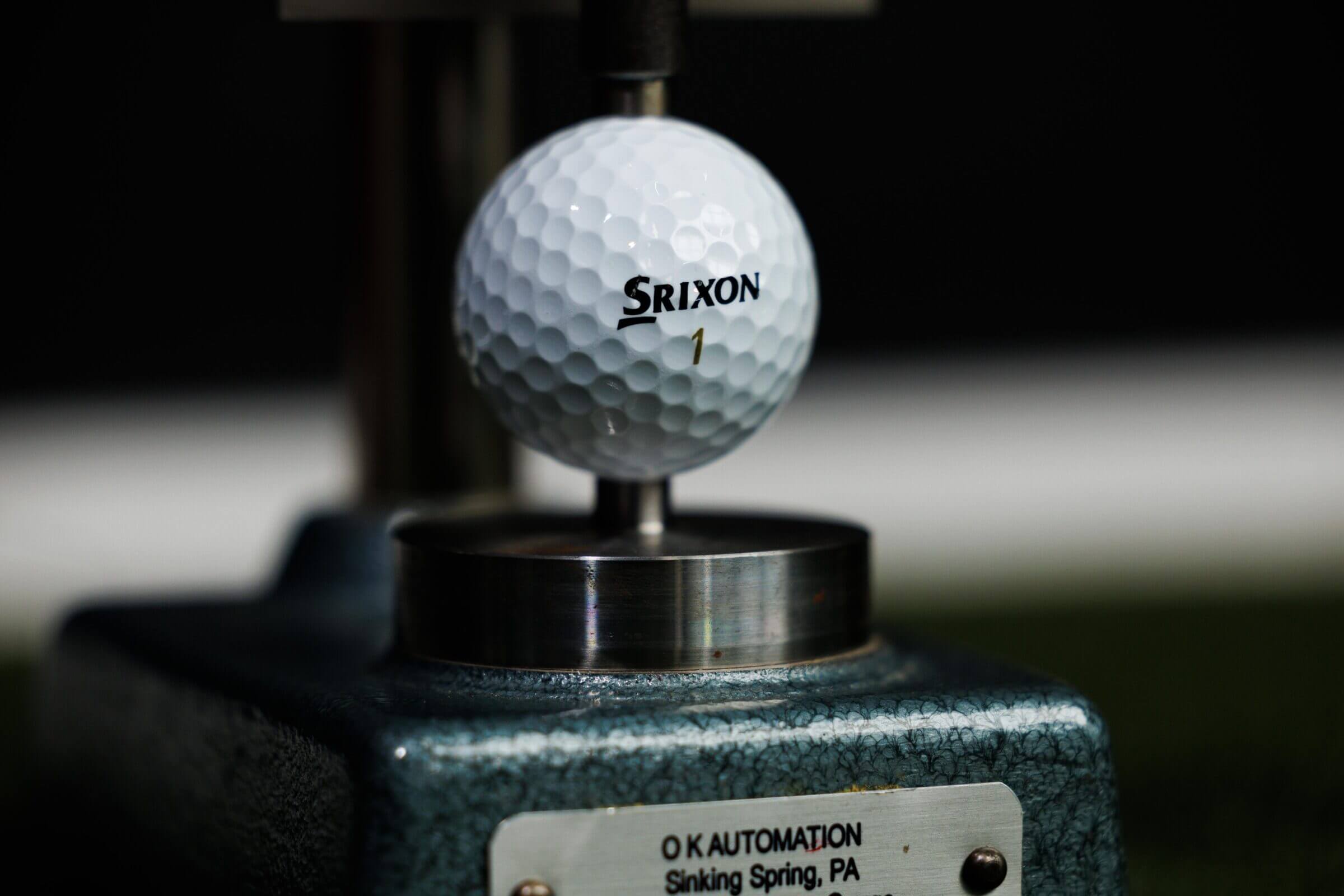
Compression is a measure of how much force is required to deform a golf ball; the higher the number, the firmer the ball. Consistency matters because a ball that compresses differently from shot to shot produces different results from shot to shot. Ball Lab measures every ball individually and tracks both the average and the spread across the sample.
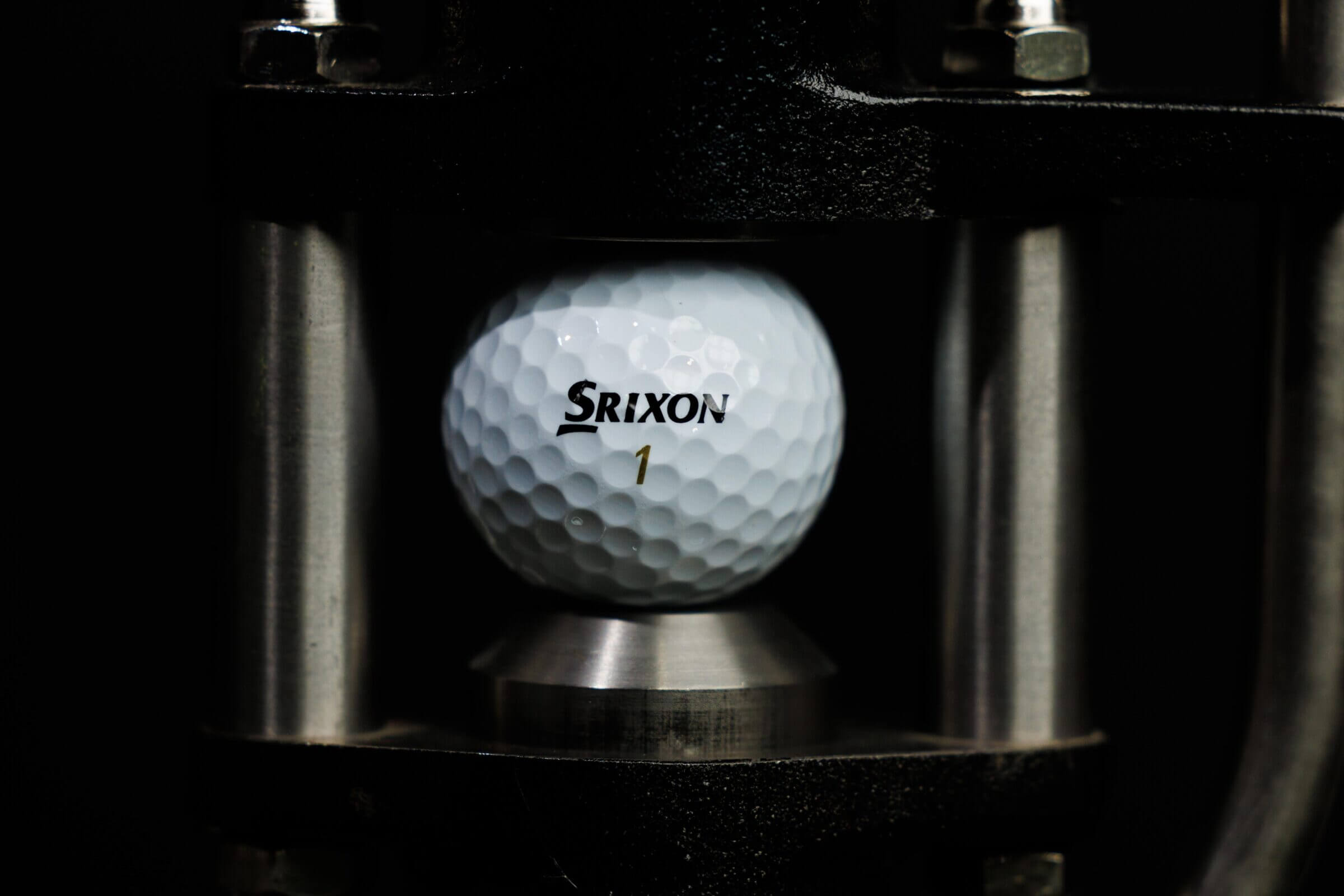
The 2026 Srixon Z-Star Diamond averaged 93, in the firm range of our database. It is similar in compression to the Callaway Chrome Tour and TaylorMade TP5. Compression consistency graded at B- with a delta of 8.2 points and a spread running from 88.8 to 97.0, slightly better than the database average of 9.6. One pattern stood out in the per-ball data: Box 2 ran consistently firmer than Boxes 1 and 3 which accounts for a meaningful portion of the overall spread. Taken in isolation, Boxes 1 and 3 tell a tighter story.
Ball Lab also measures compression symmetry which tracks how evenly compression is distributed across three points on each individual ball. Is each ball consistent within itself? The Z-Star Diamond averaged 1.5 points of deviation, below the field average of 1.9.
The charts below detail the compression measurements in our sample.
Weight
Weight consistency is another metric Ball Lab tracks. Even small differences across a dozen balls can translate to inconsistent ball flight. Ball Lab weighs every ball to four decimal places.
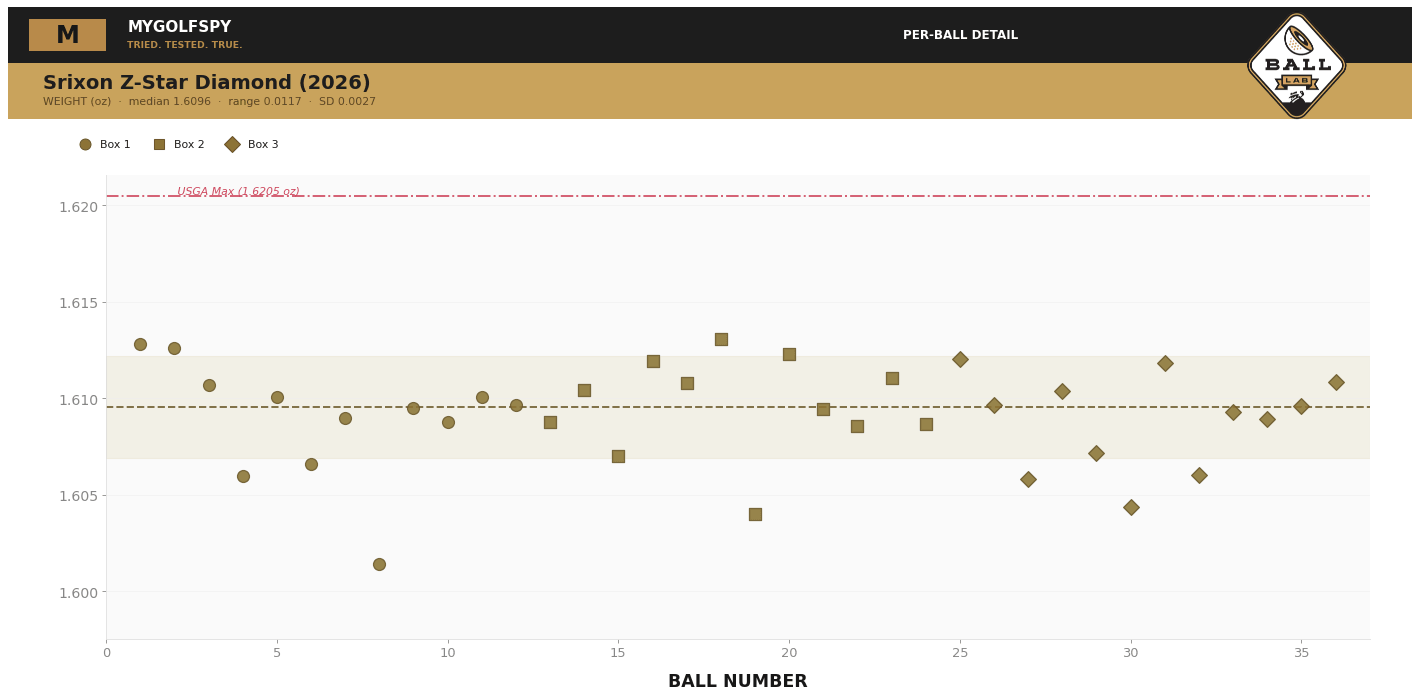
The 2026 Srixon Z-Star Diamond averaged 1.6096 ounces across 36 balls, in the average range of the database. Every ball cleared the USGA maximum of 1.6205 ounces with a range running from 1.6014 to 1.6131 and a standard deviation of 0.0027. The range of 0.0117 ounces is the widest in the sample, driven largely by a single outlier in Box 1 that pulled the spread wider than the remaining 35 balls would suggest.
Weight consistency grades out at B-.
The charts below detail the weight measurements in our sample.
Diameter
A ball that isn’t uniform in shape can track offline on the putting green or produce inconsistent flight in the air. Ball Lab measures each ball across multiple axes to get a true picture of its shape.
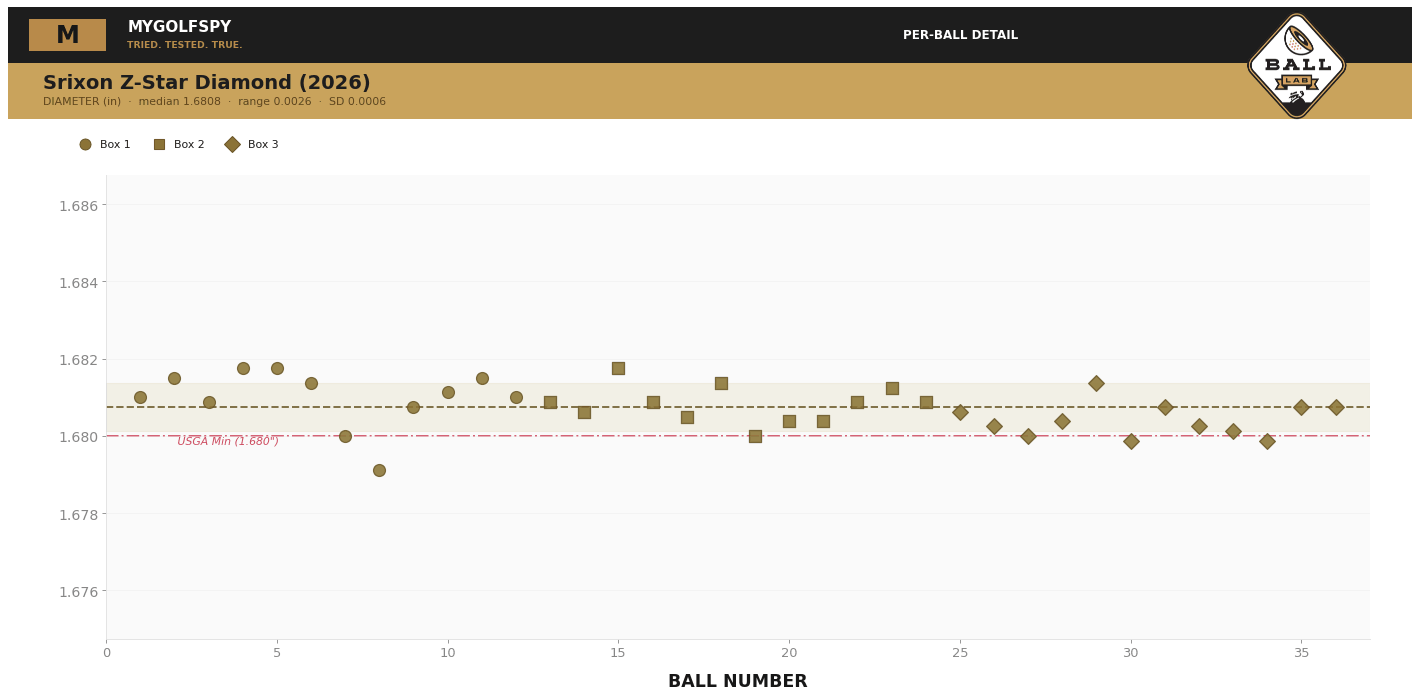
The 2026 Srixon Z-Star Diamond averaged 1.6808 inches, above the USGA minimum of 1.680, with a roundness deviation of 0.0006 inches. Every ball cleared the minimum and the sample showed no consistent pole-versus-seam pattern: 20 of 36 balls fell within gauge noise on that measurement and no sample-wide shape bias was identified. Box 1 was the least consistent of the three at an SD of 0.00073 while Box 3 was the tightest at 0.00043.
Diameter consistency graded out at B, consistent with the even profile across all five categories on this card.
The charts below detail the diameter measurements in our sample.
Ball Lab report card
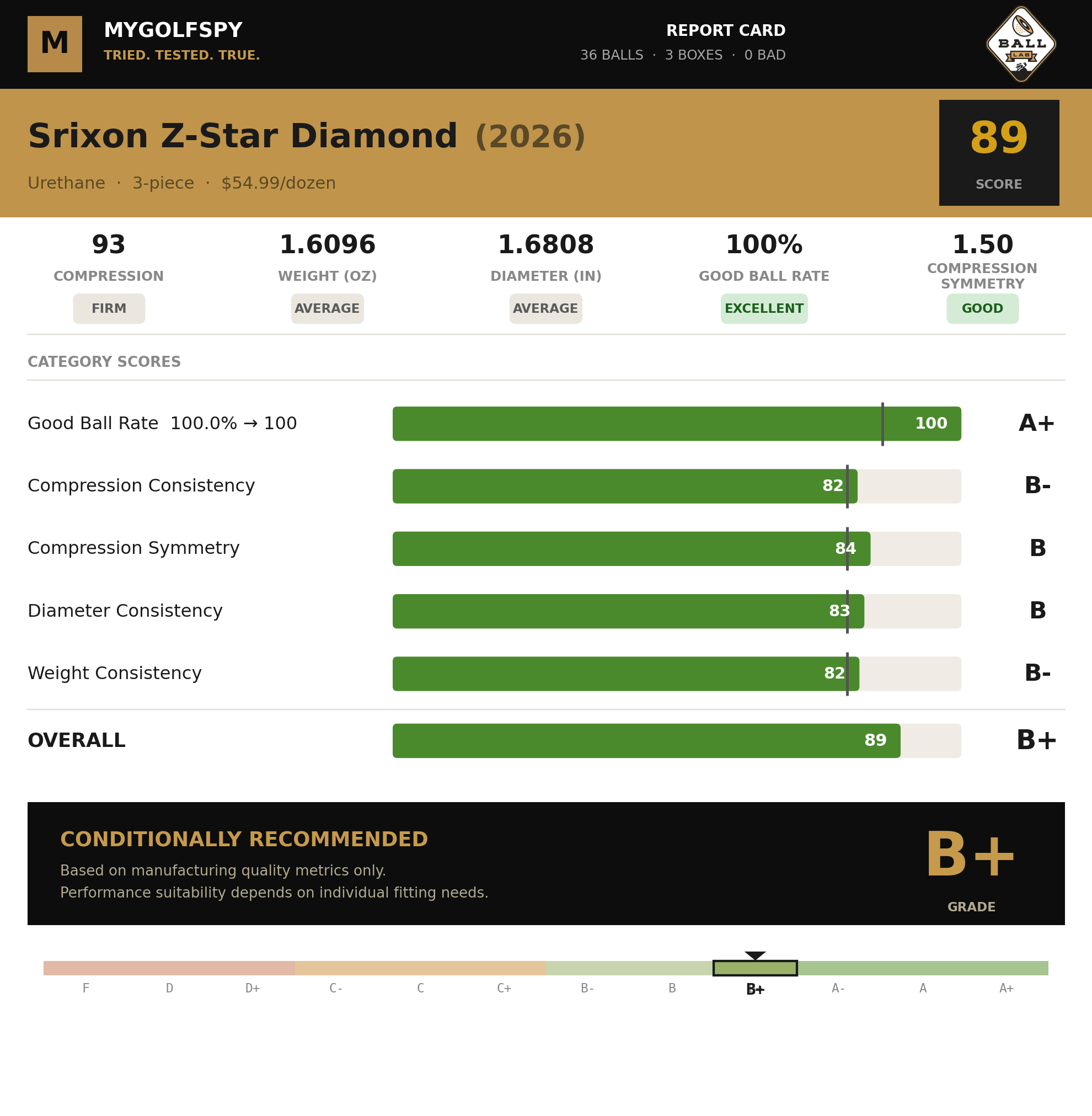
Each Quality Score is a weighted average of five grades: good ball rate, compression consistency, compression symmetry, diameter consistency, weight consistency. Our scoring system punishes defective balls more severely while giving greater weight to compression metrics than to weight and diameter.





Kyle
1 month ago
Dear ball makers….
I’m a casual player. Index 3-4…. Retired, playing 5 times a week.
I will never EVER spend that kind of money for a golf ball…
There are just too many many good DTC balls out there for half the price….
Fake
1 month ago
Srixon regularly offers a “Buy two, get one free” deal which brings the price down a bit.
I personally like the Maxfli Tour X, and when I played the Srixon Q Star Tour, each ball felt different and I never got comfortable with them.