


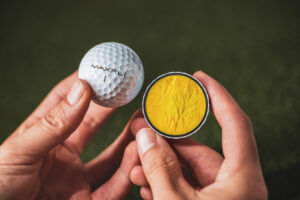
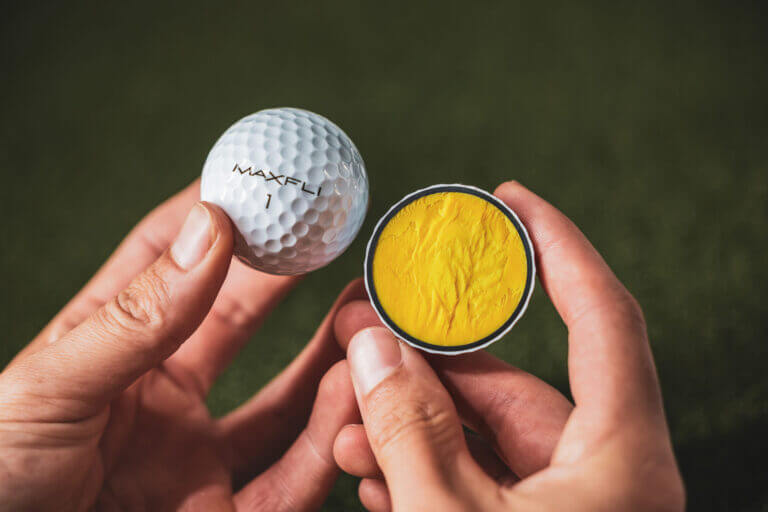
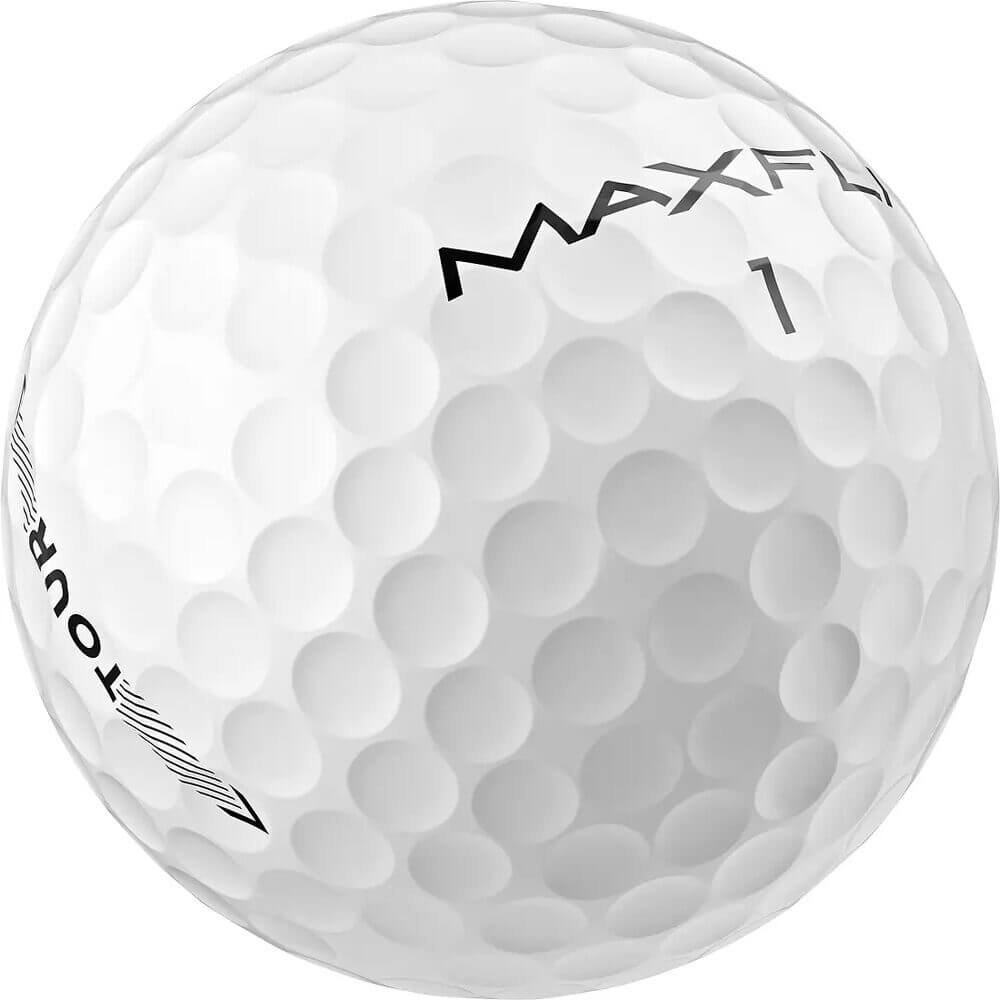
The Maxfli Tour is a $39.99 urethane golf ball sold exclusively at DICK’S Sporting Goods and Golf Galaxy and it’s one we’ve spent time with beyond just our Ball Lab. If you’ve read my piece on playing only Maxfli balls for 45 days, you already know the on-course story. What Ball Lab can tell you is what’s happening inside the box. We measured weight, diameter, compression, roundness and balance across 36 balls and three boxes to give you the manufacturing side of that picture.
Here’s what the 2025 Maxfli Tour looks like under the microscope.
Maxfli Tour
 Pros
Pros
 Pros
Pros - Diameter consistency rated B-plus and weight consistency rated B
- Compression symmetry rated B-minus at 1.75 points; individual balls are internally consistent
Cons
 Cons
Cons - Compression consistency rated C with a 13.7-point spread and a range running from 86 to 100
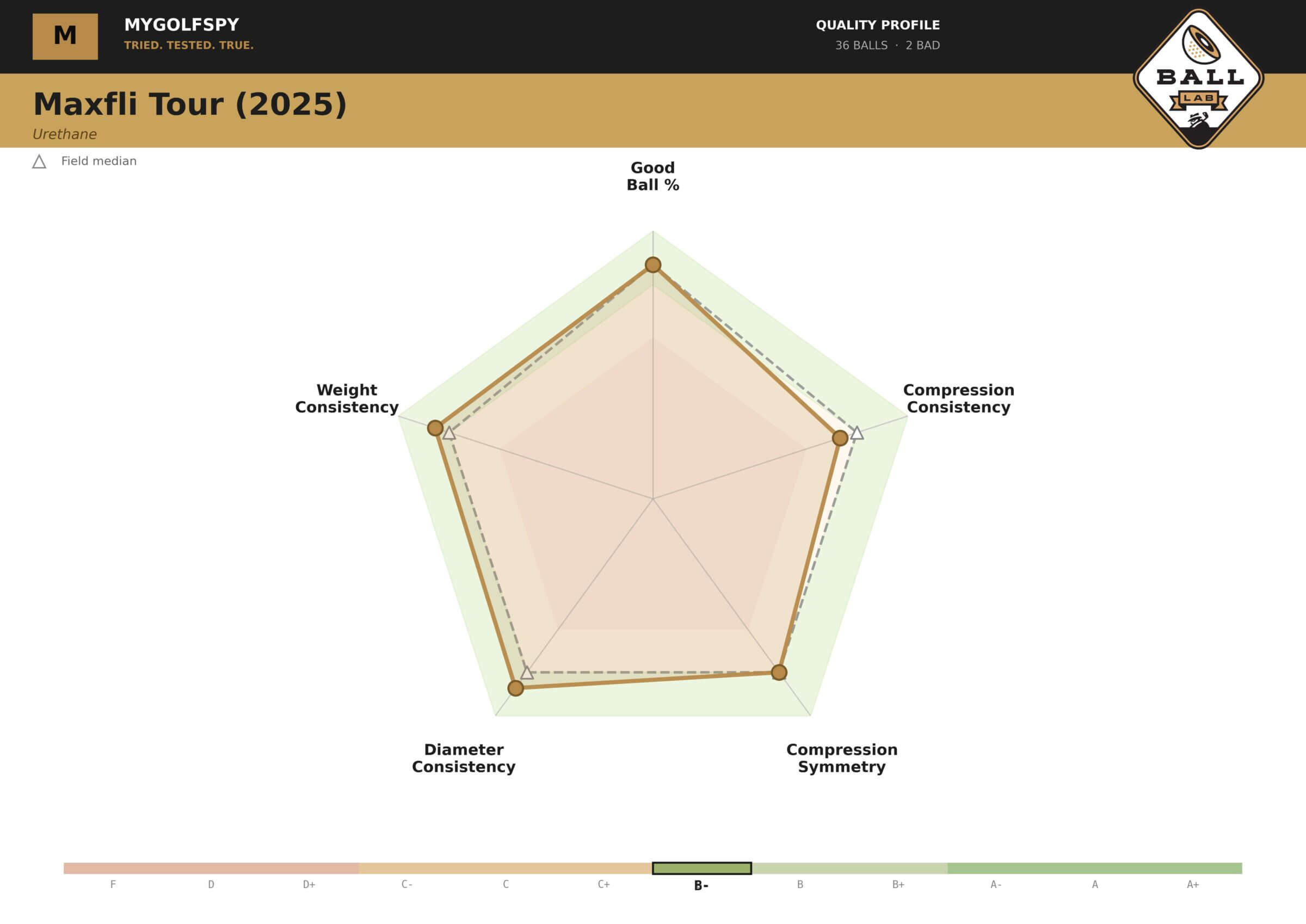
- Two of 36 balls were flagged as bad — a 94.4% Good Ball rate is average
Our Verdict
 Our Verdict
 The 2025 Maxfli Tour earns a Quality Score of 82 and a B-minus grade. Diameter consistency and weight consistency are the relative bright spots, both grading in the B range. Compression consistency grades at C and is the primary drag on the overall score, ranking in the bottom quartile of the database. Two of 36 balls were flagged as bad, bringing the Good Ball Rate to 94.4 percent and a grade of B-plus.
Product details
- Price: $39.99/dozen
- Construction: 3-piece urethane
- Compression: 90 (Firm)
- Factory: Foremost, Taiwan
- Diameter: 1.6809 inches
- Weight: 1.6042 ounces
- Bad Balls: 2 of 36 (5.6%)
Test results
The 2025 Maxfli Tour scored 82 and earned a B-minus grade. The Maxfli Tour is dragged down by compression consistency that graded at C with a spread that lands in the bottom quartile of the database.
Good Ball Rate came in at 94.4 percent. Two of 36 balls were flagged as bad, neither tied to a specific category-level defect in cores, layers or covers. Both bad golf balls were related to compression and they were both found in the first box. Compression in boxes two and three was generally consistent.
Compression symmetry averaged 1.75 points, right in line with the field average of 1.9. Compression consistency is where the profile takes its hit, grading at C with a delta of 13.7 points and a spread running from 86.3 to 100.0. That is a wide window for a firm urethane ball and means balls at opposite ends of that range will perform differently.
Diameter consistency graded at B-plus. The sample showed no consistent pole-versus-seam pattern with 17 of 36 balls falling within gauge noise and no sample-wide shape bias identified. Weight consistency graded at B.
If not for the compression consistency issues, the Maxfli Tour would be a straightforward recommendation. The physical manufacturing profile holds up well. But compression is the category that matters most for ball-to-ball performance predictability and that is where the Maxfli Tour fell short.
With a score of 82, the 2025 Maxfli Tour does not earn a quality recommendation. Compression consistency is the primary reason it doesn’t score higher.
Use the MyGolfSpy Golf Ball Selector to compare 48 golf balls using data from our 2026 robot test. Filter by swing speed and see how each ball performs from driver to wedge to find the best fit for your game.

Compression
Compression is a measure of how much force is required to deform a golf ball; the higher the number, the firmer the ball. Consistency matters because a ball that compresses differently from shot to shot produces different results from shot to shot. Ball Lab measures every ball individually and tracks both the average and the spread across the sample.
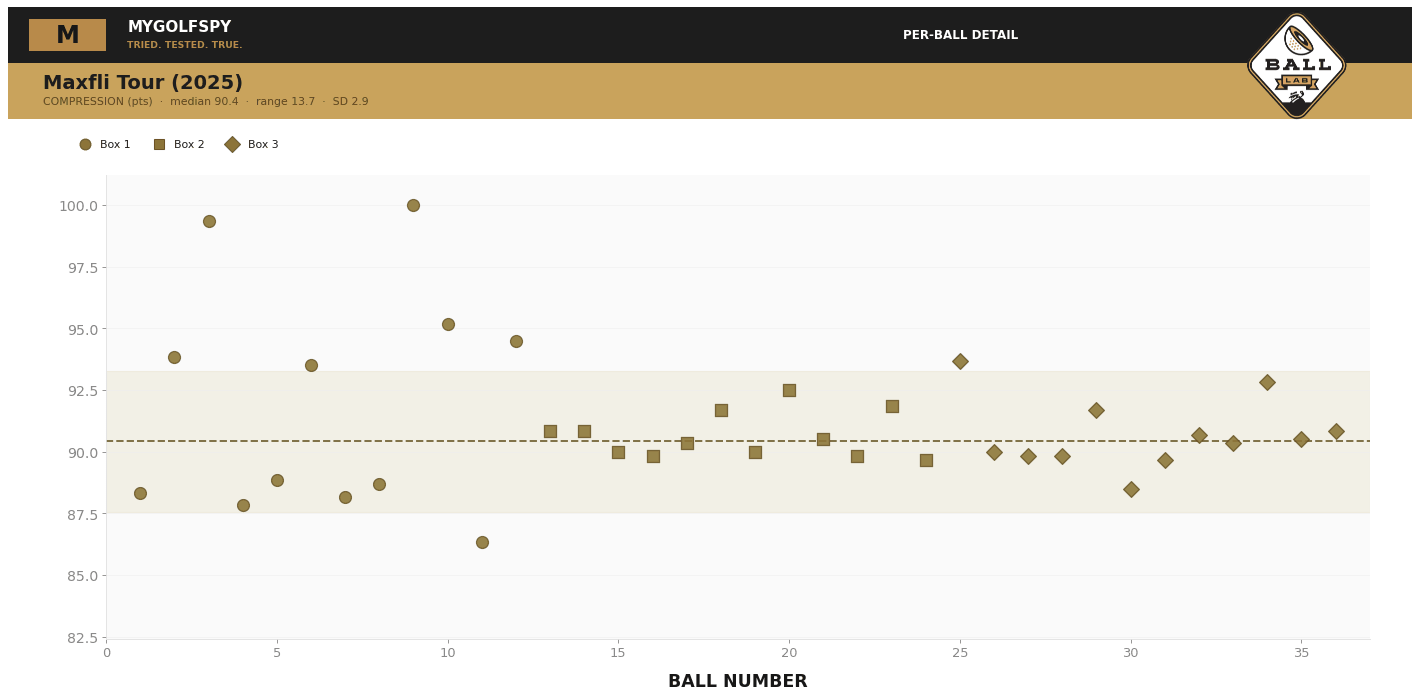
The 2025 Maxfli Tour averaged 90.4, in the firm range of our database. Compression consistency graded at C with a delta of 13.7 points and a spread running from 86.3 to 100.0. That’s well below the database average of 9.7. In simple terms, the firmest ball in the sample and the softest ball in the sample are not the same product.
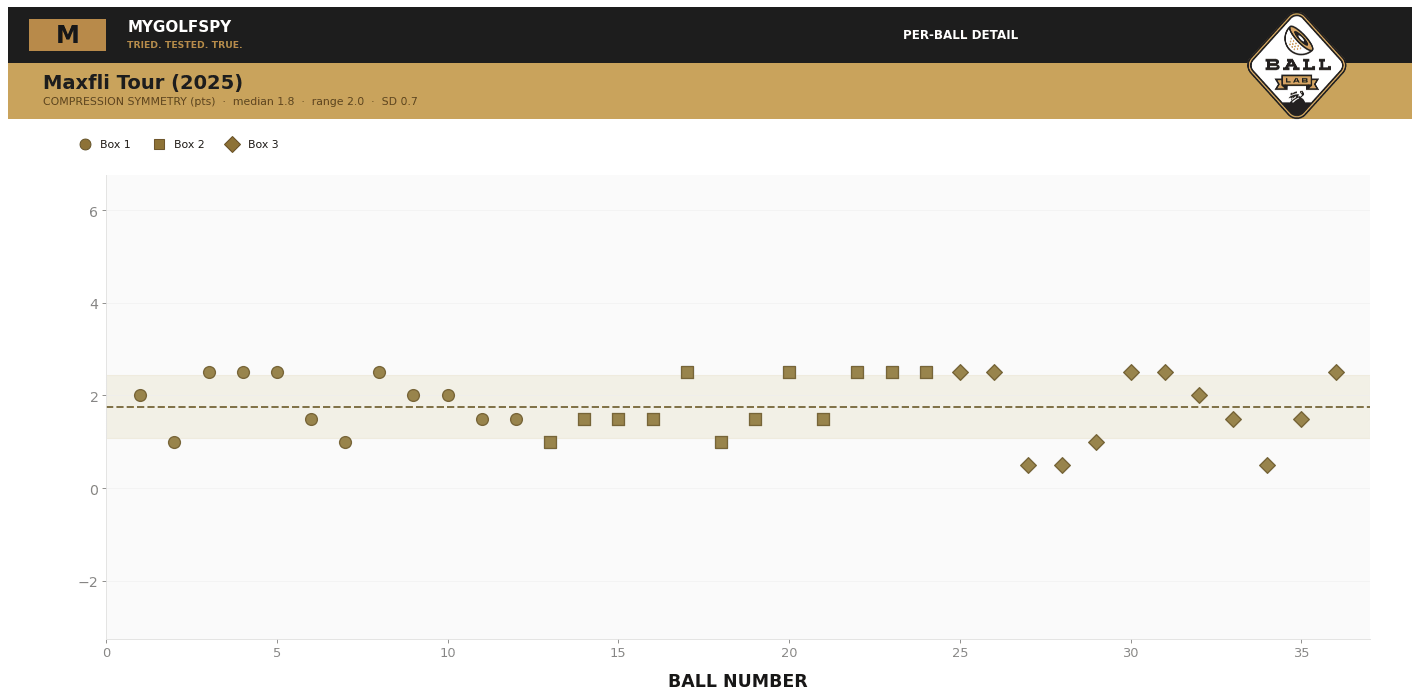
Ball Lab also measures compression symmetry which tracks how evenly compression is distributed across three points on each individual ball. Is each ball consistent within itself? The Maxfli Tour averaged 1.75 points of deviation, right in line with the field average of 1.9. A neutral result that neither helps nor hurts.
The charts below detail the compression measurements in our sample.
Weight
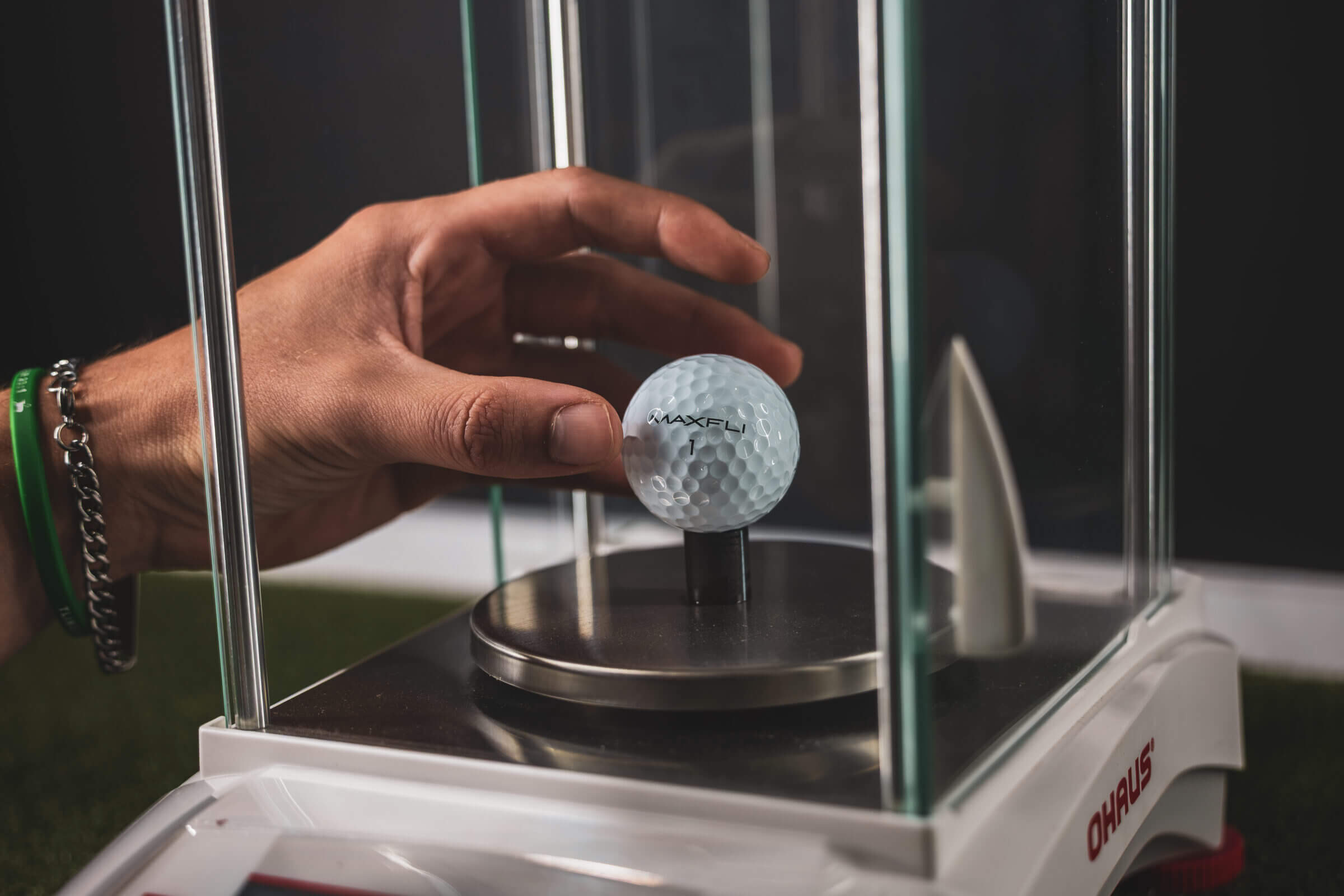
Weight consistency is another metric Ball Lab tracks. Even small differences across a dozen balls can translate to inconsistent ball flight. Ball Lab weighs every ball to four decimal places.
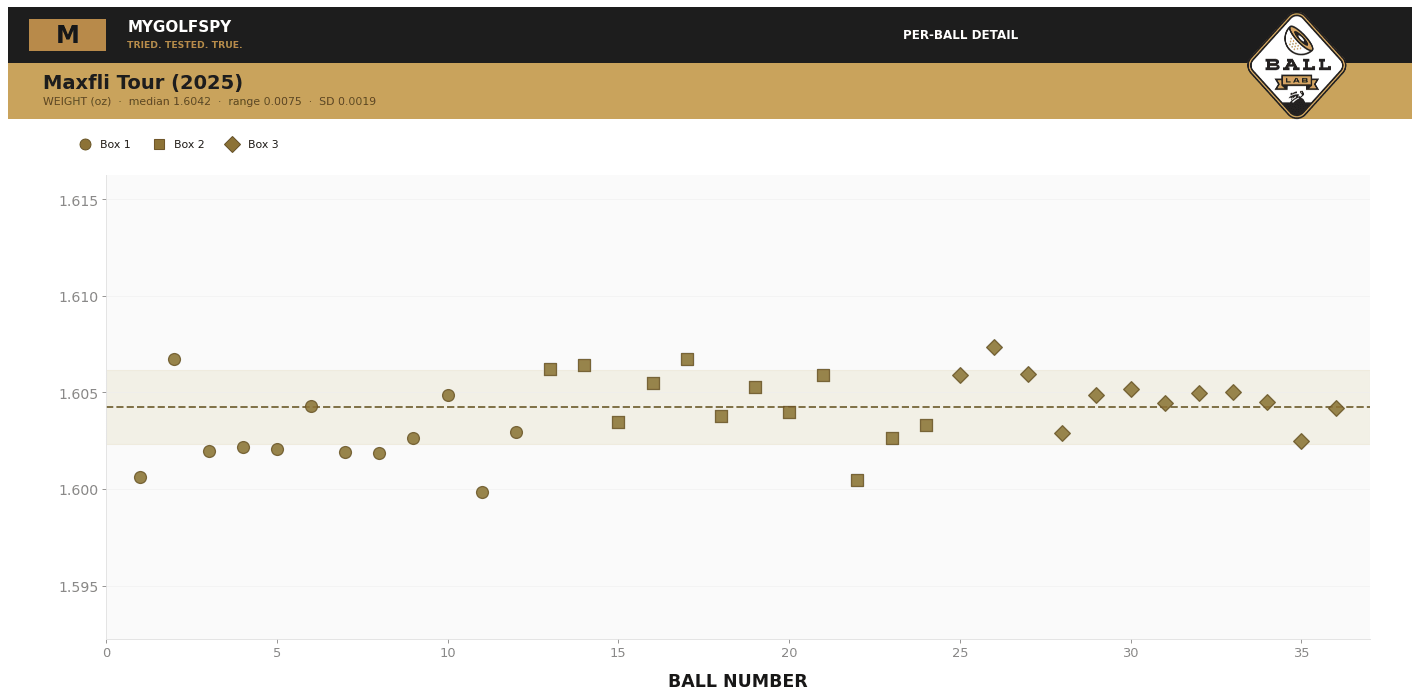
The 2025 Maxfli Tour averaged 1.6042 ounces across 36 balls, on the lighter end of the database. Every ball cleared the USGA maximum of 1.6205 ounces with a range running from 1.5998 to 1.6074 and a standard deviation of 0.0019. No outliers and no violations.
Weight consistency grades out at B.
The charts below detail the weight measurements in our sample.
Diameter
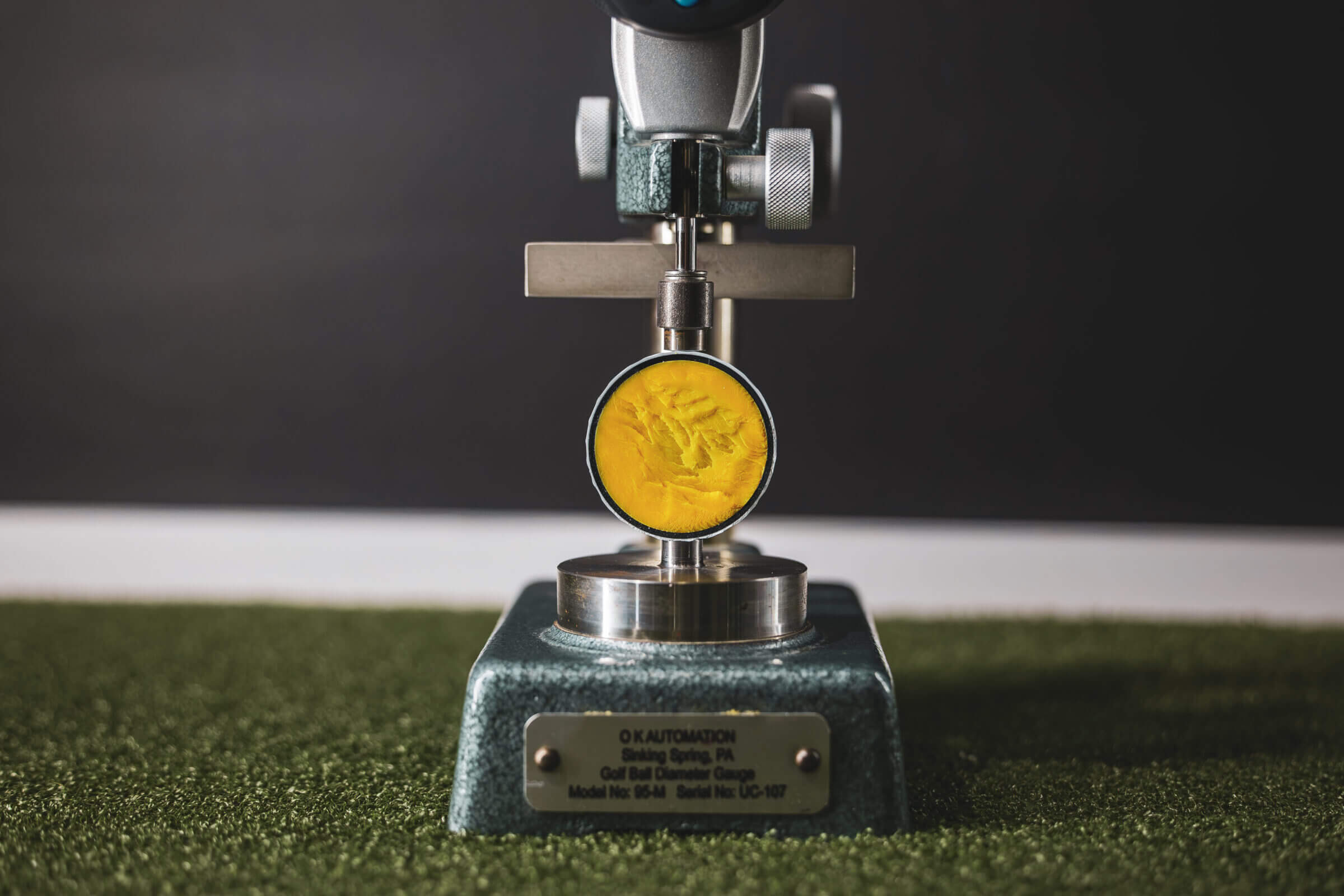
A ball that isn’t uniform in shape can track offline on the putting green or produce inconsistent flight in the air. Ball Lab measures each ball across multiple axes to get a true picture of its shape.
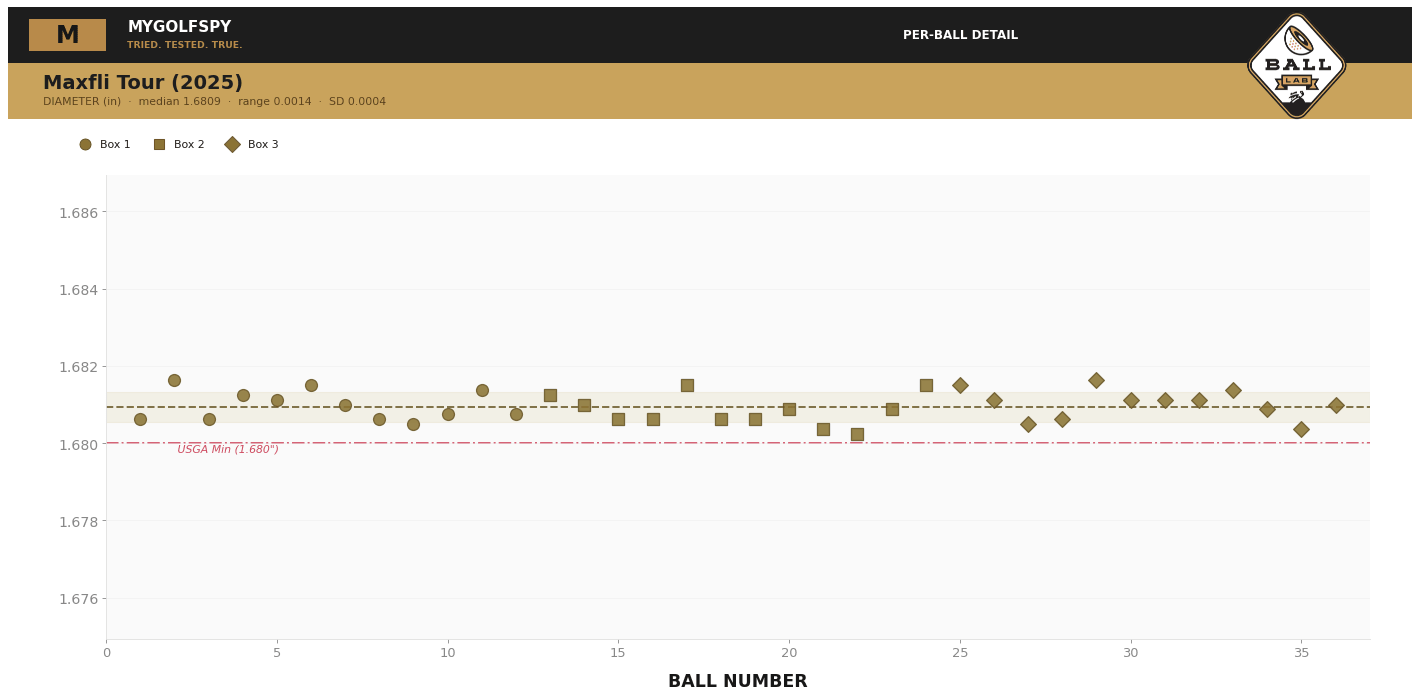
The 2025 Maxfli Tour averaged 1.6809 inches, above the USGA minimum of 1.680, with a roundness deviation of 0.0006 inches. Every ball cleared the minimum and the sample showed no consistent pole-versus-seam pattern.
Diameter consistency graded out at B-plus, the strongest category on the card.
The charts below detail the diameter measurements in our sample.
Ball Lab report card
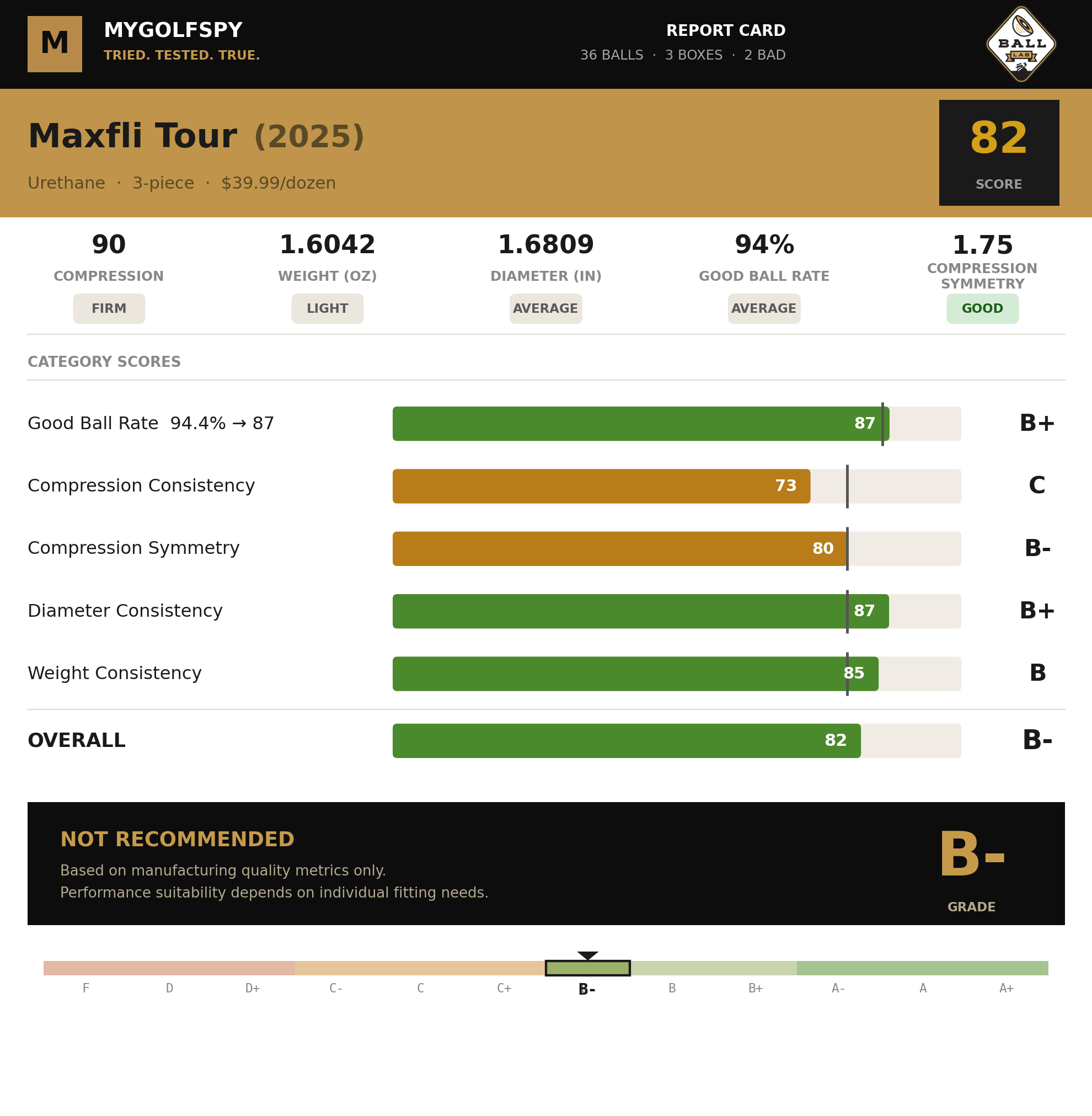
Each Quality Score is a weighted average of five grades: good ball rate, compression consistency, compression symmetry, diameter consistency, weight consistency. Our scoring system punishes defective balls more severely while giving greater weight to compression metrics than to weight and diameter.
Get more from MyGolfSpy
Create a free account to build your golfer profile and get personalized recommendations from our testing.
[uwp_register]




Frank musolino
2 months ago
The only problem I had with one maxfli tour is I cracked it, and my club head speed is only 88 to 90 miles per hour. I called Dicks and they sent me a dozen for 16.00. I still like that model.