


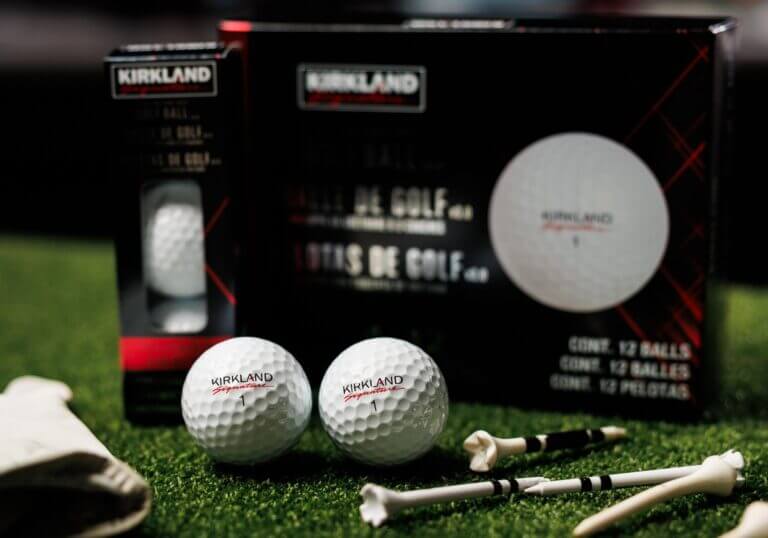
Picture this: You’re standing in the golf ball aisle at your local pro shop, staring at what appears to be an endless wall of white dimpled spheres. The prices range from “reasonable” to “You can’t be serious!” You grab what looks like the latest Pro V1, confident you’re getting the newest technology that will finally drop your handicap into single digits, only to discover later that you’ve bought a model as old as your set of Tommy Armour 845 irons.
We’ve all been there. The golf ball market is a minefield of model years, packaging changes and inventory that sometimes feels like it’s been sitting on shelves since the second Bush administration. With manufacturers constantly updating their offerings and retailers moving through old stock, knowing what you’re actually buying has become more complicated than reading a green at Augusta.
Here’s the thing: golf ball technology actually does improve (or at least change) from generation to generation. Sure, it’s not going to transform you into Scottie Scheffler overnight but the differences between a current model and something from three years ago can be significant enough to matter. More importantly, if you’re paying premium prices, you deserve to know you’re getting the version you actually want.
So how do you navigate this maze without getting burned? It’s simpler than you may think but it requires a little detective work. Here’s your field guide to making sure you’re not the sucker who pays full price for last year’s model.
When in doubt, check the manufacturer’s website

This is Golf Ball Shopping 101 but you’d be amazed how many people skip this step. Manufacturers want to sell their newest stuff—that’s where the margins are. So, what you see prominently featured on their websites is almost always going to be their current generation.
Think of the manufacturer’s website as your answer key. Whatever packaging, descriptions and model details you see there should match what you’re considering buying elsewhere. If there’s a discrepancy, you’re probably looking at older inventory.
It takes 30 seconds to pull up TaylorMade.com or Titleist.com on your phone. Trust me, it’s worth the effort.
The three telltale signs
Putting aside whatever technological upgrades are happening under the cover, manufacturers change two things with virtually every release and these changes are your best clues for identification.
Packaging changes every single time

Unfortunately, online retailers don’t always update images to reflect when a product is no longer nouveau.
Every time a manufacturer releases a new ball, they release new packaging as well. Sometimes the differences are subtle—maybe a slightly different shade of blue or a repositioned logo—but with attention to detail, they’re always apparent.
Here’s a pro tip: Many boxes include “New” or “Nouveau” somewhere on the packaging during the first year of release. And speaking of “Nouveau,” if you’ve ever wondered why there’s always French on your golf ball boxes, it’s because Quebec requires bilingual packaging. Geo-political lesson aside, that French text can actually help you identify newer models.
Most balls have at least two-year life cycles and as manufacturers move deeper into Year Two, the “New/Nouveau” designation often fades from the box. So while it’s not a 100 percent guarantee, if you see that “New” callout, there’s a good chance you’re getting the latest model.
Side stamps tell the real story

To be legal for tournament play (and for general conformance reasons), nearly every golf ball worth playing is listed on the USGA’s conforming list. As part of the process of differentiating new models from previous ones with the same name, manufacturers are required to change the side stamp—those small letters and numbers printed on the side of the ball.
This is actually your most reliable identifier. You can check the manufacturer’s website to compare the side stamp on the balls you’re considering against what’s shown for their current model. The side stamp is also the best way to identify those random balls you find in the woods since found balls don’t typically come in boxes with helpful packaging cues.
Price is non-negotiable

Like pretty much everything else in the golf equipment world, golf balls are price-controlled. That is to say, authorized retailers are not allowed to sell for less than MAP (minimum advertised price). While it’s common for brands to run specials (e.g., buy three, get one free), it’s rare you’ll see single-unit price cuts until just before (and sometimes after) a new model launches.
If Amazon is selling Tour Response for $34.99 but TaylorMade.com shows the price as $42.99, it’s a safe bet that you’re looking at a prior-gen model.
Retail descriptions: Your friend (mostly)
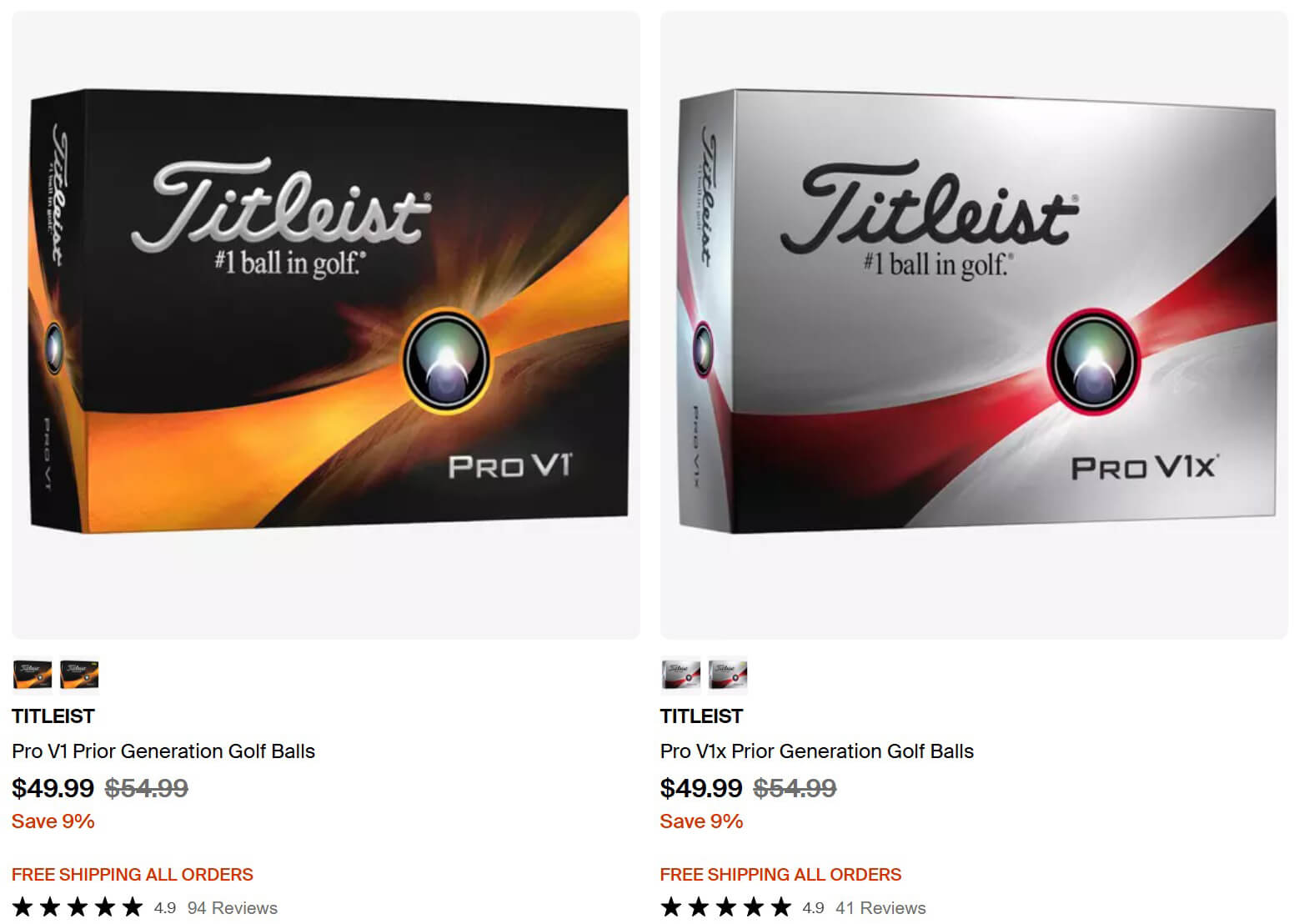
If you’re buying balls from major retailers like PGA TOUR Superstore, Golf Galaxy or any online retailer, pay attention to the product descriptions. Older models will often include the phrase “Prior-Gen” or “Prior Generation” in the title or description. While prior-generation balls often come with solid discounts, it’s worth noting that it’s not unheard of, especially as new models are rolling out, to have multiple model years of “prior-gen” inventory sitting in the warehouse. So while you might be getting a deal, make sure you’re not getting a little more prior than you bargained for.
These descriptions will also typically contain the model year of the ball but here’s where it gets tricky: you need to understand release cycles.
Understanding release cycles

Not every manufacturer operates on the same schedule and understanding these patterns can save you from accidentally buying outdated inventory.
Titleist releases Pro V1 models in odd-numbered years (2023, 2025, etc.). Their AVX and ionomer offerings typically get refreshed in even years. As for Left Dash? Honestly, your guess is as good as anyone’s.
Srixon follows a similar pattern with Z-Star models typically coming in odd years and most of their lower-priced ionomer balls arriving in even years (though there can be exceptions—looking at you, Ultispeed).
Other major brands, such as Callaway, TaylorMade and Bridgestone, tend to release new urethane models concurrently with Titleist so their current urethane models will be listed as 2024. That might make them feel “old” when you’re shopping in 2025 but they’re still the current generation.
Direct-to-consumer and house brands are less predictable with their release schedules but because you’re typically buying directly from them, it can be a little easier. Nevertheless, it pays to double-check, especially if you’re buying what’s typically called “DTC” from a third party.
While DTC can be an exception, if the model year of the balls displayed is more than two years, you’re likely looking at prior-gen inventory.
The bottom line
Look, golf is expensive enough without paying premium prices for yesterday’s technology. A few minutes of homework can save you money and ensure you’re getting the performance you’re paying for.
The irony is that some of the “older” balls you’ll find are actually fantastic. The 2019 TaylorMade TP5, for example, is arguably one of the best golf balls ever made. If you find them at a discount, they’re absolutely worth buying. The key is knowing what you’re getting and paying an appropriate price for it.
Your best defense against getting played in the golf ball aisle? Be an informed buyer. Check the manufacturer’s website, compare packaging and side stamps, read product descriptions carefully and understand release cycles. It’s not rocket science but it does require a little effort.
After all, if you’re going to lose golf balls in the water hazard anyway (and let’s be honest, you probably are), at least make sure you’re losing the right ones.









B. Kulsrud
1 year ago
What about the “Found Golf Balls” and “Lost Golf Balls”? Any comment