


I was videoing my golf swing the other day because I’m working on a movement that has been driving me nuts for the last few months. After almost every swing, I wanted to grab the phone and see if I had fixed it.
Eventually, I realized that was becoming part of the problem.
If I really want this movement to become part of my golf swing, I should eventually be able to hit 15 or 20 shots and then check the video to see if it’s still there.
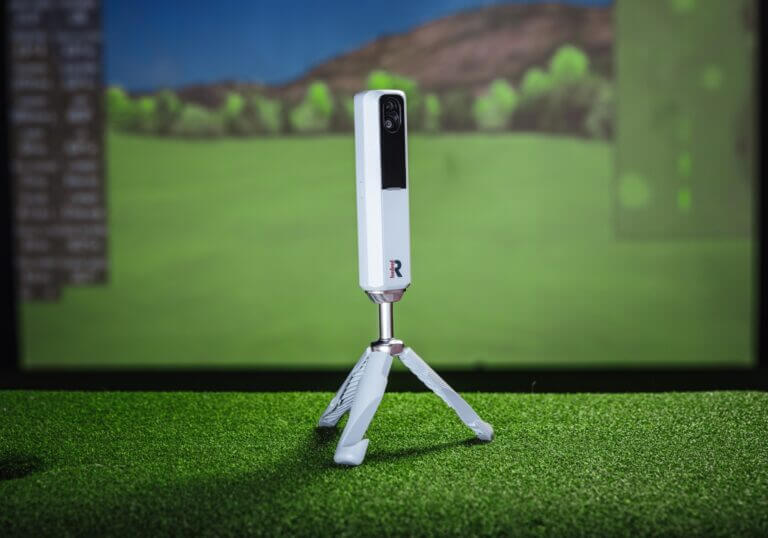
That got me thinking about launch monitors. It’s easy to do the same thing when club path, face angle, attack angle, spin and carry appear after every shot. Hit a shot, check the number, make a correction, repeat.
It feels productive. But are you practicing golf or practicing how to respond to your launch monitor?
A recent systematic review called “The Missing Brain in Golf Technology: Why More Data Does Not Always Improve Performance” looked at how golf technology interacts with motor learning, attention, working memory and automatic movement. The takeaway wasn’t that technology is bad. It was that more information does not automatically mean more learning.
Measuring your swing and learning your swing are different things
Launch monitors are incredibly good at telling you what happened. They can identify changes in club delivery and ball flight that would be difficult to recognize on your own.
The researchers make an important distinction, though. Measuring a performance outcome and acquiring a motor skill are not the same thing. Having more accurate information doesn’t guarantee that you’ll learn the movement that produced it.
That explains my video problem pretty well.
The video can tell me whether I made the movement I wanted. Eventually, I still need to know what that movement feels like without watching the previous swing first.
Launch monitor data should work the same way. If you are trying to change your club path, knowing the path is useful. The goal is eventually being able to make the movement without needing the number from the last swing to tell you how.
More feedback can eventually become too much
The paper calls this the “Technology Performance Paradox.”
Too little objective feedback can make learning difficult because you’re relying completely on feel. A moderate amount of well-managed feedback can help. The concern comes when the amount of information becomes large enough that you are trying to consciously process too much at once.
That isn’t hard to imagine with a modern launch monitor. Carry, ball speed, club speed, spin, attack angle, club path and face angle can all be sitting in front of you after the same shot.
All of those numbers can be useful. They don’t all have to be useful at the same time.
The review also discusses how too much technical feedback can keep pulling a golfer’s attention back toward positions, angles and movements that eventually need to become more automatic.
Can you tell what happened before you look?
To me, this is the easiest way to make launch monitor practice more useful. In fact, you’ll see professionals doing it all the time.
Hit the shot and make a prediction before looking at the screen. Where did you strike it? Where did it start? Did that path feel more left or right? Was the carry longer or shorter?
Then check the data.
I wrote an article about Blades Brown and a practice session he had where he was able to guess his yardages and it’s pretty impressive.
When you add in the guessing, the launch monitor is helping you connect feel with reality instead of replacing feel altogether.
I also think it makes sense to start spacing out the feedback once you understand the change you’re working on. Early on, you may need to check frequently. Then try three swings without looking. Move to five. Eventually, see if you can make the change through a larger block of shots.
I don’t want to hit 20 bad shots just to prove I can practice without technology. I want to use the technology enough to learn what I’m trying to do and then see whether that movement survives when I stop checking it constantly.
At some point, practice golf
There should probably be a point in every launch monitor session where the number stops being the goal.
Pick a target, change clubs, try to vary the trajectory or play a simulated hole and give yourself more of that on-course experience.
The launch monitor can still collect all the data. You just don’t have to react to all of it.
This review ultimately included six studies and the authors acknowledge that direct research into the cognitive and neurological effects of golf technology is relatively scarce. So this isn’t proof that checking your launch monitor after every swing will make you worse.
It is a good reason to think about what you want the technology to accomplish.
The goal with my swing video isn’t to make one good movement immediately after watching the previous one. I want to hit a group of shots, check the video and see that the movement is still there.
That’s probably a good test for launch monitor practice, too. Use the numbers to help you learn the shot, not to become dependent on the numbers to hit it.







Leave A Reply