


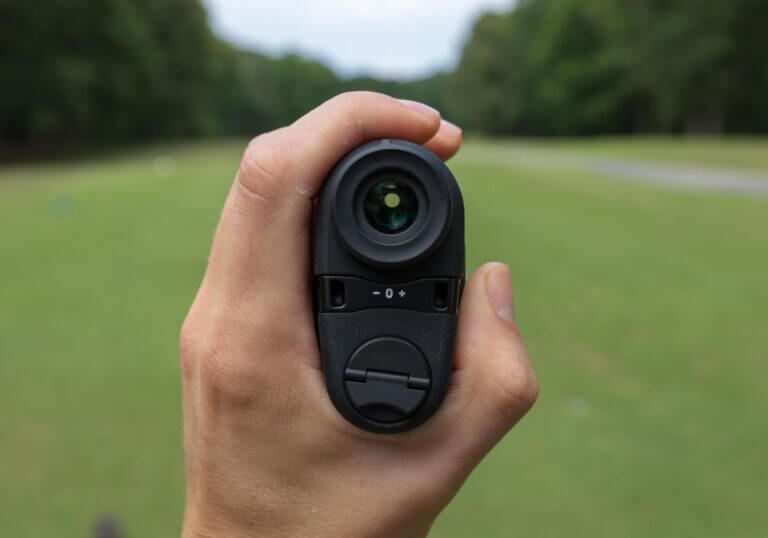
Last Saturday, I watched a student pull out his rangefinder on the 14th tee, zap the pin at 147 yards, then proceed to fly his approach shot over the green into thick rough. He had the exact distance but made the worst possible decision with that information.
Here’s the thing: knowing yardages doesn’t automatically make you a better golfer. In fact, I see players get worse when they first start using rangefinders because they become obsessed with precision while ignoring strategy. They’re so focused on hitting it exactly 147 yards that they forget about the water hazard lurking behind the pin or the bunker guarding the front.
After two-plus decades of teaching, I’ve learned that rangefinders are only as good as the decisions you make with them. The magic isn’t in the technology itself but in how you use that information to eliminate big numbers from your scorecard.
The layup that saves strokes
Most golfers use rangefinders to attack pins. Smart golfers use them to find safe landing zones. When you’re 180 yards out on a par-4 with water short of the green, don’t just zap the flag. Range the front edge of the hazard, the back edge, and identify your perfect layup distance.
I teach students to find their “money yardage” for each wedge. If you’re deadly with a 60-yard sand wedge, use your rangefinder to identify spots that leave you exactly that distance. Suddenly, that intimidating approach becomes a routine pitch shot to a fat part of the green.
Here’s what changed everything for my student Janet: instead of ranging pins, she started ranging trouble: water hazards, bunkers, thick rough. Once she knew exactly where danger lurked, she could plan her misses intelligently. Her scores dropped five strokes in three rounds using this approach.

The practice range revelation
Your rangefinder isn’t just for the course. It’s your most valuable practice tool, especially for shots under 100 yards. Most driving ranges have yardage markers but they’re often inaccurate or positioned poorly for wedge practice.
Use your rangefinder to create your own targets. Find a spot exactly 75 yards away, then hit 10 shots to that distance. Not to a flag or a pretty target but to that specific yardage. This builds the distance control that separates good short games from great ones.
The revelation comes when you realize how much your distances vary. That smooth sand wedge you thought went 80 yards? Range it. You might discover it’s actually 73 yards on calm days and 85 yards with a helping wind. This knowledge eliminates those frustrating shots that come up short or fly long for no apparent reason.

The trouble-scouting advantage
Before you play any new course, walk a few holes with your rangefinder during a practice round. Range every hazard, every bunker, every collection area. Create a mental database of danger zones and safe spots.
On your home course, use your rangefinder to discover things you’ve never noticed. That fairway bunker you’ve been avoiding might only carry 220 yards, well within your driver’s range. Or that water hazard that looks intimidating might start 40 yards short of where you thought.
The honest truth about yardage obsession
Perfect distances don’t guarantee perfect shots. I’ve seen players spend so much time ranging everything that they lose focus on fundamentals like alignment and tempo. Your rangefinder should inform your strategy, not replace your instincts.
The best rangefinder users I know take one reading, make their decision, then commit fully to the shot. They don’t second-guess or re-range. They trust their information and execute with confidence.
Start using your rangefinder strategically in your next round. Range the trouble, identify your layup zones, and watch those big numbers disappear from your scorecard.





Matt Norton
1 year ago
Leave the rangefinder in the bag and get a gps watch.