


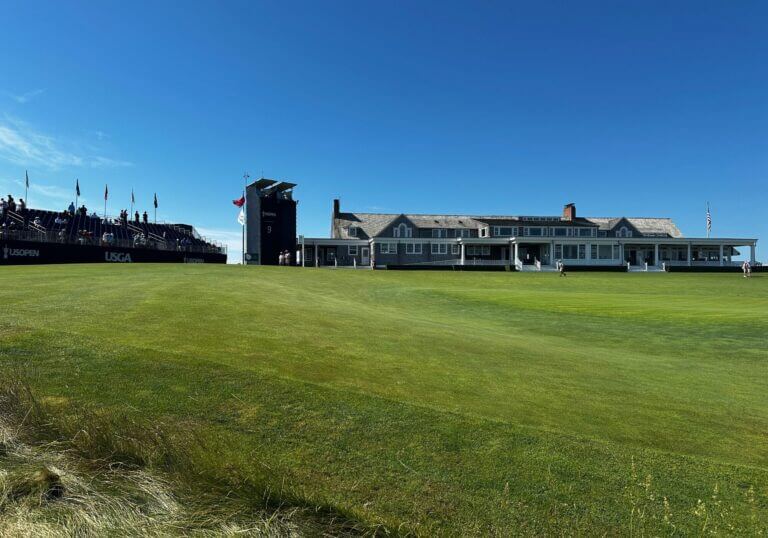
SOUTHAMPTON, NEW YORK — Standing from the tee box of the first tee at Shinnecock Hills Golf Club, one can’t help but notice the iconic windmill from adjacent National Golf Links of America towering in the distance.
Windmills, much like golf, however, are man-made. Naturally juxtaposed against National Golf Links, Shinnecock Hills and Sebonac is the real looming albatross: Great Peconic Bay. Like the albatross in Samuel Taylor Coleridge’s poem, “The Rime of the Ancient Mariner,” Great Peconic looks innocent and tame. On the other hand, just like Coleridge’s albatross, it’s the source of pure chaos and disaster.
The wind coming off Great Peconic is where the 2026 U.S. Open at Shinnecock will live or die.
Since the last U.S. Open here in 2018, the fairways have been widened by about six yards reverting back to the Coore-Crenshaw renovation that reflects original architect William Flynn’s 1931 masterpiece. During that 2018 Open, the USGA pinched in many of the fairways, which averaged about 42 yards in width; this year, they are averaging about 48 yards, among the widest ever at this championship and some 20 yards wider than we saw at Oakmont a year ago.
To a casual fan, that six yards of widening might not sound like that much. But, if you put it into perspective—specifically football terms—that number is meaningful. Jim Brown, who is widely considered the greatest running back of all time, averaged 5.2 yards per carry. A five-yard run is considered above-average for a running back. The fact that Shinnecock’s fairways have gained more width than a vintage Jim Brown carry makes this both compelling and, frankly, a bit staggering.
During my time walking the course on Tuesday and Wednesday, one thing was abundantly clear: players were finding fairways. A lot of fairways.
That’s not necessarily a bad thing. During today’s press conference, Mike Whan and John Bodenhamer of the USGA reiterated the importance of “letting Shinnecock be Shinnecock.” Right now, the course is playing almost exactly how it’s played by its members.
That’s fine.
However, there’s a fine line between letting a course play as it was originally intended while also accounting for modern equipment and subsequent distance gains. As a result, it may come as no surprise, but the practice rounds saw a lot of aggression from players off the tee. Unlike its predecessor at the PGA Championship, Aronimink, Shinnecock’s fairways are less sloped, and the widened fairways are certainly emboldening players.
While I hate to continue comparing Shinnecock to Pennsylvania courses (what can I say? I’m from PA), it’s completely fair to compare it to another U.S. Open anchor site: Oakmont.
As has been well-established, the penalty for missing the narrow fairways at Oakmont is draconian. With this year’s setup, the USGA seems to be going in the opposite direction, and even missed fairways aren’t punished nearly as severely. In recent years, several of the main tenets required to win the U.S. Open have been keeping the ball in play, hitting accurate approach shots and, of course, putting solidly. I mean, look at the way Brooks Koepka won here in 2018. At the time, Koepka was easily one of the most elite drivers of the golf ball, but he teed off with a 3-iron for a large portion of the week. He kept the ball in front of him.
That sort of play, at least during the practice rounds, has been virtually non-existent. With that in mind, I don’t think it’s fair or even reasonable to expect the same on both Thursday and Friday for a couple of reasons.
The first is the USGA itself.
Kierkegaard said “anxiety is the dizziness of freedom,” and the USGA has remained adamant that the widened fairways will force players to expend a tremendous amount of mental energy in determining their approach play. That is the theory: more width creates more options, and more options create more room for doubt.
I am compelled to say that has proven to be the case, as players do have a number of different options at their disposal. Once again, however, the matter of distance rears its head. On missed approaches on par 5s and longer par 4s, we’re seeing memories of Martin Kaymer at Pinehurst, with a number of players electing to putt from off the green.
Speaking of the greens, that’s a story in and of itself. During their press conference, Whan and Bodenhamer confirmed that the greens will be syringed on Thursday and Friday and that, for the entirety of the week, green speeds would measure at about 10.5 on the Stimpmeter: the slowest we’ve seen in 30 years here. I don’t think it needs to be said but I’ll say it anyway: the USGA isn’t above reproach, but I firmly believe they know what they’re doing and agree with their philosophy that if Shinnecock “isn’t good enough, we shouldn’t come here.”
If all of this sounds upsetting because you want to see absolute carnage at the U.S. Open, you’ve forgotten about Great Peconic.
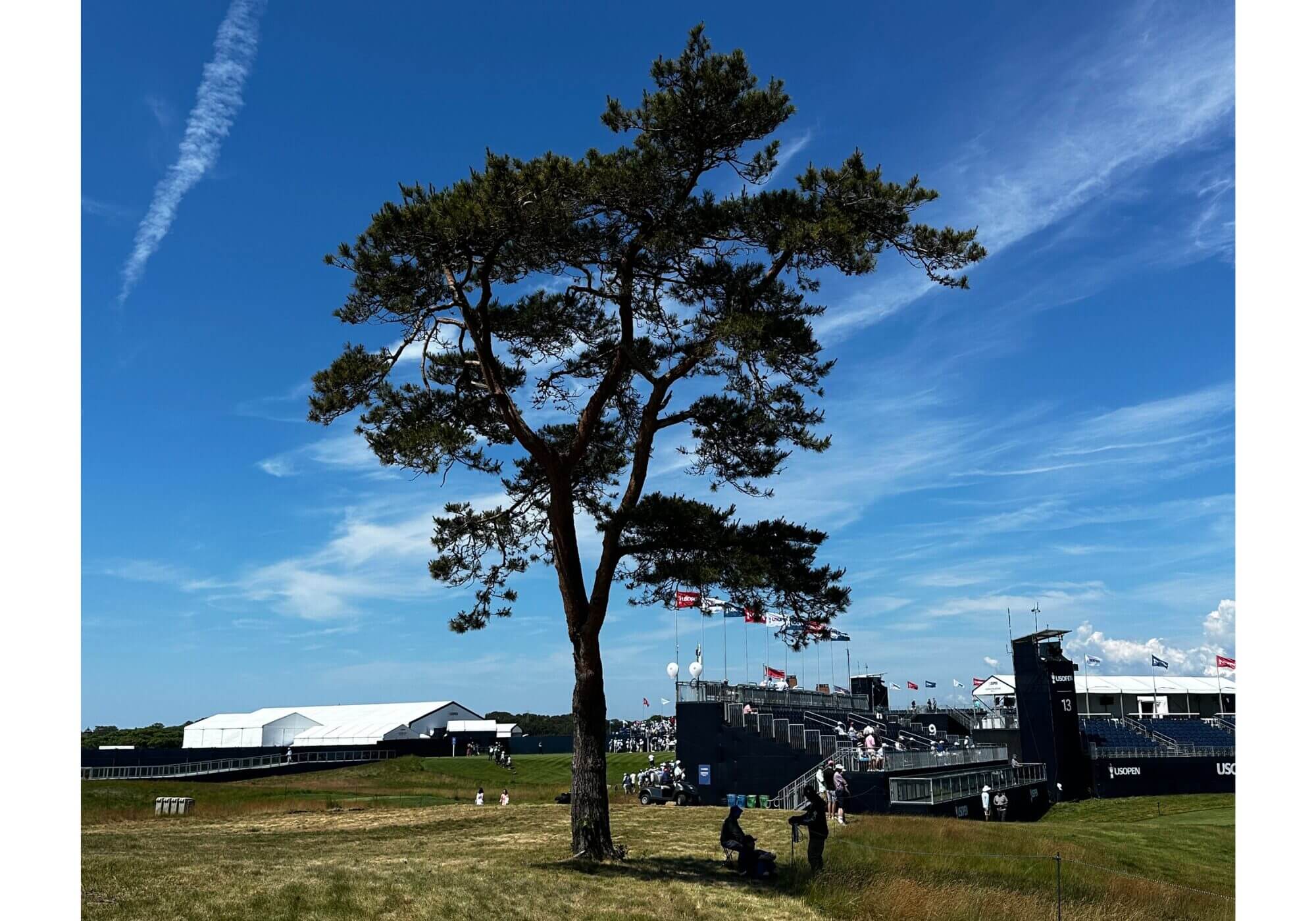
Like its neighbor, National Golf Links, Shinnecock, with the exception of a few scant trees, is a largely treeless property, and that means absolutely no defense against the power of the sea. With coastal wind gusts of up to 36 mph expected tomorrow and even higher gusts expected through the weekend, the USGA’s decision to widen fairways and syringe greens can potentially be seen as an act of mercy.
If nothing else, it’s a defense from scores getting too high.
We put things into perspective earlier with regard to how substantially the fairways have been widened. Let’s do the same thing with the wind. According to the National Weather Service, 36 mph winds are considered a full-on gale. Imagine trying to play golf in wind that’s strong enough to snap branches off trees with green speeds running a 15 on the Stimpmeter. It’s pretty much impossible. Some greens mights become virtually unplayable.
This year’s U.S. Open is proving something we often forget in an increasingly modern world. For as much as we would like to be, human beings are not in control of the natural world. The USGA, by virtue of the placement of Shinnecock Hills, has effectively let go of the reins, thrown its hands up and said “we are not going to play God,” because, in this case, it realizes that in golf (and life), nature is the great equalizer.
By the time it’s all said and done, the effects of Great Peconic Bay will certainly have their say.








Leave A Reply