


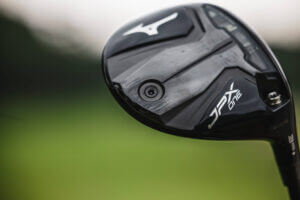
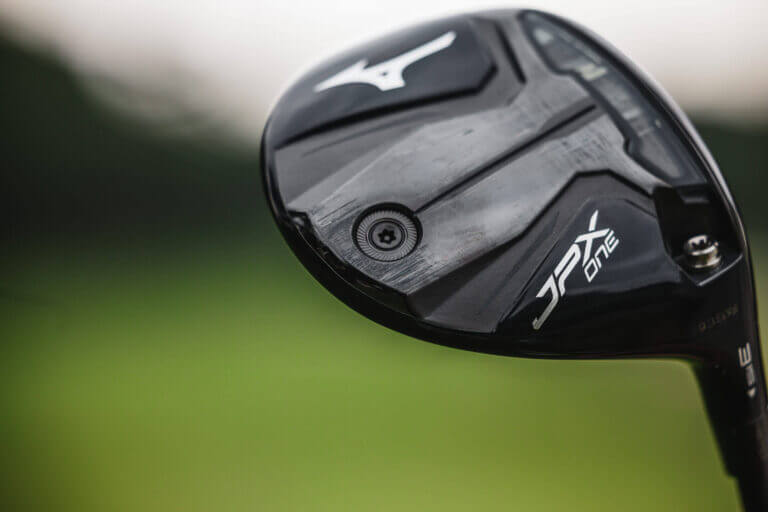
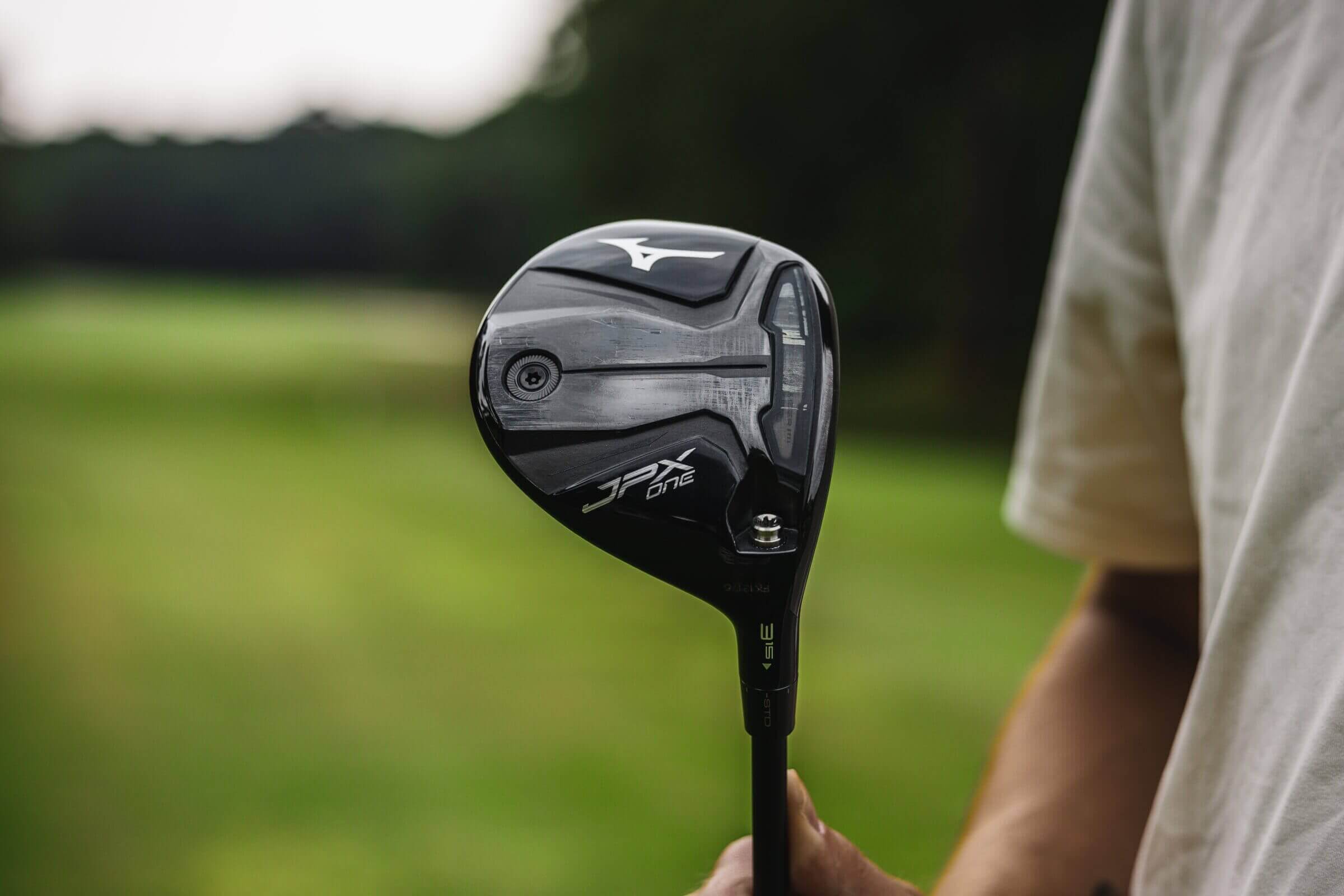
The Mizuno JPX ONE finished first overall in our 2026 Fairway Wood test with an 8.9 MGS Score. At the other end of the rankings, the Tour Edge Exotics LS was last with an 8.2. The Tour Edge technically tied the Callaway Quantum Triple Diamond in overall score but, since it occupies the final spot in our published rankings, we’re using it for this first-versus-worst comparison.
And if you looked only at distance, you’d have a hard time telling which one won.
First vs. worst: The key numbers
| Mizuno JPX ONE | Tour Edge Exotics LS | |
|---|---|---|
| MGS Score | 8.9 | 8.2 |
| Accuracy | 9.2 | 8.2 |
| Distance | 8.5 | 8.4 |
| Forgiveness | 9.4 | 7.8 |
| Carry Distance | 202.58 yds | 201.84 yds |
| Total Distance | 214.14 yds | 214.22 yds |
| Ball Speed | 131.61 mph | 130.90 mph |
| Shot Area | 2,746 sq. yds | 4,079 sq. yds |
| Proximity | 36.3 yds | 45.0 yds |
| Playable Shots | 91.90% | 86.67% |
| Fairway Percentage | 67.96% | 68.07% |
Distance had almost nothing to do with it
The JPX ONE carried 202.58 yards compared to 201.84 for the Exotics LS, a difference of less than one yard. Total distance was even closer. The Tour Edge actually finished 0.08 yards longer.
For all practical purposes, these two fairway woods went the same distance.
If your only question is, “Which one goes farther?” this comparison doesn’t give you much of an answer.
Accuracy favored the Mizuno
Accuracy accounts for a significant portion of our overall fairway wood scoring and is based on Strokes Gained.
The JPX ONE earned a 9.2 accuracy score compared to 8.2 for the Exotics LS.
It’s worth being careful about how we interpret some of the other numbers. For example, fairway percentage was essentially identical. Tour Edge was actually slightly higher at 68.07 percent compared to Mizuno’s 67.96.
So this isn’t as simple as saying the Mizuno hit fairways and the Tour Edge didn’t. Over the complete test, however, the JPX ONE produced the better accuracy result.
The bigger separation was forgiveness
This is where the difference becomes easier to see.
The Mizuno earned a 9.4 forgiveness score compared to 7.8 for the Tour Edge.
Our forgiveness scoring looks at shot-to-shot consistency including changes in carry distance, ball speed and backspin as well as dispersion.
One piece of that picture was shot area.
The JPX ONE produced a 2,746-square-yard shot area. The Exotics LS was at 4,079 square yards, nearly 49 percent larger.
That doesn’t mean the Tour Edge was “49 percent less forgiving.” Shot area is only one part of the forgiveness calculation. It does, however, help illustrate what separated the two clubs.
The Mizuno also finished with 91.9 percent playable shots compared to 86.67 percent for the Tour Edge while average proximity was 36.3 yards for Mizuno and 45 yards for Tour Edge.
Does finishing last make the Tour Edge Exotics LS a bad fairway wood?
The Exotics LS is a more specialized design. Tour Edge positions it as a low-spin, workable fairway wood aimed at golfers looking for those particular characteristics.
For the right player, that could be exactly what they need.
What our test suggests is that the JPX ONE is likely to make sense for a broader group of golfers. It produced essentially the same distance while delivering better overall accuracy and more consistent performance across our testing, regardless of handicap and swing speed.
Fitting still matters for fairway woods.
The bottom line
The Mizuno JPX ONE combined strong accuracy with the best forgiveness score of the two while giving up nothing meaningful in yardage. The Tour Edge Exotics LS could still be a good fit for a golfer specifically looking for a low-spin, workable fairway wood but it didn’t produce as complete an overall performance across our test pool.










Matty J
1 month ago
Not specific to this Fairway Woods test, but for all the club testing in general, I’m thinking the “Forgiveness” scores may be a little misrepresenting. Based on your description, it seems this is more of a measure of consistency than forgiveness. Not that consistency isn’t important but IMO forgiveness should measure how does the ball perform on a variety of off-center hits at various club speeds. A bit more representative of how I view forgiveness. Still good info and please keep up the testing!