


The Mount Rushmore Of Golf Architects
News

The Mount Rushmore Of Golf Architects

Support our Mission. We independently test each product we recommend. When you buy through our links, we may earn a commission.

The Mount Rushmore Of Golf Architects

When it comes to design, no single architect has dominated the creation of golf courses. 

Golf architecture is an appreciated art form that brings together a common collective of individuals who seek to explore the game beyond just hitting a ball down a patch of grass.  

These nerds, enthusiasts or admirers (there are countless other adjectives to describe them), revel in the majesty of perfectly placed bunkers or flawless use of the natural landscape. 

So, as with all sports, let’s begin the debate: Who are the G.O.A.Ts that deserve their face on the Mount Rushmore of golf architecture?

Establishing the criteria

Let’s start with the requirements. I’ve made this list based on four distinct categories: signature works, influence, enduring legacy and innovation.

1. Signature works

This first piece is pretty self-explanatory.

This can span from top-100 rankings to prestigious events hosted. Good golf course design is showcased in some shape or form for the general public—how much do they appreciate it?

2. Influence

With all art, style transcends era. Influential architects have their styles incorporated into modern designs and span multiple decades. We’re looking for those who have timeless layouts that don’t lose relevancy over the years despite changes in technology.

3. Enduring legacy

When it comes to the art of golf course design, the general public asks, “Are their courses still used for major championships or iconic events? or “Is their design philosophy still taught, debated and celebrated today?”

These two questions pose interesting debates. An architect should span generations in their approach to design. Newer architects should look to them for inspiration and guidance in how to design their own courses. If not, what’s the point?

4. Innovation

A great architect pushes the boundaries of golf course design. Not only did they push design in terms of routing, design and/or incorporation of the natural environment but they advanced the idea of golf as an art form.

Golf course design is not simply just moving dirt, sand and grass to create 18 holes in a field somewhere. The great courses leave lasting memories and create an appreciation for the design and energy used to create them. 

With that in mind, let’s get into our Mount Rushmore of golf architects.

Mount Rushmore

Old Tom Morris

Golf course design might look very different without Old Tom Morris.

Regularly referred to as the “father of golf course design,” his portfolio speaks for itself. St Andrews stands in a class of its own but designs such as Muirfield and Prestwick also showcase his keen eye to shape the Scottish coast into timeless designs. His use of bunkering and creating multiple routes to a hole were groundbreaking during the 19th Century (and are commonplace in modern golf).

His work stands the test of time and he helped lay the foundation for golf architecture as a craft, making him the first true architect whose influence can still be seen more than a century later.

Alister MacKenzie

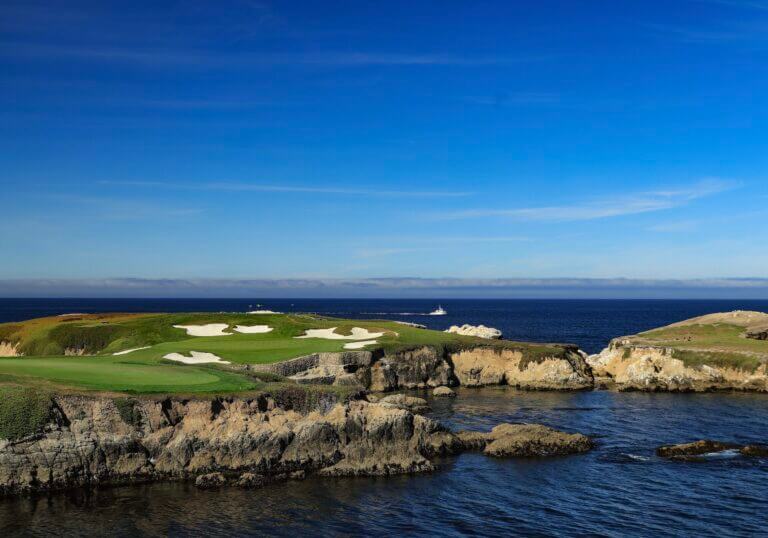
MacKenzie’s work was on full display in early September during the Walker Cup at Cypress Point—and it did not disappoint.

Simply put, he was an artist. MacKenzie stood firm on the belief that all courses should be natural, flow with the land and challenge the strategy of all golfers, regardless of skill level. His designs, such as Augusta National, Cypress Point and Royal Melbourne, are the gold standard for beauty and playability.

MacKenzie also wrote about his philosophy in books that remain essential reading for architects today. His ability to combine challenge, artistry and fun makes his legacy one of the most enduring in the game and earns him a spot on our list.

Donald Ross

If Alister MacKenzie was the artist, Donald Ross was the craftsman.

Ross is remembered for bringing golf architecture to America in a way no one else had. He is attributed to have designed more than 400 courses. His most famous work, Pinehurst No. 2, is known for his trademark turtleback greens and utilizing nature to build a challenging layout into the surroundings.

And while his courses are challenging, Ross proved that a difficult course did not need to be flashy or overly penalizing in terms of hazards. Some of his courses are regularly used to host major championships but they are far from the only influential courses in his extensive profile.

Pete Dye

Last, but certainly not least, is Pete Dye.

Dye, simply put, changed the way modern golf looks and feels. He was not afraid to take risks and intimidate those eager to play his designs. Using island greens, railroad ties and deep pot-bunkers, Dye did not hold back with providing a visually stunning course.

His courses were not his only contribution to the world of golf architecture as he also mentored the next generation of architects, including Tom Doak and Bill Coore.  Dye’s work bridged the gap between the Golden Age classics of Ross and MacKenzie to modern tournament golf, earning him the final spot and making him one of the most important figures of the last 50 years.

Honorable mentions

Bill Coore and Ben Crenshaw

  • Generating buzz with their continued partnership, you cannot name one without including the other. Courses such as Sand Hills, Friar’s Head and a duo at Bandon Dunes (Trails and Sheep Ranch) make a strong case to include them on the list.

Robert Trent Jones Sr.

  • Another name that was hard to not include. Jones Sr.’s list of courses are also too beautiful to be ignored (Firestone, Hazeltine, RTJ and Spyglass Hill).

What do you think? Do you agree or disagree with these picks? 

Let me know below in the comments.

Top Photo Caption: The 16th hole at Alister MacKenzie’s Cypress Point. (GETTY IMAGES/David Cannon)


For You

For You

News
Jun 23, 2026
The Best Prime Day Golf Deals! Get ‘Em While You Can (2026)
Scottie Scheffler Career Grand Slam Scottie Scheffler Career Grand Slam
News
Jun 23, 2026
How Long Will Scottie’s Career Grand Slam Search Take?
Instruction
Jun 23, 2026
Why You Can Hit Your Driver But Not Your Irons (And Vice Versa)
Nate Burcak

Nate Burcak

Nate Burcak

A high school teacher with a golf addiction, Nate has learned golf is more than playing well. When he's not coaching the local high school team, he's embracing the stories and the history that make a round memorable. Playing well is just an added plus.

Nate Burcak

Nate Burcak

Nate Burcak

Driver Titleist TSR3 3-Wood Titleist 913D
Utility Iron Srixon U65 Irons Srixon Z765
Wedges Titleist Vokey SM6 Putter Taylormade Spider
Ball Taylormade TP5x  
Nate Burcak

Nate Burcak

Nate Burcak


    This site is protected by reCAPTCHA and the Google Privacy Policy and Terms of Service apply.

      Sean

      9 months ago

      no James Braid? He updated and modernised most of Morris’s courses to be 18th holes.
      James Braid is WAAAAAY more influential than Dye and Trent Jones.

      Reply

      mg

      9 months ago

      Pete Dye? No way is he as gifted as the men who don’t move a gazillion yards of earth. He should’ve been arrested for being an environmental hazard. Give me A.W. Tillinghast all day.

      Reply

      Paul R Bolton

      9 months ago

      Stanley Thompson is Canada’s greatest architect. His work stacks up favourably with anyone

      Reply

      Steve O

      9 months ago

      Totally agree. A.W Tillinghast should be in the top 5 as should Robert Trent Jones, Sr. Both created designs to work with the land they had and make courses that are both playable and enjoyable.

      Reply

      Lee Blaylock

      9 months ago

      Robbert Trent Jones and Dick Wilson were the epitome of the dark ages of architecture. That’s what P died changed was their boring designs.

      TC

      9 months ago

      I was lucky enough to grow up on a beautiful Robert Trent Jones Sr. design, a municipal course! And also lucky enough to play several rounds on MacKenzie’s first course in America, the Meadow Club, which remains a Northern California stunner.

      Reply

      Jeff Cook

      9 months ago

      No mention of Tom Fabio?

      Reply

      Wayne Morrison

      9 months ago

      While I can make a case for the exclusion of some of the architects mentioned as worthy of a “Mount Rushmore” of golf architects and a case for the inclusion of others, I’ll concentrate on the validity of including William Flynn for consideration of this “monumental” achievement. William Flynn designed or redesigned a mere 87 courses of which 25 either were not built or haven’t existed in more than 80 years. Of the 62 courses with varying degrees of Flynn input, there have been 104 USGA events played with 17 more scheduled and there have been 3 PGA championships. Compare these numbers with the number of championships played on Ross (400+ courses), Tillinghast (200+ courses), Macdonald, Raynor, and Thomas courses. Senseless to include MacKenzie, Colt, Alison, and other primary UK course designers given their limited work in the US. William Flynn was an outstanding agronomist, turf developer (bent and native grasses), and course construction expert. Unlike his contemporaries, he was a one-stop shop for golf course development. He may well be the finest router of golf courses in America. Tillinghast, Raynor, and Lees inspected the Cascades property for the Homestead and none of them could come up with a routing. Flynn did so in a day. Flynn was an early practitioner of minimalism, utilizing as much of the natural features as possible (creating site-specific designs) while making the man-made features look natural – saving significant money over time compared to the more engineered designs such as Macdonald and Raynor. Flynn was a master at perceptual miscues, he understood that it was difficult to determine change in elevation over long distances, he manipulated the top lines of bunkers to hide diagonals and to misread slopes of greens. His offset fairways and greens require both distance and line of play considerations (1st at Shinnecock Hills is a great example) not evident in straightaway holes. He understood that on downhill or uphill approaches, the slight alteration of green tilt makes front to back greens look back to front on downhill shots and the converse on uphill shots. Flynn believed in specific shot-testing on championship designs and provided rewards for those able to hit draws off of fade lies and fades off of draw lies – he examined the physical and strategic thought test of every golfer. He promoted using multiple tees for different classes of golfers rather than multiple tees for use on different days as was the custom. In 1927 he wrote that if something wasn’t done about the ball, 7,500 to 8,000 yard courses would need to be built. Lost courses at the Rockefeller, Lasker, Cassatt, and McLean estates showcase Flynn’s ability to design great golf on small acreage with reversible holes, double greens, and crossovers not possible on typical courses with their amount of play. Of all golf course architects, the portfolio of par 3 designs by Colt and Flynn stand above the rest.I could go on an on. But a picture – or rather a play of Merion, Shinnecock Hills, The Country Clubs (Pepper Pike and Brookline), Kittansett Club, Phila Country Club, Lancaster Country Club, etc. are all worthy of study. At 5’4″ he was an excellent player, capable of hitting low running draws 300 yards. In high school, he regularly beat Francis Ouimet, although he was a bit older. Why Flynn isn’t appreciated as much as some of those mentioned is a real head scratcher.

      Reply

      Jeff brown

      9 months ago

      I can’t believe you ignore William Flynn – he of shinnicock, Merion, cherry hills, Huntington alley

      Reply

      Spencer Clark

      9 months ago

      Mike Strantz should’ve gotten an honorable mention. Gone too soon.

      Reply

      Jon Silverberg

      9 months ago

      Subtract Dye (ugh!) and add C. B. MacDonald, A. W. Tillinghast, Seth Raynor, Deveraux Emmit…yeah, that makes it a bit crowded…so what?

      Reply

      1-Iron

      9 months ago

      You left out Tillinghast???

      Reply

      Linwood Hines

      9 months ago

      DOAK, DOAK and a few others.

      Reply

      Will

      9 months ago

      Personally, I’m a big fan of the way Mike DeVries designs courses. Mostly just fits them on top of the existing landscape without moving much dirt around, resulting in a mix of pretty normal holes and absolutely crazy ones. The crazy ones do tend to slow down pace of play, unfortunately. Some people see “260 to the par 4 green?!” and can’t resist going for it, even though it’s narrow and everything between it and the tee box is a massive ravine.

      Reply

      Brandon

      9 months ago

      No Seth Reynor? Name a Reynor course that isn’t incredible to play.

      Reply

    Leave A Reply

    required
    required
    required (your email address will not be published)

    This site uses Akismet to reduce spam. Learn how your comment data is processed.

    News
    Jun 23, 2026
    The Best Prime Day Golf Deals! Get ‘Em While You Can (2026)
    Scottie Scheffler Career Grand Slam Scottie Scheffler Career Grand Slam
    News
    Jun 23, 2026
    How Long Will Scottie’s Career Grand Slam Search Take?
    Instruction
    Jun 23, 2026
    Why You Can Hit Your Driver But Not Your Irons (And Vice Versa)