




Handicaps can take a while to drop. Even if you feel like you’re playing better golf, your scores may not reflect it for some time. Great golfers know to look for signs that they’re getting better at golf. These signs can help you avoid feeling discouraged and focusing too much on the numbers.
Fewer blow-up holes
If you are used to a few double or triple bogeys on the scorecard each round, you may start to notice them disappear. When you have a bad hole, it may be because of a mental or course management mistake, not necessarily from poor ball striking.
Track your double bogeys or worse so you have an idea as to which way you are trending.
Finishing the round with the same golf ball
Not losing a golf ball during your round indicates that your shots are straighter and you’re making smarter decisions. Lost balls cost you penalty strokes.
Learn to control your clubface. The more control you have, the easier it is to finish the round with the same golf ball.

Ability to shape shots
Another sign you are getting better at golf is to move from “hoping” for straight shots to intentionally hitting a slight fade or a draw. You’ll easily get out of trouble when you can work the ball left and right.
If you still struggle with working the ball, spend some time on the range, making small adjustments to your setup to hit a fade or draw. Practice until you feel confident enough to do it on the course.
Your approaches are finishing pin-high
Amateur golfers must expect not to hit most greens in regulation. However, even if the green is missed, a pin-high approach is a good sign.
Pin-high approaches show you chose the right club, leaving you with easier up and downs.
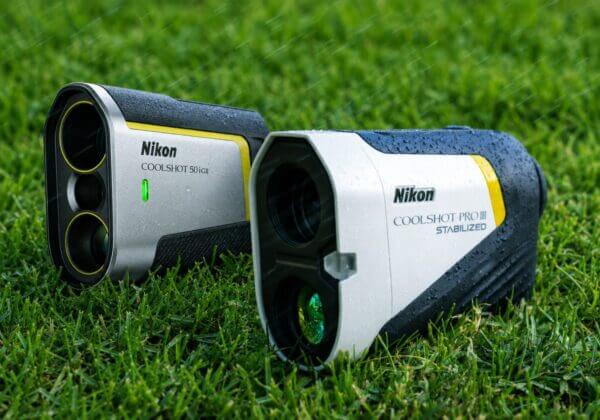
Make sure you are using a rangefinder or distance measuring device that you trust and track your true yardages.

Putting for par (or birdie) more often
Nobody likes those 10-foot putts for bogey. Walking up to every green and grinding over these putts is exhausting. If you find yourself at least standing over more par or birdie putts, your handicap is likely on its way down.
Even if you are not making pars and birdies just yet, start tracking how many times you give yourself a chance to make one.
Expecting better shots
Standing over a ball and hoping it doesn’t go out of bounds is a telltale sign that you’re not in control of your game. When you play more consistent golf, you’ll become confident, and increased confidence should lead to better execution.
Make sure you are building positive thoughts into your pre-shot routine and expecting those better shots.

Better decision making
When you get better at golf, you’ll start thinking through your shots instead of grabbing a club and taking a swing. Questions like “Should I lay up?”, ” Is this a birdie hole?” or “What risk do I need to avoid?” will come into your mind. Choose safe targets and plan your shots.
Practicing with a purpose
Randomly hitting range balls is more of an exercise than a practice plan to improve your scores. Make sure your practice sessions mimic real on-course situations. Use data from your rounds to help set specific goals for each practice session.
Less emotional reactivity on the course
How you conduct yourself on the course may change as you improve. When your game improves, you realize that one bad hole does not need to ruin the entire round. You stay composed instead of getting frustrated or completely giving up.
Calm mindsets are great to have on the course. Focusing on hitting one good shot at a time is a strategy that works.
Fewer three-putts
Three-putts are score-killers. If you are three-putting less often and making more of those putts in the five-foot and under range, the difference should reflect in your handicap soon.
Practice some longer lag putts. We looked at some Shot Scope data recently about the average distance golfers have to the hole after an approach shot and it’s much further from the hole than you may think. Work on putts that are more than 50 feet so you know you can get them close.

More awareness of course conditions
As your game improves, you may notice that wind, slope and green speeds become more important to you. You recognize how course conditions impact your carry distance. With more awareness, you’ll make better decisions and often shoot lower scores.
Your misses are still playable
You can work with mistakes like missing a fairway by a few yards or coming up just short of a green. You’ll put yourself in positions where you can get up and down more often or advance the ball with fewer wasted recovery strokes.
Final thoughts
If you recognize these signs in your game, you’re getting better at golf. Stick with it.
Give the handicap some time to go down as it’s likely already headed in the right direction. Focus on consistency and smart decision-making and the scores will come. Also, collect data and information about your rounds to monitor what needs work.






Gerry Teigrob
1 year ago
I can relate to all of these aspects that are integral to my game. Even working on my golf game virtually, I notice how much every little thing makes a difference in indicating where the state of my game is. Thanks for nailing what indicates that my overall game is improving!