


Instead of wasting cash (or space in your bag), here are four accessories I recommend skipping. In some cases, the alternative saves you money. In others, it simply offers more value where it counts. Either way, you’ll end up with gear that actually earns its place in your bag.
1. Cheap “Slope” Rangefinders
Budget rangefinders with slope may look appealing but the slope calculation is usually inaccurate, inconsistent or outright wrong. If the number jumps around or doesn’t account for angle properly, it’s doing more harm than good.
Instead, get this.
- Go simple: a basic no-slope rangefinder for budget yardages.
- Or if you want slope, choose one that’s actually accurate—like Shot Scope PRO L2 or PRO ZR (use code MGS15 for 15% off).

2. Multi-Prong, Gadget-Heavy Divot Tools
Those bulky, multi-prong “Swiss Army” divot tools look cool but they aren’t worth the $20 or more. Sometimes, the extra prongs and attachments make it harder to use proper green-repair technique and they can be bulky to keep in your pocket.
Instead, get this.
- A tee or a simple two-prong or single-prong divot tool that lets you repair cleanly.
- Focus on correct technique
3. Golf-Branded Club Cleaning Wipes
Golf cleaning wipes seem convenient but they just aren’t necessary. They tend to dry out quickly and cost far more than they’re worth. A regular microfiber towel and a little water do the same job.
Instead, get this.
- A microfiber towel (works for clubs and balls, costs almost nothing).
- Or upgrade to a Grooveit brush if you want water + quick scrubbing on your bag.

4. Tee Height Gadgets (Like TeeBot)
If you haven’t seen the TeeBot, it’s a little device that helps you set your tee to the “perfect” height. Yes, tee height matters. But manufacturers already make tees with height-marking lines for a fraction of the price.
The bigger issue? Even if your tee height is flawless, you still need the swing mechanics to actually find the center of the face. A $25 tee height-measuring gadget won’t do that for you.
This is one of those situations where I’d use the simple test: “Do the pros use it?”
Instead, get this.
- Regular tees with height-marking lines—they do the same thing instantly.
- Or simply use the visual rule: half the ball sits above the top of the driver.

5. Premium golf ball marker pens (Like Flightpath)
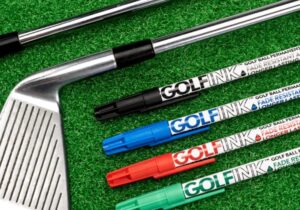
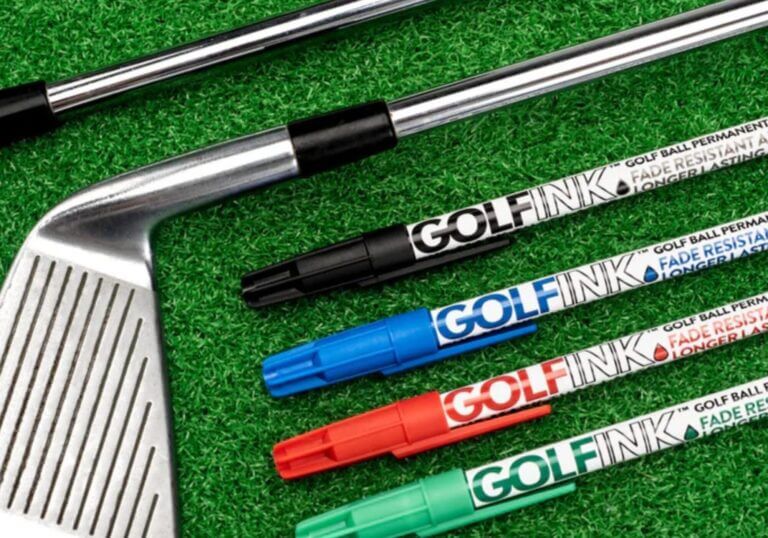
These $15 per pen “tour-trusted” marker pens look impressive in the product photos but they don’t do anything a regular Sharpie can’t already handle. Even if the ink does last longer, most golfers lose the ball long before the markings ever fade. I’ve had the cheap marker in my bag for years and it does the trick.
Instead, get this.
- A simple Sharpie. It’s cheap, reliable and easy to replace when you inevitably misplace it.





Tom Sampson
11 months ago
Quick ask. If it is not already on the site somewhere, can you post a quick video to support the comment in the multi prong divot tool section about: Focus on correct technique. I have hard conflicting “correct techniques”. Thank you.
Golfnut3567
11 months ago
Insert the ball mark repair tool behind the ball mark and gently push the top of the tool toward the center. Continue working around the ball mark, pushing the surrounding turf in toward the center of the indentation. Avoid using a lifting or twisting motion because this can damage turf roots. Once you have finished pushing turf in toward the center, gently tamp the area down with your putter to create a smooth, firm surface. From USGA.
Don’t dig or twist, you tear roots, make dead spots.
Andrew the Great!
11 months ago
I do that, and there’s always still a little indentation in the middle. It’s never a smooth, firm surface afterwards. And there’s NO way Tour pros actually fix their ball marks with their abbreviated, perfunctory efforts.