


Earlier this week, you may have seen CBS commentator Colt Knost, a former PGA Tour pro, tweet about his application for amateur reinstatement.
Knost, 41, made $5.2 million as a pro golfer over 13 years. He was a solid but unheralded player, winning twice on the Korn Ferry Tour and making 199 PGA Tour starts. Knost is through with his playing career at the highest level (and has been for some time) so now he wants to get his amateur status back in order to compete in that arena once again. Nearly two decades ago, he was the No. 1 amateur in the world.
The idea that a player like Knost can get back into the amateur game so easily has become a controversial and thorny issue.
The USGA, which has been spending ample time trying to get its arms around the ever-elusive definition of amateurism in golf, told Knost that he is in a holding pattern while the governing body determines what they should do with former pros like him.
My inclination is that the USGA is finally going to be much firmer with reinstatement which has become chaotic in recent years.
If that happens, I am going to celebrate it. Here’s why.
We need to draw a firmer line in the sand for amateur reinstatement
Golf is one of the few sports in which a professional athlete can retire, complete a waiting period determined by a governing body and eventually return to the amateur ranks.
Naturally, there are levels to this.
It’s common sense that a player who made a brief, unsuccessful pass at professional golf should not be permanently exiled from amateur competition. He gained virtually no advantage and should only have to sit out a short amount of time before getting to compete again.
The mini-tour player who lost money for two years, changed careers and now sells insurance should, in short order, be allowed to represent his club and enjoy competitive golf again. He should be able to join the mid-amateur circuit and fulfill whatever competitive desires remain.
It would be draconian to suggest that the second a player turns pro, they can never come back to amateur golf. That concept might have more obvious guardrails in other sports but golf isn’t like that; turning pro is not always indicative of talent relative to amateurs and there are thousands of failed pros who gained little other than scar tissue from the experience.
But we’re not talking about a guy who had a cup of coffee in pro golf’s minor leagues. We’re talking about long-established pros who were at the highest levels of the game for many years.
Point blank: Former professionals of this stature should have limited eligibility in their return to competitive amateur golf.
Waiting periods alone, which differ depending on what level of golf you reached, are an inadequate stopgap to a much bigger issue. Time away from professional competition doesn’t eliminate the advantages accumulated during a professional career. A former Tour player may not possess the exact game that once earned checks but he retains years of specialized instruction, tournament experience, course-management knowledge and comfort under pressure. He knows how to prepare for championship golf because championship golf was once his occupation.
Allowing an accomplished former pro to enter the same championships as lifelong amateurs violates golf’s competitive spirit. Once you have entered the realm of being a stable Tour player over many years, you should pass a point of no return when it comes to rejoining age-restricted amateur events.
Namely, we’re talking about mid-amateur golf, an arena that should belong to elite career amateurs who built lives outside professional golf but still desire an outlet for high-level competition.
A player like Knost should never set foot on the tee at the U.S. Mid-Am but that has been happening with regularity. Of the eight quarterfinalists at last year’s Mid-Am, six of them had competed professionally and several had earned a decent living doing so.
This isn’t in the spirit of what these events should stand for.
I am far less concerned with elite amateur golf which belongs to college golfers and those under the age of 25. These players routinely have access to NIL (name, image, likeness) deals. NIL has greatly blurred amateurism at the elite level.
If a guy like Knost wants to bang his head against the wall playing the flat-bellied kids who drive it 330 yards on a string, I am not fundamentally opposed to that. The advantages I listed earlier are mitigated greatly by the fact that many of the “amateurs” competing are simply professionals in waiting.
So here is where I would draw a line in the sand: Accomplished former pros of a certain threshold should not be eligible to play mid-amateur or senior amateur competition.
My starting point would be $1 million in recognized-tour earnings or five seasons of meaningful participation on the PGA Tour, LPGA, Korn Ferry Tour or comparable international circuits. The precise threshold is debatable; the need for one is not.
However, after a lengthy waiting period, former pros should have access to all-ages amateur events. As for smaller tournaments like club championships, member-guests and other local play, it should be up to whoever is operating those events (many of those tournaments use handicaps, anyway).
The purpose of reinstatement restrictions shouldn’t be to protect every amateur from superior competition. It should be to preserve age-based championships for the career amateurs those events were created to serve.
And, finally, once you return to amateur golf, you can never again repeat the cycle of turning pro and getting reinstated.
Why this topic has become so heated
This is really about restoring competitive balance to protect pockets of golf competition where true amateurism (or as close to it as we can get these days) should still exist.
National mid-amateur championships should principally belong to elite golfers who maintained amateur status while building careers and lives outside professional golf, not players who already spent years making golf their occupation.
I think that’s part of why even average hackers are upset about this. They want some structure and fairness.
Knost will defend his application by saying that he isn’t requesting special privileges and by pointing to the money modern amateurs can make. I don’t blame him for going through the reinstatement process. The rules have allowed several of his peers to return and he has every right to ask for equal treatment.
But his public campaigning displays little awareness of how ridiculous the request looks: A former world No. 1 amateur with 199 PGA Tour starts and $5.2 million in career earnings wants to compete in championships built for golfers whose working lives unfolded outside the ropes.
Reinstatement shouldn’t grant every reinstated player unrestricted access to every championship.
A golfer can stop playing professionally. He can stop accepting prize money. He can build an entirely different life away from the tour.
What he can’t do is retroactively become someone who was never a seasoned pro.
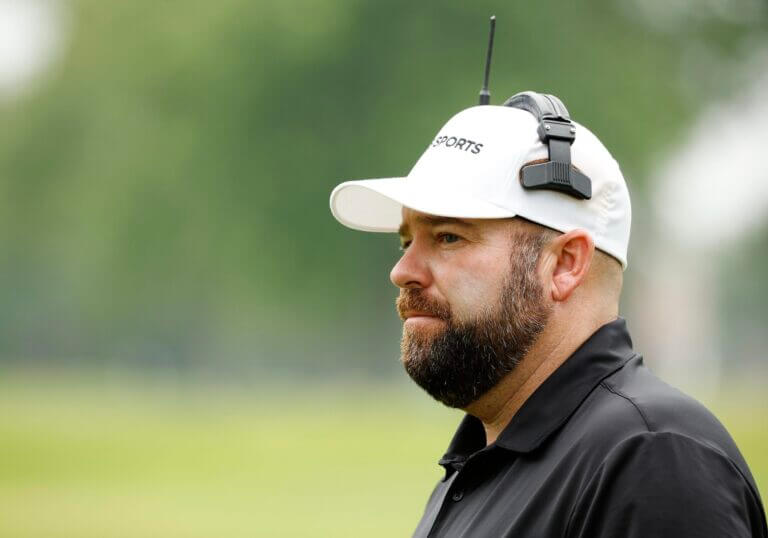
Top Photo Caption: Colt Knost commentates during a CBS telecast. (GETTY IMAGES)









Glenn H
2 weeks ago
Why not just say they can enter and play but are not eligible to win.