


[adthrive-in-post-video-player video-id=”4NdRENAv” upload-date=”2025-10-14T13:48:43+00:00″ name=”Club Gapping” description=”” player-type=”default” override-embed=”default”]
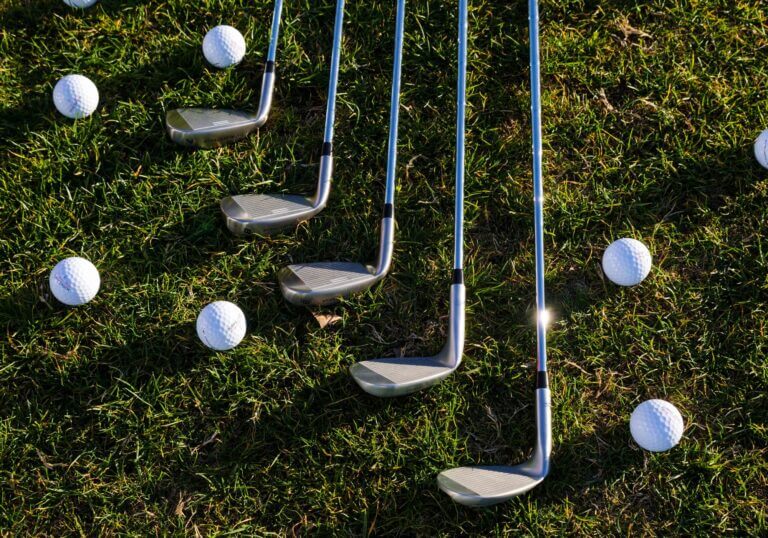
Titleist is spearheading a major change in how golfers should gap their irons. For decades, the standard fitting practice has been aiming for a 10-yard distance gap between each iron in the bag. Now, the new philosophy suggests a better metric is a consistent 5 mph ball speed difference between clubs.
The theory is sound, but its adoption presents a significant hurdle.
The Accessibility Problem
The biggest challenge facing this 5 mph gapping theory is accessibility.
On a traditional driving range, a golfer can easily estimate a 10-yard difference, judging by where the ball lands. However, measuring an exact 5 mph ball speed difference is impossible without precise technology. This fitting method requires a launch monitor, immediately excluding the vast majority of amateur golfers who practice without one. The most valuable information is therefore only accessible to those who can afford dedicated fitting sessions or personal launch technology.
Why Data-Driven Gapping is Superior
Despite the accessibility barrier, the consensus is that the data-driven approach is objectively better:
- Eliminates Distance Clusters: For golfers with slower swing speeds, it’s common for their 4-, 5-, and 6-irons to travel virtually the same distance. Focusing on a 5 mph ball speed gap forces a club change (like integrating a hybrid) that guarantees true separation between clubs.
- Professional Endorsement: Approximately 80% of professional golfers utilize some form of combo set (or split set) to optimize their gaps. This involves using more forgiving club models for long irons (3, 4, 5) to improve ball speed consistency.
- Consistency and Control: Following the 5 mph rule leads to undeniable benefits for all golfers, including better distance control, greater consistency, and more reliable landing angles (the descent angle of the ball), which translates directly to lower scores.
The question remains: If this information is truly smarter and better for the average golfer, how can the industry make data-driven gapping the new standard without requiring every player to own a launch monitor? This is the core issue Titleist and other manufacturers must solve to make the 5 mph gap the norm.








Pete
7 months ago
Not convinced a 5mph difference is better than 10 yards difference. If I’m on the range, I could hit two different irons 5 mph difference and they could go the same exact distance due to spin and launch conditions (the faster one could technically fly shorter)…so, in the end, it really does come down to 10 yards distance. Something that is actually relevant. I’ve watched and played golf for over 45 years. I don’t recall ever thinking, or watching a pro tournament on tv, where the caddy and/or players say, “I need a club that goes 120mph here…”. They want a club that goes x yards, period.