
Cut ‘Em Down: Why Tree Removal Is Good For Golf
News

Cut ‘Em Down: Why Tree Removal Is Good For Golf

Support our Mission. We independently test each product we recommend. When you buy through our links, we may earn a commission.

Cut ‘Em Down: Why Tree Removal Is Good For Golf

Talk about a niche within a niche within a niche.

Today, we are discussing the role of trees in golf course design.

Not exactly as controversial as my recent Jon Rahm column—there is still a glow outside my window from the torch-bearing mob—but it’s an important issue within golf nonetheless.

The subject has naturally come up this week at Aronimink, host of the PGA Championship.

During Aronimink’s 2018 restoration led by Gil Hanse, many trees were removed as the course got back to its Donald Ross roots. In the original 1928 Ross design, there were only about a dozen trees on the property. There are a lot more now but considerably fewer than what Aronimink had prior to a Ron Pritchard restoration in 2003 and the subsequent Hanse 2018 restoration.

Tree removal is a major trend in modern golf course restoration. Oakmont is a great example. They took out around 15,000 trees and completely changed the complexion of the course.

It’s not done just at championship courses like Aronimink and Oakmont, however. Many restorations and new designs take the stance that fewer trees—or, more accurately, selective tree placement—is a core element to the course.

Although the practice has come under fire this week, I still think tree removal is a very positive trend for golf as a whole.

Why trees are getting removed from courses

The basic premise of tree removal on golf courses is that it’s good for the health of the course on multiple levels.

  • The grass is healthier. Grass and trees battle for the same resources of sunlight and water. Trees block essential morning sunlight and prevent wind from drying morning dew. Removing trees improves air circulation and allows grass to get more sunlight and water.
  • It costs less to maintain the course. Trees tend to suck away water and nutrients which can impact other areas of the course. Removing them helps courses reduce water usage and chemical inputs. And tree maintenance costs can be reduced or removed from the budget.
  • Better course strategy/playability. Some courses planted trees a long time ago with the idea that the holes would become harder over time. But the trees took up a larger area than expected, obstructing shots and changing the original design of the hole. Tree removal can restore the intended challenge of the course architect.

Here is a video of Hanse breaking down Aronimink’s restoration and the (limited) role of trees at that course.

Obviously, there are a few caveats here.

It’s not necessarily about removing every tree. It’s selective tree removal that is done with intention.

And this isn’t to say that trees on courses are bad across the board. There are many phenomenal treelined courses. Courses without a ton of them can have strategically placed trees that enhance the layout.

However, if forced to pick a side between keeping trees or removing trees on courses, I definitely stand with the tree removal crowd.

The course health reasons are obvious. It’s easier to grow turf out in the open and it’s more economical not to have trees all over the place.

But the big key to me is the playability element.

Think about all the benefits the average golfer gets from playing a course that is more open. Fewer, if any, lost balls. No punching out from the woods. Faster pace of play because we aren’t wandering around in the woods all day. Potentially lower scores and happier golfers (though not always).

It also opens the door for more strategy. Just because you are in play all the time doesn’t mean you are guaranteed to be in a good position with a great angle to the flag. Wider fairways often offer golfers the option to aim for certain sides of a fairway or to take different clubs off the tee. That’s a positive.

How tree removal impacts the pros

When it comes to challenging the best players in the world, trees are an excellent defender.

Narrow, treelined fairways with thick rough would challenge pros far more than just adding yardage to the scorecard.

On top of that, the “width and angles” movement has far less of an impact on Tour pros who are mashing drives and hitting wedges into 500-yard par-4s. Angles don’t matter quite as much when you are coming into greens with that much loft.

Xander Schauffele touched on this tree debate during his pre-tournament presser at Aronimink.

“When I hear certain designers saying, ‘I’m going to restore this course to 1915,’ I’m like, ‘Well, it probably takes a good 100 years for a nice tree to grow, just to take it out, just to say it was where it was before.

“I think people keep talking about distance and how the game is played but just put a bunch of trees on a course? I think Hilton Head is a good example. Do I like Hilton Head? Not really. But it’s hard. It’s kind of crazy, if you look at the winning score at Hilton Head and the winning score at Doral, one’s called Hilton Head and one’s called the Blue Monster. I think the winning score at Miami is lower. It’s just funny when you kind of look at it in that sense.”

Let’s also hear from Rahm, one of my favorite voices in golf when the questions are not about his hostage situation with LIV.

“I’ve been making this joke for the last few years where I see a lot of golf courses coming in saying, ‘Look, 100 years ago, this golf course was like this, there was no trees’. I’m like, well, in the back of my mind, they planted those trees with the future vision of having those trees in play, and now you’re taking them all out.

“While I see both points, I don’t know which one is more valid than the next. I do believe a lot of it has to do with course conditions … I think the course setup that was expected in the ’30s, ’40s and ’50s, compared to what we have right now with how tight the grass is and how meticulous everything is, probably has something to do with it as well. I think golf has evolved and for the overall health of the course, they might need to take those trees out.”

These are really interesting comments from both players. I particularly appreciate what Rahm said as he weighed both sides.

My response to Schauffele is that I don’t think golf should be centered around the professional game in terms of changing every variable just to challenge pros. The PGA Championship will come and go but the Aronimink members are playing that course for decades to come.

If courses have to choose between challenging pros or providing a great experience for recreational players, it’s obvious they have to choose the recreational experience first.

Are those two things mutually exclusive? Not always. Shinnecock has one tree on the whole course and the winner will be lucky to finish in red numbers because of the course’s firmness and design.

I’m a huge believer that pros can be challenged in far more interesting ways (course design and setup) than having to navigate a minefield of trees. It’s not particularly exciting to watch that unless it’s a one-off situation like Harbour Town.

And, ultimately, we can’t be catering everything to one week a year when pros are playing a course. There has to be a healthy middle ground.

The bottom line

Selective tree removal is a positive for golf.

It makes the game more playable for average golfers and more efficient for the courses themselves on several levels.

Having a forest of trees would raise everyone’s scores, including the pros. But it wouldn’t really be fun for golfers to play and it wouldn’t be super interesting to watch the pros struggle in that way.

What do you think? Is the tree removal trend beneficial or harmful for the game? How do you challenge the pros?

Let me know below in the comments.

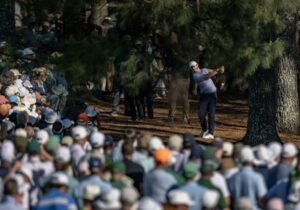
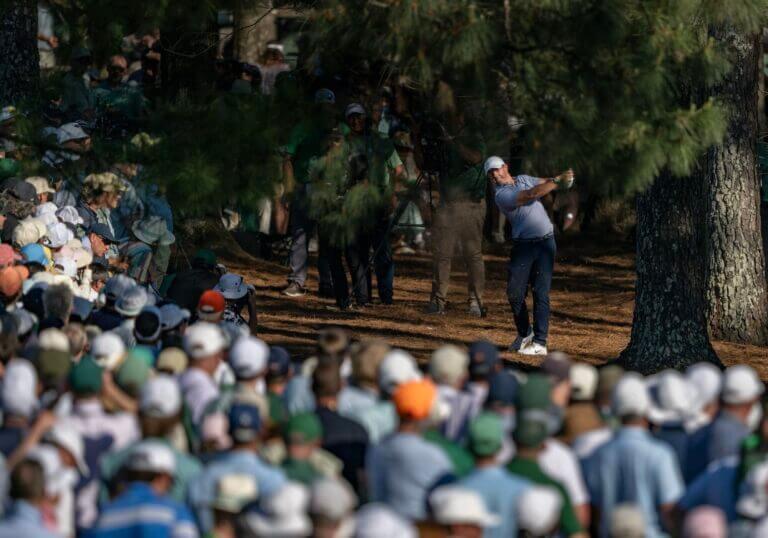
Top Photo Caption: Rory McIlroy hits a shot out of the trees. (GETTY IMAGES/Chris Condon)

For You

For You

Best Super Game-improvement irons of 2026 Best Super Game-improvement irons of 2026
Buyer's Guides
Jun 5, 2026
Best Super Game-Improvement Irons of 2026
Buyer's Guide
Jun 5, 2026
I Tested 5 Complete Golf Sets From $199 To $1,599. Here’s Where to Spend Your Money
News
Jun 5, 2026
Scratch by 50: How I Started Practicing Better
Sean Fairholm

Sean Fairholm

Sean Fairholm

Sean is a longtime golf journalist and underachieving 10 handicap who enjoys the game in all forms. If he didn't have an official career writing about golf, Sean would spend most of his free time writing about it anyway. When he isn't playing golf, you can find Sean watching his beloved Florida Panthers hockey team, traveling to a national park or listening to music on his record player. He lives in Nashville with his wife, Anja, and dog, Hogan.

Sean Fairholm

Sean Fairholm

Sean Fairholm

Sean Fairholm

Sean Fairholm

Sean Fairholm

 
Sean Fairholm

Sean Fairholm

Sean Fairholm


    This site is protected by reCAPTCHA and the Google Privacy Policy and Terms of Service apply.

      Daddy

      3 weeks ago

      Trees are my favourite obstacle in the game. They are strategic, they force shot shapes and getting out of there is fun. They shouldn’t be everywhere of course and turf health considerations are valid. That being said I feel like the average golfer would want a hole without obstacles just to maximize score. Links courses have no or few trees but the winds and dunes protect the greens, parkland courses need trees and lakes (which are usually a flat stroke penalty once you fall in them, no skill required).

      Reply

      John DeArcangelis

      3 weeks ago

      I feel their are too many bare and boring from a TV viewpoint golf courses on tour. I like from the ground views you get more often like at the masters which has plenty of trees. I would also like to see more low ground level views on the greens so you can see the breaks. Bare is boring both in play and viewing.

      Reply

      Tim29201

      3 weeks ago

      I’ll give Sean this: his articles never fail to produce elite‑tier comment sections

      Reply

      Robert

      3 weeks ago

      I like the trees as much as anyone, but you have to follow the money. Golf is a business, and a huge part of that business is TV. You can’t show off a world-class course or a spectacular shot if there’s a forest in the way. Removing trees is just practical; it gives the networks the clear views they need to keep people watching.

      Reply

      Sam

      3 weeks ago

      I can assure that the club members that are approving tree removal programs are not doing it to make TV coverage easier. They are doing it to improve course conditions and make the course more enjoyable to play

      Reply

      John S

      4 weeks ago

      One of the issues we had with our course in the UK was drainage. In the 1960s our course was described as one of the driest winter courses in the area. Then someone decided to make our fairways tree lined and our fairways become waterlogged in the winter. Tree roots get into drains and block them. Also they slow the flow of water across the course in winters. Our soil is clay based and so removing trees has helped stop as much winter mud.

      Reply

      Rick

      4 weeks ago

      Why is everyone listening to the USGA? They have been on a mission to take down trees and superintendents have followed blindly.

      Trees are good… period. They add shade, character, homes for nature, etc. Golf isn’t just about challenges or costs, sometimes it’s about getting one with the outdoors.

      I agree trees need to be strategic. But just taking down trees just because you can is losing years of investment in making golf the challenge that it is.

      Reply

      Sam

      3 weeks ago

      Why do you think the USGA has “been on a mission to take down trees?” What do they have to gain? It’s not like they sell the chainsaws or something. They have produced hundreds of pages of research that inform their decisions and this article mentions some of the reasons that trees are not solely “good.”
      Also, there are tons of landscapes and ecosystems that aren’t heavily wooded. All of the tree removal projects I have heard about are taking out trees that were planted by the club 40-80 years ago. They are literally bringing the “outdoors” closer to their natural state.

      Reply

      EZE

      4 weeks ago

      So silly. Courses in the 1910s-1930s were built on FARMLAND because nobody was going to clear a forest to build a golf course. They didn’t have the machinery we have today. It would raise the cost of a course by 10x. And during the depression, nobody was spending $$ on tree removal.

      Reply

      Paul Rankin

      4 weeks ago

      Often, courses are built on former pastureland – it’s available and fairly cheap. Cutting a new course through a forest is expensive. Trees, like grass, propagate. Over time more trees appear. Duh. That said, the idea that restoring a course to its original intent has little real meaning. Designers restoring a course generally don’t torch the place – they leave in trees for alignment, beauty and as penalties for mis-hit shots in the modern era.

      Reply

      Will

      4 weeks ago

      “We cut down all the trees and now it’s too easy. We have to roll back the golf ball!!!1!” Absolute idiocy.

      Reply

      Sam

      4 weeks ago

      did you even read the article? this is a terrible strawman argument.

      As this article notes, courses are taking out trees for the health of the grass, ease/cost of maintenance, and enjoyment of regular golfers. The downside of doing so is that the course becomes devoid of strategy for the .01% of players and boring to watch. The goal isn’t higher scores. If it was, then you could have the entire course be rough with trees directly in front of every green. However, that would be absolutely miserable for regular golfers and not enjoyable to watch. The goal is to ensure that a variety of skills are required to excel (distance, accuracy, shot shaping, spin control, pitching, chipping, putting, course management, etc). Don’t get tricked by the OEMs into thinking that trees are the issue and distance isn’t.

      Reply

      Will

      4 weeks ago

      Tricked by the OEMs? You’re being tricked by idiots at the USGA if you think a ball rollback is necessary.

      Sam

      4 weeks ago

      If we need tree lined fairways to test professional golfers then something needs to change. It would really suck if The Old Course had to plant hundreds of trees so they could continue to host Opens. I hope we can agree on that.

      Also, why do you think the non-profit with the sole mission of supporting the game of golf for over 120 years are the bigger idiots than the publicly traded equipment manufacturer? What does the USGA have to gain by rolling back the ball?

      Honest question – What is the downside of a rollback in your opinion? And what are the downsides if there is a rollback only for elite ams and tour pros?

      Mark

      4 weeks ago

      We just had a renovation at my Country Club, Robert Trent Jones Design originally, minimal trees. In the 80’s the members decided to plant a bunch of trees around greens and to create dog legs. We just removed about 300 of them. The greens wouldnt grow as the tree roots had grown under the greens and sucked up all the water. The modern equipment meant you just had to try and hit over the trees on the dog legs. Great for the big hitters. Made it almost impossible for those of us who hit it a mere 260. We still have plenty of trees, but the new design is a million times better as it has gotten back to Robert Trent Jones’s original vision.

      Reply

      John DeArc

      3 weeks ago

      Too much coke in the 80’s led to alot of dumb ideas lol.

      Reply

      Mike

      4 weeks ago

      Trees are a pain in the ass & stunt grass growing. Look at the course Tiger & Gil Hanse are renovating in Philadelphia. I played there for years in the early 2000’s; drove past there recently to see the renovations (scheduled to open in Fall 2027) & was amazed at how many trees they have taken out.

      Reply

    Leave A Reply

    required
    required
    required (your email address will not be published)

    This site uses Akismet to reduce spam. Learn how your comment data is processed.

    Best Super Game-improvement irons of 2026 Best Super Game-improvement irons of 2026
    Buyer's Guides
    Jun 5, 2026
    Best Super Game-Improvement Irons of 2026
    Buyer's Guide
    Jun 5, 2026
    I Tested 5 Complete Golf Sets From $199 To $1,599. Here’s Where to Spend Your Money
    News
    Jun 5, 2026
    Scratch by 50: How I Started Practicing Better