


Sometimes, maybe often, golf doesn’t have much going for it. It’s frustrating, expensive, time-consuming, and as complicated as you want to make it. On your best day, it’s the greatest game ever invented. On your worst day, you wonder if your time wouldn’t have been better spent slamming your head in a car door.
Most days, I suppose it beats mowing the lawn.
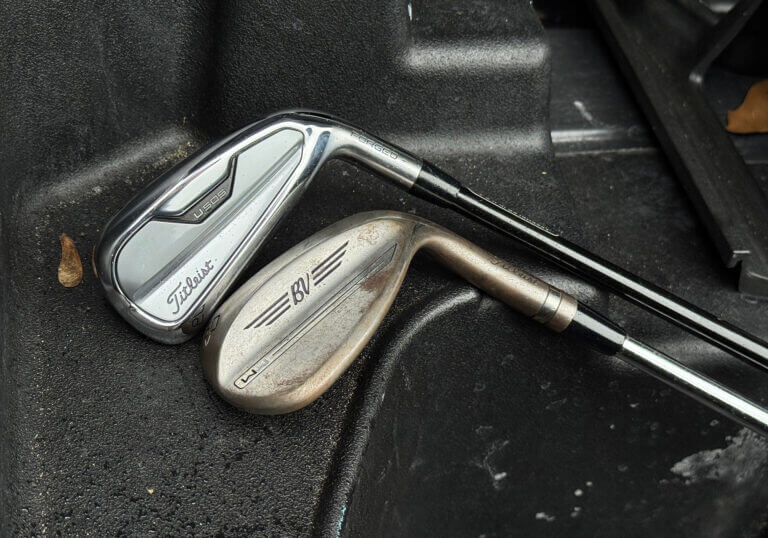
Fair warning: What I’m about to share won’t help you simplify the game. In fact, I’m about to suggest you spend a bit more money for the privilege of adding complexity to your equipment strategy. I’ve already given you a reason to overthink your golf ball selection and now I’m going to introduce you to one of my favorite equipment philosophies. I call it Two in the Trunk.
No, this isn’t a euphemism for the kind of thing some of you are googling at 2 a.m. I’m suggesting that, quite literally, you should keep two extra clubs in the trunk of your car.
(Though, truth be told, the trunk isn’t the ideal place to store clubs. Maybe keep those extra two in the garage for when you need them, although “Two in the Garage” doesn’t have nearly the same ring to it.)
What is Two in the Trunk?

The concept is built on the idea that there’s only so much you can control on the golf course. You can work on your swing, manage how you react to bad shots but other key factors (like when the cart girl makes her way around or environmental conditions) are totally outside the scope of what you can influence. I can’t help you with the cart girl but I can give you some practical advice for when you might want to consider swapping clubs in and out of your bag.
Tour-influenced
Tour players have been adapting their bags—or parts of them—to specific courses for decades. Take Augusta, where you’ll see high-loft, low-bounce wedges designed for the tight lies around those undulating, elevated greens. But let the course get soft and suddenly they’re reaching for higher-bounce options that can handle softer turf without digging.
We see the prevalence of 7-woods at the U.S. Open where longer rough makes higher-lofted fairway woods more appealing. And you can bank on plenty of chatter about golfers making the switch to utility irons at the Open Championship where windy links courses demand players flight the ball low and let it roll.
Here’s the thing. If it works for tour players, why shouldn’t it work for you? Having a couple of strategic options in the trunk means you can adapt to whatever the course throws at you.
The lob wedge swap

I believe golfers can benefit from diversifying their wedge setup. For a long time, we’ve heard about diggers and sweepers and choosing the right bounce based on how steeply or shallow you attack the ball. There’s something to that but the fact of the matter is the course doesn’t care how you swing. You’re going to encounter conditions and lies where low bounce is a recipe for disaster. Likewise, there are situations where a high-bounce wedge is a liability.
I can tell you from experience that 14 degrees of bounce at Bandon Dunes is not ideal. Those firm, tight lies can send your high-bounce wedge skidding into the ball.
Bladed. Center mass.
I’ve come to believe most golfers should have a mix of wedge bounces. Do what works for you but I pair a high-bounce sand wedge with a low-bounce lob wedge. It works most days but my preferred combination isn’t ideal for every situation which is why I also keep a mid- to high-bounce option in the trunk.
Most often, the switch is from my 58° T Grind (4 degrees of bounce) to a 58° V-grind with similar loft but 10 degrees of bounce. Really fluffy sand or extreme moisture might call for going even higher on the bounce scale. The beauty is having options without carrying extra wedges all the time.
Think of an extra wedge as your golf bag’s spare tire.
The transition zone

While it’s certainly possible to replace nearly any fairway wood with a hybrid or utility iron, I tend to focus on what I call the “transition zone”—wherever it happens to be that you transition from a long club that’s not part of your iron set to the first club that is. For me, that’s the transition from my 7-wood to my 5-iron.
In recent years, I’ve become a huge proponent of higher-lofted fairway woods. While I’m not ready to add a 9-wood to the mix just yet, a 7-wood is a great option for golfers looking for something easy to hit with high flight and more forgiveness than you’ll get from a long iron.
That said, there are times when it makes sense to pull the 7-wood. For most golfers, wind is the most common reason to make the switch. A utility iron is going to fly lower and typically roll a bit more (and is less likely to drop and stop immediately in soft conditions as well). A hybrid is an option here, too, and while many have moved away from them in recent years—and many more simply hate them—they’re still worth considering.
The key is having that utility iron or hybrid available when conditions call for it. When the wind is howling at 20 mph and your 7-wood is ballooning and nearly moving backwards, that’s when you’ll appreciate having a lower-flying option ready to go.
A third option worth considering

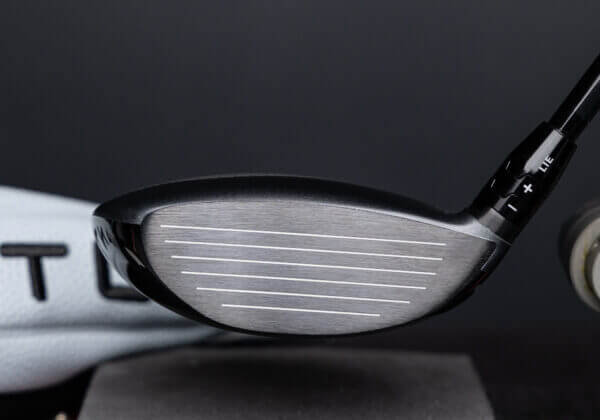
While I’m not quite ready to advocate for three in the trunk (we only have so much room), allow me to suggest that some of you might want to consider adding a mini driver to the mix of available options. Whether you swap it for your driver (at least one of the longer hitters I know has ditched his driver entirely) or for your 3-wood, the mini can be an intriguing option, particularly on shorter courses or courses that place an above-average premium on accuracy.
Mini drivers offer more forgiveness than a traditional fairway wood while providing better control than a full-sized driver. They’re easier to hit off the deck than most drivers and the shorter shaft length can help with accuracy when you need to thread the needle.
I’ve found them particularly useful on tree-lined courses where the penalty for being in the wrong spot is severe. You’ll give up some distance relative to your driver, but if it keeps you in play and in generally better position more often, that’s a trade worth making.
The philosophy behind the strategy

I’m not pretending this approach will turn you into Scottie Scheffler. Hell, it probably won’t even turn you into the best player in your weekly league. But it might prevent you from throwing a complete tantrum when the conditions aren’t perfect. And by “you”, I mean “me”, but also maybe you.
The beauty of the Two in the Trunk approach isn’t just about having options (or spending more money)—it’s about thinking strategically about your equipment. Instead of carrying the same 14 clubs every round regardless of conditions, you’re acknowledging that golf courses and weather conditions vary dramatically from one day to the next.
Think about it this way: You wouldn’t wear the same outfit to a beach resort and a ski lodge. Why would you bring the exact same clubs to a links course in Scotland and a track in Florida?
Relative to the totality of what you likely spend on golf, the investment is minimal. We’re talking about one or two additional clubs but the potential impact on your scores can be significant. More importantly, it gives you confidence knowing you have the right tool for the job, whatever Mother Nature (and the course architect) throw at you.

Making It work
The key to making Two in the Trunk work is being honest about your game and the courses you play. If you never encounter truly soft conditions, maybe the wedge swap isn’t worth it. If you only play one course and it never gets particularly windy, the utility iron might stay in storage.
But if you travel for golf, play different courses regularly or live somewhere with variable weather conditions, having those options available can be a game-changer. It’s about being prepared for the conditions you’ll face rather than trying to adapt your standard setup to any situation. The pros don’t do that and you probably shouldn’t either.
The Two in the Trunk approach can’t solve all of your problems. It won’t fix your slice or magically make you a better putter. What it will do is give you the right club for the right situation and, sometimes, that’s enough to turn a frustrating round into a manageable one.
In a game that offers precious few guarantees, having the right equipment for the conditions is one small edge you can actually control. In golf, we’ll take every edge we can get.







Michael Musselman
1 year ago
Solid article. I’m a 1 club trunk guy with a 2 iron to swap out with 7 wood for when really windy days or trips to Bandon, Cabot bringing 15 in the travel bag. I like the idea on the wedges too for soft but I still keep my 60T in the bag on wet days because i like having that wedge for sand when it’s either wet or firm for more precision than being stuck with just high bounce wedges. I do agree though more people could use those tweaks on setups to understand conditions and play the lie more than distance when making my decision on club usage.