


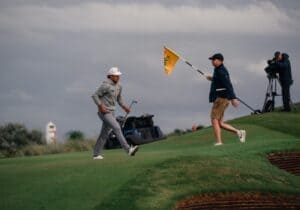
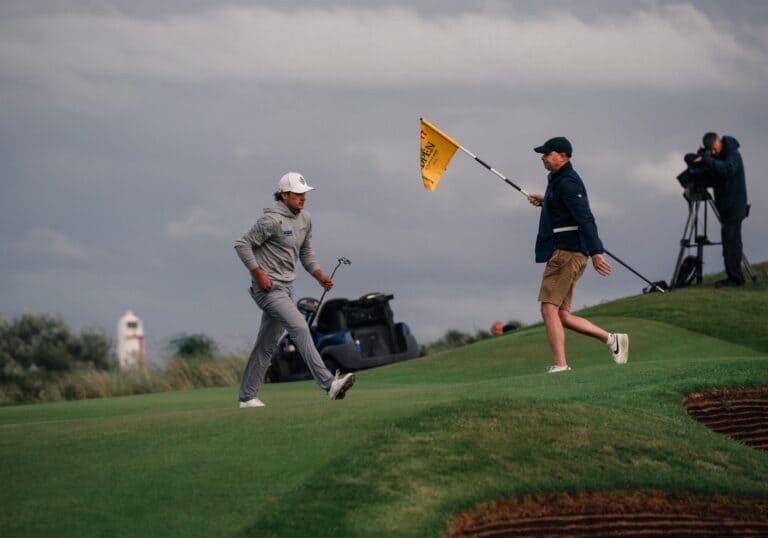
A Korn Ferry Tour winner spent his summer modifying his golf shoes with memory foam after a foot injury. His story is a reminder that most golfers underrate their footwear.
Years ago, I worked for a golf startup and my entire job was to track a handful of up-and-coming players. One of them was James Nicholas. I logged every shot he hit in competition which means I got to know his game extremely well. Eventually I got to know Nicholas himself, and even his family, when he played a Korn Ferry Tour event at my club.
He’s a genuinely nice guy and my kids have a pile of signed James Nicholas gear to prove it.
This year was a thrill to watch. In February, James won the Astara Golf Championship in Bogotá, Colombia, his first career Korn Ferry Tour title, and it felt like the next big step toward locking up his PGA Tour card. In June, he made the cut at the U.S. Open at Shinnecock Hills in his home state of New York after qualifying on Golf’s Longest Day for the second straight year. Then he qualified for the Open Championship at Royal Birkdale, earning medalist honors in a 36-hole qualifier.
Everything was lining up. Then came the wall.
One jump, one bad landing
During Open week, James climbed a wall to sneak in an early practice round and jumped down on the other side. The landing went wrong and the injury turned out to be far bigger than anyone expected.
He tried to play through it. He shot 75 in the opening round but by the next morning he couldn’t tee it up and withdrew. For a player who had worked years to reach his first Open, it was a brutal way for the week to end.
Anyone who plays knows how much the swing depends on the ground. Now imagine chasing a Tour card when you can’t push off it. Even a little pressure on the heel hurt too much to play through.
The shoe question I couldn’t shake
We spend a lot of time at MyGolfSpy talking about how much equipment influences performance and when James told me about the injury, one question jumped out immediately: What about his shoes?
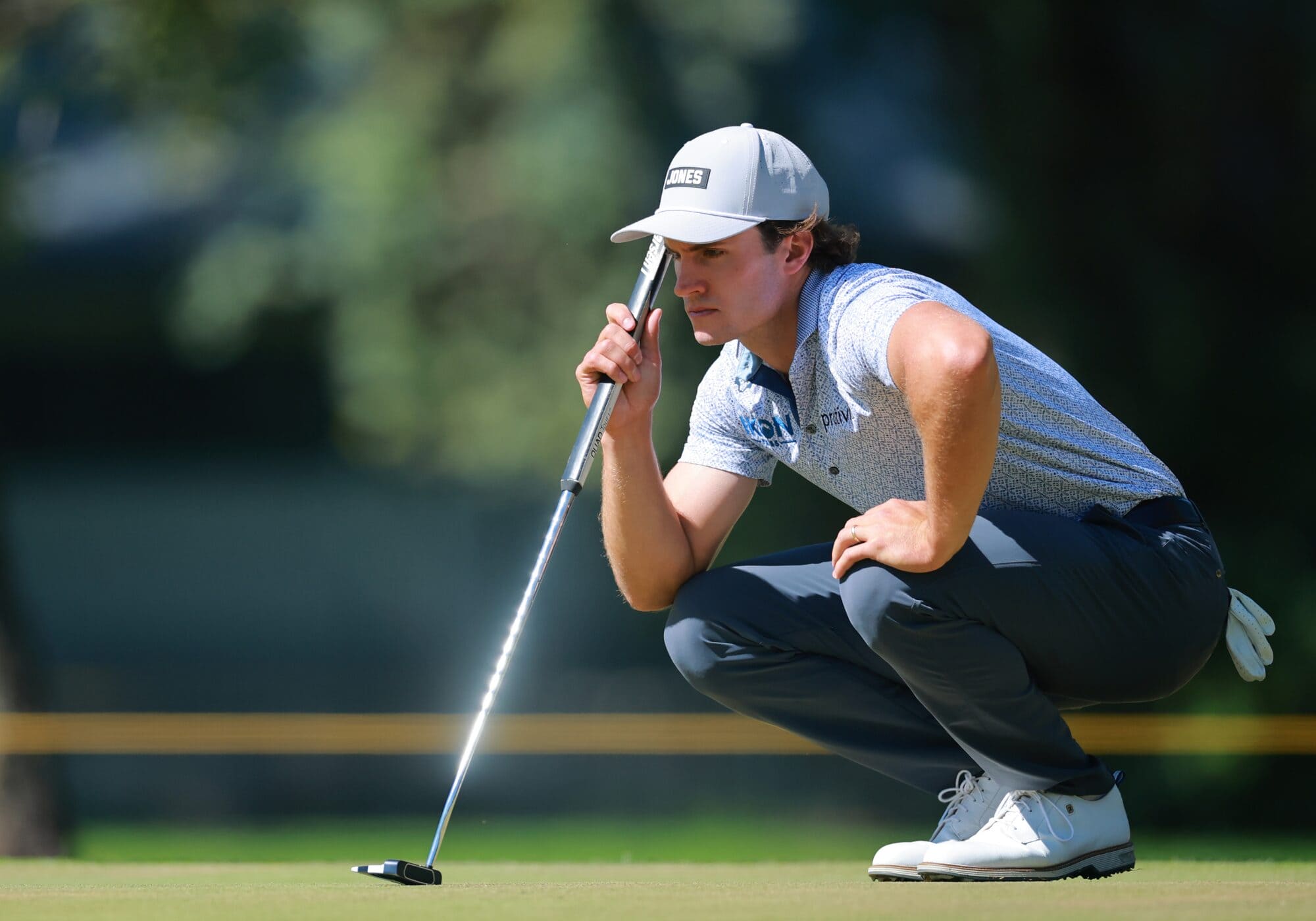
James is a sharp dresser and I knew his go-to was the FootJoy Premiere Series. I asked him if he was able to keep the Premiere Series shoes in play after his injury. The answer was no; for a stretch this summer, he couldn’t wear them at all.
The shoes that got him through
I caught James as he was heading to a flight and he walked me through what he did. He first moved into the FootJoy HyperFlex Carbon LE, then to the FootJoy Pro/SL. FootJoy helped him along the way and James did some rigging of his own.
The goal was to shift pressure into the arch of his foot and away from the heel. To get there, James cut pieces of a material similar to the memory foam in a Tempur-Pedic mattress and added them to his shoes, adjusting as he went.
It’s not a polished solution but it worked. He was back competing in August and kept grinding through the final stretch of the season.
A note on the Pro/SL
The Pro/SL, one of the shoes that helped carry James through the summer, was named MyGolfSpy’s Best Spikeless Golf Shoe of 2026 after our testing. It’s a great shoe that even James said didn’t make him feel like he needed to compromise.
What most amateurs miss
Most of us don’t have a team of trainers and a footwear rep on call. Most of us just walk 18 holes in whatever’s in the trunk and write off sore feet as part of the game.
The fixes are often simpler than you’d think.
- Check how worn your shoes are. Cushioning and support break down long before the uppers look bad. If your feet ache more than they used to, the shoes may be the culprit.
- Look at the insole. A different insole or a bit of arch support can change where pressure lands on your foot which is exactly what James was chasing.
- Get the fit right. A shoe that’s too tight, too loose or the wrong width will make a long round feel longer. Feet also swell over 18 holes so try shoes on later in the day.
- Adjust when you’re not at 100 percent. If a small change gets you around the course comfortably, make it. Nobody is handing out points for suffering.
- Don’t ignore pain that doesn’t go away. Shoe changes are a good first step for everyday soreness but persistent heel or foot pain is worth a conversation with a doctor or podiatrist.
So why go back?
James is back in the Premieres and I asked him why he didn’t just stick with the shoes that got him through the season.
It wasn’t performance. James said the traction, support and stability didn’t fall off at all when he moved to the other FootJoy models. The Premiere has all of that, too, and he never felt like he was giving anything up on the course.
The real reason is style. He simply likes the look of the Premiere better.
He also mentioned that he likes how low the Premiere sits to the ground. He admitted it would be interesting to test whether he plays better in that lower shoe but when I pressed him, he came back to the look.
I love that answer. It’s honest and it’s a reminder that shoes are personal. They have to fit, they have to feel right and, yes, you should like how they look. Confidence is part of performance.
The path is still there
James finished 30th on the Korn Ferry Tour points list, outside the top 20 who earned PGA Tour cards. That’s not where he wanted to land but the door isn’t closed. Finishing inside the top 60 sends him straight to the final stage of PGA Tour Q-School in December where the top five finishers earn Tour cards. He also keeps full Korn Ferry status for next season.
After a year that included a win, two U.S. Open cuts and a summer spent rebuilding his shoes just to keep playing, I wouldn’t bet against him.
The takeaway for the rest of us is simpler. Your feet carry you through every round and the shoes under them deserve a little more attention than most of us give them.




Leave A Reply