


Golf has its own language. Some terms are easy enough to figure out, like birdie or bogey. Others, like breakfast ball, short-sided, sandbagger or dormie, can make you feel like you missed an entire class on golf vocabulary.
This complete golf terms glossary is meant to help with that. Whether you are new to the game, trying to understand what your playing partners are saying or just want to know the difference between a fade, slice, draw and hook, this list covers the golf words, slang, scoring terms and rules phrases every golfer should know.
Use the A-Z glossary below to look up a term quickly, or scroll through and see how many you already know.
Table of contents
- A: Ace to Approach Shot
- B: Back Nine to Bunker
- C: Caddie to Cut
- D: Divot to Duff
- E: Eagle to Executive Course
- F: Fade to Front Nine
- G: Gimme to Ground Under Repair
- H: Hacker to Hybrid
- I: Impact to Interlocking Grip
- K: Kick-In to Knee-Knocker
- L: Lag Putt to Lost Ball
- M: Marker to Muni
- N: Nassau to Nip It
- O: OB to Overlap Grip
- P: Par to Push
- R: Rangefinder to Rough
- S: Sand Save to Swing Plane
- T: Tap-In to Triple Bogey
- U: Unplayable to Up-and-Down
- V: Vardon Grip
- W: Waggle to Worm Burner
- Y: Yank to Yips
A: Ace to Approach Shot
Ace (Hole-in-One): Holing out a tee shot in a single stroke, usually on a par-3.
Address: Your starting position before you take the club back.
Aimpoint: A green-reading method where golfers use their feet to feel slope and assign aim points for putts.
Airmail: Hitting a shot well over the green or well past your intended target.
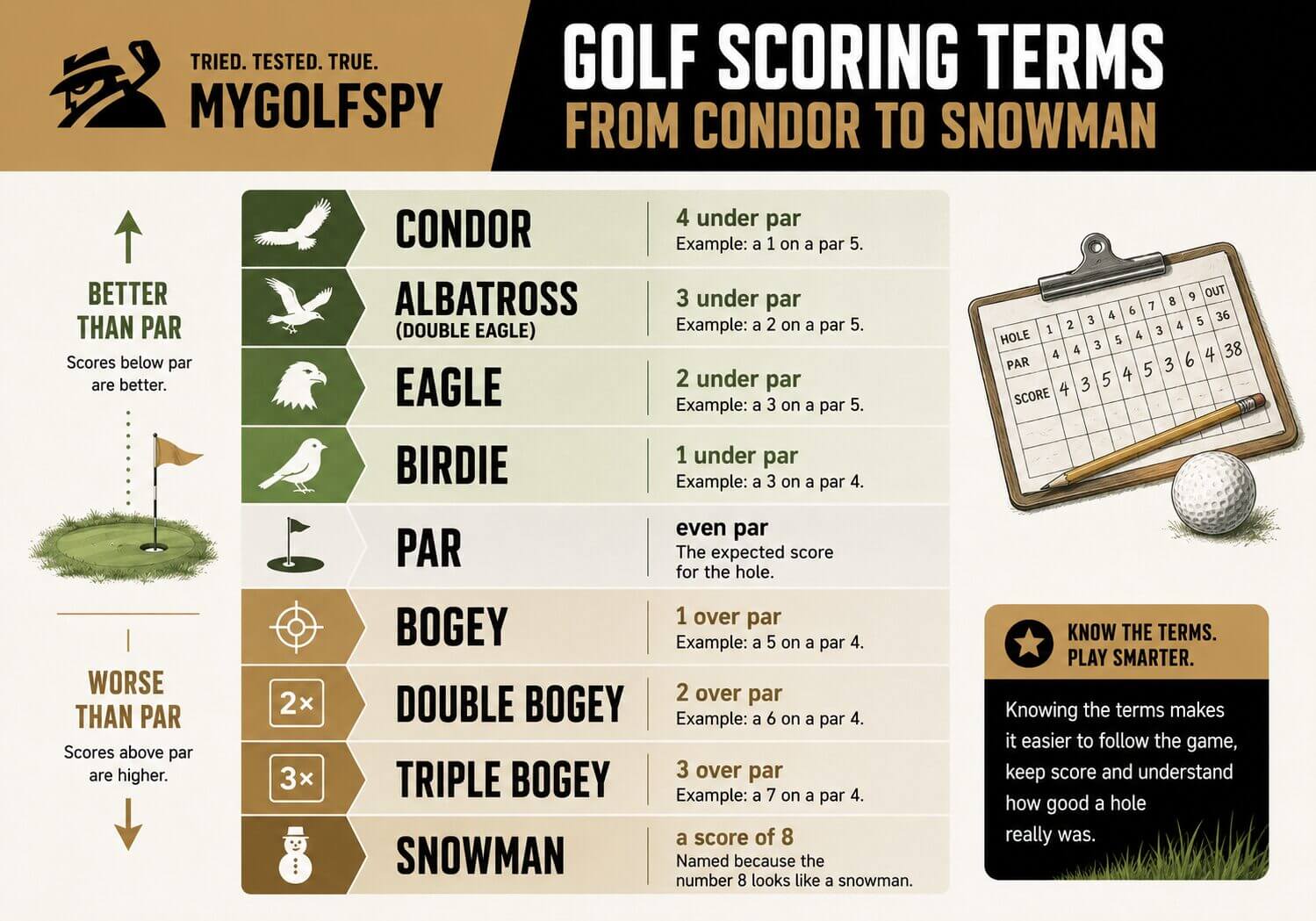
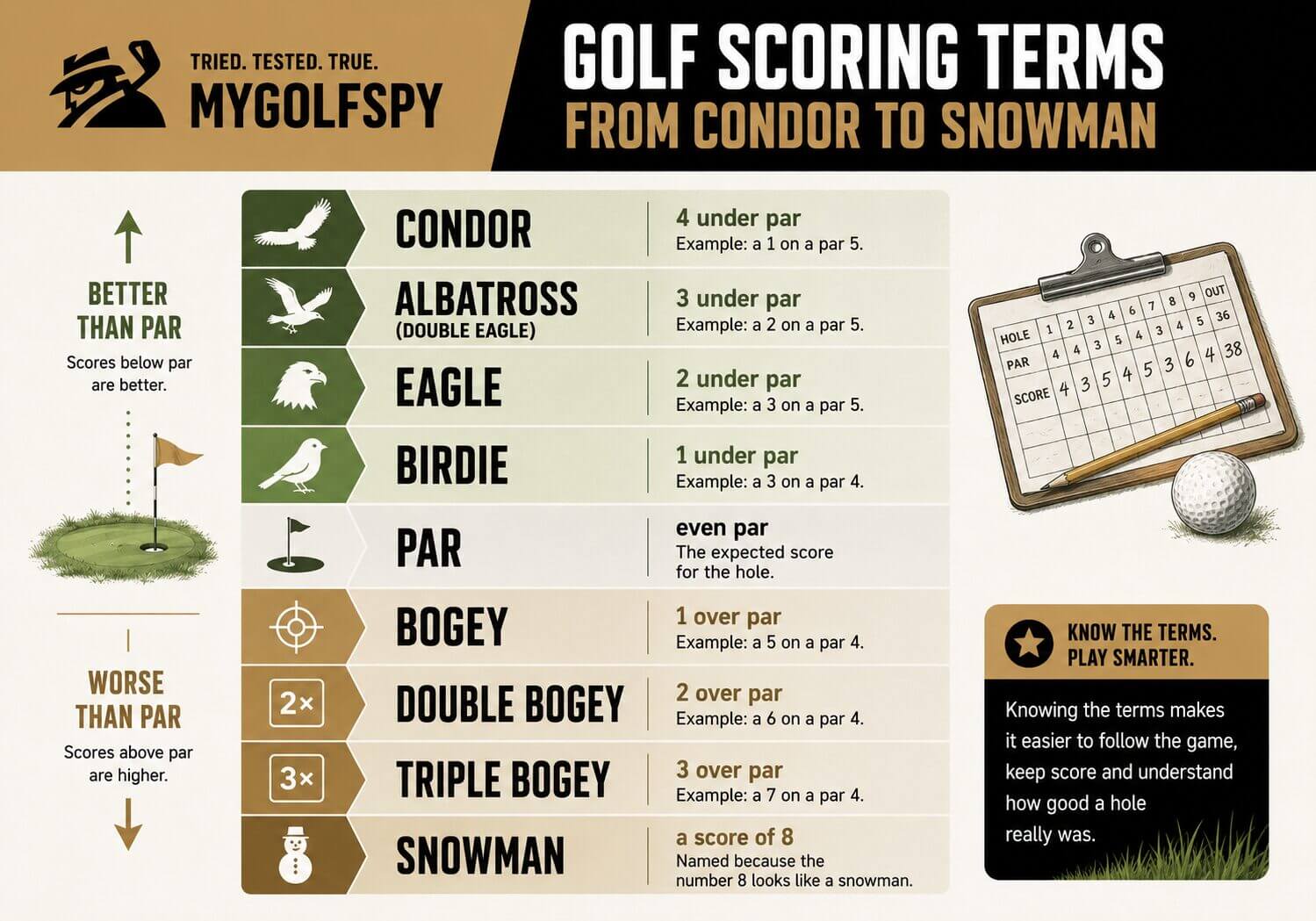
Albatross (Double Eagle): A score of three strokes under par on a hole, such as 2 on a par-5. Extremely rare.
Alignment: How your feet, hips, shoulders and clubface are aimed relative to the target.
All Square: A match-play term meaning the match is tied.
Angle of Attack: The upward or downward movement of the clubhead as it approaches the ball at impact. A positive angle of attack means the club is moving up. A negative angle of attack means it is moving down.
Apron: The short grass around the green, similar to the fringe or collar.
Approach Shot: Your attempt to hit the green, usually from the fairway, rough or tee box on a par-3.
B: Back Nine to Bunker
Back Nine: The second nine holes of an 18-hole round.
Backspin: The spin that helps a golf ball stop quickly or spin backward after it lands.
Ball Marker: A small coin or object used to mark the position of your ball on the green.
Baseball Grip: A grip where all 10 fingers are on the club. Also called a 10-finger grip.
Birdie: A score of one stroke under par on a hole. Example: scoring 3 on a par-4.
Bite: What golfers say when they want the ball to stop quickly after it lands.
Bladed Shot: A shot struck with the leading edge or lower part of the clubface, often sending the ball low and too far.
Bogey: A score of one stroke over par on a hole.
Breakfast Ball: A casual mulligan, usually taken after a bad first tee shot of the day.
Bump-and-Run: A low chip that rolls most of the way to the hole.
Bunker: A sand-filled hazard found near greens or along fairways. Some golfers also call it a sand trap.
C: Caddie to Cut
Caddie: A person hired to carry your golf clubs and provide advice throughout a round. A forecaddie walks ahead to spot shots and assist the group but does not carry clubs. They can help locate balls, but remember, a provisional ball must be declared before you go forward and doesn’t depend on a forecaddie.
Carry: The distance a ball flies through the air before landing. Carry is key when clearing hazards like bunkers or water.
Cart Path Only: A course condition where golf carts must stay on the cart path instead of driving on the fairway or rough.
Chip: A short shot played from near the green that spends more time rolling than flying.
Choke Down: Gripping lower on the club to make it play shorter and give you more control.
Chunk (Fat): A mis-hit where the club strikes the ground before the ball, causing a large divot and a short shot.
Collar: The short grass around the edge of the green, similar to the apron or fringe.
Condor: A score of four strokes under par on a hole, such as a hole-in-one on a par-5. Nearly impossible.
Course Handicap: The number of strokes a golfer receives from a specific set of tees based on their Handicap Index, Course Rating, Slope Rating and par.
Course Rating: A number that shows how difficult a course should play for a scratch golfer under normal conditions.
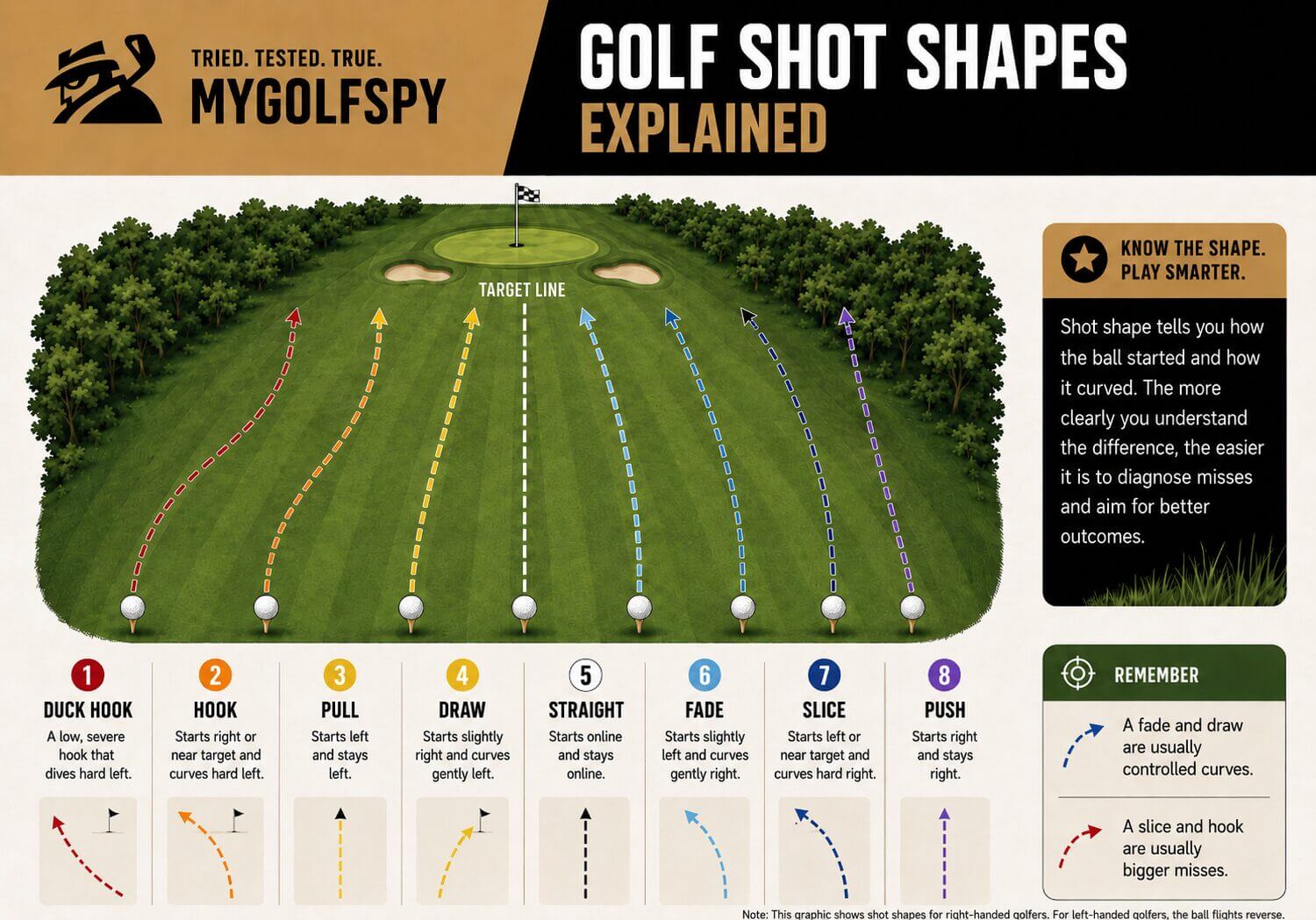
Cut (Shot): A gentle left-to-right curve for a right-handed player, softer than a full slice.
D: Divot to Duff
Divot: The piece of turf displaced when a club strikes the ground during a swing. A well-struck iron shot usually creates a forward divot, while fat shots make deep ones before the ball.
Dogleg: A hole that bends left or right between the tee and green. Sharp doglegs can block the view of the green or punish straight drives.
Dormie: A match-play term used when a player or team is up by the same number of holes remaining. For example, 3 up with three holes to play is dormie.
Double Bogey: A score of two strokes over par on a hole.
Draw: A controlled shot that curves slightly from right to left for a right-handed golfer.
Driver: The longest club in the bag, usually used off the tee on par-4s and par-5s.
Duck Hook: A severe hook that curves sharply right to left for a right-handed golfer and usually dives low.
Duff: A badly mis-hit shot, often one hit fat or weakly.
E: Eagle to Executive Course
Eagle: A score of two strokes under par on a hole. Example: scoring 3 on a par-5.
Elevated Green: A green that sits higher than the fairway or surrounding area.
Even Par: A score that matches par for a hole or round.
Executive Course: A shorter course with many par-3s, often totaling par 60–65 instead of the usual 70–72.
F: Fade to Front Nine
Fade: A controlled shot that curves slightly from left to right for a right-handed golfer.
Fairway: The short-mown area between the tee box and green where you ideally want your tee shot to land. Consistently hitting fairways often lowers scores.
Fat Shot: A shot where the club hits the ground before the ball, causing the ball to come up short.
Flatstick: Slang for a putter.
Flop Shot: A high, soft shot that lands gently on the green. Usually hit with a lob or sand wedge, it’s often associated with Phil Mickelson.
Flyer: A shot from the rough that goes farther than expected because grass reduces spin.
Foot Wedge: Slang for illegally kicking or moving your ball with your foot.
Fore: A warning shout when a ball might hit or come close to other players. Always yell “fore” if there’s even the slightest chance your shot might endanger someone else.
Four-Ball: A team format where each player plays their own ball and the team uses the best score on each hole.
Foursomes: A team format where two partners alternate shots with the same ball.
Fried Egg: A ball buried in sand so it looks like a fried egg, with only the top visible. These shots require extra touch to escape.
Fringe: The slightly higher-cut grass surrounding the green. Though not counted as a green in regulation, golfers often putt from the fringe.
Front Nine: The first nine holes of an 18-hole round.
G: Gimme to Ground Under Repair
Gimme Putt: A short putt that players may choose not to strike. In casual play, a gimme is simply agreed upon. Under the Rules of Golf, only in match play can an opponent officially concede a next stroke.
GIR (Green in Regulation): Reaching the green with a chance for birdie. On a par-4, this means hitting the green in two shots.
Grain: The direction grass grows on a green, especially Bermuda, which affects how putts break.
Green: The closely mown area containing the hole and flag. Hitting greens in regulation usually leads to better scores.
Green Fee: The price a golfer pays to play a round of golf. Rates vary by course, number of holes and time of day.
Gross Score: Your total score before handicap strokes are applied.
Grounding the Club: Letting the club touch the ground before hitting the shot. This matters most in certain rules situations.
Ground Under Repair (GUR): A marked area under maintenance. Players get free relief and must drop outside the marked zone.
H: Hacker to Hybrid
Hacker: Slang for a poor or inexperienced golfer.
Half Shot: A controlled shot hit with less than a full swing.
Handicap: A golfer’s Handicap Index under the World Handicap System (WHS) is a calculated measure of potential ability, not simply an average of strokes over par.
Hazard: An older or casual term golfers still use for trouble areas like water, bunkers or marked penalty areas. In the modern Rules of Golf, “penalty area” is the official term for many areas that used to be called water hazards.
Heel: The inside part of the clubface, closest to the shaft.
Hole Out: To finish a hole by getting the ball into the cup. It can also describe making a shot from off the green.
Honor: The right to hit first from the tee, usually earned by having the lowest score on the previous hole.
Hook: A shot that curves from right to left in the air for a right-handed golfer. A severe version is called a duck hook, while a gentler one is a draw or push-draw.
Hosel: The part of the clubhead where the shaft connects to the club.
Hosel Rocket: Slang for a shank, when the ball strikes the hosel and shoots sharply sideways.
Hybrid: A club designed to blend the forgiveness of a fairway wood with the loft and length of a long iron.
I: Impact to Interlocking Grip
Impact: The moment the clubface contacts the golf ball.
In the Leather: A casual way to measure whether a putt is close enough to be given. It usually refers to the length from the putter head to the bottom of the grip.
Interlocking Grip: A grip style where the pinky finger of the trail hand interlocks with the index finger of the lead hand.
K: Kick-In to Knee-Knocker
Kick-In: A very short putt that is close enough to be tapped in easily.
Knee-Knocker: A short putt that still feels stressful because it matters.
Knockdown: A shot intentionally kept low to control distance or play in the wind.
L: Lag Putt to Lost Ball
Lag Putt: A long putt played to finish close to the hole, not necessarily to go in.
Lay Up: Playing short of a hazard or the green to a safe yardage, often on par-5s.
Lie: How the ball is sitting on the ground, in the grass or in the sand.
Links: A traditional coastal course built on sandy dunes with firm, windy conditions, few trees and natural bunkers. Links does not simply mean “golf” or “European course.”
Lip In: A putt that catches the edge of the hole and drops in.
Lip Out: A putt that rolls toward the hole but rims out instead of dropping. A near-miss also called a “burnt edge.”
Lob Wedge: A high-lofted wedge, usually around 58 to 64 degrees, used for short shots that need height and soft landing.
Lost Ball: A ball that cannot be found within the allowed search time. In most cases, the player must take stroke-and-distance relief.
M: Marker to Muni
Marker: A small object used to mark a ball on the green. In tournament golf, a marker can also be the person responsible for keeping another player’s score.
Match Play: A format where players or teams compete hole by hole instead of by total score.
Mudder: Slang for a golfer who plays well in wet or muddy conditions.
Mulligan: A casual “do-over” where a golfer re-hits a shot without penalty. Mulligans are not allowed in tournament play.
Muni: Slang for a municipal golf course, usually a public course owned or operated by a city or local government.
N: Nassau to Nip It
Nassau: A common golf betting format with three separate bets: front nine, back nine and overall 18-hole score.
Net Score: A golfer’s score after handicap strokes have been applied.
Nineteenth Hole: Slang for the clubhouse bar or restaurant after a round.
Nip It: To make clean, crisp contact on a short shot, usually with a wedge.
O: OB to Overlap Grip
OB / Out of Bounds: An area outside the boundaries of the course. A ball hit out of bounds usually requires stroke-and-distance relief.
Open Face: A clubface that points right of the target for a right-handed golfer. Golfers also open the face to add loft on certain short-game shots.
Open Stance: A setup where the feet and body are aimed left of the target for a right-handed golfer.
Overlap Grip: A grip style where the pinky finger of the trail hand rests over the index finger of the lead hand. Also called the Vardon grip.
P: Par to Push
Par: The expected number of strokes a skilled golfer should take to complete a hole. Courses are usually par-70 to par-72 overall.
Penalty Area: A marked area, often water or other difficult terrain, where a player may take relief with a penalty stroke.
Penalty Stroke: An extra stroke added to a player’s score because of a rules situation, such as hitting into a penalty area or taking an unplayable lie.
Pin: Another word for the flagstick.
Pin High: A shot that finishes even with the hole in terms of distance, whether it is left or right of the target.
Pitch Shot: A short shot, usually hit with a wedge, that flies more than it rolls.
Playing Through: When a slower group allows a faster group behind them to pass and continue ahead.
Plugged Lie: A ball embedded in the ground or buried in sand.
Press: In golf betting, to start an additional wager, often when a player or team is behind.
Provisional Ball: A second ball played when the first ball might be lost outside a penalty area or out of bounds. The player must announce it as provisional before hitting it.
Pull: A shot that starts left of the target and stays left for a right-handed golfer.
Punch Shot: A low, controlled shot used to keep the ball under the wind or under tree branches.
Push: A shot that starts right of the target and stays right for a right-handed golfer.
Putt: A stroke made with a putter on the green. Fewer putts per round usually mean lower scores.
R: Rangefinder to Rough
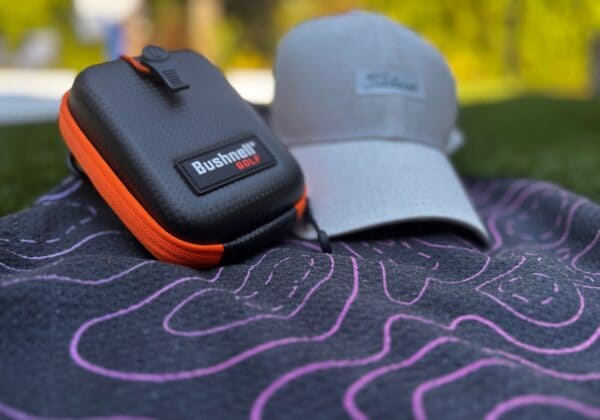
Rangefinder: A device used to measure distance to a target, usually the flagstick.
Ready Golf: A pace-of-play method where the player who is ready hits first, instead of waiting for the golfer farthest from the hole.
Reading the Green: Studying the slope, speed, grain and break of a green before hitting a putt.
Relief: The process of moving your ball under the Rules of Golf, either with or without a penalty.
Reload: Slang for hitting another ball after a bad shot, usually when the first one may be lost or out of bounds.
Reverse Pivot: A swing fault where a golfer’s weight moves the wrong way, often toward the target in the backswing and away from it in the downswing.
Rough: Longer grass surrounding the fairway and green, making shots more difficult. Rough length varies by course and may include intermediate and deep roughs.
S: Sand Save to Swing Plane
Sand Save: Getting the ball out of a bunker and holing the next putt, saving par from the sand.
Sandbagger: A golfer who keeps their handicap artificially high to gain an advantage in net competitions.
Sand Trap: Another name for a bunker.
Scramble (Format): A team format where all players hit, then play the best shot until the hole is completed. Popular in charity and casual tournaments.
Scrambling (Stat/Skill): Saving par after missing the green in regulation, usually with a chip and a putt.
Scratch Golfer: A golfer with a handicap of zero who typically shoots at or below par.
Shank: A mis-hit where the ball strikes the hosel of the club, shooting sharply sideways. Often called “The S Word.”
Short Game: The part of golf played near the green, usually including pitching, chipping, bunker shots and putting.
Short-Sided: A tough position where your ball misses the green on the same side as the pin, leaving little room for a chip or pitch.
Shotgun Start: A tournament format where all groups start at the same time on different holes.
Sit: What golfers say when they want the ball to stop quickly.
Skull: A thin shot, often around the green, where the club catches the ball too low and sends it too far.
Slice: A shot that curves from left to right in the air for a right-handed golfer. Excessive sidespin causes shorter distance; a milder version is called a cut or pull-cut.
Slope Rating: A number that shows how much harder a course plays for a bogey golfer compared to a scratch golfer. Ranges from 55–155, with 113 as the standard.
Snowman: A slang term for scoring an 8 on a hole, because the number looks like a snowman.
Stableford: A scoring format where players earn points based on their score on each hole.
Stance: The position of your feet when setting up to hit a golf shot.
Stimpmeter: A tool that measures the speed of greens.
Stroke Play: The most common scoring format, where every stroke counts and the lowest total score wins.
Strong Grip: A grip position where the hands are rotated more to the trail side on the club. For a right-handed golfer, this usually means seeing more knuckles on the lead hand.
Swing Plane: The general angle or path the club travels on during the swing.
T: Tap-In to Triple Bogey
Tap-In: A very short putt that should be easy to make.
Tee: The small peg used to hold a ball above the ground for the first shot on a hole. It can also refer to the area where each hole begins.
Tee Box: The starting area for each hole is defined by the tee markers and two club-lengths deep. In stroke play, hitting from outside this area is a two-stroke penalty and you must correct by playing from inside the teeing area. In match play, the opponent may cancel the stroke and require a replay.
Tee Time: Your scheduled starting time for a round of golf.
Tempo: The rhythm and timing of your golf swing.
Texas Wedge: Using a putter from off the green instead of chipping.
The Turn: The point between the front nine and back nine, usually after the ninth hole.
Thin (Skinny): A mis-hit where the club strikes the lower part of the ball, sending it too far with little loft.
Tight Lie: A lie where the ball is sitting on very short grass or firm ground, leaving little cushion under the ball.
Topped Shot: A mis-hit where the bottom of the club strikes the top half of the ball, producing a low shot that travels only a short distance.
Triple Bogey (Trip): A score of three strokes over par on a hole.
U: Unplayable to Up-and-Down
Unplayable: A rule option when you find your ball but cannot hit it, for example, stuck in a bush. You may declare it unplayable and take relief with a one-stroke penalty.
Up-and-Down: Saving par by chipping or pitching onto the green and holing the following putt.
V: Vardon Grip
Vardon Grip: Another name for the overlap grip, where the pinky finger of the trail hand rests over the index finger of the lead hand.
W: Waggle to Worm Burner
Waggle: A small motion golfers make before hitting to help relax, often involving one to three club waggles.
Weak Grip: A grip position where the hands are rotated more toward the lead side on the club. For a right-handed golfer, this usually means seeing fewer knuckles on the lead hand.
Wedge: A high-lofted club used for shorter shots, chips, pitches and bunker shots.
Whiff: A swing that completely misses the ball.
Worm Burner: A very low shot that barely gets off the ground.
Y: Yank to Yips
Yank: A shot pulled sharply left of the target for a right-handed golfer.
Yips: A condition where nerves or muscle spasms cause jerky strokes, often ruining short putts.





Dok
3 months ago
The “Golf shots explained” graphic doesn’t seem correct.