


One of the questions I get asked most often by parents is, “When should I start my kid in golf?”
I was introduced to the game around five years old with an old cut-down 7-iron. By seven, I had a small set of my own clubs and I was more than ready for them. I wanted to play. I wanted to hit the ball farther and I wanted to hit targets.
Years later, after teaching hundreds of junior golfers and now coaching my own two kids, who both started around age two, I don’t think there is one perfect age to start a child in golf. Instead, I think it’s worth asking three simple questions.
Is your child ready to start golf?
Not all two-year-olds are the same. Neither are all five-year-olds.
I’ve worked with six-, seven- and eight-year-olds who weren’t ready for structured golf instruction because they couldn’t follow basic directions or stay engaged long enough for it to be safe and productive.
I’ve also seen very young kids who were ready.
If you’re wondering whether your child can start, I would look at three things.
- Do they have enough strength to swing a golf club?
- Can they follow a very basic direction such as “stand here” or “put your foot here”?
- Can they stay engaged in an activity for 10 minutes?
That last one matters more than you might think.
A toddler losing interest in a toy at home isn’t a big deal. A toddler running onto a driving range to chase a golf ball is. You don’t need perfect behavior but you do need enough maturity that they can understand a few basic boundaries.
Starting at two doesn’t mean practicing for an hour
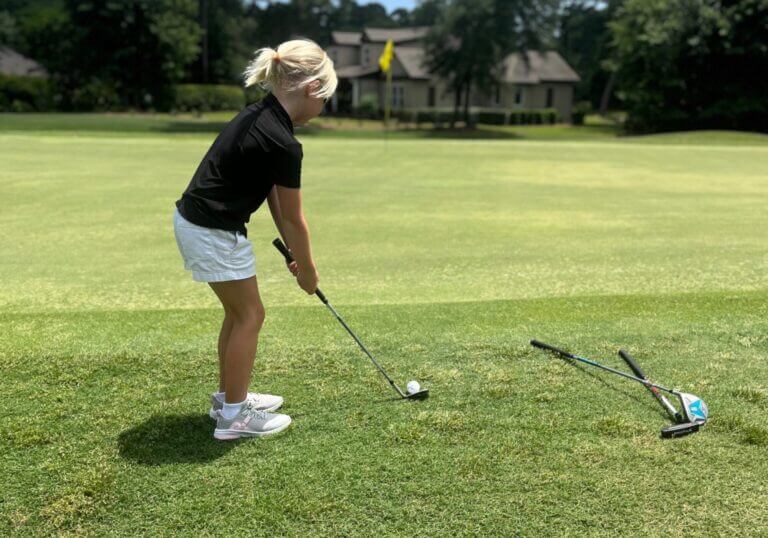
When my kids were two, “golf” usually meant 10 or 15 minutes.
In fact, I often ended the session before they did. I’d tell them we were going to hit balls for a little while and then I’d put everything away before they lost interest.
That was intentional.
I wanted them to want to do more the next time.
Some days, we hit balls. On rainy days, we might use a putting mat inside. Sometimes a significant portion of “practice” was simply trying to get the ball to balance on a tee or taking a ride in the cart and learning to rake a bunker.
Little things such as teeing up a ball are harder for a two-year-old than you may realize. Let them figure it out and don’t rush; the process it ends up being part of the fun.
Don’t confuse starting early with getting ahead
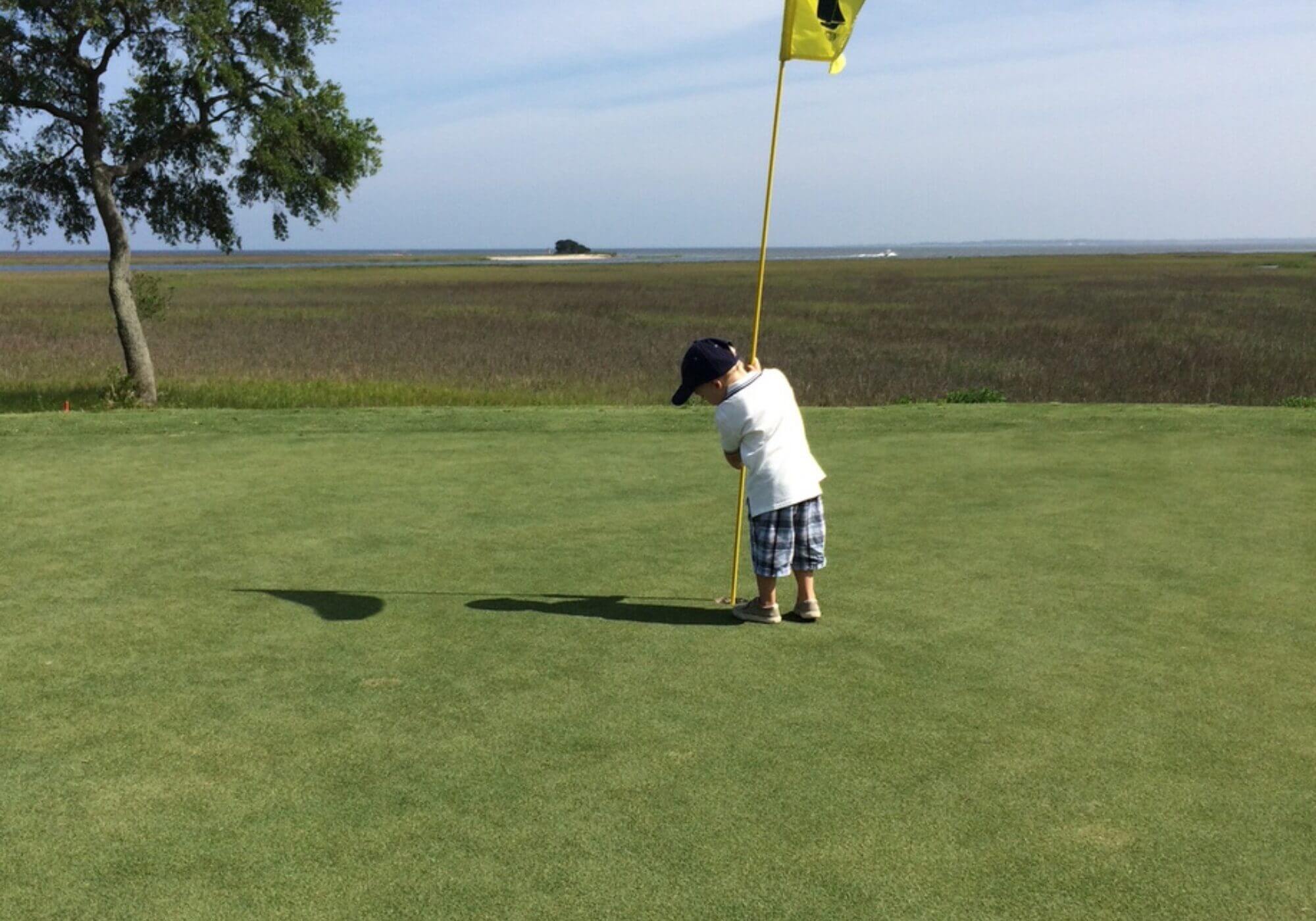
Do I think starting your child at two instead of four or five gives them a significant advantage?
No.
Annika Sorenstam didn’t start playing golf until 12, Nick Faldo started at 14 and Greg Norman at 16.
I’m not suggesting you wait that long if your child is ready. The point is that there isn’t some window that closes if your three-year-old isn’t interested or ready yet.
Starting young gives kids more time around the game but only if they enjoy being there. I’d much rather see a kid start at five and love golf than start at two and be tired of it by eight.
The biggest advantage has nothing to do with age
Starting your child young can be great but the age isn’t what matters most.
The kids who have the biggest advantage aren’t necessarily the ones who started at two. They’re the ones whose parents and coaches kept golf fun.
Golf became part of their routine. They got excited to go practice. They wanted to get new clubs. They asked to go play.
Once golf starts feeling like work, kids don’t want to do it. When golf feels like work to me, I don’t want to play.
So if your two-year-old can move a club, follow a few simple directions and stay safely engaged for 10 minutes, go ahead and introduce them to golf. I’m going to share more content about what steps I took early on to help my kids develop strong fundamentals and also share some mistakes you may want to avoid.





Sonoma Valley Tom
2 months ago
I love when a young father brings his toddler to the driving range. The kid hits 25 balls 3 to 5 feet from the mat. The two of them leave. There’s 25 balls that I can scoop up. Don’t have to pay the pro shop for a small warm-up bucket.
Mike
2 months ago
That’s funny! I’ve done the same thing.