


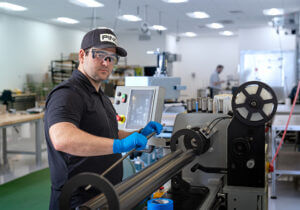
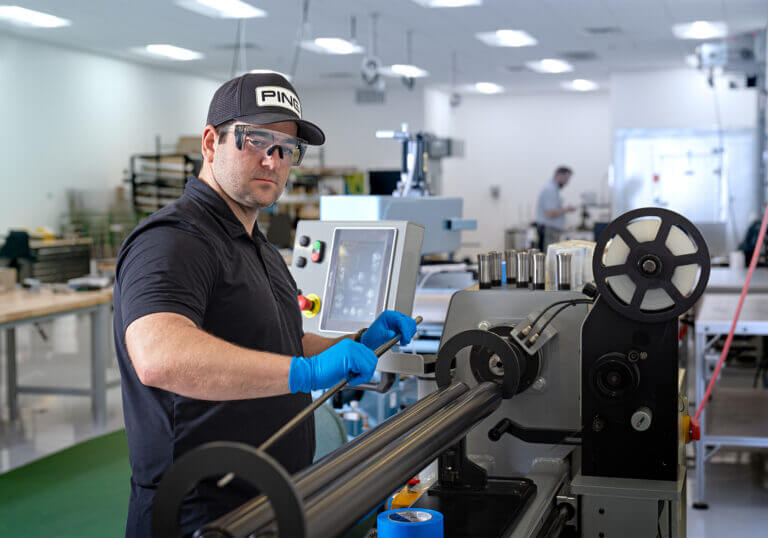
PING has been doing stock shafts differently for decades. Now it has its own lab to push even further. Here’s what that means for the shafts in your clubs.
The shaft is not the engine of the golf club
When we published our Right Driver vs. Wrong Driver analysis, a good chunk of the feedback boiled down to some variation of: “Yeah, but what about the shaft?”
Fair enough. The relative importance of the shaft is a debate that’s been simmering in golf for as long as I can remember. Is the shaft the engine of the golf club? The transmission? A glorified connecting rod? Like many things, where the shaft fits in the performance equation often depends on whom you ask and, more often than not, what they’re selling.
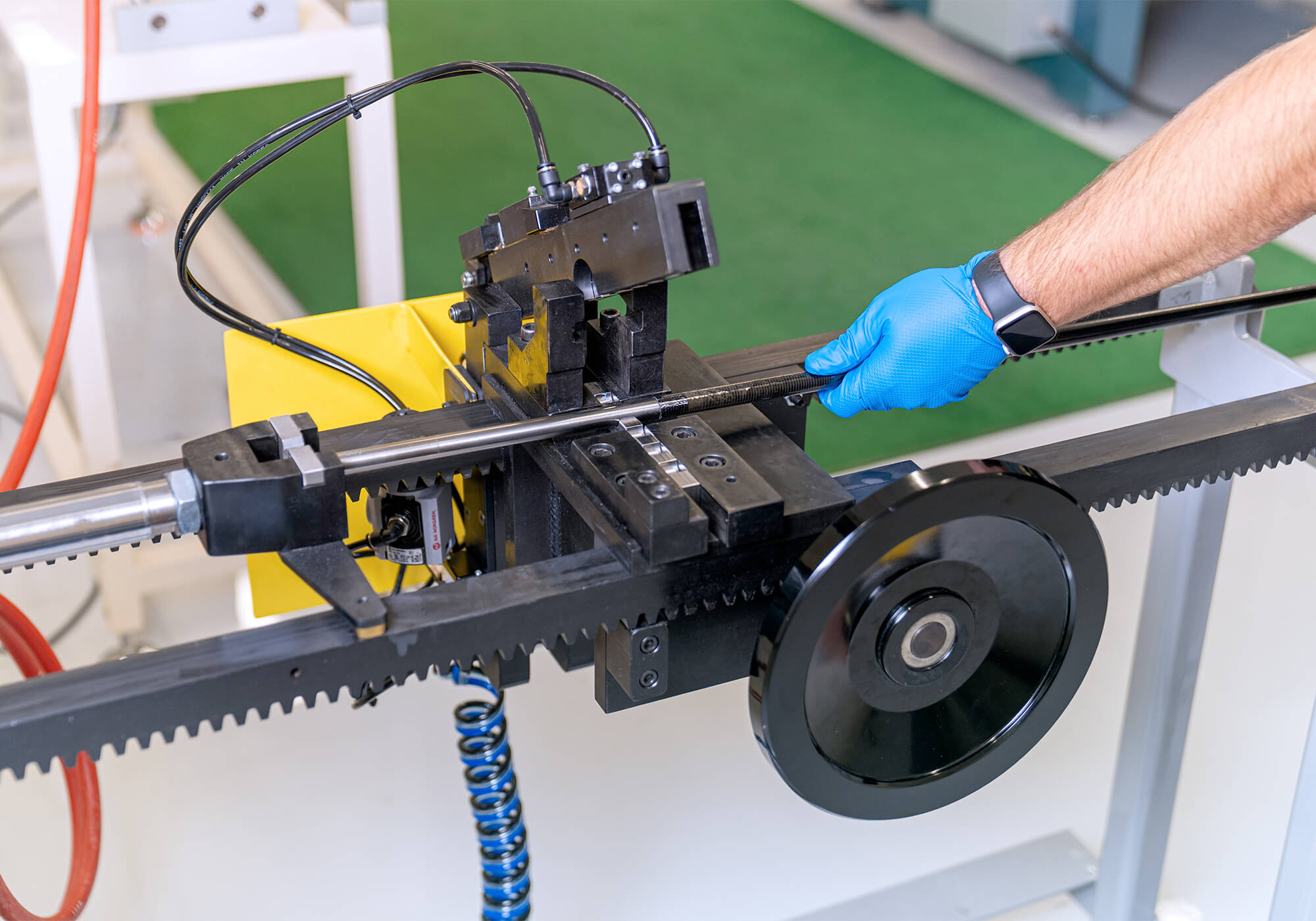
So when I sat down with PING’s John Oldenburg and Erik Henrikson to talk about the company’s Shaft Lab, I wasn’t expecting Oldenburg’s first interaction with Henrikson to become one of the better stories I’ve heard in a while.
Oldenburg spent 24 years on the shaft manufacturing side of the business before joining PING six years ago. His former employer’s marketing slogan? “The shaft is the engine of the golf club.” The first thing Henrikson ever sent him was a recorded presentation. Slide one, big bold letters: “The shaft is NOT the engine of the golf club.”
Welcome to PING, John.
To his credit, Oldenburg laughed and after six years of working on the system side of things, he now agrees with the sentiment.
“The head is what you use to make gross adjustments to performance,” Oldenburg explains. “You need to get ball flight up or down a degree and a half, two degrees—you need to knock 500 or 600 rpm of spin off—you have to do that with the head. The head has so much more influence on that than the shaft does. You get them in that tight window with the head, then when you need to make fine adjustments, that’s where the golf shaft comes in.”
Head first, shaft second. That hierarchy matters for everything that follows.
The stock shaft game
Stock shafts have a bad reputation and a lot of that is well deserved.
To understand why, it helps to understand how most OEMs approach stock shaft selection. Oldenburg is in a unique position to speak to this. He knows how the sausage gets made.
The typical process goes something like this: an OEM identifies the hot aftermarket shaft brand of the moment. They go to the shaft manufacturer and say, “We need a version of that.” The manufacturer makes a modified version that hits the OEM’s profit margin targets. A modifier gets added to the name or a key technology indictor is removed (from the tip section, for example) so the consumer technically knows it’s not the full aftermarket product. Sometimes the result is reasonably close to the original. Sometimes it’s not close at all.
“The biggest driver for just about every OEM in shaft selection, stock program shaft selection, is price,” Oldenburg says. “It comes down to price: ‘What can you give me for whatever has been allocated for the shaft portion of that program?’”
The result is that a lot of stock shafts are, functionally, watered-down versions of recognizable aftermarket products. The OEM gets to trade on a familiar brand name. The consumer gets something that looks like the real thing on the spec sheet. Whether it performs like the real thing is a different conversation entirely.
PING’s approach: Design the shaft to the head
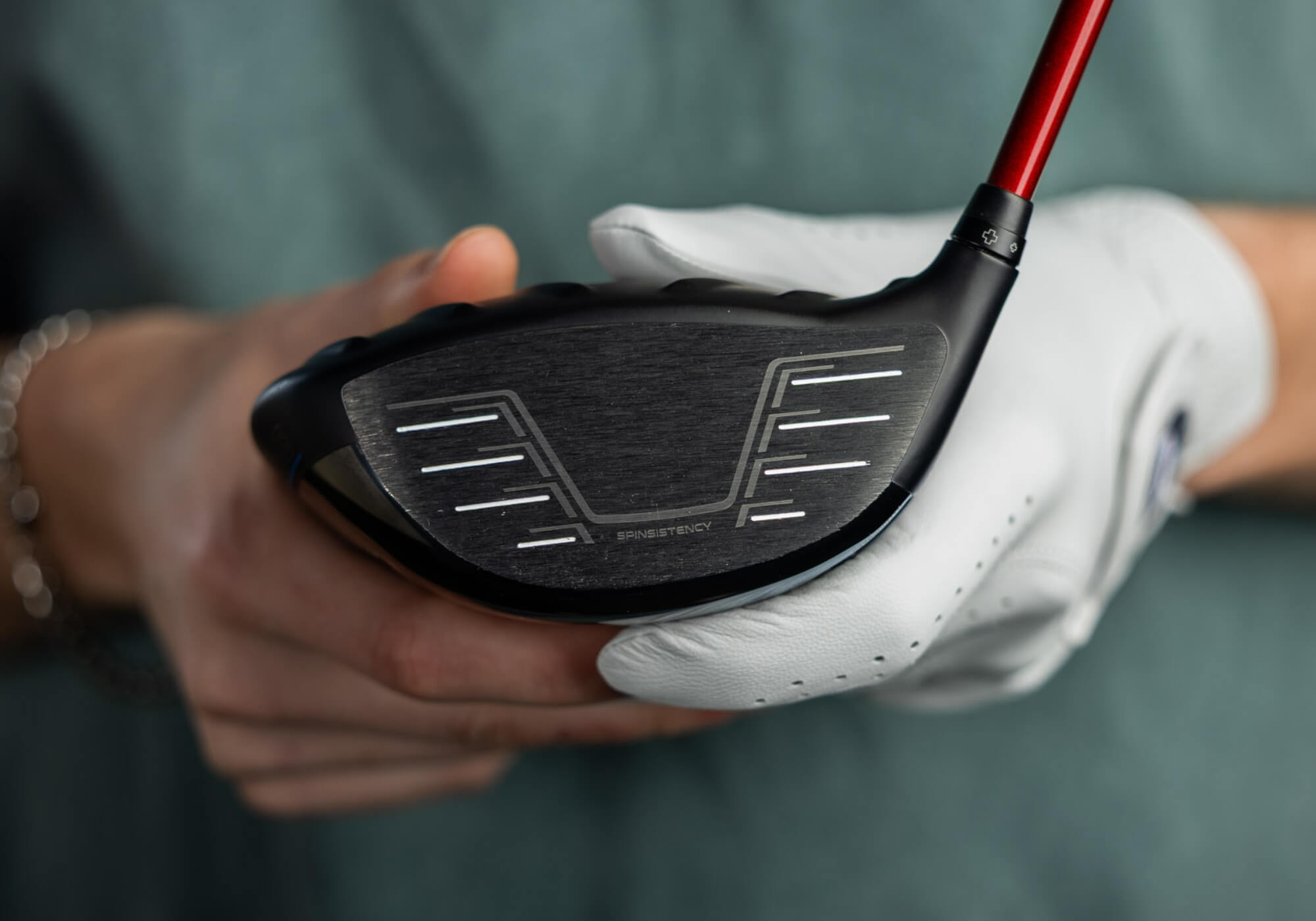
PING has been playing the shaft game differently for a long time. Rather than picking a hot brand and building a program around the name, PING designs its stock shafts to work with its head designs. This isn’t a recent pivot. It’s been the approach since at least the early ’90s when Oldenburg was on the other side of the transaction, building shafts to PING’s specifications.
“PING has always been different,” Oldenburg says. “They didn’t just choose an existing brand and try and modify that brand to fit a program. They would specify all the necessary performance parameters to the vendor to then prototype the shaft. The shaft would be designed and built to work with the head system.”
The process today goes deeper than specifications. When PING begins development on a new club, the shaft team sits down with the head designers and asks what the goals are. What’s changing from the previous generation? What performance targets need to be hit? From there, the shaft team identifies what can be adjusted within the shaft to help achieve those system-level goals. The shaft isn’t an off-the-shelf afterthought. It’s part of the design.
PING also puts its own name on its stock shafts—Alta, Tour—rather than trading on aftermarket brand names. That might sound like a small thing but it reflects a fundamentally different philosophy. You’re not getting a discount version of someone else’s product. You’re getting a shaft that was designed from the ground up to pair with the head it ships with.

There’s a materials angle here, too. Graphite shafts are built with different grades of carbon fiber: standard modulus, mid-mod, high-mod, and ultra-high-mod. Each step up roughly doubles the material cost. Most stock shafts are limited to standard and mid-mod materials because of margin constraints.
According to Oldenburg, PING’s Alta CB shafts use significant amounts of high-mod material which he believes makes them unique among stock offerings. “We use what we need to achieve our goals. We don’t have these restrictions on us based upon ‘You can’t use this material.’”
That high-mod material isn’t there for bragging rights. PING’s stock shafts use a high balance point design that allows more mass in the head (more mass, more ball speed). But pushing the balance point up means less material in the tip section and if you want to maintain stiffness and control torque with less material, you need stronger, stiffer carbon fiber. It’s a cascade of design decisions that only works if you’re willing to pay for the materials.
Enter the Shaft Lab
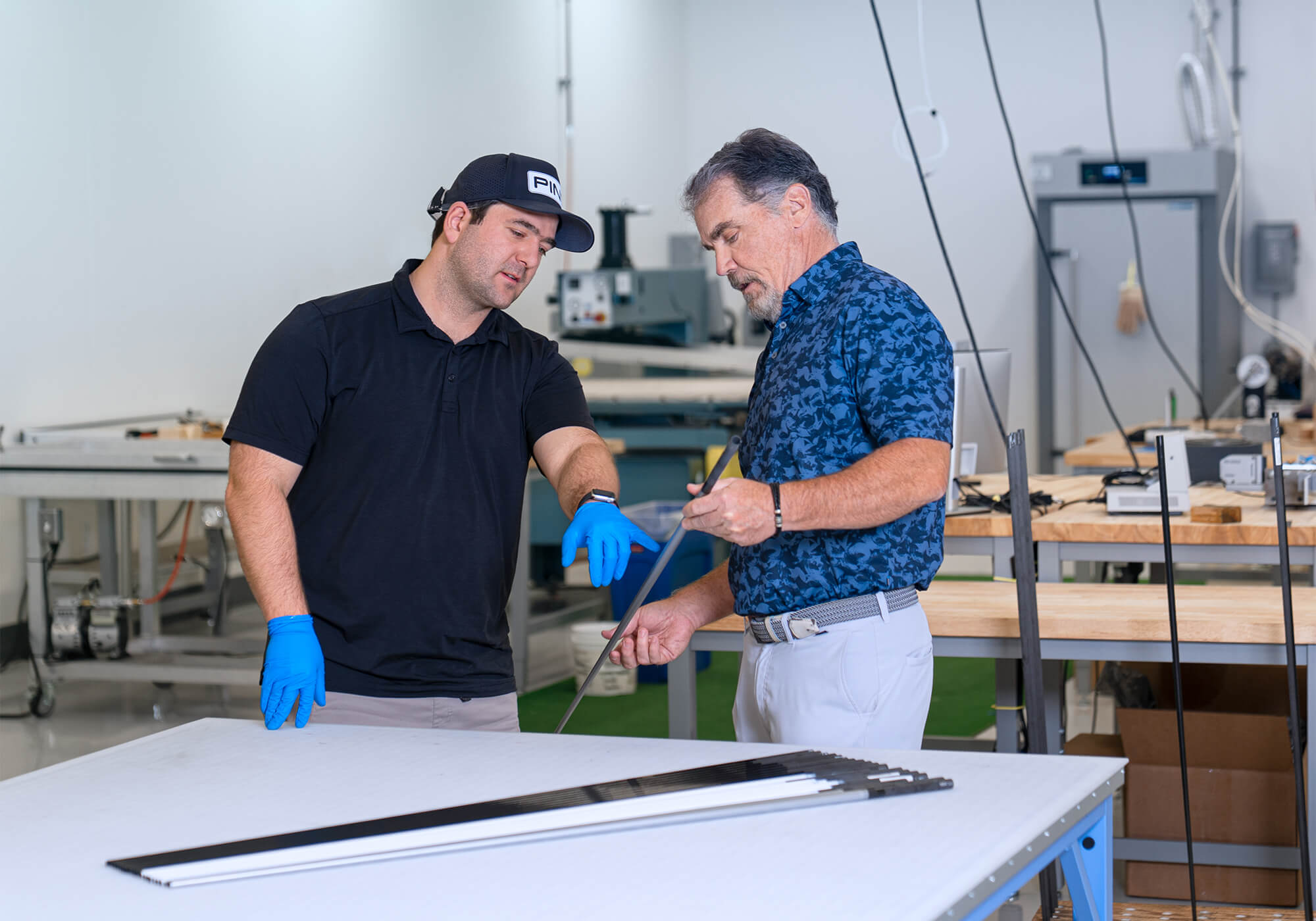
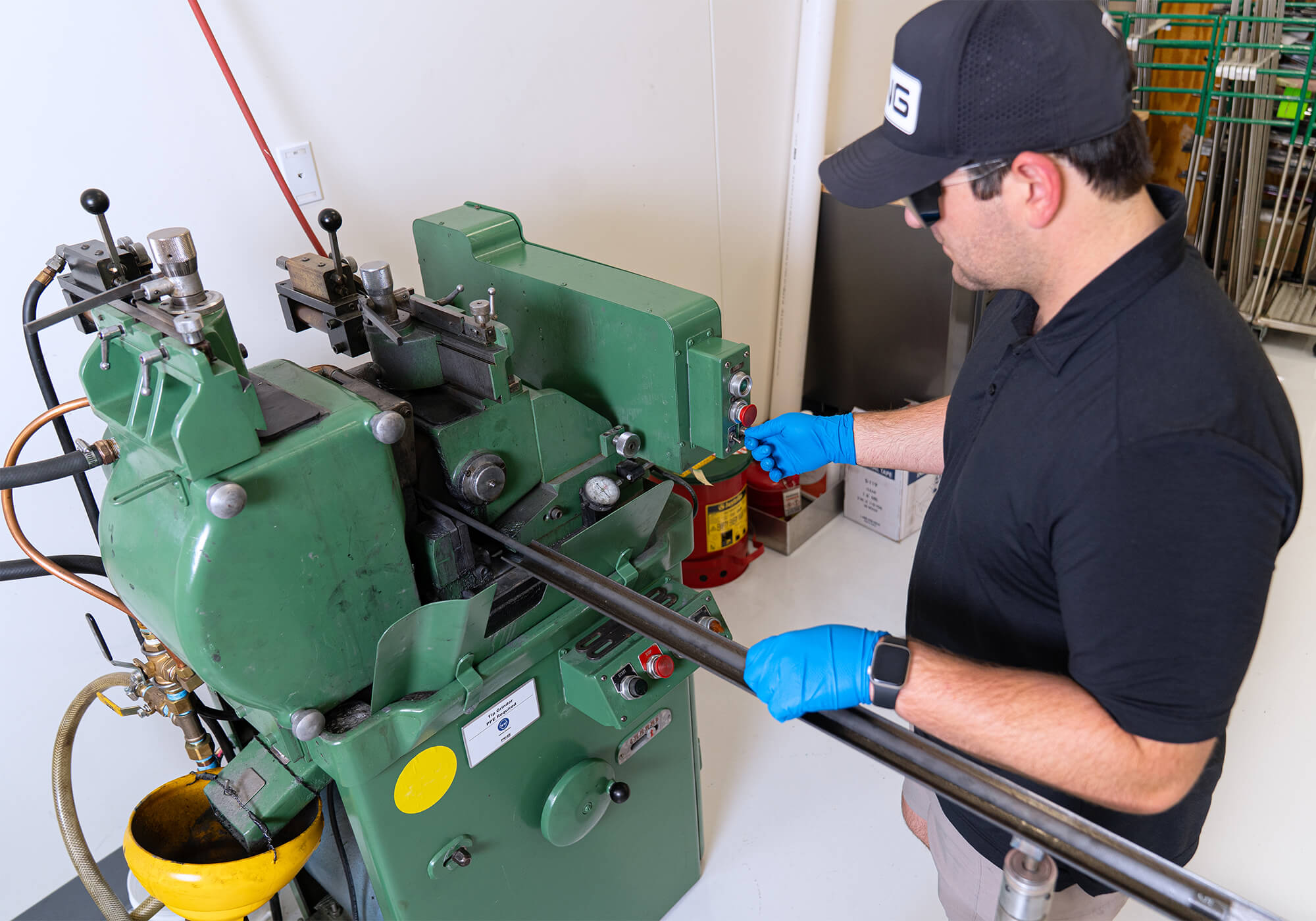
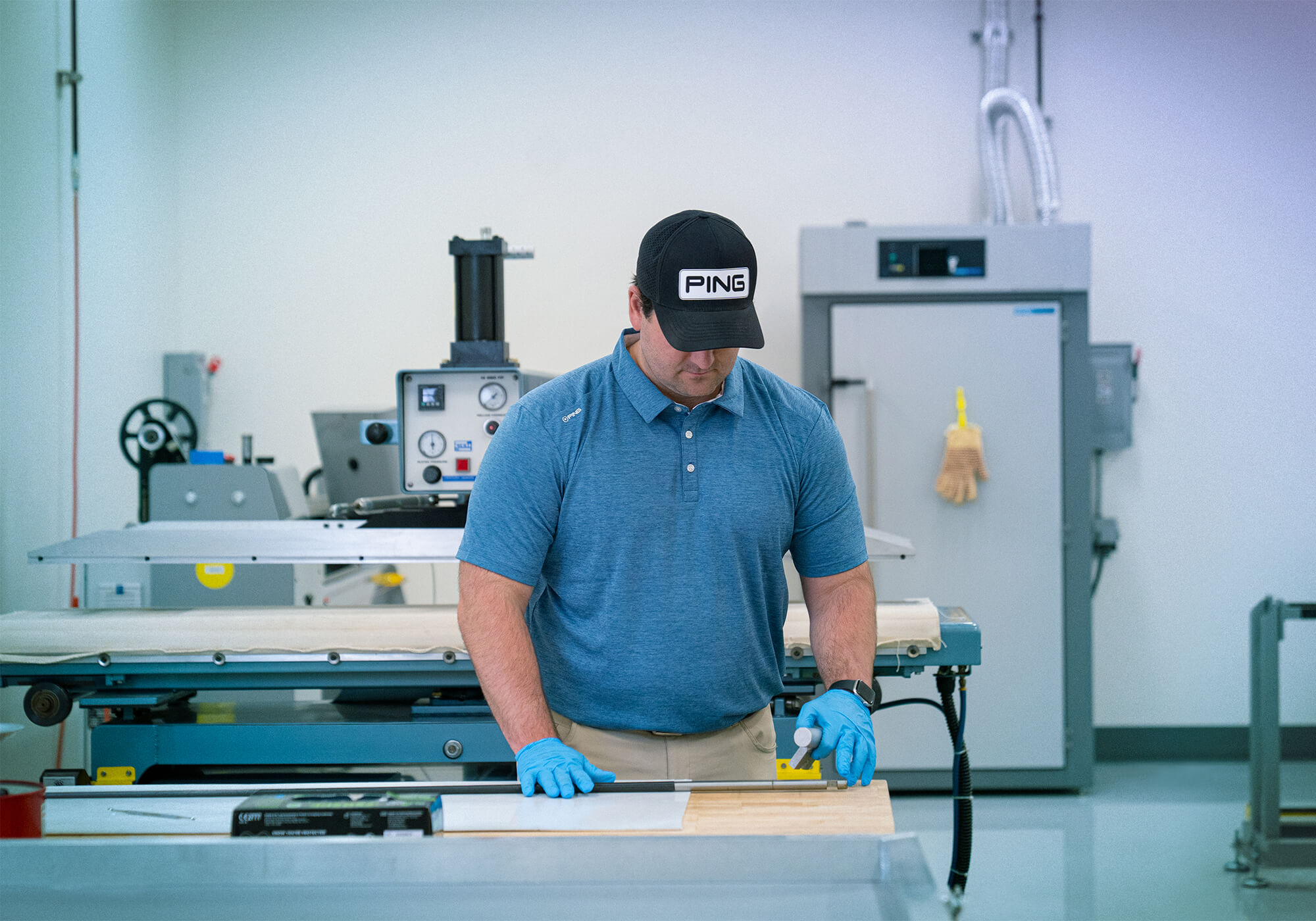
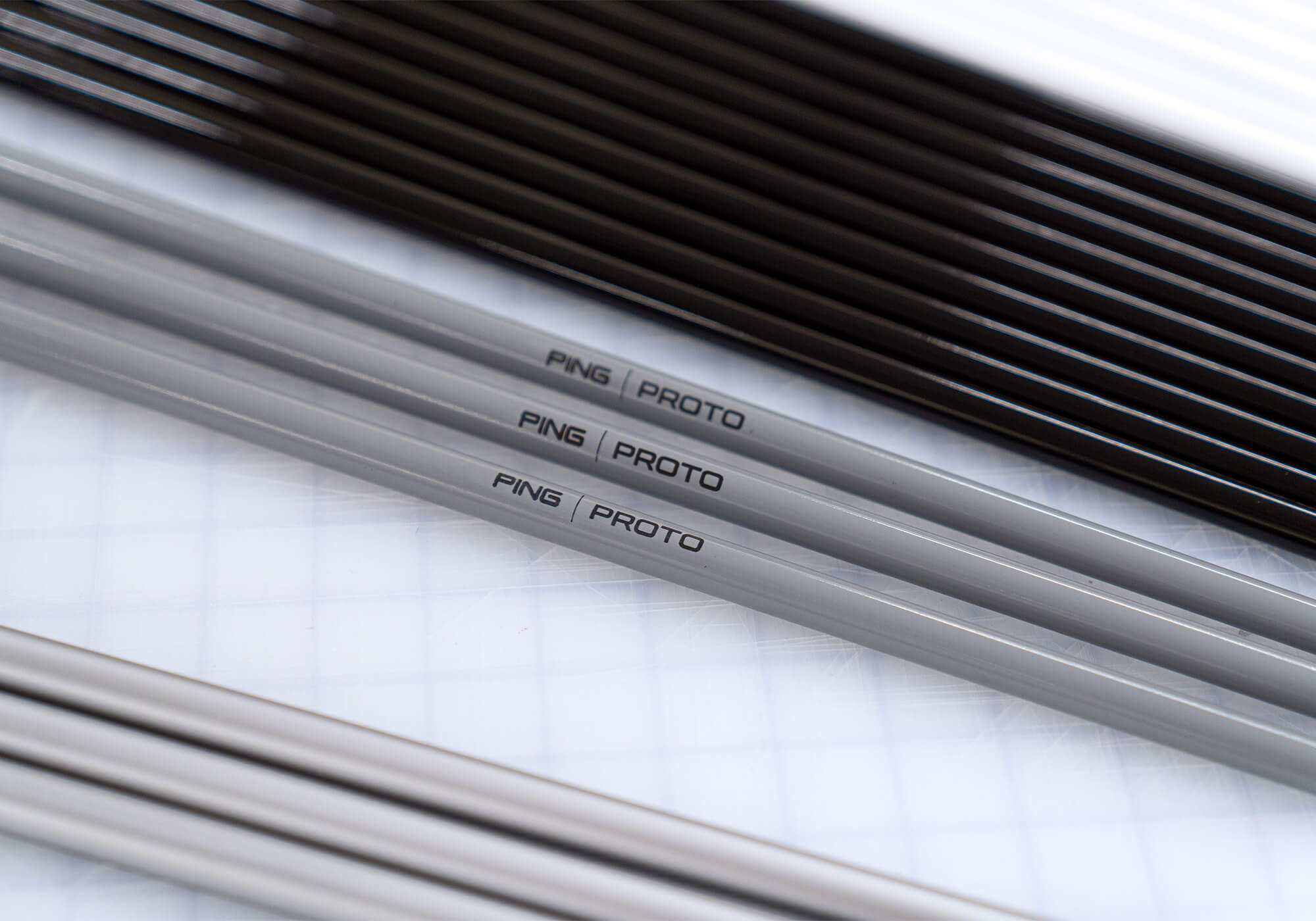
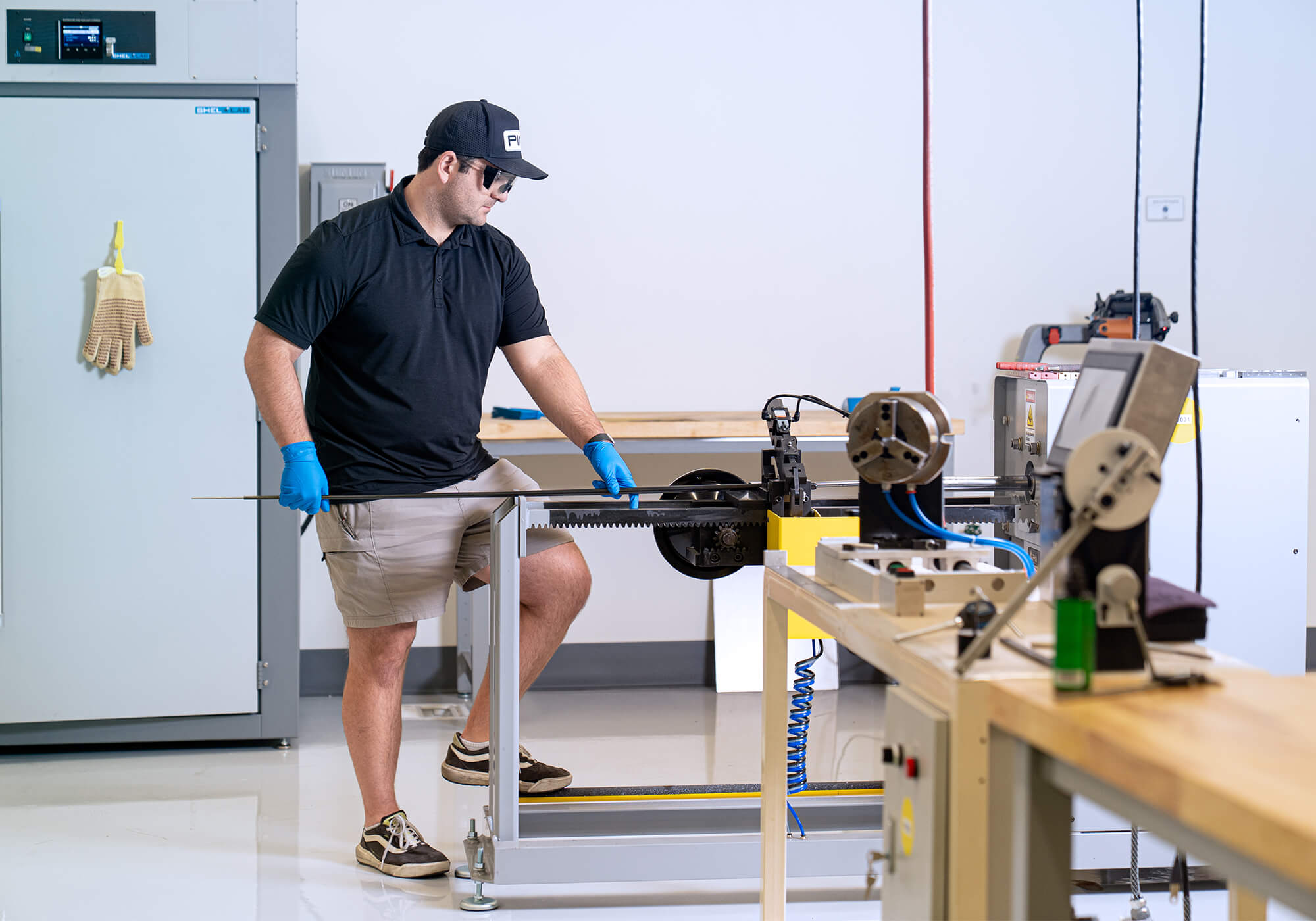
PING’s Shaft Lab has been operational for roughly a year. It uses a table-rolling process, the same manufacturing method employed by about 99 percent of the shaft industry. In terms of what it can produce, the lab is capable of making anything any other shaft company can make. The difference is speed, proximity and purpose.
To be clear, this isn’t about PING bringing production in-house. The company still relies on vendor partners to manufacture the shafts that ship in your clubs. The Shaft Lab is a low-volume prototyping and research facility. It’s less about making products, more about accelerating the science.
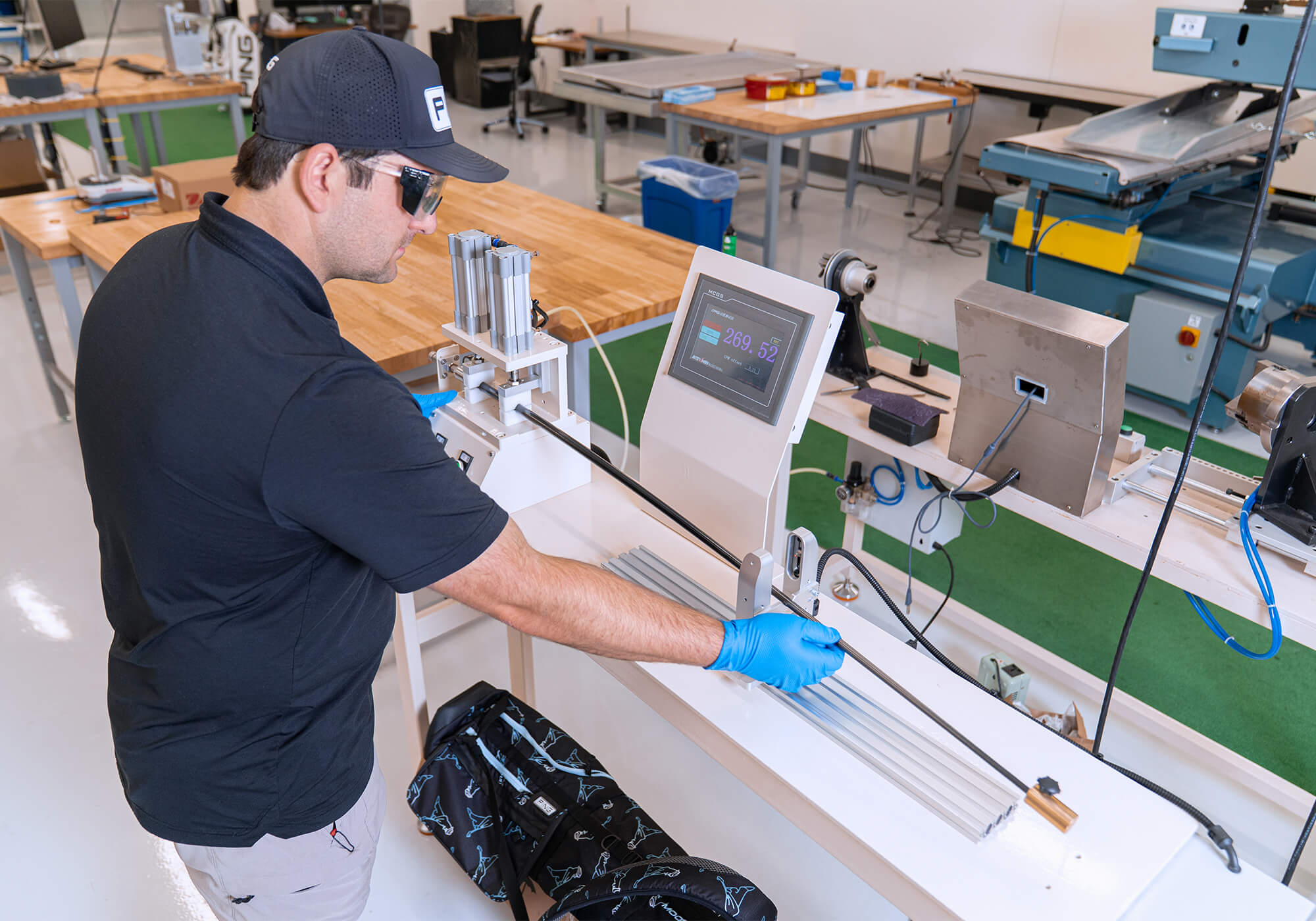
Before the lab, PING was designing shafts in-house but relying on those same vendors to prototype them. That meant waiting. Now, if a test generates a question that requires a modified shaft to answer, Oldenburg’s team can have new test parts in hand the next day. No vendor queue. No lead time.
“If I’ve got something that’s a high priority, I go and I can have shafts in my hands the next day,” Oldenburg says, “which is really, really cool.”
He pitched the lab as a three-step proposition. Step one: take total control of stock shaft design and prototyping. Step two: work with tour players to gain insights and get PING-branded shafts in their hands. Step three: pure R&D. What can be done differently with shaft design that nobody else is doing?
That third step is the most interesting and Oldenburg is candid about how ambitious it is. The table-rolling process has been the standard for graphite shafts since the late 1960s when Frank Thomas (who would go on to become the USGA’s technical director) made the first graphite shafts at Shakespeare, a fishing rod company.
The materials have improved. The machinery is better. The designs are more sophisticated. But the fundamental process hasn’t changed. PING wants to explore whether there’s a better way. They’ve hired a PhD in polymers and composites and are bringing on another in composite modeling. Whether that leads somewhere remains to be seen but they’re asking the question.
“Part of what the lab is there for is to do science,” Oldenburg says, “not just design golf shafts the way they’ve been designed before. Using the assumptions that have been used before. It allows us to do science, do it better, do it more accurately, do it quicker.”
What PING is learning (and unlearning)

Where things get interesting is when the Shaft Lab and Focal (PING’s motion capture system) start working together in a way that ties back to something we’ve covered before: how PING tests equipment.
If you’ve read our piece on how PING approaches club testing, the methodology here will sound familiar. PING builds test plans that isolate a single variable—change one thing, measure the effect, control for everything else. On the head side, that might mean testing two drivers that differ only in loft or CG location. On the shaft side, it means building shafts that are identical in every way except one property: torque, tip stiffness, butt stiffness, weight or CG location. Test each in isolation. Understand what that one variable does. Then layer the insights together.
Torque was one of the first variables they isolated and it produced one of the cleanest results. A quick primer: torque measures how much a shaft resists twisting around its axis. It’s different from lateral stiffness (the flex you feel during the swing). A shaft can be very stiff laterally but relatively free to twist or vice versa. The two properties are independent.
The conventional wisdom has always been that lower torque (more resistance to twisting) is better. It’s one of those things that sounds right and has been repeated so often that nobody questions it. PING’s single-variable testing found something more nuanced. By building shafts with identical lateral stiffness but different levels of torsional stiffness, they could isolate what torque alone was doing.
Two findings stood out.
First, higher-torque shafts felt softer to players, even though the lateral stiffness was unchanged. The shaft flexed the same amount during the swing but the added freedom to twist changed the perception. Second, and more meaningfully for performance, higher torque tended to leave the clubface slightly more open at impact.
That second finding flips the script on the “low torque equals more control” mantra. For a player whose miss is to the left (which describes a lot of better players), higher torque can actually help keep the ball from going there. This insight directly influenced a custom shaft PING built for tour player Neal Shipley, who wanted to be able to swing as hard as he could without losing it left. The old playbook would have said low torque. PING went higher.
Then there’s kick point, a commonly referenced, although perhaps antiquated, spec in shaft fitting. The accepted generalization: a softer tip section (low kick point) launches the ball higher and spins it more. PING’s player testing found that was true roughly half the time. The other half? Some players hit it about the same. Some hit it lower. Not exactly the certainty the fitting charts suggest.
Perhaps the most eye-opening finding came from a study that speaks to something Henrikson comes back to again and again: the golf club is a system and you can’t change one part without affecting everything else. PING tested the same shaft in a game-improvement iron (with offset and a long blade length) versus a player’s iron (minimal offset, compact). What they found was that the offset, which is conventionally understood to help deliver the face more closed, was actually changing how the shaft bent during transition in a way that partially counteracted the very thing offset is supposed to do. The head’s center of mass, shifted by the offset, was altering the forces and torques acting on the shaft which in turn changed how the shaft delivered the head to the ball. The system was fighting itself.
“I never would’ve thought that the design changes we were making, particularly with offset, would change the way the shaft bent the way it did during transition,” Henrikson admits. It’s the kind of insight that only surfaces when you’re measuring shaft behavior dynamically during the swing rather than relying on static bench measurements. And it’s led to what Henrikson diplomatically describes as “some very healthy debates” about offset on the design side.
The biggest unknown isn’t the shaft. It’s you.
If there’s a single thread that ran through the entire conversation, it’s this: the biggest challenge in shaft fitting isn’t understanding how shafts behave. It’s understanding the two-way relationship between the shaft and the golfer.
That relationship goes both ways.
The shaft influences how the head gets delivered. A more flexible shaft bends differently which changes the effective CG location and mass properties the golfer is working with through impact. That’s physics. But the golfer also responds to the shaft, sometimes consciously, sometimes not. And that human response can reinforce, cancel out or completely override what the shaft is doing mechanically.
“There are no absolutes with respect to fitting golf shafts,” Oldenburg says. He estimates that accepted fitting generalizations hold up about 65–75 percent of the time. That means that roughly a quarter to a third of the time, the expected result doesn’t materialize. And the question PING keeps asking is: why? Is the golfer making an unconscious manipulation? A conscious one? Or is it purely mechanical? Are the shaft’s bend properties changing the lever system in a way that forces a different delivery regardless of intent?
Here’s an example. Henrikson shared a study where they gave players stiffer and more flexible shafts. Half the players responded to the more flexible shaft by unconsciously moving their hands forward at impact, effectively canceling out the expected higher launch. Put that same shaft in PING Man (PING’s swing robot) and you’d see the expected result every time because the robot swings it the same way regardless of what’s in its hands.
“PING Man’s not gonna do that,” Henrikson says. “PING Man just swings it the same way regardless.” But humans aren’t robots. They adapt. And that adaptation can completely override what the shaft is doing mechanically.
Henrikson put the challenge into perspective: “If I make a driver face thinner and I go out and test it on the range with 20 players, 20 out of 20 players will have higher ball speed. If I do something to a shaft, very rarely are you going to get this universal result.” Oldenburg recalled building a shaft that was, in his words, “stupid stiff in the tip” to bring ball flight down. He put it in a tour player’s hands. The player hit everything high and with more spin. Exact opposite of the intent. “That’s the way it is in the shaft world,” he said.
This is the frontier PING is most focused on. Not how to make a shaft bend a certain way (they’ve largely figured that out) but how to predict what a specific golfer will do when you hand them that shaft. Can swing types be grouped into buckets that respond to shaft changes in predictable ways? Can those buckets inform fitting logic? PING’s new Performance Research Center in the UK is focused heavily on human-equipment interaction and it’s the reason every test seems to generate more questions than answers.
As Henrikson framed it, PING knows a lot about head/ball interaction. Friction, COR, CT—they’ve been studying the collision between clubface and ball for years. “The connecting point between the human and the club is one that I feel like we have a lot of knowledge gap to fill. And once we start filling that knowledge gap, that’s going to help us design better shafts.”
How does this stack up?
I asked Oldenburg directly: given his background on the shaft manufacturing side, how does PING’s testing and analysis capability compare to the dedicated shaft companies?
His answer? At or beyond about 90 percent of them. Companies like Fujikura and Mitsubishi are technically sophisticated and have their own measurement and modeling tools. But what PING has that no shaft company can replicate is the ability to test head-shaft combinations as an integrated system. PING can prototype a new shaft and pair it with a prototype head and have both on a test range the next day. No other OEM can do that with shafts and no shaft company can do it with heads.
That’s the real advantage of doing this in-house. It’s not just about making shafts faster. It’s about running an ongoing research program where every test informs the next question and the lab can respond to that question without waiting on anyone else.
The bottom line
PING’s Shaft Lab isn’t going to revolutionize your Tuesday afternoon round. Not yet, anyway. But it represents something genuinely uncommon in the golf equipment industry: an OEM that treats the stock shaft as a design problem worth solving rather than a margin line to manage.
Whether that translates into meaningfully better stock shafts for everyday golfers is the question that matters most and it’s one that PING’s own engineers will tell you they’re still working to answer. What they won’t tell you is that it doesn’t matter. Because even in a world where the head is the primary performance factor and the shaft is the fine-tuning mechanism, getting that fine-tuning right is the difference between a club that works and one that works for you.
And if the guy who spent 24 years making shafts for everyone else says PING’s stock shafts are built differently, we should probably listen.








ScottyDog
3 weeks ago
I’ve gone from the G400 LST with a 65x Tour chrome to the G440K with an Alta blue 50s. It’s an absolute game changer. I’d noticed my ball flight had dropped a bit with a bit of a swing speed drop due to a few back issues. I was hesitant to give up my G400 but it finally gave in and cracked so it was time for the upgrade. I’m still swinging it at around 110mph but its just effortless now using the stock Alta shaft, it’s incredible. These shafts are phenomenal they really are.