



100 Yards Feels Like A Scoring Shot But The Data Says Otherwise
Instruction

100 Yards Feels Like A Scoring Shot But The Data Says Otherwise

Support our Mission. We independently test each product we recommend. When you buy through our links, we may earn a commission.

100 Yards Feels Like A Scoring Shot But The Data Says Otherwise

From 180 to 200 yards out, I know I’m not that good at golf.

When I’m holding a long iron or hybrid from that range, I’m already thinking about where I can miss and how I’m going to get up and down. It’s not great but it’s honest. That part of my game is not a strength.

From 100 yards, though, it feels different.

A wedge in hand. A clean number. This is supposed to be a scoring distance. I expect to hit the green. I expect to give myself a putt.

But is that expectation earned?

To find out, I asked Shot Scope to help identify the yardage where golfers overestimate their ability more than anywhere else. What the data revealed points directly to … 100 yards.

The 100-yard reality check

At 100 yards, most golfers believe they should be hitting greens consistently and leaving short putts. The data tells a very different story.

Shots from 100 yards

HandicapProximity (feet)Green Hit %Short %
03170%14%
54157%21%
104949%26%
155940%31%
206534%39%
257528%46%

The gap between what golfers expect from this distance and what the data shows they produce is larger here than anywhere else in the bag.

A 10-handicap golfer hits the green just 49 percent of the time from 100 yards. The average proximity is 49 feet. One hundred yards is treated like a scoring distance and it ends up becoming more of a coin flip.

Even scratch golfers average 31 feet from the hole and miss the green 30 percent of the time. Those are strong results but they still fall short of what most amateurs expect from themselves with a wedge in hand.

What do longer yardages look like?

At first glance, the 150- and 200-yard numbers seem to simply confirm that golf gets harder as you move farther from the target. That’s true, but it’s not the most important takeaway.

The more revealing insight is this: we are not dramatically worse from longer distances than we are from 100 yards.

Shots from 150 yards

HandicapProximity (feet)Green Hit %Short %
04455%19%
56338%29%
107230%35%
159224%43%
2010917%50%
2511613%63%

From 150 yards, a 10-handicap hits the green 30 percent of the time.

The difference when you get further from the hole is that you’re likely planning for these misses. You play safer targets and think about recovery.

From 100 yards, you probably don’t. That’s why this distance creates the biggest disconnect between belief and performance.
The miss pattern to be aware of

One of the most important insights across all three distances is how often shots come up short.

From 100 yards alone:

  • Nearly 40 percent of 20-handicap golfers miss short
  • Almost half of 25-handicap golfers fail to reach the green

This points to poor carry distance awareness. It also explains why frustration spikes at this yardage. Short misses often mean bunkers, false fronts and awkward chips. These misses feel avoidable but they are more common than the average golfer realizes.

What to do about it

Enough with the data! Let’s move on to the solution. How can you get better from 100 yards?

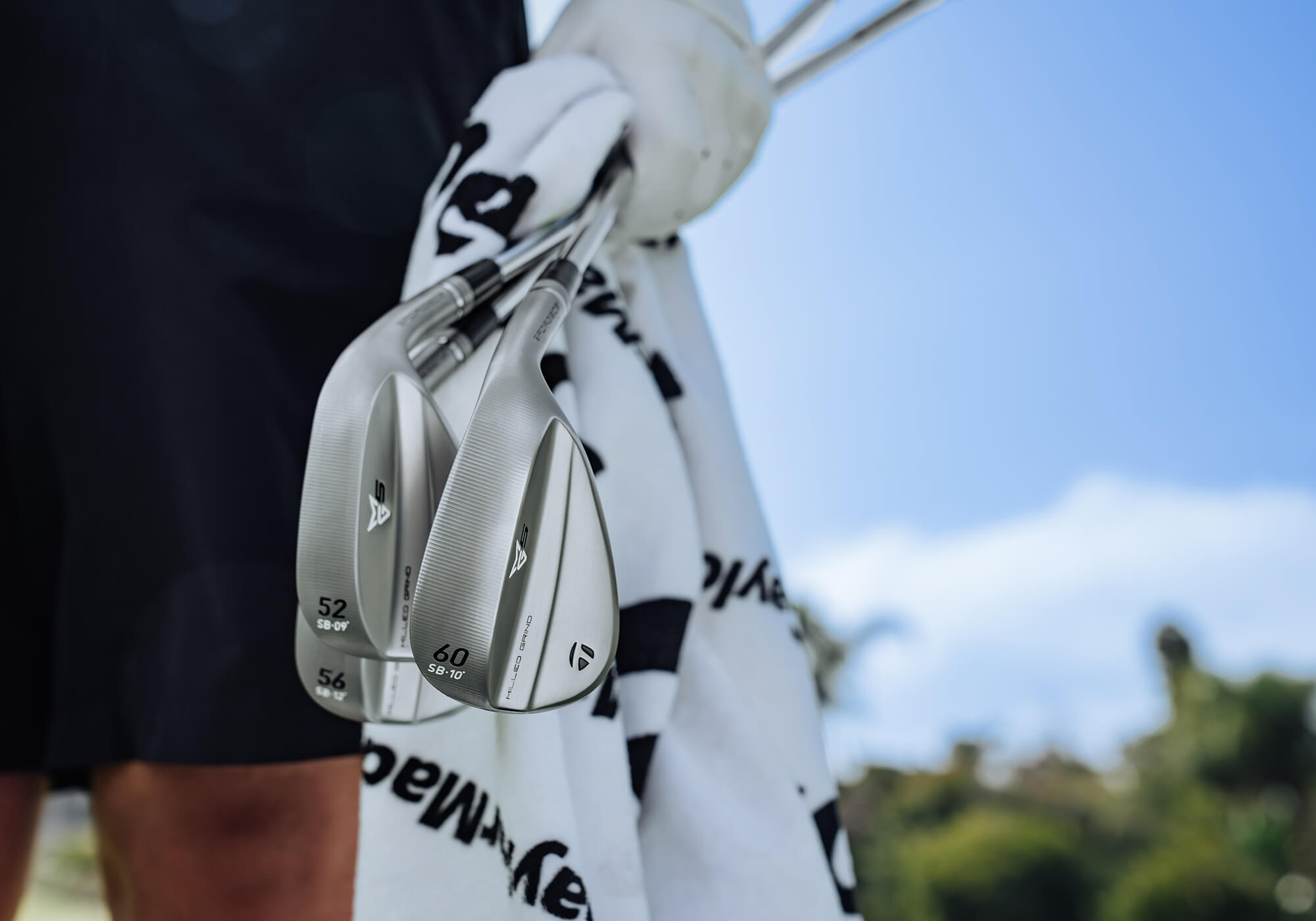
  • Know your carry distances: Many misses at 100 yards are distance errors. Carry matters more than total yardage here. Know how far each of your wedges carries and make sure you are being realistic about the average carry (not your furthest shot).
  • Own a stock 100-yard shot: One wedge, one motion, one number you trust under pressure. If the wedges aren’t your strong point but you can hit a three-quarter 9-iron to 100 yards, that’s fine.
  • Practice low-point control: Solid contact and predictable strike location matter. Use tees, Divot Board or a line on the range to practice low point and stay more consistent.
  • Work on your aim: When practicing at the range, you have to work on aiming practice. Pick a target and honestly look at how close you get the ball to the hole.

Final thoughts

The data shows 100 yards is really a test of discipline, expectation and awareness. Start measuring your true success rates from 100 yards.

For You

For You

Instruction
Jun 9, 2026
If You Still Play Long Irons, Copy This Thought From Ludvig Åberg
PLM 2025_Most Wanted_Foresight GC3 PLM 2025_Most Wanted_Foresight GC3
News
Jun 9, 2026
College Golf Tournament Prep Looks Nothing Like It Did When I Played
News
Jun 9, 2026
The Best Father’s Day Golf Gifts That Won’t Break the Bank
Brittany Olizarowicz

Brittany Olizarowicz

Brittany Olizarowicz

Britt Olizarowicz is a scratch golfer, former teaching professional and one of MyGolfSpy’s leading voices on equipment testing and golf performance. She has spent more than 15 years working at private clubs in New York and Florida and now specializes in translating test data and swing mechanics into practical advice for everyday golfers. Britt began playing at age 7 and has never left the game. When she’s not writing, you’ll find her on the course, playing pickleball, cooking, running or out on the boat with her family.

Brittany Olizarowicz

Brittany Olizarowicz

Brittany Olizarowicz


    This site is protected by reCAPTCHA and the Google Privacy Policy and Terms of Service apply.

      Kevin

      4 months ago

      My question from this is, what is the “Scoring Shot” the different handicaps should be looking at? Or put another way, what yardage does X handicap hit 75%-80% green and what is the average proximity? Looking for what I can consider a solid “go-zone” for targeting the flag vs just center of green.

      Reply

      Dr Tee

      4 months ago

      Bogus–I am pretty sure a scratch handicapper can put it on the green from 100 yards >70% of the time !!! I play to a 10 index and this more closely matches my 100 yards and in GIR data. That being said, I spent a couple of years working with a short game coach and know my wedge yardages quite precisely for full and partial swings. I’m certain most scratch handicappers know the same about their yardages and gapping

      Reply

      Royce

      4 months ago

      Do you use arccos or shot scope tracking? They are brutally honest gps shot trackers. The data is 100% real.
      For instance “scratch players know their numbers” as it turns out most scratch golfers overestimated their long irons by 10 yards on average.
      Raw gps data is awesome.

      Reply

      Tom54

      4 months ago

      Shout out Rick Telander

      Reply

      Pat

      4 months ago

      I am 100% sure I can put it within 15 feet of the pin from 100 yards out — until I hit the shot.

      Reply

      John Keenan

      4 months ago

      For many players missing the green is caused by poor club selection. They remember the club they once hit 100 yard to 3 feet. Not the vast majority that came up short. Club up, put your ego on hold and get it on the green.

      Reply

      ProjectX

      5 months ago

      High Handicaps coming up short has far less to do with knowing your carry distance and more to do with poor strike quality. Nobody is going to base their carry numbers off poor shots, they’re going to base it off well struck shots. But when you pull a club for a well struck shot and strike it poorly that’s where you come up short. I wouldn’t recommend anyone pulling a club expecting a bad shot and then nuking it 20 yards passed the pin because they accidentally hit it well. If you don’t want to come up short the answer isn’t “know your numbers” because if you play enough golf you already do know them. The answer is hit it better more often and you’ll stop coming up short.

      Reply

      vito

      4 months ago

      Yep. Great comment. Practice your 100 yard carry club more.

      Reply

      Aidan

      4 months ago

      It starts with practice which most high handicappers don’t know how to do. Majority of mid to high handicappers will go to the range, get a bucket then proceed to rip drivers and a few 9 or 7 irons and call it a day. Low handicappers practice for specific shots and tend to spend more time at the putting/chipping green than on the range.

      George F.

      4 months ago

      [Quote]I wouldn’t recommend anyone pulling a club expecting a bad shot and then nuking it 20 yards passed the pin because they accidentally hit it well.[/quote]

      If 20 yards past is still on the green, but a mishit shorter club isn’t, then play the longer club. Being on the green is really important.

      Basically, club to the BACK of the green distance. If a front pin and a long green, OK, club to the middle. If you’re dead if you go over the green, then pick the longest club that absolutely will not go over it.

      We’re not good enough to shoot at pins.

      Reply

    Leave A Reply

    required
    required
    required (your email address will not be published)

    This site uses Akismet to reduce spam. Learn how your comment data is processed.

    Instruction
    Jun 9, 2026
    If You Still Play Long Irons, Copy This Thought From Ludvig Åberg
    PLM 2025_Most Wanted_Foresight GC3 PLM 2025_Most Wanted_Foresight GC3
    News
    Jun 9, 2026
    College Golf Tournament Prep Looks Nothing Like It Did When I Played
    News
    Jun 9, 2026
    The Best Father’s Day Golf Gifts That Won’t Break the Bank