
2025 Iron Loft Chart: Average Lofts By Category (And What They Really Mean)
Instruction

2025 Iron Loft Chart: Average Lofts By Category (And What They Really Mean)

Support our Mission. We independently test each product we recommend. When you buy through our links, we may earn a commission.

2025 Iron Loft Chart: Average Lofts By Category (And What They Really Mean)

Iron loft is a hot topic for good reason. It’s one of the first numbers golfers look at when comparing clubs. But with more data than ever on launch, spin and shaft characteristics, we’ve learned that iron loft alone doesn’t tell the full story.

Still, if you’re switching from a game-improvement iron to a player’s model (or vice versa), you’ll feel the difference immediately.

In 2025, we tested more than 65 iron sets across every category. Using that test pool, I researched the stock lofts of each set and created a composite average for every major iron category. While there are small variations from one set to another, this chart represents what you can realistically expect in 2025 for golf iron lofts.

2025 iron loft chart

Here’s how 2025 iron loft averages compare across every major category tested by MyGolfSpy.

IronPlayer’sPlayer’s DistanceGame ImprovementSuper Game Improvement
4-Iron23°21°20°18°
5-Iron26°24°22°21°
6-Iron29°27°25°24°
7-Iron33°31°28°27°
8-Iron37°35°33°31°
9-Iron42°39°37°36°
Pitching Wedge46°44°42°41°

The loft gap is big

The difference between the average player’s 7-iron (33 degrees) and a super game improvement 7-iron (27) is six degrees, roughly the difference between a 7-iron and a “5½-iron.” That’s why golfers switching categories instantly notice a change in distance and trajectory.
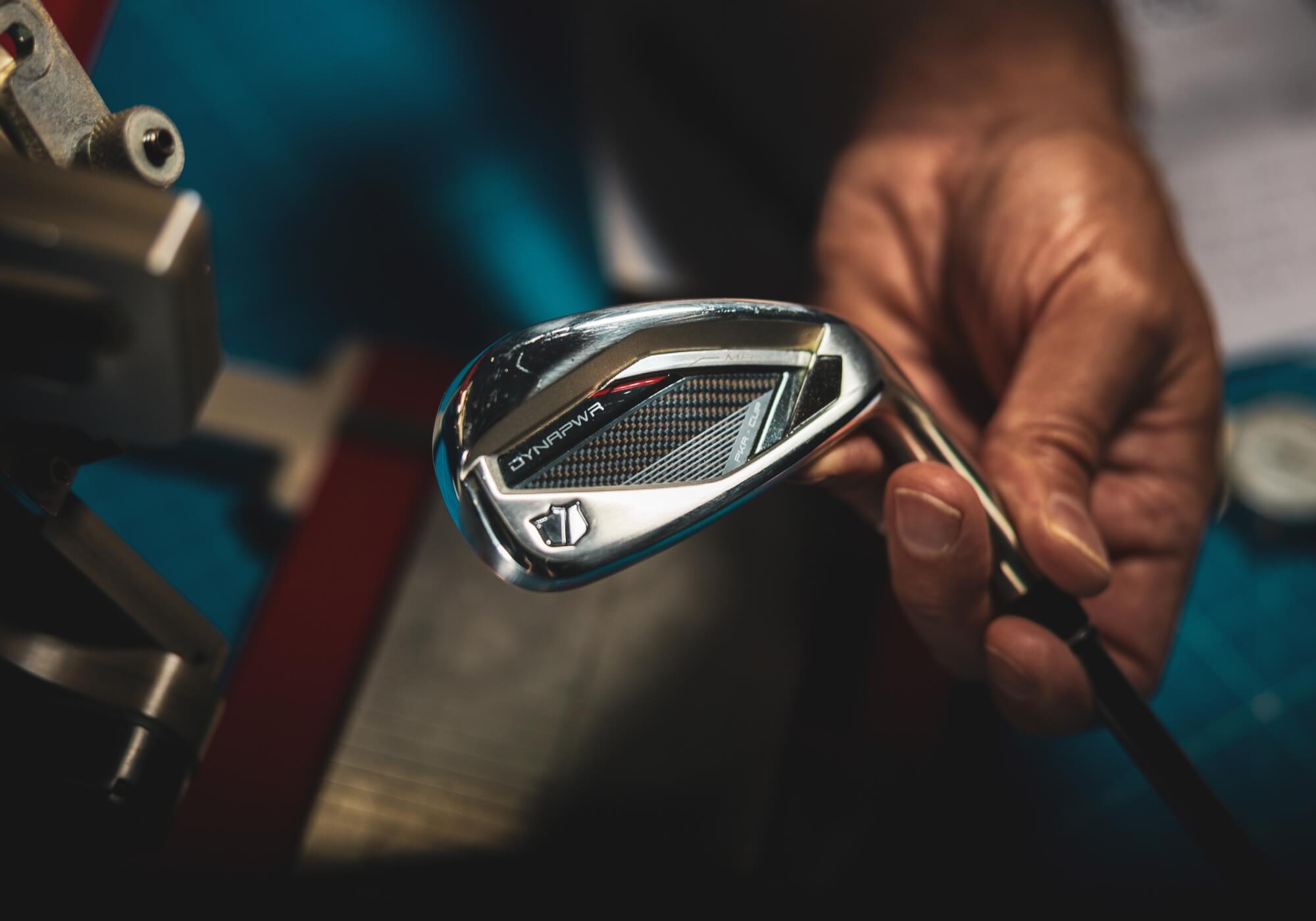
Wilson DYNAPWR Max The best super game-improvement iron of 2025

Why loft alone doesn’t define distance

Manufacturers have learned to pair stronger lofts with design tweaks that make them easier to launch.
By pushing the center of gravity lower and deeper, today’s irons deliver higher launch and lower spin even as lofts get stronger.

Add in shaft and fitting variables (weight, flex, torque, kick point) and you can see why two clubs with the same loft don’t always perform the same. A 30-degree 7-iron in 2025 might still launch higher and stop faster than a 33-degree 7-iron from a decade ago.

How loft varies across brands and categories

Loft strength doesn’t just vary by category. It can also depend on the brand and the individual design of the iron. Some manufacturers build stronger lofts to maximize ball speed and distance while others stay closer to traditional specs for consistent spin and control.

The variation in loft widens when you compare across categories, especially in super game-improvement irons, where design priorities range from pure distance to maximum launch and forgiveness.

CategoryTypical Loft Range (7-Iron)Variation (±°)Notes
Player’s32°–34°±1°Traditional trajectory and spin-focused designs.
Player’s Distance30°–31°±1°Slightly stronger lofts for added distance without losing control.
Game Improvement27°–30°±2°Stronger lofts tuned for higher launch and forgiveness.
Super Game Improvement26°–29°±3°Strongest lofts; brands push distance over spin.
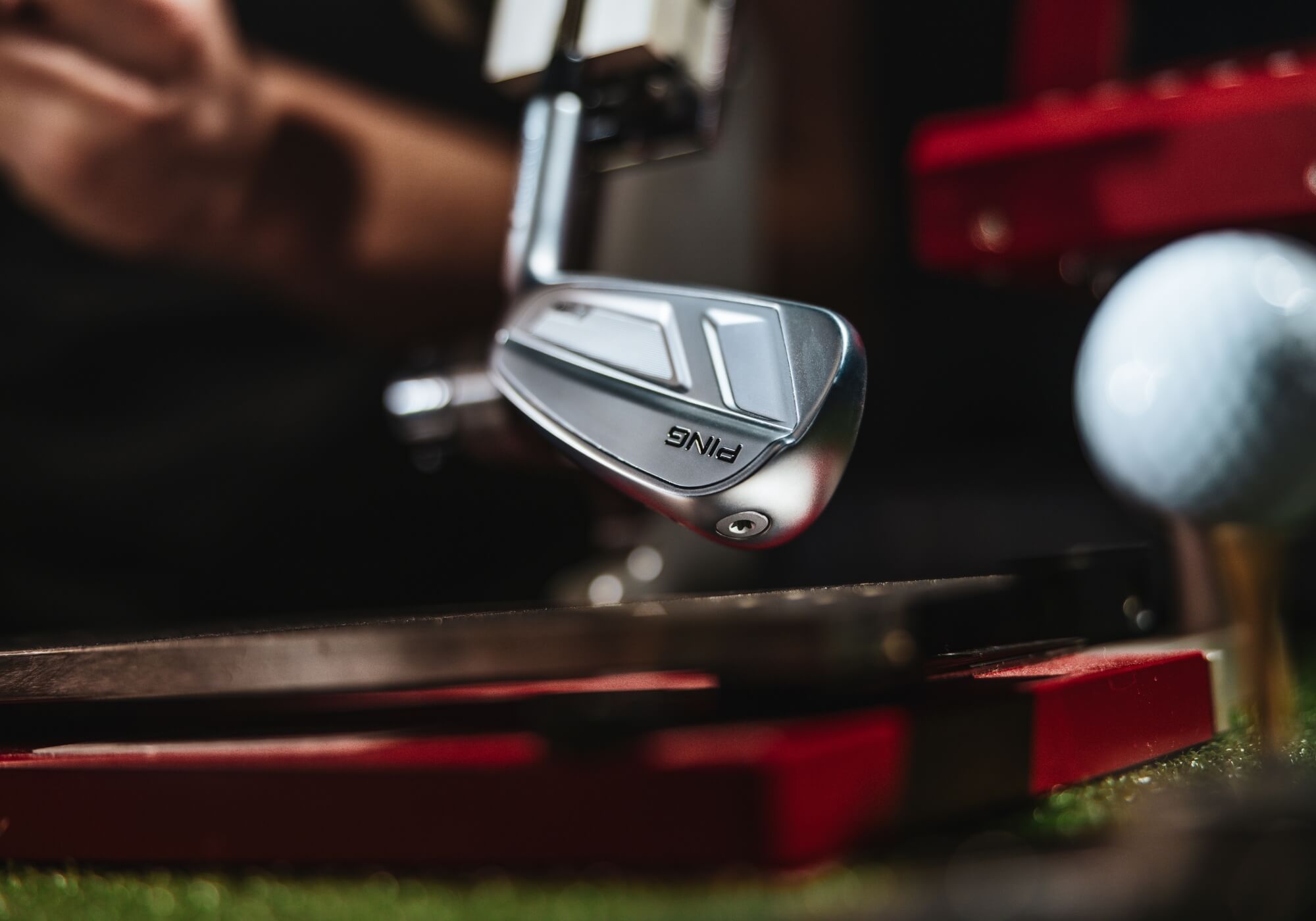
PING iDi driving iron review

Static loft versus dynamic loft

Every iron has a static loft (the number printed on the spec sheet) but what ultimately determines launch and spin is dynamic loft, the loft delivered at impact. Two golfers can use the same 7-iron and produce completely different trajectories. The difference comes from how their hands, wrists and shaft lean affect the clubface at impact.

Dynamic loft is why a player with a shallow delivery can still launch the ball high with a strong-lofted iron while a steeper player might struggle to get the same flight even with a weaker loft. It’s also why fitting matters more than chasing the “perfect” number on a loft chart.

Final thoughts

Iron lofts continue to evolve. If you’re testing new irons this season, don’t just look at the number on the club’s spec sheet. Look at the loft, the launch and the yardage gaps throughout your set.


For You

For You

News
Jun 5, 2026
Three Reasons Your Handicap Is Lower Than It Should Be
First Look
Jun 4, 2026
How Much Larger Is The New TaylorMade Spider ZT Max?
First Look
Jun 4, 2026
Can The New Odyssey Ai-DUAL Jailbird Cruiser Fix Your Putting Problems?
Brittany Olizarowicz

Brittany Olizarowicz

Brittany Olizarowicz

Britt Olizarowicz is a scratch golfer, former teaching professional and one of MyGolfSpy’s leading voices on equipment testing and golf performance. She has spent more than 15 years working at private clubs in New York and Florida and now specializes in translating test data and swing mechanics into practical advice for everyday golfers. Britt began playing at age 7 and has never left the game. When she’s not writing, you’ll find her on the course, playing pickleball, cooking, running or out on the boat with her family.

Brittany Olizarowicz

Brittany Olizarowicz

Brittany Olizarowicz


    This site is protected by reCAPTCHA and the Google Privacy Policy and Terms of Service apply.

      Jason

      7 months ago

      I’ve played a LOT of golf over the years. 3x a week minimum. I’m about a 4 handicap. I play irons that are nearly 20 years old. I’ve never considered any of the things mentioned in the article or comments. Grab your clubs, go to the range and figure out your distances. All of this is irrelevant if you don’t have a repeatable swing. Pros have been over complicating golf for decades, us hacks don’t need to go down that road. Your club championship isn’t that important. Go have fun and stop sacrificing your children’s college funds to find the right fit

      Reply

      Turtlehacker

      7 months ago

      Here’s my question concerning distance vs descent angle.

      Let’s say you hit a 7-iron to reach a par 3 over water, but the ball rolls to the fringe on the back of the green.

      So, you go to a fitting and the fitter gets you fitted in clubs with higher launch, sacrificing some distance. Now, your 7-iron goes higher, but shorter. When you reach the same par 3 over water, now because of lost distance, aren’t you going to have to hit your 6-iron and then watch the ball roll over the green yet again. Either that or hit the 7-iron and watch your ball go into the water short of the green. Seems like you’re fixing one problem only to create the same problem. Help me please understand the ‘fix’ in this viscous cycle.

      Reply

      Shay

      7 months ago

      Hey turtlehacker, my question , and problem exactly.

      Reply

      Pete

      7 months ago

      Need a ball that has more spin.

      Reply

      Andrew the Great!

      7 months ago

      “So, you go to a fitting and the fitter gets you fitted in clubs with higher launch, sacrificing some distance. Now, your 7-iron goes higher, but shorter. When you reach the same par 3 over water, now because of lost distance, aren’t you going to have to hit your 6-iron and then watch the ball roll over the green yet again.”

      No. You’re gonna hit your new 7-iron and because it goes shorter than your old 7-iron, you won’t be on the back fringe, you’ll be in the center of the green, or on the front fringe if your contact isn’t pure.

      Unless there’s just 10-15 yards between the water in front of the green and the fringe on the back of the green. Which of course describes no par-3 we play.

      Reply

      Christopher

      7 months ago

      You’d have to look at your land angle, 45-50° will generally stop on on most greens. If your 7-iron would land short, your fitter should give you a six that hits the 45-50° land angle window, whether it’s an iron, hybrid, or wood.

      Remember if your 7 lands short hit a six, even if it might roll over the back. But it would be unusual for a modern club to go shorter and higher, that would be a bad fit. They’re not going to be dusting off a set with a 40° 7-iron from out back.

      Reply

      Jim R.

      7 months ago

      Club manufacturers and golf media continue to evaluate irons talking too much about distance. Naive players literally buy the distance hype. Players need to be made aware of the great knowledge and lessons learned by guys like Ralph Maltby and Tom Wishon. They talk about playability of irons and set makeup. They have fit 1000’s of golfers and have learned what works and what doesn’t. I hope that MyGolfSpy can somehow share these lessons learned.

      Reply

      Gerald Foley

      7 months ago

      This issue won’t go away. Forget loft and think only about what you need to hit greens easier. Not over simplifying just speaking from anecdotal personal experience. I play to a 6-8 handicap at age 78. I have been expertly fit at a great golf shop by a really techie good golfer who knows his stuff. What you really want when playing is your club to put the ball as close to the hole as possible. During fitting I found the best irons for “me” and my swing speed. My fitter concentrated on ball flight and spin and descent angle. He actually changed shafts near the end of fitting to get better descent angle which sacrificed about 5 yards on my 7-iron but has allowed my shots to better hold greens. During a good fitting you narrow your club selection by feel and accuracy and distance. A long (distance) club isn’t much good if it doesn’t feel good and is reasonably accurate and forgiving, although forgiveness to me is really more related to skill level. Nobody cares about your club lofts if you are hitting greens.

      Reply

      Justin Miracle

      7 months ago

      I have no issues with my current irons but have looked at newer models. I don’t think I’d get noticeable performance gains, and this is definitely one of the reasons I’m hesitant to get anything newer than my JPX 919 HM.

      Maybe if I get to a point where I can move away from the GI irons.

      Reply

      Harry

      7 months ago

      Why don’t manufacturers just put the loft number on the clubs instead of 4 or 5 or 8 irons ? It may confuse your buddy when he asks what did you use for a club and you tell him it was my 31.

      Reply

      James C

      7 months ago

      Because it’s way more complicated than that. It’s like the swingweight scale – it worked when all shafts were steel and had similar balance points. It’s near useless now.

      Static loft is only one of many variables. Multi-material constrctions & wildly different CG locations change the whole process.

      Reply

      David B

      7 months ago

      You can only do so much with strong lofts if you can’t hold a green with a 7 iron. But aside from that, you’re not even thinking about it correctly as far as how strong lofts work. You’re talking about your 7 iron not holding greens and going weaker and ending up having to hit a 6 iron. When the idea is to have a strong lofted 8 iron that goes almost as far your 7 iron but flys higher with more spin to hold the green. Thats the real benefit of strong lofts, being able to club down with an easier club to hit than you had to start with while losing nothing in the process. This is achieved by leveraging game improvement features in an iron head design (center’s of gravity, MOI, weight distribution, face length, etc.) against stronger lofts. You don’t achieve it in one year or product cycle, you achieve it over time incrementally to where you end up gaining forgiveness and playability through stronger lofts. It’s the opposite of the way it’s portrayed by most people who say you’re losing through strong lofts by gaining distance. Thats an inaccurate way of looking at because it fails to see the bigger picture. Which is not about hitting a Wedge instead of 9 iron, but hitting a 6 iron instead of a 5 hof 5 iron or in this case a 8 iron and not a 7 iron. Thats where the benefit lies and understanding this and taking advantage of it can make a significant difference in your game. But only if you have a game to start with, otherwise it would be a waste of time.

      Reply

      David B

      7 months ago

      FYI, that was a response to Turtlehacker

      vito

      7 months ago

      So called loft jacking is an issue that can get a lower swing speed player into trouble. It’s why some companies are offering “HL” versions which are trending back towards older typical lofts(7 iron 35 degrees). With the new lower lofted irons you need to have enough swing speed to take advantage of the lower CG to launch the ball properly.

      Reply

      Smitty

      7 months ago

      I’ve struggled with this for some time as my older Maltby irons (MMB17) are very “classic” lofts and often 1 to 1.5 clubs different than playing partners. I recently mis-guessed my distance (cart path only day) and had 8 iron from 170ish – not enough club. My buddy nearby had his Ping i410 7 iron that I used instead and promptly launched the ball over the green. I need to upgrade…

      Reply

    Leave A Reply

    required
    required
    required (your email address will not be published)

    This site uses Akismet to reduce spam. Learn how your comment data is processed.

    News
    Jun 5, 2026
    Three Reasons Your Handicap Is Lower Than It Should Be
    First Look
    Jun 4, 2026
    How Much Larger Is The New TaylorMade Spider ZT Max?
    First Look
    Jun 4, 2026
    Can The New Odyssey Ai-DUAL Jailbird Cruiser Fix Your Putting Problems?