


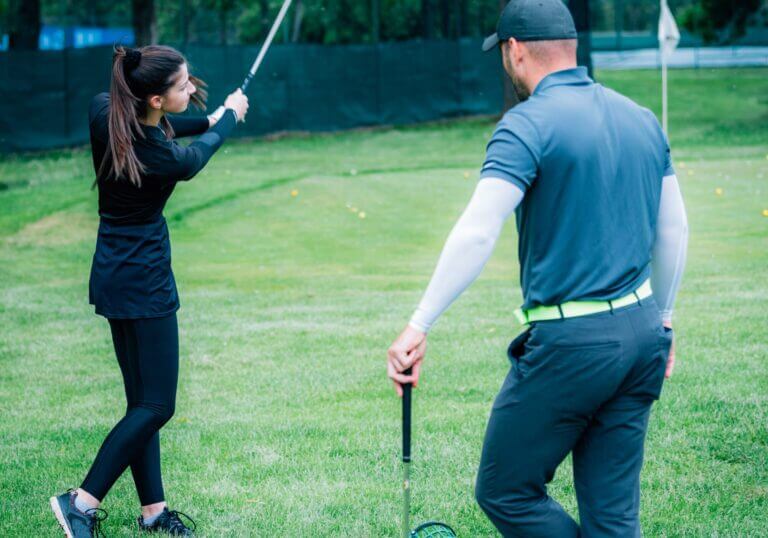
You finally book a lesson and now you’re worried about the first shot. What if you top it? What if the swing you’ve come to fix suddenly behaves itself?
Either way, you’ve given the instructor somewhere to start. But a good coach has probably already begun asking questions before you put a ball down. Where are you aiming? Does that grip feel comfortable? What were you trying to do in that practice swing?
I’d rather have an honest answer to those questions than watch you put on a good first-shot performance. A lesson isn’t an audition. The little things you do before swinging can help explain why the shots have been frustrating you.
Here are five things an instructor may notice, along with what you can bring to that conversation.
1. Where you think you’re aiming
Suppose you set up with your feet pointing left of the flag. Before moving your feet, I’d want to know where you intended to start the ball. You might be allowing for a fade. You might believe you’re aimed straight at the flag. Those are very different conversations.
For a basic straight shot, picture the ball’s target line and your stance line running alongside each other. Like railroad tracks. Stand with your feet to one side of the ball so the toe line doesn’t need to point directly at the flag. The clubface and the shot you’re planning matter here, too.
To check yourself at the range, choose a target and take your normal stance. Lay a stick along your toes and then step behind it to see where you were actually lined up. This guide to using alignment sticks in practice explains other useful ways to check your setup.
Tell your coach if the corrected position feels strange. That’s useful information, not something to be embarrassed about.
2. How you settle your hands on the club
An instructor can see whether you overlap, interlock or use a 10-finger grip. What interests me just as much is whether you keep taking your hands off the handle and putting them back on.
Are you looking for a comfortable position? Trying to remember something you read? Hanging on tightly because the grip is worn? Each possibility deserves a different response. I wouldn’t prescribe a new grip simply because you adjusted your hands twice.
Hand placement matters to clubface control but the coach still needs to see the shots. A grip that looks unusual may be quite workable for you.
If yours feels awkward, say so before hitting. Show the instructor how you normally hold the club instead of copying a new grip in the parking lot. MyGolfSpy’s guide to golf grips can help you put a name to what you’re doing. You don’t need to know all the terminology to ask for help.
3. Whether you’re reaching for the ball
Watch what happens when you set the club behind the ball. Do you have to stretch your arms out to get there or do your hands end up crowded against your legs?
Neither observation settles the question on its own. Your build, the club’s length and how you bend toward the ball all affect the space available. An instructor should consider all of that together before telling you to move closer or farther away.
With a mid iron, try standing upright, tipping forward from your hips and letting your arms hang comfortably. Bring your hands together on the handle and relax your knees. How different does that feel from your usual address position?
There’s no prize for matching a photograph. I’d want to hear that you’re balanced and have room for your arms without feeling stretched or squeezed. If getting into position is uncomfortable, tell the instructor rather than forcing yourself to hold it.
4. Where you put the ball for that club
When someone says the ball is too far forward, my first question is, “For what shot?” A teed driver and an iron from the turf don’t need the same address position.
The instructor will also look at the width of your stance. A ball that appears centered in a very narrow stance can look quite different once you spread your feet. That’s why a quick glance at one foot isn’t enough to judge the whole setup.
Bring the club that’s giving you trouble into this part of the lesson. If your driver behaves and your irons don’t, show both. MyGolfSpy’s explanation of driver and iron setup differences gives you some background for that discussion.
Before leaving, ask the coach to help you recognize the recommended ball position. A photo of your own setup can be easier to remember than a verbal description.
5. What you’re rehearsing
A practice swing might include a deliberate pause, a held wrist angle or an exaggerated turn. I’d ask what you hope that movement will change.
Perhaps you’re working on last week’s lesson. Perhaps you’re combining tips that were never meant to go together. Your coach needs to hear the thought behind the motion, especially if you aren’t sure it’s helping.
You don’t have to tidy up everything before the appointment. Bring your normal routine, the clubs you struggle with and the questions you’ve been carrying around. Then hit the first ball. Even an ugly one can get a useful lesson started.








Leave A Reply