



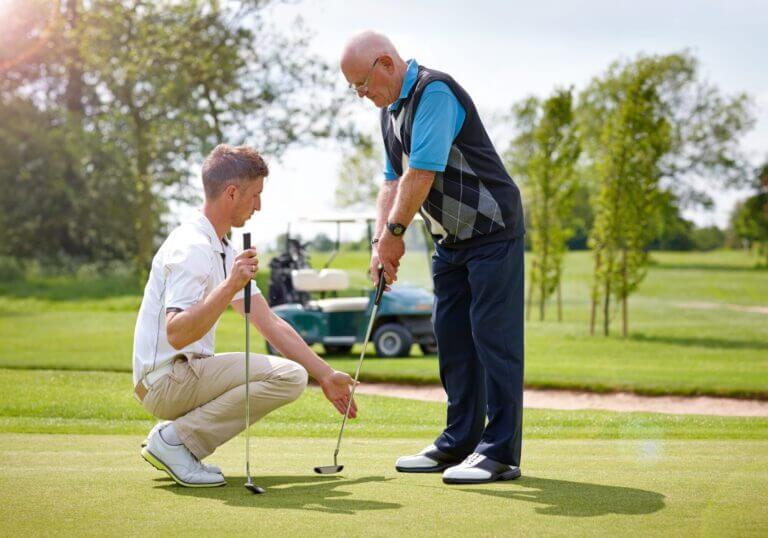
A golfer often walks onto the lesson tee carrying two bags, one literally and the other figuratively. One has clubs. The other is packed with expectations.
They want the coach to find the problem quickly, explain it simply and make the ball behave before the hour ends. Many also feel they are being tested. They apologize for bad shots, speed through warm-up swings and try to prove that the miss they described is real.
After decades of coaching, here is what I wish more golfers understood: a good lesson is not a one-hour repair shop. It is a diagnostic appointment and the first draft of an improvement plan. The goal is not to make your final five shots look perfect. The goal is to leave knowing what matters, what does not and how to practice the priority.
Bring the problem, not your diagnosis
Tell the coach what you see and when it happens. “My 7-iron starts left and keeps going left” is more useful than “I am coming over the top.” So is, “I drive it well on the range but miss right when I get nervous.” One describes evidence. The other assumes the cause.
A visible miss can come from several permutations of face angle, swing direction, strike location, setup and timing. Your job is not to arrive with the correct technical answer. Your job is to give the coach an honest picture of the ball flight, contact and situations that are costing you shots. If you have trouble describing the pattern, learning to read your ball flight on the range will make the conversation much more productive.
Choose one main outcome for the session. You may mention the rest but do not ask one lesson to cure the driver, bunker game, three-putting and fear of the first tee. A narrow target gives the coach room to diagnose instead of racing through four unrelated mini-lessons.
Let the coach see your normal golf
Warm up enough to move comfortably but do not hit a large bucket before the lesson and arrive exhausted. Once the session starts, hit several normal shots without trying to manufacture your best swing. A coach needs to see the pattern you bring to the course.
Do not hide the ugly shot. Do not immediately explain every miss. The pull, block, top or heavy strike may provide the most useful information of the day. Mention any physical limitation, recent equipment change or practice constraint that affects what you can reasonably do. A correction that requires four range sessions each week is not a useful plan for someone who only has 20 minutes at home.
A lesson should narrow your attention
Golfers often judge a lesson by how many ideas they receive. I judge it by how clearly the priority emerges.
The coach may identify several contributing pieces but you should not leave trying to rebuild all of them at once. Ask three direct questions: What do I work on first? What should I ignore for now? What will tell me I am doing this correctly? Those questions turn information into an order of operations.
This is one reason the most important lesson point is not always the most visible swing position. The root problem may be a setup choice, clubface condition or sequencing issue that creates the motion you were trying to eliminate. Fixing the symptom can make the swing look different without making the strike more predictable.
Leave with a practice contract
Before you leave, be able to write down five things: the priority, the feel or cue, the feedback method, the practice dose, the transfer test.
For example, the priority might be controlling the clubface earlier. The cue might be a specific checkpoint in the takeaway. The feedback might be the ball starting inside a narrow window. The dose might be three sets of eight balls with a pause between sets. The transfer test might be hitting five different targets with the normal pre-shot routine.
That is much stronger than “keep working on it.” It also connects the lesson to the larger question of when instruction helps and when practice must take over. The lesson creates clarity. Practice builds ownership.
Record a short summary in your phone before driving home. If the coach allows video, capture only the key demonstration or drill. A folder full of clips is not a plan. One clear note that you can repeat is more valuable.
Do not grade the lesson by the last ball
A new movement can produce a few excellent shots, a few poor ones and plenty that feel unfamiliar. That does not automatically mean the lesson worked or failed. Test the plan across two or three focused practice sessions. Track the feedback the coach gave you, not only whether every ball reached the target.
If the pattern is not improving, communicate what you are seeing. Good coaching is a conversation, not a verdict delivered in 60 minutes. The plan may need a different cue, a simpler drill or a revised diagnosis.
The best lesson does not make you dependent on another lesson. It gives you a clearer understanding of your golf, one useful priority and a way to measure progress. Arrive ready to show the truth. Leave with less to think about and something specific to do next. That is a lesson worth taking.









Leave A Reply