




Most golfers hit range balls without learning much.
They hit one shot, hate it, drag another ball over and try something different. Then they repeat that cycle until the bucket is empty.
That is not practice. That is guessing.
Your ball flight is giving you information on every shot. The trick is learning how to read it without overreacting. You do not need a launch monitor to make better use of your range time. You need to understand start direction, curve and contact.
Once you know what the ball is telling you, the range becomes much more useful.
Start with where the ball begins
The first thing to watch is not where the ball finishes. It is where the ball starts.
For a right-handed golfer, if the ball starts right of the target, the clubface was likely open to the target at impact. If it starts left, the clubface was likely closed to the target.
For left-handed golfers, reverse the direction.
This is not the entire story but it is the best place to start. Many amateurs see a slice that finishes right and immediately think “swing path.” But if the ball also started right, the face was part of the problem.
Start line tells you a lot about face control.
On the range, pick a specific target and use alignment sticks or a club on the ground to make sure you are aimed correctly. If your aim is off, you will misread the ball flight.
Then look at the curve
After start direction, watch the curve.
A ball that starts right and curves farther right is different from a ball that starts left and curves right. Both may finish in a bad place but they do not always come from the same pattern.
In simple terms, the ball curves because of the relationship between the clubface and swing path.
If the face is open to the path, the ball curves right for a right-handed golfer.
If the face is closed to the path, the ball curves left.
That does not mean you need to become a physics professor. Just understand that start line and curve work together.
Start line tells you a lot about the face.
Curve tells you a lot about face-to-path.
Contact still matters
A toe strike, heel strike, thin shot or fat shot can change the flight.
This is why you should always read ball flight with contact. If you hit one off the toe and it hooks, that may not be your normal clubface pattern. If you hit one low on the face with the driver and it spins right, contact may be the main issue.
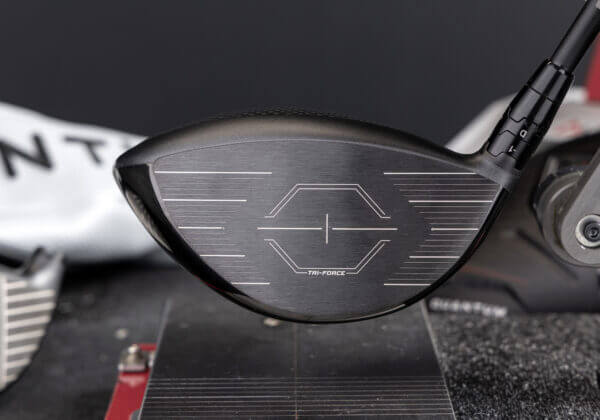
Use foot spray, impact tape or a dry-erase marker line on the ball to check strike location.
You do not have to do this for the whole bucket. Hit five shots with feedback. See where contact is happening. Then go back to ball flight.
A centered strike makes the flight easier to trust.
Do not fix every shot
One bad shot is not a pattern.
This is one of the biggest mistakes golfers make on the range. They hit one pull, make a correction, hit one thin shot, make another correction, hit one slice, change again.
Now they have made three swing changes in four balls.
Look for patterns over five to 10 shots. Are most of them starting right? Are most curving left? Are most strikes low on the face?
Patterns matter. Random shots happen.
A better practice question is: What is the most common miss today?
Fix that first.
Use the three-shot test
Here is a simple way to organize your range session.
Hit three shots to the same target with the same club.
After each shot, write down or say out loud:
Where did it start?
Which way did it curve?
How was the contact?
Do not judge the swing. Just collect information.
After three shots, look for the pattern. If all three started right, work on face control. If all three curved right, work on face-to-path. If all three were thin, work on low point.
This keeps you from chasing every ball.
Match the fix to the flight
Here are a few simple examples.
If the ball starts right, check your clubface. Use a waist-high face checkpoint or grip check.
If the ball starts left, make sure your face is not shut at address or rolling closed early.
If the ball curves too much right, feel the club working more from the inside or the face closing sooner relative to the path.
If the ball curves too much left, feel the face staying more stable through impact or the path moving less from the inside.
If contact is heavy, move your low point forward.
If contact is thin, check whether you are rising up, hanging back or trying to help the ball.
Keep the fix simple and connected to the actual flight.
Final thought
Your golf ball is not lying to you. But it does need to be interpreted correctly.
Do not just react to where the ball finishes. Watch where it starts, how it curves and how it was struck. Then make one adjustment based on the pattern.
That is how you stop beating balls and start practicing.






Leave A Reply