


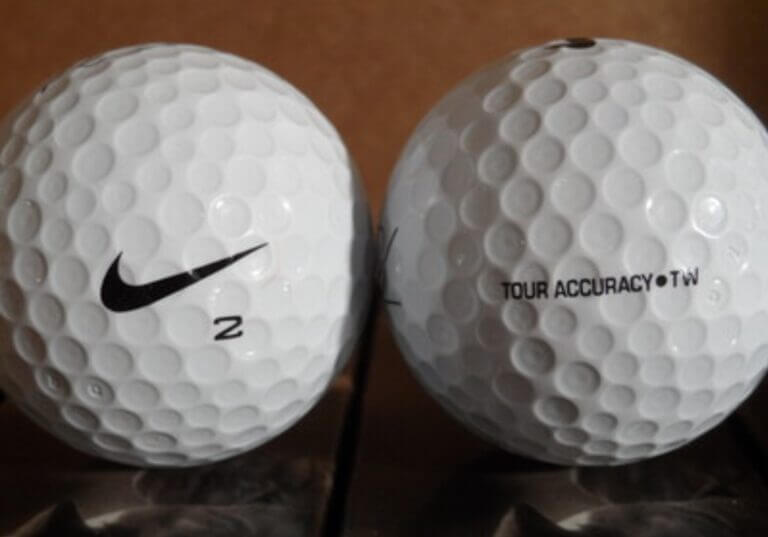
Welcome back, my friends, to the show that never ends. It’s another edition of everyone’s favorite MyGolfSpy feature, History’s Mysteries.
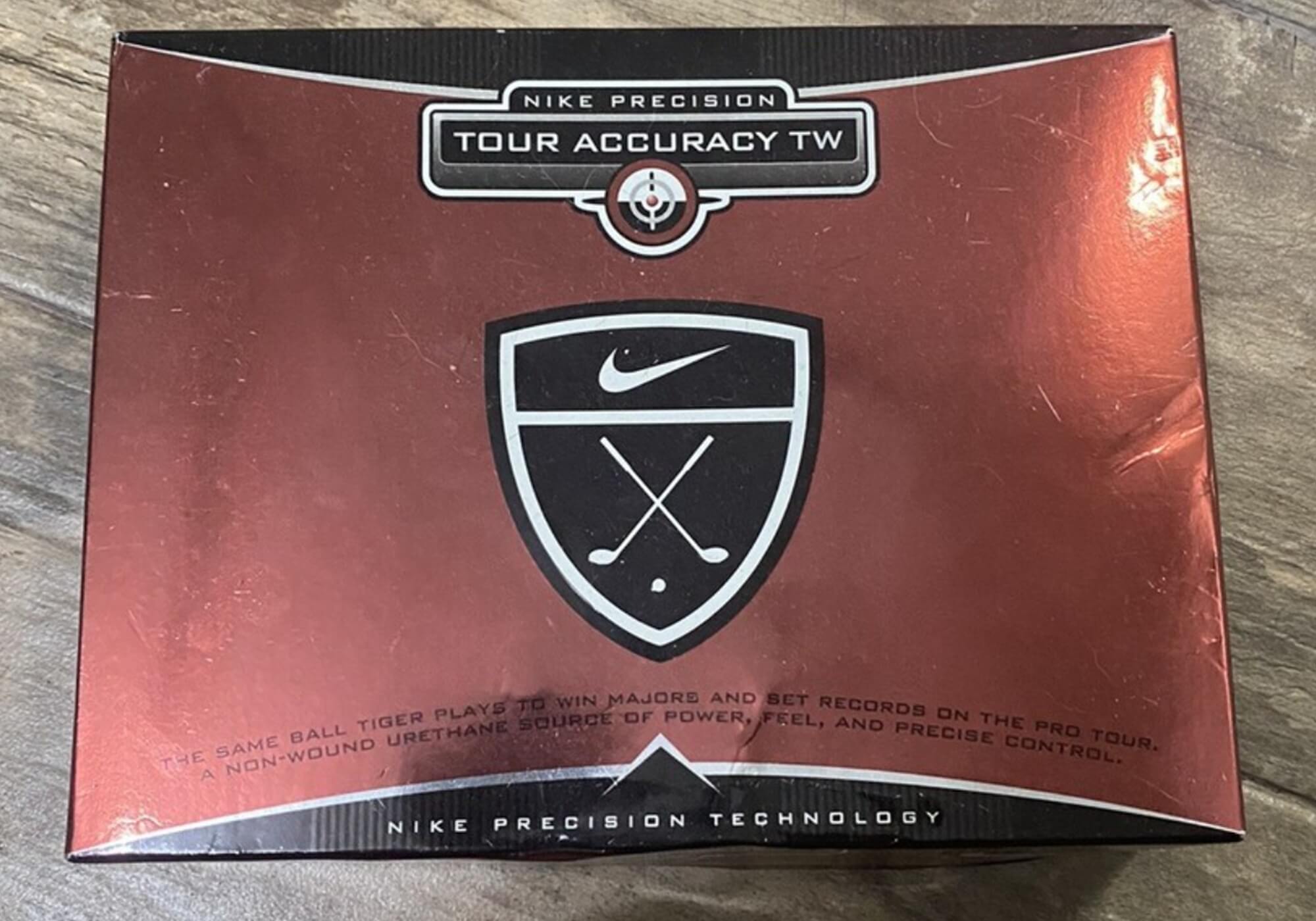
Today, we’re going to dive into a story that’s fascinated me for a long time. It’s the story of how the NIKE Tour Accuracy, the ball that fueled Tiger’s incredible run of four straight majors in 2000-2001, came to be. It’s also the story of how two huge companies, NIKE and Bridgestone, worked together to create that ball.
This story also has a few interesting twists and turns, just to keep you on your toes.
How ‘bout it, history junkies, shall we get started?
History’s Mysteries: The story of the NIKE Tour Accuracy
Many of you probably know this already but the original Tour Accuracy was a collaboration between NIKE and Bridgestone. NIKE’s part was that they had Tiger Woods. Bridgestone’s part was a bit more substantial.
However, here’s something that maybe you didn’t know. Every NIKE ball that Tiger played, from May of 2000 when he switched from the Titleist Professional, until the day NIKE shut down its golf equipment division in 2016, was also made by Bridgestone. That would include not only the original Tour Accuracy but also the TW models of the NIKE ONE, NIKE ONE Platinum, NIKE ONE Tour and NIKE ONE Tour D.
I didn’t know that, either.

“We OEM’d those balls for them,” Bridgestone Marketing Director David Vogrin tells MyGolfSpy. “Their success was our success. Even now, when we assume everyone knows, we do focus groups and people don’t realize that we made the balls Tiger used for 67 of his 82 PGA wins and for 13 of his 15 majors.
“It’s really fun to tell people that story.”
The seeds of the solid-core revolution
The solid-core golf ball officially dates back to 1972 and the Spalding Top-Flite. It was a two-piece solid-core ball with a Surlyn cover. The Top-Flite was firm (“Rock-Flite, anyone?) and more durable than the liquid-center, balata-covered balls that dominated golf at the time. It was also lower spinning and noticeably longer than balata balls.
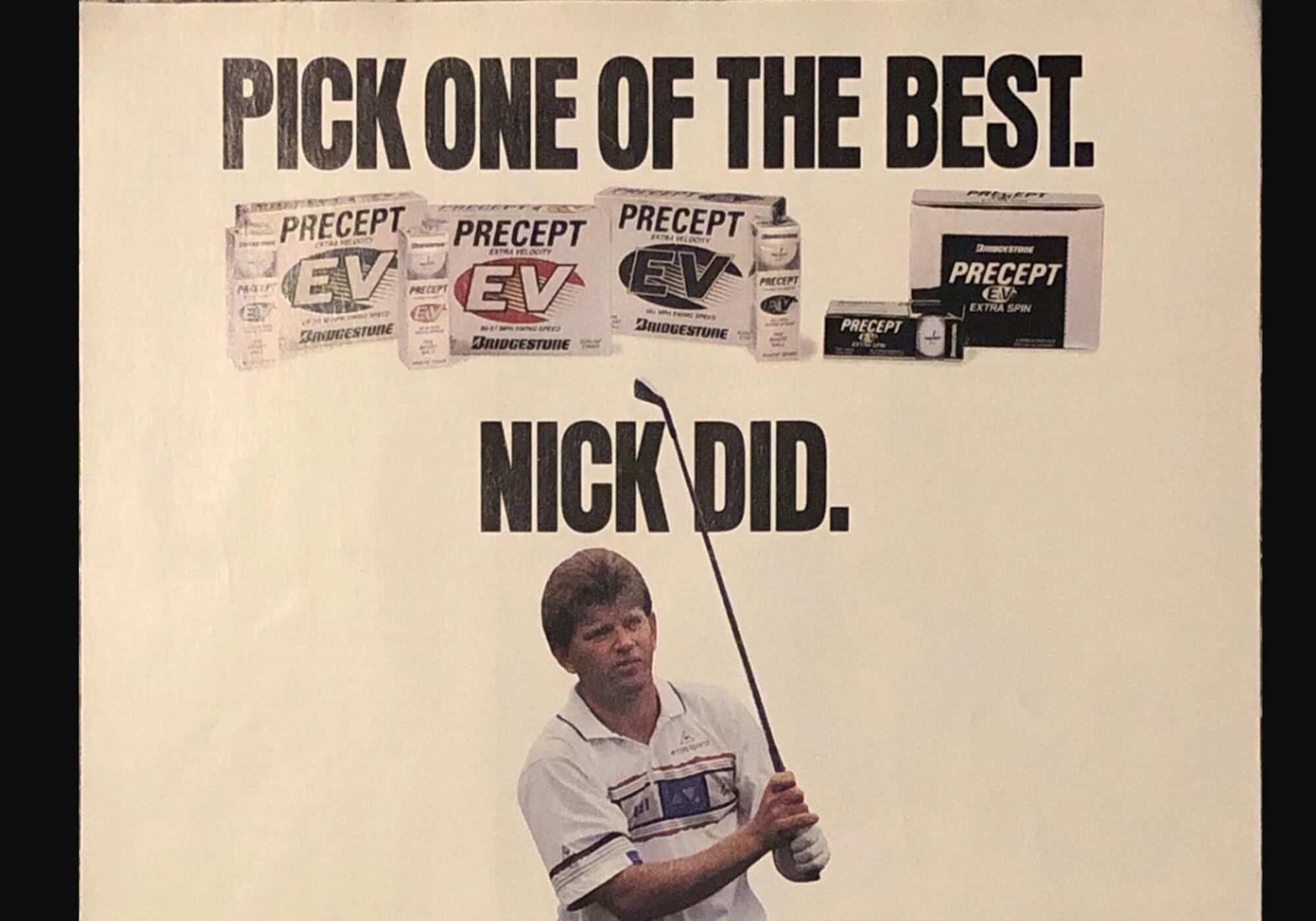
Bridgestone opened its North American manufacturing facility in Covington, Ga., in 1990 (it’s in the process of closing down now). One of its earliest solid-core balls was the Precept EV Extra Spin. It was a two-piece, Surlyn-covered ball. What makes it significant is that Nick Price won two majors in 1994 with that ball, likely making him the first golfer to win a major with a solid-core ball.
In 1996, Spalding came out with the Top-Flite Strata, widely considered the first multi-layer, solid-core urethane ball. Mark O’Meara rode the Stata Tour to his greatest season ever in 1998, winning the Masters and the Open Championship.
This is where Tiger enters the chat.
By late 1998, Tiger had won seven pro tournaments including the 1997 Masters. He was 22 years old with a five-year, $40-million apparel deal with NIKE and a five-year, $20-million equipment deal with Titleist in his pocket. But he wasn’t Tiger. Not yet.
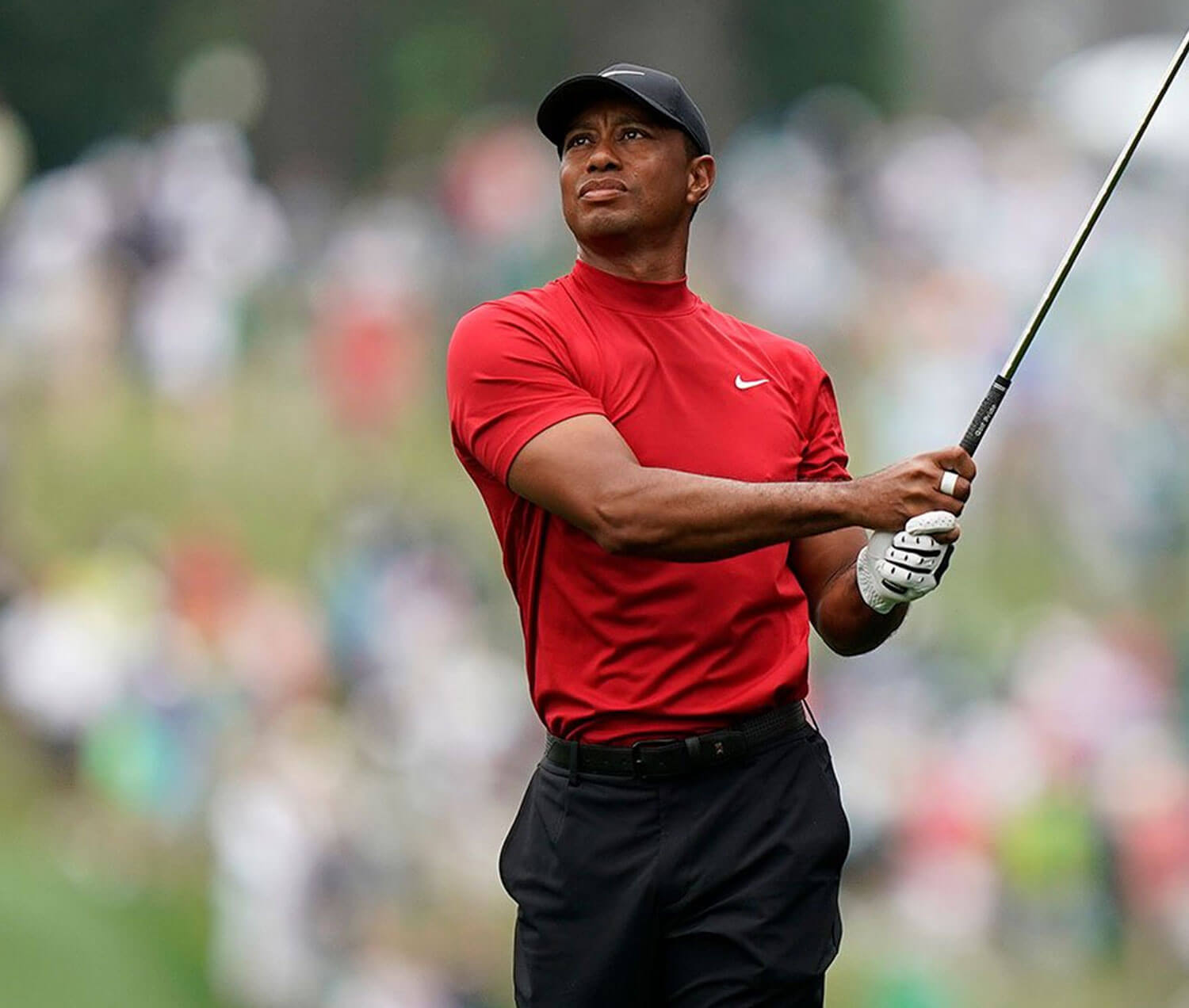
Then came a fateful practice round with O’Meara.
“It’s the ball”
During that practice round, Tiger was using his gamer, the Titleist Tour Professional. It was a traditional wound ball with a urethane, rather than balata, cover. Tiger noticed that O’Meara was getting significantly more spin and check on his pitch shots and asked O’Meara how he was doing it. O’Meara joked that it was his technique.
The legend goes that Tiger watched more closely for a few holes and eventually said, “It’s the ball.”
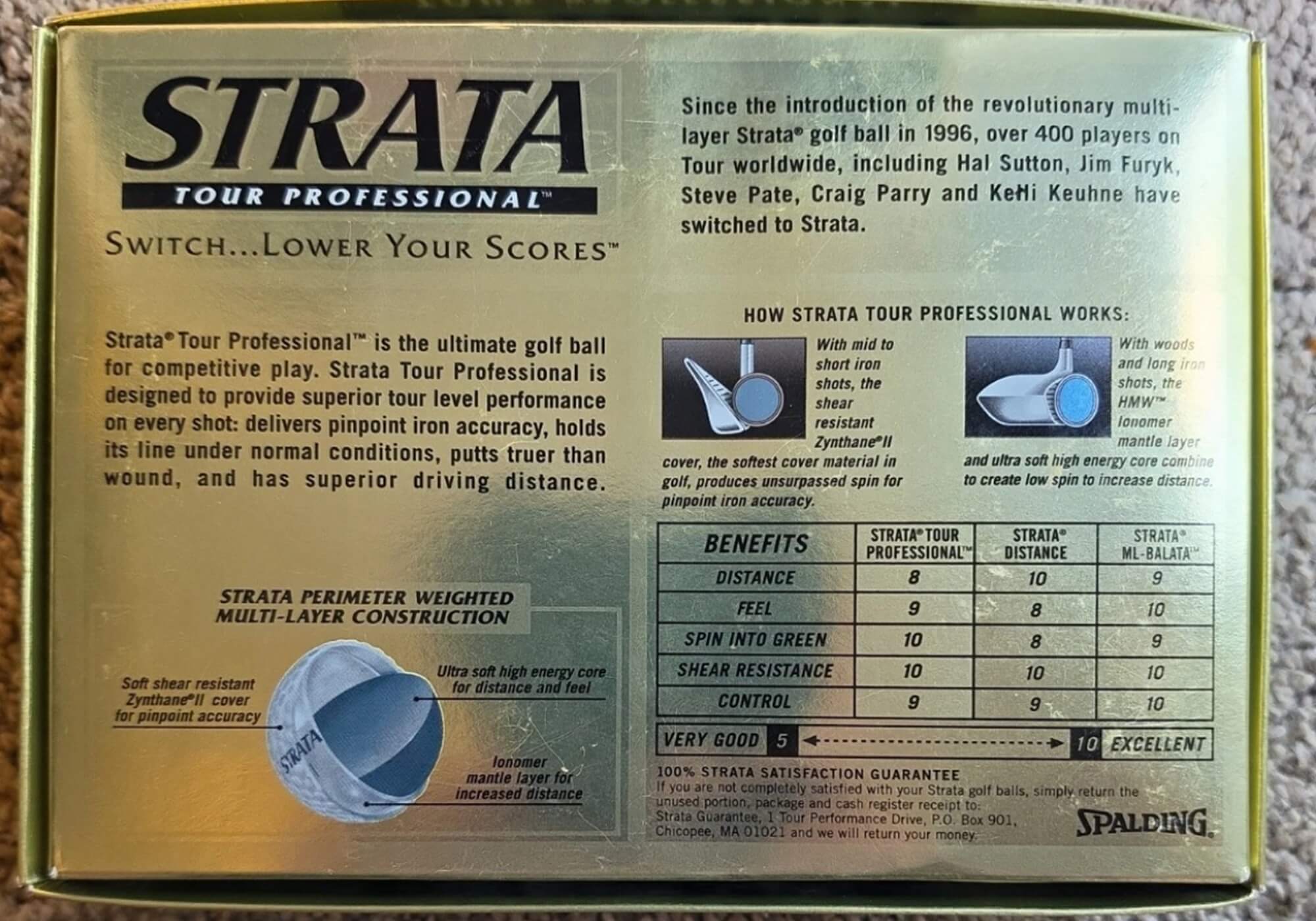
The Strata had seemingly contradictory characteristics for the time. It was low spin off the driver but offered plenty of spin around the green. It was more durable than a wound balata and was considerably more consistent in the wind. That planted a seed with Tiger that, despite all his talent, he was at an equipment disadvantage.
Tiger had a phenomenal 1999 using the Tour Professional, winning eight tournaments and his second major at the PGA Championship.
“At that point in his career, he was seeing things change out there,” says Vogrin. “He had friends who were exploring solid-core golf balls.”
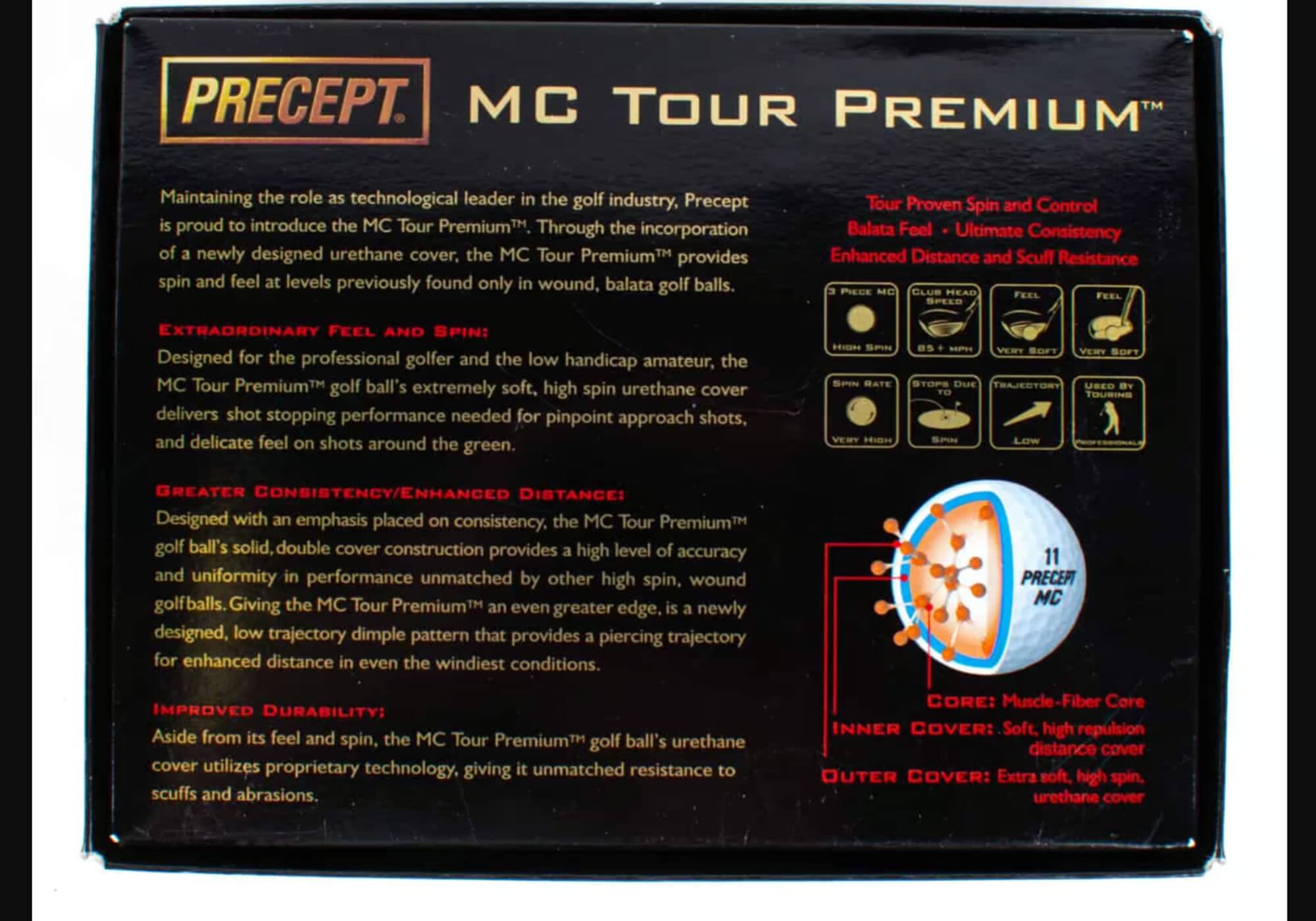
Here’s another fact people tend to forget. The Strata was the first multi-layer, solid-core urethane golf ball. But did you know the second one on the market was actually from Bridgestone? Yep, in January of 2000, Bridgestone launched the Precept MC Tour Premium. Behind the scenes, however, Bridgestone and NIKE were working on a joint venture to create a solid-core ball just for Tiger.
The NIKE-Bridgestone partnership
NIKE signed Tiger to that huge five-year deal in 1996. With eyes set on a bigger deal in 2001, it started the process of getting into the equipment business.
One problem. Even though NIKE had Tiger, it didn’t have the equipment expertise to make it happen. Bridgestone, on the other hand, had technical expertise but had not yet started marketing anything under its own name. It was only selling balls under the Precept brand (it wouldn’t sell a Bridgestone-branded ball until 2004).
Bridgestone also had an ace in the hole, a golf ball engineer named Rock Ishii. Ishii had been with Bridgestone since the late ‘80s and had worked on its earlier solid-core balls. Not long after Tiger’s practice round with O’Meara, NIKE started looking for ways to make a ball for Tiger. That led to Bridgestone and to Ishii, who became the point man between the two companies.

Ironically, Ishii would leave Bridgestone in 2002 to become NIKE’s Senior Director of Golf Ball Innovation.
“Ishii started working with Tiger right away, listening to his feedback and what he wanted in a solid core ball,” says Bridgestone Senior Marketing Manager Adam Rehberg. “The biggest thing he didn’t want was firm. He loved that balata feel.”
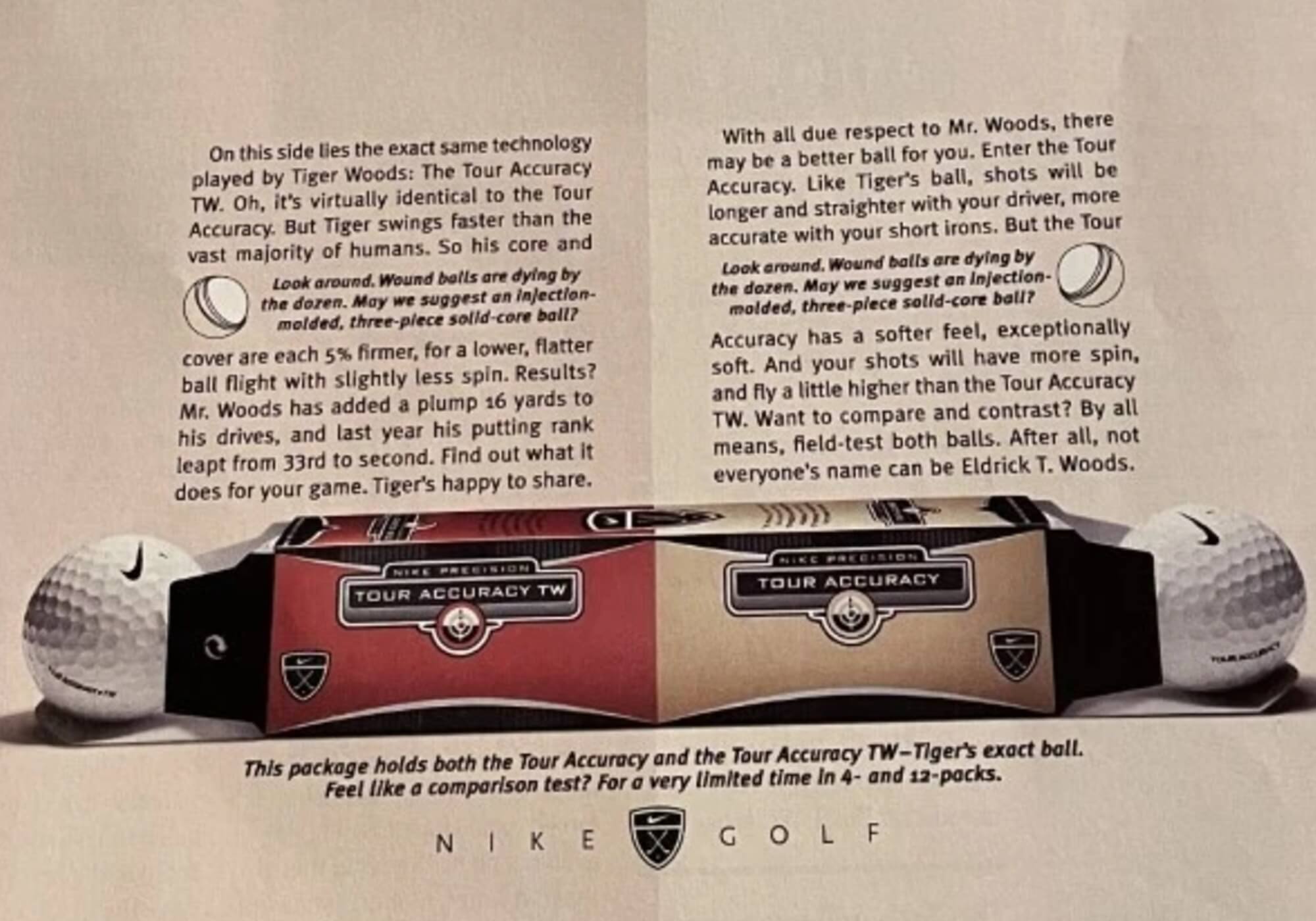
“At the time, Tiger was used to launching his driver at about eight degrees with 3,500 rpm of spin,” adds Vogrin. “Back then, eight degrees and 3,500 rpm was where everyone lived with wound balls.”
When Tiger started testing Bridgestone’s solid-core prototypes, however, he immediately saw launch increase to 12 degrees and spin drop to around 2,200 rpm.
“Can you imagine knocking 1,300 rpm off your spin while also launching the ball 50 percent higher instantly, just by changing golf balls?” says Vogrin. “The ball was going 50 yards farther on mathematics alone.
Making the switch
All of a sudden, a guy who already won 15 tournaments and two majors, who was about to turn 24 and who was the most athletic, high clubhead speed guy the game had ever seen, was about to get even more out of his golf ball.
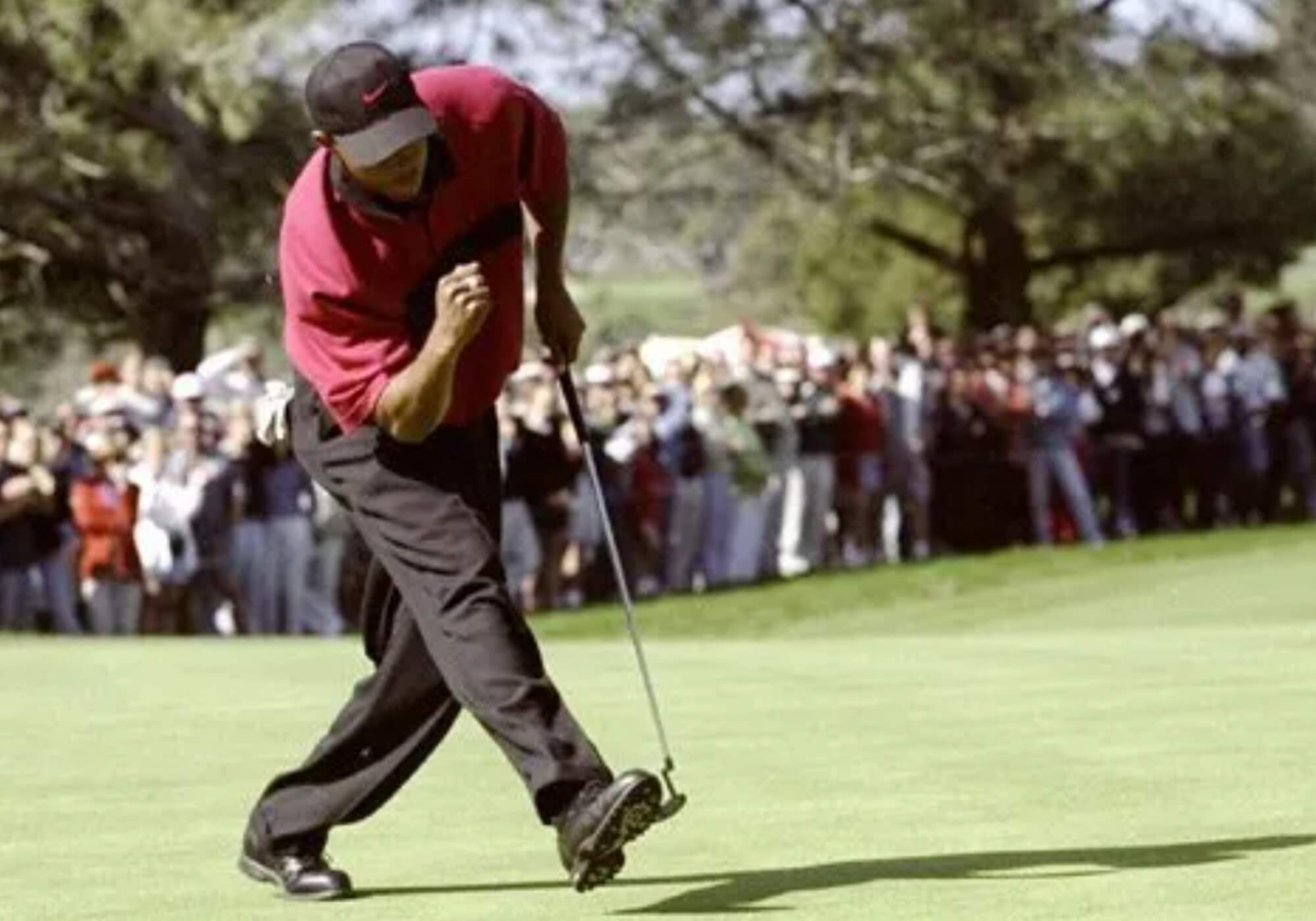
Ishii travelled between Japan and Florida regularly in 1999, delivering prototypes for Tiger to try. Bridgestone was trying to match Tiger’s launch, shot shape and trajectory preferences. By early 2000, they had it. Both Bridgestone and NIKE figured Tiger would wait until the offseason to put the ball in play but he surprised everyone when he put the new Tour Accuracy in play at the Deutsche Bank-SAP Open in Germany that May. He finished third. A week later, he used the Tour Accuracy to win the Memorial. His next start would be the U.S. Open at Pebble Beach.
In case you missed it, he won by 15 strokes.
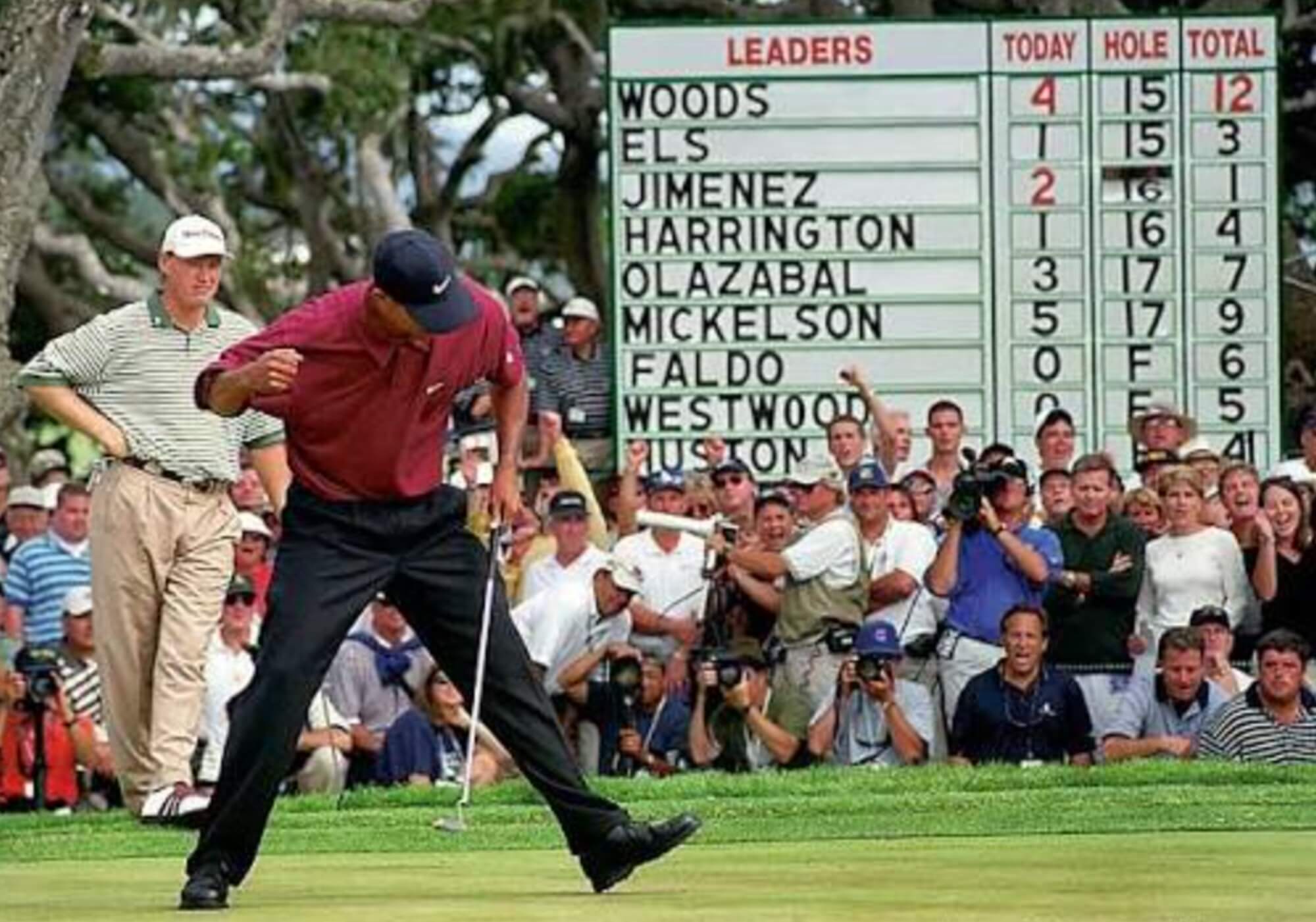
A month later, Tiger won the Open Championship at St Andrews by eight strokes. In August, he won the PGA in a playoff over Bob May and, the following April, he completed the Tiger Slam with a two-stroke victory over David Duval at the Masters.
It was the first and, so far, only time one man has held all four major championship trophies at once. By the 2001 Masters, however, Titleist had finally launched the Pro V1. Tiger’s win at Pebble put the wound balata on life support. The fact that Titleist staffers, who had been clamoring for a ball equal to Tiger’s for months, switched wholesale to the Pro V1 ultimately pulled the plug.
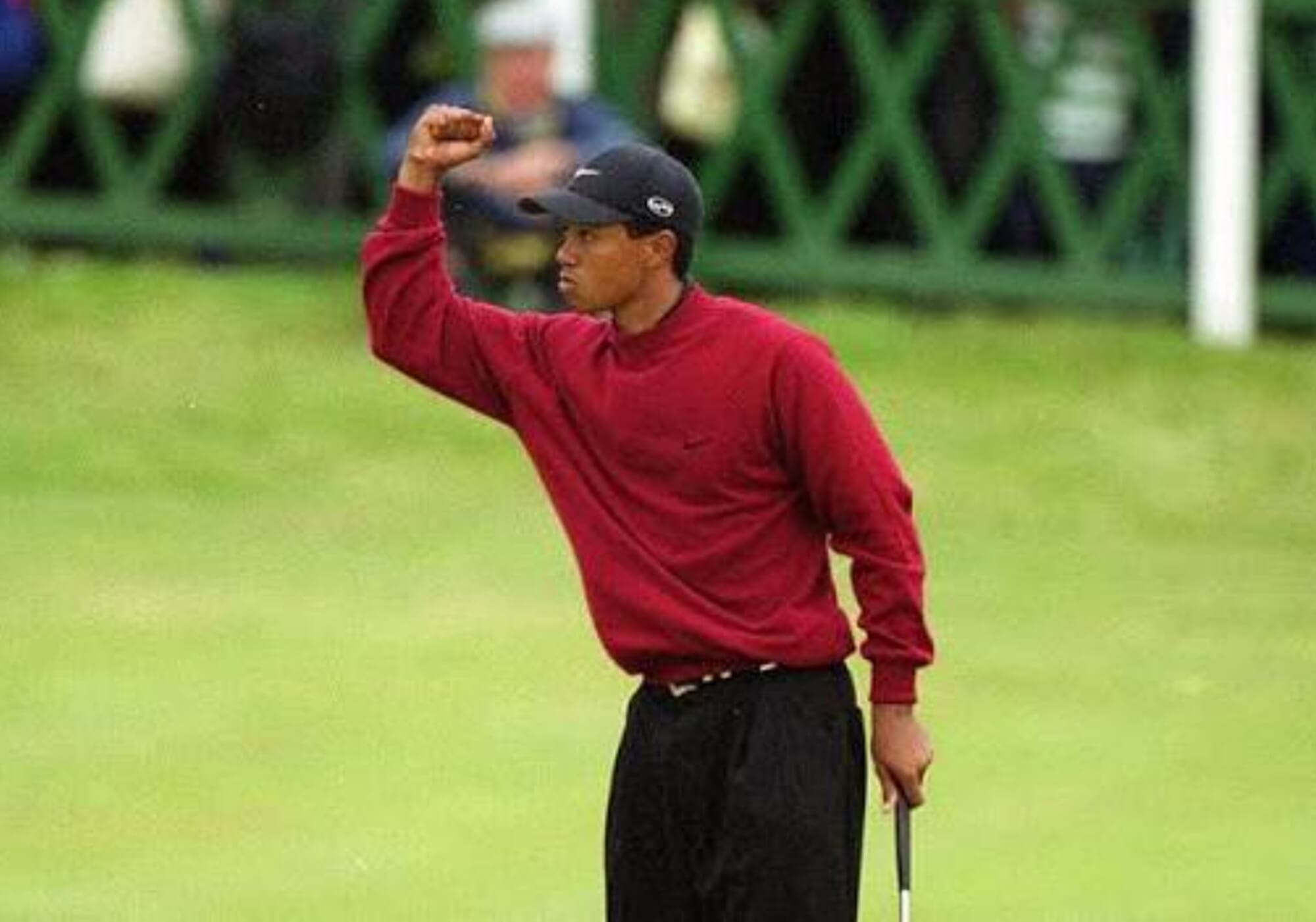
The wound golf ball was dead.
It wasn’t just the distance
While Tiger’s distance with the new Tour Accuracy was substantial, Vogrin and Rehberg say Tiger was most impressed with what it could do with his irons.
“He made a career on knowing that his ball is going to launch lower with enough spin to stop instantly,” explains Vogrin. “He likes to control distance with spin and trajectory rather than launch and spin. Then, as now, he’s all about hitting his windows.”
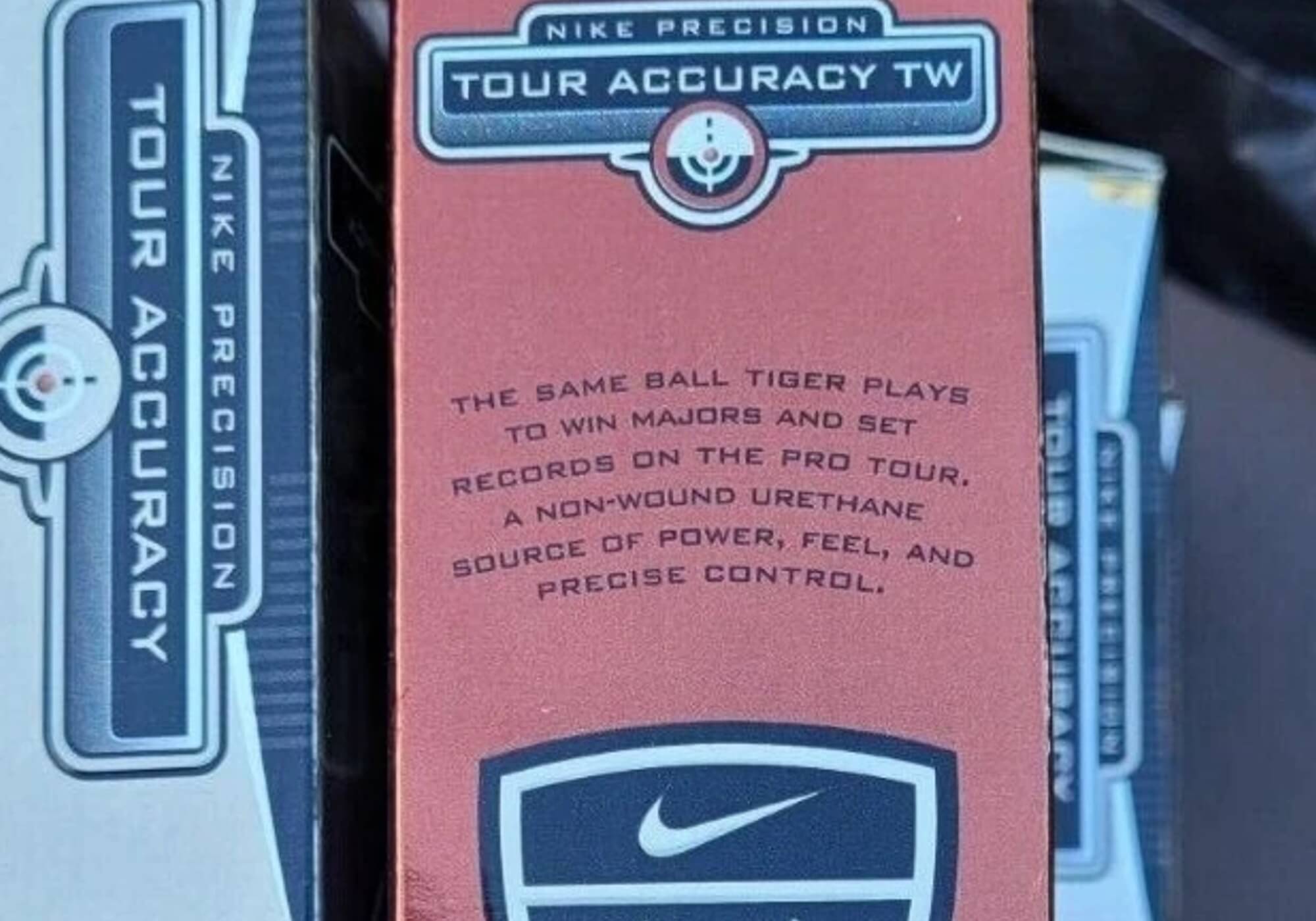
“We did a Walk ‘n Talk video with Tiger about the transition earlier this year,” says Rehberg. “I thought for sure he’d say the biggest difference was distance. Part of it was but he said it was really about control and knowing where the ball was going to end up.
“He said with wound balls, they had to play for drift. When they hit their peak, they’d just move so much. If you wanted to hit a left pin through a right-to-left wind, you’d have to aim for the bunker to the right of the green to have any hope of getting close. He said with his new ball, he could just take dead aim.”
Think about that for a second. Giving Tiger Woods, the most prolific ball striker of his or maybe any era, the ability to take dead aim on any pin?
“That should send shivers down anyone’s back,” says Rehberg.
“The ball allowed him to play aggressively safe,” adds Vogrin. “He didn’t have to throw his ball 40 feet to the left and worry about it drifting 50 feet to the right and off the green. He could aim 25 feet left of the pin and if the wind did move it, it wouldn’t move it to the right of the pin.”
History’s Mysteries: Bridgestone and the Tour Accuracy legacy
When Tiger put the Tour Accuracy in play in May of 2000, about 80 percent of the field was still playing a wound ball. The sea changed almost immediately. In 2001, not a single golfer on the PGA Tour posted a win with a wound ball.
Not one.
No one on the LPGA, Seniors, European, Canadian, Buy.com or Japan golf tours did, either.
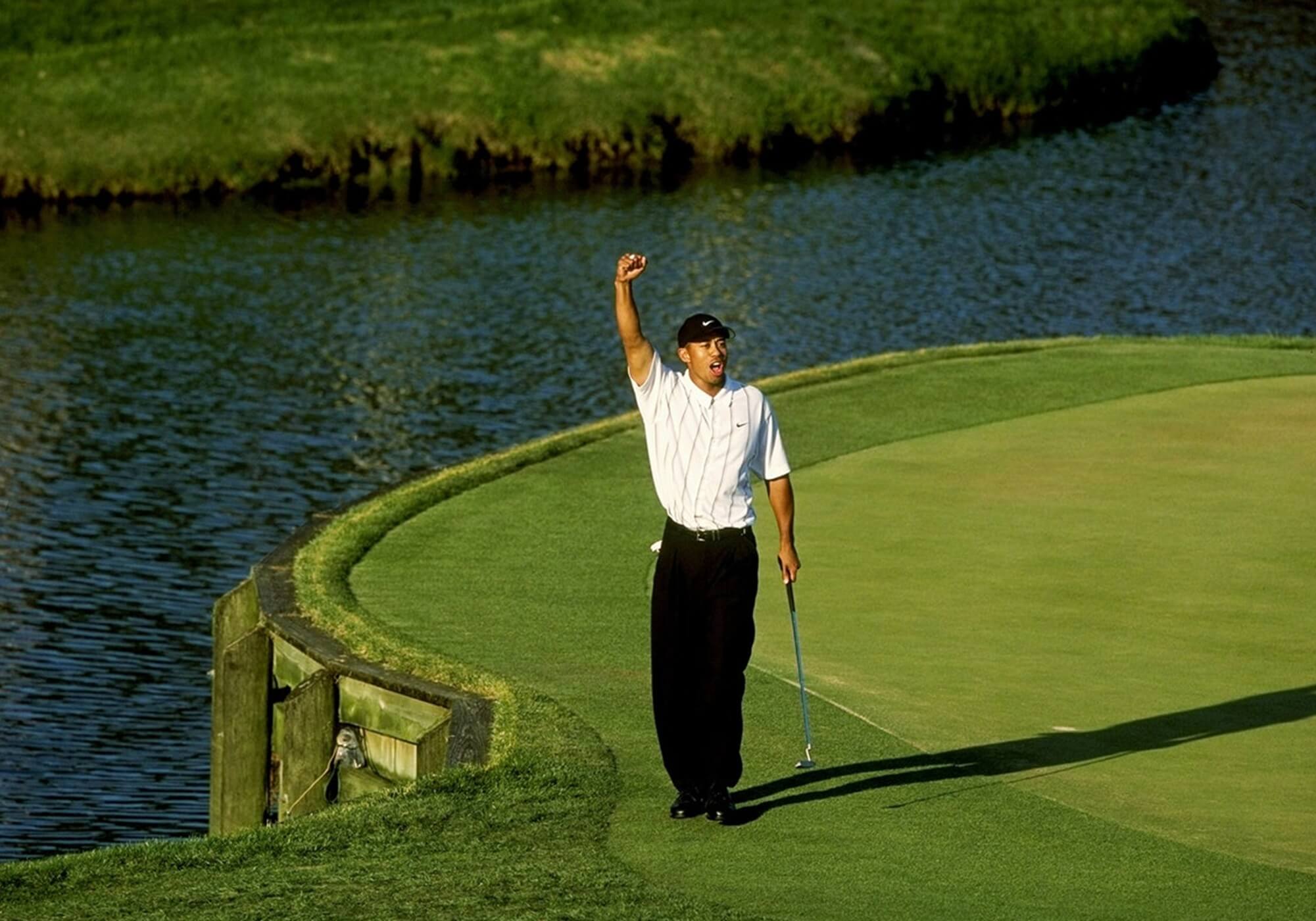
“Tiger told us during that Walk ‘n Talk that he felt the ball was a huge advantage,” says Rehberg. “He was already the best player in the world but in 2000, he knew he had a competitive advantage thanks to his golf ball.”
There was one nagging question I had for Vogrin and Rehberg. Just how different, really, was the Tour Accuracy from the Precept MC Tour Premium that Bridgestone had already launched that January?
“There were some differences, primarily cosmetically,” says Vogrin. “There weren’t going to be any patent infringement issues because we were helping NIKE make a golf ball. The key technologies, like the seamless cover, the injection-molded urethane and the gradational core, were all ours.”
“Gradational cores [where the core is soft in the center and gradually gets firmer toward the outside] weren’t even a thing back then,” adds Rehberg. “Cores were little rubber balls with rubber bands around them until we made a gradational core.”
History’s Mysteries’ parting thoughts
When NIKE exited golf equipment in 2016, Tiger’s return to Bridgestone was really a fait accompli for one simple reason: since 2000, he’d always played a Bridgestone-made golf ball.
“Believe it or not, Tiger plays a stock Bridgestone golf ball,” says Vogrin. “When he signed with us, he played the B330-S. He liked the softer, spinnier version of our tour balls.”
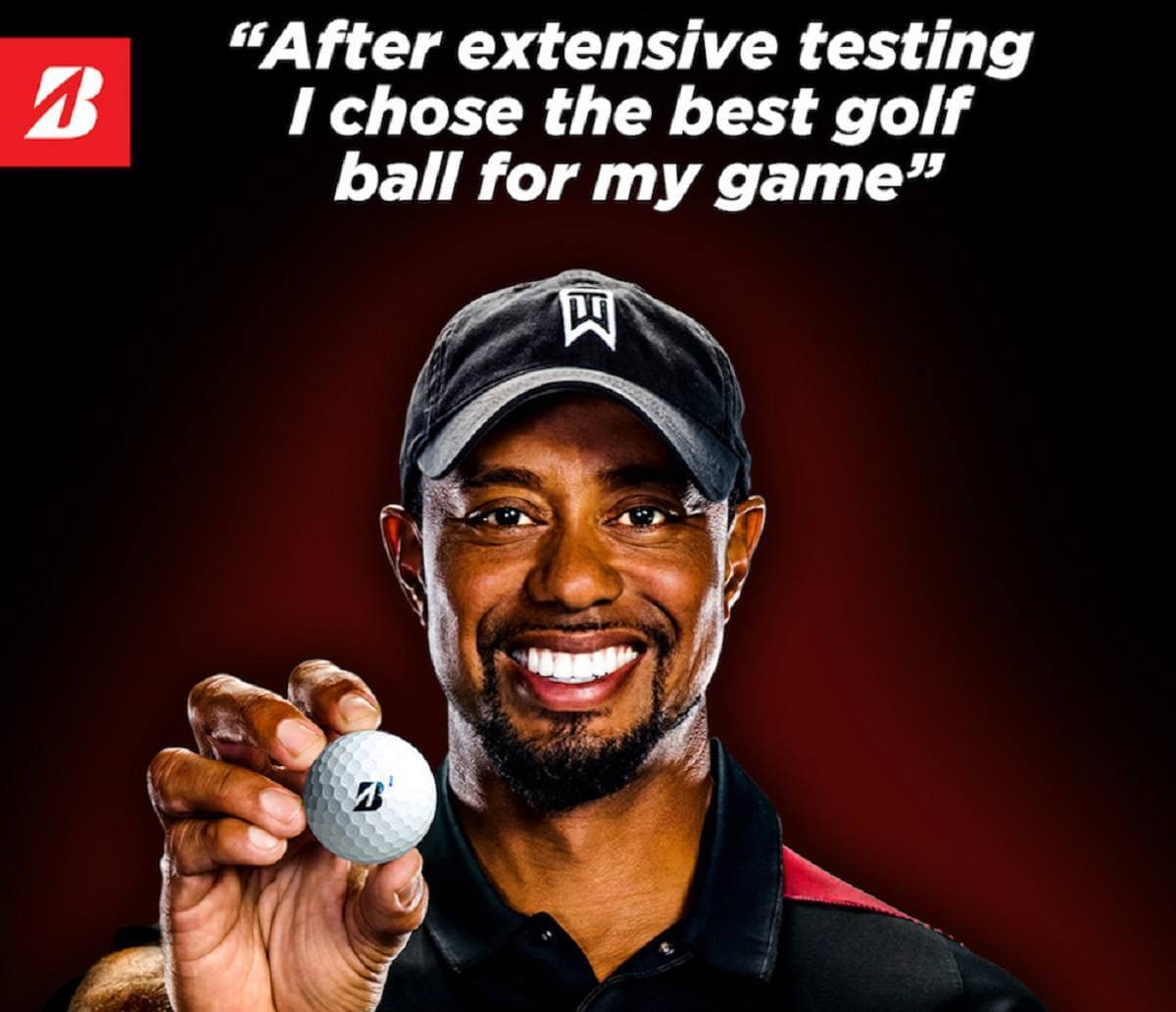
This year, however, Tiger switched to the new, firmer Tour B X.
“Everything for him is about those nine windows,” says Rehberg. “Once he was able to put the X through those windows and once the short-game performance was there and the sound was there, the X provided him with a little more distance.”
Of course, Tiger’s not playing now. We don’t know when, or even if, he’ll ever play again. But when he did play, he did things with a golf ball that few of us had ever seen before and might never see again.

And because this is History’s Mysteries, it’s important to know that regardless of the brand name on the ball, he was doing it with a Bridgestone. That has to count for something.
We hope you enjoyed this latest edition of History’s Mysteries. As always, we’re interested in what you have to say. Tiger is up there with Hogan and Nicklaus as the best the game has ever seen so please share your memories of Tiger the player.
As for the rest, well, let’s choose to be grown-ups today and keep it on topic.









athalonius
3 months ago
Now, if they only taught history in school like that. I had no idea Bridgestone was behind every Nike ball Tiger played. It’s amazing how one piece of equipment can completely change the trajectory of the game. I’ve been gaming Bridgestone balls for years, and stories like this only make me appreciate the brand even more. Thanks for putting together such a well written piece