


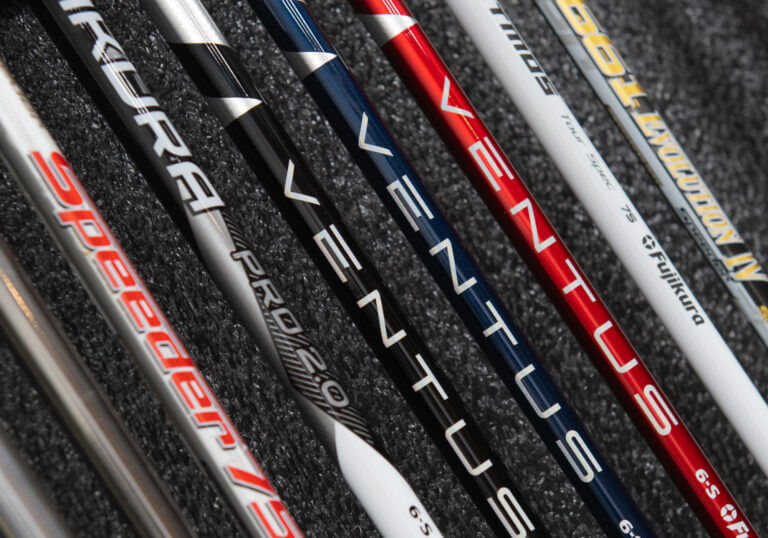
There’s one area of buying new golf clubs that most golfers still overlook: the shaft. There’s endless chatter about driver heads, new iron models, even grip options, but the shaft? It rarely gets the attention it deserves. Golf shafts are tricky. There are hundreds of options, confusing labels and very little education.
Most golfers assume the shaft they’re given is “good enough.” In reality, the wrong shaft can wreck your timing, cost you distance and make good swings feel like bad ones. Here are six signs your shaft flex is hurting your game.
1. You’re struggling to find the center of the face
If you feel like you’re swinging well but still missing off the toe, heel, high or low, your shaft may be the issue. Consistency is hard in golf and while there is always a chance your issues are swing-related, a mismatch in flex, weight or kick point can throw off your timing and make it hard to find the sweet spot.
If the shaft is:
- Too soft? It can release early and shut the face, leading to heel strikes or hooks.
- Too stiff? It may delay the release, pushing the contact toward the toe.
- Kick point mismatch? Can alter dynamic loft and make the strike unpredictable.
Use impact tape or a launch monitor to track your miss patterns. If you find it is consistently in one spot, you may want to have your shaft evaluated to make sure it’s the best fit. Trying a few different shafts and tracking the impact position may help resolve the issue.

2. Your launch and spin numbers are way off
If you are hitting golf shots that travel straight up in the air or fly low and never reach peak height, your launch and spin numbers may be impacting the ball flight.
Some signs to watch for include:
- Too low: Shaft may be too stiff or have a high kick point.
- Too high: Shaft could be too soft or have a low kick point.
- Excess spin: Likely from an early-releasing, soft-tipped shaft.
- Too little spin: Often caused by tip-stiff or heavy shafts.
The optimal launch angle for most drivers is between 12 and 15 degrees. Depending on the swing speed, the ideal spin range is usually between 2,000 and 2,800 rpm. Adjust shaft flex and kick point based on your current launch monitor data.
3. Your tempo doesn’t match the shaft
Tempo matters as much as swing speed. If your transition and rhythm don’t match your shaft profile, you’ll struggle with timing and consistency. A fast tempo with a soft shaft makes the club feel like it lags.
Golfers who have a smooth tempo but play with a stiff shaft will feel like they have to muscle the club through the ball.
When you go for a fitting, pay attention to how the club “loads” during your backswing. Heavier shafts can help smooth out quick transitions. Lighter shafts may feel better to players with smooth and slower tempos.

4. You picked your shaft based only on the letter
Flex labels like “regular” or “stiff” aren’t standardized across brands. One company’s “regular” might be another’s “soft stiff.” Letter designations don’t tell you anything about weight, torque or kick point.
You can use clubhead speed as a guide or starting point but it’s not the full story
- 85–95 mph → Regular
- 95–105 mph → Stiff
- 105+ mph → Extra Stiff
5. You lost distance after upgrading to a “newer, better” driver
Have you lost distance after getting a new driver head? Was the ball speed impacted? The shaft may be holding you back, not the new clubhead. Compare the weight and profile of your old shaft versus the new one.
You may have upgraded the driver head but ended up with a shaft that is no longer a fit for your game.
New driver head, same or lower ball speed? It might be the shaft holding you back, not the clubhead.
Fitting is essential to ensure the head and shaft work together effectively.

6. It just feels off
Feel is feedback. If the shaft feels too soft, too stiff or like it takes effort to swing, trust that instinct. Try different weight/flex combinations with similar clubheads. Don’t assume “heavier means better” or “lighter means faster.” Test both and see what the numbers show.
Ask a fitter to show you profiles with different kick points to see how the feel changes.
Final thoughts
If you’ve been grinding away at your swing but nothing feels quite right, your shaft may be the problem. The wrong flex, weight or kick point can cause timing issues, launch problems and inconsistent strikes even when your swing is fine.
A quality fitting (with the right tools and a knowledgeable fitter) can help you get dialed in with a shaft that complements your swing and helps you play your best golf.








Dr Tee
1 year ago
Duh–not a neglected area. Most large and small retailers offer in-shop fitting largely aimed at selecting correct shaft.
Tony
1 year ago
I would have to agree with you. Most serious golfers are buying new and a lot of times it will come with a free fitting. It’s the golfers that are buying second-hand golf clubs that would have the issue. I don’t think they care that much, and they are probably still developing their swing so it’s also a non-issue in that case as well.