


A friend of mine brought up the idea of dominant eye and putting with me recently and it’s not something I’d ever given much thought to. I’d spent plenty of time on grip, speed and green reading but never on which eye I was aiming with.
So I took a deeper dive and experimented with it. It turns out I’d been lining up with my right eye, the dominant eye in my case, for years without realizing why. I tried a few different setups to see how they compared and the one with my dominant eye over the ball was clearly the one that worked best for me.
I won’t tell you it’s magic. But it’s one of those things worth understanding if you’re looking for some help with your putting.
The theory
Just as you have a dominant hand, you have a dominant eye. It’s the one your brain leans on most to judge where a target is, even though you’re looking with both eyes open.
The idea is that your dominant eye has a big say in how the line of a putt looks to you. If that eye isn’t positioned correctly over the ball, the line can appear slightly off from where your putter face is pointing. You might feel perfectly aimed and still start putts a little left or right, then make small compensations in your stroke to get the ball back on line.
Many instructors recommend setting up with your dominant eye over the ball or just inside it with your eyes square to the target line.
How to find your dominant eye
It takes about 10 seconds to find your dominant eye. Here are two options.
- Extend both arms in front of you and make a small circle with your thumbs and forefingers.
- With both eyes open, look through the circle at a distant object, like a flagstick or a spot on the wall.
- Keep looking at the object and slowly bring your hands toward your face.
- The circle will drift to one eye. That’s your dominant eye.
- To double-check, close one eye at a time. The object stays centered in the circle with your dominant eye and jumps out of it with the other.
Another method is to extend your arms and form a small triangle with your thumbs and index fingers and then center a distant object in the triangle. Close one eye at a time. The eye that keeps the object centered in the triangle is the dominant one.
What it means for your setup
Most golfers fall into one of two groups: same-side dominant or cross-dominant.
Same-side dominant (for example, right-handed and right-eyed)
This is the majority of golfers, by some estimates more than 70 percent. You’re more likely to prefer a putter with little offset or a center shaft. The ball may feel best slightly forward of center in your stance and you may be more comfortable with a slightly open stance.
Watch for your eyes drifting inside the ball. That’s the setup where the line can start to look misleading.
Cross-dominant (for example, right-handed and left-eyed)
It’s less common to be cross-dominant. If you are, you’ll be more likely to prefer an offset putter. The ball should feel better in the middle of your stance and a square stance will feel better to you.
Some cross-dominant players tilt their head slightly to bring the dominant eye into a better position. Jack Nicklaus is the example.
A possible connection to my putter
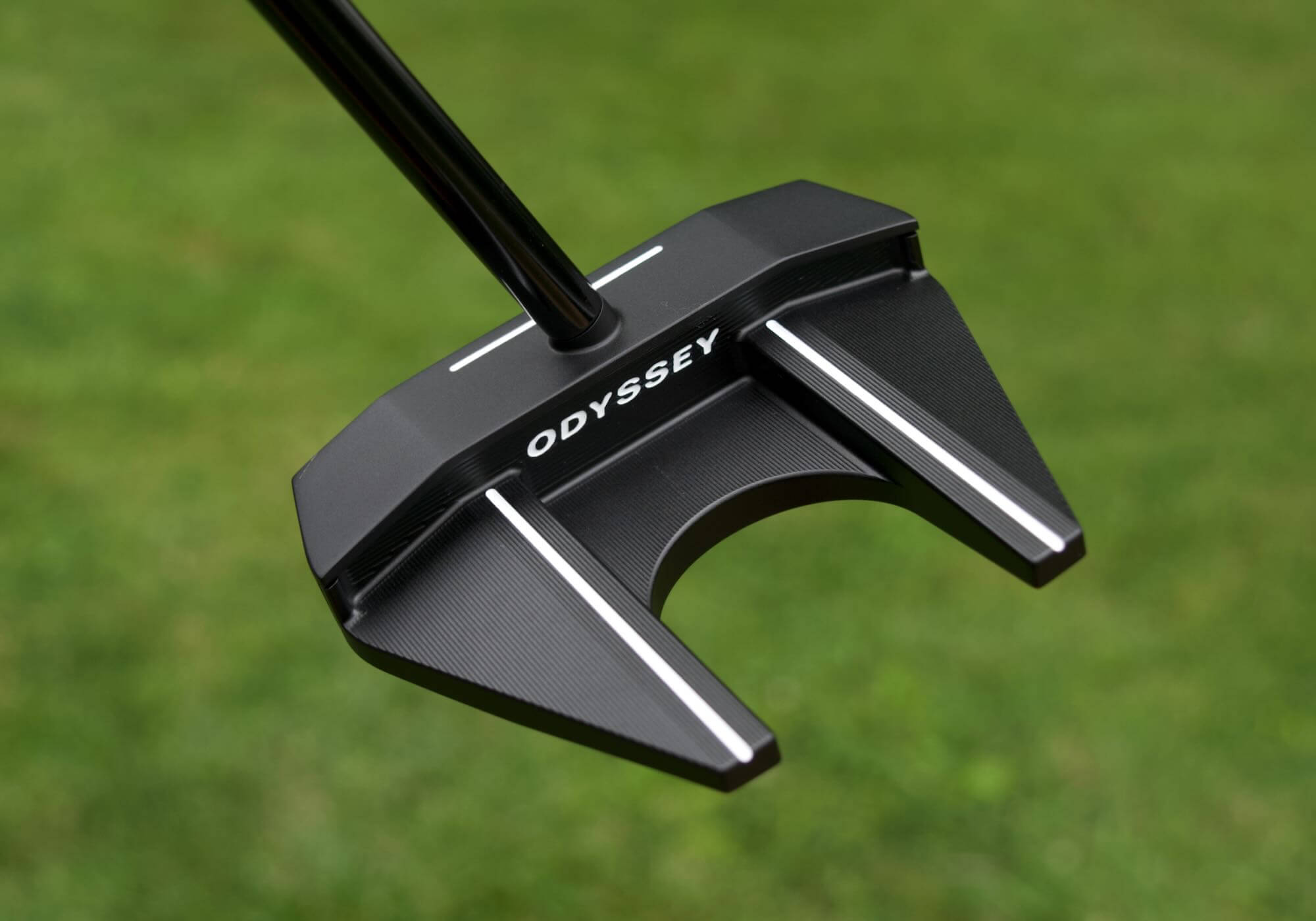
I started putting better this year after switching to a center-shafted putter and I think understanding my dominant eye might be part of the reason. Coaches often say same-side dominant players tend to like center shafts and less offset since that makes it easier to see the line with that eye over the ball.
It could be a coincidence and a new putter can help for plenty of reasons. But it lines up with what I found so it’s worth keeping in mind if you’re putter shopping.
The bottom line
Knowing your dominant eye won’t magically turn you into a great putter. But it takes 10 seconds to find out, it costs nothing to test, and it might explain why some setups feel better than others. If your putting could use a refresh, give it a try and see what you notice.






Leave A Reply