

The Stock Yardage Myth: How Often Amateurs Actually Hit Their Number
Instruction

The Stock Yardage Myth: How Often Amateurs Actually Hit Their Number

Support our Mission. We independently test each product we recommend. When you buy through our links, we may earn a commission.

The Stock Yardage Myth: How Often Amateurs Actually Hit Their Number

Most amateur golfers believe they have a “stock” yardage for every iron in the bag, e.g., “I know my 7-iron goes 160 and my 8-iron goes 145.” The numbers feel repeatable and predictable. Practice sessions reinforce that belief. But golf isn’t played on a range mat with no wind and perfect lies.

So how often do amateurs actually hit their stock yardage on the course?

Using Shot Scope on-course data, we looked at 7-iron performance only. Instead of focusing on how far the ball traveled, we measured consistency: specifically, how often a golfer finishes within ±5 yards of their own performance average distance.

This includes everything real golf throws at you: wind, uneven lies and elevation changes. Here’s what the Shot Scope data shows.

How often golfers hit their “stock” 7-iron

Handicap Group% of Shots Within ±5 Yards of P-Average
Scratch18.5%
5 Handicap17.2%
15 Handicap14.0%
25 Handicap12.5%

These numbers, with a 7-iron in hand, were lower than I expected. While consistency improves steadily as handicap decreases, it’s still not all that high. Scratch golfers hit their stock 7-iron about six percentage points more often than 25-handicap golfers.

The best players in this group land within five yards of their stock number less than 20 percent of the time. True repeatability on a “stock” yardage is rarer than most amateurs expect.

Why this matters for golf course management

Knowing your yardages is still critical. But the mistake many amateurs make is assuming their average distance represents what will happen most of the time.

It doesn’t.

If your 7-iron performance average is 160 yards, that means your typical full swing centers around 160. It does not mean 160 is what you can expect every time you pull that club.

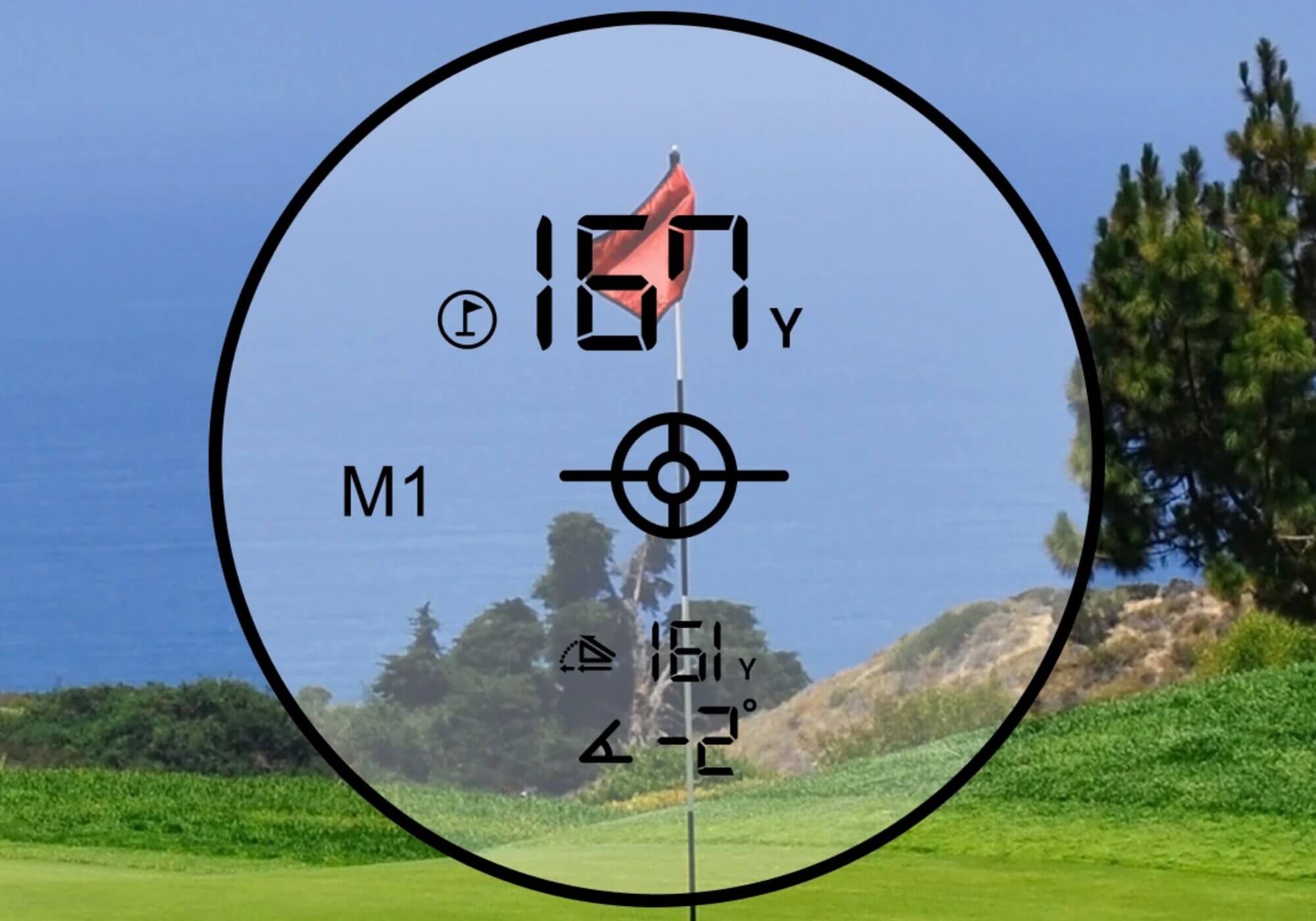
Let’s say the pin is 162.

Many golfers immediately think, “That’s a 7-iron.”

But if you only finish within five yards of 160 about 14 percent of the time (15-handicap average), a large portion of your shots are landing shorter than that number. A slightly low strike, a touch into the wind or a small ball-speed drop can easily turn that 160-yard club into a 152-yard shot.

Now you’re short of the green, bringing front bunkers and short-sided misses into play.

This is where better players separate themselves. They miss their number less often and manage dispersion more intelligently.
Think in ranges, not single numbers

The quickest way to apply this to your game is to start thinking in ranges.

Instead of saying, “My 7-iron is 160,” shift to: “My 7-iron typically carries between 152 and 165.”

That range will vary by player but the principle is the same. Your average is the center of your dispersion, not the number you should expect every time.

If your 7-iron averages 160 and your common misses are six to eight yards short or long, your effective carry window might realistically be 152 to 165.

Now let’s go back to that 162-yard pin.

If your lower-end carry is 152 and a meaningful percentage of your shots fall there, the 7-iron becomes a probability decision. This is where amateurs get into trouble. They match the club to the laser number instead of matching it to their dispersion pattern.

The takeaway isn’t that stock yardages are useless. It’s that they’re probabilities. The better you understand your dispersion, the smarter your decisions become and those small consistency gains are exactly what help you move to a lower handicap.


For You

For You

Instruction
Jun 9, 2026
If You Still Play Long Irons, Copy This Thought From Ludvig Åberg
PLM 2025_Most Wanted_Foresight GC3 PLM 2025_Most Wanted_Foresight GC3
News
Jun 9, 2026
College Golf Tournament Prep Looks Nothing Like It Did When I Played
News
Jun 9, 2026
The Best Father’s Day Golf Gifts That Won’t Break the Bank
Brittany Olizarowicz

Brittany Olizarowicz

Brittany Olizarowicz

Britt Olizarowicz is a scratch golfer, former teaching professional and one of MyGolfSpy’s leading voices on equipment testing and golf performance. She has spent more than 15 years working at private clubs in New York and Florida and now specializes in translating test data and swing mechanics into practical advice for everyday golfers. Britt began playing at age 7 and has never left the game. When she’s not writing, you’ll find her on the course, playing pickleball, cooking, running or out on the boat with her family.

Brittany Olizarowicz

Brittany Olizarowicz

Brittany Olizarowicz


    This site is protected by reCAPTCHA and the Google Privacy Policy and Terms of Service apply.

      Dave

      3 months ago

      I actually went through the motions of mapping my bag over the weekend. It was eye opening. My averages now give me a better idea of what to hit from what distances. I know it will likely be different once I’m out on course and with different conditions, but knowing a true driver average rather than assuming I’ll always get max distance will help me plan my play better.

      Reply

      George F.

      4 months ago

      Since these are distribution measurements, Ms. Olizarowicz, what’re the means and standard deviations for each of them? Both carry distance and horizontal miss. Assuming we can know the latter. Also, are these distributed normally?

      Those numbers would help to better define the size and spread of a given golfer’s typical shot distribution with a given club. Aside, being able to see a “typical” club’s shot fan, overlaid upon a picture of the green, is one reason I’ve liked provisualizer for my pre-round planning. Being able to see that, “Oh, I have to aim all the way over there to keep more than 15% of these out of (the water, OB, some death bunker),” is really helpful.

      You’re absolutely right on the need to think of those numbers as ranges, and those small percentages within +/- 5 yds is really eye-opening. Golf is hard.

      Thanks for sharing that data with us.

      Reply

      Chappy8

      4 months ago

      I have ShotScope and a launch monitor. I find the p-averages are fairly accurate, but I’d expect the result shown above.
      For example, my 5 iron p average is 224 yds. My launch monitor says it’s a 205-210 carry club. I know the number is juiced on ShotScope because I often hit it as a club on an elevated tee where I play. It also runs out a lot. I also use my 5 iron as a punch out from the trees. P average accounts for that, but it is biases for me.
      I think it matters where the distance variation comes from. I’m guessing for better players it’s coming from reading wind, fliers/lie, etc. I see a lot of high handicappers that don’t launch the ball and get significant rollout. The are just trying to make good contact so their issues are coming from strike.

      Reply

      Owen

      3 months ago

      That’s interesting. I have used shot scope for years but play a lot of different courses so have the feeling my P average is a little short for most clubs as playing new courses mean I play conservatively.

      Would be great to compare P average course by course or by season. – maybe then you could develop a feel for distances in the UK winter vs Colorado mountains

      David Elswick

      4 months ago

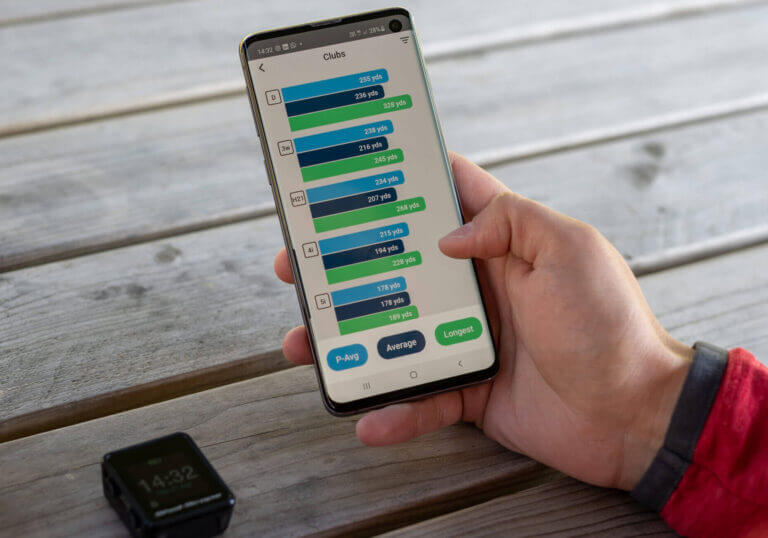
      Those numbers seem pretty harsh. I’ll have to do a better job of tracking my dispersion and see where I fall. I’m interested in the stock photo used in the article. What app tracks your shots and has that view. That would be handy to have.

      Reply

      sellemental

      4 months ago

      That is the Shot Scope app that tracks the data with their shot tracking products, e.g. V5 or X5 watch, and others. Can be very illuminating to your performance !

      Reply

      Gary

      4 months ago

      It’s why knowing your cover number is important. If it’s 160y pin and 148y front, my 7i hit with “average” distance can cover the front edge, so I’m on the green. If I pure it, maybe in high. My GIRs went up when I started playing the cover number and not just the PIN number.

      Reply

      Fake

      4 months ago

      With the rollout I get, I take a similar approach. I learned (and learned much too late, but I learned), that pinseeking meant I was overshooting the green much of the time. Not that I’m a big hitter, but I wasn’t playing the right shots.

      Reply

      Dean D

      4 months ago

      I’m incredulous about these numbers. How is this distance measured and is dispersion included? I’m aging and losing yardage these days so my “stock” numbers aren’t steady but for 25 years my misses were left or right often but distance was within 5 yards over 70% of the time with long & short almost equal missed & I’ve never been lower than a 7 handicap. I’m a mediocre iron player most days – is this really indicative of poor contact or decision making?

      Reply

    Leave A Reply

    required
    required
    required (your email address will not be published)

    This site uses Akismet to reduce spam. Learn how your comment data is processed.

    Instruction
    Jun 9, 2026
    If You Still Play Long Irons, Copy This Thought From Ludvig Åberg
    PLM 2025_Most Wanted_Foresight GC3 PLM 2025_Most Wanted_Foresight GC3
    News
    Jun 9, 2026
    College Golf Tournament Prep Looks Nothing Like It Did When I Played
    News
    Jun 9, 2026
    The Best Father’s Day Golf Gifts That Won’t Break the Bank