



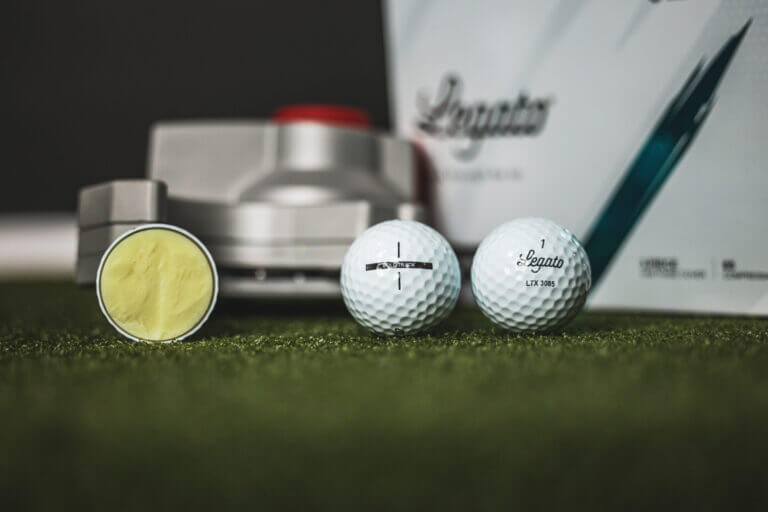
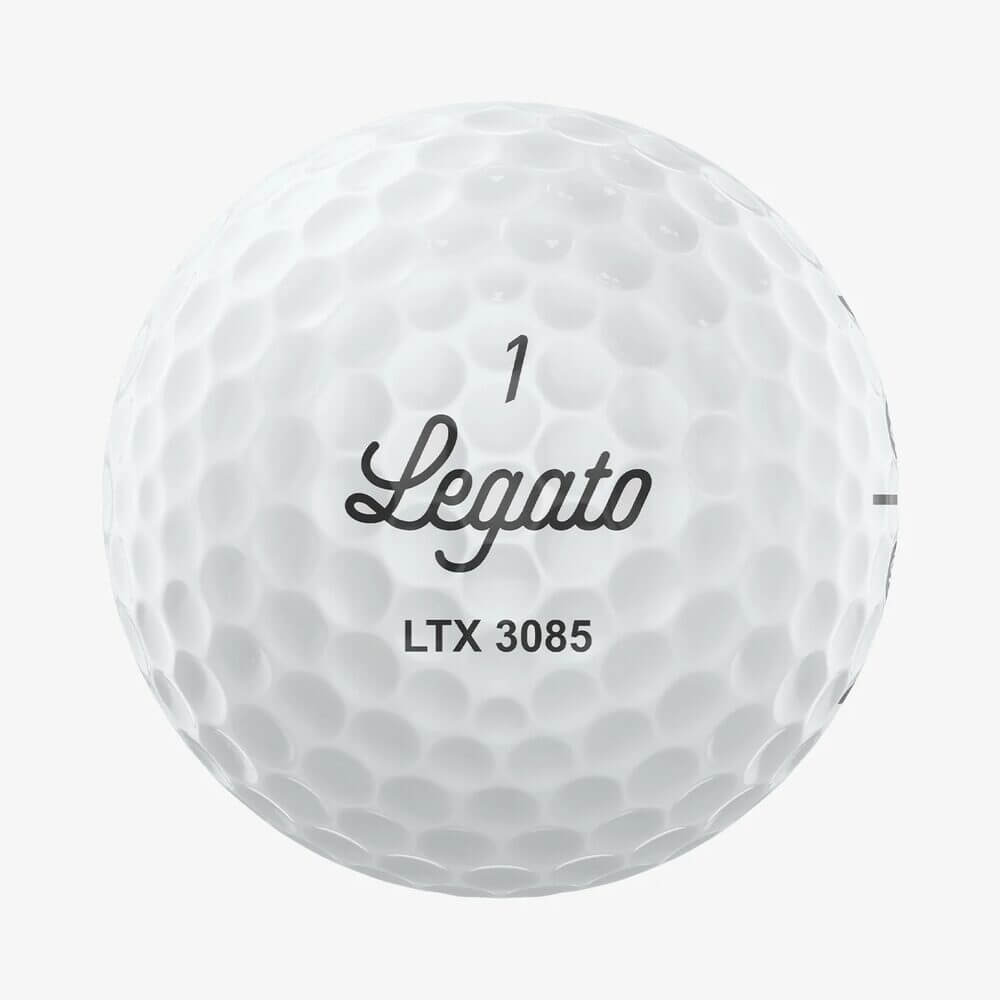
The Legato LTX 3085 is a urethane, three-piece golf ball made by Launch Technologies. It sits in a crowded mid-price segment and markets itself as a premium option. What Ball Lab can tell you is whether the manufacturing backs up that positioning. We measured weight, diameter, compression, roundness and balance across 36 balls and three boxes to give you an objective look at what you’re actually getting when you buy the Legato.
Here’s what the 2025 Legato LTX 3085 looks like under the microscope.
Legato LTX 3085
 Pros
Pros
 Pros
Pros - Diameter consistency rated B — the strongest category on the card
- Compression Symmetry rated Good at 2.0 points — each ball is reasonably internally consistent
Cons
 Cons
Cons - 5 of 36 balls flagged as bad — an 86% Good Ball rate is the worst result we've seen in this test series so far this year
- Nearly 1 in 7 balls exceeded the USGA weight limit — a manufacturing quality issue that's hard to overlook
Our Verdict
 Our Verdict
 The 2025 Legato LTX 3085 earns a Quality Score of 72 and a C-minus grade: Not Recommended. A Good Ball Rate of just 86 [percent, with five of 36 balls flagged as bad and weight consistency issues that saw nearly one in seven balls exceed the USGA weight limit. Diameter consistency was the one standout, grading at B and ranking as the strongest category on the card.
Product details
- Price: $31.99/dozen
- Construction: 3-piece urethane
- Compression: 89 (Firm)
- Factory: Launch Technologies
- Diameter: 1.6827 in
- Weight: 1.6149 oz
- Bad Balls: 5 of 36 (13.9%)

MyGolfSpy Ball Lab measures the quality and consistency of golf balls, giving golfers insight into what’s happening beneath the cover. Use Ball Lab as a starting point in your search for the right golf ball. Quality Scores are based on five key metrics: defect rate, compression consistency, compression symmetry, diameter consistency and weight consistency. Scores are weighted toward the factors that most affect performance and defective balls reduce the final score to reflect real-world quality.
Test results

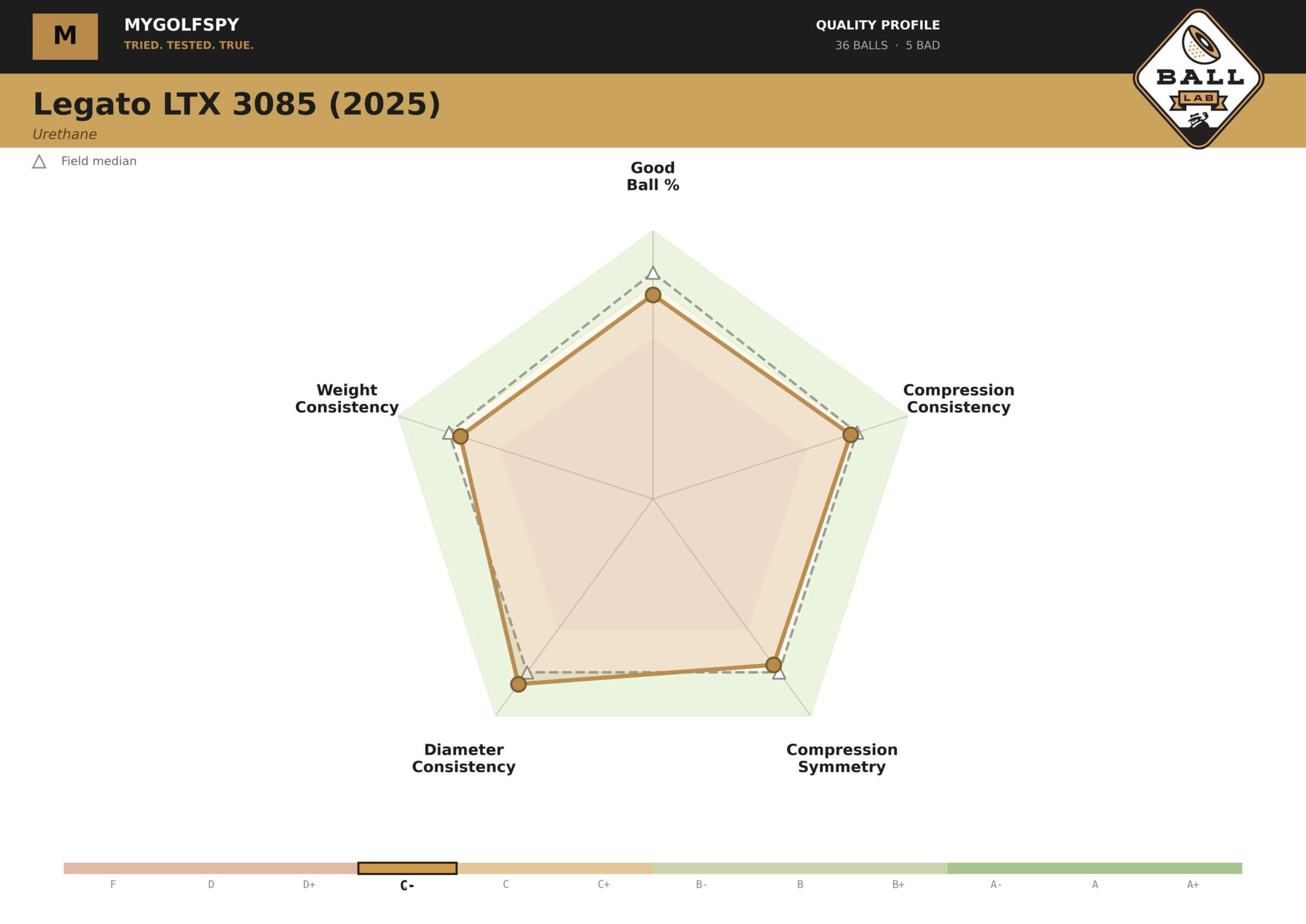
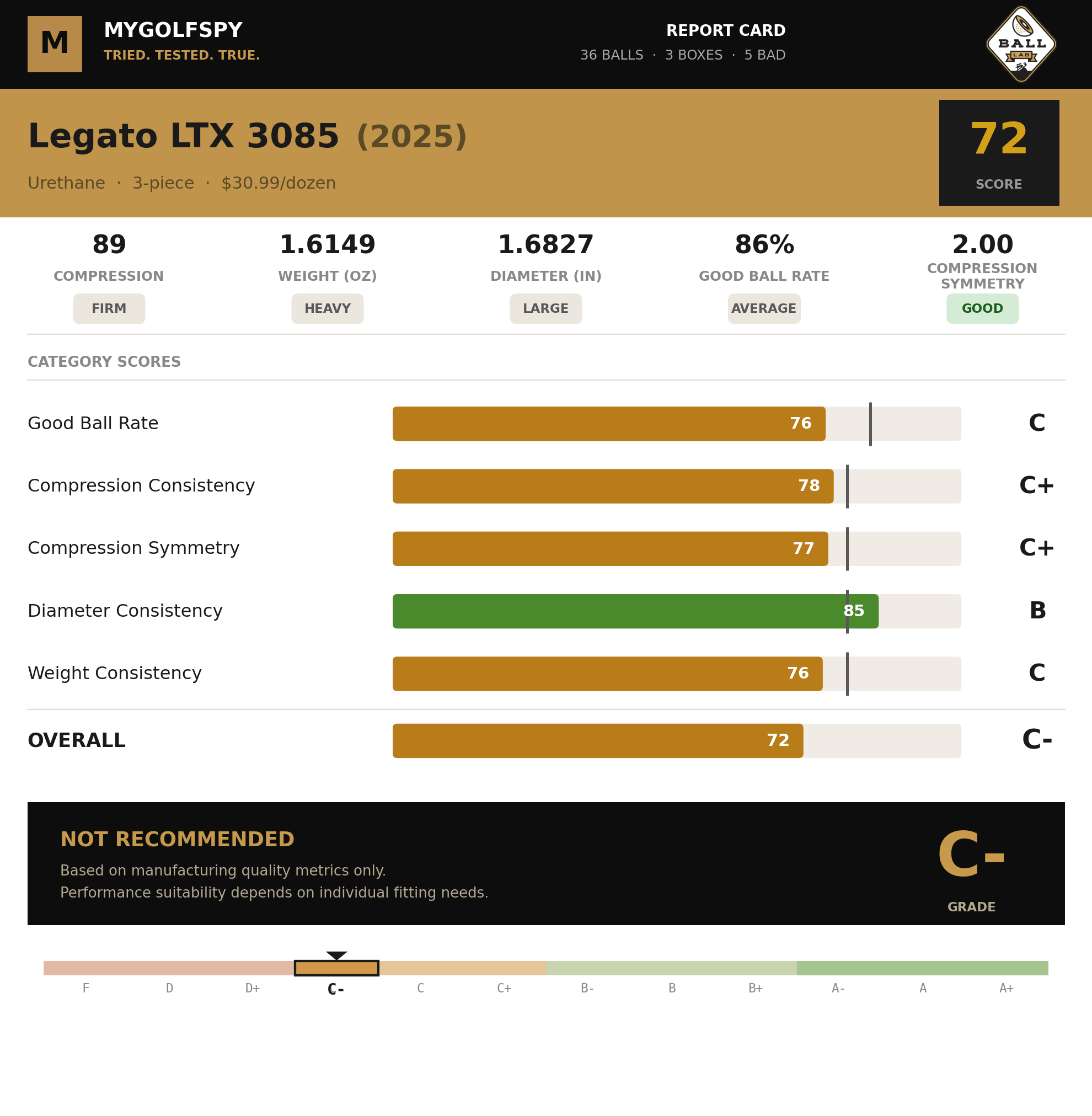
The 2025 Legato LTX 3085 scored 72 and earned a C-minus grade: Not Recommended. The headline number is dragged down by a defect rate that stands out in this test series and weight consistency issues that produced USGA limit violations in nearly one in seven balls.
Good Ball Rate came in at 86 percent. Five of 36 balls were flagged as bad; the worst result we’ve seen in this test series.
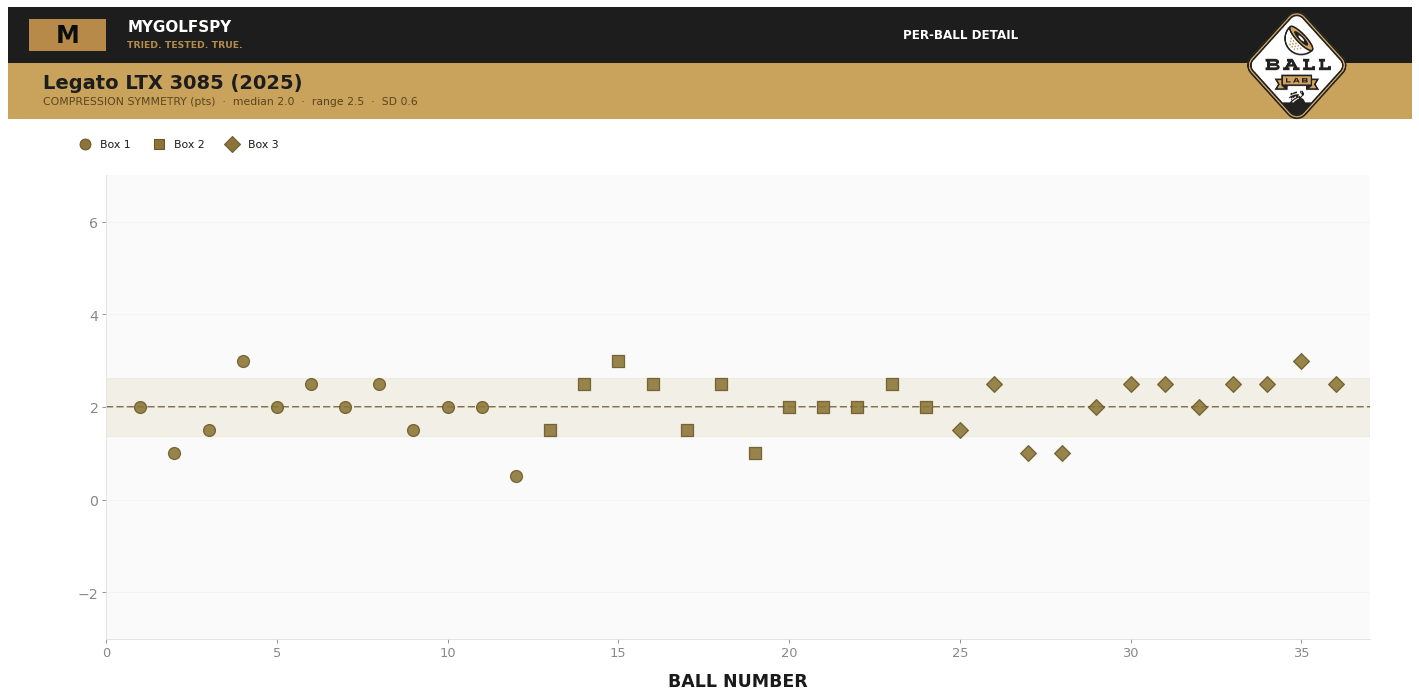
Compression symmetry averaged 2.0 points, in line with the field average. That’s a neutral result, not necessarily a strength or a weakness. Where compression does give some ground is consistency across the sample, which graded at C+ with a delta of 9.3 points and a spread running from 85.2 to 94.5. That’s a nine-point window which means the highest and lowest compression balls in the sample will perform differently from each other off the clubface.
Diameter consistency graded at B and was the strongest category on the card. Roundness was solid and no pole-versus-seam pattern was identified across the sample.
At 72, the Legato LTX 3085 does not earn a recommendation from Ball Lab. The defect rate and weight limit violations are the primary drivers of that outcome.
Compression
Compression is a measure of how much force is required to deform a golf ball. The higher the compression value, the more force required. Consistency in that value matters because a ball that compresses differently from shot to shot produces different results from shot to shot. Ball Lab measures every ball individually and tracks the average and the spread across the sample.
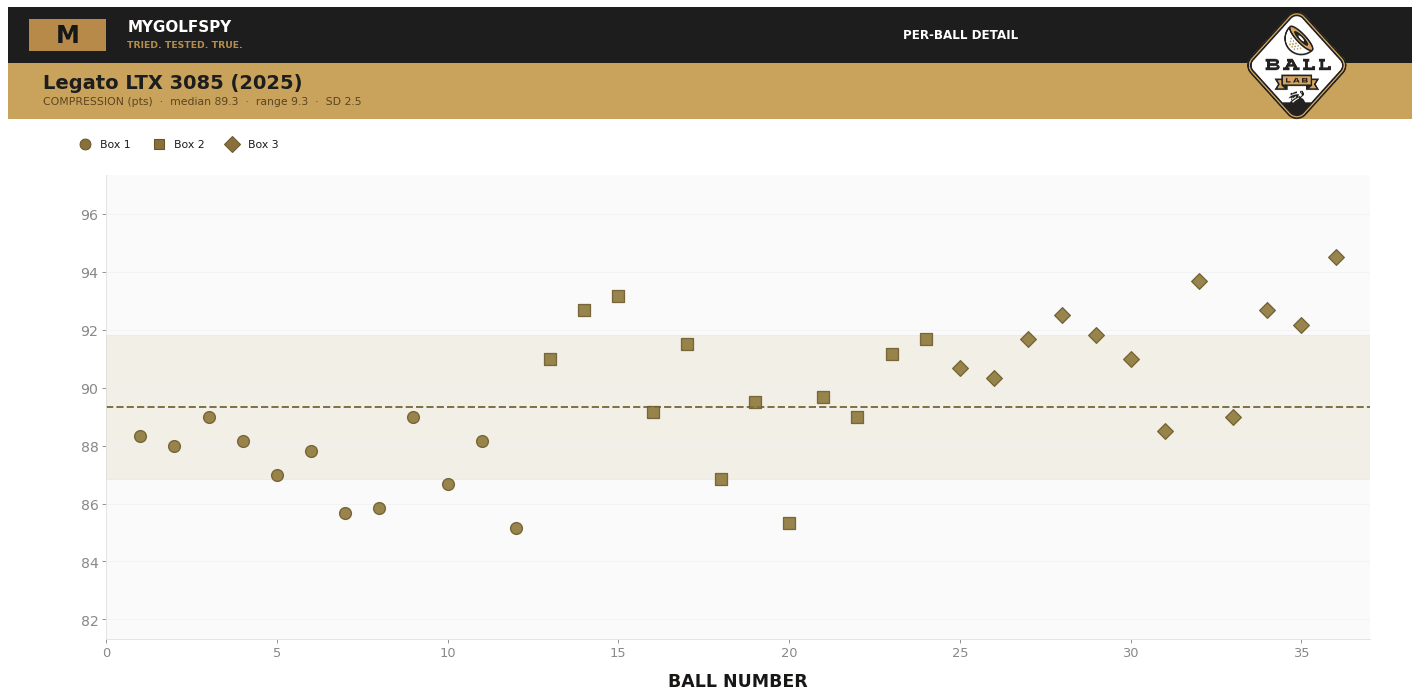
The 2025 Legato LTX 3085 averaged 89.7, putting it in the firm range of our database. Compression consistency graded out at C+ with a delta of 9.3 points and a spread running from 85.2 to 94.5. That delta is roughly in line with the database average of 9.6.
Ball Lab also measures compression symmetry which is distinct from the delta measurement. Where the delta tracks variation across all 36 balls, symmetry tracks how evenly compression is distributed across three points on each individual ball. The Legato averaged 2.0 points of symmetry deviation, in line with the field average.
The charts below detail the compression measurements in our sample.
Weight
Weight is another metric we analyze in these Ball Lab tests. Even small differences in weight across a dozen can translate to inconsistent ball flight. Ball Lab weighs every ball to four decimal places.
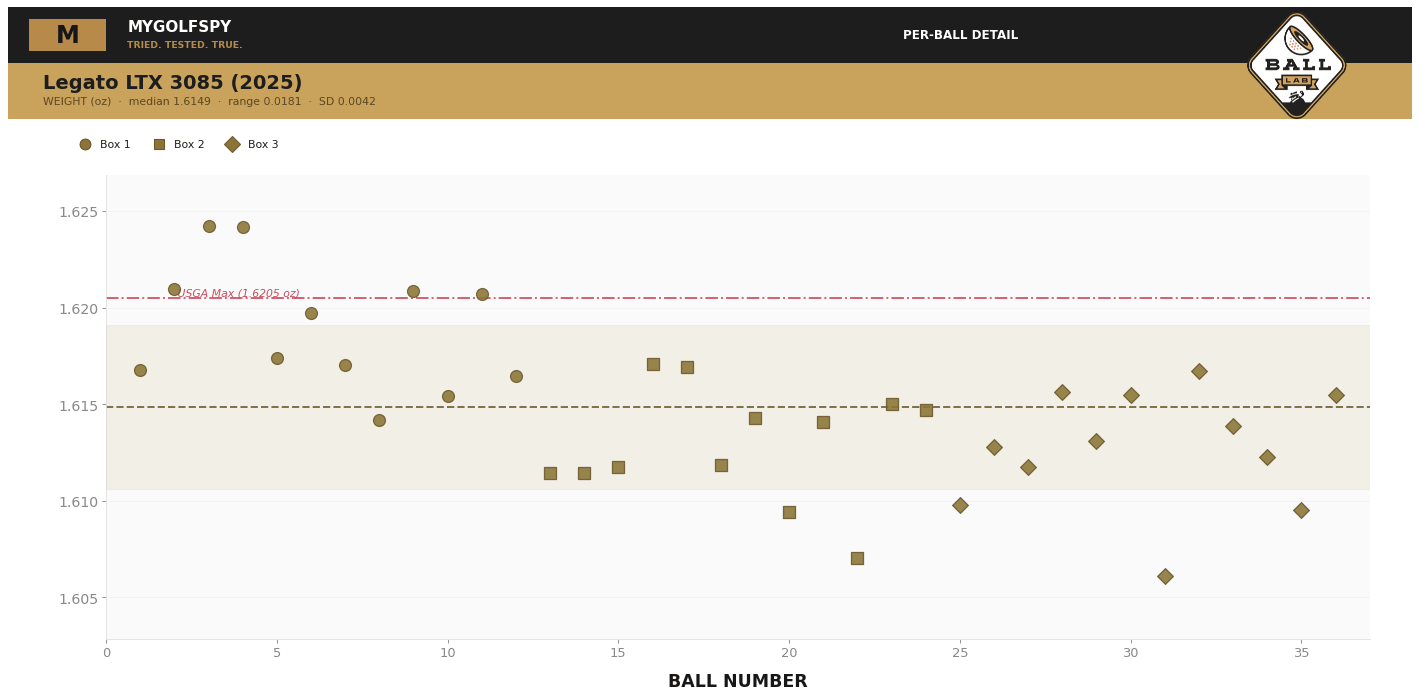
The 2025 Legato LTX 3085 averaged 1.6149 ounces across 36 balls, in the heavy range of the database. Of the 36 balls tested, five exceeded the USGA maximum of 1.6205 ounces, a 13.9-percent violation rate that is a meaningful quality control concern. It’s also a number that would cause the USGA to put this on the non-conforming list had they tested the same balls we did. The range ran from 1.6061 to 1.6242 with a standard deviation of 0.0042.
Weight consistency grades out at C.
The charts below detail the weight measurements in our sample.
Diameter
A ball that isn’t uniform in shape can track off line on the putting green or produce inconsistent flight patterns in the air. Ball Lab measures each ball across multiple axes to get a true picture of its shape.
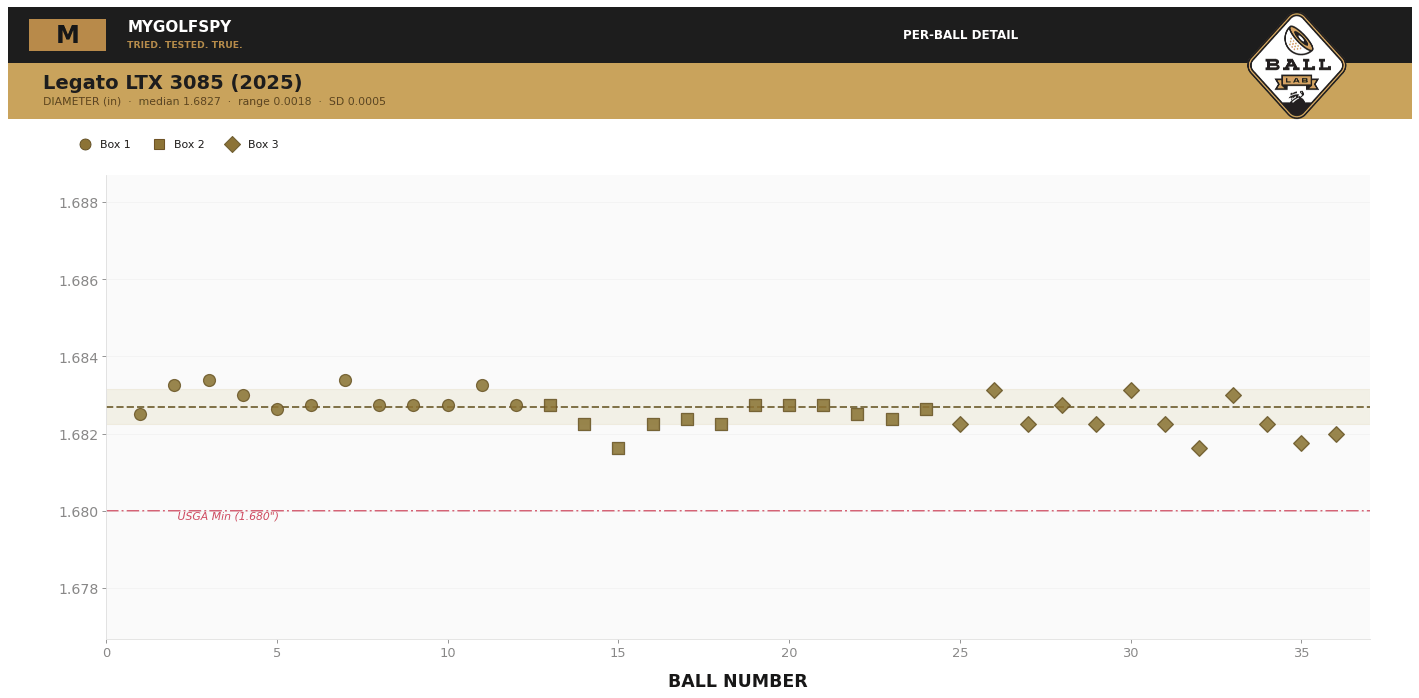
The 2025 Legato LTX 3085 averaged 1.6827 inches, above the USGA minimum of 1.680, with a roundness deviation of 0.0006 inches. Every ball cleared the minimum and there was no consistent pole-versus-seam pattern across the sample; 24 of 36 balls came in within gauge noise on that measurement.
Diameter consistency graded out at B.
The charts below detail the diameter measurements in our sample.
Ball Lab report card
Each Quality Score is a weighted average of five grades: good ball rate, compression consistency, compression symmetry, diameter consistency, weight consistency. Our scoring system punishes defective balls more severely while giving greater weight to compression metrics than to weight and diameter. This is a reflection of how much compression variation actually matters to ball flight and feel.







Sean
3 months ago
Does no one ever do any testing with people to see if they like the look of the font, logo’s etc?
This looks like a ball you find in the bottom of an old gorse bush that hasn’t been trimmed in 40 years.