



This article is part of the Smarter Golf series, powered by Arccos data.
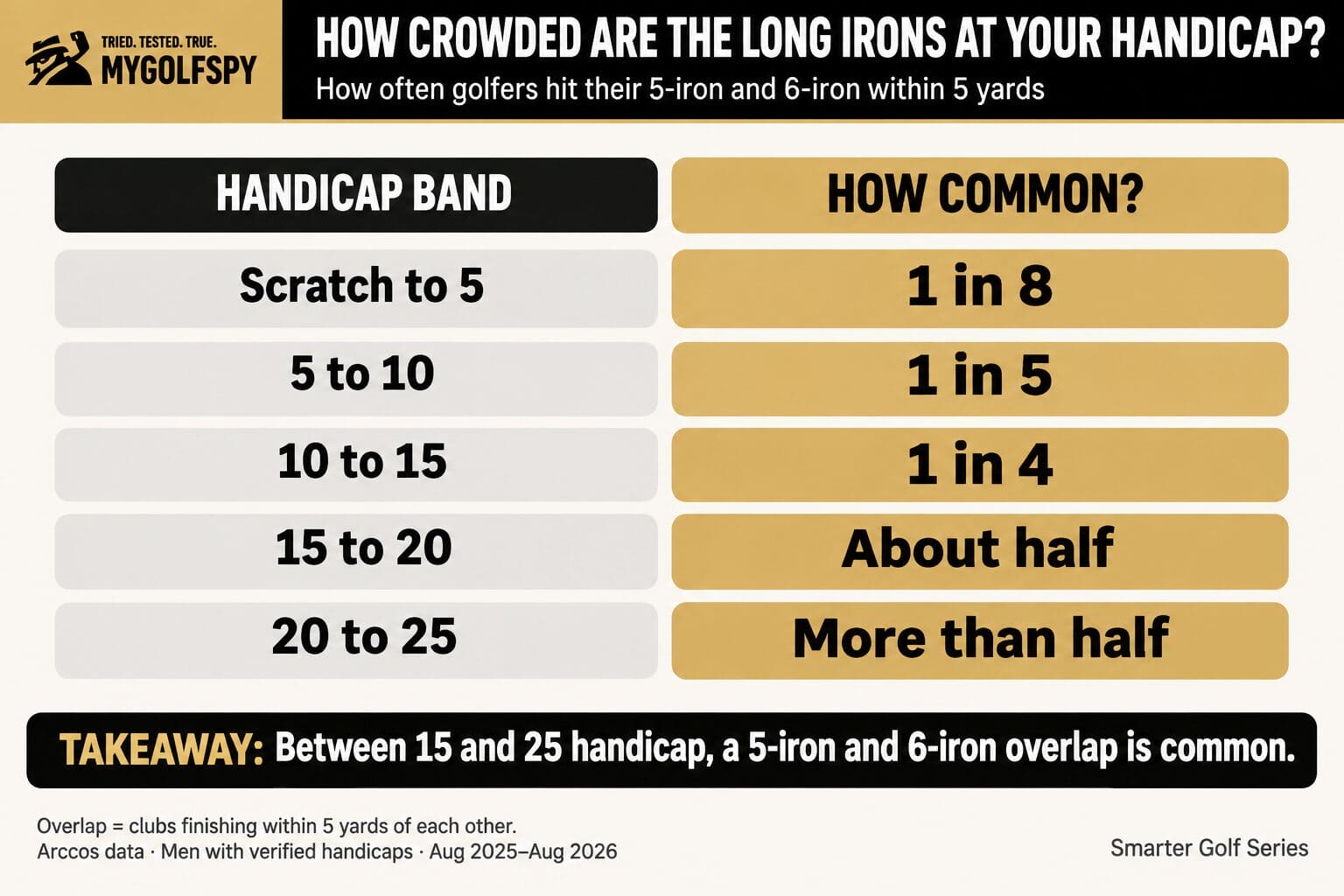
About half of golfers with a 15 to 20 handicap hit their 5-iron and 6-iron within five yards of each other. At a 20 to 25 handicap, it’s a bit more than half. If that’s you, two of your irons may be finishing in nearly the same spot and that’s not helping your game.
Most gapping advice averages each club across many golfers. We did it differently. Arccos looked inside the bags of more than 38,000 men, one golfer at a time, and compared every iron with the next one. The question isn’t how far a 5-iron goes. It’s how much farther your 5-iron goes than your 6-iron and whether that’s normal for a golfer who swings like you.
The chart below shows what normal looks like. Find how far you typically drive it, check your own gap against the chart and then read on for what to do if it comes up short. (This data covers men only.)
What’s a normal gap between your 5-iron and 6-iron?
The normal gap between your 5-iron and 6-iron is directly correlated to how far you drive the ball. Find your typical drive on the chart and then compare it with your own gap.
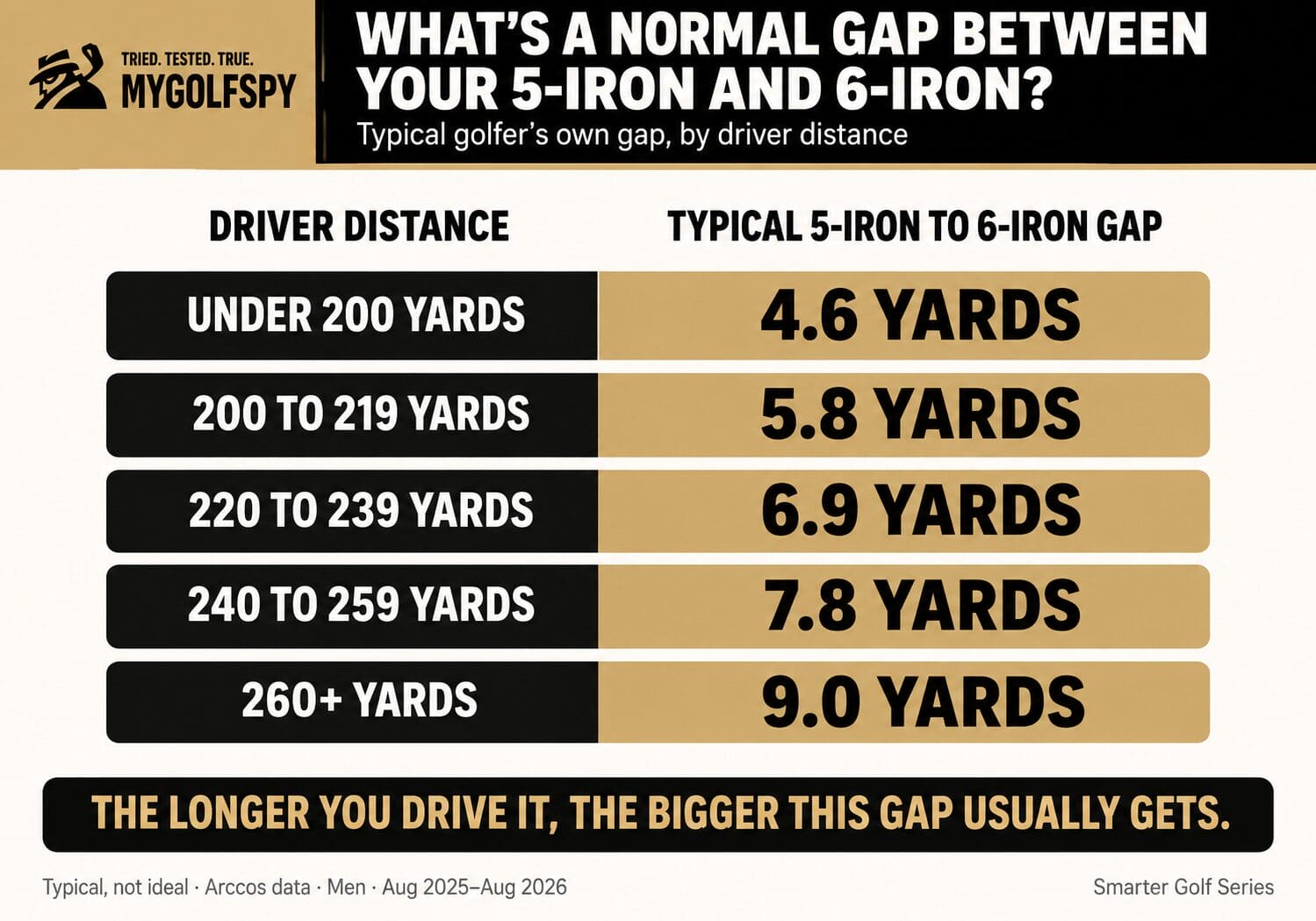
Golfers who drive it under 200 yards typically have 4.6 yards between the 5-iron and 6-iron. Golfers who drive it 260 or more have 9.0, about twice the room for the same two clubs.
This chart shows what’s typical, not what’s ideal. Better players run a little wider at the same driver distance, by up to about two yards. A gap slightly under the typical number for your drive isn’t a red flag. A gap at or under five yards means your clubs are sometimes doing the same thing.
How crowded are the long irons at your handicap?
The higher the handicap, the more likely the 5-iron and 6-iron are to overlap.
Between 15 and 25, about half or more of golfers have a 5-iron and 6-iron that finish within five yards of each other. Below a 10 handicap, it’s the exception.
What good gapping looks like
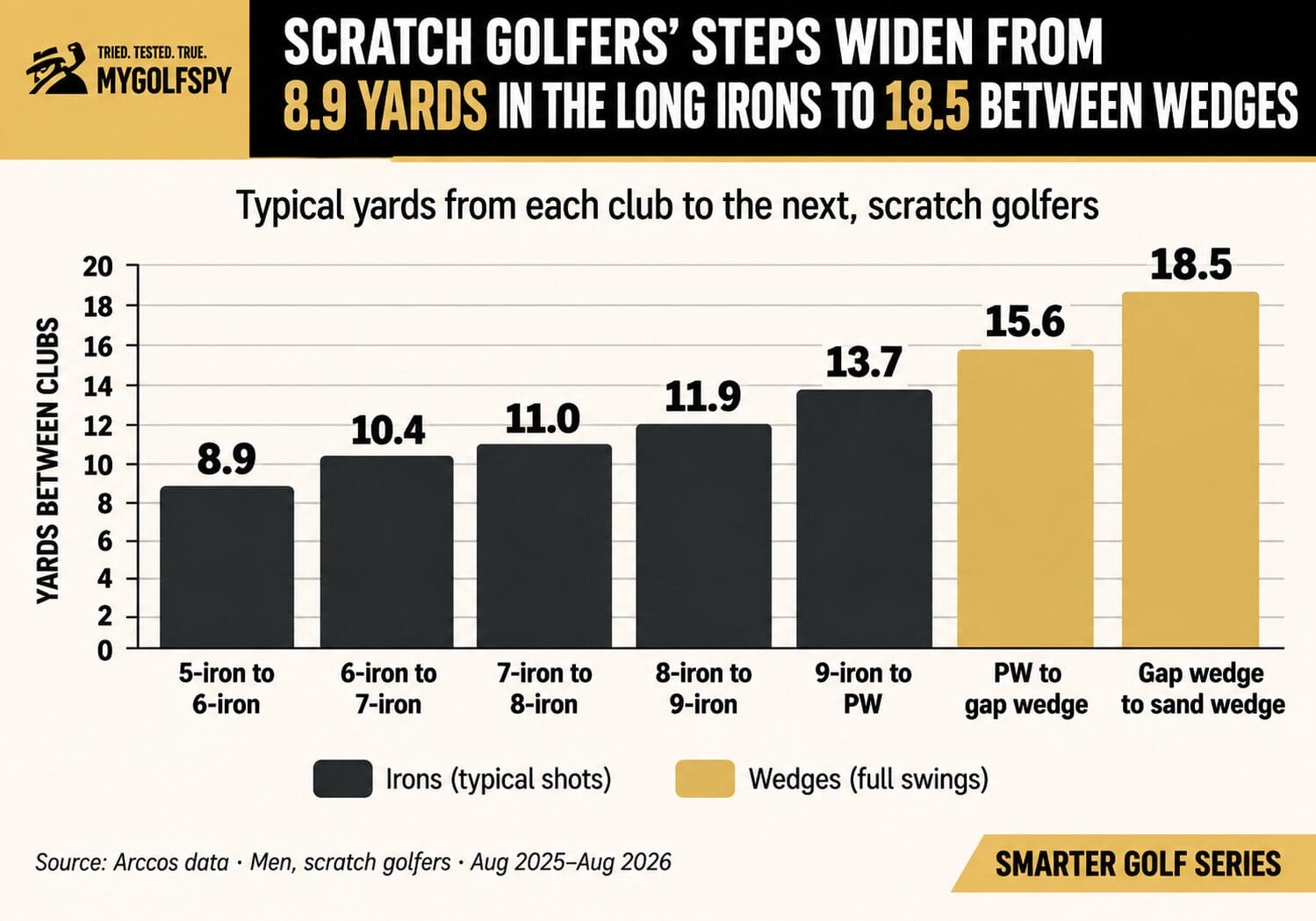
Scratch golfers have about nine to 14 yards between irons, widening toward the pitching wedge, and about 16 to 18½ yards between full-swing wedges.
Two things to notice. The steps widen as you go down the bag and the 9-iron to pitching wedge step is the widest for irons at about 13 yards for golfers from scratch to 25 handicap. A 20-yard gap is also normal between wedges but not between irons.
The top of the bag is where the pattern breaks down most often. The step from your longest iron to the next one is typically about eight yards compared with about 11 lower in the set. About one in four golfers hit those two clubs within five yards of each other.
Don’t expect to match every scratch number. That’s not realistic for most golfers. The target is the shape: steps that widen as the loft goes up with as little overlap as your swing allows.
If your gap is too small, here’s what to look at
If your longest iron and the next one finish within about five yards of each other, you’re carrying two clubs for one distance. These are options to consider, not guaranteed fixes.
- Check your 3-wood and 5-wood. About three in 10 golfers who carry both hit them within five yards of each other.
- Take a club out. If two clubs go the same distance, pull the harder one to hit and spend the slot on a distance you’re missing.
- Try a more lofted long club. Among five to 20 handicappers, golfers with a hybrid above the 6-iron tend to have an 11-to-14-yard step there versus six to eight yards with a 5-iron.
- Check for a missing gap wedge. About one in seven golfers from scratch to 20 handicap go straight from the pitching wedge to the sand wedge, a step of 30 yards or more.
The only way to know your gaps is to track them
The only way to really know how far you hit your clubs is to track your game. When you do, you can see which clubs are helping you, which are hurting you and where changing one club could make a big improvement.
Tracking your game with Arccos is easy. Whether you choose Smart Sensors or play sensor-free with Arccos Air, you’ll understand your game and improve faster. These data points give you a place to start but knowing the data that is specific to your game will make all the difference.






Leave A Reply