


Most bad golf purchases come from a shortcut. You grab the biggest number on the launch monitor, the best seller, the name everybody knows or whatever felt great in the demo bay. Testing from MyGolfSpy shows where those shortcuts fall apart, using robot-hit golf balls and thousands of shots and putts from real golfers.
Almost everything below comes from MyGolfSpy’s 2026 testing: including 42 drivers and more than 20,000 shots, 79 putters and about 50,000 putts, 48 golf balls and more. This isn’t about steering you away from a brand. It’s about the questions worth asking before you spend the money.
1. A wedge bought for its dry-spin number
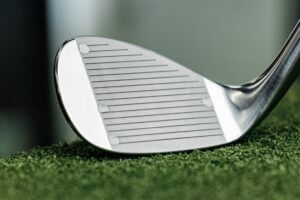
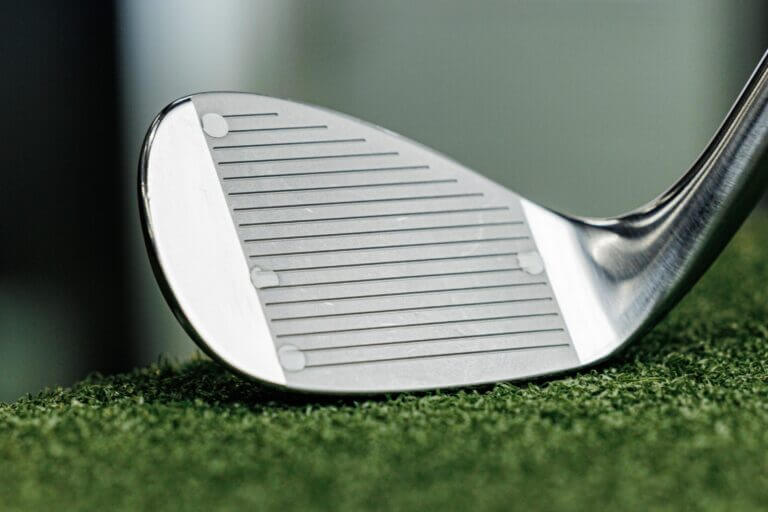
The wedge that spins the most on a launch monitor isn’t always the one that spins the most on the course. In MyGolfSpy’s 2026 wedge test, the Vokey SM11 held onto basically all of its spin when things got wet. The Performance Golf ONE.1 dropped from 7,217 rpm dry to 3,506 wet. It had the higher spin rates going in but couldn’t keep up in wet turf.
Your ball plays into it, too.
On wet full wedge shots in the 2026 ball test, ionomer balls lost almost a third of their spin and urethane balls lost about a tenth. So when you’re shopping for wedges, ask to see the wet numbers. A couple of hundred rpm on a dry mat shouldn’t decide it anyway.
2. A soft ball because you swing slowly
The old myth is that slow swingers need a soft ball. We went looking for the swing speed where that would apply but couldn’t find it in our 2026 robot data. We also found that the fastest ball isn’t always the longest since spin, peak height, carry and rollout all decide where the ball ends up.
Use the Golf Ball Selector which lets you filter by swing speed to learn more.
3. A putter bought for its price
Price tells you almost nothing about how a putter will perform. Across about 50,000 putts and 79 putters, we found no meaningful link between price and performance. The top blades averaged $320 and the bottom five averaged $509. Two of the priciest zero-torque putters, the $650 Toulon Formula 90 and the $549 Scotty Cameron Fastback OC, finished 17th and last in their category.
Cheap isn’t a safe bet, either. Mallets were the one category where the most expensive putters finished on top and the almost $500 Bettinardi BB 6.0 led the mallet field. On the budget end, the Wilson Lakeview is a zero-torque putter that doesn’t need premium money.
What really separated the best putter from the worst was the medium-range putt. So look at how a putter does from short, medium and long range instead of what it costs and try a zero-torque model before you settle on a style.
4. A driver bought without knowing your swing speed
We broke down driver testing into swing speed brackets of under 90 mph, 90 to 105 and over 105 and the winners change from group to group. The most forgiving driver for a 75-mph swing isn’t the same one you’d pick for a 110-mph swing.
The Srixon ZXi scored an 8.4 overall in the main test, mostly held back by distance, but looked a lot better in the slow swing speed test.
The cost of getting it wrong grows with speed. At 105+ mph, nine out of 10 testers lost more from the wrong driver than they gained from the right one. Know your swing speed first and then read the results for your group and see how it changes the information.
5. Irons chosen for the longest carry instead of the most repeatable carry
The longest iron on the chart usually isn’t the one that helps you most. MyGolfSpy builds its forgiveness score around how much ball speed, carry, backspin and dispersion change from shot to shot. A club can win on distance and still lose on the numbers that decide where the ball ends up.
The PING i540 is a good example. It led the player’s distance category on distance but struggles with consistency in ball speed, carry and backspin, and dispersion.
Same story in game-improvement irons: the PXG 0311 XP GEN8 was the longest but finished last in proximity, straight shot percentage and adjusted offline. The top five irons for distance were only 1.89 yards of adjusted carry apart so a few extra yards rarely make up for a bigger miss.
6. Chasing carry while ignoring height and descent angle
Everybody looks at carry but height and descent angle are what keep the ball on the green. An iron or ball that adds carry but costs you spin and descent angle makes it harder to hold greens.
Launch angle isn’t much help when you’re comparing balls since they tend to be close so pay more attention to max height.
Long irons are where this hurts most. A lot of golfers can still carry a 4-iron or 5-iron a decent distance but can’t get it up high enough or bring it down steeply enough to hold a green. If that’s you, a hybrid or a higher-lofted fairway wood is probably the better club. Check peak height and descent angle before you buy, not just carry.
7. A low-spin ball when you want greenside performance
Balls differ the most around the green. In the 2026 ball test, urethane balls averaged about 1,250 rpm more greenside spin than ionomer balls and only three balls cleared 5,900 rpm: the Callaway Chrome Tour X, Titleist Pro V1x and Srixon Z-Star Diamond.
If you’d rather have rollout than spin, ionomer balls and lower-spinning golf balls can work fine. The mistake is buying one for distance and expecting it to stop on the green. Decide whether you want stopping power or rollout and compare greenside spin, not just driver distance.
8. A hybrid picked on accuracy rank alone without checking spin
Even a test winner can be the wrong club for you. The Mizuno JPX One won MyGolfSpy’s 2026 hybrid test on accuracy, the most heavily weighted category, with a 9.8 accuracy score. Testers put just under 96 percent of their shots in a playable spot, the best of any hybrid.
The catch is spin. MyGolfSpy flagged it as one of the highest-spinning hybrids tested and one tester thought it was a little too much for his game. If you already spin the ball a lot, that extra spin can make it climb and stall which costs you carry and makes wind a bigger problem. If you struggle with low launch and low spin, it can help and it’s part of why the club was so accurate.
Get your launch and spin numbers from a launch monitor or a fitting.
9. Assuming a colored ball plays like the white one
You may think color is a cosmetic choice but testing says it can change how a ball performs. In the 2026 test, the white and yellow Kirkland Performance+ didn’t play exactly the same. The yellow ranked ninth for spin at mid speed and third at top speed while the white sat 17th and 13th, per the full ball test.
Two-tone balls add another wrinkle. We robot-tested 12 Vice Pro Tan and 12 Vice Pro Neon Sunset balls in four orientations. When the balls were rotated, 11 of 12 Neon Sunset balls shifted the same direction and so did 10 of 12 Pro Tan. Neon Sunset tended to draw and Pro Tan tended to fade and the balls started on the same line but curved differently.
Paint didn’t make the balls less consistent and the gaps were inside the USGA’s symmetry test limits. The catch is that the USGA test measures only carry and hang time so a left-right shift like this never shows up.
10. Skipping last year’s model just because it’s last year’s
A new release isn’t automatically better than the one it replaced and the price gap can be big. MyGolfSpy still named the Titleist GT2 and GT3 the best value options in its 2026 driver test. Several drivers have dropped in price over the course of the last year.
If you’re in the market for new gear but don’t want to spend 2026 prices, take a look at this guide showing pricing changes from year to year on clubs. (How To Buy Last Year’s Golf Clubs)





Leave A Reply