Support our Mission. We independently test each product we recommend. When you buy through our links, we may earn a commission.
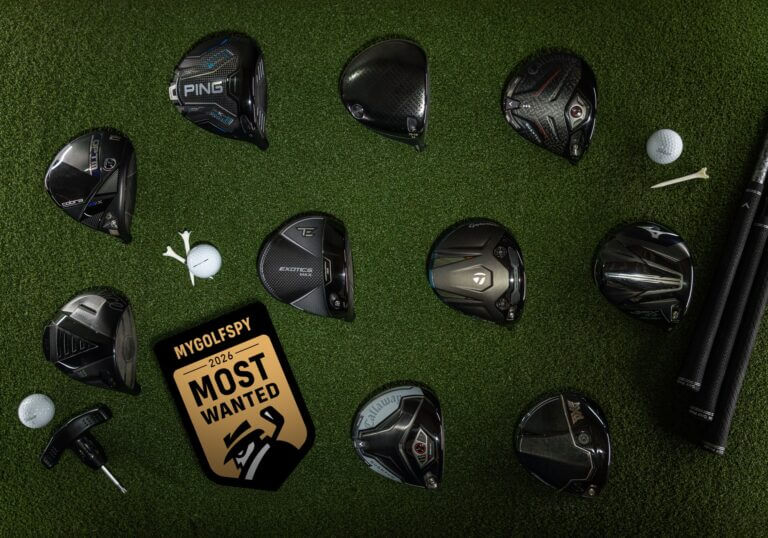
The largest MyGolfSpy driver test is finally here.
42 drivers. 490 hours. 20,580 shots. 411,600 data points.
1 Best Driver of 2026.
Independent, data-driven testing is the heart and soul of MyGolfSpy. Each Most Wanted Test is the most comprehensive, independently conducted review in golf. Don’t take our word for it. Take it from our 18 million readers across the world who are golfers just like you and me.
Our data-driven tests are backed by more than a decade of testing experience and expertise. We are the industry leader in independent testing.
At MyGolfSpy, our mission is golfer first. You, the consumer, are our sole priority. Every Most Wanted Test has one goal: to cut through marketing BS, to let data determine which products are superior and which are inferior. And, most importantly, to empower you, the consumer, with the best knowledge prior to your next golf club purchase.
Hype is noise. Our cold, hard data squashes the noise. Are you ready?
These are the best drivers of 2026.
Best drivers of 2026
42 drivers testedMost consistent in the test: sixth for distance, fourth for accuracy and forgiveness.
Won the distance category and was runner-up for accuracy. Forgiveness is average.
A proven low-spin option, named best driver in 2025. Forgiveness is average.
Distance score of 9.1 and forgiveness of 9.0. Built for high swing speed golfers.
Distance score of 9.2, with better forgiveness (8.7) than the standard Triple Diamond (8.5).
Pick by swing speed Each group has its own winners and scores.
BEST DRIVERS OVERALL
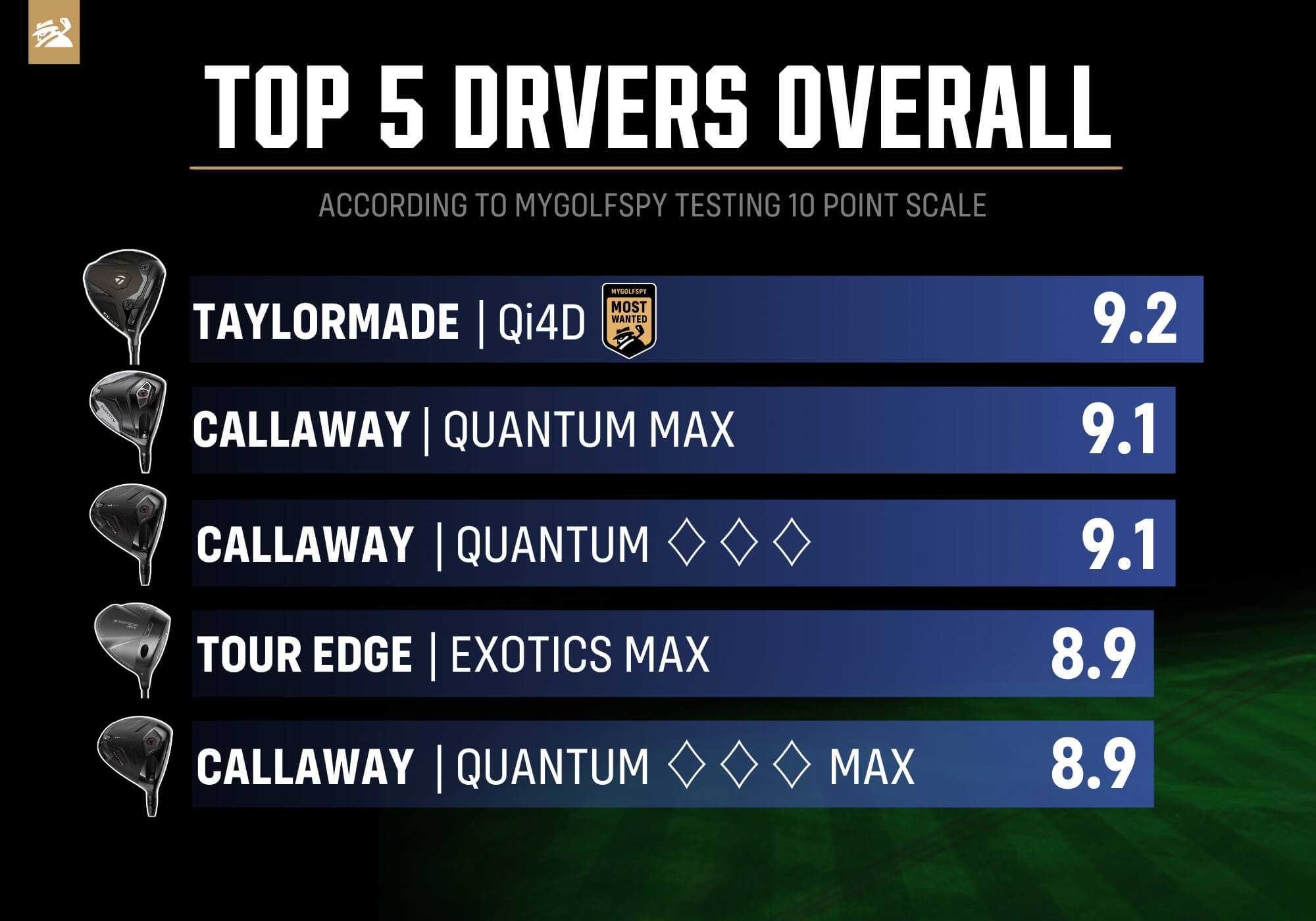
If you’re considering buying a new driver, it needs to outperform your current driver. It is that simple. The best drivers produce consistent performance across all three of our scoring categories. They provide distance. They are accurate. They are forgiving. These are the ingredients you need and should want in your next driver. These are the best drivers of 2026.
 Review Score
 Distance Score
 Accuracy
 Forgiveness
 Price
Price
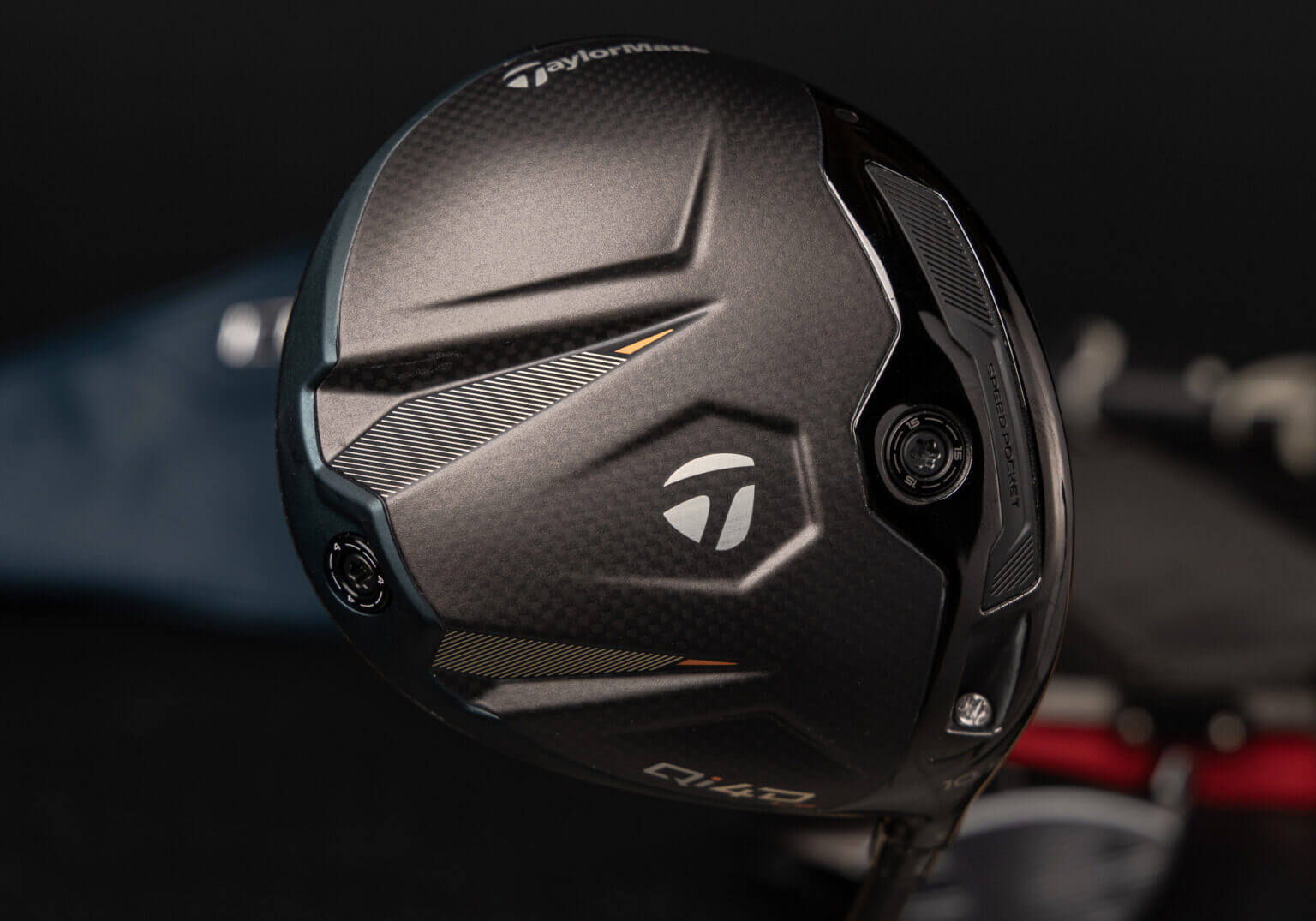
The TaylorMade Qi4D is the most consistent driver of 2026, making it our top choice overall. Its excellence across all three scoring categories—ranking sixth for distance, fourth for accuracy, and fourth for forgiveness—is the key to its success. While excelling in a single category is beneficial, superior all-around performance is paramount. The TaylorMade Qi4D delivers this consistency, which should be the number one priority when selecting a driver.
In terms of sound and feel, our testing group subjectively ranks the TaylorMade Qi4D driver very highly, perhaps making it the best-rated TaylorMade driver at MyGolfSpy in recent years. That said, the carbon face still produces a distinctive sound and feel that may not appeal to all golfers. If you dislike the sound and feel of a carbon face, you should consider other options.

The TaylorMade Qi4D has made a triumphant return, claiming the title of Best Driver of 2026 by returning to the brand’s roots. The key to its success is outstanding performance consistency. The Qi4D excels across all of our evaluation metrics—it is long, accurate, and consistent—a winning combination that delivers top-tier results.
“Favorite TaylorMade head in a long time. Going through an extensive fitting intrigues me.”
“Easy to hit, club-head speed is up with it, and it was very consistent.”
“Love the return to MATTE.”
“Yeah…this peaks my interest. Checks the ball speed box and I was accurate with it. The spin deviations were consistent too.”
TaylorMade drivers have struggled with inconsistency over the past few years, which has been our biggest critique. While the ball speed has remained consistently high, the accuracy and forgiveness have been erratic. However, the TaylorMade Qi4D appears to have resolved this long-standing issue of inconsistency. Qi4d is the best driver of 2026 because it is the most consistent. It’s a driver that has captured my attention, and it should certainly capture yours as well.
Review Score
Distance Score
Accuracy
Forgiveness
Price
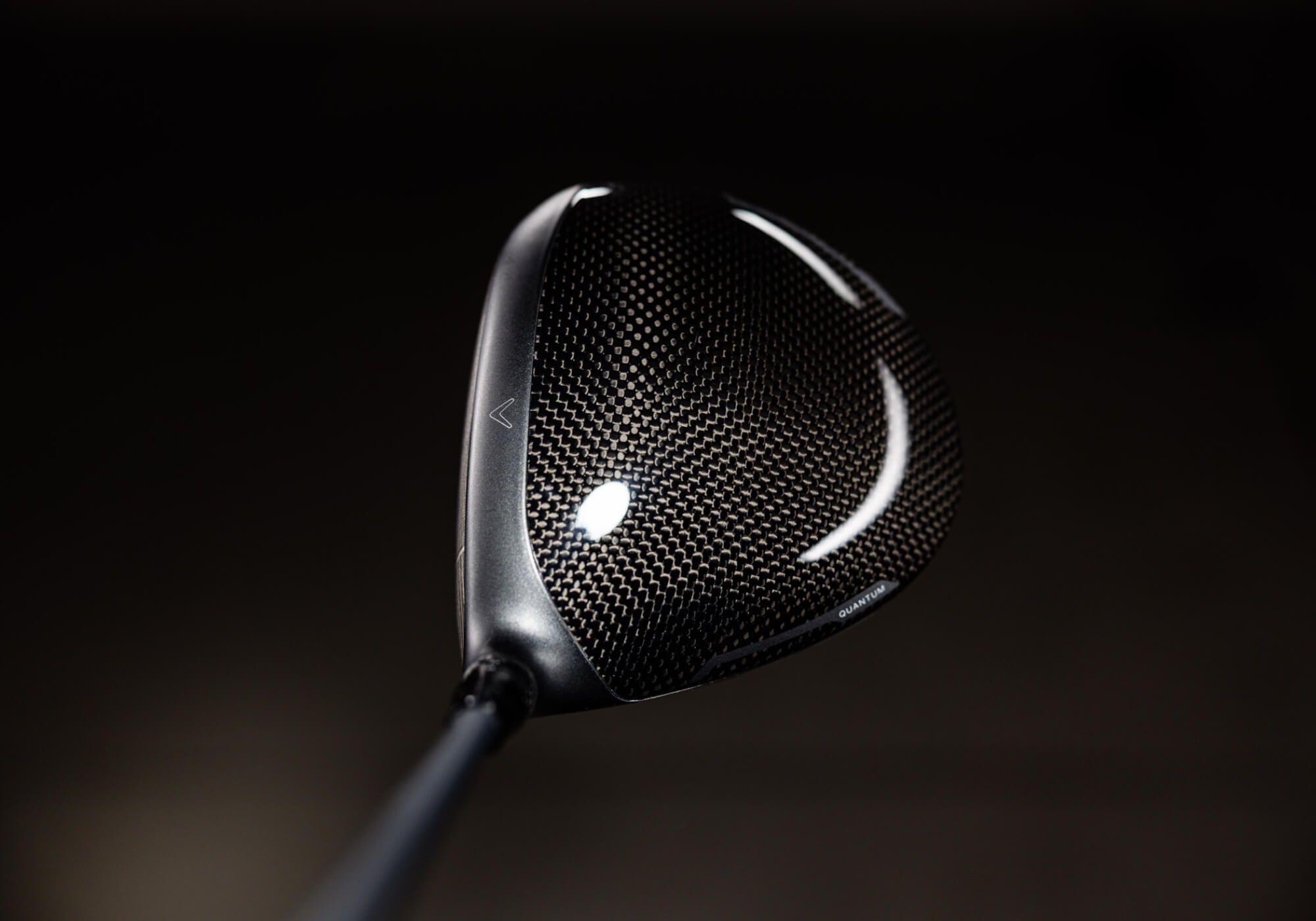
Golfers prioritize distance when selecting a driver, which is typically the longest club in the bag. Fortunately, the Callaway Quantum Max delivers both exceptional distance and accuracy. It truly is an outstanding performer. If you want the best of both worlds, this driver needs to be on your "must-try" list.
While the Callaway Quantum Max has few drawbacks, its forgiveness is a notable area where it falls short compared to competitors. Forgiveness is a complex metric but is essential for driver performance. At MyGolfSpy, we define it by the consistency of a driver across key areas: ball speed deviations, carry distance deviations, and overall shot area. In these terms, the Callaway Quantum Max performs only to an average degree.
The Callaway Quantum Max impressed our staff during testing, quickly passing the eye test and suggesting its potential as a top contender. This suspicion proved largely correct, as the Quantum Max earned the runner-up spot in our Best Drivers of 2026. This driver excelled in distance, securing the top spot in that category, and was the runner-up for accuracy. Simply put, this is Callaway’s finest core driver model yet—it’s a must-try.
“Pretty consistent, great club-head speed, playable spin, and less glare than I expected. I like it.”
“I’d buy it. Love it. Long and consistent.”
“Callaway continues to impress in the driver space. Excellent option.”
“All numbers suggest going through a fitting and walking away with a new driver.”
Callaway has established itself as a top performer in the driver category. Our testing strictly adheres to an “off-the-rack” approach, focusing only on stock options. The Callaway Quantum Max is a notable success, being the first core model in recent history to pass our rigorous performance test. This achievement underscores Callaway’s capability to deliver a high-performing driver straight “off-the-rack.” For golfers willing to slightly compromise on forgiveness, the Quantum Max is a strong contender for their next driver.
Review Score
Distance Score
Accuracy
Forgiveness
Price
The Callaway Quantum Triple Diamond driver is a model of proven, consistent results that puts pressure on the manufacturer not to mess with success. Time and again, it excels in our Most Wanted Driver tests. It delivers both exceptional distance and remarkably playable shot outcomes. See the difference for yourself today.
Like the Callaway Quantum Max, the Quantum Triple Diamond driver sacrifices forgiveness, which is often characteristic of low-spin models due to their design properties. Our testing, which includes a deeper analysis of shot-to-shot consistency, showed that the Quantum Triple Diamond performs only at an average level for these specific metrics.
The Callaway Triple Diamond driver has a proven track record, notably being named the best driver in 2025. Carrying on this tradition, the 2026 Callaway Quantum Triple Diamond is engineered for exceptional distance and accuracy. Additionally, its design makes the Quantum Triple Diamond an excellent low-spin option for golfers who need to reduce excess spin off the tee.
“Consistent across with face with spin retention, good look from address.”
“ Noticeably longer than others, but not as forgiving. Spun a little lower too.”
“Loved the feedback off the face pertaining to contact. Performance is great.”
“All around a super driver. Very consistent across the face.”
Where to begin…Callaway Quantum Triple Diamond is the full package. Testers rated it highly for subjective feedback and its performance is undeniably superb. The only drawback is its low spin properties. Be wary of this if you’re considering this driver.
Distance is straightforward: carry and total distance.
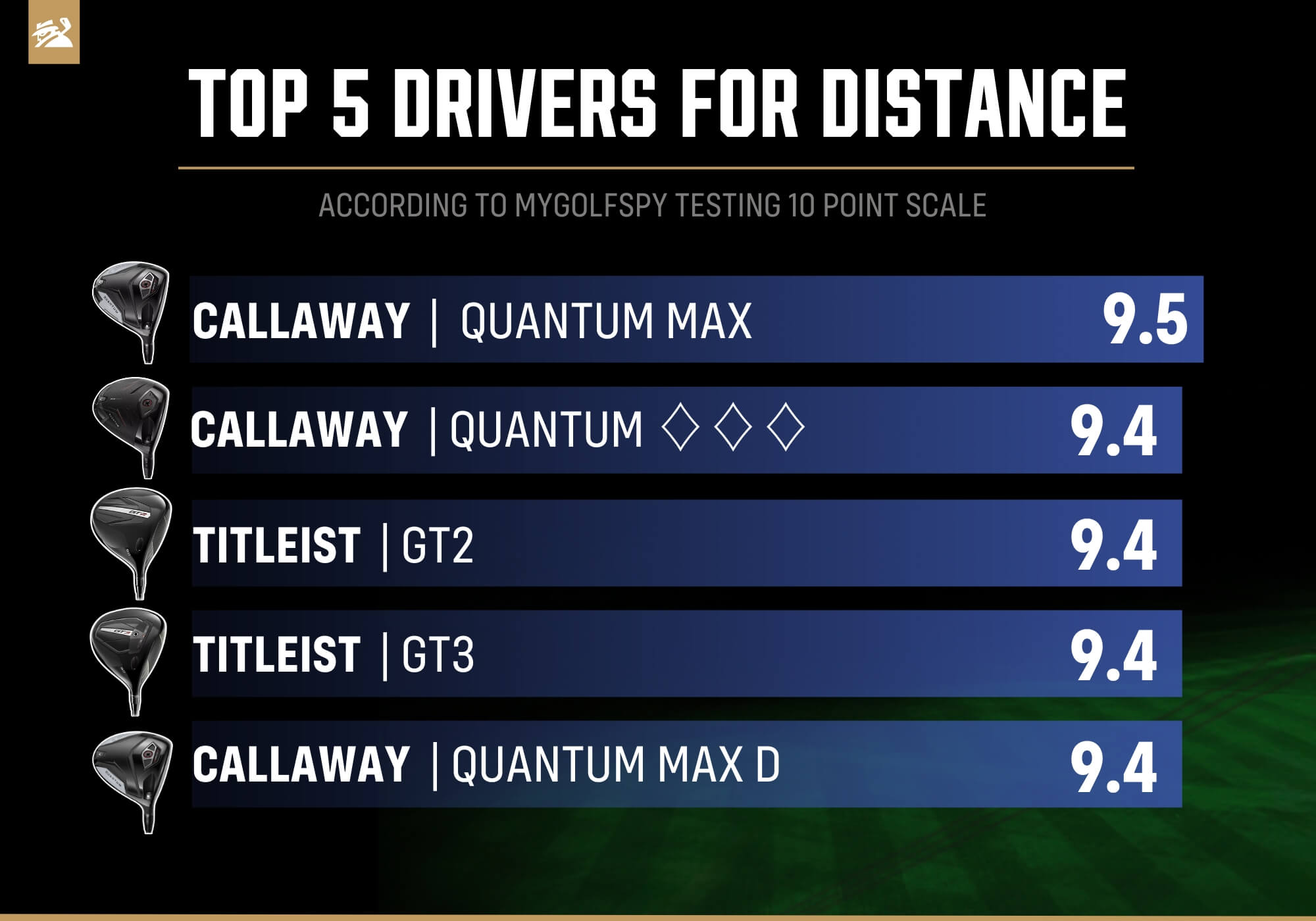
As golfers, we are always chasing more distance. Is it the five, 10 or 15 yards we continue to hear from manufacturers? No. However, there are drivers that offer distance more consistently than others on the market. It is the one performance trait where this is an undeniable separation in performance.
Here are the best drivers for distance.
Distance Score
Accuracy
Forgiveness
Review Score
Price
Golfers prioritize distance when selecting a driver, which is typically the longest club in the bag. Fortunately, the Callaway Quantum Max delivers both exceptional distance and accuracy. It truly is an outstanding performer. If you want the best of both worlds, this driver needs to be on your "must-try" list.
While the Callaway Quantum Max has few drawbacks, its forgiveness is a notable area where it falls short compared to competitors. Forgiveness is a complex metric but is essential for driver performance. At MyGolfSpy, we define it by the consistency of a driver across key areas: ball speed deviations, carry distance deviations, and overall shot area. In these terms, the Callaway Quantum Max performs only to an average degree.
The Callaway Quantum Max impressed our staff during testing, quickly passing the eye test and suggesting its potential as a top contender. This suspicion proved largely correct, as the Quantum Max earned the runner-up spot in our Best Drivers of 2026. This driver excelled in distance, securing the top spot in that category, and was the runner-up for accuracy. Simply put, this is Callaway’s finest core driver model yet—it’s a must-try.
“Pretty consistent, great club-head speed, playable spin, and less glare than I expected. I like it.”
“I’d buy it. Love it. Long and consistent.”
“Callaway continues to impress in the driver space. Excellent option.”
“All numbers suggest going through a fitting and walking away with a new driver.”
Callaway has established itself as a top performer in the driver category. Our testing strictly adheres to an “off-the-rack” approach, focusing only on stock options. The Callaway Quantum Max is a notable success, being the first core model in recent history to pass our rigorous performance test. This achievement underscores Callaway’s capability to deliver a high-performing driver straight “off-the-rack.” For golfers willing to slightly compromise on forgiveness, the Quantum Max is a strong contender for their next driver.
Distance Score
Accuracy
Forgiveness
Review Score
Price
The Callaway Quantum Triple Diamond driver is a model of proven, consistent results that puts pressure on the manufacturer not to mess with success. Time and again, it excels in our Most Wanted Driver tests. It delivers both exceptional distance and remarkably playable shot outcomes. See the difference for yourself today.
Like the Callaway Quantum Max, the Quantum Triple Diamond driver sacrifices forgiveness, which is often characteristic of low-spin models due to their design properties. Our testing, which includes a deeper analysis of shot-to-shot consistency, showed that the Quantum Triple Diamond performs only at an average level for these specific metrics.
The Callaway Triple Diamond driver has a proven track record, notably being named the best driver in 2025. Carrying on this tradition, the 2026 Callaway Quantum Triple Diamond is engineered for exceptional distance and accuracy. Additionally, its design makes the Quantum Triple Diamond an excellent low-spin option for golfers who need to reduce excess spin off the tee.
“Consistent across with face with spin retention, good look from address.”
“ Noticeably longer than others, but not as forgiving. Spun a little lower too.”
“Loved the feedback off the face pertaining to contact. Performance is great.”
“All around a super driver. Very consistent across the face.”
Where to begin…Callaway Quantum Triple Diamond is the full package. Testers rated it highly for subjective feedback and its performance is undeniably superb. The only drawback is its low spin properties. Be wary of this if you’re considering this driver.
Just because we weigh distance slightly more than accuracy does not mean you should neglect it. Ignoring accuracy is a huge mistake for most golfers. Keeping the ball in play leads to better scores. Furthermore, the best drivers for distance tend to be more accurate than other competitors.
Accuracy is a blend. Hitting fairways is key. Producing playable shot outcomes is equally important. Are your drives landing and coming to rest in playable conditions? This is what we are evaluating for driver accuracy.
Here are the best drivers for accuracy.
Accuracy
Distance Score
Forgiveness
Review Score
Price
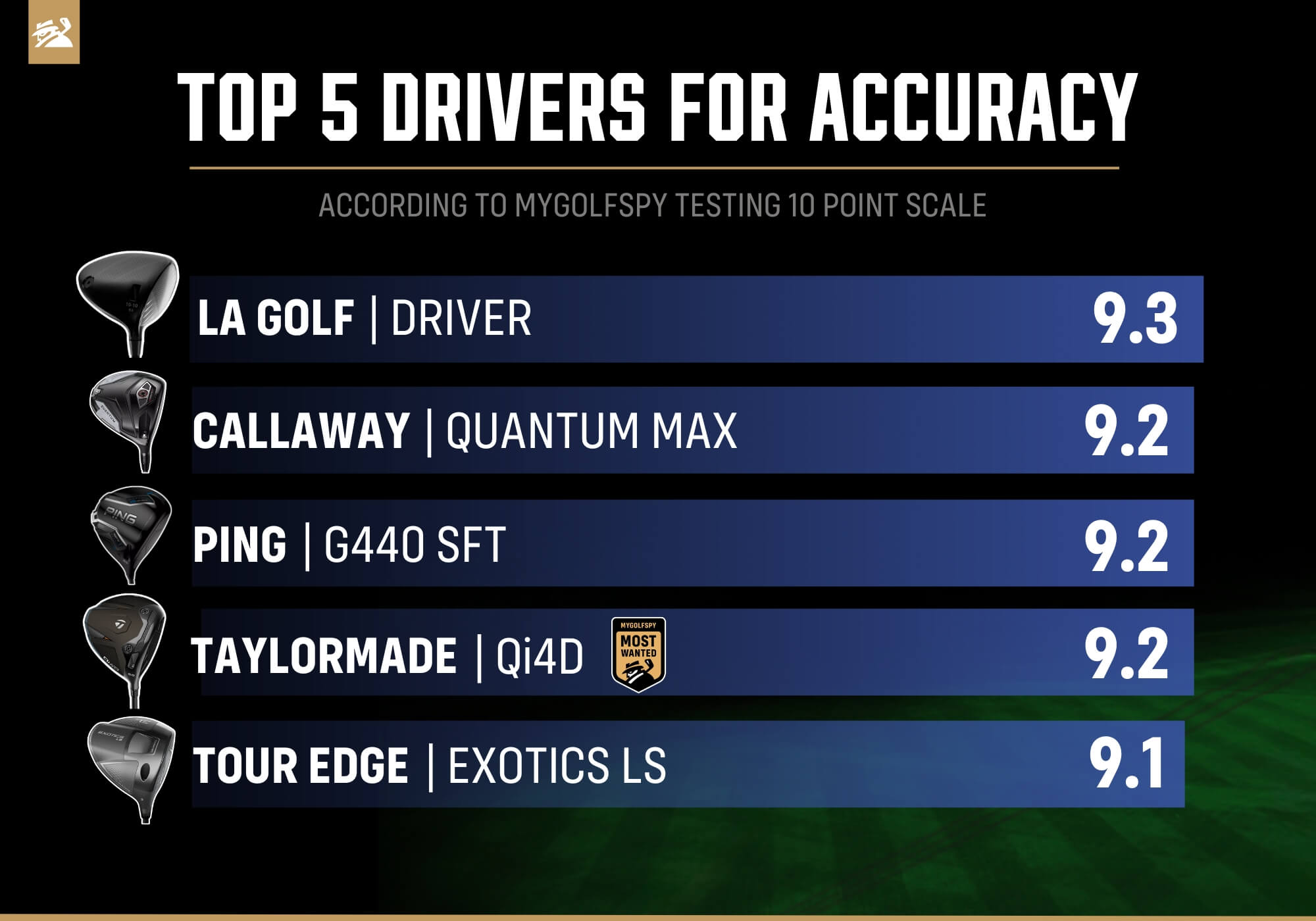
Accuracy is paramount in our Most Wanted Testing, especially for drivers. Hitting fairways and ensuring playable misses are key shot outcomes. To quantify this, our driver testing incorporates straight shot and playable shot percentages. This data clearly identifies the most and least accurate drivers. The LA GOLF Driver stands out as the top performer for accuracy.
While the LA GOLF Driver is a top performer for accuracy, contributing positively to its total distance score, it struggles to keep pace with the leaders in potential distance. This is primarily because its ball speed is noticeably slower off the face, a significant drawback given that most golfers prioritize their longest tee shots. It also tends to produce more spin than others.
LA GOLF made an impressive debut in their first year of driver testing. Heading into the evaluation, there were considerable unknowns about the performance of their “Face ID” driver. However, it made a strongly positive impression, notably standing out as the best driver for accuracy. Despite its exceptional accuracy, the LA GOLF Driver’s main drawback is a lack of overall distance, which ultimately hurts its total performance score.
“Sound was high pitched, straight as hell, but didn’t see the distance off the face.”
“Slower balls speeds. But, the accuracy is legit.”
“Best stock driver setup of the year…PING is a close second, but this was out of the box playability.”
“Sound is bad. I wouldn’t buy it strictly because of the sound. For a first driver, it is a strong performer.”
The LA GOLF driver immediately makes a strong statement, earning the top spot for accuracy in our Best Drivers of 2026. This performance is well-supported by our testing pool’s consensus. As a first-generation driver, LA GOLF is certainly turning heads. If high accuracy and immediate playability are what you prioritize, this driver is a serious contender for your bag.
Accuracy
Distance Score
Forgiveness
Review Score
Price
Golfers prioritize distance when selecting a driver, which is typically the longest club in the bag. Fortunately, the Callaway Quantum Max delivers both exceptional distance and accuracy. It truly is an outstanding performer. If you want the best of both worlds, this driver needs to be on your "must-try" list.
While the Callaway Quantum Max has few drawbacks, its forgiveness is a notable area where it falls short compared to competitors. Forgiveness is a complex metric but is essential for driver performance. At MyGolfSpy, we define it by the consistency of a driver across key areas: ball speed deviations, carry distance deviations, and overall shot area. In these terms, the Callaway Quantum Max performs only to an average degree.
The Callaway Quantum Max impressed our staff during testing, quickly passing the eye test and suggesting its potential as a top contender. This suspicion proved largely correct, as the Quantum Max earned the runner-up spot in our Best Drivers of 2026. This driver excelled in distance, securing the top spot in that category, and was the runner-up for accuracy. Simply put, this is Callaway’s finest core driver model yet—it’s a must-try.
“Pretty consistent, great club-head speed, playable spin, and less glare than I expected. I like it.”
“I’d buy it. Love it. Long and consistent.”
“Callaway continues to impress in the driver space. Excellent option.”
“All numbers suggest going through a fitting and walking away with a new driver.”
Callaway has established itself as a top performer in the driver category. Our testing strictly adheres to an “off-the-rack” approach, focusing only on stock options. The Callaway Quantum Max is a notable success, being the first core model in recent history to pass our rigorous performance test. This achievement underscores Callaway’s capability to deliver a high-performing driver straight “off-the-rack.” For golfers willing to slightly compromise on forgiveness, the Quantum Max is a strong contender for their next driver.
What makes a golf club, specifically a driver, forgiving?
Our industry-leading standard for defining forgiveness analyzes three specific metrics: carry distance deltas, ball speed deltas and shot area (aka dispersion).
Each of these metrics showcases how well a driver produces similar shot outcomes over time. Essentially, we are boiling it down to this:
How consistent is a driver?
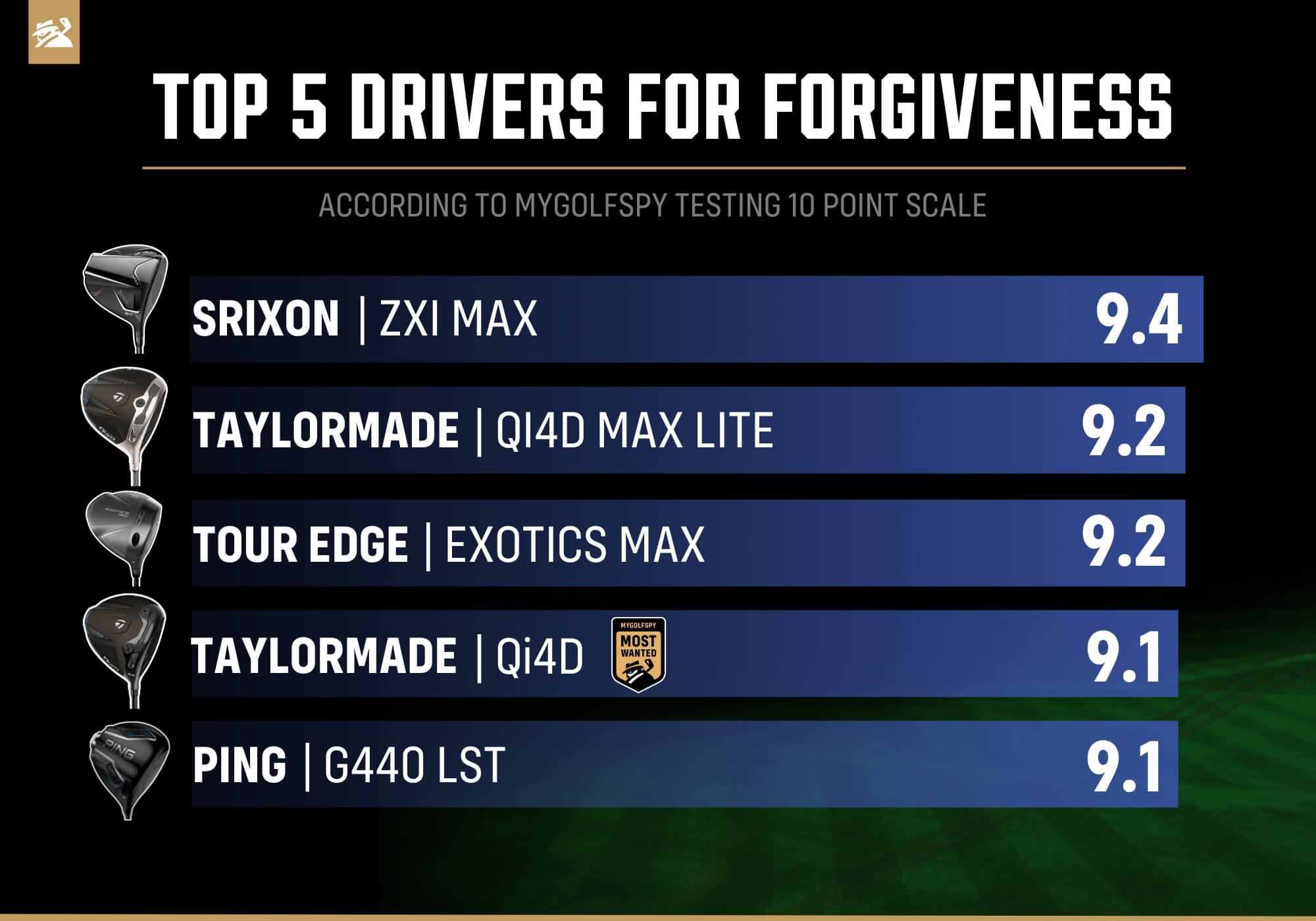
Here are the best drivers for forgiveness.
Forgiveness
Distance Score
Accuracy
Review Score
Price
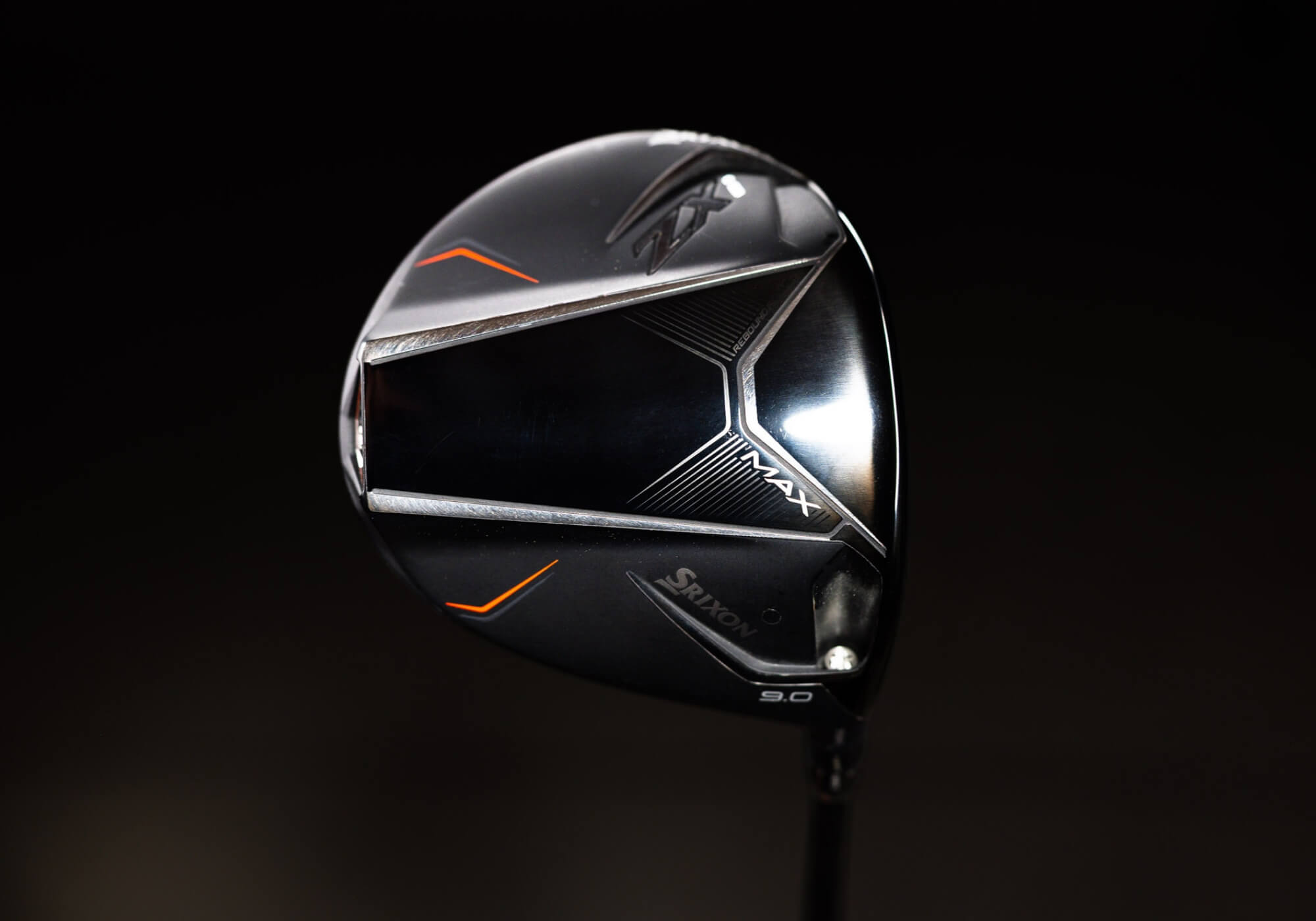
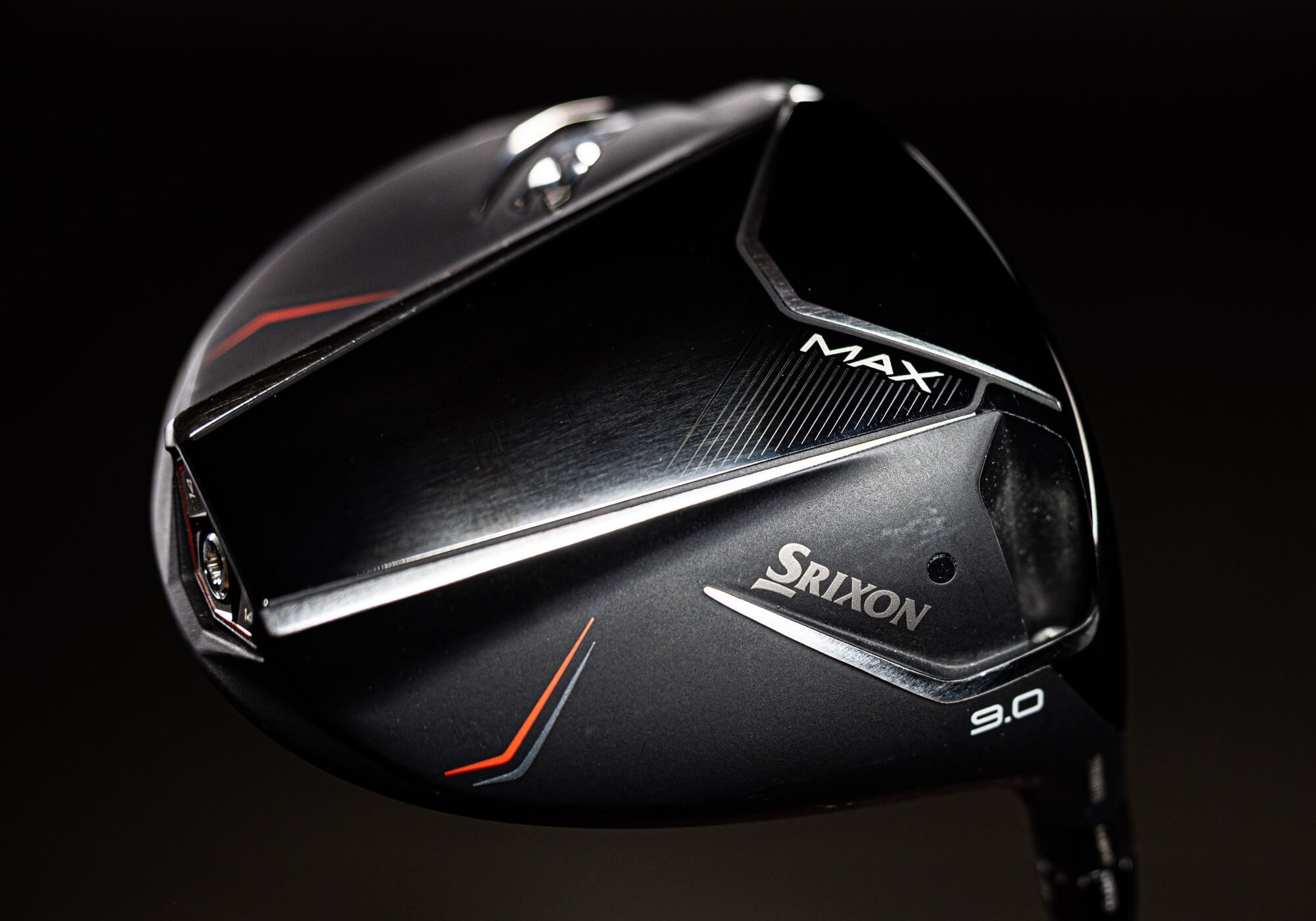
While distance and accuracy often take center stage when evaluating drivers, the crucial scoring category of forgiveness is frequently overlooked. We believe that forgiveness is a vital, yet underrated, quality. Our evaluation of a driver's forgiveness reveals which models deliver predictable and consistent shot outcomes, significantly reducing guesswork on the course. The Srixon ZXi Max is a prime example of a driver designed to excel in this essential, but overlooked area.
While the Srixon ZXi Max driver offers consistent ball speed and carry distance, it may not be the best choice for maximizing pure distance. Longer drivers are available on the market. As a "max" or highly forgiving driver, the ZXi Max has a high Moment of Inertia (MOI). However, this design characteristic also tends to produce more spin than other drivers. Golfers prioritizing distance should consider this caveat.
The Srixon ZXi Max, one of 13 drivers tested in 2025, excels in forgiveness, making it the best driver in this category for 2026. While it may not be a distance leader, the ZXi Max delivers exceptional shot-to-shot consistency in ball speed, carry distance, and dispersion (shot area). For golfers aiming to improve their consistency and achieve more playable outcomes, the Srixon ZXi Max is an outstanding choice.
“Spin-Factory.com. I love the sound and feel. It’s loud.”
“Definitely forgiving off the face, especially toe strikes.”
“Good look. Very solid overall.”
“Very solid performer across the board.”
The Srixon ZXi Max is an underrated and often-overlooked driver. It delivered solid performance in 2025 and remains a very capable option in 2026, even when compared to 29 newer models. The ZXi Max provides good ball speed off the face; however, it does tend to produce higher spin. Golfers who already battle excessive spin should consider alternative options. Nevertheless, for those prioritizing consistency, this driver is certainly worth testing.
Forgiveness
Distance Score
Accuracy
Review Score
Price
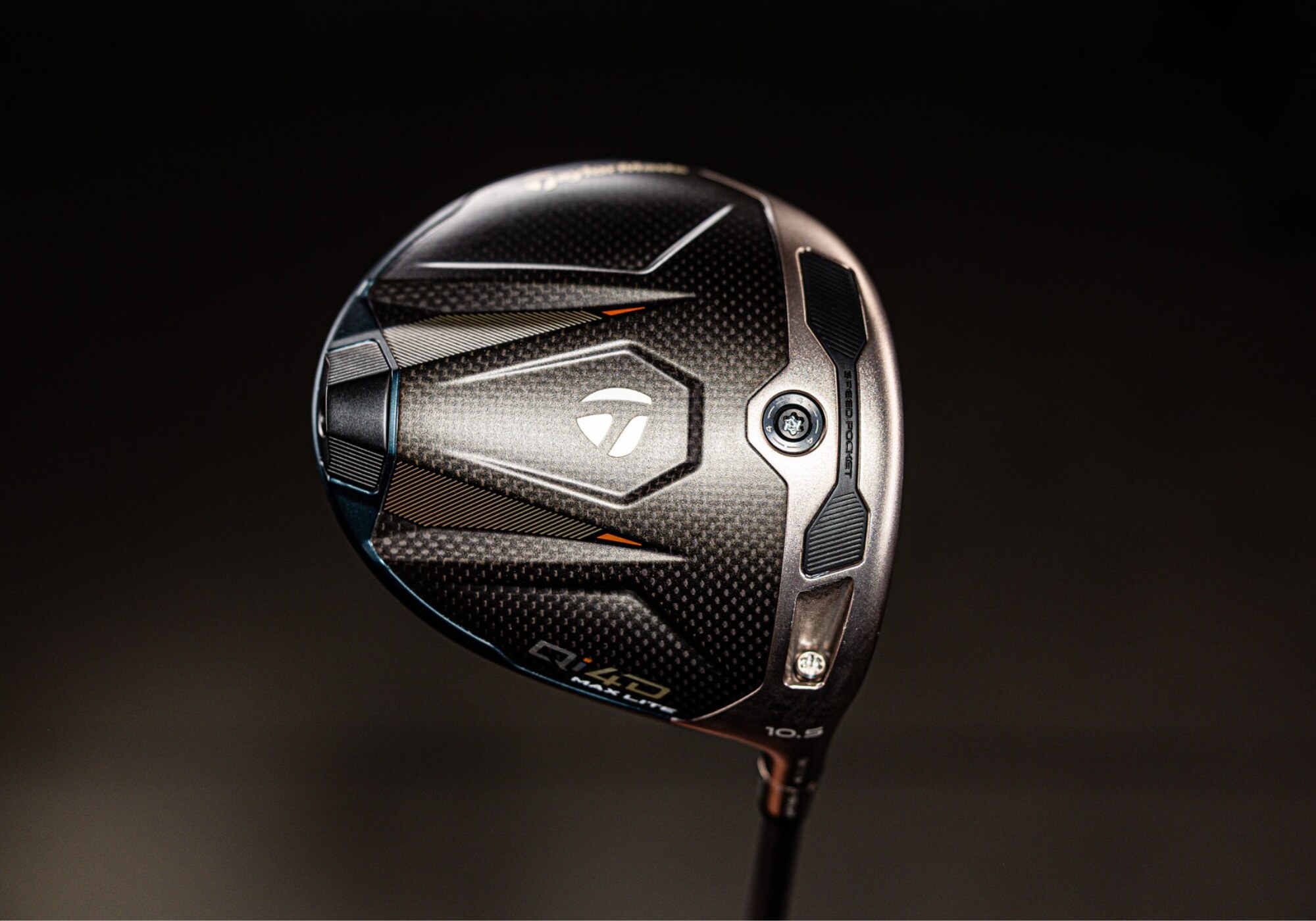
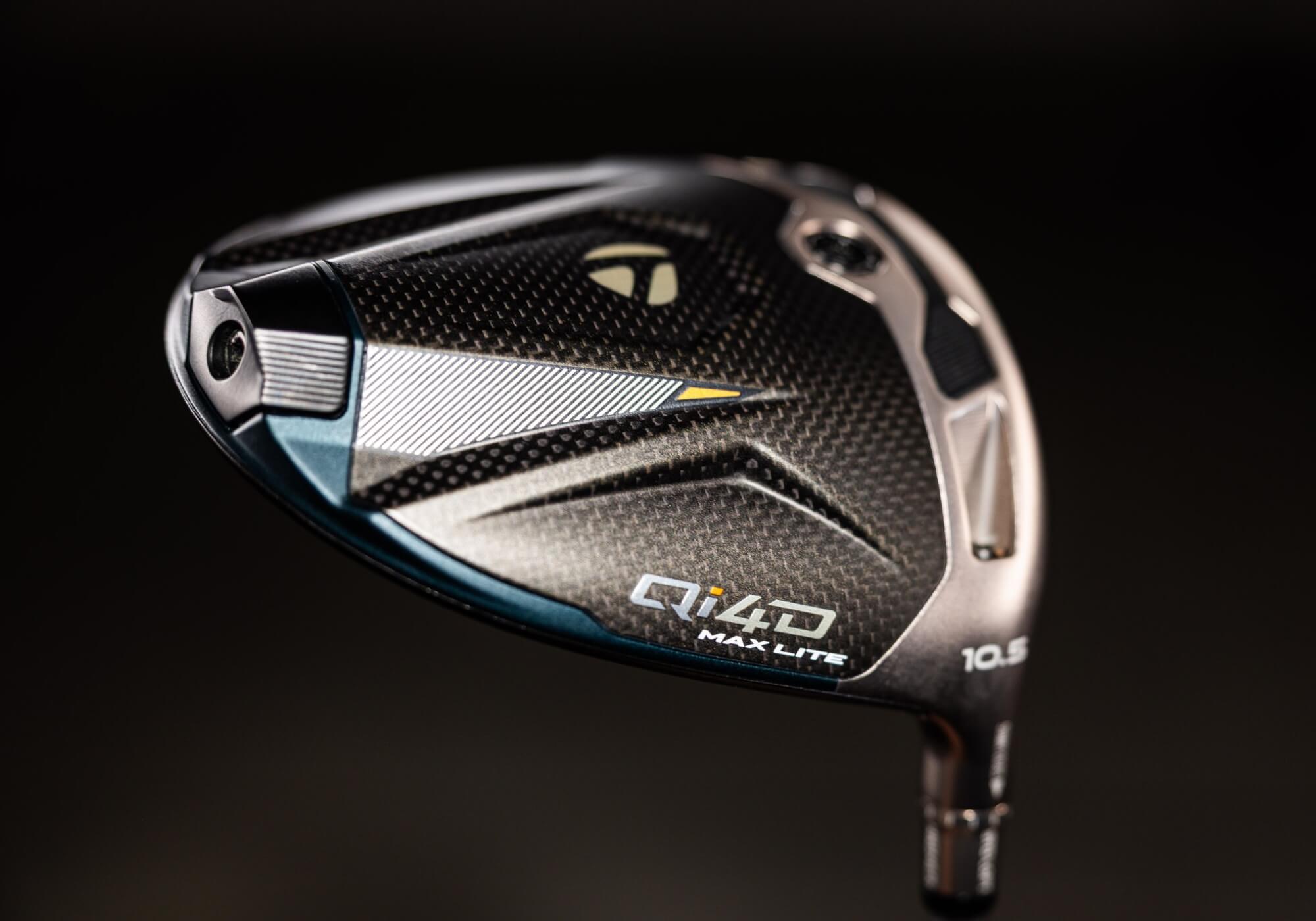
In our testing, standard deviations are a key component of driver forgiveness, specifically for ball speed, carry distance, and shot area (dispersion). Drivers that exhibit the tightest standard deviations for these metrics score highest on our forgiveness charts. The TaylorMade Qi4D Max Lite is a standout performer in this category.
While the TaylorMade Qi4D Max Lite is forgiving, it may not be suitable for golfers with faster swing speeds, as the struggle with distance is amplified at higher speeds. This driver could be a viable option for golfers with slower swing speeds.
The TaylorMade Qi4D Max Lite driver targets a niche market due to its lightweight design. Surprisingly, in testing, it ranked second overall for forgiveness. While the club is designed for forgiveness, the real surprise lies in its consistent performance across golfers of various swing speeds, which speaks to the inherent consistency of the driver head.
“Felt good, great ball speed, and very consistent.”
“Forgiving, consistent. I had results regardless of user error.”
“Almost performed like the high performance drivers , if you mishit it you lost a lot of distance, and that could be because of my swing speed.”
“Too much spin, but it felt amazing.”
The TaylorMade Qi4D Max Lite is essentially a lighter-weight variant of the Qi4D Max. This driver’s design and features are specifically engineered for golfers with slower swing speeds, or those who need to achieve higher launch angles and increased spin. It excels at delivering these desired shot characteristics. Even testers whose swing speeds would disqualify them from using this driver offered high praise for its subjective appeal (feel, sound, and looks). It won’t surprise me if we see this driver featured prominently in our upcoming slow swing speed test results.
Our mission is to cut through the subjective BS and encourage golfers to buy based on performance. Performance should be your top priority. Period. However, there are other things you need to consider when purchasing a new driver.
If you’re new to golf, it can be useful to understand the parts of a driver. Golf drivers consist of several parts: the clubhead, the shaft and the grip. The clubhead is the portion that actually strikes the ball and is often made from materials such as titanium or composite blends.
The hosel connects the head to the shaft, which can vary in length and is commonly constructed from steel or graphite. The grip can be chosen separately and you can always regrip your clubs. And if you really want to go the custom route, you can add a unique ferrule, too.
Driver price points are quite the talking point nowadays. Most drivers are hovering at US$600. There are several that exceed that price, even before you think about upgrading to an aftermarket shaft.
Thankfully, there are value alternatives, especially as more direct-to-consumer offerings become available. Or, you can scoop up some of the best drivers on the market for a discounted price.
Driver prices are continually escalating, with several models projected to hit the $700 mark in 2026. This trend raises a key question: “Is newer always better?”
While many new 2026 models show performance gains over their predecessors, savvy golfers can still find exceptional value. For 2026, we recommend the Titleist GT2 and GT3 drivers as the best value options. Currently available at a discounted price, these models deliver phenomenal ball speed and pure distance.

Now that we are in 2026 and all of the 2026 driver models have been released, many of the best drivers featured in last year’s test are on sale. Take a look at our brand-specific promo code and golf deal pages to get the best price on a new driver for your game.
Choosing the right driver shaft is a daunting task. The landscape and information surrounding shaft selection and fitting is also shifting. For example, TaylorMade’s approach to shaft fitting based on “closure rate.” Certainly, there are other OEM’s with research on this approach, but TaylorMade is attempting to be a leader in the space with their stock shaft selection.
Regardless of the approach, you want the driver shaft that allows you to perform consistently. Here at MyGolfSpy, we test from an “off-the-rack” or “from stock” approach. The driver shaft and the loft of the driver head create a partnership. That partnership needs to allow you to produce consistent shot outcomes.
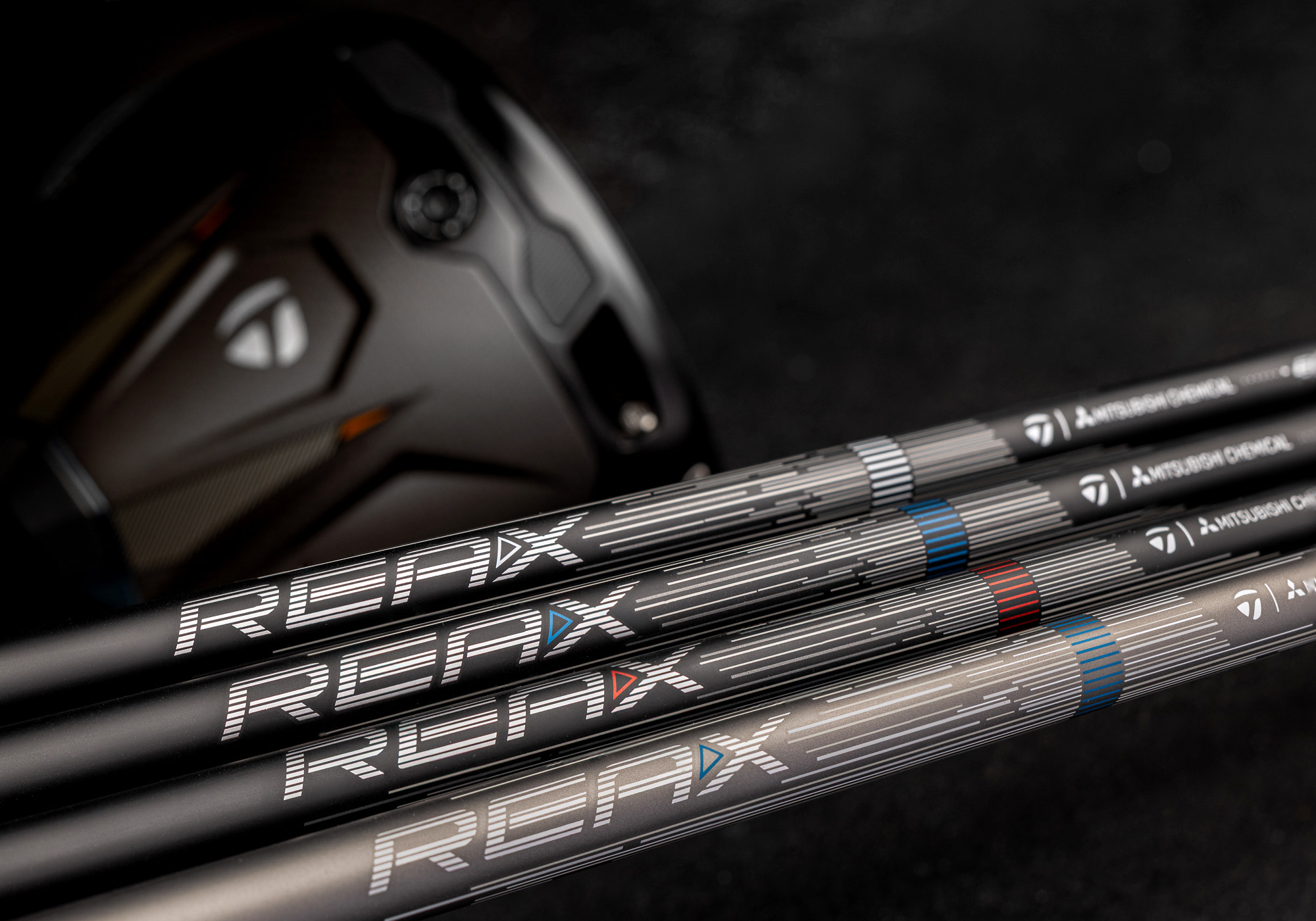
The traditional approach is to evaluate launch conditions, a proven approach. For example, if you don’t generate enough spin, launch angle or peak height with your driver, you want to add loft and even a driver shaft that helps raise all of the above data metrics.
Ultimately, you should not neglect the importance of the driver shaft.
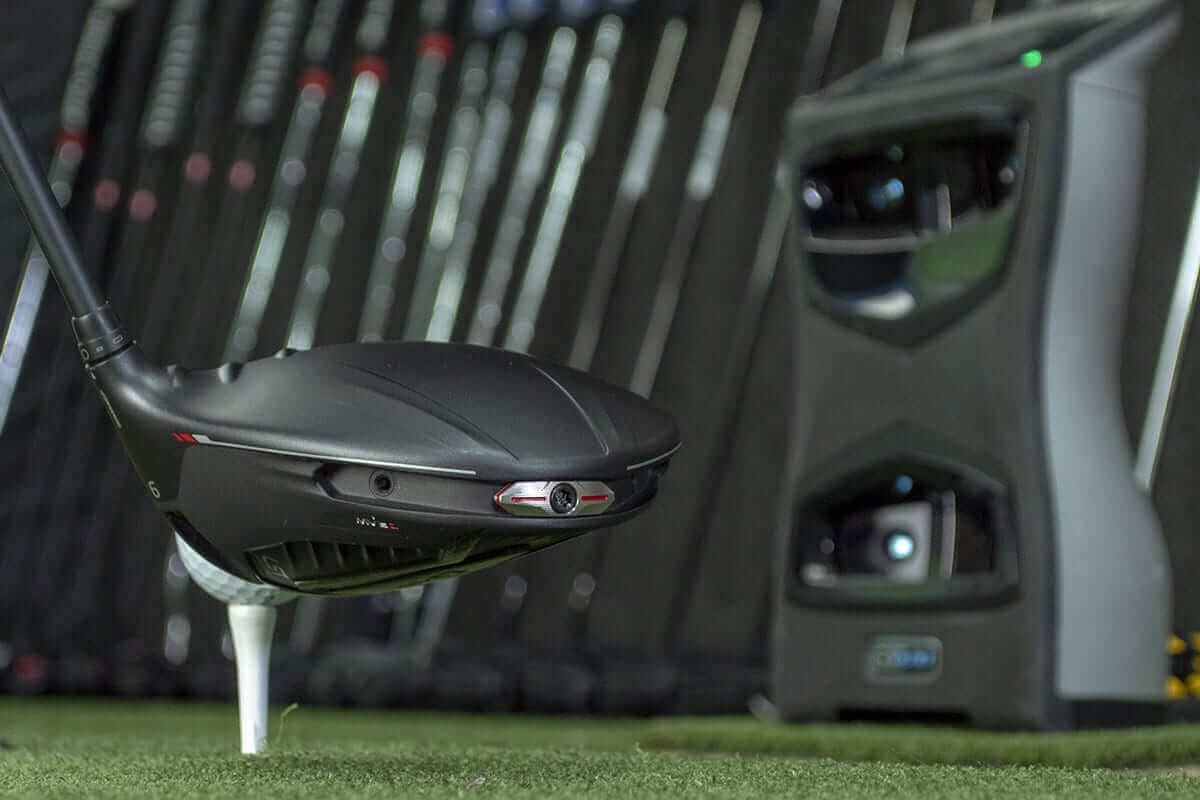
No one else does testing like MyGolfSpy. Who else is committing 490 hours to test 42 driver models? Yes, that is how much time and dedication it takes to execute a Most Wanted Driver Test. We don’t take it lightly.
For 2026, the testing pool includes 42 different driver models. This is our largest driver testing pool in our history.
MyGolfSpy’s test program is powered by three crucial components :
For driver testing, we have 35 testers. Since a driver is marketed to all golfers, our testing pool includes golfers of varying swing speeds and skill levels. Due to the scale of this test, each tester committed to 14 appointments to complete the driver test. All 35 testers hit each of the 42 drivers.
In the forthcoming weeks, we will release subsequent articles highlighting the best drivers for slow, mid and fast swing speed golfers
Providing you, the golfer and consumer, with insights into the best drivers on the market is our No. 1 goal with this test. We can’t do that without taking a diligent, in-depth approach to analyzing the data we collect throughout this process.
Our scoring categories remain the same and we will review those below.
Overall scores are labeled as a MGS Score. The MGS Score is on a 10-point scale.
Driver testing is comprised of three scoring categories:
These three categories are weighted with distance taking a slight priority over accuracy.
Maximizing driver distance is every golfer’s goal. For our distance category, we evaluate two specific metrics:
Being accurate off the tee can be a game changer. For our accuracy category, we analyze two specific metrics:
We label forgiveness as how consistent a driver is at producing consistent shot outcomes. For our forgiveness category, we assess three specific metrics:
Scores are derived strictly from ball launch monitor data by way of our Efficiency Values. Efficiency Values are a cleaner version and representation of raw average as they remove golf ball data and clubhead data outliers from the equation.
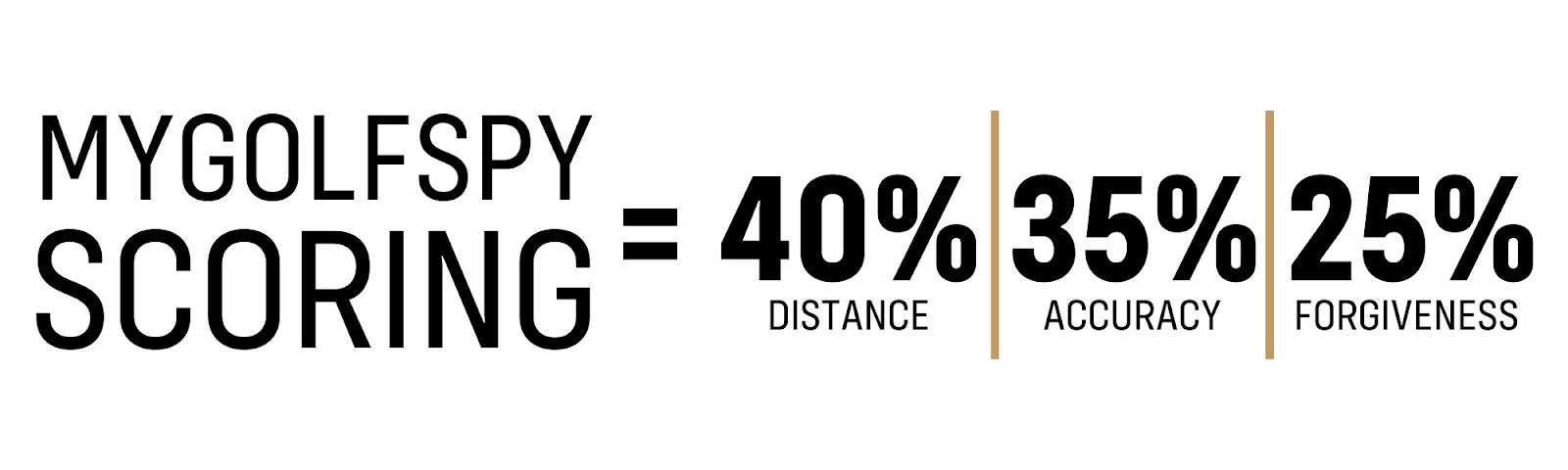
With this being said, scores are weighted with 40 percent of the score coming from distance metrics, 35 percent from our accuracy metrics and the remaining 25 percent from our forgiveness metrics. You can reference the specific metrics within each scoring category in the previous heading section.
Finally, we reserve a very small percentage of the score to account for things like fitting considerations, excessive amounts of outliers and other details that fall outside the scope of the data.
| Driver Model | MGS Score | Accuracy Score | Distance Score | Forgiveness Score |
|---|---|---|---|---|
| TaylorMade Qi4D | 9.2 | 9.2 | 9.3 | 9.1 |
| Callaway Quantum Max | 9.1 | 9.2 | 9.5 | 8.5 |
| Callaway Quantum Triple Diamond | 9.1 | 9.1 | 9.4 | 8.5 |
| Tour Edge Exotics Max | 8.9 | 9.1 | 8.7 | 9.2 |
| Callaway Quantum Triple Diamond Max | 8.9 | 8.6 | 9.2 | 8.7 |
| TaylorMade Qi4D LS | 8.9 | 8.5 | 9.1 | 9.0 |
| Callaway Quantum Max D | 8.8 | 8.6 | 9.4 | 8.3 |
| Titleist GT3 | 8.8 | 8.5 | 9.4 | 8.3 |
| Titleist GT2 | 8.8 | 8.4 | 9.4 | 8.5 |
| PING G440 LST | 8.8 | 8.4 | 9.0 | 9.1 |
| LA GOLF Driver | 8.8 | 9.3 | 8.2 | 8.9 |
| PING G440 MAX | 8.8 | 9.1 | 8.6 | 8.6 |
| PXG Lightning Max Lite | 8.8 | 9.0 | 8.4 | 9.1 |
| PING G440 K | 8.7 | 8.9 | 9.0 | 8.1 |
| COBRA OPTM Max-K | 8.7 | 8.9 | 8.5 | 8.8 |
| PXG Lightning Tour Mid | 8.7 | 8.5 | 8.6 | 9.0 |
| Tour Edge Exotics LS | 8.6 | 9.1 | 8.1 | 8.8 |
| PING G440 SFT | 8.6 | 9.2 | 8.0 | 8.8 |
| PXG Lightning Tour | 8.6 | 8.8 | 8.8 | 8.0 |
| COBRA OPTM LS | 8.6 | 8.4 | 8.7 | 8.6 |
| Ben Hogan PTx LST | 8.6 | 9.0 | 8.4 | 8.2 |
| Titleist GT4 | 8.6 | 8.0 | 9.2 | 8.3 |
| PXG Lightning Max 10K+ | 8.5 | 8.5 | 8.7 | 8.2 |
| Srixon ZXi Max | 8.5 | 8.6 | 7.9 | 9.4 |
| Wilson DYNAPWR Max | 8.5 | 8.2 | 8.6 | 8.8 |
| Takomo Ignis D1 | 8.5 | 8.4 | 8.8 | 8.1 |
| Mizuno JPX One | 8.4 | 8.8 | 8.2 | 8.4 |
| Srixon ZXi | 8.4 | 8.5 | 8.2 | 8.8 |
| TaylorMade Qi4D Max Lite | 8.4 | 8.7 | 7.7 | 9.2 |
| MacGregor Tourney Max | 8.4 | 8.9 | 7.8 | 8.7 |
| Vice Golf VGD01+ | 8.4 | 8.1 | 9.0 | 7.9 |
| Wilson DYNAPWR Max + | 8.4 | 8.5 | 8.3 | 8.3 |
| Wilson DYNAPWR Carbon | 8.4 | 7.9 | 9.0 | 7.9 |
| Srixon ZXi LS | 8.3 | 8.3 | 8.6 | 8.0 |
| Ben Hogan PTx Max | 8.3 | 8.6 | 8.1 | 8.4 |
| COBRA OPTM X | 8.3 | 8.3 | 8.5 | 8.1 |
| Wilson DYNAPWR LS | 8.3 | 7.7 | 9.0 | 8.1 |
| Titleist GT1 | 8.2 | 8.8 | 7.6 | 8.2 |
| Vice Golf VGD01 | 8.2 | 8.2 | 8.0 | 8.4 |
| TaylorMade Qi4D Max | 8.2 | 8.3 | 8.0 | 8.3 |
| Mizuno JPX One Select | 8.0 | 8.0 | 7.9 | 8.1 |
| COBRA OPTM Max-D | 7.9 | 8.0 | 7.3 | 8.9 |
| Driver Model | Average Ball Speed | Average Carry Distance | Average Total Distance | Average Backspin |
|---|---|---|---|---|
| Ben Hogan PTx LST | 140.94 | 235.54 | 249.65 | 2,311 |
| Ben Hogan PTx Max | 140.30 | 234.74 | 247.87 | 2,452 |
| Callaway Quantum Max | 140.91 | 238.93 | 255.21 | 2,114 |
| Callaway Quantum Max D | 141.44 | 238.72 | 253.97 | 2,249 |
| Callaway Quantum Triple Diamond | 142.12 | 238.75 | 254.37 | 2,195 |
| Callaway Quantum Triple Diamond Max | 141.84 | 238.72 | 252.77 | 2,329 |
| COBRA OPTM LS | 142.48 | 236.58 | 250.61 | 2,416 |
| COBRA OPTM Max-D | 140.95 | 229.01 | 240.00 | 2,684 |
| COBRA OPTM Max-K | 140.97 | 236.16 | 249.44 | 2,461 |
| COBRA OPTM X | 141.46 | 235.86 | 250.05 | 2,406 |
| LA GOLF Driver | 140.67 | 234.40 | 248.94 | 2,482 |
| MacGregor Tourney Max | 139.44 | 231.90 | 247.61 | 2,311 |
| Mizuno JPX One | 141.83 | 233.87 | 248.86 | 2,649 |
| Mizuno JPX One Select | 141.30 | 233.59 | 247.21 | 2,449 |
| PING G440 K | 141.66 | 237.78 | 252.04 | 2,516 |
| PING G440 LST | 141.06 | 236.27 | 250.35 | 2,423 |
| PING G440 MAX | 141.35 | 237.37 | 251.42 | 2,640 |
| PING G440 SFT | 140.71 | 232.36 | 245.90 | 2,728 |
| PXG Lightning Max 10K+ | 141.47 | 236.55 | 250.46 | 2,413 |
| PXG Lightning Max Lite | 141.45 | 235.65 | 249.32 | 2,663 |
| PXG Lightning Tour | 141.15 | 236.36 | 251.38 | 2,347 |
| PXG Lightning Tour Mid | 141.53 | 235.95 | 250.36 | 2,401 |
| Srixon ZXi | 141.87 | 236.01 | 249.18 | 2,725 |
| Srixon ZXi LS | 140.63 | 234.23 | 246.95 | 2,494 |
| Srixon ZXi Max | 140.86 | 233.10 | 246.33 | 2,752 |
| Takomo Ignis D1 | 141.57 | 236.94 | 250.77 | 2,412 |
| TaylorMade Qi4D | 142.27 | 238.68 | 253.29 | 2,438 |
| TaylorMade Qi4D LS | 142.27 | 236.71 | 253.65 | 2,437 |
| TaylorMade Qi4D Max | 140.74 | 233.41 | 247.57 | 2,573 |
| TaylorMade Qi4D Max Lite | 141.15 | 233.20 | 245.38 | 2,734 |
| Titleist GT1 | 141.67 | 234.84 | 245.33 | 2,858 |
| Titleist GT2 | 142.29 | 239.25 | 252.42 | 2,396 |
| Titleist GT3 | 142.62 | 239.17 | 252.52 | 2,410 |
| Titleist GT4 | 142.43 | 237.76 | 252.65 | 2,343 |
| Tour Edge Exotics LS | 139.88 | 233.71 | 248.76 | 2,305 |
| Tour Edge Exotics Max | 140.64 | 236.20 | 250.56 | 2,582 |
| Vice Golf VGD01 | 141.28 | 233.21 | 248.35 | 2,342 |
| Vice Golf VGD01+ | 142.89 | 237.47 | 252.72 | 2,344 |
| Wilson DYNAPWR Carbon | 142.05 | 236.88 | 251.58 | 2,341 |
| Wilson DYNAPWR LS | 141.35 | 237.81 | 253.17 | 2,273 |
| Wilson DYNAPWR Max | 141.58 | 237.05 | 251.82 | 2,533 |
| Wilson DYNAPWR Max + | 141.18 | 235.55 | 248.71 | 2,579 |
Our driver test is one of the longest, most extensive, tests we do. Here are six key takeaways after 490 hours of testing:
All 42 drivers feature an adjustable hosel at a minimum. Several also include moveable weights which allow for shot shape correction or a shift in CG location to change launch conditions.
COBRA still leads the way with adaptor sleeve innovation. Their FutureFit33 features 33 unique loft and lie adjustments to help dial in your driver.
Even the likes of Takomo Ignis D1, Ben Hogan, and MacGregor offer drivers with adjustable hosels. It is a no-brainer to have and hopefully the industry continues this trend.
TaylorMade Qi4D claims the top spot for 2026. It builds on the momentum of the TaylorMade R7 Quad mini driver, an absolute beast in the mini driver space.
Arguably, its top rival Callaway is the most impressive brand top to bottom for 2026. All four of Callaway’s Quantum drivers finish in the top seven in our rankings. Callaway Quantum Max is the best core model driver from Callaway in years.
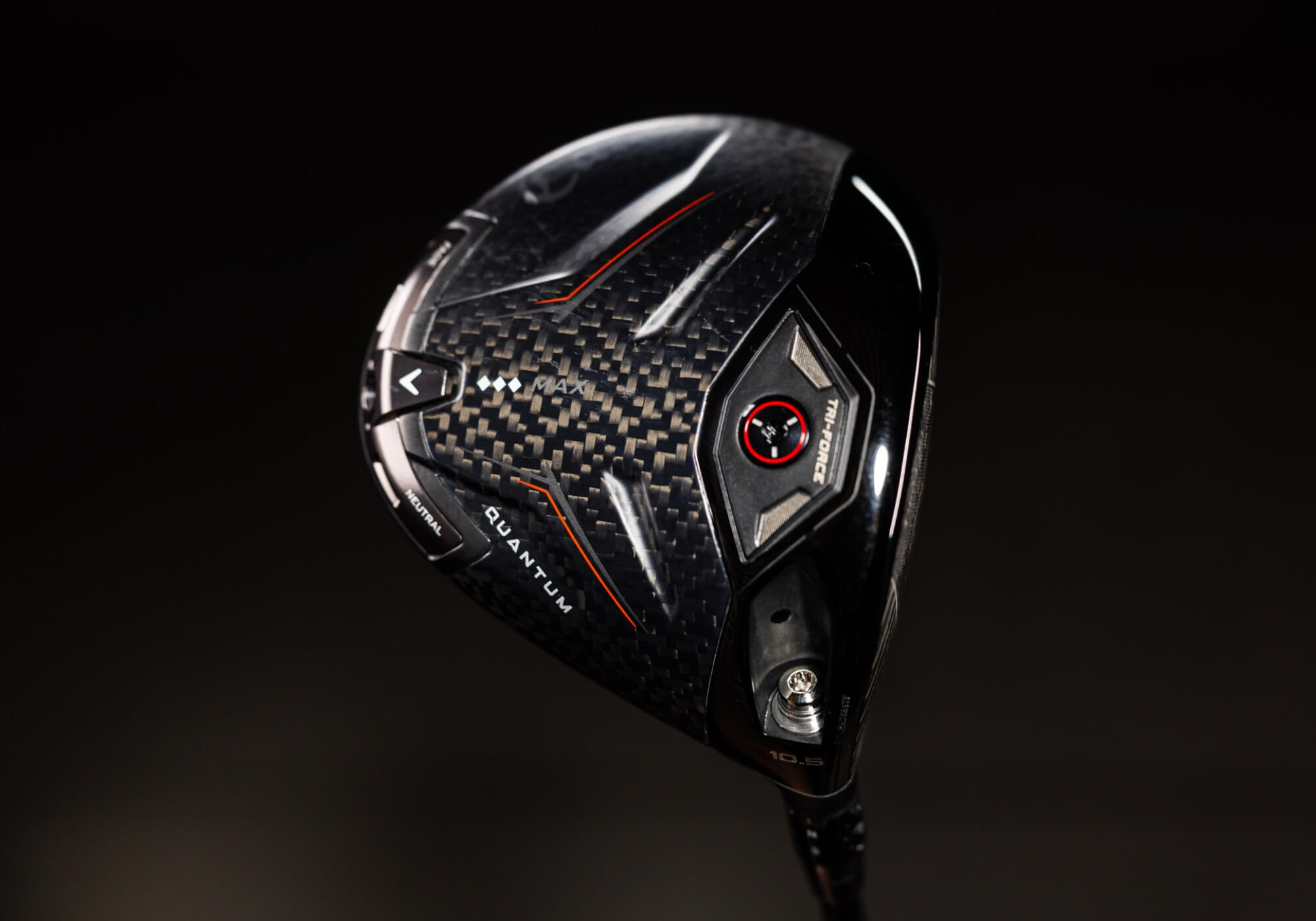
LA GOLF, Vice Golf and Takomo Golf all had first-generation drivers in our 2026 Most Wanted Driver test. Each of them were impressive in their own way.
LA GOLF is the best driver for accuracy. Remember the PING G430 Max 10K? There were moments in testing where our staff thought LA GOLF might pull out the overall victory. However, it lacks overall distance relative to other top performers.
Vice Golf has two drivers: VGD01 and VGD01+. VGD01+ is a phenomenal option for distance. Based on our Efficiency Values, it is the best driver for ball speed.
Takomo Golf Ignis D1 is middle of the road. It isn’t the best for anything but it isn’t the worst for anything. For $319.99, it is a great value option. Ignis D1 holds its own for distance and ball speed.
10K MOI is still relevant. For 2026, we saw Wilson and PXG add “10K” driver models to their lineups. PING introduced their newest option as well, PING G440 K. Even Tour Edge Exotics Max has “10K” stamped on it. Oh, and don’t forget COBRA OPTM Max-K.
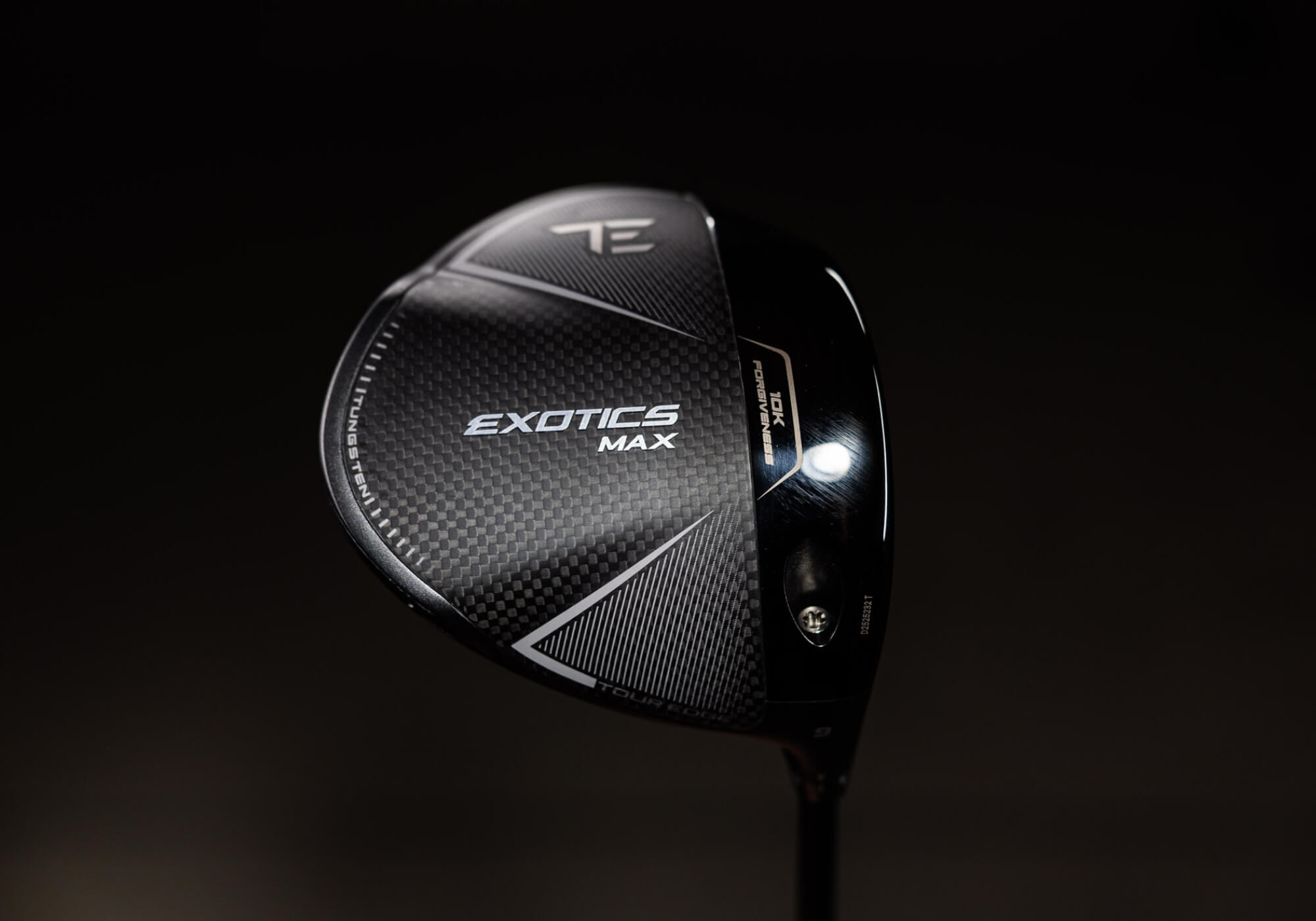
Each of these drivers can find a place in someone’s golf bag. If you want to go with a high MOI driver, Tour Edge Exotics Max, PING G440 K and COBRA OPTM Max-K are the best options.
Remember, MOI is just a number. It doesn’t convey the entire forgiveness or performance story.
It’s neither a surprise nor a secret that not all manufacturers put the same effort (money) into their stock shaft lineup. While having more options doesn’t guarantee better performance (the head still has to perform), even for the off-the-rack buyer, a more robust shaft lineup is an advantage.
For some golfers, sometimes many golfers, drivers don’t do what they’re supposed to. There’s design and there’s perception. What I mean by that is that if something in the design of a driver – things like face angle, lie angle, even the way the top line presents at address – causes a golfer to change something in his setup, the real-world result can differ from the design intent.
It’s the reason why we sometimes see draw-biased drivers produce fade-biased results and why “better player” drivers with small shapes and open faces can sometimes go left.
A driver fitting is about more than finding the head that produces the best numbers. Shaft length, adjustable loft and movable weights can all change the way a driver performs, and the club you like looking at isn’t always the one you’ll hit best. We broke down four things worth paying attention to during your next driver fitting, including a few that are easy to overlook. [Read our full driver fitting guide here.]

World-class testing requires world-class equipment. This is the gear we trust to help us fulfill our Most Wanted testing.
Cancer Survivor. Amputee Golfer. Essentially, a OneLeggedBoss. When he isn't facilitating testing or analyzing data, Phillip enjoys his family time, practicing and playing golf, unwinding with video games, capturing photos of nature, or devouring pretzels.


| Driver Titleist GT3 | 3 Wood Titleist GT3 |
| 7 Wood Callaway Elyte Triple Diamond | Irons (5-PW) Srixon ZXi5 |
| Wedges (46, 50, 54, 58) Titleist Vokey SM10 | Putter L.A.B. MEZZ.1 MAX |
| Ball Titleist Pro V1x |
3 months ago
After reading thru this article, my first reaction is that it is close to worthless because it does not include, at a minimum, club loft, shaft (&flex) used and swing speed. Without that information, this is little better than the growing useless AI generated tripe on many YouTube channels. I have learned the hard way that many of MGS (and other testers) claims and recommendations of what is “best” has no basis in fact for the average golfer (which is the vast majority of all golfers). Some of these touted wonder clubs do not even perform properly unless you have a 100+ mph swing speed.
3 months ago
If the drivers you test are not assembled with same loft, same face angle, same shafts, same length, same swingweight, same grips,your test has absolutely no value.
5 months ago
This is scary. I think. I am 71. SS mid 80s. I went into my local store today to ask about new shaft for my PXG 0211 driver, vintage 2021, evnflo ripride 40 grm a flex. Then, I located a TM QI 35 Max with Mitsubishi Vanquish R2. In street clothes, street shoes, indoors, cold swing – no warm up. 1st swing was wild. Then 3 in a row striped around 190 yards. Virtually no dispersion, identical ss, launch angle. Felt like I could try a dozen other clubs and not find a better fit n feel. $400 with Memorial Day sale. I think I must pull the trigger. And if can break a carbon face at 85 mph, well, I’ll risk it.
5 months ago
I have been reading these annual club reviews for what must be over a decade now and try-though-I-might, I STILL get confused when trying to reconcile the shot dispersion aspect of the Forgiveness metric with what the Accuracy metric is trying to tell us. Isn’t a driver with a wide shot dispersion going to typically be less accurate? I totally get the ball speed and carry distance dispersion part being part of Forgiveness, b/c they don’t really have anything to do with accuracy per se. But to me, Forgiveness should also factor in how the driver performs on off-center face hits. That’s the real “Forgivenss” metric. Then the shot dispersion piece could be incorporated into Accuracy.
If I’m interpreting this wrong (again, for the last 10+ years), please correct me. Love the work regardless; this has just always bothered me slightly.
7 months ago
Was playing Elyte with AutoFlex 305x prior to your article. Swing speed in low 80’s at 75. Bought a ZXi head and tried with both AutoFlex 305x and AV II from XXIO. Dramatic difference in distance, control, and feel. Matching my old LA White Tie 40 gm to Elyte and taking it to 2nd Swing. Convert to ZXi and AV II with AutoFlex when tempo near perfect.
7 months ago
Why did you drop strokes gained as a metric?
7 months ago
I have yet to find a club that makes me want to move on from my Titleist TSi 3. The TSr3 was the same, the GT3 was the same. Taylormade is like hitting garbage. I have tried everything they offer, never ever do they perform near my Titleist. Callaway, they seem to go dead. I do not know what it is, but after so many hits, it’s like they loose pop. I am not paying $700 to basically hit it the same distance as what I have now.
7 months ago
Any word on when we get the breakdown by swing speed?
7 months ago
And just like that, the world’s number one player is back to using the Qi10 after giving the latest TaylorMade drivers a go. It will be interesting to see if others follow suit and revert back to a previous generation model. An article for MGS to consider is just how much better the newest models are across all major OEMs compare to 1 or 2 generations ago. There’s significant money differences now with drivers approaching $700. The question to be answered is are they really worth it?
8 months ago
I would really like to see more detail about how the test is conducted… how many swings is each tester taking, how is the ‘stock’ shaft selected for each tester, are all swings taken into consideration or are outlying ‘bad’ swings removed… and I’d also like some attempt to quantify the gap in scoring similar to the raw data available for the ball test. What’s the actual difference between 8.8 forgiveness and 9.0… is that marginally less forgiving that you’ll rarely notice on the course or is it catastrophically different, ditto for accuracy… is a 0.5 difference in distance 30 yards or 3 yards, etc…
8 months ago
I would like to see a year-by-year comparison of clubs by Brand. To see if the Club/ Brand has taken a step back or the other brands just got better, Take Cobra for example, last year their Drivers were hitting well and this year not so much … I am curious to see how the Cobra 2025 compares to the 2026 line up.
5 months ago
Agreed. I would like to see the same
8 months ago
Not to beat a dead horse, but how did the same GT2 and GT3 drivers that finished well below the 440 LST driver in last year’s testing (LST was 3rd overall) finish ahead of the 440 LST this year? Different testers and/or setup than last year? Another notable difference is that the 440 Max finished 22nd or 23rd overall last year, but then finished 12th overall this year against a field of more technically-advanced drivers, including the more-advanced 440K?
8 months ago
Hmm, must be pretty tight race across the board. Driver choice is personal, not one size fits all. Lots of good choices out there, is how I interpret it.
8 months ago
Bingo! You cannot mathematically eliminate the HUGE variable which is the person swinging the golf club. You test the same clubs with the same ball in the same environment year to year with the ONE variable being the person swinging the club, and you get WIDELY different results year to year. Flawed testing.
8 months ago
As a caddy I see everything. Buy or don’t buy, it won’t matter. Get the right shaft though. and Cobra makes damn good drivers.
3 months ago
Agreed. All drivers have to conform to the legal Coefficient of Restitution. That hasn’t changed in years. All these manufacturers can do is to maximize forgiveness and create better shafts.
8 months ago
Any data for performance for slow or moderate swing speeds
8 months ago
3 yards carry separates first and 20th place????
Do you or would you ever rerun/publish these numbers with a different weighting system.
Giving distance such a high percentage of the score, while the actual distance difference is so small make little sense for me.
The score delta of .6 points is the difference from 1st to 20th place. That carry distance delta is only 3 yards (worth .6 points in this system)
Honestly that is such a tiny difference and such a big impact on the scoring.
8 months ago
I’ve wondered that myself, or if there was a way to adjust the weighting. Someone like me would value forgiveness more than distance, especially with the relatively small number of yards separating the clubs.
8 months ago
Thank you MGS for taking this on and providing some excellent insights. Lots of varied opinions shared in the comments, but in the end it’s your test and your criteria driving your conclusions. Historically MGS results provide a very good starting point for new driver evaluations. One quick observation- the Titleist GT2 and GT3 look to still be excellent options, especially when you consider their price/performance. Both offer similar results but with a savings of between $150 to $250 over most of the current 2026 releases. It will be interesting to see what they cook up when they release their next generation of drivers in the next couple of months.
8 months ago
The article says there are 13,680 shots.
The article also says there are 20,580 shots.
That’s a pretty big discrepancy.
Even using the larger number, that realistically means each person hit 14 shots, per club.
I love the data, I just wish we could… See the data. If 6 yards is the difference between scoring 9.5 and 7.9 then the ratings are probably inflated. What’s a forgiveness score of 9.5 vs 8.0 represent? 6 yards offline? 16? 60?
Just give us the real numbers rather than translating them into scores that carry no quantifiable meaning. You did all the work, you have all the data, we just want to see it.
8 months ago
I understand the pro-robot crowd’s stance of reducing variables however you need the human element. My question is can the shaft fitting be minimized? Ideally MSG would have one singular driver shaft everyone used for every driver. That would eliminate a huge variable but poses a host of other problems. Perhaps have a singular shaft family with 3 options and fit from only those shafts?
Just glancing the results it seems the greater the “fit from stock” the better the family seems to score overall. That’s not the point of the test and in the messaging MSG acknowledges more shaft options is an advantage. I think that variable needs to be reduced somehow.
8 months ago
This makes no sense, this years drivers scored less by a fair margin than last years. And drivers that are essentially like for like, ie Ping 430 10k vs 440K, the current model got a much lower forgiveness score than last year. Sounds like the real user testing is basically random.
8 months ago
Cope
8 months ago
Nope…dope…
8 months ago
In your testing it was noted using Titliest V1 golfballs..my question is /- Did or do you test each Driver with a NEW Ball for each testing separately ???
8 months ago
Holy Cobra fall off.
8 months ago
SO nice, what we really need is for someone to sue the club companies and take away their price control methods, you know NO one can sell a !$699 driver for less than $699. I was in High School when Timex Watches lost the fair trade battle and could not control prices on their watches anymore and we started getting discounts everywhere on Timex Watches. I know someone who tried to put PING irons on sale and PING Rep. came in and took all his stock and he was not allowed to carry PING clubs anymore. They hid behind the patient laws, now you know why there are new drivers/clubs every year or so.
8 months ago
Another option is to look at other brands who sell for much less.
8 months ago
Would love to see data separated by swing speeds.
8 months ago
Question: How do you determine which shaft is “stock” if there are multiple offerings? Tour Edge offers a few different “no charge” offerings for their drivers. I’m assuming other manufacturers do the same.
8 months ago
I believe, from write-ups of past tests, is that they will fit each tester for each club, choosing the best fit from among the stock options available for that club. Essentially, they try to get the best fit possible that would be available from that manufacturer for each tester, but without going into aftermarket options.
So a manufacturer that offers a wider selection of “stock” shafts will have a better chance of finding a good fit for a particular tester.
8 months ago
That makes sense. Thank you.
8 months ago
Well I was hoping for a little more from the new Mizuno models as they were intriguing with that new face material/layer. In MGS Score: JPX One 8.4 (27th), JPX One Select 8.0 (41st). In Distance: JPX One 8.2 (30th), JPX One Select 7.9 (37th). In Accuracy: JPX One 8.8 (15th), JPS One Select 8.0 (39th). In Forgiveness: JPX One 8.4 (25th), JPX One Select 8.1 (34th). The JPX One appears to do noticeably better than the JPX One Select in every category.
I wonder if they could add a row number to the table (that is updated when sorting changes). That would save me some counting!
8 months ago
With all of that, the Mizuno might still be a great club for you.
8 months ago
Thanks for your time and effort. Interesting reading as I’m currently in the market for a new driver
8 months ago
The results, in my opinion, are a good starting point for where to start looking, but nothing more than that. I have found that stock shafts in a hitting bay is the worst place to pick a club. The things I look for when choosing a driver is a combination of head, shaft, and grip properly set up by a fitter. Anyone choosing a $600+ without looking at all of those factors is going to be disappointed with the results. The other issue is chasing a well known name instead of clearly looking at the performance results of the club regardless of manufacturer is short sighted. I found hitting anything with a carbon face (Taylormade) was off-putting in sound and feel. I found that hitting a $300 driver correctly set up with the correct shaft is just as long and more accurate than some of the leading names in drivers. Bottom line is the data is great and the testing is thorough for what it is… but get fit on grass with a proper fitter and hit the club you believe fits your swing and your game.
8 months ago
Which $300 driver gave you those results?
8 months ago
One thing that stands out to me is just how close all of the drivers are to each other in carry distance (I don’t like to look at total distance because it is very course dependent). Over 42 drivers they are all carrying within 10 yards of each other and not to say that distance doesn’t matter anymore but for me the forgiveness and accuracy are king now. Also as a golfer on a budget, I would love to see a MSRP column added, I know prices change depending on discounts but still a valuable data point for a lot of people.
8 months ago
Agreed. A “budget pick” or “best bang for the buck” or “$/carry yards” would be a nice category. Frankly, with the $200 price drop, the Titleist GT series should be a top contender for anyone considering a value buy.
8 months ago
They usually have a category or a single value pick, but they didn’t on this one. I would have to think Tour Edge would be up there too. Looks like Tour Edge Exotics Max was 6th in overall score for $500. GT2 and GT3 were 11th and 12th.
8 months ago
The MacGregor Tourney Max is $249. Probably the least expensive driver on the list. The Takomo is $319.
8 months ago
Gezz! Interest mortgage rates are a bit high right now because that’s what I need to afford one of these bad boys! Club head, shaft upgrade and fitting cost, insurance too! Only to learn my current driver does the same, and it’s paid for.
8 months ago
1. Should point out that the Titleist GT 2 and 3 are 2025 drivers, yet they score only 0.4 less than the 2026 top driver by MGS points AND they now cost only $400 bucks new, maybe another $100 less if preowned, NOT $650+ like the new 2026 offerings !!
2. GT 2 has consistently been one of the longest drivers for the last 2 years and I will emphasize your advice on fitting–I recently increased my GT2 clubhead speed by 5 mph and carry distance by 8-10 yards by upgrading the stock Denali Red to a “preowned” Autoflex SF 405 Titleist tipped which I found on E-Bay for only $350. Same club, same swing, same golfer. Another helping of Kimchi and Bulgogi please.
3. IMHO indoor fitting in no way represents or duplicates outdoor fitting or performance. You can fit all you want in simulators–and it is garbage.
So, you can test all you want indoors with stock shafts–it is meaningless !!!
8 months ago
I’d like to see data sorted by hdcp more than anything. I understand not using a robot, but how a double digit hdcp hits a driver provides very little benefit or insight in my opinion. I see them on my range all the time. Different golf swings and swing speeds are fine but needs to be good players. If you pay attention to what new driver models non-sponsored tour guys are playing it will tell you all you need to know where to start if you’re looking for a new one.
8 months ago
it is possible to post the same data, but separate out by handicap and swing speed? I am sure everyone on here would like to know there own handicap and swing speed or total driver yards. Like let me know what the 1-10 Handicaps, with high swing speeds, with 270-300 yard drives. what are the scores of just those data points? the test does nothing for me if you include 30+ handicappers who hit the ball 220 with 90 mph swing speeds. this would make the read and information so much better
8 months ago
My point exactly!
8 months ago
Stay tuned. MGS will follow up this article with separate lists for high, moderate, and slow swing speeds. Or at least that’s what they’ve done the last few years.
8 months ago
Thanks for another great driver test, MGS. Is it perfect, no. Is it the best thing that is available, absolutely. A few comments and suggestions:
– I used to be team robot testing but then I realized how many variables you would have to set the robot for to get useable test results. Multiple swing speeds x multiple angles of attack x multiple club paths x multiple strike locations equals nearly infinite robot settings. No human swings exactly the same every time so different parameters are tested each swing. That said, as much as MGS tries, it is impossible to perfectly select a group of testers that will fairly represent all club deliveries. A slight bias of heel strikes in the test group can impact the results especially when distance differences are razor thin.
– I would love to see dispersion circles for each driver (and for all club tests). Left to right dispersion is far more important to me than front to back (my home course has no forced carries) and generally I like to avoid clubs with a draw bias. While very accurate drivers of the ball might not care about left and right dispersion (because they never miss) but they face forced carries off the tee.
– Why are there people coming and leaving comments about this test being meaningless or laughable? You know how MGS is going test. If you don’t like it, don’t read it. The fact you logged in and read the results during the early access release time says something.
– Fitting the drivers to each tester ensures they are given a reasonable chance to perform however I would love to understand what this process looks like. Is each tester for each driver before any testing begins or on the day they are testing those drivers? The one thing these fittings eliminate is the ability to look at the relative performance of each driver in a standard set up (lets say 10* of loft, standard lie and weight setting). For all I know, one of the drivers might have been set upright with all the weight in the heel to keep it from slicing off the planet. Others might launch really high requiring most testers to be fit in a lower loft than comparable drivers.
– I am a gear junkie and love reviews. I love the MGS test, the Cool Clubs robot tests and the YouTubers who do head to head comparisons. All can provide you valuable information if you look for trends. But ultimately you need to get a club fitting if you want to know what is going to work best for you.
8 months ago
What the title of this article should be is “Best New Drivers of 2026” but it would be great to see is a yearly article of Best Drivers of the Last 5 Years”. If MGS is really trying to help the average golfer, then a comparison of the best for the last five years not only provides golfer insight into whether to buy new or to shop pre-owned but would show what the real performance differences are (this could be the same for any review drivers, irons, putters, etc.).
That being said, the information and effort put into this by the MGS team is still appreciated!
8 months ago
Why does the sort function never work on these? When you press the arrow to sort largest-to-smallest, it absolutely doesn’t work. Secondly, amazing how Quantum, although wasn’t #1, took three out of the top five spots. Felt like Callaway won this year, but we ‘have to give TM a trophy’. The only analogy I have is an Oscar Award — a movie didn’t win best picture, but won virtually everything else.
8 months ago
Thanks for doing this MGS, if for no other reason than I can read the same comments year after year, such as where us driver X, why no robot, don’t test people, you are biased and only want us to buy a new driver from X company.
And many more inane comments criticizing the process or brands tested.
8 months ago
My son and I tested almost every driver this year. I ended up with QI4D and he was fitted into the Quantum Max with his 115 avg swing speed, so this actually makes us feel good about our Driver choices. Thanks for the efforts.
8 months ago
I don’t understand how some of these results come to be. Optm ls spinning more than the X and barely less than the max-k, GT2 spinning less than GT3 and barely more than GT4. Quantum td max spinning the most of all the Callaway drivers. Just strange.
I honestly think nowadays just demo all the drivers, find the one you like look, sound, and feel of and then go to a fitting day for that brand. You’ll get the most out of the fitting and you won’t have to go through all these heads to find one before you get shaft, loft, weights, etc. They’re all fast, they’re all forgiving.
8 months ago
An amazing article with so much info to disseminate. Thanks MGS, you guys are awesome.
8 months ago
Nice to see some of the smaller and less expensive brands like Takomo, Tour Max, and MacGregor having a decent showing against the big names. Plenty of good options at more affordable prices. I appreciate your inclusion of these brands.
8 months ago
Tour Edge, I mean. Got ahead of myself.
8 months ago
I don’t see Cobra OPTM max D in the table. Was it tested?
8 months ago
It was at the very bottom, unfortunately.
8 months ago
This is laughable. Every independent test I’ve watched on YouTube, the new Callaway drivers scored lower in distance and dispersion over the Qi4D, GT2, GT3, and G440. My advice is go get fitted and try them all and don’t trust this review.
8 months ago
I’m sorry we were unable to confirm your bias. Can you show me which of those tests includes a statistically meaningful sample size? I would love to check those out.
While I’m thinking of it, how many of those reviews had any insights that might suggest they tried different (stock) shaft combinations, and made reasonable attempts to fit each driver rather than hit whatever stock part made it their way?
For context, our driver tests include 35 testers across a variety of handicap, swing speed, and delivery types. We test multiple lofts and work to fit each of our testers into the best available stock shaft. We also make weight and hosel adjustments. Basically we do what we can to ensure the best fit for each golfer (again, from the stock parts).
For this particular test, after tossing the gross outliers (tops, pop-ops, and shots hit so far offline it couldn’t be the club’s fault), we collected 20,568. Are any of your reviewers close to that number?
With all of that said, yes, I think every golfer should get fitted for every club in the bag, but I think we both know that isn’t going to happen.
8 months ago
Thanks Tony! MGS is great. For sure the best thing going. I just don’t understand how people are never happy even though MGS does, by FAR, the most comprehensive testing. AND we don’t even have too pay to get your data. I guess it is a sign of time that we live in that people can complain about free, extensive data. So sad.
Thanks again. Some of us really appreciate all that you do.
8 months ago
I’ve seen very few say the Callaway is the best, but I have seen most say the Qi4D is actually the best option.
8 months ago
Im really curious why the Quantum Max had much lower spin averages than the other Quantums including the triple diamond and triple diamond max. Must be a shaft thing?
8 months ago
Where’s Ping this year? Have they fallen off, or have all the other improved their drivers that much?
8 months ago
They haven’t fallen off. You can see the full results in the article. 3 of their 4 driver models finish in the Top 15: G440 LST, G440 MAX, and G440 K. These three models especially are worth trying in a fitting.
8 months ago
It’s a game of inches but it does seem like Ping fell off a cliff! I saw so many greta reviews on YT of the 440k I got one for the forgiveness and for that club to only get an 8 here is wild. Any more specifics? Is this club worse than the old 10K ping?
8 months ago
Actually, going through the results table, I think they are looking quite good, despite them not getting any specific mentions in the top 3 or the categories. The LST is 5th in forgiveness while also quite high in distance score, and I think that bodes well for the high swing speed results. MAX, LST, and K show up in the top 16 of MGS Score. LST and K are 13 and 14 in distance score. LST is 5th, SFT is 13th, and MAX is 19 in forgiveness score. This is out of 42 models. Keep in mind we’ll see high/mid/low swing speed results coming soon.
8 months ago
“Most Wanted”, Most Coveted, maybe, with 6 of the top 7 at $650 and the TE that can only be seen on line.
I don’t play with a lot of people that are chompimg at the bit to run out and drop 650 to gain 5 yards or hit 1 or 2 more fairways per round. The GT’s at 8 and 9 are a little more reasonable but for last years models. I hope they outsell all of the 2026 stuff. Maybe that would send a signal to the OEM’s that their pricing is offensive.
8 months ago
It doesn’t make any sense lumping together all the various types of drivers (low spin, game improvement, core models, SFT) together. You don’t do this for irons. And then saying “here’s the best”. Each driver is designed for something specific. You need to start separating into categories like you do for irons so it’s true comps. For instance, I just got fitted into the GT2. The fitter had me also hitting the Qi4D and the JPX One. All three similar category of drivers. I’m not hitting a LS or Triple Diamond. Directionally good information, but alot of “noise” to sort through what is truly “best”.
8 months ago
They get separated out into groups based on swing speed down the road. But every player hits every driver. It was mentioned specifically in the article actually
8 months ago
Surprised the Ping G440K didn’t do better in this testing. Ironically what brought this fairway finder down was the lack of forgiveness. When looking at the numbers it was literally 1 yard of difference on total distance to the Qi4’s. Thanks for the work you guys do.
8 months ago
I bought the Ping G400 K, after gaming the G400 SFT last year and having mixed results with the SFT. Recently, I had a chance to game both drivers this year; and the 400K is truly a fairway finder. Lastly, I picked up 10 yards driving with the 400 K. My swing coach/fitter traded me even, no cost.
8 months ago
super curious about this too…G440K has been getting great buzz and supposed to be the fairway finder model (and Ping is synonymous with forgiveness)…and it is near the bottom in forgiveness? is there any context to help explain – swing speed?
thank you
8 months ago
A lot of time, hard work and data put in to making this happen. Metrics were similar and extremely close across the board for many of the top brands including some surprises as was the case for LA Golf. Just have to decide what metric is more important when it comes to choosing a new driver (other than a fitting).
Shout out to the MGS team for another successful testing for drivers. Also nice to see Hogan included in the testing for a little love.
8 months ago
Titleist GT Wins again. GT 3
8 months ago
With the notable exception of the Cobra Max-D driver total distance of 240 yards, all the other drivers have a distance range between 247 yards to 253 yards. For us mere mortal golfers the second shot on a par 4 or par 5 hole is going to be with the same club. So while I am a constant MGS reader, regular forum member and gear junkie it seems that we are counting angels in the head of a pin especially where driver distance is concerned. I applaud the MGS test team for this big effort to glean data on all the drivers. But where the rubber hits the road is that a prospective new driver purchaser will have to go to a retailer that sells most of these drivers and start the long and often confusing process of smacking balls to see what works. Add to that exercise the effort it will take to ignore the sales pitch of the golf store “pro” who will try to steer your perceptions and upsell you with a shaft that you probably don’t need.
8 months ago
Amen very well said
8 months ago
Well done 👏👏. Appreciate the effort it took to compile this list ..
8 months ago
Unless you’re using an “Iron Byron”, this is all meaningless. Too many variables.
8 months ago
Agreed. Robot data on center and off-center strikes seems to be more objective. Appreciate all the effort the guys put in, but agree with others who say mixing the different driver designs doesn’t help decisions.
8 months ago
We get this comment every year, and while I understand the logic, that logic is fundamentally flawed. It’s a bit long in the tooth but we wrote about this more than a decade ago.
Why we don’t use robots for club tests
Robot testing has its place, and I think it’s great that you can get those insights from Mark Timms and the team at CoolClubs. Also some good stuff being done by Jonathan Wall and Gene Perente (LEGEND!) for GolfDigest, but when you talk to the guys inside R&D rooms, as we do every year), there is universal agreement that humans are the right way to run the type of club tests we’re doing. Incidentally, it’s actually one of very few topics where we’ve found true universal agreement.
I think the part that the “robots or it’s invalid” crowd misses entirely is that the relationship between club and golfer is a two way street. The club reacts to the golfer … we all get that, but the golfer also reacts to the club.
When the club is the variable, you need to capture both. This is particularly true when it comes to our accuracy and forgiveness metrics. Is there something in the design of a driver that is going to cause a tester to set up open or closed. It happens all the time, and you’re never going to see it on a robot. Never. Yet, when we’re in R&D rooms, there’s almost always discussion around subtle design details meant to assist with framing, alignment, etc.
Forgiveness is even more interesting. In a robot test, you’re all but invariably going to see higher MOI drivers shine in ball speed retention (call it off-center performance). The physics are real, and in the world of perfectly consistent strikes, it’s going to come through. What a robot can’t answer are questions like:
Are there some drivers for which golfers make generally more centered impact?
Are there drivers for which golfers produce less consistent swing speed?
Just two examples, but there are countless more.
Lastly, and this is the thing that is seldom discussed about robot testing … generally, you’re primary impact location is geographic center (and the other 8 points are built around that). The thing is, almost no driver has its CG projection in geometric center. It’s often above that, but some plenty higher than others. Typically it’s also a bit towards the heel, but sometimes a bit towards the toe, but the point is, it’s not the same between any two drivers, so in a robot test, you’re generally favoring drivers for which the center of gravity is closest to true center. Even with robots, it’s an imperfect crapshoot.
So yeah … I get it, the surface logic is sound, but when you dig deeper, robot testing clubs doesn’t tell you nearly as much as human testing does.
And to reiterate, while this has become my opinion from more than a decade of testing with both humans and robots, it’s one that was formed through hours of conversations with the guys who actually design the clubs. Don’t take my word for it. Take theirs.
8 months ago
The good news is I’m sure the most wanted driver will give you .01 strokes gained over every driver produced in the last 5 years. So please run out and drop $1k on the latest.
8 months ago
Thank you for the explanation. This is good info. Just so we can better understand year over year, was there anything that changed in regard to the scoring? I just noticed in the 2025 test the top driver was 9.9 while this year it is 9.2. And in 2025, 11 drivers scored higher than 9.2. Is that just a variable of human testers? Or is there anything in particular you all changed about the scoring. I’m just very interested in looking at say the Elyte Triple Diamond versus this years batch. Thanks again!

















Harry Safady
2 months ago
Just wondering if you guys have ever tested the VLS Maxvert 2, to see if it does what Todd Kolb says it does. Slower Senior swing speeds but adds 20-40 yards with swing speeds in the 80MPH range. Any feedback would be appreciated.