Support our Mission. We independently test each product we recommend. When you buy through our links, we may earn a commission.
The golf ball is the most important piece of equipment in your golf bag.
That’s not a statement we make lightly. The golf ball is the only piece of equipment you use for every shot you hit. It’s also true that when looking at the totality of performance – speed, flight, spin – we find there’s more difference between golf balls than there is between drivers, irons or wedges.
Simply put: If you’re looking to dial in performance, it doesn’t matter if you shoot 68 or 98; the golf ball is critical.
That’s the reason we’ve done robot testing every two years and why we’ll be moving to an annual test moving forward.
Our 2025 test is our fourth foray into the world of large-scale ball testing. With each iteration, we’ve learned more about golf ball performance and have uncovered several surprise findings (good and bad).
As you may know by now, we’ve learned “soft” is slow, performance differences are more significant than many golfers believe, and a poorly made ball can fly significantly offline, even on a perfect swing.
While we made some small changes in this year’s test, the goal remains unchanged: we want to help you find the best golf ball for your game.
Below you’ll find we’ve broken this article down into distinct categories to help you find the best golf ball for your game. Feel free to skip ahead or scroll on to learn more about that test, methodology and key findings.
MyGolfSpy’s 2025 golf ball test (presented by UNRL) took place in July at three locations in the Scottsdale, Ariz., area and involved more than 80 hours of testing time.
Forty-four golf ball models were tested at three speeds with drivers and mid-irons. To better understand what is typically called “greenside performance,” we also included a 35-yard wedge test. Lastly, we tested full swings with a sand wedge in both wet and dry conditions. Those results will be published separately.
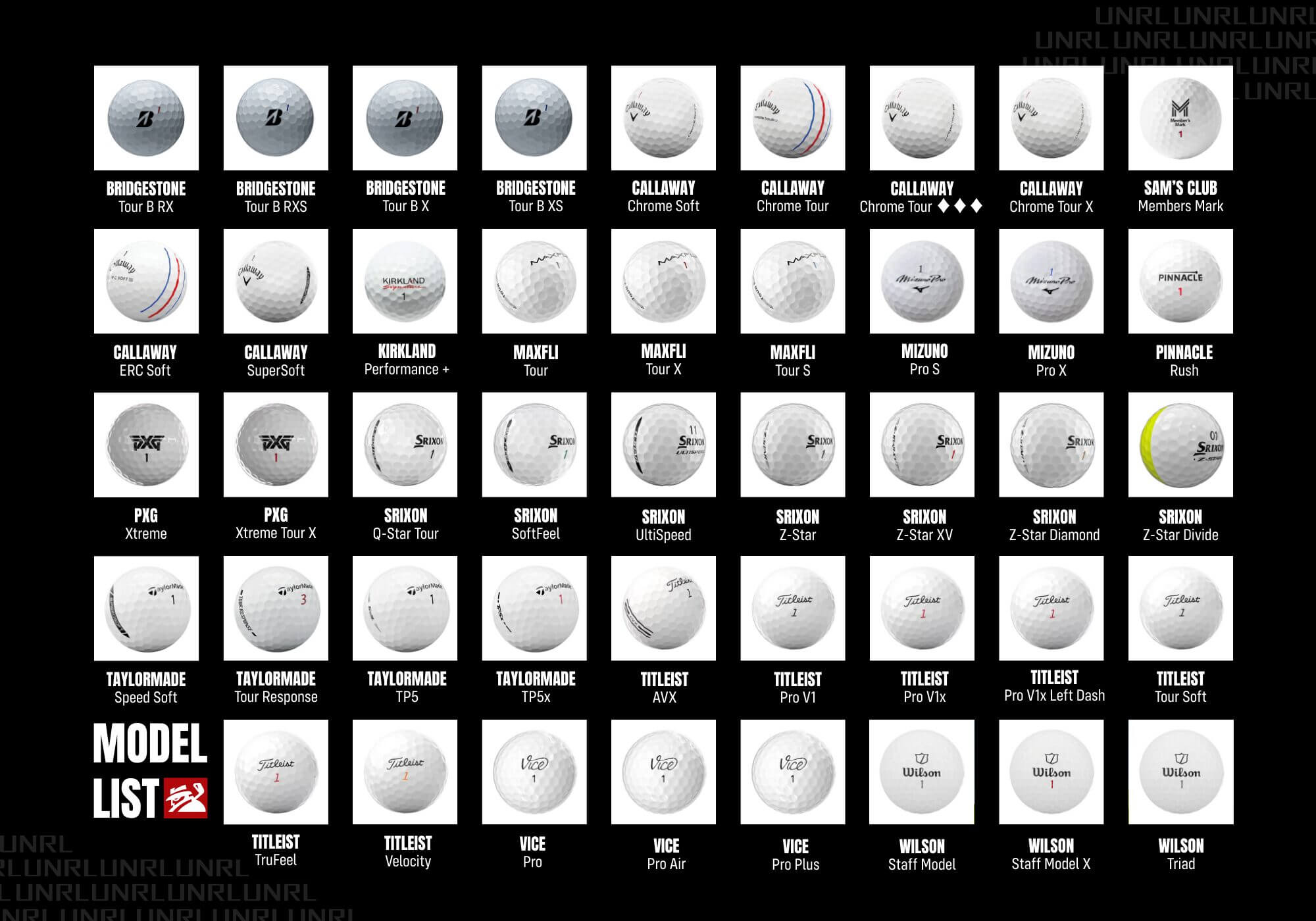
As in the past, the 2025 ball test features predominantly premium urethane offerings from major OEMs (original equipment manufacturers) and smaller direct-to-consumer (DTC) and house brands. This time around, we also included the top-selling two- and three-piece ionomer offerings on the market.
Without exception, all of the balls used in the test were purchased at retail and sourced from multiple vendors.
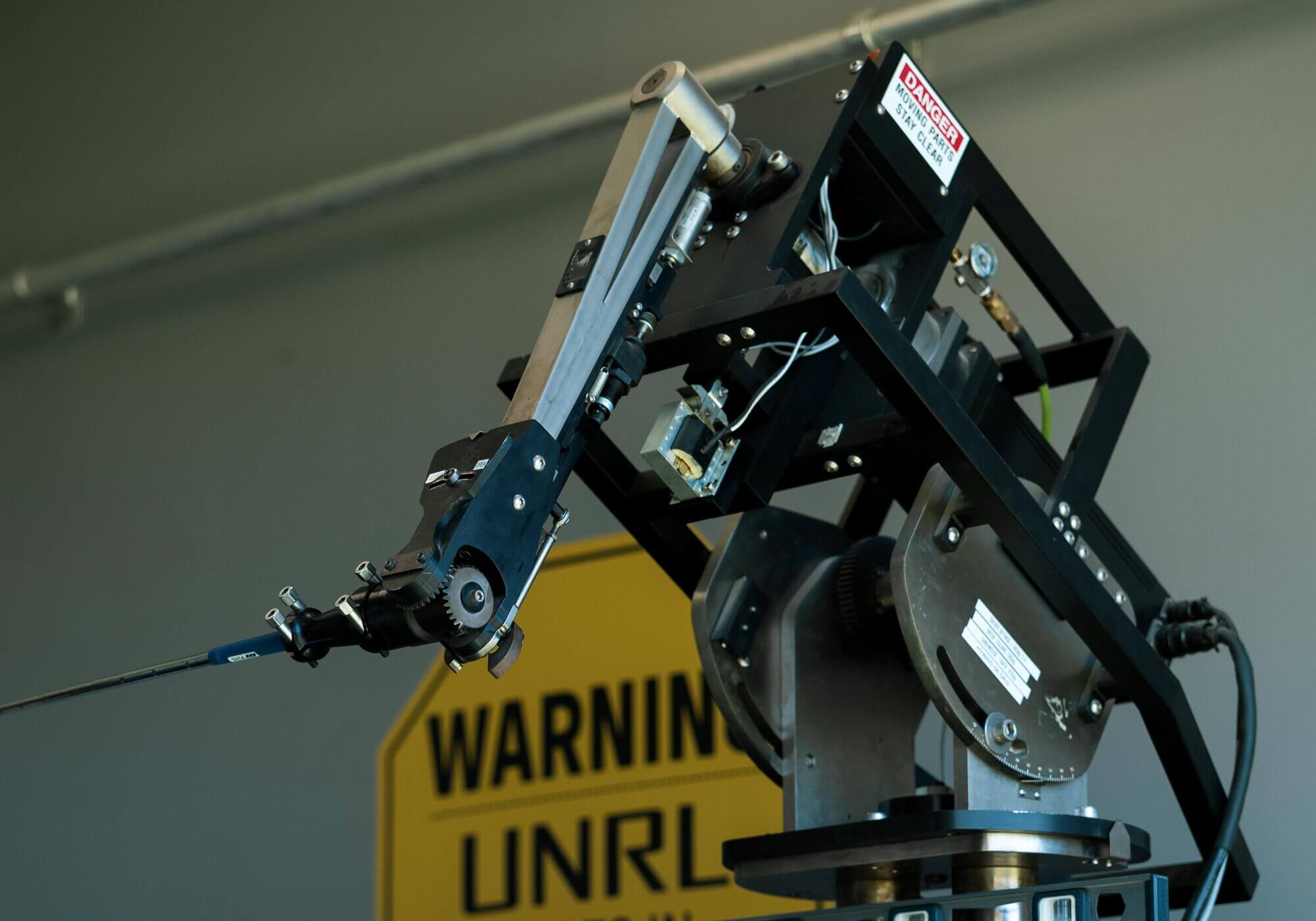
Outdoor testing was split between the CoolClub test facility at Sunridge Canyon Golf Club in Fountain Hills and Scottsdale National Golf Club. Golf Labs robots were used in both locations. Wedge testing (indoors) was conducted at CoolClubs headquarters using an ADC swing robot.
Both parties were compensated for the use of the robots and the engineers to operate them.
Temperatures throughout the test averaged about 105 degrees Fahrenheit. As a result of the temperature and altitude, there are a few things to understand:
That said, values for key downrange variables (primarily carry and total yards) should largely be relative from one ball to the next. Metrics captured at impact such as ball speed, launch angle and spin rates will be minimally impacted by environmental factors.
Weather stations were used in both testing locations to monitor wind speed and direction.
Winds were generally calm throughout the week (wind speed +/- 5 mph), but we did encounter swirling winds during high-speed iron testing. After reviewing the data, we felt that wind impacted the test to a greater degree than we were comfortable with and the best course of action was to return to Arizona to repeat that portion of the test.
For each of the three speeds for the driver and iron portions of the test, the robot was calibrated to achieve specific launch and spin targets.
The parameters for each portion were similar to what we’ve used in the past but some adjustments were made based on manufacturer feedback. While small tweaks were made at each speed, the most noticeable differences will be found in the slow speed portions of the test where we sought to achieve launch conditions more in line with those produced by real golfers within that demographic.
In our two previous tests, we used 8-irons for our mid-iron tests. For this test (and likely moving forward), we used 7-irons.
The specific configuration for each test condition (including the clubs used) is detailed in the relevant sections below.
A calibration ball (Titleist Pro V1) was used for each test condition to establish the baseline. This allowed us to split balls into smaller groups to help mitigate the impact of changing environmental conditions. Using a control ball also allows us to make meaningful comparisons across the entirety of the test pool.
The test pool was divided into six groups containing six to nine balls and the control ball.
To the extent possible, balls were grouped by their construction and performance characteristics.
For each golf ball model, we hit three to four shots before moving to the next model in the group. The rotation continued several times (maintaining the same order) until all shots were hit. We then moved to the next group.
For driver and iron testing, data was collected using Trackman launch monitors. GCQuad was run in parallel with Trackman to monitor for robot drift and changes in environmental condition, and to generally ensure the consistency of the setup throughout the test day.
Before the final processing of the data, outliers were removed using the 1.5 IQR rule. For drivers and irons, outliers were filtered based on carry yards and the offline value. For the 35-yard wedge test, outliers were filtered based on launch angle and spin rates.
The calibration ball was used to establish a baseline for the data presented. Values for each metric are derived from the percentage difference for each ball model relative to the control ball in its group.
For the last couple of tests, the Titleist Pro V1x Left Dash might as well have existed on an island. Off the driver at high speed, in particular, very few competitors were even close. In this year’s test, we found several models that produced ball speeds (and distance) that rival Left Dash.
While Left Dash remains in the conversation as one of the longest balls in golf, the rise in models that we measured above 100 compression (and the others that were just under) suggests that brands are getting wise to the idea that some golfers want (and might even benefit from) a distance-centric tour ball.
New models don’t just bring new names and new side stamps. Very often, they bring performance changes.
The data (and the eyeball test) suggest Bridgestone’s offerings improved across the board, the Kirkland Performance+ is an entirely different ball, and the Maxfli Tour X might be better than ever. TaylorMade took a much-needed step forward (but still has work to do) while Mizuno may have taken a small step backward.
We’ve often talked about the value offered by DTC and house-brand balls. It’s also true that many of them are excellent performers. While the Tour S may be more of a niche offering, the Maxfli Tour was again excellent, as was the Tour X.
The PXG offerings continue to impress, Vice is a perennial strong performer and while Costco may have overcorrected a bit for the excessive spin of previous Performance+, we believe it’s the best three-piece ball we’ve seen from them thus far. At less than $20 a dozen, it’s hard to argue against the value proposition.
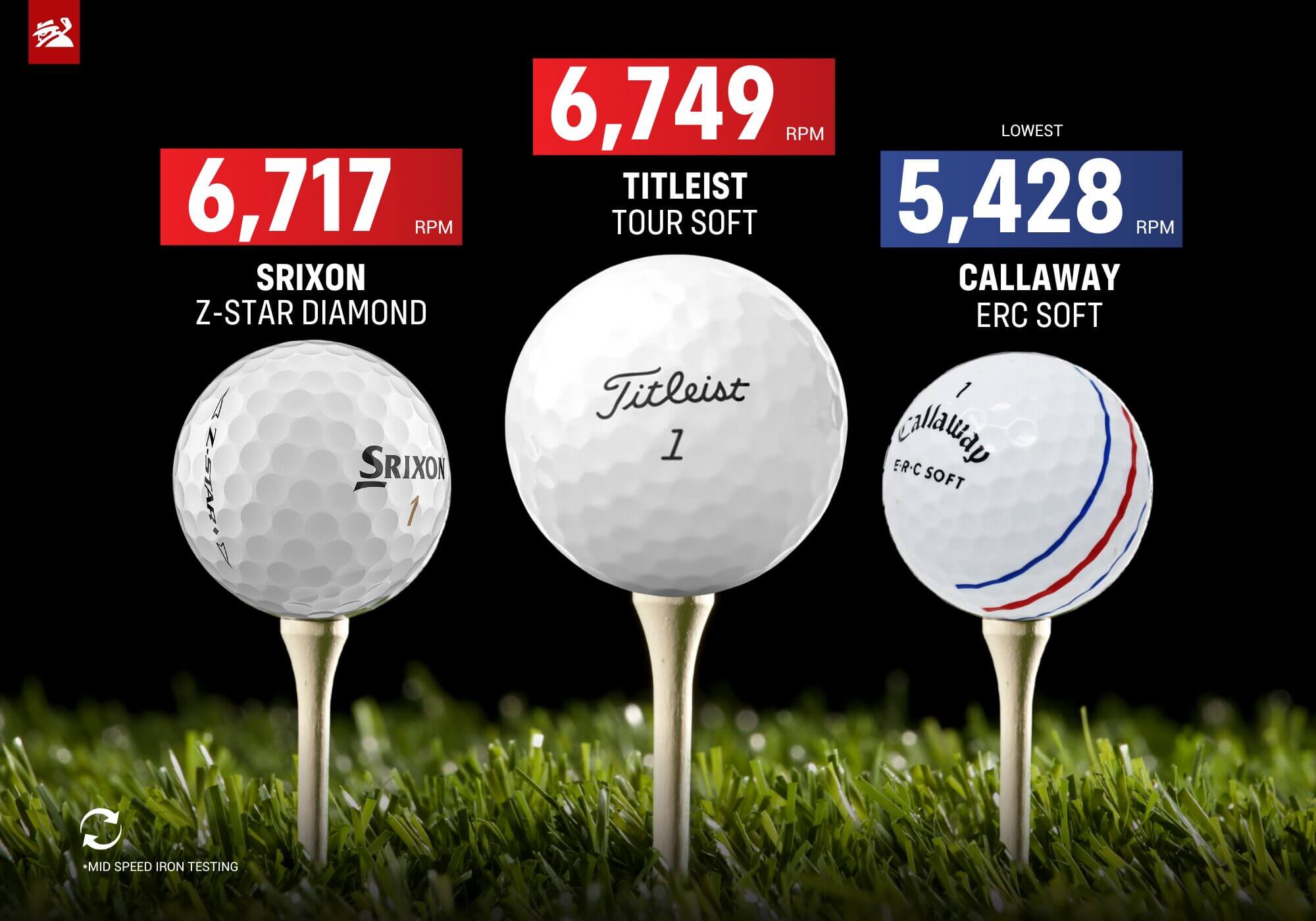
This year, we tested more mostly low-cost ionomer models than we have in the past. In some cases, distance, spin rate and trajectory were surprisingly good off the driver and irons. The Titleist Tour Soft, in particular, took us by surprise (in a good way).
The bad news is that when it comes to greenside performance, even the best-performing ionomer options fail to generate competitive greenside spin rates.
If you want complete performance, not a single ionomer ball we tested can deliver.
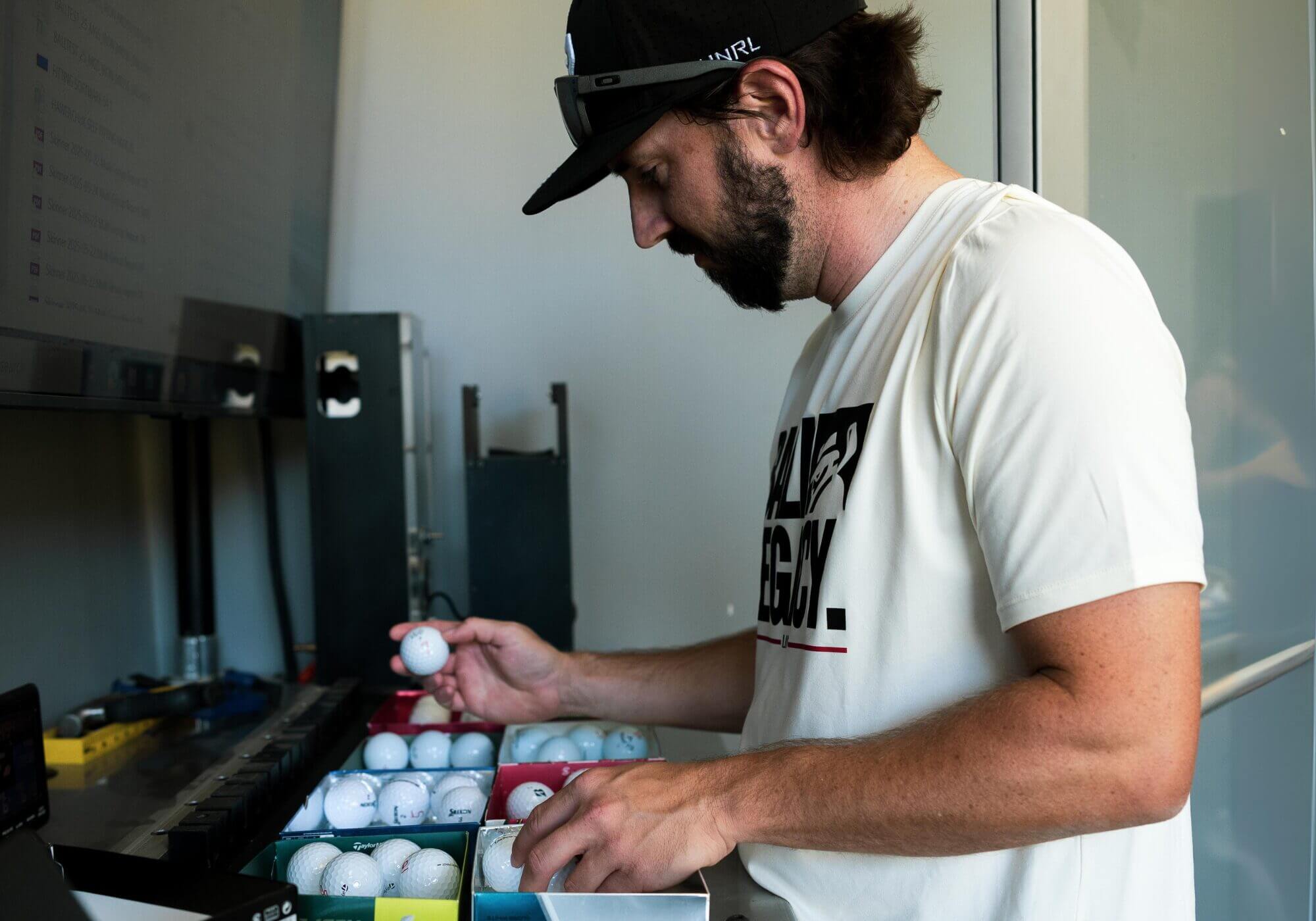
While I wouldn’t go so far as to say that all balls perform similarly off the driver, differences are certainly more nuanced than they are with irons. That said, you might be surprised to learn that the biggest differences between balls are found on the shortest shots.
In the high-speed iron portion of the test, the differences from top to bottom of the launch and spin charts are less than one degree of launch and about 1,800 rpm of spin.
Compare that to our 35-yard wedge shots, where launch angles differ by roughly seven degrees and spin rates from highest to lowest differ by nearly 4,000 rpm.
You don’t need to sacrifice speed to get what you want from a golf ball. Unless what you want from the ball is an excessively soft feel, you don’t need to sacrifice speed to get the trajectory and spin you need.
In looking only at those balls that produced above-average ball speed in most conditions, we found balls that produced nearly every combination of flight and spin characteristics.
We included this last year, but it absolutely needs to be here again: As golfers, we’ve been conditioned to think about golf club performance in terms of ball speed, launch angle, spin rate and often distance.
With the golf ball, launch angle on its own doesn’t tell you much.
In many cases, launch angle differences between balls are minimal but when you consider the whole of a ball’s trajectory – launch angle, peak height, peak height distance (how far down-range the ball reached its apex) and descent angle – significant differences emerge.
Does it fly low and flat, high and flat, or does it just kind go straight up and straight back down?
The bottom line is that the trajectory of the golf ball is complex. Simplification is always risky, but we’d suggest relying more heavily on maximum height than launch angle.
This section contains a few notes to help you better understand the rest of what you’ll find in this report.
The performance section below references “soft” and “soft-ish” golf balls. As with many things in the golf equipment world, there is no universally accepted standard that defines what it means for a golf ball to be soft. You’ll find the phrase “soft feel” applied to balls that range from under 50 compression all the way to 100.
For the purposes of our discussion, we’re classifying anything with mid-70s compression or lower as soft. Balls with compression values in the low 80s may be described as soft-ish.
The softest balls on the market (below 60 compression) tend to be two-piece ionomer offerings where really soft cores are used to offset feel lost to firmer ionomer covers.
Our target test parameters were intended to align with the launch and spin numbers produced by the average golfer in each group. As distance is the product of speed, trajectory, spin, carry and total distance, values will inevitably vary by some degree depending on the trajectory and spin produced by the individual golfer.
While the relationship between speed, launch and spin shouldn’t change much (balls that spin the most for me will likely spin the most for you), it’s important to note that the results reflect what happened under the specific configurations tested.
Whether it’s Trackman, Foresight or a different algorithm entirely, a “total distance” number always relies on math to normalize ground conditions. For this test, total distance values for drivers were calculated using the USGA bounce-and-roll algorithm for drivers. For irons and wedges, we used the total distance numbers provided by Trackman (irons) and Foresight (wedges).
Finally, remember that most manufacturers describe the performance of their products relative to their other products. Simply put, a ball a manufacturer describes as offering high ball flight and low spin may actually be mid-trajectory and mid-spin relative to the market as a whole.
Our descriptions of trajectory and spin are relative to the other balls in this test.
For each swing speed group, we’ve provided our top picks from the test. The balls are divided into high-spin, mid-spin and low-spin offerings. While not explicitly stated elsewhere, in most cases, each list contains a high-, mid- and low-trajectory ball (in that order).
As some balls that are high-spinning and high-flying off the driver can be mid-flying and mid-spinning off irons (or nearly any other permutation), balls may not fit neatly into one bucket.
The larger point is that we’ve done our best to provide a selection of performance options in each category.
We should also note that any models that produced severe cuckoo balls (shots that flew too far offline to be reasonably explained by environmental conditions or where trajectory was visibly different from the larger sample) were excluded from consideration.
We’ve also provided a “Great Buy” value option as well as our top ionomer pick for each category.
For what it’s worth, we’ve limited our lists to our top three picks but, in many cases, we could comfortably add a few more.
To arrive at our picks, we considered key performance metrics like ball speed, trajectory, spin rate and distance. The high-speed recommendations below are based on a combination of driver and iron performance.
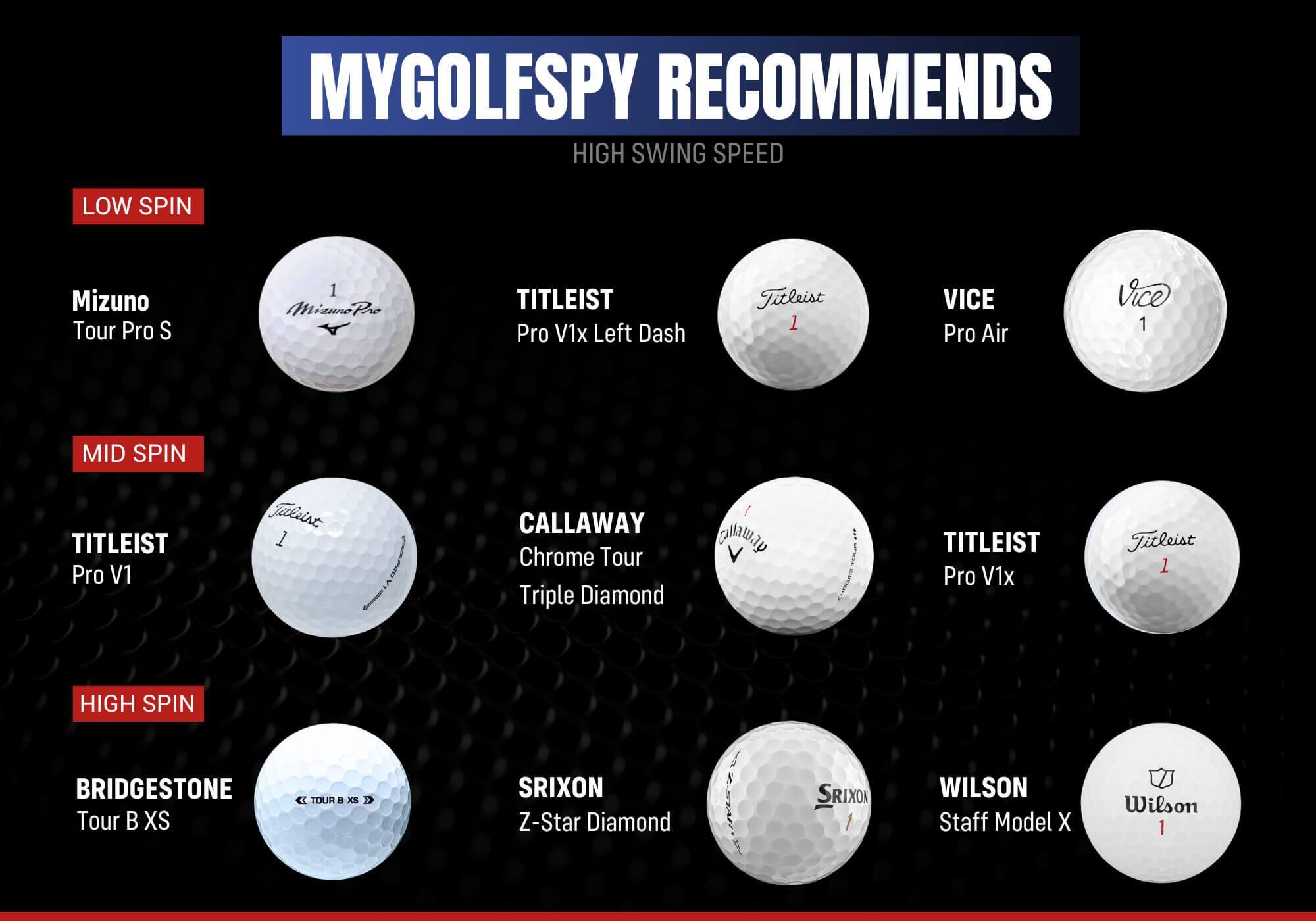
Low Spin – Mizuno Pro S, Titleist Pro V1x Left Dash, Vice Pro Plus
Mid Spin – Titleist Pro V1, Callaway Chrome Tour Triple Diamond, Titleist Pro V1x
High Spin – Bridgestone TOUR B XS, Srixon Z-STAR DIAMOND, Wilson Staff Model X
Great Buy – Kirkland Performance+ v3.5
Ionomer – Srixon Q-STAR ULTISPEED
| Test Parameter | Test Average (All Balls) |
|---|---|
| Driver Used: PXG Black Ops Tour-1 | Ball Speed: 166.02 |
| Swing Speed: 116 | Total Distance: 319.46 |
| Calibration Launch Target: 10.5 | Launch Angle: 9.76 |
| Calibration Spin Target: 2500 | Spin: 2641 |
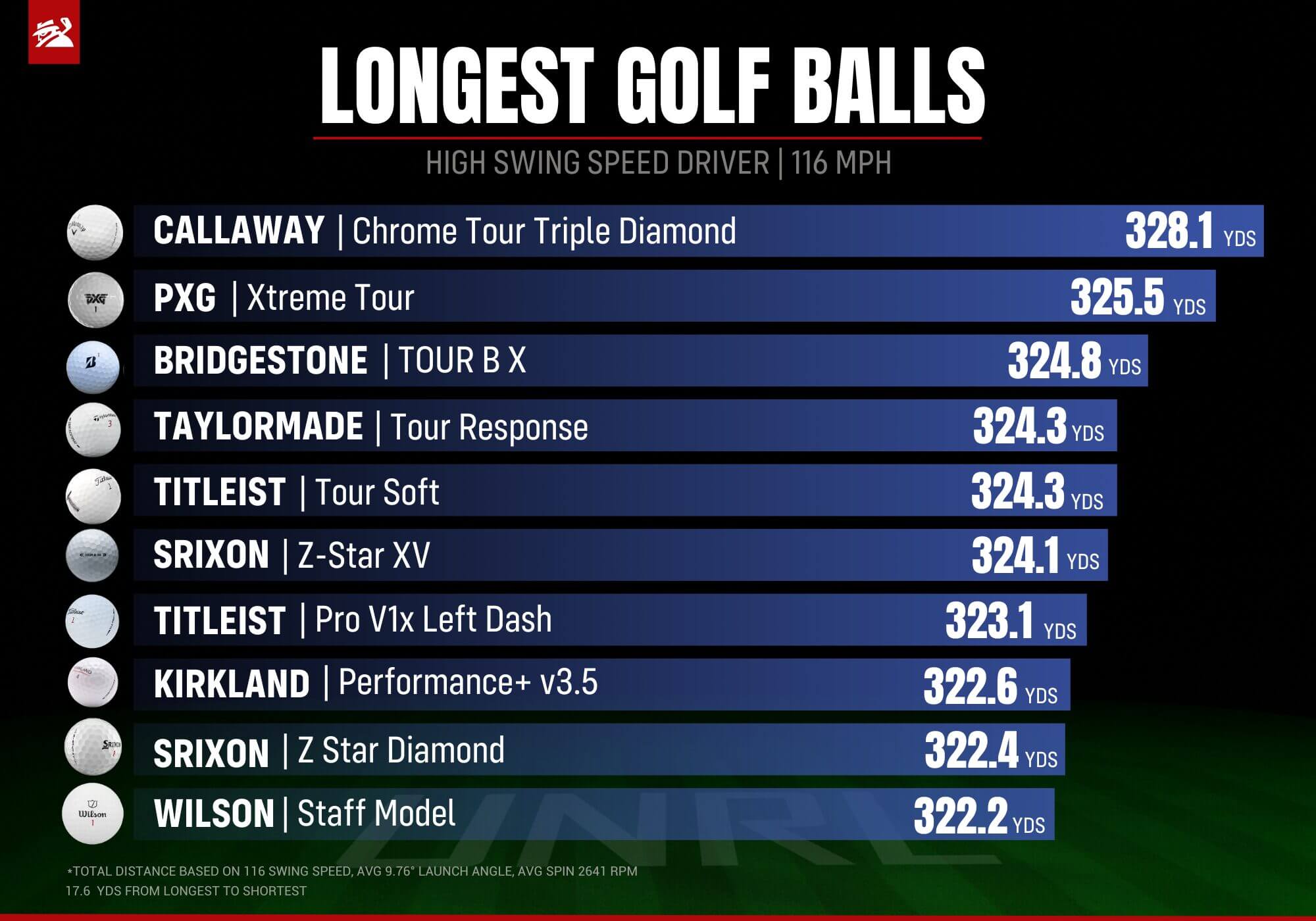
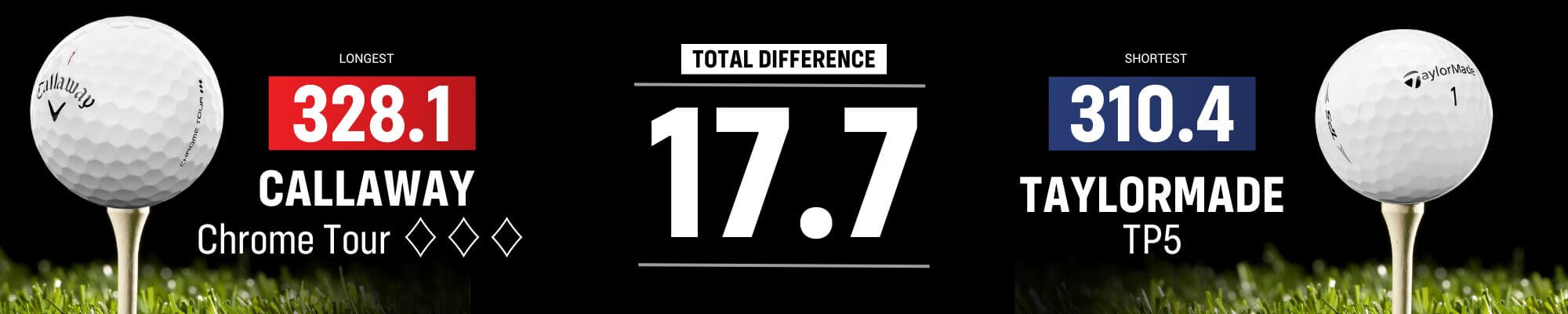
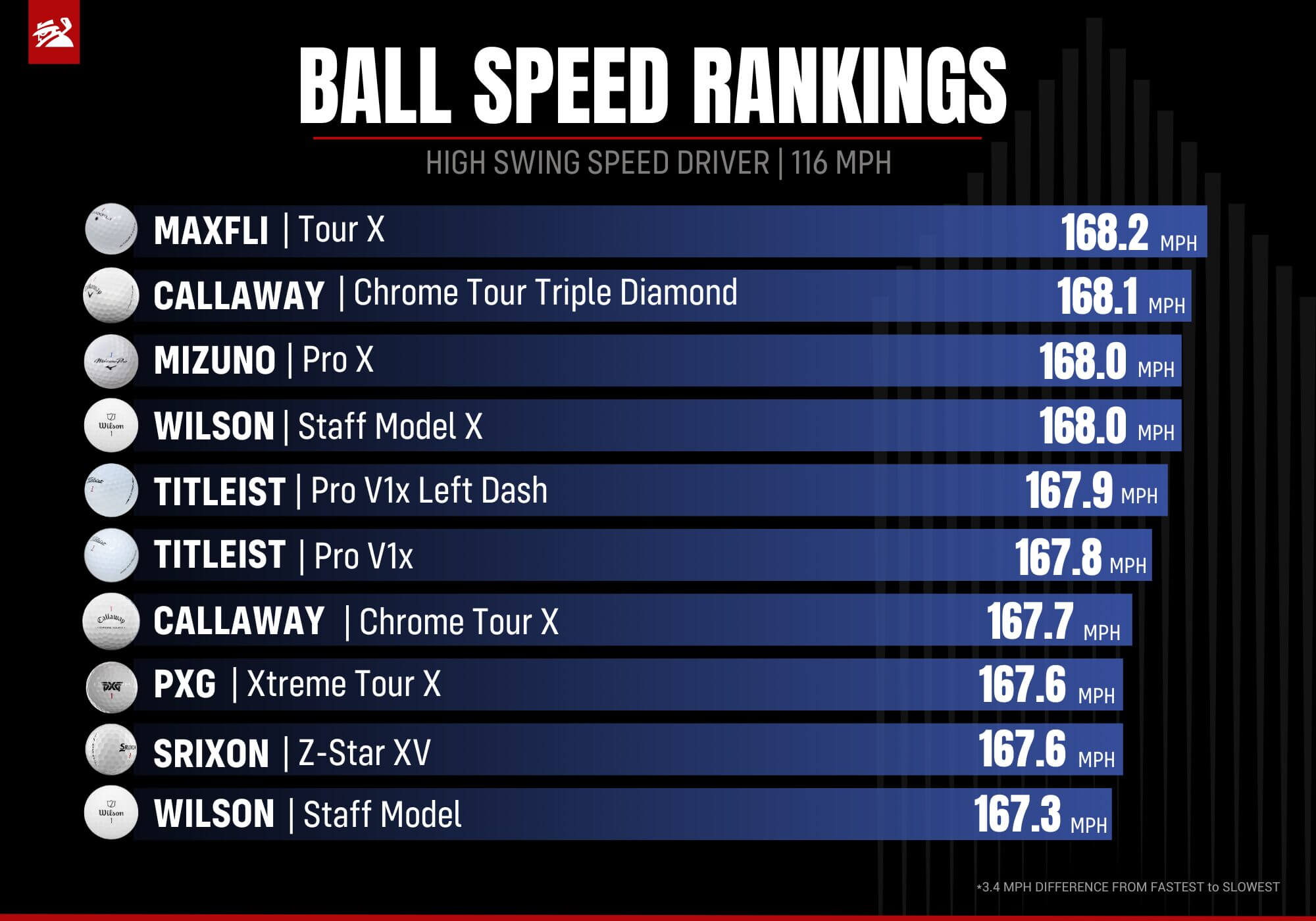
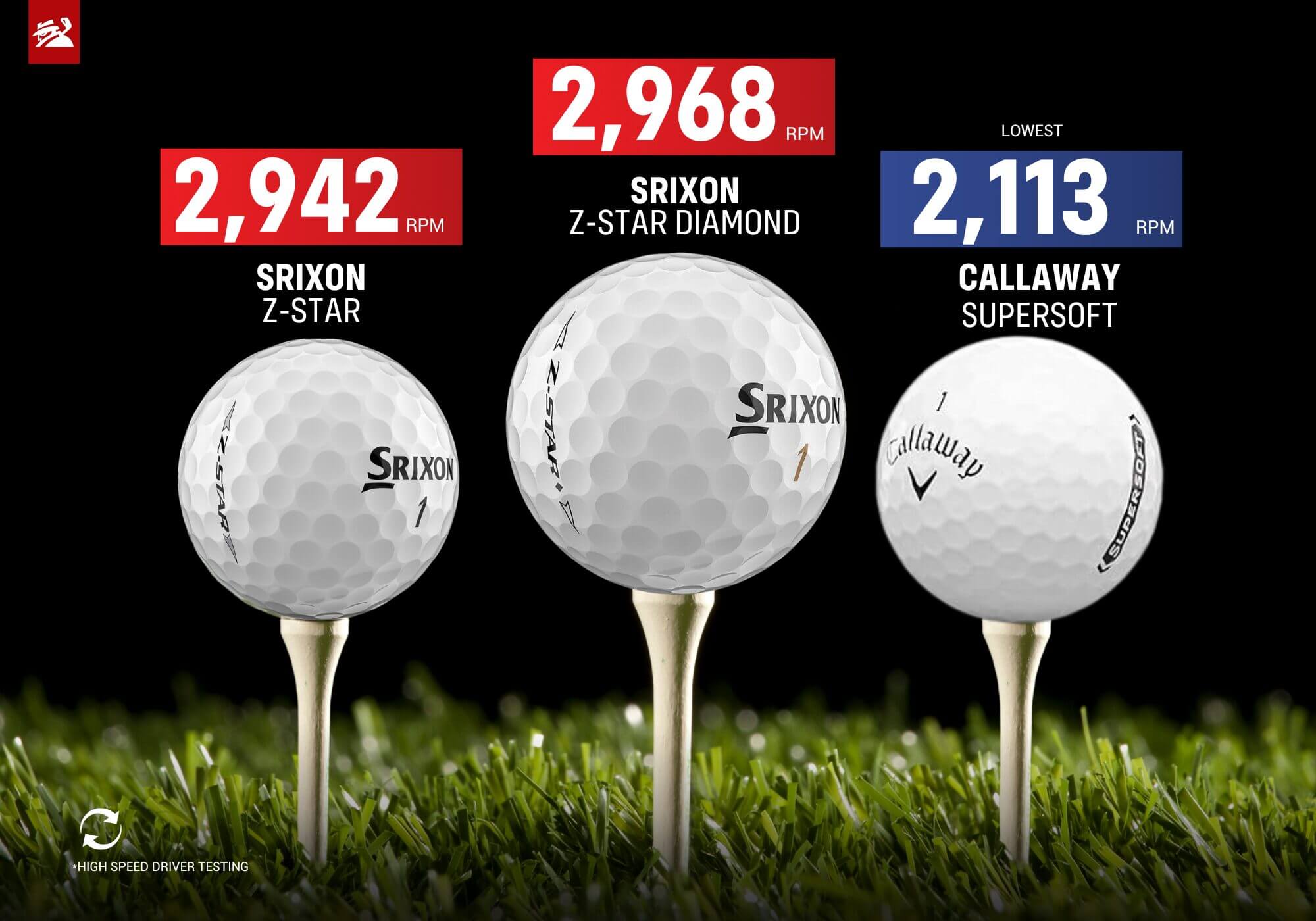
When it comes to the driver, low spin can be your friend, as it will often result in straighter shots. It’s a good bit of the reason why low-compression balls are sometimes described as more forgiving.
| Test Parameter | Test Average (All Balls) |
|---|---|
| Club Used: PXG 0317ST | Ball Speed: 126.92 |
| Swing Speed: 90 | Total Distance: 191.05 |
| Calibration Launch Target: 17 | Launch Angle: 12.44 |
| Calibration Spin Target: 6500 | Spin: 6498 |
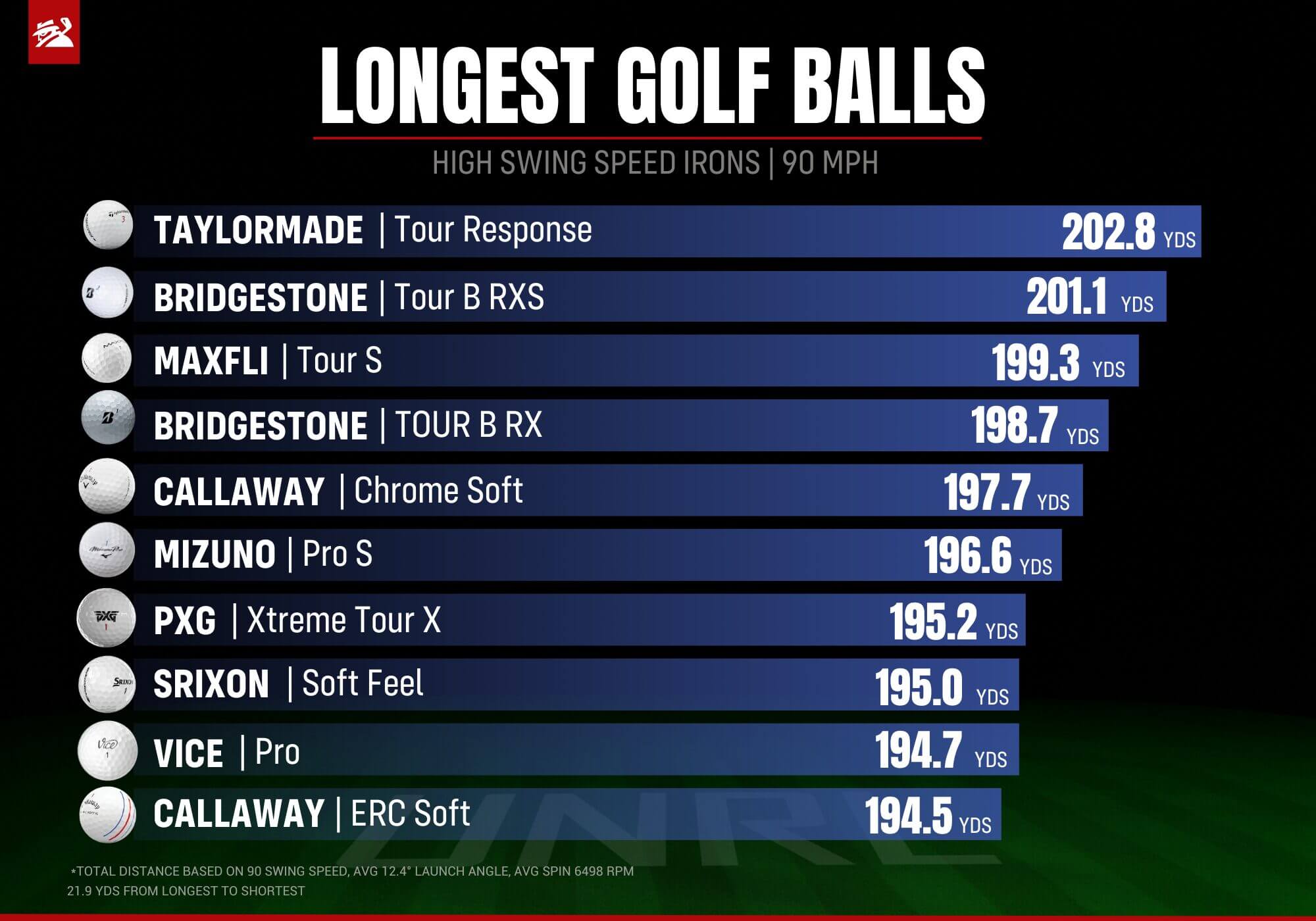
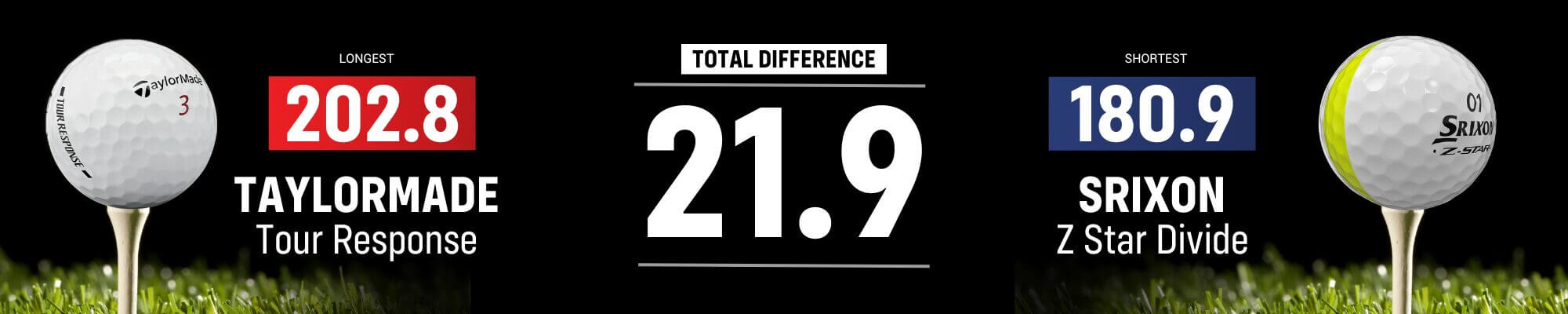
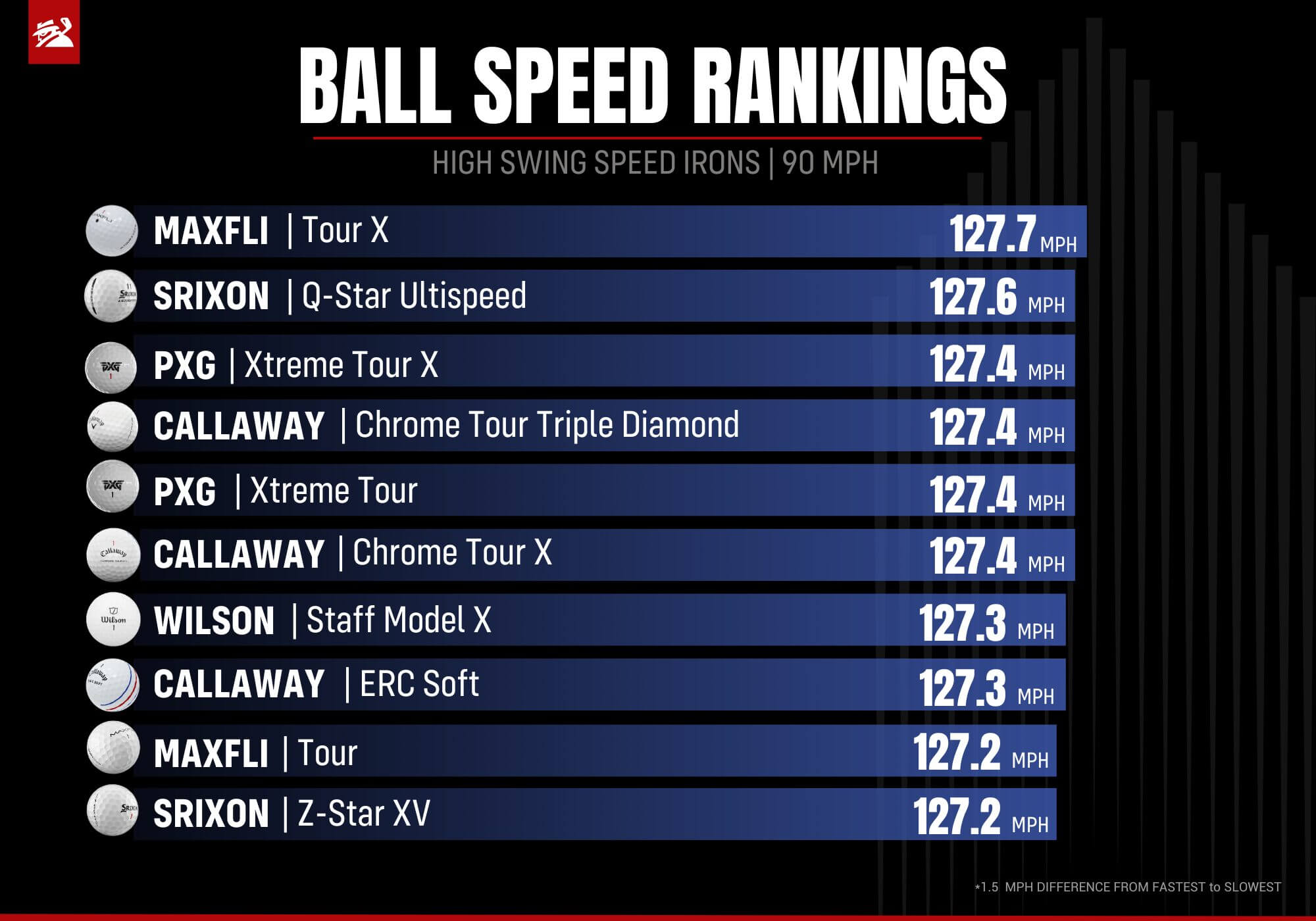
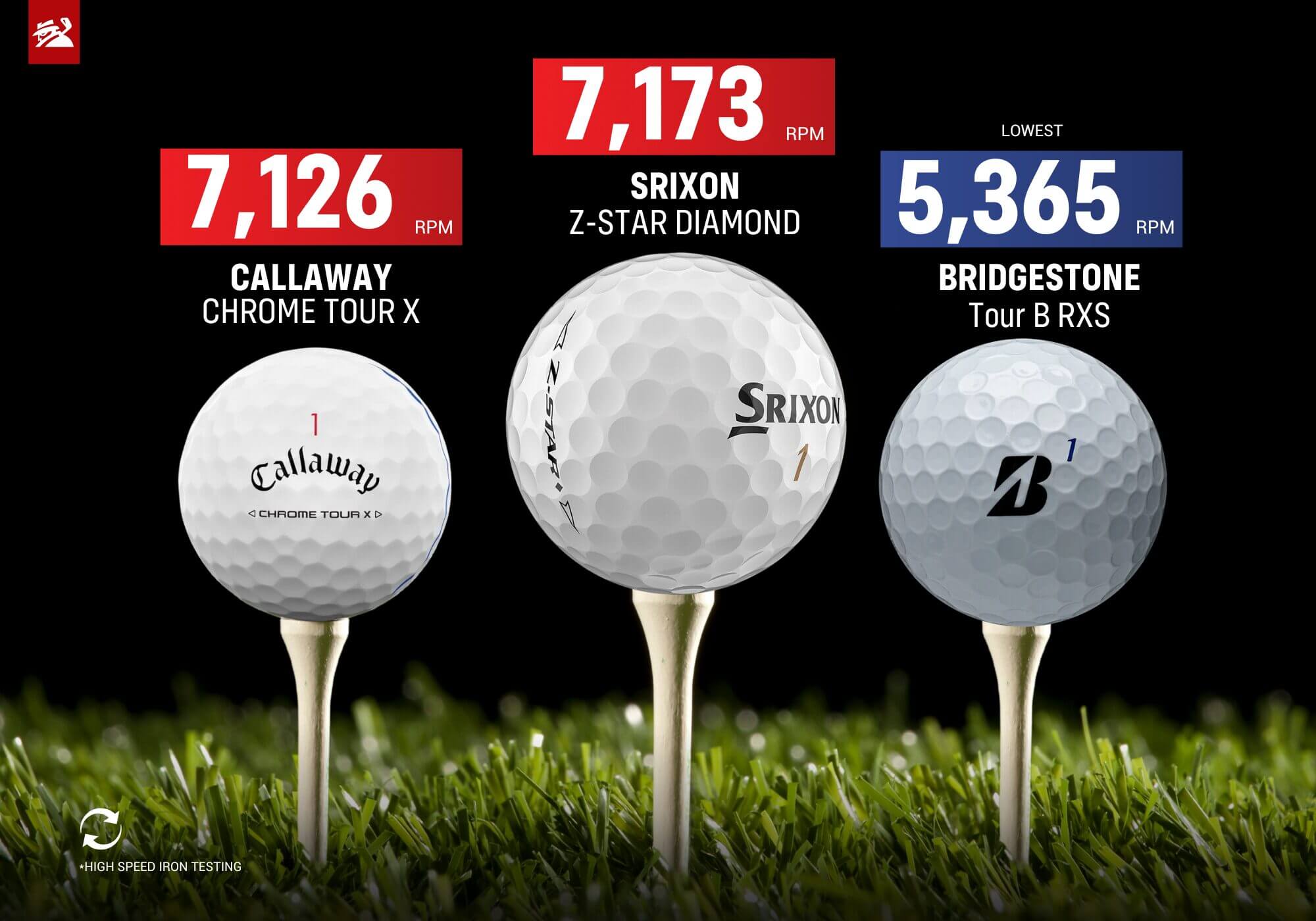
To arrive at our picks, we considered key performance metrics like ball speed, trajectory, spin rate and distance. The mid-speed recommendations below are based on a combination of driver and iron performance.
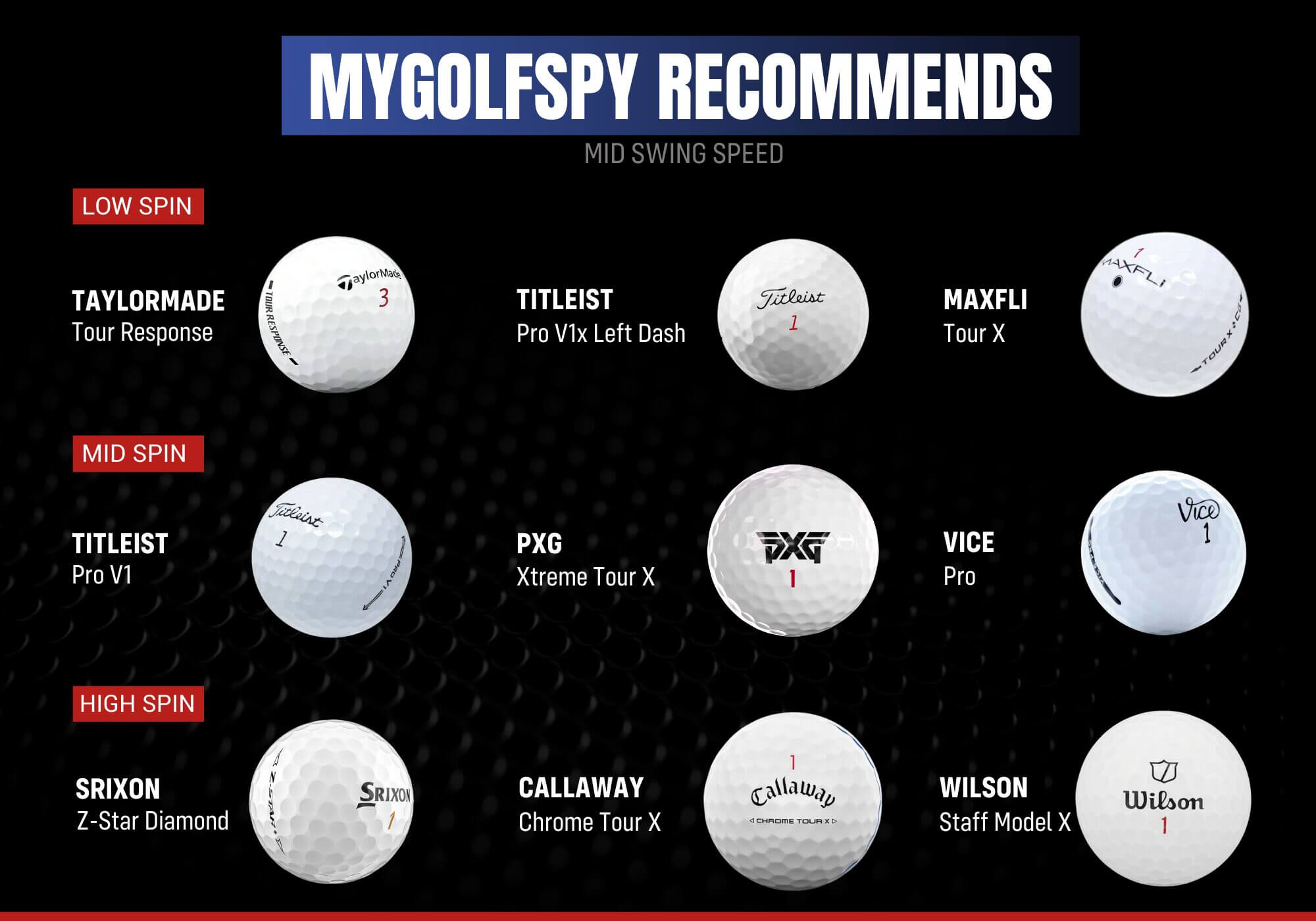
Low Spin – TaylorMade Tour Response, Titliest Pro V1x Left Dash, Maxfli Tour X
Mid Spin – Titleist Pro V1, PXG Xtreme Tour X, Vice Pro
High Spin – Srixon Z-STAR DIAMOND, Callaway Chrome Tour X, Titliest Pro V1x
Great Buy – Kirkland Performance+ v3.5
Ionomer – Titleist Tour Soft
| Test Parameter | Test Average (All Balls) |
|---|---|
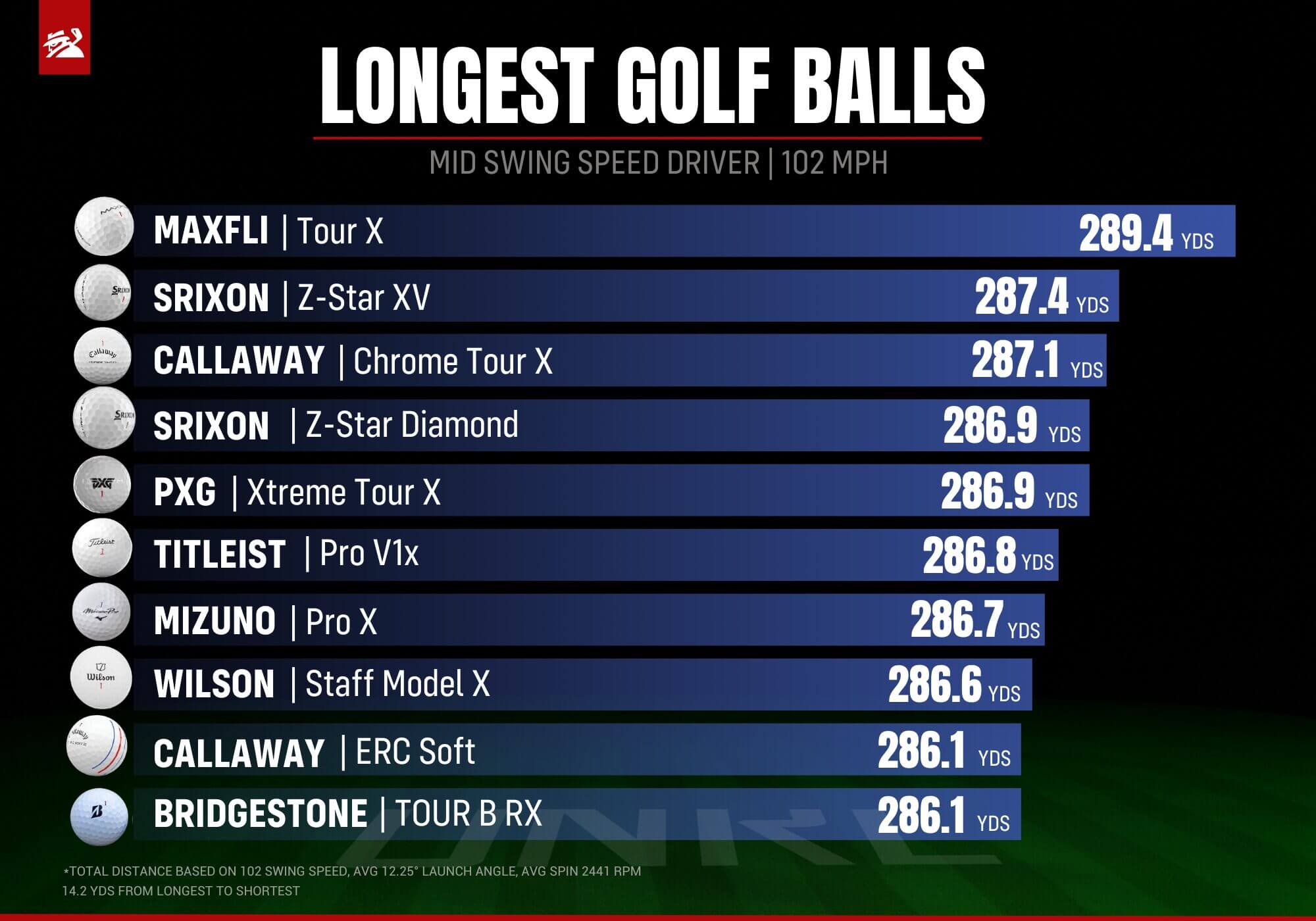
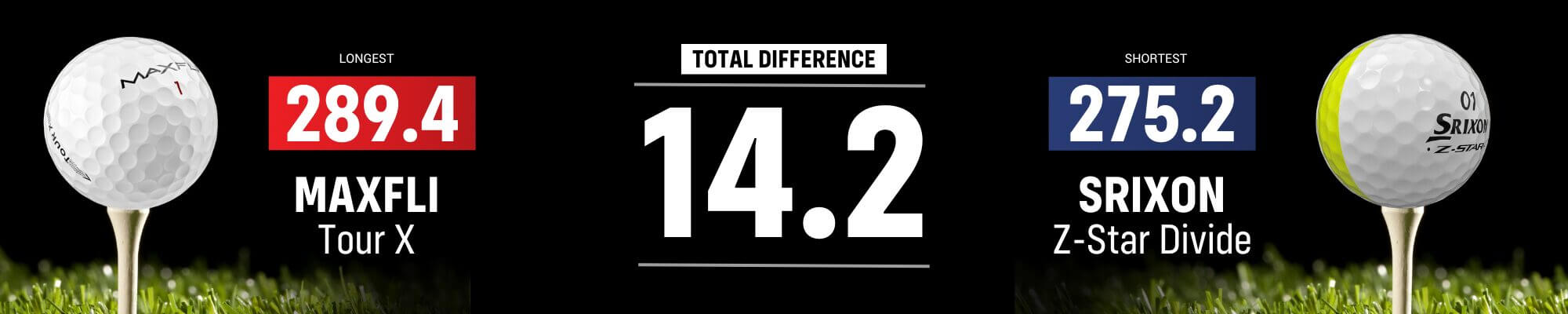
| Driver Used: PXG Black Ops | Ball Speed: 149.03 |
| Swing Speed: 102 | Total Distance: 282.79 |
| Calibration Launch Target: 13 | Launch Angle: 12.25 |
| Calibration Spin Target: 2600 | Spin: 2441 |
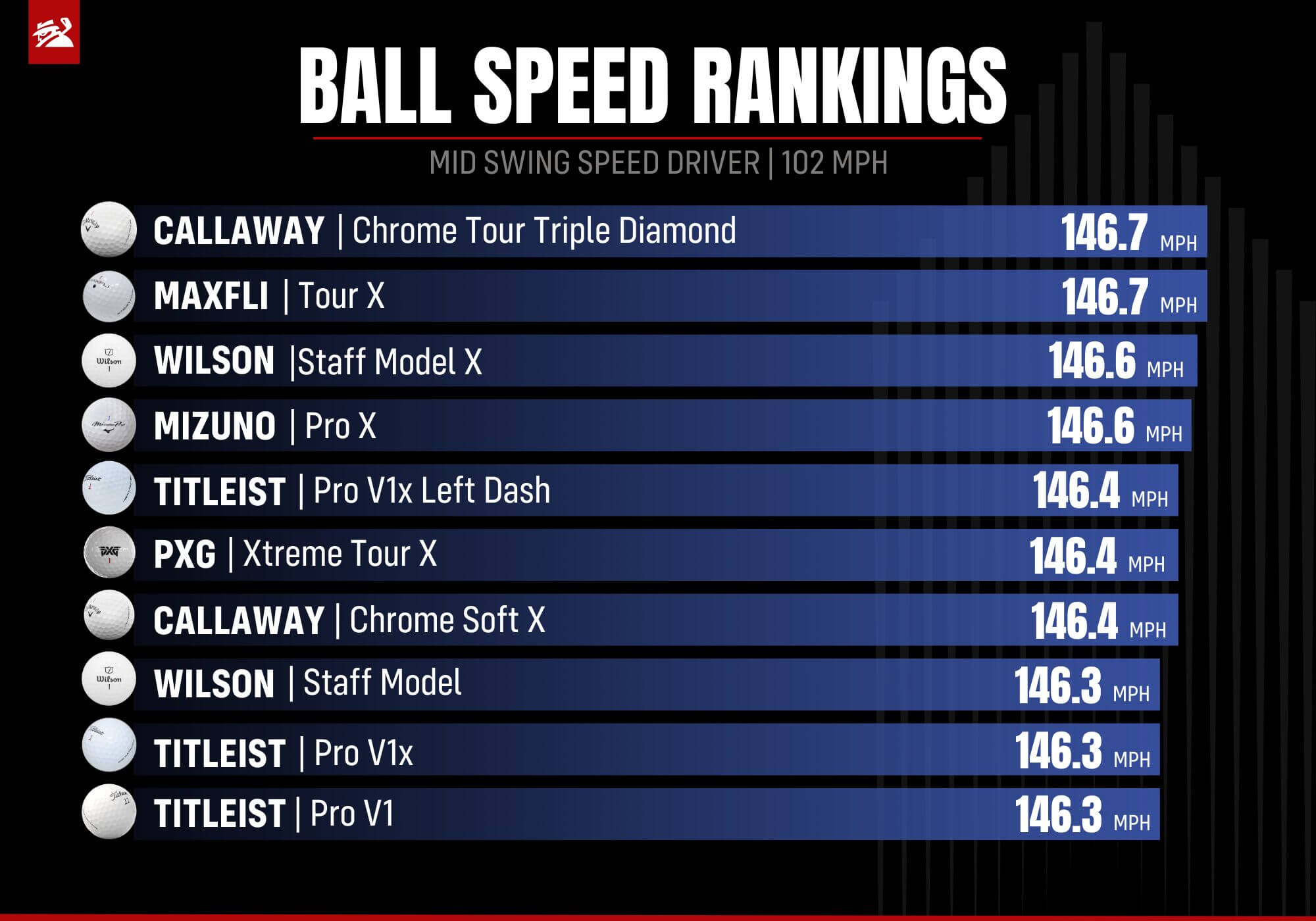
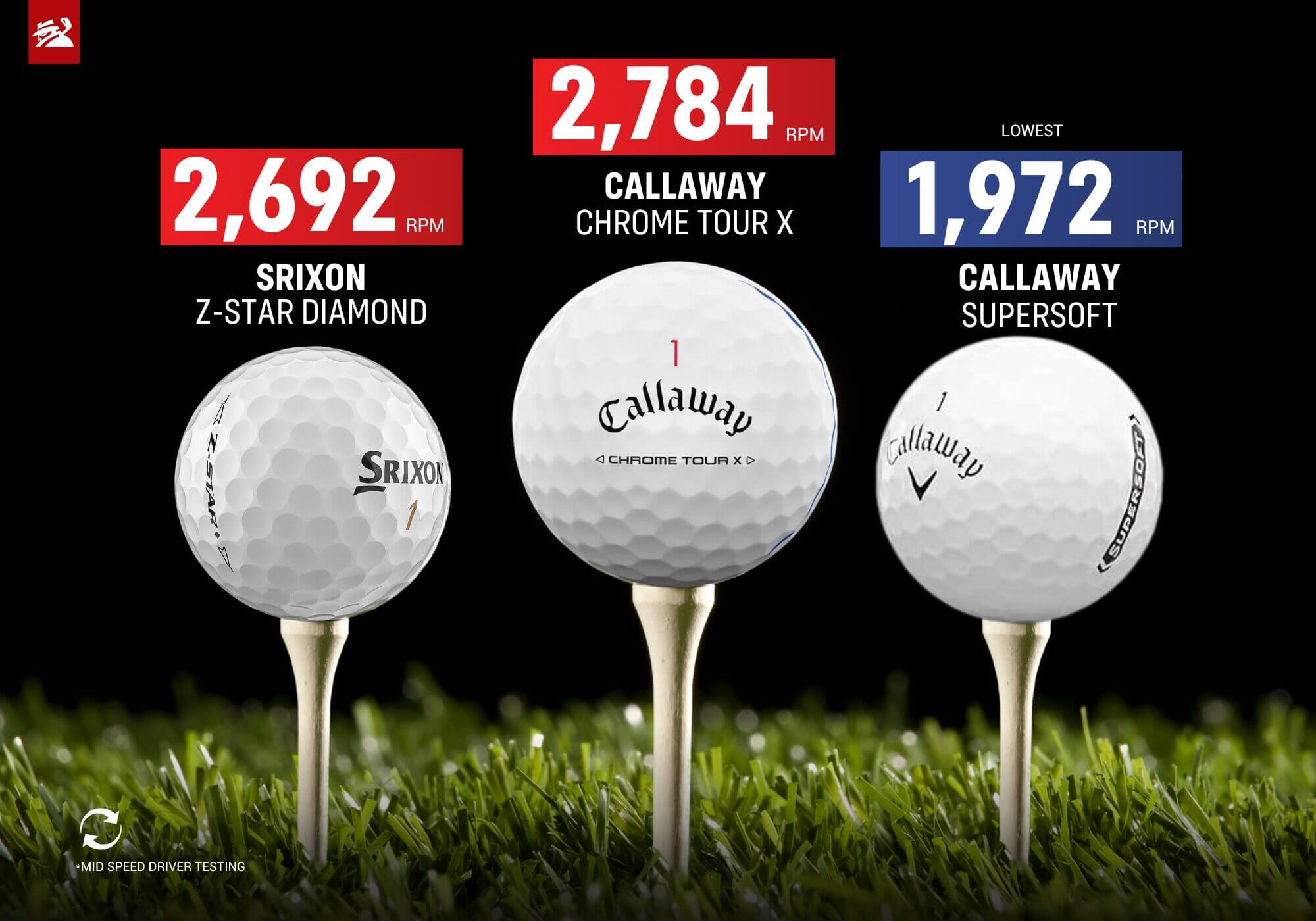
| Test Parameter | Test Average (All Balls) |
|---|---|
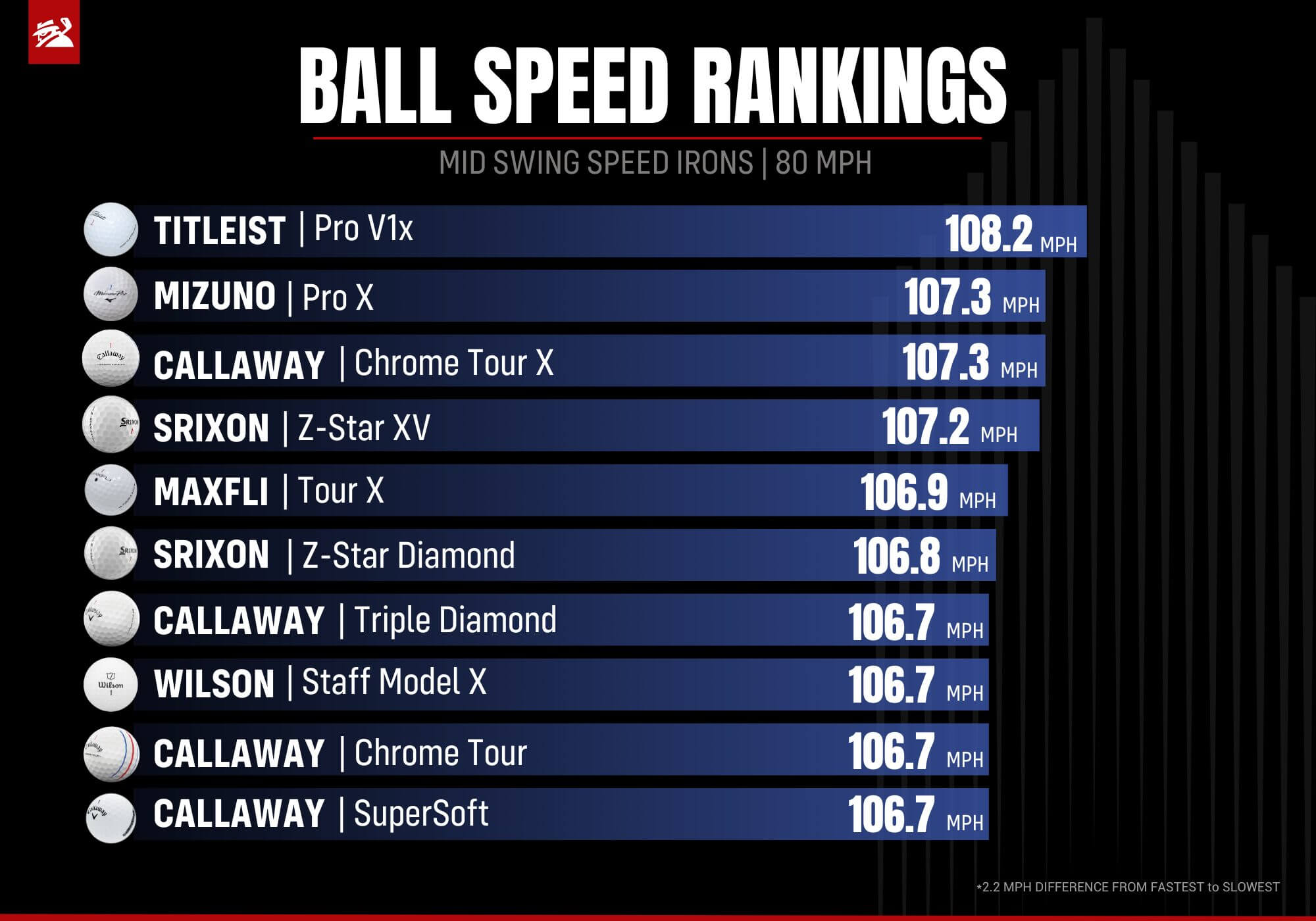
| Club Used: Titleist T100 | Ball Speed: 106.17 |
| Swing Speed: 80 | Total Distance: 154.46 |
| Calibration Launch Target: 19 | Launch Angle: 18.63 |
| Calibration Spin Target: 6000 | Spin: 6089 |
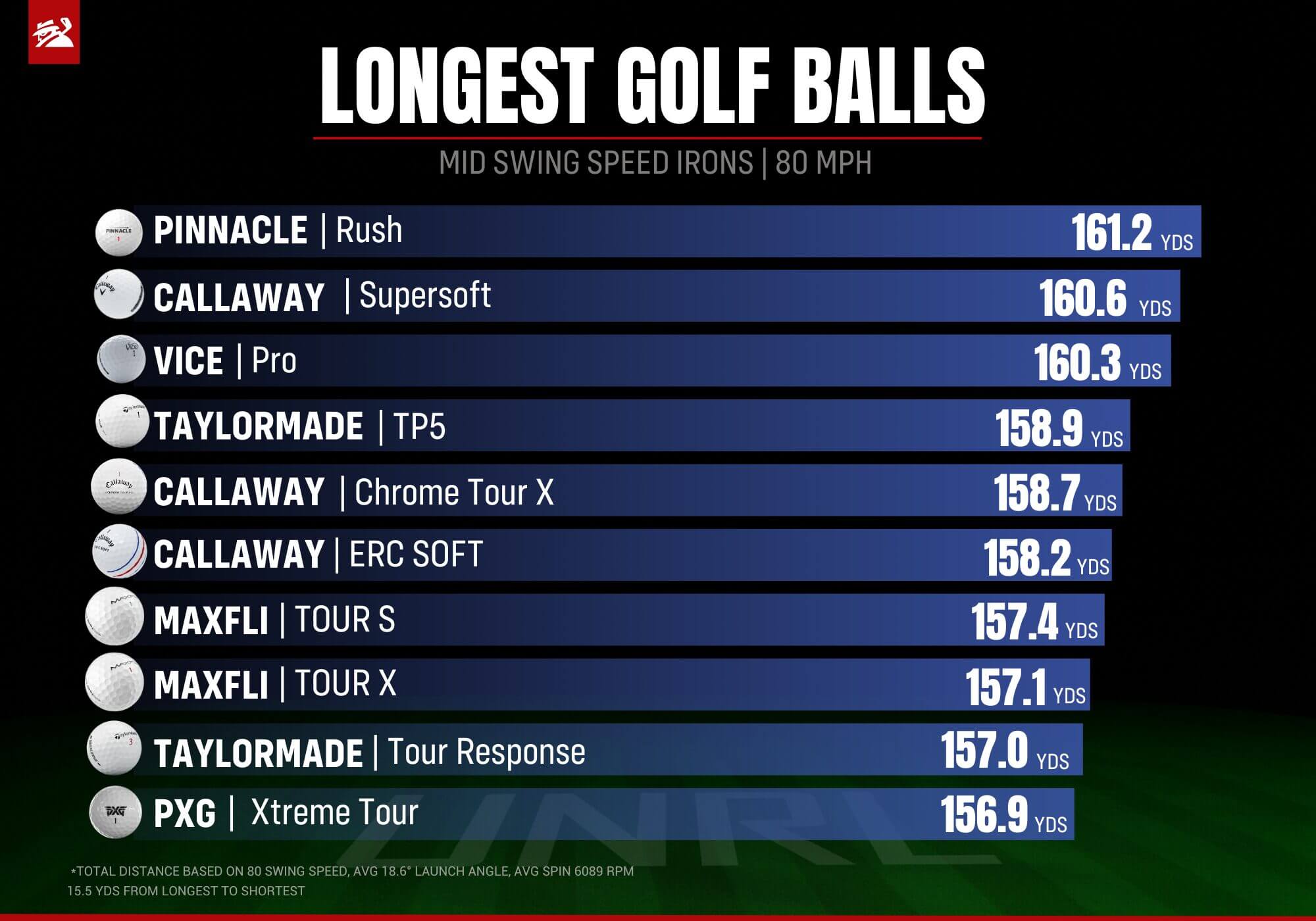
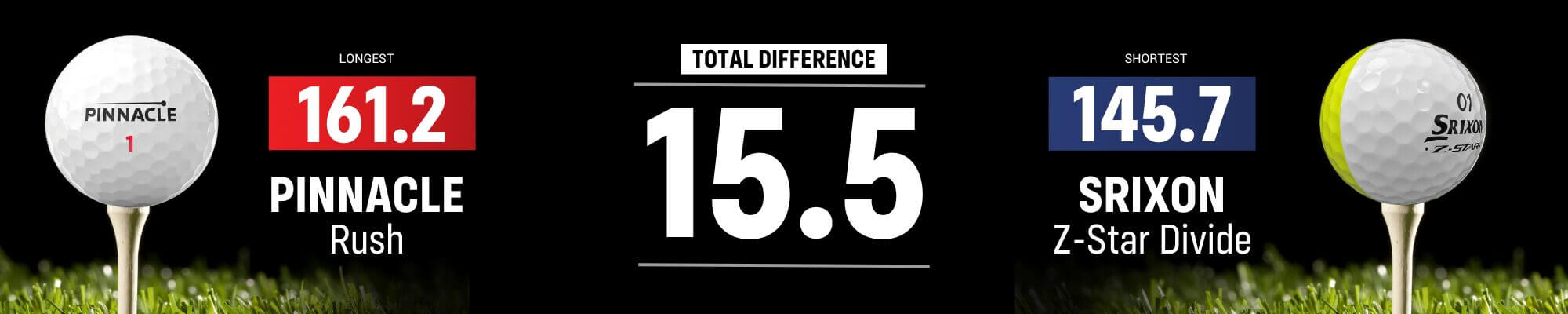
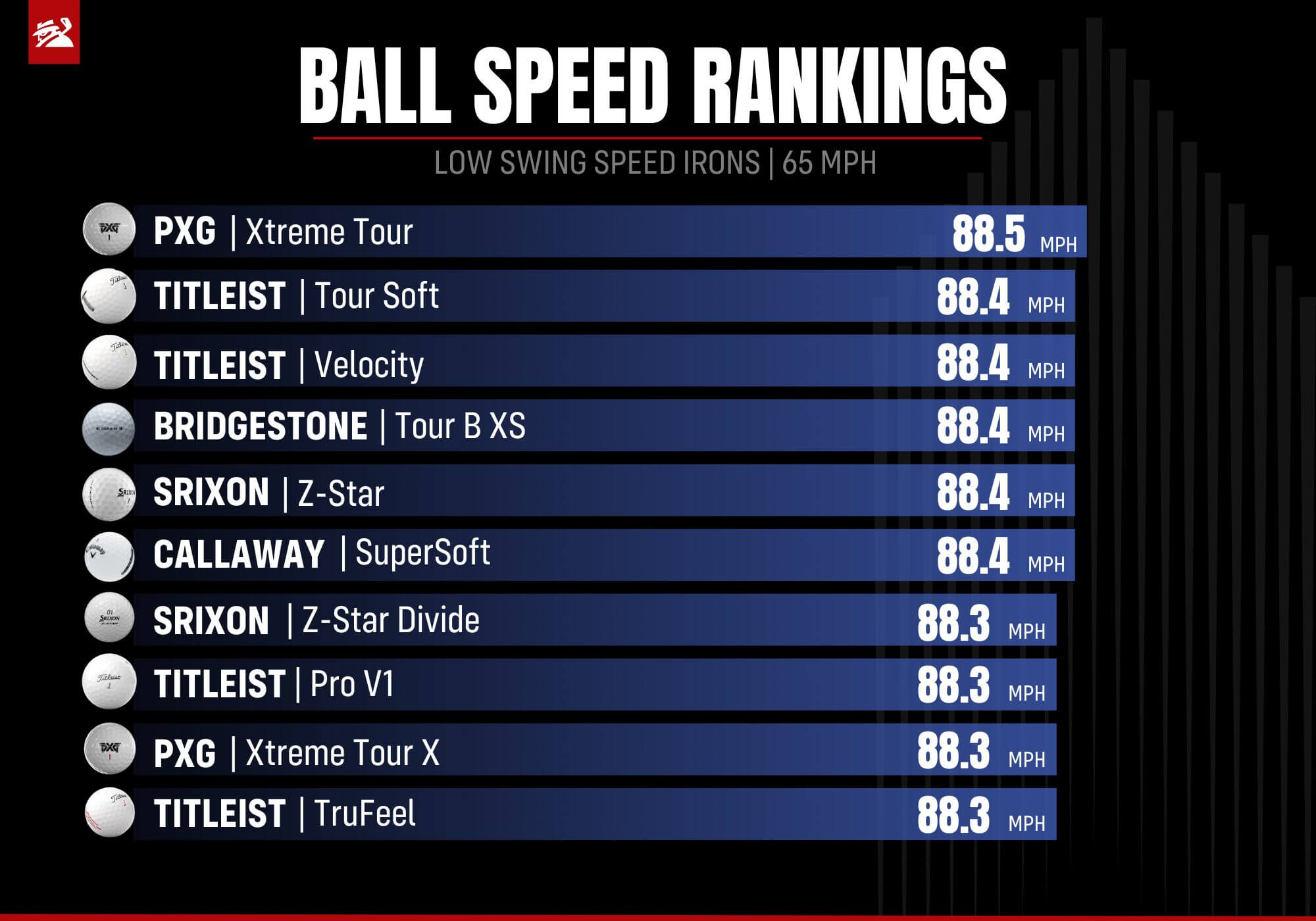
To arrive at our picks, we considered key performance metrics like ball speed, trajectory, spin rate and distance. The low-speed recommendations below are based on a combination of driver and iron performance.
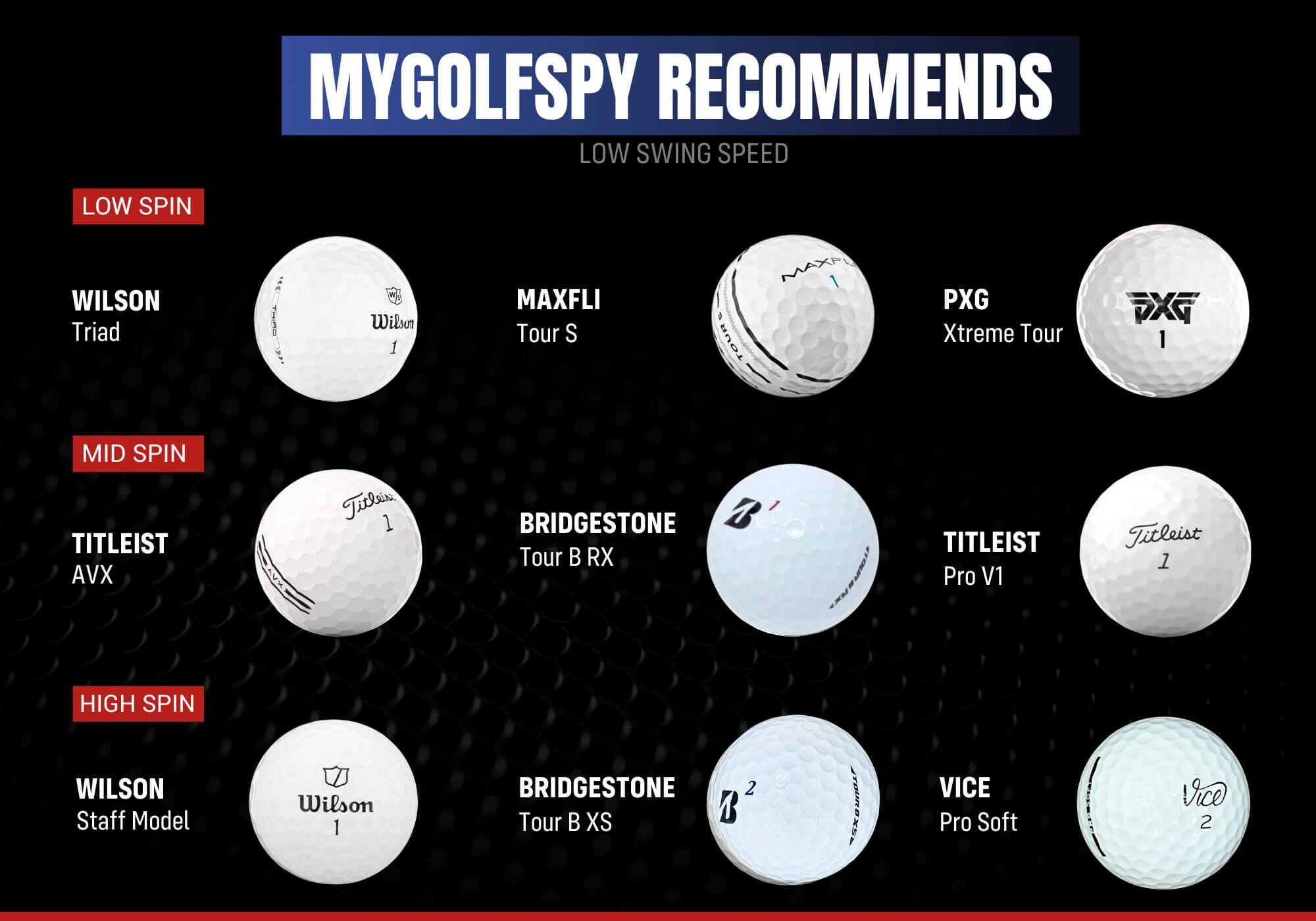
Low Spin – Wilson Triad, Maxfli Tour S, PXG Xtreme Tour
Mid Spin – Titleist AVX, Bridgestone TOUR B RX, Titleist Pro V1
High Spin – Wilson Staff Model, Vice Pro Air, Bridgestone TOUR B XS
Great Buy – Kirkland Performance+ v3.5
Ionomer – Srixon Q-STAR ULTISPEED
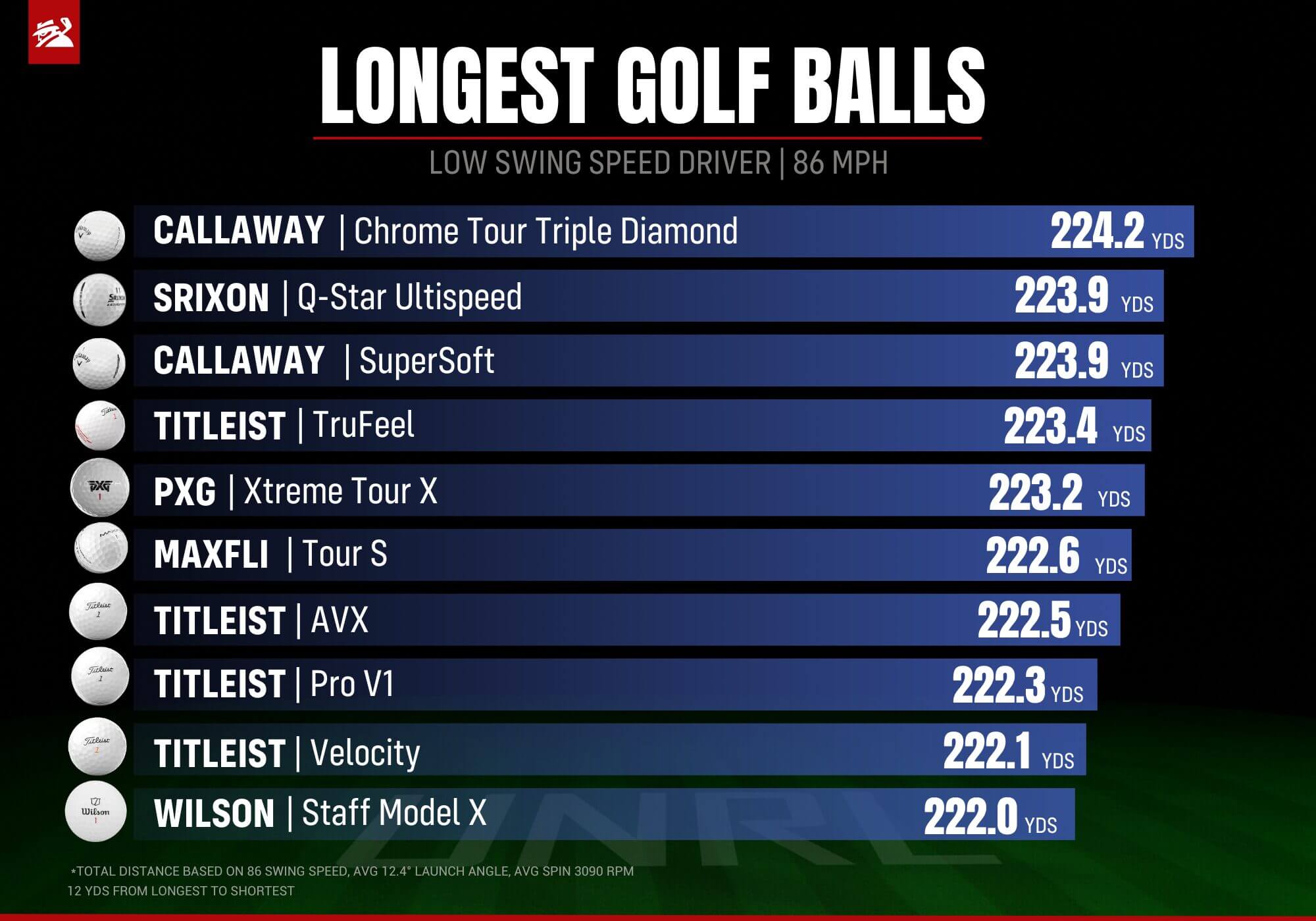
| Test Parameter | Test Average (All Balls) |
|---|---|
| Club Used: PXG Black Ops | Ball Speed: 123.46 |
| Swing Speed: 86 | Total Distance: 220.25 |
| Calibration Launch Target: 13 | Launch Angle: 12.44 |
| Calibration Spin Target: 3000 | Spin: 3090 |
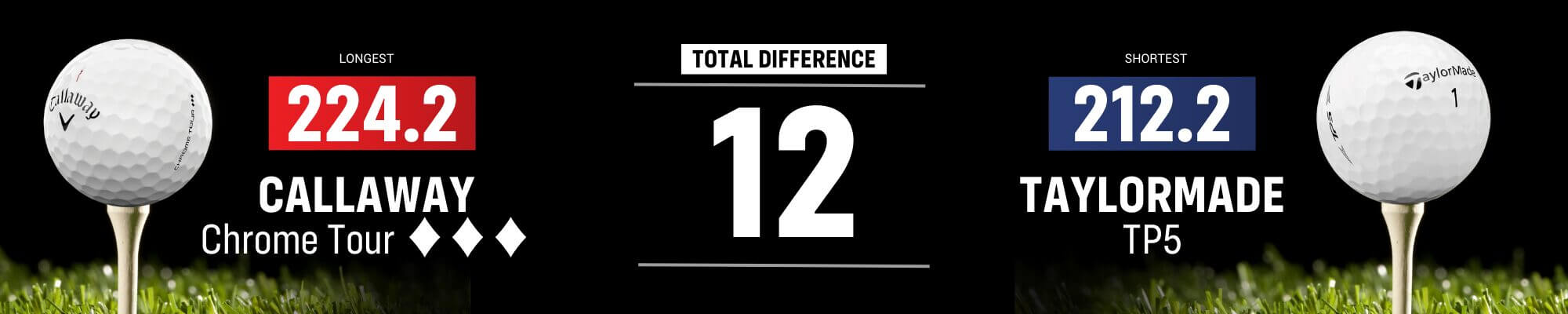
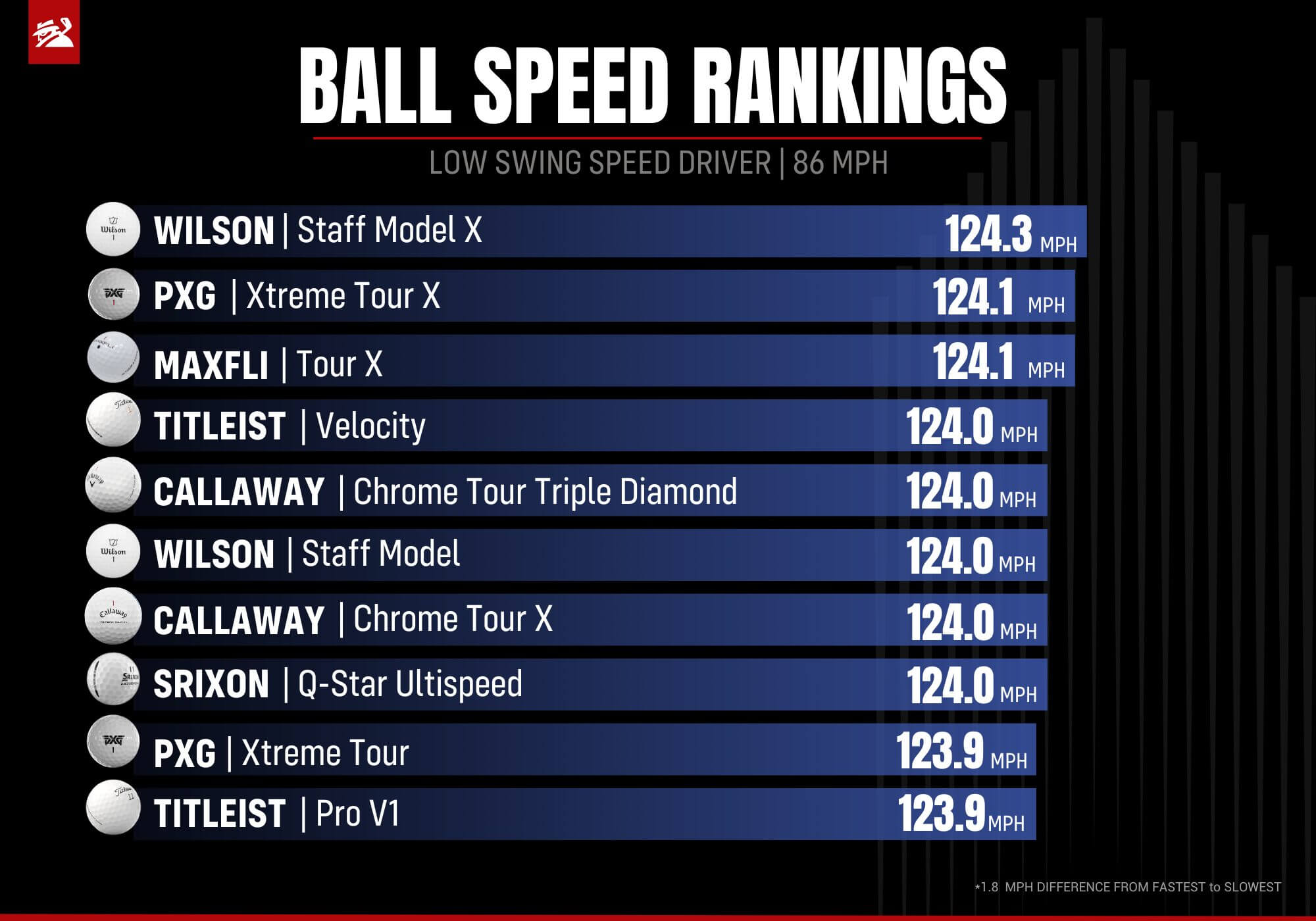
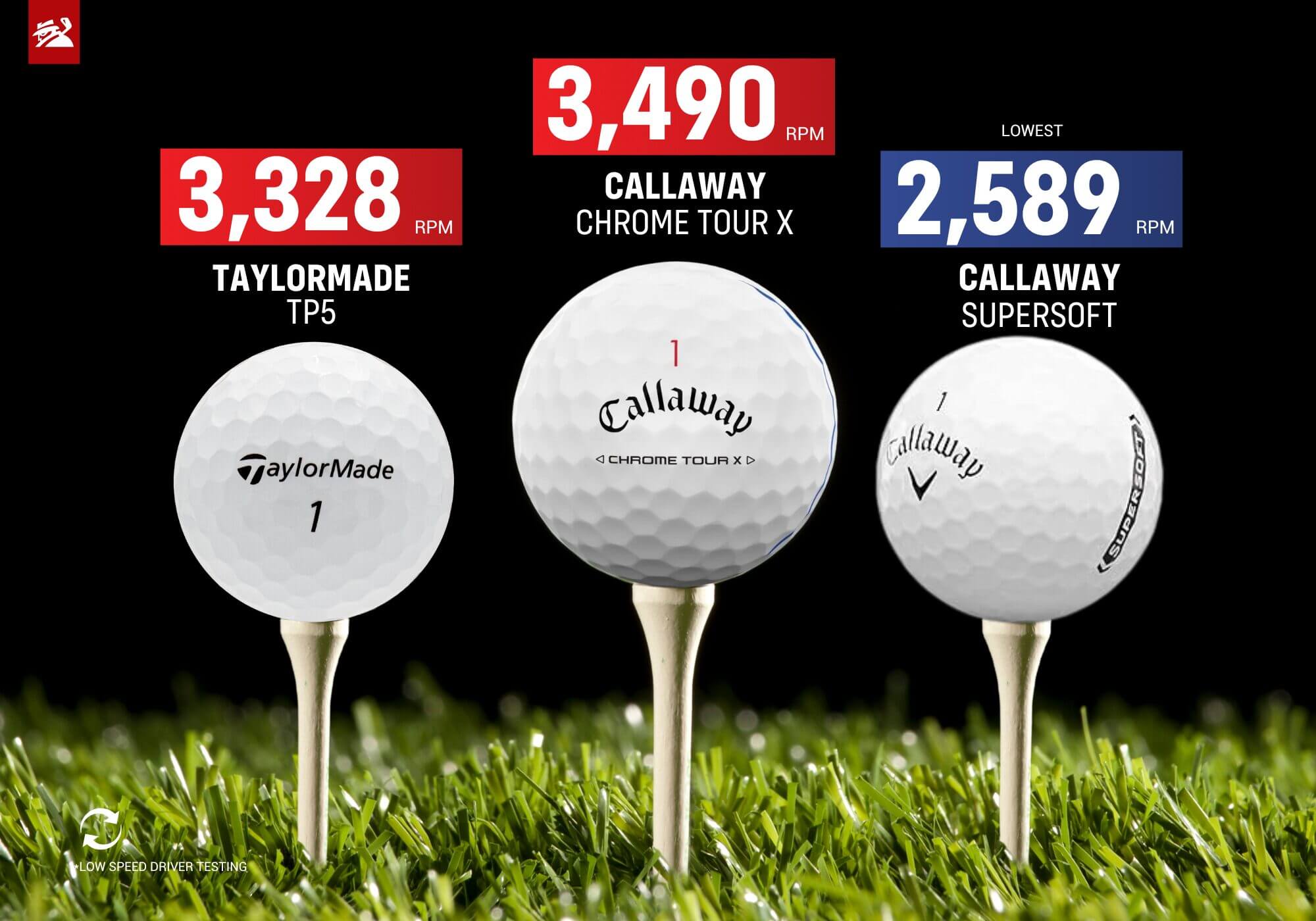
| Test Parameter | Test Average (All Balls) |
|---|---|
| Club Used: Srixon ZXi5 | Ball Speed: 88.12 |
| Swing Speed: 65 | Total Distance: 130.11 |
| Calibration Launch Target: 20 | Launch Angle: 23.22 |
| Calibration Spin Target: 5000 | Spin: 4809 |
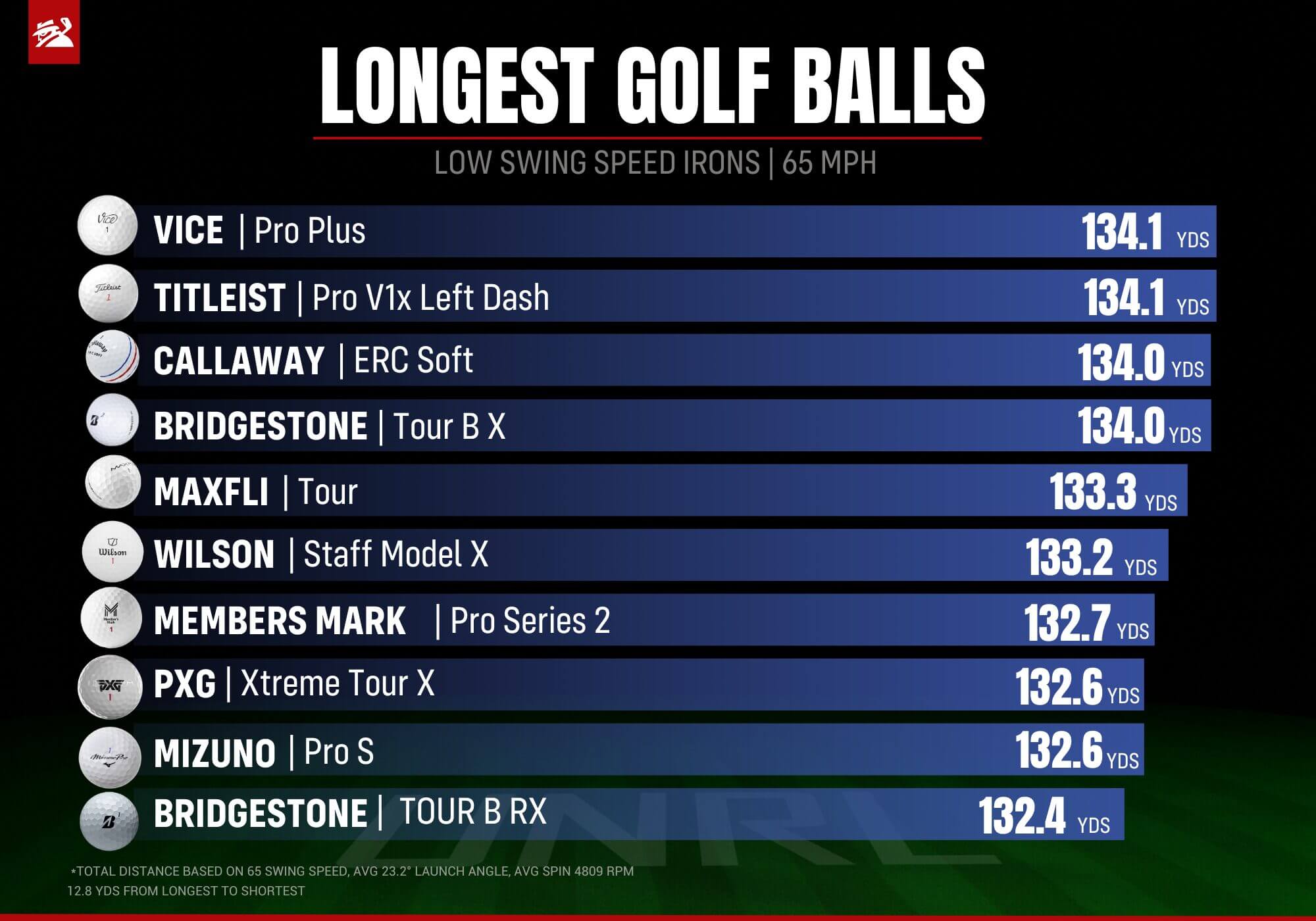
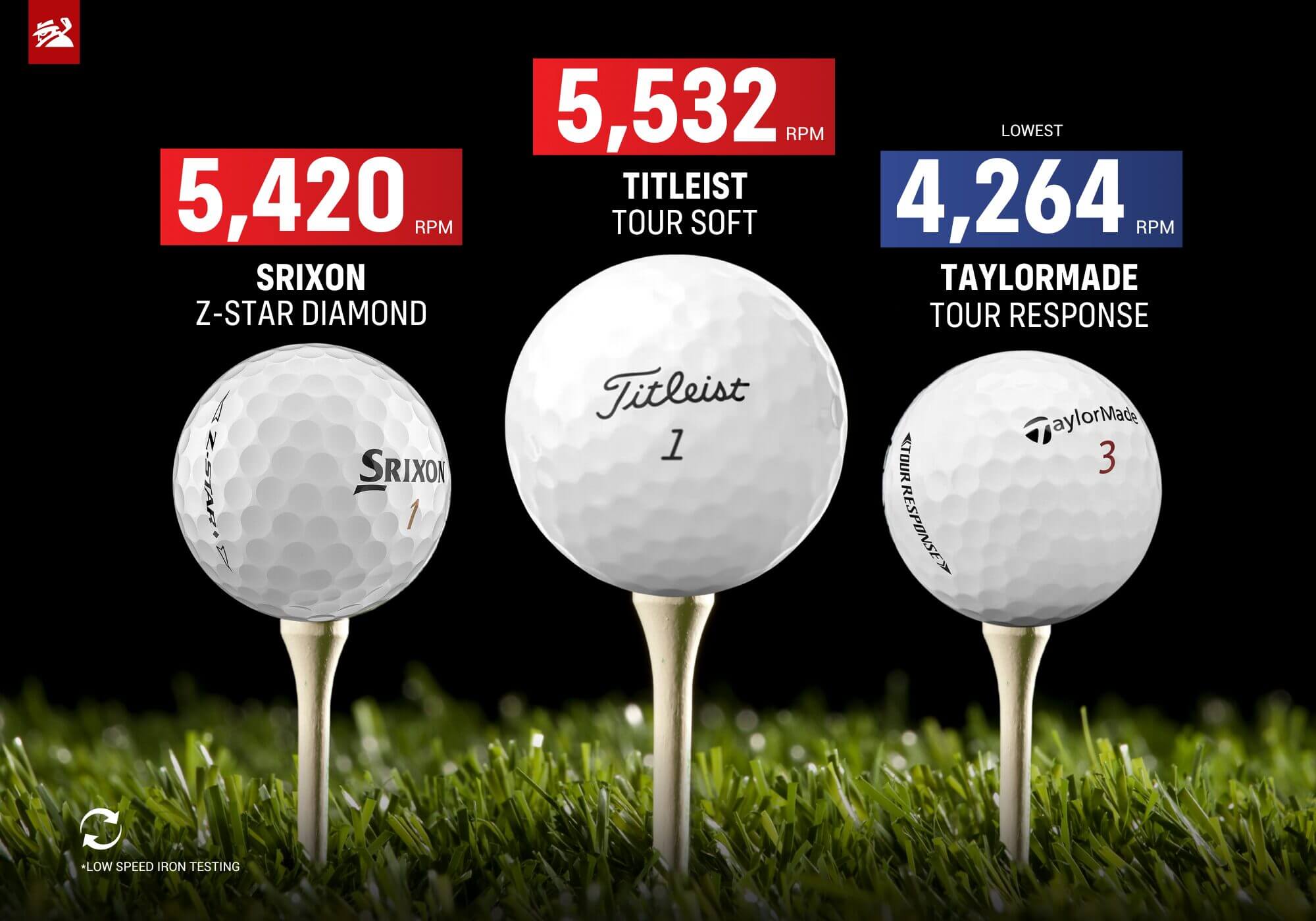
The wedge portion of the test was designed to replicate a greenside shot of 35 yards. Rather than calibrate to specific launch and spin targets, we configured the robot to hit the calibration ball approximately 35 yards.
| Test Parameter | Test Average (All Balls) |
|---|---|
| Club Used: Vokey SM10 | Ball Speed: 44.17 |
| Swing Speed: 42 | Total Distance: 42.02 |
| Calibration Launch Target: n/a | Launch Angle: 30.03 |
| Calibration Spin Target: n/a | Spin: 5441 |
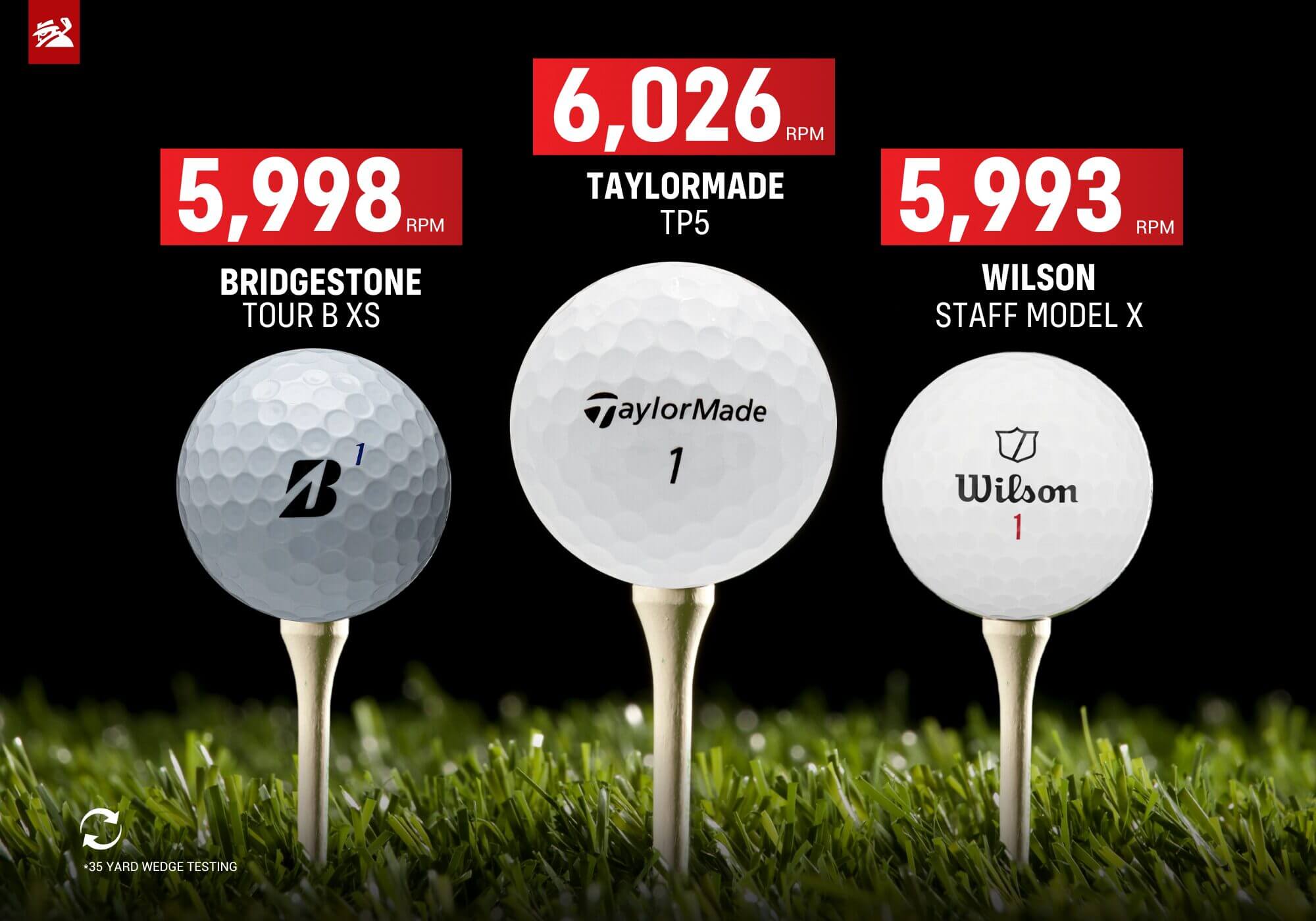
Launch angle may not be something you’ve considered on shorter greenside shots, but we do see significant differences.
In our previous Ball Tests, we’ve provided a scatter plot showing the relationship between ball speed and compression. This time, we’ve enhanced the chart to allow you to plot any two of our provided metrics. What you do with it is entirely up to you.
We’ve also included the ability to filter balls by manufacturer or model.
If you experience issues with any of the charts loading, here are the direct links:

Our next two charts provide a more straightforward look at the data. The functionality is similar to the scatter plot. You choose the metric you want to see along with the club and speed conditions. You can also filter by OEM and ball model.
By default, the bar chart below will display the top 10 for the given metric. You can increase or decrease the number of balls shown in the chart (it defaults to 10). You also have the ability to show the top x, bottom x or middle x values.
The way the filters operate is somewhat counterintuitive. We recommend leaving the “Choose What?” set to Include Top x. If you want to see the bottom x, the sort function of the bottom of the chart will re-sort from the bottom up.
As a specific example, by default, the chart will show you the top 10 highest-spinning balls. Sorting the chart without adjusting the Top x filter will repopulate the chart with the 10 lowest-spinning balls.

Finally, we’ve added a crosstab for those who like to see everything in one place. Although we’ve done what we can, this one will be a struggle to view on your mobile device.

This is the first of several posts to come from the MyGolfSpy 2025 Ball Test. In the near future, you can expect reports on wet versus dry performance off wedges (yes, moisture makes a huge difference), hot versus cold balls, as well as breakdowns of some of the more interesting models we tested.
Stay tuned.
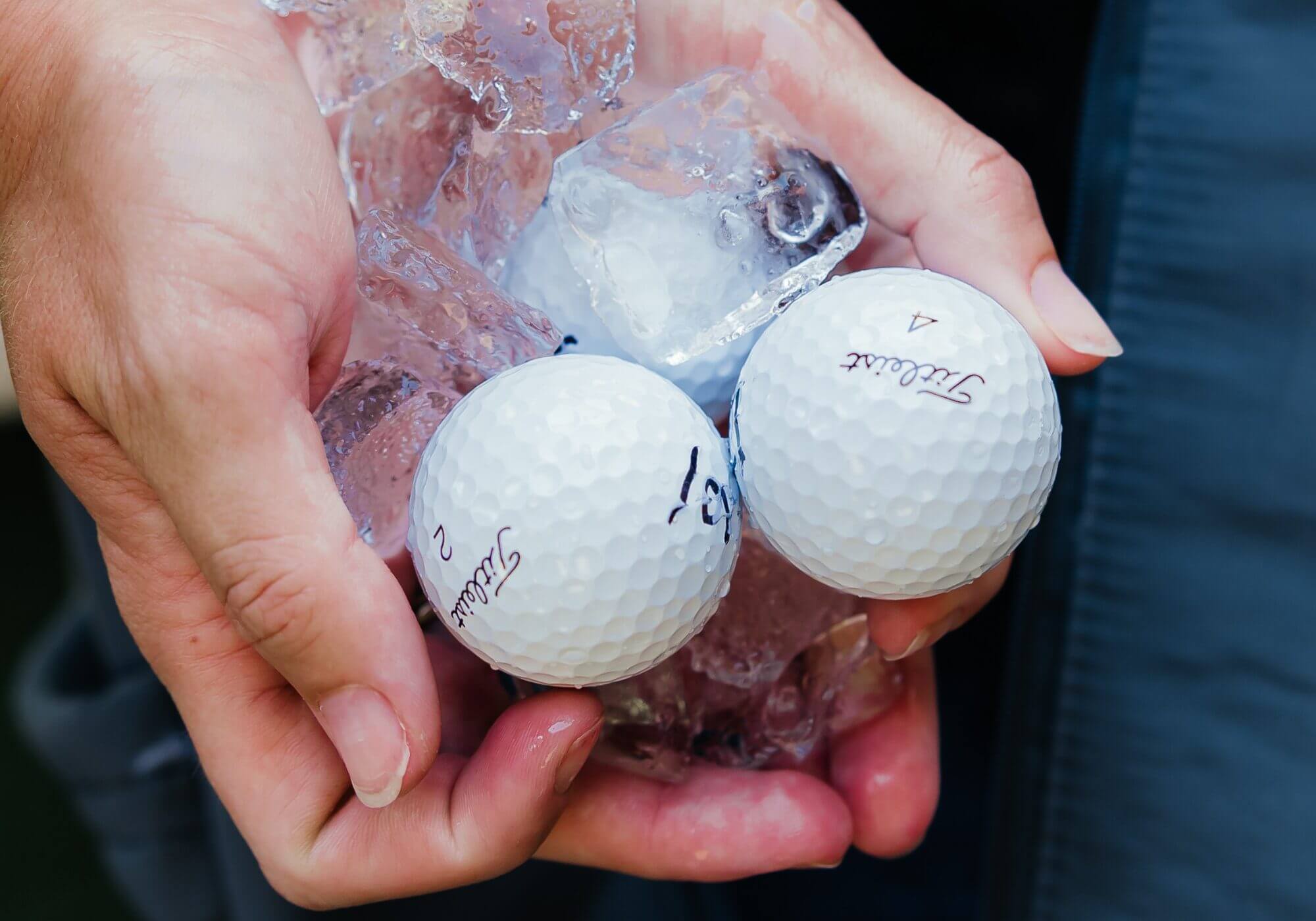
A: We’ve covered this before. The short answer is there isn’t one. As with your golf clubs, the most important characteristics are flight (a combination of launch angle, peak height and descent angle) and spin rates.
While there are some absolutes (softer balls are slower off the driver and invariably lower-spinning), it’s ultimately the combination of flight, spin and speed that needs to be optimized for your game.
While many believe high compression is for fast swingers and low compression is for slower ones, the truth is that some high-speed golfers can benefit from the low-spin properties of low-compression balls while some slow-swinging golfers (many, in fact) will benefit from the higher trajectory and added spin offered by some higher-compression offerings.
A: Handicap isn’t an evaluation of your swing properties. It’s a measure of your ability and consistency. Just as with low-handicap golfers, higher handicaps come in all swing types so the same fitting rules apply.
That said, golfers fighting a slice or a hook may want to consider a ball that offers low driver spin. Low-spinning balls should fly a bit straighter off the tee.
The caveat is that many balls with true low-spin properties off the driver are also low-spin off irons and often low-spin as you move closer to the green. That may impede your ability to control the ball and hold greens on shorter shots.
Cost is also a factor. If you’re losing more than a couple of balls a round, spending $50-plus on a dozen balls likely doesn’t make sense. While used balls are an option, we highly recommend avoiding refurbished.
A: It’s a fact that golf balls fly farther when it’s hot, as it was during our test. Carry and total distance numbers will be longer than in cooler conditions. What’s important isn’t the final number but rather the relative performance differences between balls. Those relationships should be minimally impacted by environmental conditions.
A: Finding the right ball is a process. Our recommendation is to start with a few you think might work. If you’ve got a launch monitor, use it to trim the list. If you don’t have access to a launch monitor, our data should help you narrow the field. Test on the course and side by side. For the best comparison, don’t test more than two balls at a time.
The conventional wisdom is to start around the green and work backward. The idea is to see how the ball performs on relatively short shots (partial wedges). From there, move to your irons. That’s where the biggest differences are and where you’re most likely to notice them.
Chances are you have an adjustable driver, so once you’ve found the ball that performs best through the rest of the bag, take advantage of the driver’s adjustability and tune it to fit the ball.
A: For the swing speed closest to yours, the ball speed, launch and spin relationships between balls should translate reasonably well. The fastest balls will be fast. The “spin-iest” balls will still be spinny. How those factors come together in the total distance equation heavily depends on other factors in your swing (attack angle, loft, impact).
A: For the most part, yes. While balls played on the PGA Tour often pass additional checks to ensure they’re conforming, nobody is sitting on a secret stash of high-performance Tour-only balls.
Ball manufacturers want their Tour staff playing the retail ball and that’s mostly what happens.
That said, nearly every manufacturer has a couple of secret menu offerings. These are typical niche balls (very low or very high spin offerings, for example) that won’t be a good fit for most golfers.
It’s also true that some Tour pros play prior-generation balls that were once the stock retail ball but have been superseded by newer models.
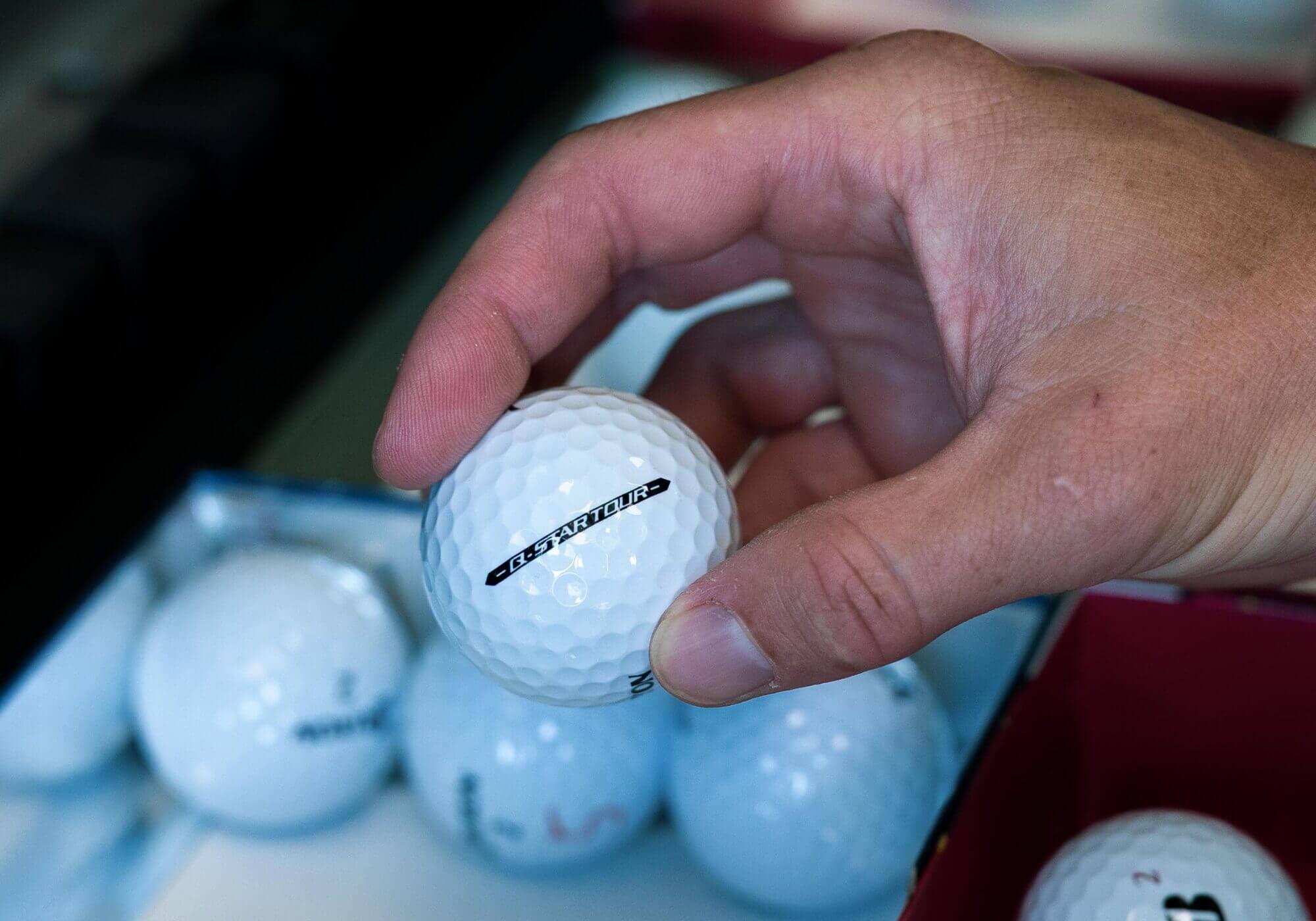
A: MyGolfSpy purchased all of the balls used in this test at retail from multiple vendors.
Q: Why is there so much rollout in your test data?
A: For the total distance values, we relied on a mix of the USGA’s bounce-and-roll formula (drivers) and the launch monitors’ native calculations. We believe all of these models are based on firm (if not excessively firm) ground conditions.
While the distance should be relative regardless, you may want to focus on carry yards, particularly for irons and wedges.
A: Golfers have been trained to think in terms of launch angle but, when it comes to the golf ball, launch angles tend to be very similar and it’s not uncommon, for example, for a ball with a low initial launch angle to have a comparatively high peak height.
When we discuss trajectory, we’re primarily looking at the max height number as it indicates which balls flew the highest. Those small differences in launch angle, along with descent angle and max height distance (how far down-range the ball reached its apex), can help paint a more complete picture of a ball’s trajectory.
A: First, most manufacturers have released new models since our previous test (only Pro V1x Left Dash is unchanged from our previous test) so we would expect performance differences.
Second, as we have in the past, we have made a few modifications to the test setup that we hope improve the overall quality of the test. Those changes invariably contribute to different outcomes, especially as it relates to carry and total yards.
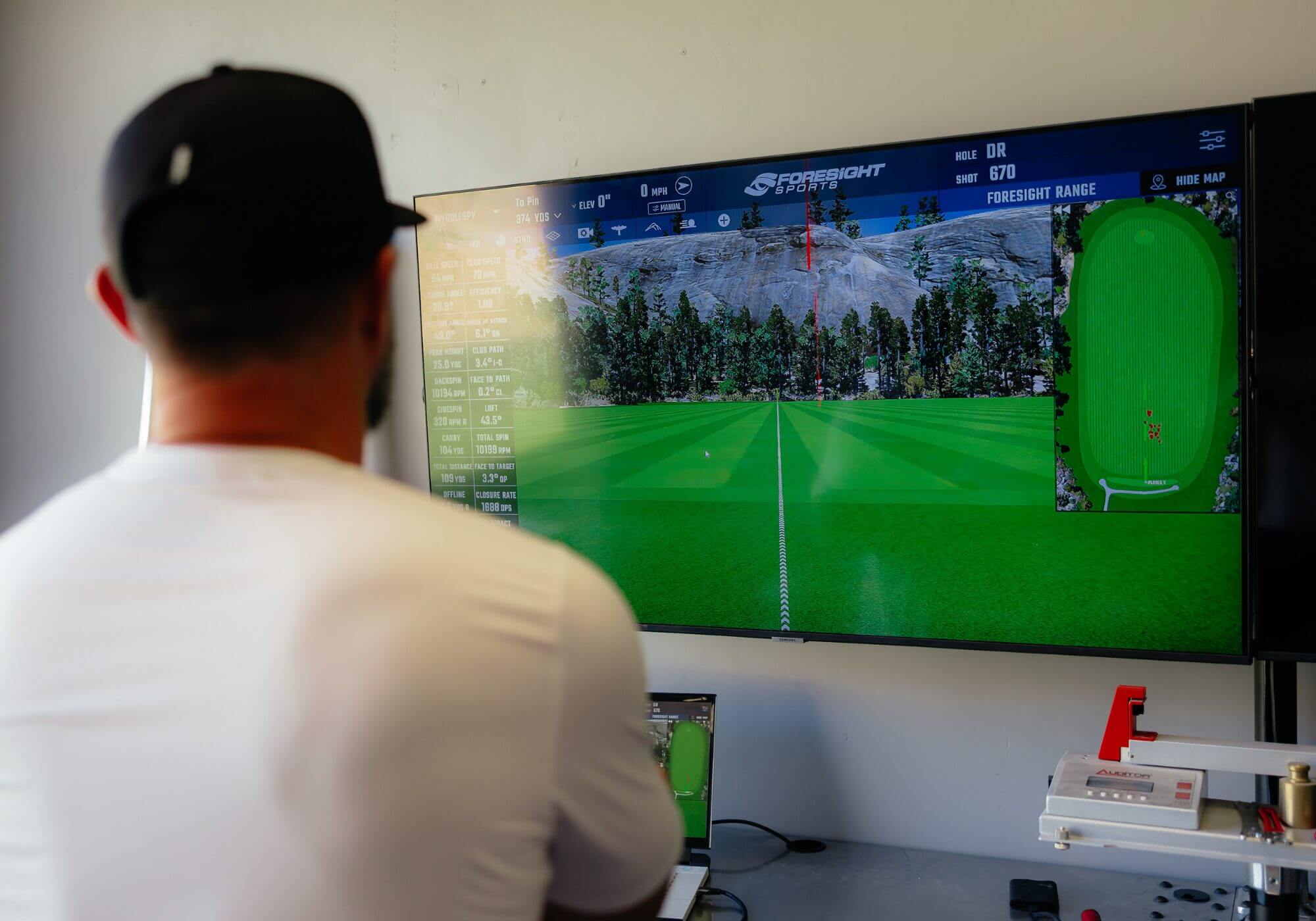
A: Not a question and also false. We know golfers want to see distance numbers but the test parameters were meant to reflect the real-world averages for each swing speed. Simply put, we didn’t optimize for distance; we configured the robot to achieve launch and spin targets in line with what average golfers in each group achieve.
While distance is not unimportant, we want to emphasize that the right ball for your game is the one that is optimized for the trajectory and spin properties created by your swing.
A: This is the double-edged sword that is ball testing. That’s especially true when testing as many balls as we do.
On one hand, to understand the influence of the cover/dimple pattern, it’s imperative to capture the full flight of the ball. On the other, that exposes you to environmental factors, namely wind, which invariably impact offline and dispersion values – especially over the course of the several hours it takes to complete each portion of the test.
For this report, we’ve focused on key performance metrics (ball speed, launch, spin and, ultimately, how they impact the distance equation).
We continue to look for reasonable ways to quantify dispersion, especially as it relates to what we would consider extreme misses.
A: In the past, we’ve tested the yellow version of one of the golf balls in our test. This time around we decided to test the multi-colored DIVIDE option. The DIVIDE is particularly interesting because, in addition to different pigmentation at the mantle and cover layers, it also requires a different dimple pattern (relative to the standard Z-STAR) to join the two halves of the DIVIDE cover.
A: We had hoped to include Snell balls in this test. However, the company is in the process of rolling out updated models. Updated 2.0 and 4.0 aren’t available yet and we weren’t able to source the 3.0 the same way we sourced the other balls in this test. We fully expect to include Snell in our 2026 test.
A: Ball Test capacity is always limited so we can’t test everything. This year, the inclusion of more low-cost/ionomer models limited the number of urethane offerings we could include. Decisions about what to test are based on popularity and interest level.
As we move to an annual ball test, our hope is to include more brands in the future.
A special thanks to the incredibly dedicated and talented team behind this project.
Adam Beach, Phillip Bishop, Rob Colella, Adam Phillips, Dave McKeand, Bennett Green, Madison Reynolds, Nick Dingman, Ingram Smart, Connor Lindeman, Chris Nickel and our loyal supporting writers near and far.
Some old, some new.
Also, to UNRL for keeping us kitted and cool in some of Arizona’s toughest conditions.
Thanks for sticking with us.
See you in 2026.

World-class testing requires world-class equipment. This is the gear we trust to help us fulfill our Most Wanted testing.

Tony is the Editor of MyGolfSpy where his job is to bring fresh and innovative content to the site. In addition to his editorial responsibilities, he was instrumental in developing MyGolfSpy's data-driven testing methodologies and continues to sift through our data to find the insights that can help improve your game. Tony believes that golfers deserve to know what's real and what's not, and that means MyGolfSpy's equipment coverage must extend beyond the so-called facts as dictated by the same companies that created them. Most of all Tony believes in performance over hype and #PowerToThePlayer.


| Driver Titleist GT3 9° | Mini Driver TaylorMade R7 Quad 13° |
| 4-Wood Titleist GT2 16.5° | 4-Hybrid Titleist GT3 |
| Irons (5-PW) Titleist T350 | Wedges Vokey SM10 (48° F, 54° F, 58° T) |
| L.A.B. Golf DF3 | Ball Titleist Pro V1x Left Dash |
3 months ago
nice to see this review for 2026.
However, your editor/data checker needs to do some more work as the distance numbers on one chart aren’t the same for numbers on another chart for the same ball/club/swing speed. I may be a bit nit picky as they are off by a few tenths (not rounding errors) but I didn’t check many, just the balls I was interested in. Being close is still being wrong. But it doesn’t give many warm and fuzzy feeelings for your overall quality control process.
I also find it very hard to believe the ProV1x for mid iron slow swing speeds is 11 yards (33 feet) shorter (10%) than the longest! I play the ProV1x on occasion and the ERC soft and I have found them to be at least within 10-15 feet of each other at the most.
Lastly I’m confounded by how you select the “recommended” balls within high/mid/low spin grouping as the numbers just don’t seem to correlate. No Callaway Triple Diamond anywhere? Seems a bit biased toward certain brands and away from others MGS seems to be very pro – Maxfli when by the numbers they seem middle of the pack. Why not give us your formula on how the data is ranked? From my perspective on reviewing your numbers it appears 1/2 those recommended shouldn’t be.
Its up there with recommending clubs that aren’t available in the US
But it’s the internet so you must be right….
thanks
3 months ago
unfortunately I am still confused about what ball I should be using.. Now I understand that you cannot have distance and also have a ball that has good spin holding power. I would assume most golfers are what I believe is that I will give up some distance to get good holding power on the green. With that said my 7 iron ball speed on good hits is high 90s. My driver ball speed on very good hits is 120/122. Getting about 180 yards Carry and 205 total. So with all of this said what balls should I focus on? I have been using for the past two or three years is Callaway Chrome or Chrome X. one of the reasons is because of the American flag they have on the ball and is easy to identify. Plus I believe it’s a very good ball for stopping power. I also have used titelist AVX ball. That seems to go a bit further but I believe I lose some spin for shots onto the green. Thank you for your guidance and help.
3 months ago
My struggle with these articles is that the results posted show negligible differences…like .5 yds in distance amongst the top 10. Can the results get tiered by a significant factor, say grouped by X yds of distance, Xxx rpm for spin, etc. It seems to me, that I may be playing a ball that is the 2nd tier of the results and it may be within 2% of distance, spin, etc. And half the price.
7 months ago
Glad to see all those practically new Pro-V1’s that I’ve found fit my game fairly well!
8 months ago
Why don’t the numbers for the table data and the graphic image numbers for the top 10 match? I’m looking at data for the low swing speed, and every single number listed for distance in the graphic does not match the data displayed in the raw data table. It’s close, but not equal.
Is there a reason for the discrepancy?
3 months ago
because their QC sucks. Been that why for years. not hard to fix
8 months ago
> In our two previous tests, we used 8-irons for our mid-iron tests. For this test (and likely moving forward), we used 7-irons.
Is a 7 really a mid-iron any more? In a world where 4 irons are disappearing from sets (in favor of hybrids), so a lot of people carry only two iron clubs longer than a 7.
9 months ago
no Tourstage neither, this « testing » trends getting boring…
9 months ago
Love them with you do. Before I buy any equipment, I research your site and then get fit. Best combo for finding the right gear.
One question about golf ball testing, does a particular ball roll/increase curves of making putts? Does one roll better than another, etc.
11 months ago
Hey folks. I sent a note earlier but got no reply. I am wondering why the Trufeel did not end up on the recommended list for slow swing speed. In the data chart it appears to be one of the longest with low driver spin and higher iron spin. My E12 Contact has been discontinued and I am looking for my next ball. Thanks so much
9 months ago
I was pleasantly surprised to see Trufeel in there as I have been pleasantly surprised by its distance however its flight height & chipping feel were not ideal. Great value though.
12 months ago
Maxfli proports is identifies Center of Gravity on each ball and marks it with the side logo. Have you ever tested the validity of their premise? Can you or did you test for dispersion aligning the stripe versus random placement on the tee?
1 year ago
Ah, the tyranny of numbers. 35 yard wedge: at the top we have TM Tp5 and Wilson Staff X spinning at about 6000 rpm. Difference between carry and total distance about 6 yards. At the bottom we have TM Speedsoft and Titleist Velocity spinning about 3000-4000 rpm less. Difference b/n carry and total distance….about 6 yards (the Speedsoft even clocked in at 5.5 yards). Destroys debate about effectiveness of spin for chips and low/mid range pitches. As the data proves – there is NO DIFFERENCE
Better results for mid swing speed mid iron; Titleist Tour Soft and Srixon Z Star Diamond spinning at ~6750 rpm and diff b/n carry and total is 7-8 yards. Callaway Supersoft and ERC spinning at ~5450 (1300 rpm less) and difference is about 10 yards. All four had descent angles of about 44 degrees. Doesn’t seem like that much to me
8 months ago
There is a huge difference in feel, launch angle, spin rate and player
skill. Your not going to hit a Velocity 12 feet off the ground and have it drop and stop, which is easy to do with the right techniques and a Pro-V1x. Also A proV 1x off of a driver launches high with very low spin creating excellent distance off the tee yet spins more than most with a wedge. That a pretty good engineering trick thats a big reason why its a players ball. Ther are alot of shots you cant use a soft feel ball to do, usually starting with low spin on green side shots.
1 year ago
You know what would be fun? Add new and heavily used range balls into the mix.
1 year ago
I’m having trouble finding the dispersion chart in this test. Can someone please direct me? Thanks!
1 year ago
I’m having trouble finding the dispersion chart in this study. Can someone please point me there.?
1 year ago
Can someone please make a recommendation? I’m willing to compromise on the driver. I have 103 (mid) driver swing speed and want below average spin numbers (as low as practicable) on the driver. However, I also want above average spin numbers on the irons, and higher spin numbers on the wedge. Can you recommend a few balls that might fit that? I can’t use these graphs or tables very well on my phone. Thank you!
9 months ago
I was on the same boat as you and mostly use Maxfli Tour X. ProV1x is similar to me but almost 2x the price
1 year ago
How is the Taylor Made Tour response not the best ball of the bunch. It has longest carry of the soft balls with the lowest driver spin. And on the next metric that matters (spin within 35 yards) it is in the top chunk off 75% of balls that are all about the same before it drops off
1 year ago
Maxfli Tour X used to be the longest in the slow to mid off the Driver…Is that still the case ?
1 year ago
My driver avg distance is about 225 and 7 iron about 150 yards, I consider this slow and your own data says this is the largest group of golfers yet you have ZERO information on this swing speed. Your swing speed gapping for testing is to large. It should be 116, 105, 95, and below 85; you’ve left out a huge swath of everyday golfers
1 year ago
when you’re swinging that slow, the ball really doesn’t matter. Better to concentrate on how to swing properly and learn how to swing faster. No healthy male under 80 should be swinging under 95. Watch some Paul Wilson videos on Youtube and use his tips.
1 year ago
Rick–I assume you are not 80—- with many senior golfers with hip and knee replacements and sever spine arthritis — your comment that all should have swing speeds above 95– is not grounded in reality and given such, not sure of your point.
10 months ago
BS! I guess not everyone is fortunate enough to be as talented as you.
9 months ago
I have not swung much above 85mph the entire time I have played this game, since 1998! I play soft golf balls, and I keep up with much faster swingers in my group! Not everyone is that talented, or just can’t swing that fast! I am 69 years old, but just never could swing faster than 85ish. Started playing later in life…
1 year ago
I would like to see you test Oncore balls. I found them to out perform Titleist at a significantly lower price. Also, one of the owners is NFL MVP Josh Allen, so there should be some interest.
1 year ago
Why does your slowest swing speed tested result in tee shots of over 220 yards? You own data says the biggest percentage of golfers hit it 200-224. There are a HUGE number of golfers that hit tee shots under 200 yards. There should absolutely be a category for people who hit tee shots 180 yards.
1 year ago
My driver avg distance is about 225 and 7 iron about 150 yards, I consider this slow and your own data says this is the largest group of golfers yet you have ZERO information on this swing speed. Your swing speed gapping for testing is to large. It should be 116, 105, 95, and below 85; you’ve left out a huge swath of everyday golfers.
1 year ago
The ‘Environmental Conditions’ part at the beginning of the article covers this. They tested in Scottsdale, Arizona (high altitude) at 105F ambient temp. That heat and altitude combo results in some thin air that boosts carry distance, which they said in the article.
Look at swing speed numbers for comparison, not distance results.
I think they should try to run next year’s test at something closer to sea level to see how the ball flights work in normal air, but I know they have to go where they can get the robot time (currently in Scottsdale).
1 year ago
This is robot testing, therefore the ball is generally hit in the center of a square face. Most golfers rarely have this level of efficiency. Even if they swing FASTER than what is required to hit it 220 yds, if they (…you) don’t hit it in the center of the face and square, you will have poor efficiency and will undoubtedly lose a ton of yardage. I play with many guys who swing 115-120 mph every time. Sometimes they hit it 350 yds, sometimes 290. It all comes down to efficiency.
9 months ago
They aren’t running a golf swing test, this is about ball data. When you miss the center of the face most of the variables are club dependant (forgiveness vs workability). The point of this test is to give you a base line of how balls perform with all things being equal.
I play TM P7MB irons so I know that I am losing 15 yards on a missed shot regardless of the ball. But these tests gave me the info to know how it will perform when I hit it well 80-90% of the time. I was a ProV1/V1x guy for 15 years until I saw the Maxfli numbers in 2023. That winter I tested the Tour X vs the V1x all winter and got almost identical numbers but now save 40% on my ball budget.
1 year ago
Using your results I tried the Maxfli Tour S balls. My swing speed is basically in-between low and mid. I played one of my best rounds of the season with them yesterday. Coincidence? Maybe. We’ll see how the rest of the season plays out.
1 year ago
thanks for the data.
someone needs to scrub your data entries as the bar chart and the table data numbers are different. I only checked total distance for most titleist and a few other balls but none matched. they are kinda in the same relative order but all different numbers. The engineer and accountant in me has trouble sleeping seeing that.
Also I think the slow iron total number for ProV1x at 122… is incorrect. I think it should be 132… your mid speed data and 2023 ball test would agree).
I do love the addition of a few mid to lower priced balls (velocity, utlispeed and Supersoft…). thanks for that. and as always for slow swing speeds.
And of course our course, swings and clubs will have different results as somehow the longest ball for me is the ProV1x. but as a slow swing speeder the long balls listed that I’ve played are close.
1 year ago
Tony…always love the ball report. But…Your ‘low swing speed’ isn’t that low. There are A LOT of golfers below 86mph. Does your conclusion that ‘even low speed golfers benefit from a firmer ball’ still hold w/ women/Seniors who swing at <70mph? The interesting question is… is there a point (mph) under which golfers would gain distance switching to a softer ball? ie is there a point (mph) in which a ProV1 is too hard? (…ie that slow swingers can't compress it.) Version to version the conclusions from your reports don't really change or add much knowledge to the field. You've expanded the impact of it by adding things like wet ball, more cheaper balls, etc. In the future, you could grow the impact of your report by changing the specs to study the effects at very slow swing speeds eg 65mph. maybe…65mph instead of 86mph or studying 65mph with only a few balls (across the range of compression) or studying a couple of balls of varying compressions across the full range of robotic swing speeds (40mph to 140mph)
1 year ago
I appreciate the data at the end. The Tableau interactive graph was a nice touch. Cheers!
1 year ago
For next year (or even this year), suggest adding to the table average retail price for a dozen balls for comparison reasons. I was looking at the Wilson Staff Model X, but realized they’re essentially the same price as ProV1x with similar results. From a manufacturing quality perspective, the ProV1x would likely be the better overall value considering consistency in manufacturing quality until proven otherwise with a comparison of Wilson quality control review.
1 year ago
Why no sidespin, multilayer balls brag about spin off a wedge and reduced spin off a driver, even the robot should be generating some spin.
1 year ago
I see your tests were conducted at 105 degrees. Would results tend to be linear at about 80–85 degrees? So a top performer at 105 would still be top at 85? Thanks for all the effort that goes into this testing.
1 year ago
Question: Mid-speed, Driver, ball speed section. Under observations it states, “Once again, the Titleist Tour Soft stands out as a surprising performer.”
But that ball is not shown in the graph. Am I missing something?
1 year ago
Bar Graphs overstate the difference between balls, a 2 yard difference appears to much larger than the one percent difference.
1 year ago
Love this data. Also get a kick out of the keyboard warriors (one in particular) who know “so much more than y’all”. Too bad they don’t work for MGS (tongue in cheek). I want a ball that spins the most and flies the highest off the 7i for Mid speed so it can stop better on the greens. Same ball needs to have good Driver flight carry. The charts allow me to compare balls for these specs. While I can play different balls, it’s harder to “see” the differences. Also we all know we don’t hit every shot the same, so our our “real life” doesn’t aways help. I also want good spin greenside, so I love the 35y wedge data. Thanks TC and team for enduring our Arizona heat to bring this to us. YTB!
1 year ago
From my perspective this test was very accurate. I have tested several balls looking for the best one to fit with my new driver and what I wanted greenside. Somewhat of a compromise but the best ball for me was the Titleist AVX beating out the Super Soft, Tru Feel, Q Star Tour and MaxFli Tour S.
Was heartened to see the AVX was a recommended ball for slow swing speeds. My driver is around 82. Three of the other balls fared well on the test as well. After about 20 rounds the AVX has held up well with distance and not punishing me too much when I get some sidespin. The descriptions of the balls mentioned fit with my experience. That has not always been the case. Glad you included the top selling Ionomer balls. Great job!
1 year ago
This is great data and I appreciate all the hard work the MGS staff put into this evaluation. The one piece that is still missing is the Ball Lab evaluations for golf ball quality and manufacturing QC. It’s been over a year since the last Ball Lab evaluation and there were only a few before that in 2024. Based on this testing I have narrowed down my ball choices to test this fall. But it would be nice to determine if any of the balls have quality issues (which is difficult to evaluate without the tools y’all have available in the lab). Hopefully y’all will resurrect the Ball Lab in the coming months.
1 year ago
I appreciate your testing, but I am struggling to get a proper context on the data. Is one ball really different than another? If so how much different. This can be determined if you published sample size and standard deviation, in addition to the mean (average) that you provide. Please make that data available to your avid followers like myself so I can do some basic statistics and get a better handle on the results. I can think of no reason for you to not do that. Thanks
1 year ago
When you talk about cuckoo balls, can you provide a list of which balls had it happen? I listened to the podcast where you mentioned this being an issue for Member’s Mark. Is it a 1 out 10 shots problem, 1 out of 20?? As a high handicapper, I still lose 2 or 3 balls per round and hit a number of cuckoo shots every time out. I can see the advantage of a urethane cover for 40-60 yd wedge shots so would prefer to play one. But I can’t rationalize paying $4 or $5 bucks a ball when I still lose this many balls. Don’t the advantages of a cheap urethane ball around the green (vs a surylyn cover) outweigh the occasional cuckoo ball?
1 year ago
I find it interesting the the Chrome Tour Triple Diamond is the longest high swing speed driver ball but the 4th shortest iron ball. I won’t be putting this ball into play for that reason. Maxfli Tour X has been great for me
1 year ago
Well, in fairness, there could be more than a few reasons for the discrepancy. However, I think it’s weird that, for fast swingers, their club head speed and launch conditions are set to PGA tour trackman averages, yet the PGA tour gets a 1.49 smash average along with 171 mph of ball speed. This is 4-5 mph less than the test average. I think it’s safe to assume most PGA players are using a ProV1 or ProV1x, and even if you assume the test average is being held down by slower balls, the ProV1x is still 3 mph less than PGA average ball speed (along with a 1.45 smash). There are all sorts of environmental reasons that carry and total might not match the test, but it seems like the test robot should at least be able to be as efficient with smash factor as the human robots of the PGA.
1 year ago
Delete this message. My first reply attempt to OpMan below mysteriously started on a new thread.
1 year ago
Thank you for the ball test!!
in the “Top Picks for High Swing Speed” section, Vice Pro Air is shown in the graphic for Low Spin, then in the verbiage below the graphic that lists the balls in the graphic, it says Vice Pro Plus. Is one a typo? Thanks again!
1 year ago
I can’t say that I’m consistent swing to swing for all this to matter but I do love digging into the data. My only wish is that you would test more yellow balls – maybe not all of them but maybe one from each manufacturer. This adds to the work and I know they are supposed to be the same but they aren’t IMO. Some of the difference are a plus and some are a minus. I play yellow as they are easier for me to track and spot. Maxfli’s are painted and seem to be close but are less durable. Bridgestone, Titleist and Kirkland yellow balls seem to have a smoother finish and firmer cover feel than the white balls. Again, maybe it’s not enough to matter but the ProV1 did show difference in the last test. Thanks!
1 year ago
Total crap shoot most balls will be within a few yards of each other depending on the players swing and club choice. Most high end balls will be similar
9 months ago
That is you opinion but I myself have seen huge differences in top level balls whether it is flight, spin, distance or a combo of the 3. The “ball doesn’t matter” thought process has never made sense to me considering it is the most important piece of equipment on the course and if that were true companies would be switching materials and builds regularly.
1 year ago
Great read as always. Love the charts and I’m sure I’ll be going back over every data point to kill time at work just to avoid responsibilities for a bit. I’m still sticking with my Vice Pro or Plus for now. Spending an extra $22/dozen to chase some extra yardage just doesn’t outweigh the comfort and familiarity factor I’ve got. But at the same time, hitting past my shorter hitting buddy by a bit more does sound fun. Can’t wait to see how much more is gonna come rolling out in the coming weeks from this test.
1 year ago
We’re talking 2-3 yards here. Don’t sweat it – Vice balls are great.
1 year ago
Thanks for all the work on the ball test. I would like to see the iron used in the tests listed by manufacturer and model as the lofts vary considerably by make and model. Same with the driver, what make and loft was used and what shaft. All said, the ball test showed only a few yards different in the balls I use so no need to change. Keep up the good work.
1 year ago
Why does the Maxfli Tour X have the top speed for the 116 mph driver, but isn’t even in the top 10 for driver distance? Do they need to revamp their dimple design?
1 year ago
Again, look at the drivers and the parameters used in testing here.
Sure, it’s to do with spin, launch angle, peak height, and PROBABLY aerodynamics, but again, what if you hit these balls with different set ups, say, extra low lofted driver, less than 7 degrees, with AofA of 7+, achieving close to 17 degrees of launch at 1700 with perfect spin loft?????
You can never tell.
These test parameters are limited is why when you see a ball with the highest initial ball speed, why isn’t it the longest?????? Now you can extrapolate as much as you want, but there is no way to tell unless you actually do more testing at various set ups.
1 year ago
Why are the average smash factors for driver different across swing speed. I’m seeing 1.43 for fast/slow and 1.46 for mid. These seem really low–especially if you are using a Trackman. (Maybe CHS is Foresight?) Maybe you need to hit on an inefficient spot on the face to achieve a given launch/spin? I’m a 15 HCP that hits all over the face of my driver and I was getting an average of 150 ball speed at my fitting (103 CHS). The best balls are only 1-2 mph in ball speed above their averages. Seems like if the balls are coming from the center of the face–especially for slower/faster swing speeds. Seems like the best balls should be seeing a 1.48 smash if they are coming off the center of the face.
1 year ago
The robot needs calibration LMAO
1 year ago
Well, in fairness, there could be more than a few reasons for the discrepancy. However, I think it’s weird that, for fast swingers, their club head speed and launch conditions are set to PGA tour trackman averages, yet the PGA tour gets a 1.49 smash average along with 171 mph of ball speed. This is 4-5 mph less than the test average. I think it’s safe to assume most PGA players are using a ProV1 or ProV1x, and even if you assume the test average is being held down by slower balls, the ProV1x is still 3 mph less than PGA average ball speed (along with a 1.45 smash). There are all sorts of environmental reasons that carry and total might not match the test, but it seems like the test robot should at least be able to be as efficient with smash factor as the human robots of the PGA.
1 year ago
please take two weeks off then quit
1 year ago
awesome stuff again guys! i dont see anything on here about balls that performed really poorly. i know some were wildly offline, did i miss something?
1 year ago
Would love Tony’s thoughts on Bridgestone’s own subjective classification of their tour balls:
“The Tour B XS is designed for higher spin, particularly around the greens with short irons and wedges. ***The Tour B X is designed for lower spin***, offering more distance off the tee and a more penetrating ball flight.”
Against the conclusions of the test:
“The two highest-spinning balls off the driver at our highest test speed were two Srixon models (Z-STAR DIAMOND and Z-STAR) with the ****Bridgestone TOUR B X*** and Wilson Staff Model X not far behind.”
Disappointing, as I just snagged 4 dozen B X’s after doing a good bit of my own research. Might need to go back to the drawing board.
1 year ago
I think the relative value of the test is very helpful (for example, how do balls compare to each other in distance and spin). But the biggest gap in information is the relative difference between prior gen balls. If you compare the 2025 test with the 2023 test (use highest speed swing), are we to believe there is on average 20 yards gained in driver vs. prior gen balls? I think for the ProV1x, the difference was 25 yards of carry gained with only 1mph difference in swing speed. Would have loved to see prior gen balls included for a few of the most popular (ProV1, ProV1x, etc.). But otherwise, good information as always.
1 year ago
Test conditions are different so you really can’t directly compare results across tests.
1 year ago
I wonder what number iron was used? Obviously, a 6 iron is going to go further than an 8 iron
1 year ago
One aspect of ball selection not included in your tables is price. Price does not affect ball performance, but it does impact my buying decisions. I am a high-handicap player (working hard to improve). From what I have seen, Kirkland balls are good to very good but not great. But at $27 for two dozen, they make sense for someone who can lose more balls than average. A column including the cost per golf ball would enable people to factor in value. Some one may choose the third-best ball if it is half the price.
1 year ago
I would also want durability as a measure. What good is a 4$ ball if it is unplayable after 9 holes?
1 year ago
That’s pretty much most of the higher end Urethane balls, especially if you use such wedges as the new Clevelands that will shred the covers LMAO
1 year ago
The recommendations are at least suspect. I would like to know how one of the low swing speed ball recommendations is a ball that is not even in the test (Vice Pro Soft).
Kidding aside – as that’s an obvious type-o – but who knows what they really meant – go ahead and select all the recommended balls for a given swing speed in the tableau. Then pick some random other ball – or your favorite and stick it in the mix. You’d suspect that the random ball would be an obvious worse performer for any given metric. You’d be wrong more often than not, i suspect.
Still like ball test day. Wish there were still ball lab days ….
… those were the best.
1 year ago
My bad on the Vice Pro Soft … should have been Vice Pro Air (the new Pro Soft). As for the recommendations being suspect …
Classification is tricky because we’re trying to look at driver and iron performance to loosely classify. The same is true for the flight characteristics. As I wrote in the post, it’s imperfect, but the objective is to provide a variety of options with a good balance of flight and spin characteristics. We also consider greenside spin, and most importantly, as I also wrote, anything that produced cuckoo balls was removed from consideration. So, if by the numbers you think an obvious choice wasn’t selected, it’s likely because we saw something during the test that concerned us.
1 year ago
Figured it was something like that.
I completely understand your approach to evaluating the balls you thought perform the best. I do the same with the data you present. I am looking for a great performing mid-iron ball (height, spin, carry, descent) that doesn’t necessarily penalize me off the tee or near the greeen (I’ll give up a couple of total driver yds and a hundred or so wedge rpm). The only real bias I have for any given brand is mostly rooted in past ball lab reports (Foremost really good, Titleist great, etc.). I loved those . And I can afford any given ball – so i am going to be bouncing off the data that is presented to determine if there may be something out there better for my game.
You’d have to admit that publishing recommendations that do not hold up to the data that the public has to bounce off them is probably a little counterproductive. Like I said – you can pop a random ball in there on the Chart Tableau amongst the recommended picks and most often it still looks like a good or better choice for a given individual – or at least someone like me doing the kind of evaluation that I am doing.
I doubt you can forego the recommendations. There’s a certain sector of the public that just wants to know what the best ball is – or be told that the one they already like is the best. There’d be an uproar if they were not included, I am sure.
1 year ago
John,
there are 44, count ’em, FORTY-FOUR balls on this list. Good balls, no less, not them El Cheapo throw-away balls that are at range balls levels.
You can’t find one that works out of that??????????????
Especially if money is not an object to you????????????
LMAO
1 year ago
70 year old golfer, swing around 88 with driver. Used to play Pro V1, but now am sold on the Wilson Triad. Great overall ball, and the testing seems to show in the testing that it keeps up with all the others across the board, which I am happy to see. Also putts, feels great, plenty of short game spin and is very durable which does not show in the tests.
1 year ago
Can you do a wedge/greenside/bunker test for a ball? Like which ball spins more and stops on a chip/pitch, which ball rolls out more?
1 year ago
What’s the club speed range for slow and mid?
My driver club speed is 96mph. Not sure which section I should be looking at
1 year ago
Mid
1 year ago
78 yrs old, 11 hdcp. I’ve been playing ProV1 & X for many years. I play them because to me, they are the best ball across the board. Not longest, fastest etc, but a ball tha I can depend on to provide consistent reliable response to my shots.
There are many balls that will do the same, I just prefer these balls. If your test magically rated them at bottom of list, I would consider a change.
I love all the work you do, the information and data you provide. As a reader and fan of the site, I’m sorry you have take all the BS and abuse from the “experts” out there. They, like me, are entitled to opinions. They should not be entitled to the verbal/written abuse they toss your way when they disagree. Personally, I would delete and block them, but that is just me.
Thank you everything you continue to do providing us with info and data, allowing us to make educated decisions about golf, golf equipment, etc. This site has been a blessing me with info and opinions about my favorite sport!
🫡
PS After reviewing everything, I purchased 2 dozen Kirkland balls to try, see how I felt about their performance with my swing and equipment. They performed well, distance and accuracy were close to what I see from Titleist. But , my opinion, they failed the feel test. The ball felt hard, more like a range ball. But that is just me.
Again, thank you for all you folks do for the wonderful game of golf and for me.
1 year ago
Your charts show the Bridgestone Tour B RX with a compression of 89, but in your ball labs reviews, it showed it at 77? This seems like a big jump for a ball that has not really changed over the year.
1 year ago
RX was one of the more surprising balls in the test. We noticed it was showing as faster, relatively speaking. Looking at our compression measurements of our test balls, the softest one we measured was 85, the firmest 94. The data we have suggests they firmed it up quite a bit. Whether that’s representative of everything out in the world, I can’t say, but what we have suggests it’s become more of a lower spin alternative to XS, while BX is perhaps a touch firmer than previous.
1 year ago
Thanks for that update. I have been playing the B RX for several years and have been completely satisfied with it, but good to know they have changed the compression a bit.
1 year ago
Is there any reason to suppose the Pro V1 family is no longer clearly the most consistently-built golf ball (centricity, cover thickness, etc.)?
1 year ago
(That was the finding of the My Golf Spy ball testing 2 or 3 years ago.)
1 year ago
Do you test the balls with wedges from short game to full swing ?
1 year ago
I know you guys get a lot of complaints about this and that whenever you come out with your ball tests, but I truly appreciate all the work that you put into this test and you provide data that is simply not available anywhere else. Thanks for providing this awesome tool!
1 year ago
REally appreciate the time a dediction you all make to this testing. Along with the thorough results you provide.
1 year ago
At Costco, how do you tell which Kirkland golf balls are version 3.5, without opening up the package?
1 year ago
The previous version (3.0) had a silver band along the left edge of the box. What I see in store and in the Costco app for the last month or so has a red band on the left edge. While I suspect this is the ball mygolfspy is calling 3.5, Costco refers to it as v3.0 in the app.
1 year ago
Red slash on box and sleeve. Ball has open (unfilled) arrows (forget the better word).
1 year ago
Any insight for the OnCore Vero X1 relative to this data?
1 year ago
Tony, If my driver swing speed is low to mid 90’s, which speed chart is more relevant for me, the mid or slow swing speed? Big difference in ball options. Thanks for the data as always.
1 year ago
Mid.
1 year ago
The Maxfil Tour balls are by far the best balls, both performance and money wise out there!
1 year ago
Maybe would’ve been good if you done a brand ball ( titleist, Callaway etc ) against the pretenders ( vice, Kirkland , Seed ) test .
9 months ago
With you there… Seed is probably one of the most popular ball in UK & Ireland. You could have a ball test here without them… Even though they are meant to be direct to customer they now sell out of our pro shops as well..
1 year ago
None of the results even make sense. There is not a lot of difference in any balls. 5 yds isn’t anything. Titliest is any better than any other ball either. Firm is faster 5 yards longer maybe.
1 year ago
Exactly! But, to my point, the testing is skewed because they won’t test a low loft, low-spin head being hit at 1700 spin with AoA of 7+, launch angle at 17 degrees at 180+ mph to see what actually would happen for true hard hitters/Long drivers, and vice versa, if a ball is hit with a 12 degree head at AoA of -2 at -80mph etc etc…….
1 year ago
How did you choose your recommended balls? I noticed that in the fast group you recommended the Vice Pro Plus (which I usually use) as a ‘low’ spin option but the results show it as one of the high spinning balls.
1 year ago
Bit of an oddity.
The Taylormade TP5 has one of the lowest descent angles for midspeed irons.
But the TP5 has one of the highest descent angles for highspeed irons.
I’m curious what could have caused such a change in trajectory relative to other balls.
1 year ago
Neither peak height nor spin being achieved with low speeds
1 year ago
I think a more realistic and better swing speed parameter would be 80 for slow speed swings, 90 for medium speed swings, and 100 for high speed swings. Maybe an ultra high swing speed of 110 and over can be added to the testing.
A swing speed of over 100 mph is not a medium swing speed.
1 year ago
hit the gym, lol. 80? I’ve taught small women who are just starting out and swing high 70’s right away. If you’re not swinging mid 80’s at least, doesn’t matter what ball you use to be honest.
1 year ago
I agree, I play with a group with an age range of 65-90 and we’ve played indoors in the winter where our swing speeds show up on the monitor. A lot of solid golfers with swing speeds from 78-83 with the driver. This a growing number as us Baby Boomers continue to age. As for Rick’s comment on hitting the gym, most of us do. Age is a factor and as the test shows some balls deliver better than others for slow swing speeds. I have tested several balls and it does matter to be honest.
1 year ago
SuperSoft shows as a slow swing distance winner for driver and iron.
Exceptional soft feel performance for the price, especially since I don’t try to spin it on chips.
Glad my ball-hawk buddy finds so many to fill up my bag.
1 year ago
This is great information and you guys killed it, but how do you recommend someone making decisions with it? How do I do my own ball fitting based on this, i guess is my question?
1 year ago
Is there no category for shot dispersion/consistency?
1 year ago
Try reading the FAQ.
1 year ago
This is FANTASTIC. A couple things that would be great. The main one….RAW DATA DOWNLOAD as CSV or XLS. If you provide this, then none of the other requests matter because we can fill in our own other columns.
Other than that:
1) Filter balls by retail price
2) Filter by cover type: Surlyn vs Ionomer vs. Urethane
3) Difference in Carry vs. Total. This is a simple calculation if you have a csv. But for slower speed players we need to know what balls will STOP on the green, but still get reasonable distance, and at a reasonable price. This could be due to spin, cover type or descent angle.
1 year ago
I agree, I’d love to poke around with the data myself. Perhaps it could be provided in the forum or something. With the data as provided above, and the Tableau charts, etc. I can’t do a lot of comparisons. You can’t make a scatter plot with two different clubs for one. For instance I might want to put driver carry distance on one axis and iron spin on the other axis. It’s not possible because the scatter plot above only allows one club to be selected. I can make that chart myself, and others, with the data. Pretty please :)
1 year ago
OK, I am more of a little white ball hitter then a golfer, but would it be possible to combine the data for carry and total distance for both driver and mid-iron? I have been trying and the numbers are interesting. If I only look at driver distance I would miss out on a few over all longer balls. Ditto with iron distance. Know I know distance isn’t everything (it’s the only thing) but by combining the two I think I (as a slow swing player) might be able to find a ball that will let me hit more greens in regulation with lower irons. And yes, I already take the the USGA’s “Tee It Forward” to hart.
T
1 year ago
Exactly. We spoke with Dean and his team prior to the test. If we had 2-3 weeks more time, the new 3.0 would have been in the test.
1 year ago
There seems to be an issue with the chart tableau. If you unselect All for ball model – it Xs out all the ball models.
1 year ago
that’s what it’s supposed to do!!! YOU then decide which balls you want to see one at a time.
1 year ago
It’s working now. Before it was lining through all the results and not letting you pick individual balls. I know how the table is supposed to work.
1 year ago
Great Work!
As a former over 100 mph, now 70 mph, now 75 yrs old, this info has been helpful. Have been a Titleist TourSoft guy since demise of DT’s. Tried, many, always come back to Titleist. The ball just works, from ball to ball same consistent quality and performance.
My playing partner has the Maxfli’s the last few years. Excellent ball. If Titleist went out of businesses would play Maxfli’s.
Long way of saying your testing has reconfirmed my experience.
Keep up the good work!
1 year ago
if you’re swinging 70mph, there’s no reason to pay and play for Titleist. The Kirkland’s would be just as good for you, and if you want to spend a little more, get the Maxfli’s.
1 year ago
I would just play the cheapest balls at that speed and price, it won’t make a difference, just use Warbird, comes in a massive box LMAO
1 year ago
What happened to Encore balls. I really liked some of them.
1 year ago
No mention of ball consistency in this test or upcoming articles? That was one of my favorite parts of previous ball tests.
1 year ago
I am really hopeful to see some Consistency ball data come out soon. Averages are deceiving sometimes and MyGolfSpy has done a fantastic job on this in the past. If a ball goes 190, 180, 170 off an iron and it averages 180, that impacts my want to purchase it. I want my ball to go relative to the strike similar distances…I care far less about averages than consistency.
1 year ago
Is the golf ball comparison tool going to be updated with these new models?
1 year ago
Great job on the test, triple diamond may be on my radar now to test.
Just curious if your Tour Soft spin numbers with a full wedge shot are correct or is it a typo? I used your bar chart & 9,764 seems high. I was a tester of that ball this year & was getting about half of that (around 4,558 RPM) with my sand wedge full shot.
It was the only negative part of the ball was approach & greenside spin. Very low spinning off the tee (around 2,082 RPM) for me. It is a 2 piece ionomer ball…
1 year ago
Generally, full wedges spin (especially from a robot that compresses the ball relentlessly well) follows a similar progression as it does off 7-irons.
Tour Soft was one of the more surprising balls in the test, but some of that comes from the fact that it’s significantly higher compression than any other ionomer ball with ‘soft’ in the name. For flight, spin, and speed, it holds up well through the bag. It really only drops off appreciably when we get to the true greenside test. Like other ionomer offerings, it’s also not great when moisture is introduced, but that’s a story for another day.
1 year ago
Sounds good thanks for clarifying.
1 year ago
What would you prioritize trying to get mid irons to stick and hold a green? Spin or decent angle/max height/max height distance? Amazing information as always.
1 year ago
You seem to be showing compression values for TP5 of 88, which does not sound accurate. Could the 5X and 5 data have been flip-flopped by mistake?
1 year ago
Compression measurements are accurate (based on our gauges). TP5x has always been the firmer of the two and the stock TP5 has softened a bit with recent models being in the same general compression ballpark as Pro V1.
1 year ago
This is weird. Looking at the mid swing mid iron results.
Chrome Tour vs Members Mark
Ball Speed 106.69 vs 106.14
Spin both the same at 5,834
Max Height 80.55 vs 80.43
Descent 46.27 vs 47.52
Chrome Tour carry = 148.85 yds
Members Mark carry = 139.92 yds
How is this possible?
1 year ago
Dimple patterns/aerodynamics matter more than many assume and will impact ball flight differently under different scenarios. I’m not in a position to tell you that Callaway (or anybody else) has the absolute best aero, but in looking at the different scenarios as well as the previous smaller test we did, I’ve come to believe that aero on the walmart ball isn’t particularly good.
1 year ago
Would that not have a similar effect on driver swings as well? With driver at that speed the MM2 is within 1.5 yard carry of the Chrome Tour.
1 year ago
Is there a way to provide a table that merges data from 2022, 2023, 2024, & 2025? I am interested in comparing Prov1, Prov1x, Maxfli, and Tour Response over the years. I stocked up on these balls in 2022 & 2023 and want to see how they stack up against the 2025 balls. The new version of the Tour Response doesn’t seem to live up to past versions.
1 year ago
Test conditions are different with each test so it wouldn’t be an apples to apples comparison.
1 year ago
This is the best thing about this website and you guys! The one thing that I recommend after digesting all of this data is to go out and buy some sleeves and test the balls out on the course for yourself. I did this earlier this year and I never thought I would play another ball besides the ProV1. After testing Bridgestone, Srixon, Callaway, and Wilson I made a switch to the Bridgestone Tour B X. Even though it is advertised for swing speeds above 105 MPH, for a 50+ year old guy who tops out at 103 MPH, I really liked the performance and feel compared to all of the other balls I tried out. Best of luck to you all in finding the best for your game. Hit’em long and straight!
1 year ago
Great test, appreciate the work team! Been telling people the new red strip Kirkland’s are legit, nice to have the data in. The Maxfi tour X and vice pro plus I game also look to be great balls too.
1 year ago
Mid Swing Speed Iron Ball Speed chart is missing.
1 year ago
I read as far as “Key Findings”, and then I scrolled all the way to the bottom, clicked “Donate”, and sent you guys $50. I think my last donation was more than a year ago, so this was well overdue. (I heartily suggest that others of you do similarly.)
Now, back to the fun! Back to read…the REST of the story.
1 year ago
Thanks for all the work. Like many others, I look forward to this report every year. One suggestion for next year – include one or two range balls.
1 year ago
I also noticed that OnCore was not listed. Snell and OnCore have great golf balls and really should be included.
Also, I noticed that when comparing the irons it says “Driver used”. I would assume the “Driver” is a 7 Iron? Sorry if I missed it somewhere.
1 year ago
OnCore appears to be in the middle of releasing a new line Vero XP), but they are not available for sale on their website yet. So like Snell this appears to be an availability issue with the MGS procurement methodology.
1 year ago
More or less. I spoke to someone from OnCore briefly at the PGA Show and then again as we were into the planning phase. New stuff in the pipeline but not ready in time for this test.
1 year ago
Best ball on the market is and has been the tour response. Has been for the last 4 or so years as an all around ball. Just my opinion
1 year ago
Nah. MaxFli Tour or X, 100%
You can’t spin the Tour Response like you can with real balls
1 year ago
I played the Tour Response for a while and switched to the Tour X. I personally get more out of the Maxfli. One of my playing partners can work the Tour Response like a pro, however.
1 year ago
While I agree that the Tour Response is a great ball it simply isn’t worth the money when the Maxfli Tour S does everything the Tour Response does at half the price.
1 year ago
Small gripe, but I wish the compression was listed under each ball’s picture like last time. Was an easy handy reference
1 year ago
I’m confused. I recently spent some time with GPT talking about golf balls. I was using a Pro V1 but trying to find the lowest-flighted, lowest-spinning tour-level ball. It told me Bridgestone Tour BX or Callaway Chrome Tour.
I’ve been playing the BX lately. I think I like it.
“For Faster Swing Speeds (105+ mph):
Bridgestone Tour B X:
.
This ball is designed for players with high swing speeds who want a firm feel and low spin for maximum distance and accuracy, especially off the tee. It was developed with the help of Bryson DeChambeau and Matt Kuchar.
Bridgestone Tour B XS:
.
Similar to the Tour B X, but with even more spin for players who want to maximize spin and control on approach shots. ”
I’m not concerned about distance. It looks like Bridgestone is advertising the Tour BX as their lowest flighted, lowest spinning ball off the tee. But the data doesn’t corroborate that.
1. What am I missing?
2. In a vacuum – what ball should I play if my sole focus is trying to keep those 2-3 big misses right, less “big”?
1 year ago
ChatGPT is notorious for providing incorrect information. Here’s a great question to ask ChatGPT, “What percent of your responses overall are incorrect?”
1 year ago
GPT, Grok & Gemini were all aligned.
AI aside, Bridgestone says that XS is lower spin.
From MGS’ review from last year:
The B X is the firmest and fastest of the bunch, while the softer B XS is a good bit spinier
1 year ago
Phenomenal job on this test.
1 year ago
How do we interpret the Maxfli Tour X appearing as the top ball speed ball (high swing speed) yet not cracking the top lists in terms of distance? Even if it’s not far below the last ball on the list, this still leaves it 7+ yards short while comfortably leading the ball speed rankings.
1 year ago
I think this is a gentle reminder that the lab test doesn’t take into account our individual differences. I hit the Maxfli X very well. Gets in the air, good spin, stops well enough. But it might be a terrible fit for someone else who is more skilled, plays different clubs, different swing speed, etc.
1 year ago
Spin and aerodynamics, equating to max height and then descent angles, in another words, drop offs, after the initial ball speed
1 year ago
105 degrees testing temp is going to hurt the softer balls. I get that you have awesome facilities there but maybe a different time of year would be better.
1 year ago
Awesome test guys! Its very much appreciated as I like to try out different things sometimes. I would like to mention just in case it was a misprint on the graphic but the high speed driver top 10 chart shows the srixon z star xv twice and I believe one was supposed to be the diamond that is mentioned in the supporting highlights below it. That aside, great job and looking forward to the next deep dive.
1 year ago
My take away from looking at the data charts is that TM Tour Response is an incredible ball. I’m a lifelong ProV1 player but the data is clear that Tour Response is longer and spins less for both driver and irons. Am I missing something – this ball seems to be the sweet spot?
1 year ago
Spinning less on irons isn’t always a good thing for people who need to be able to spin it to stop it/ control it
1 year ago
The Driver testing is so skewed and flawed, now I understand why so many launch monitors get it wrong
Parameters need to be ANGLED better, for true testing on what happens with the balls – in another words, driver heads need to be tested from extra low loft heads at say, 7 degrees being hit at 7 degree UP AoA, to get a launch angle of close to 15, 16, 17 degrees at 1700 spin, to try to get as close to optimal launch on the charts we all know and have seen, so we can see the extreme of what a low spin set up would do the ball, rather than take this average hit as shown here on the chart above which is so middle-average at 10 degrees with 2500 spin, it is a disservice to those who swing up on the ball at high speeds to maximise roll out.
1 year ago
it’s all relative, you should know that
1 year ago
No, it’s not, not quite, sometime you literally just have to test it, with actual hits, so setting it up to hit a ball at 180mph+ at 17 degrees of launch at 1700 spin would give you data that’s out of this world and would freak people out, because they will not have seen such numbers most of the time.
The test here is kinda rolled into a fog of “playability” for the general public, but true testing should always take things to the extremes so that people can extrapolate the data themselves
1 year ago
earlier you clearly showed/stated that longest ball was the Srixon Q-STAR Ultispeed and now they don’t appear in this test. What happened to the “longest ball of 2025” ?
1 year ago
Was that a nonconforming ball?
1 year ago
Doesn’t low spin off the driver cause larger slices and hooks? I thought that backspin was stabilizing and made it more difficult to tilt the spin axis resulting in a straighter ball flight?
1 year ago
Low spin causes less slice and hook from a ball.
1 year ago
Great information!! I know one could go through all the data, but how about a winner in high, Medium, and low swing speeds for tee to green? A combination of distance, accuracy, and spin.
1 year ago
Tony, in the compression/speed chart, the Vice Pro is listed as 97 compression vs the Pro Plus at 89 compression. Seems like these were transposed by mistake?
Also noticed that the chart is missing for the mid iron ball speed section.
1 year ago
Good catch. Chart should be fixed and we’ll get the graphic added.
1 year ago
weird result clicking on “the Data” link
1 year ago
Definitely sad there’s no Snell. They have a crazy legacy from the first Ball Test. But I understand the reasoning.
1 year ago
Agree but I guess the relationship is not so good.
1 year ago
Doubt it has anything to do with the last ball lab result. Just like any Most Wanted testing, release cycles don’t always line up with MGS testing cycles. In this case both Snell and OnCore have upcoming releases that aren’t available yet (no point in testing an older model that consumers may not be able to get in the near future).
1 year ago
Same!






Kyle
3 months ago
Durability ? As a 4 handicap retired guy, I’m interested in price vs performance vs durability….
Kirkland performed ok, but I shred their covers.
Thanks….