




Earlier this year, every ball in the Titleist lineup, value models included, became available with AIM alignment features at no upcharge. The more interesting story is the research Titleist is running to prove the things actually work.
A confession that will shock no one who’s read me for more than a few minutes: I’ve been beating the drum for stripes and alignment aids on golf balls for years. Long before there was much in the way of data to back me up, I was firmly in the camp that a line on a golf ball helps you aim the thing. So when Titleist made AIM available across its entire ball lineup this year, I’ll admit I took it as a small personal win. The announcement, though, isn’t the interesting part. The interesting part is the work Titleist has been doing to figure out whether any of this actually matters.
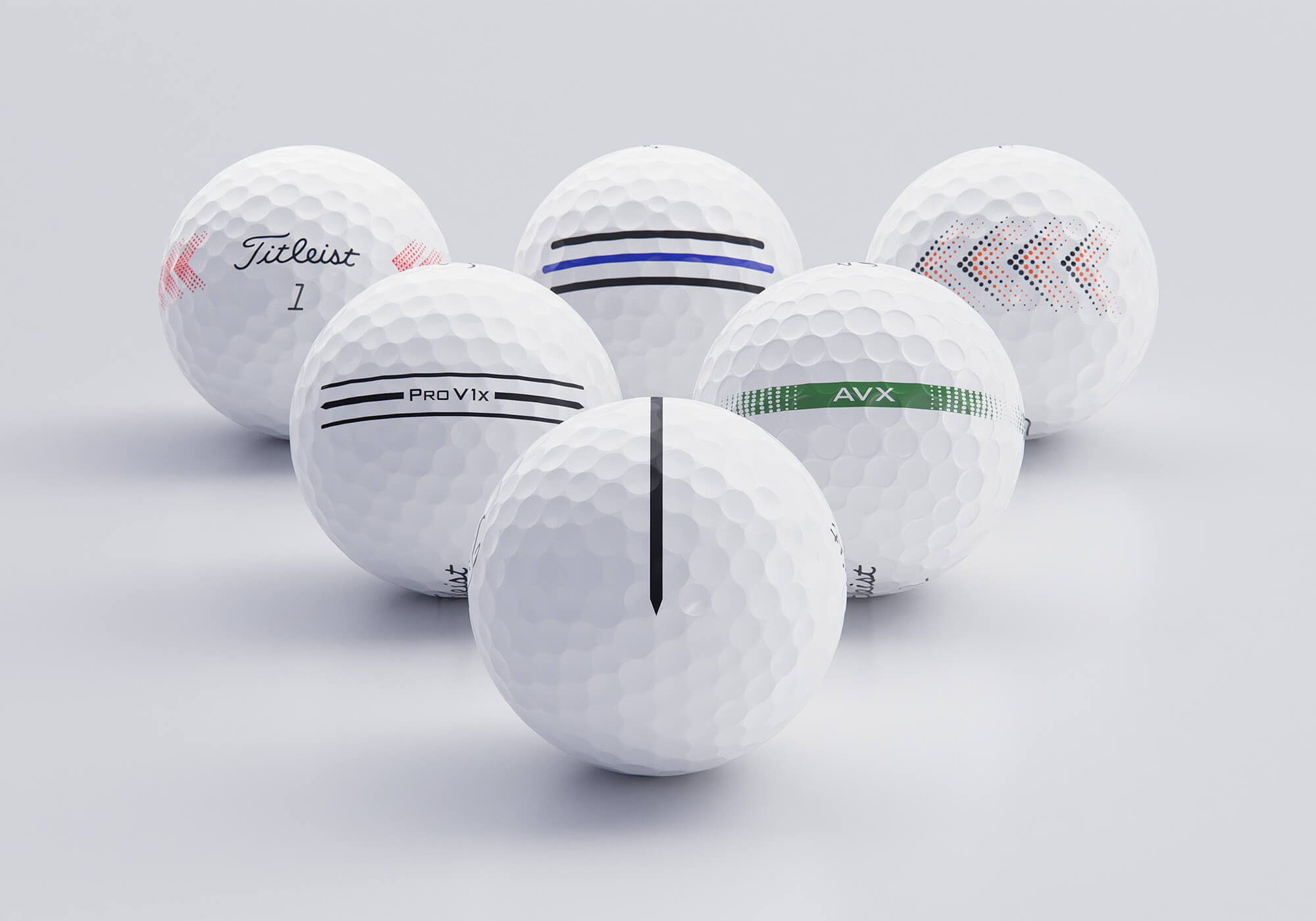
AIM, now on everything
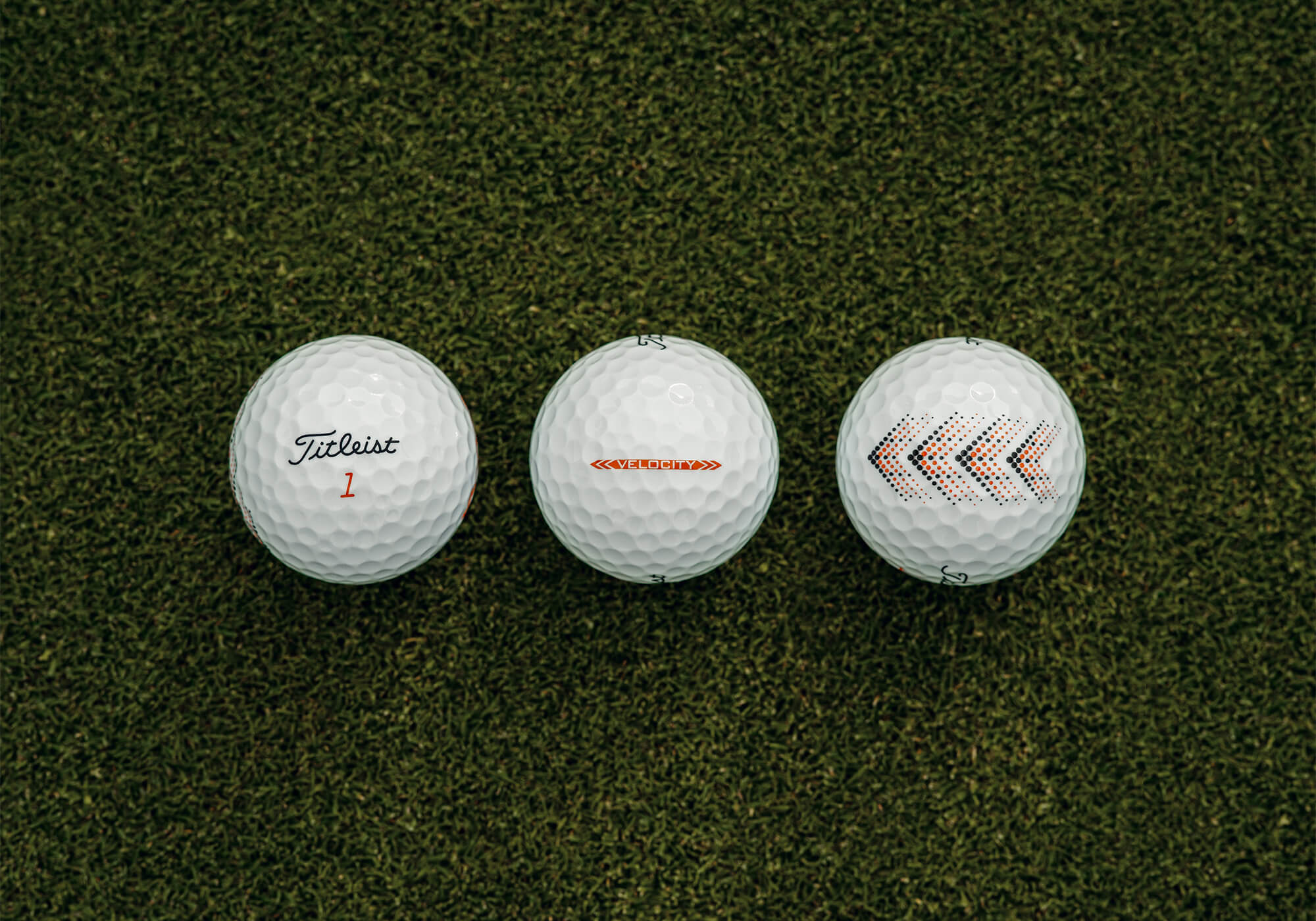
This year, Titleist extended its AIM alignment designs across the full ball lineup. Not just the Pro V1 family, where alignment options have lived for a while, but the performance and value side, too: AVX, Tour Soft, Velocity and TruFeel.
Translation: Whatever Titleist ball you play, from the $58 flagship down to the value models, there’s now an alignment option waiting for you. And here’s the part that matters to your wallet: there’s no upcharge. Pick your preferred model, pay the blank-ball price.
For a company that appeared to spend years treating visual alignment like a fad that might pass if they ignored it long enough, getting AIM across the entire line, cheap seats included, is a genuinely meaningful move.
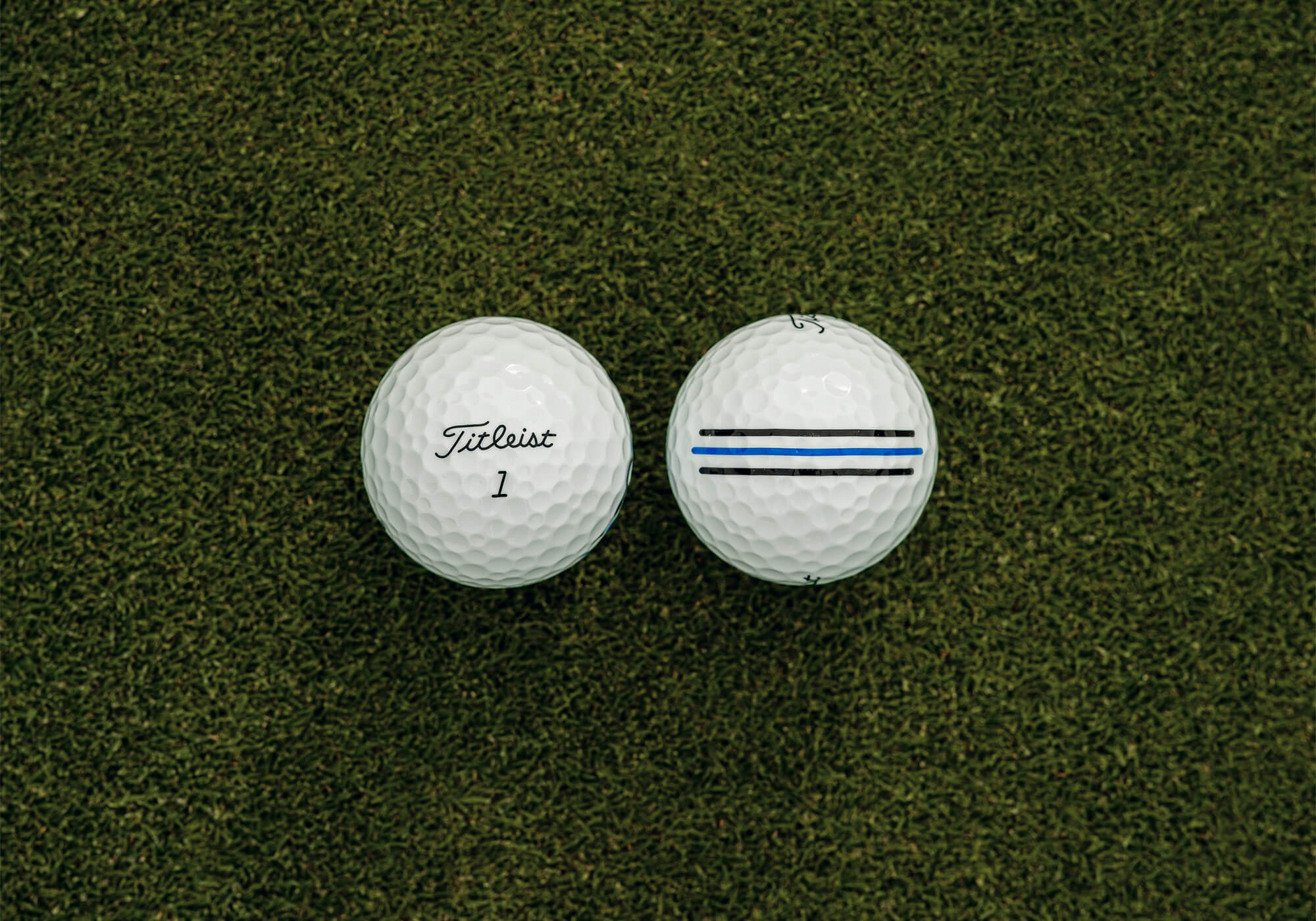
But do the stripes actually do anything?
Fair question. Anybody can print a line on a ball and call it technology. The harder thing is proving the line does something.
So Titleist’s golf ball R&D group built a device to measure how precisely a golfer can align the ball to a target. I’m going to undersell the tech here, partly because it’s proprietary and Titleist is guarded about the specifics. (No, there are no photos.)
Picture a sizable box that anchors to a series of fixed positions on their research green and uses an iPad to measure your alignment relative to a target, which is to say, a hole. From there, the device measures how far your alignment deviates, determines whether the putt would actually go in based on that alignment and calculates the maximum distance from which that putt still would have dropped. Run enough golfers through it, collect enough data, and you get a number.
The number: golfers using AIM designs were up to 35 percent more precise in their alignment than those using a standard side stamp. That’s the stat the whole thing hangs on.
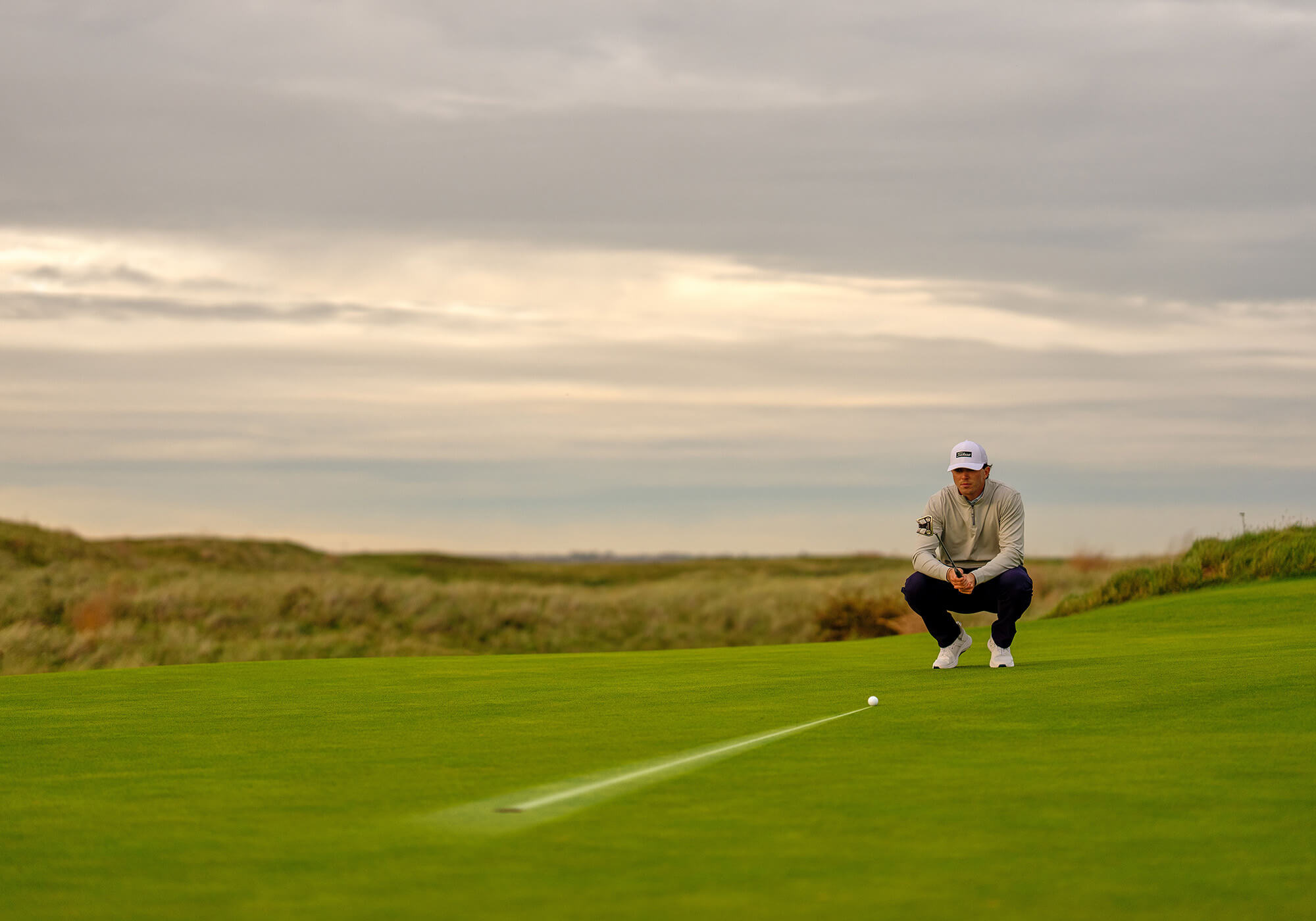
35% more precise doesn’t mean 35% more putts made
Let’s be clear about what that figure is and isn’t. A 35-percent improvement in alignment precision is probably not a 35-percent bump in made putts.
Alignment is step one. You can aim a flawless line at the wrong read and you can start the ball perfectly on line and still leave it two feet outside. Your read has to be correct and you still have to hit the putt with the right speed. Those aren’t minor details. But they’re also downstream of alignment. Get the aim wrong and none of the rest matters because the ball was never going in anyway.
Worth noting, too: the payoff isn’t uniform. On a four-footer, a standard side stamp is probably fine because there isn’t enough real estate for a small misalignment to hurt you. Back up to 12 or 16 feet and that same angular error puts you the better part of a foot off line. The farther you are from the hole, the more the alignment edge is worth.

What the box told me
I stepped through the test at Titleist’s Manchester Lane facility in Massachusetts and this is the part I’ll cop to enjoying. Watching the device work, most of what I’d talked myself into believing over years of unscientific, trust-me-bro testing showed up in the data. The stripe helped. The real data matched what I’d always felt but could never prove: that the aid earns its keep on exactly the putts where your eye is least reliable.
Is it validating to have a machine confirm the thing you’ve been spouting off about for half a decade? A little. I’ll take it.
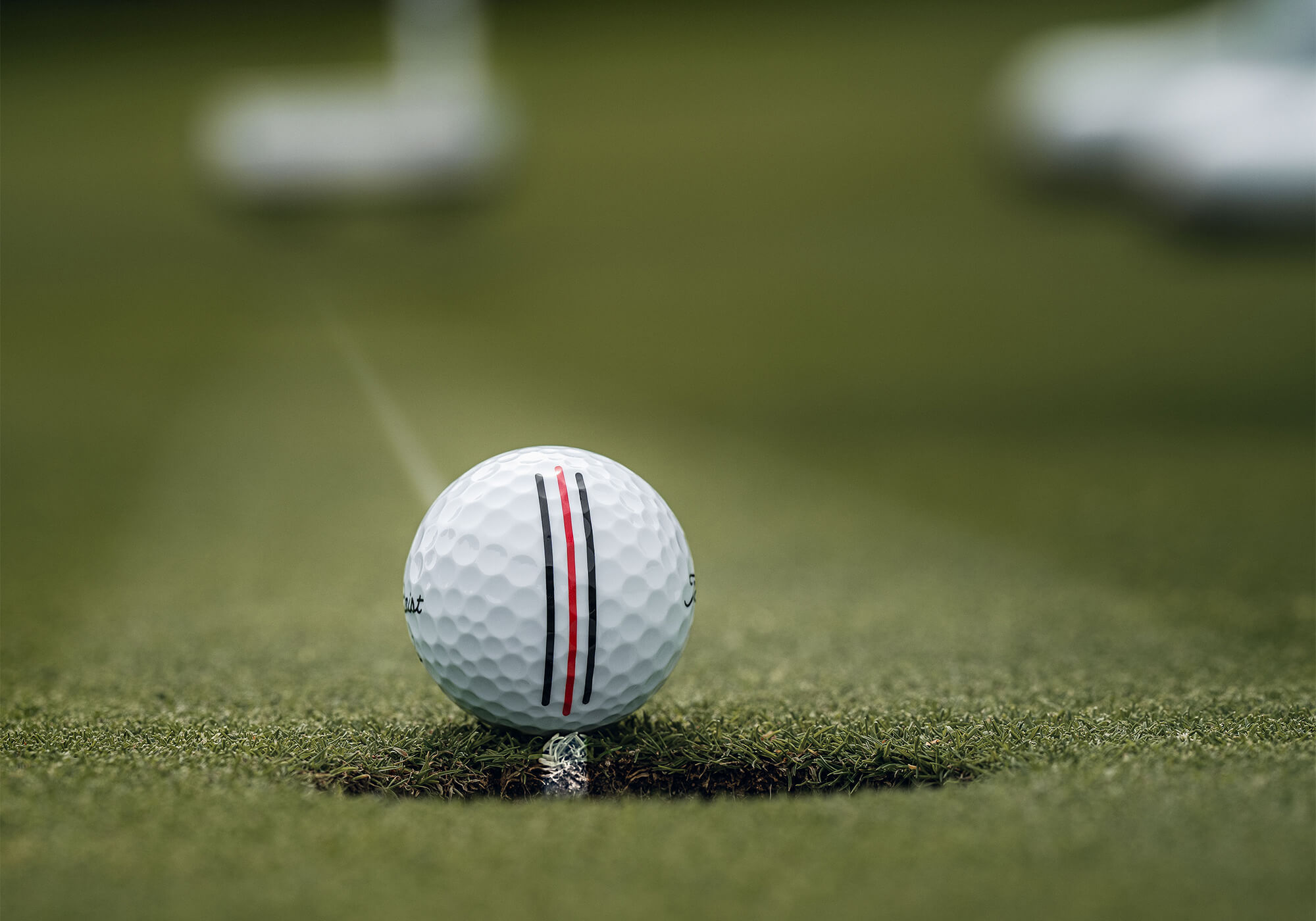
The bigger question
Validation is one thing. Adoption is another entirely.
Golfers are traditionalists, sometimes to a fault. A meaningful chunk of them still recoil at anything beyond a white ball and a hand-drawn Sharpie line. So the real question isn’t whether alignment aids work, because the data increasingly says they do. It’s how many golfers are willing to move past the side stamp to something more substantial.
And there’s a bigger question lurking behind that one. If further testing shows that bolder designs, the anything-but-traditional stuff, perform better still, will golfers follow the results? Will tour players?
There are very few technologies in golf that turn out to be universally better. Will this be one of them?
Here’s my read. In the short term, tradition wins, because it usually does. But money is the great persuader and there’s no arena more ruthlessly results-driven than professional golf where a single made putt can be the difference between a cut and a flight home or six figures on Sunday. If the evidence keeps mounting, I’d wager the best players in the world get over their aesthetic hangups in a hurry. Buy-in tends to follow the dollars.
Pricing and availability
AIM is available across every model in the Titleist lineup and Titleist doesn’t upcharge for it. Whatever design you choose, you pay the standard price: In the U.S., Tour Soft is $40 per dozen, AVX is $50, and anything with Pro V1 in the name is $58. Available now at Titleist.com and in golf shops.
Have you made the jump past the Sharpie line or are you still crouched behind the ball, calling it close enough? Let us know.









KP
3 months ago
I putt heads up, so they could stamp a dick on it , lol, and I wouldn’t care.