
Golf Driver Shaft Flex Chart: Find The Right Flex For Your Swing Speed
Instruction

Golf Driver Shaft Flex Chart: Find The Right Flex For Your Swing Speed

Support our Mission. We independently test each product we recommend. When you buy through our links, we may earn a commission.

Golf Driver Shaft Flex Chart: Find The Right Flex For Your Swing Speed

There is one thing every golfer should do before buying a new driver or a new set of irons: get fitted. A quality fitting with a knowledgeable fitter and proper launch monitor data will do more for your game than any chart or educated guess.

That said, most golfers don’t get fitted. And even the ones who do often walk away unsure about what the data means.

That’s what this information is for.

The shaft flex charts below are built from fitting data gathered by a variety of sources within the industry. Use them to understand what category you’re likely in and then confirm it with a fitter who can watch you swing.

Before you look at the number, read this

Most golfers assume that whatever flex they play in their driver is what they should play everywhere else. That’s not how it works.

A shaft is more than its flex label. The Titleist R&D team put it plainly: “No one specification defines shaft performance.” Flex is one variable. Weight, torque, tip stiffness and kick point all interact to change how a shaft behaves at impact.

Here are a few things to keep in mind.

Driver shafts are longer and lighter (typically 55–65 grams), which amplifies how much the shaft loads and releases. Faster swingers need stiffness to keep the face stable through impact.

Iron shafts are shorter and heavier (95–120 grams in steel, 65–85 grams in graphite). The loading profile is entirely different. A golfer who needs extra-stiff in the driver may perform better in stiff-shafted irons.

Wedges are a separate conversation. Many tour players play softer shafts in their wedges for feel and control. With wedges, you’re not trying to generate max speed; you’re managing distance and spin.

Fairways and hybrids fall in between. Tempo matters as much as speed here. A smooth swinger who plays stiff in their driver may find a regular flex fairway shaft gives them better, more consistent carry.

There Is No Standard for Shaft Flex

Before you use any chart like this, understand one thing: shaft flex is not standardized. A stiff shaft in one model can play closer to an extra-stiff in another. Even within the same brand, flex can vary depending on the design, weight and profile of the shaft.

That’s why matching flex strictly to swing speed is not as simple as it looks. You might swing 100 mph and fit into a stiff in one shaft and an X-stiff in another. Both can be right. They are just built differently. The label tells you the category, but there is no standardization across brands.

Use this chart to understand where you likely fall. Then confirm it with real data before you buy.

Driver shaft flex chart

FlexDriver Swing Speed
Ladies (L)Under 72 mph
Senior (A)72–83 mph
Regular (R)84–96 mph
Stiff (S)97–104 mph
X-Stiff (X)105+ mph

X-Stiff (105+ mph) — At these speeds, a shaft that is too flexible releases too early, making the clubface unpredictable at impact. If you’re right at the threshold, have a fitter check your tempo. A smooth 105 may still perform better in stiff.

Stiff (97–104 mph) — The most common flex among serious male recreational players. If you’re slicing consistently with a stiff shaft, the shaft may be too stiff for your delivery.

Regular (84–96 mph) — The largest category of recreational golfers. Don’t let ego get in the way here. Playing a shaft that’s too stiff is one of the most common equipment mistakes in golf.

Senior (72–83 mph) — Nothing to do with age. It’s a speed category. If you’re in this range and still playing regular flex because it “feels right,” get on a launch monitor. You may be leaving 10–15 yards on the table from insufficient launch and spin.

Ladies (Under 72 mph) —Lightweight, low kick point, some torque; shaft weight is an important variable at this speed range.

Resources worth bookmarking

I’ve found that finding information about golf shafts takes a little more research and digging than finding that same type of information about clubs. Here are some good resources and tools.

Final thoughts

A chart tells you what category you’re probably in. A fitting tells you what works for your swing.

Know your swing speed and your general category. Don’t be afraid to play around with different shafts in the irons and wedges that may not match the flex of the driver.

For You

For You

Bridgestone e6 SOFT TReadline golf ball Bridgestone e6 SOFT TReadline golf ball
Golf Balls
Jun 23, 2026
This Bridgestone Golf Limited-Edition Ball Might Just Have Some Traction
Drivers
Jun 22, 2026
Four More Srixon ZXi RKT Drivers Hit USGA List, Bringing The Day’s Total To Seven
Golf Balls
Jun 22, 2026
Now Serving: Callaway’s Chrome Tour Hot Dogs. One Of Them Is Flat Wrong
Brittany Olizarowicz

Brittany Olizarowicz

Brittany Olizarowicz

Britt Olizarowicz is a scratch golfer, former teaching professional and one of MyGolfSpy’s leading voices on equipment testing and golf performance. She has spent more than 15 years working at private clubs in New York and Florida and now specializes in translating test data and swing mechanics into practical advice for everyday golfers. Britt began playing at age 7 and has never left the game. When she’s not writing, you’ll find her on the course, playing pickleball, cooking, running or out on the boat with her family.

Brittany Olizarowicz

Brittany Olizarowicz

Brittany Olizarowicz


    This site is protected by reCAPTCHA and the Google Privacy Policy and Terms of Service apply.

      hlammi

      2 months ago

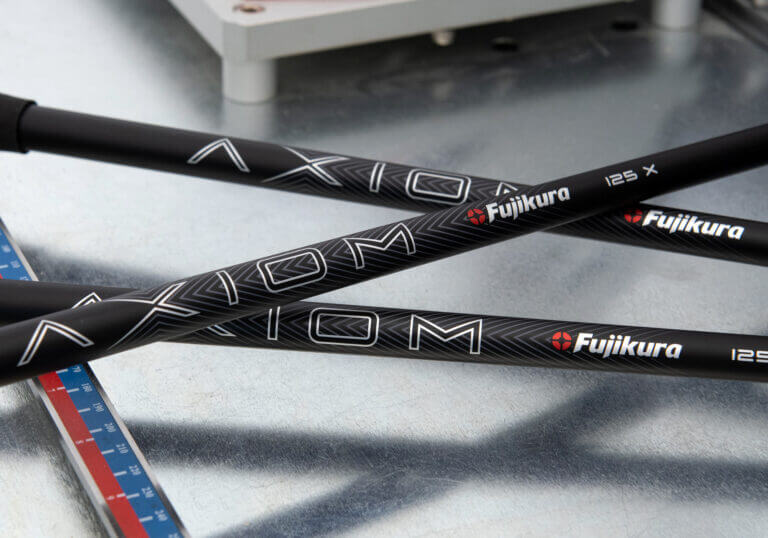
      It’s extremely funny to me that the photo for this article is an Axiom iron shaft and then in the same article you say that graphite shafts are up to 85gr when the Axiom has up to 125gr shafts.

      Reply

      WBN

      2 months ago

      My experience with getting a driver shaft that I like involved using a frequency machine which gives the CPM rating for the shaft. Once I found the comfortable range, I was able to find a shaft that benefited me most. I only use the shaft flex rating as a starting point. I am now in a Graphite Design shaft that gives me the feel that I want and the results that I am looking for. I did the same with the iron shafts.

      Reply

      Jerry Payne

      2 months ago

      An old saying regarding health care is “you are your best physician.” That is a generalization. However, the same principle can be used with equipment fittings… if you will just apply yourself to understand the differences you are feeling and reading when you compare things like shafts, etc.

      Reply

      Vito

      2 months ago

      I’m tired of these charts that show averages. No one is average. I swing at 88-90 mph. I’m fitted to a stiff shaft because I have a fast tempo and a quick transition from backswing to forward swing. Back when I was swinging 95-98 I used an X. They are the only shafts that didn’t leave the clubface open at impact because of my quick transition. Also, the stiffer the shaft the less right to left dispersion. Rick Shiels did a test year ago where he took a Ping driver and used 4 shafts from senior to X. Distance was about the same for all, peak heights varied but the biggest difference was right to left dispersion; senior being the worst, X being the best. Bottom line don’t let fitters pigeon hole you based on swing speed.

      Reply

      HackerBill

      2 months ago

      Went and got fitted for my driver at Cool Clubs. The shaft for this old man is the Ventus Red Velocore+ R2. Game changer! I would argue the shaft is more important then the driver head you use, but get fitted for both. After getting this info I used the characteristics of this shaft to help me choose everything below the driver. Went from a 20+ handicap to an 11.5 GHIN.

      Reply

      WYBob

      2 months ago

      As you pointed out, there are no standards between manufacturers for the measurement of shaft flexes. Driver swing speed is only one criteria. Often driver and irons will require shafts of different stiffness and weight. Modern launch monitors often contain Fusion Tracking technology which can correlate shaft stiffness to real world ball flight data. Tempo is equally as important as swing speed and needs to be part of the fitting criteria. Evaluating shafts on a launch monitor to get distance and dispersion patterns helps determine a shaft that properly fits you. Once you get dialed in to a particular shaft, get its CPM and Ei Curve so you can compare shafts between manufactures. Keep in mind that the same shaft from the same manufacturer at the same stated flex can vary also. Store that information for future reference. A good fitter or repair shop should be able to measure CPM for you. The manufacturer websites often provide EI curves for their shafts.

      Reply

      Ernie NOT Els

      2 months ago

      I have totally lost faith in the fitting process. I’m a senior in my late 60’s with a swing speed of 95 MPH with my driver. I once had a fitter from a major brand fit me with a Ladies “L” shaft and it was a disaster – not just to my ego, but in practice as well. I’ve tried several “A” and “R” shafts – no good. Now I am using a “S” 5.5 grams shaft and I’m in heaven. Yesterday I hit 12 fairways out of 14 and my distance is a consistent ~240 yards average. With my irons I went back to steel shafts after every fitter has recommended graphite. Using “R” flex – 115 grams with my irons and my GIR is a consistent 70%.

      Reply

      Phil Calderone

      2 months ago

      This is so true. Being a senior golfer losing swing speed, I thought I needed to go lighter and more flexible. As it turns out that is not the case for many of us. My fitting was not a great experience , but that is another story. It gave me the idea to use AI to give me alternatives based on what the numbers showed on the simulator and I was able to find what I think is a good fit for me. Iron shafts that are slightly heavier and regular flex . AI will give you general flex characteristics of most shafts on the market and compare general flight differences.

      Reply

      Matt Hurley

      2 months ago

      I have read many times there is no standard for shaft flexes. How about MYGOFSPY do some testing of shaft flexes and compare the different manufactures?

      Reply

    Leave A Reply

    required
    required
    required (your email address will not be published)

    This site uses Akismet to reduce spam. Learn how your comment data is processed.

    Bridgestone e6 SOFT TReadline golf ball Bridgestone e6 SOFT TReadline golf ball
    Golf Balls
    Jun 23, 2026
    This Bridgestone Golf Limited-Edition Ball Might Just Have Some Traction
    Drivers
    Jun 22, 2026
    Four More Srixon ZXi RKT Drivers Hit USGA List, Bringing The Day’s Total To Seven
    Golf Balls
    Jun 22, 2026
    Now Serving: Callaway’s Chrome Tour Hot Dogs. One Of Them Is Flat Wrong