
First vs. Worst Driver Of 2026: Here’s How Far Apart They Really Are
Buyer's Guide

First vs. Worst Driver Of 2026: Here’s How Far Apart They Really Are

Support our Mission. We independently test each product we recommend. When you buy through our links, we may earn a commission.

First vs. Worst Driver Of 2026: Here’s How Far Apart They Really Are

When you test 42 drivers, somebody has to finish first and somebody has to finish last.

That part is a given.

What’s more interesting is why. What makes a driver finish at the bottom of the rankings? Is it speed? Distance? Accuracy? Forgiveness? Or is it a combination of small issues that start to add up?

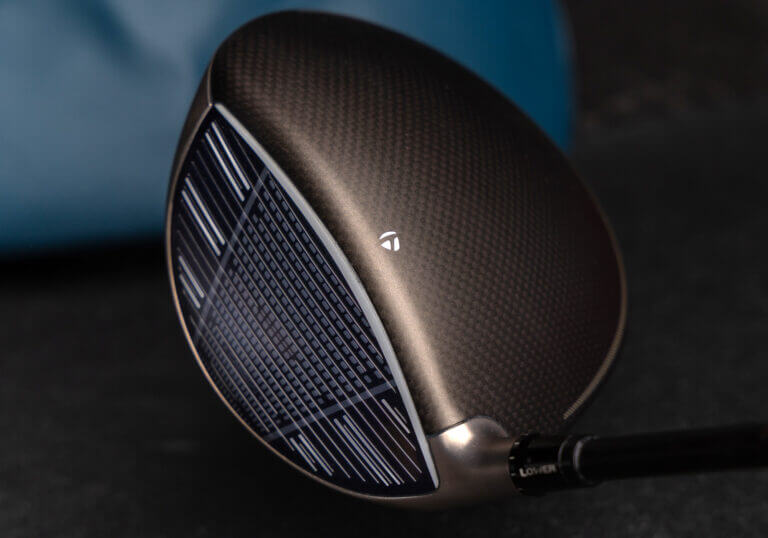
In our 2026 driver test, the TaylorMade Qi4D finished as the best driver overall. The COBRA OPTM Max-D finished last.

So I dug deeper into the data to see where the real separation was. The answer was not quite as simple as “one was long and one was short.”

Here are the real differences between the first-place driver and the last-place driver.

First versus worst: Key numbers

The first thing that stood out was that the gap was not about club speed.

The COBRA OPTM Max-D actually produced slightly more club speed than the TaylorMade Qi4D. But the Qi4D turned that speed into more ball speed, more carry, more total distance and much better shot outcomes.

MetricTaylorMade Qi4DCOBRA OPTM Max-D
Club speed98.57 mph99.11 mph
Ball speed141.26 mph139.36 mph
Carry234.59 yds225.17 yds
Total249.17 yds236.99 yds
Straight shot %56.12%41.28%
Playable shot %87.75%74.31%
Fairway %67.26%52.75%
Penalty %2.67%7.80%

The Qi4D was about 12 yards longer in total distance. It also produced more straight shots, more playable shots, more fairways, fewer penalties and a much better average proximity.

The bigger problem was accuracy

The Qi4D produced a straight shot rate of 56.12 percent. The COBRA OPTM Max-D was at 41.28 percent.

The playable shot rate showed a similar gap: 87.75 percent for the Qi4D compared to 74.31 percent for the COBRA.

Fairway percentage was also clearly in favor of the Qi4D. It hit 67.26 percent of fairways compared to 52.75 percent for the COBRA.

That is where the last-place finish starts to make more sense.

A driver can be a little shorter and still work if it keeps the ball in play. But when it is shorter and less accurate, the penalty becomes much harder to ignore. To me, this is the most important part of the story. The Qi4D did not just go farther. It put golfers in better places more often.

What if swing speed changes?

This is where the story gets a little more interesting.

The COBRA OPTM Max-D did not perform equally poorly for every swing speed. At slower speeds, the gap was much smaller. In a few shot outcome categories, the Max-D held its own.

Swing speedDriverTotalFairway %Playable %
SlowQi4D198.4679.53%94.49%
SlowCOBRA Max-D191.7178.33%95.00%
MidQi4D251.3666.15%92.82%
MidCOBRA Max-D240.2443.08%67.18%
HighQi4D296.5056.69%73.23%
HighCOBRA Max-D276.6742.98%65.29%

The COBRA was not equally bad for every golfer. But once speed increased, the weaknesses showed up in distance and shot outcome.

What makes a driver finish last?

The COBRA OPTM Max-D did not finish last because of one number.

It finished last because too many important categories moved in the wrong direction. It gave up carry, total distance, playability and fairways and golfers weren’t gaining anything.

Here is a complete look at all of our 2026 driver data: Best Golf Drivers of 2026.

img

MyGolfSpy Testing Toolkit

World-class testing requires world-class equipment. This is the gear we trust to help us fulfill our Most Wanted testing.

For You

For You

News
Sep 4, 2026
The 5 Best Times To Play Golf Ranked
Mizuno Pro S-4 irons Mizuno Pro S-4 irons
First Look
Sep 3, 2026
It’s Official: The New Mizuno Pro S-4 Irons Prove We Have An All-New Irons Category
Instruction
Sep 3, 2026
Who Would Benefit From A High-Lofted Fairway Wood?
Brittany Olizarowicz

Brittany Olizarowicz

Brittany Olizarowicz

Britt Olizarowicz is a scratch golfer, former teaching professional and one of MyGolfSpy’s leading voices on equipment testing and golf performance. She has spent more than 15 years working at private clubs in New York and Florida and now specializes in translating test data and swing mechanics into practical advice for everyday golfers. Britt began playing at age 7 and has never left the game. When she’s not writing, you’ll find her on the course, playing pickleball, cooking, running or out on the boat with her family.

Brittany Olizarowicz

Brittany Olizarowicz

Brittany Olizarowicz


      Andrew

      2 months ago

      These metrics you’ve used to describe the driver are brilliant, this is the level of detail needed in the main driver test results, rather than slughtly ambiguous “forgiveness” and “accuracy”. Fairways hit, playable ball, straight shot and penalty are real stats that translate directly to what we see and think about on the course. I’d love it if these can be used in future along side the clubhead speed, ball speed & spin rate data

      Reply

      Sonoma Valley Tom

      2 months ago

      Of course the Cobra Max Draw model is going to equal the TM Qi4 for slow swing speed. The Cobra is made for the golfer who has a 75mph swing and has never hit a straight drive, always a weak slice. That golfer would not be able to hit a decent ball with th TM. So the whole made up competition of “Who’s the best, Who’s the worst” is just a bunch of noise. Match the golfer with the most appropriate club, that’s the best for that person. There, I just made every club fitter happy.

      Reply

      Bob

      2 months ago

      Question becomes who is buying the driver. Most drivers are sold due to tour players using them. Design, shaft, sounds of a great hit vs off center forgiveness often these are ignored. A $1000 driver doesn’t guarantee a straight hit.

      Reply

      Donn Rutkoff

      2 months ago

      Beg to differ, the idea that most drivers are sold due to a famous name playing it. At $600, my guess is Ping, Titleist, Taylor, and Callaway by far outsell the other brands. Let’s look at

      1. Ping does not have many, or any?, big names. It sells on consistent quality.
      2. At $600 how many drivers are bought without some fitting or trials?
      3. The makers usually make 3 versions of each driver. One for the 300000 yard pro hitters, one for the low hdcp regular guy, and one for the rest of us.
      4. Very few of us buy the XX flex that is made for the pros. Again, a name branded top price shaft comes in 3 flexes and many don’t even come in an A flex. The makers know that they can’t make an A flex out of the same design and material as the X XX or XXX flex. So again, they do make shafts for a club for the rest of us.

      To suggest that the drivers and shafts we buy are not made for us is a stretch. Now maybe I am biased because I live a stone’s throw away from Carlsbad where most club companies located, and from Titleist Performance Institute. I am “surrounded” by their employees at most driving ranges. Fitting is a way of life here. I first got fitted for a mere 3 irons on a tight budget a year after I started banging away 30 years and have unlimited opportunity to try clubs outdoors AND indoors living here in San Diego county. So I would not buy anything over $30 used on Ebay without hitting balls. Maybe my view is badly biased.

      Thank you for saying hello. No A. I. was used to write this write this write this write this write this.

      Reply

      Kevin

      2 months ago

      Yes, the “Most” claim was obviously junk. Nike had Tiger, Rory, and Brooks. And they didn’t sell as much as the other guys.

      Dave M

      2 months ago

      #1, Ping has many big name players like Victor Hovland, Chris Gotterup and others who have accounted for at least least 5 wins this year. #2, Plenty of golfers including myself buy $600 Drivers online without hitting them. #3 Unlike many of the OEMs Game improvement Irons that are designed from the ground up as stand alone products, their Drivers are designed for Tour Pro’s and then modified so to speak to fit the average golfer. It’s not as simple as that obviously but the point is the Driver model starts with the Tour player and ends with the average golfer, not the other way around. #4 I don’t know what you mean because I don’t take the comment that OEMs don’t make drivers for the rest of us literally because they obviously do make drivers for us. To me it’s whether the drivers they are making for us are as good for us as the ones they’re making for the Pro’s, relative to our skill level of course. Basically, are the Drivers we pay for as good as the ones WE are paying for the Pros to play? When you buy a Driver from TM, Callaway and the big OEMs, you’re paying for the Driver the Tour pro plays. And that’s what why I ask the question as to whether we’re getting our moneys worth or not. I honestly don’t know the answer but I think it’s something worth trying to find a good answer to.

    Leave A Reply

    required
    required
    required (your email address will not be published)

    This site uses Akismet to reduce spam. Learn how your comment data is processed.

    News
    Sep 4, 2026
    The 5 Best Times To Play Golf Ranked
    Mizuno Pro S-4 irons Mizuno Pro S-4 irons
    First Look
    Sep 3, 2026
    It’s Official: The New Mizuno Pro S-4 Irons Prove We Have An All-New Irons Category
    Instruction
    Sep 3, 2026
    Who Would Benefit From A High-Lofted Fairway Wood?