


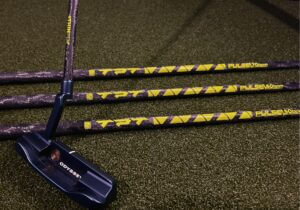
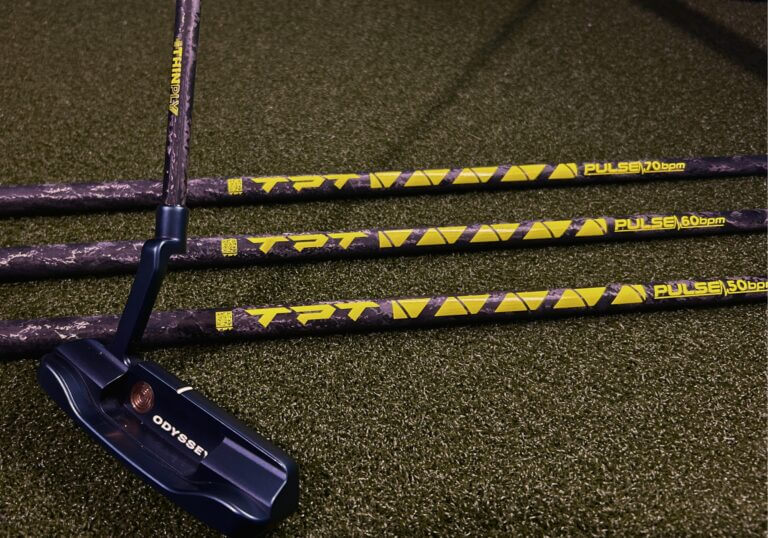
Golf gear enthusiasts are likely to recognize TPT Golf, a Switzerland-based company specializing in composite materials, specifically golf shafts.
TPT Golf has established itself as an innovation leader in the shaft industry. Their wood shafts have been played by prestigious names, including Jason Day, and the company boasts four major champions since its inception in 2016.
The company’s recent accomplishments include being an exclusive putter shaft option for L.A.B. Golf putters, one of the hottest names in the putter market. Building on this success, TPT Golf is shifting its approach to give consumers direct access to their putter shafts, leading to the creation of the TPT Pulse putter shaft.
Why TPT Pulse putter shaft?
Success speaks for itself. TPT was a hot commodity with L.A.B. Golf putters and what better way to build off that success than by making a TPT putter shaft available at retail?
But what makes TPT Pulse unique? For starters, it is created through TPT’s automated no-human-error manufacturing process. It’s 100-percent graphite built with precision to ensure feel and repeatability are present all of the time. The key cog in the creation is precision four-ply construction. This enables premium repeatability, the No. 1 goal of TPT Pulse putter shaft.
Three shaft models, three distinct feels
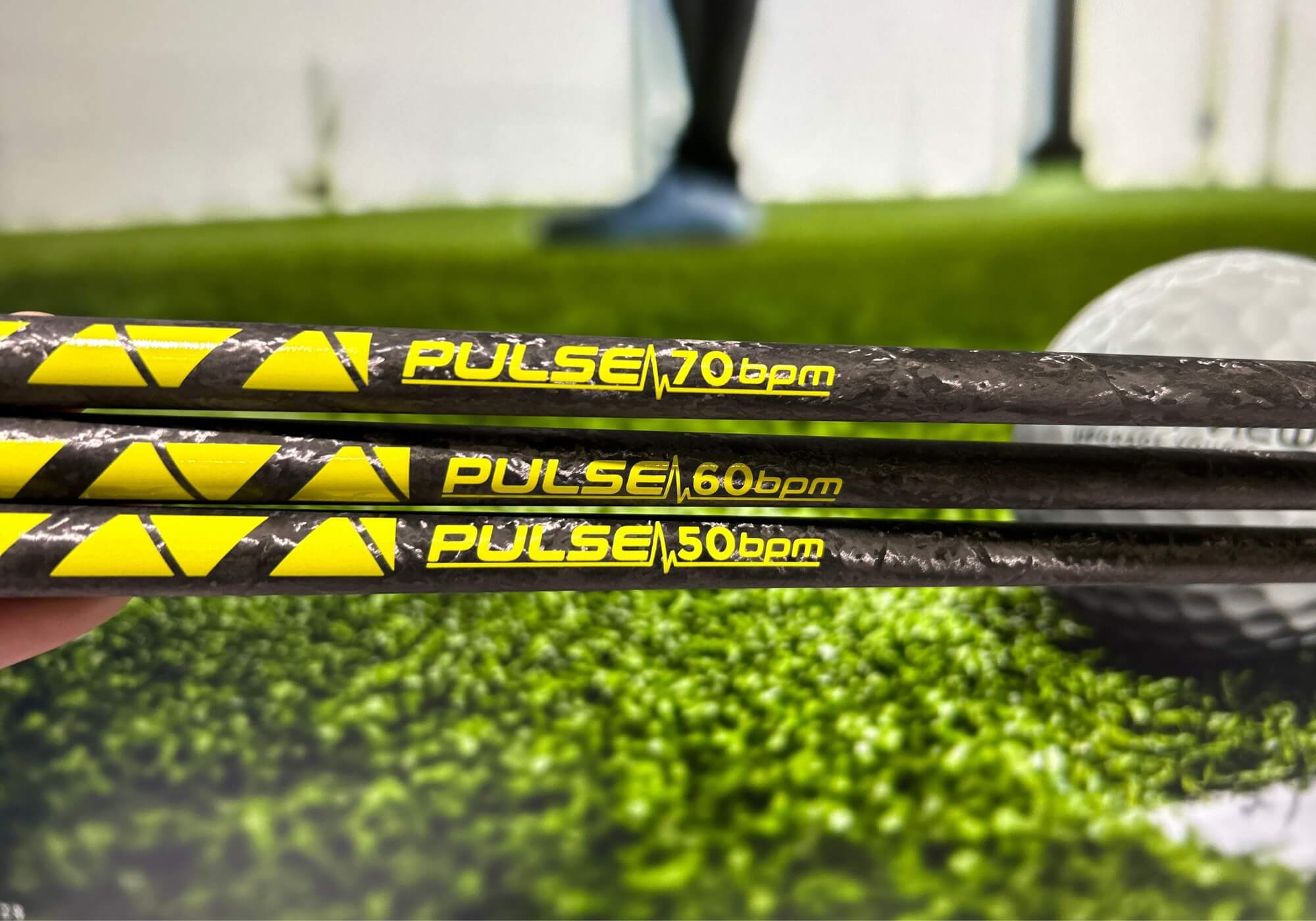
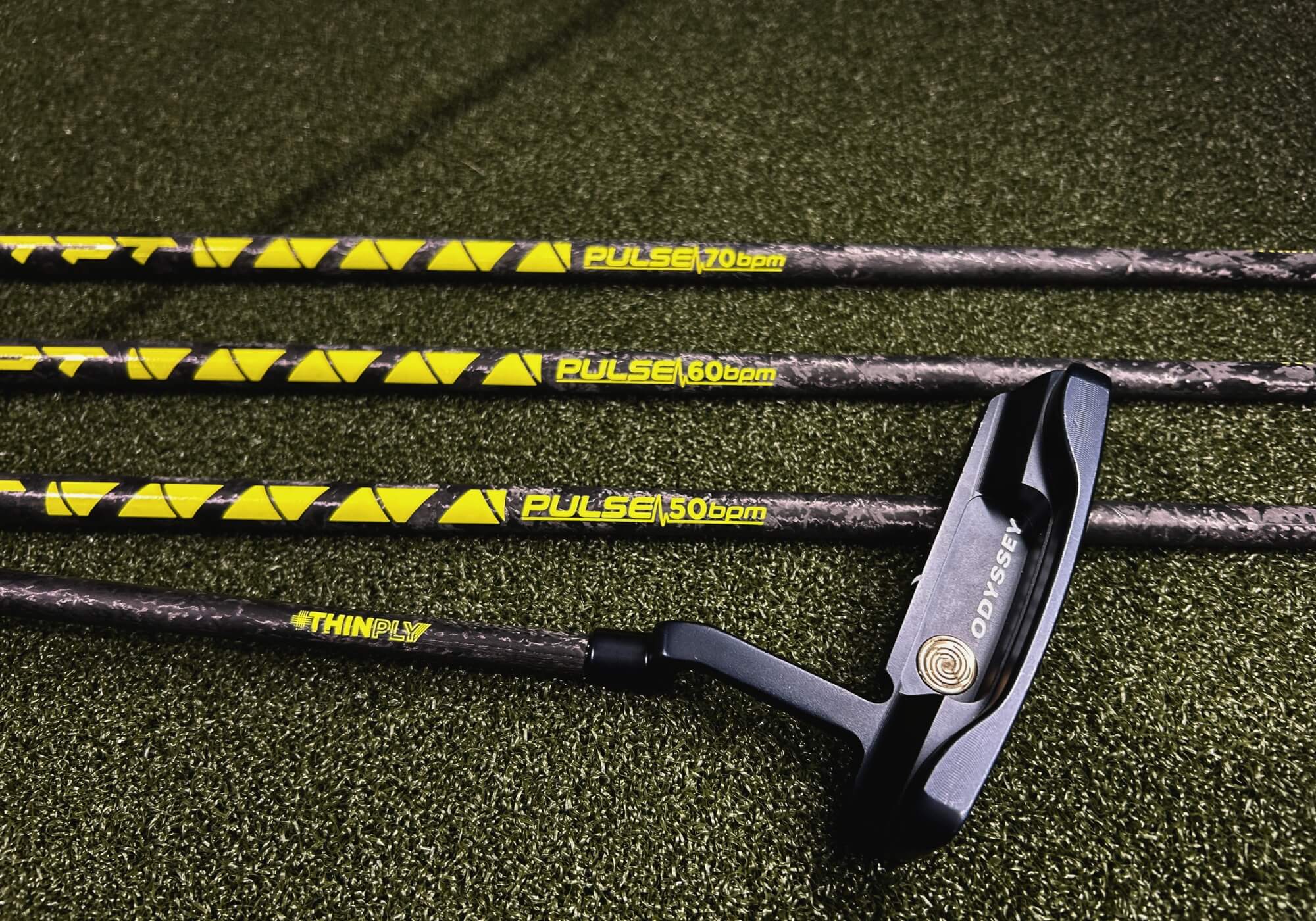
The core technology of the TPT Pulse is its Precision four-ply construction. TPT claims this construction “ensures identical energy transfer, stability, and consistency in every stroke,” allowing for three distinct shaft models:
- Pulse 50bpm
- Pulse 60bpm
- Pulse 70bpm
Although each shaft is structurally identical, each offers a very different flex and feel. The only way to truly understand the differences is through testing, which is the enjoyable part.
So enough chatter and let’s talk about the TPT Pulse putter shafts.
TPT Pulse putter shaft testing
Leveraging the capabilities of PuttView, we now have numerous putter testing options. I decided the most effective approach to evaluate three significantly different putter shafts was a direct head-to-head-to-head comparison, which is precisely what I undertook.
To maintain consistency, TPT provided each shaft pre-installed on identical putter heads. I put each shaft through our established Most Wanted Putter Protocol to determine their relative performance.
Here are the results.
| Putter Shaft | PV HCP | PV Short | PV Medium | PV Long | Make % | Avg Miss (in) | Spd Dev | Dir Dev |
|---|---|---|---|---|---|---|---|---|
| TPT Pulse 70bpm | -9.1 | -9.9 | -2.0 | -14.6 | 53.1 | 15.1 | -0.471 | 0.39 |
| TPT Pulse 60bpm | -7.2 | -8.3 | -3.0 | -9.4 | 50.0 | 17.0 | -0.315 | 0.55 |
| TPT Pulse 50bpm | 2.4 | 13.3 | -12.6 | -4.5 | 37.5 | 18.6 | -0.377 | 0.47 |
TPT Pulse 50bpm
The TPT Pulse 50bpm is the “soft and flowing” model according to TPT. It is the lightest option of the three models.
However, I have to admit, it was my least favorite of the three models. I am a competent putter and the performance with the 50bpm was atrocious. My speed and distance control were erratic and putts tended to be long. My control on shorter putts was horrendous.
Our Most Wanted Putter Protocol involves taking 32 putts through a gauntlet of four-, eight-, 12- and 20-foot putts. From there, it is scored using a PuttView Handicap. The more negative the number, the better. A positive number is not ideal.
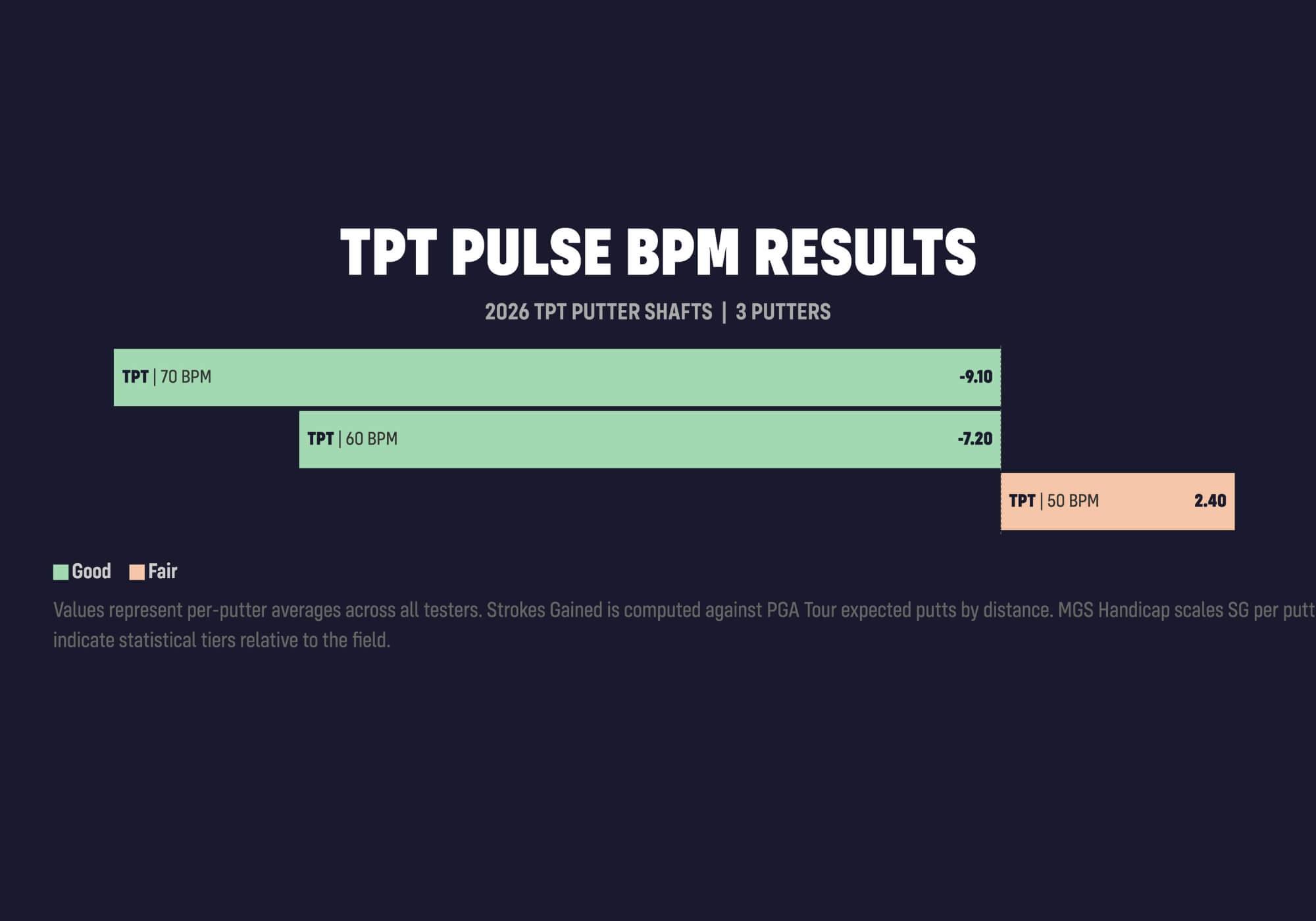
With the 50bpm, I had a PuttView Handicap of 2.4, very poor by my standards. This was influenced most by my performance from four and eight feet.
TPT Pulse 60bpm
This model is the “balanced” option. It offers more smoothness and precision, both of which were immediately noticeable when I ran through the protocol following the 50bpm model.
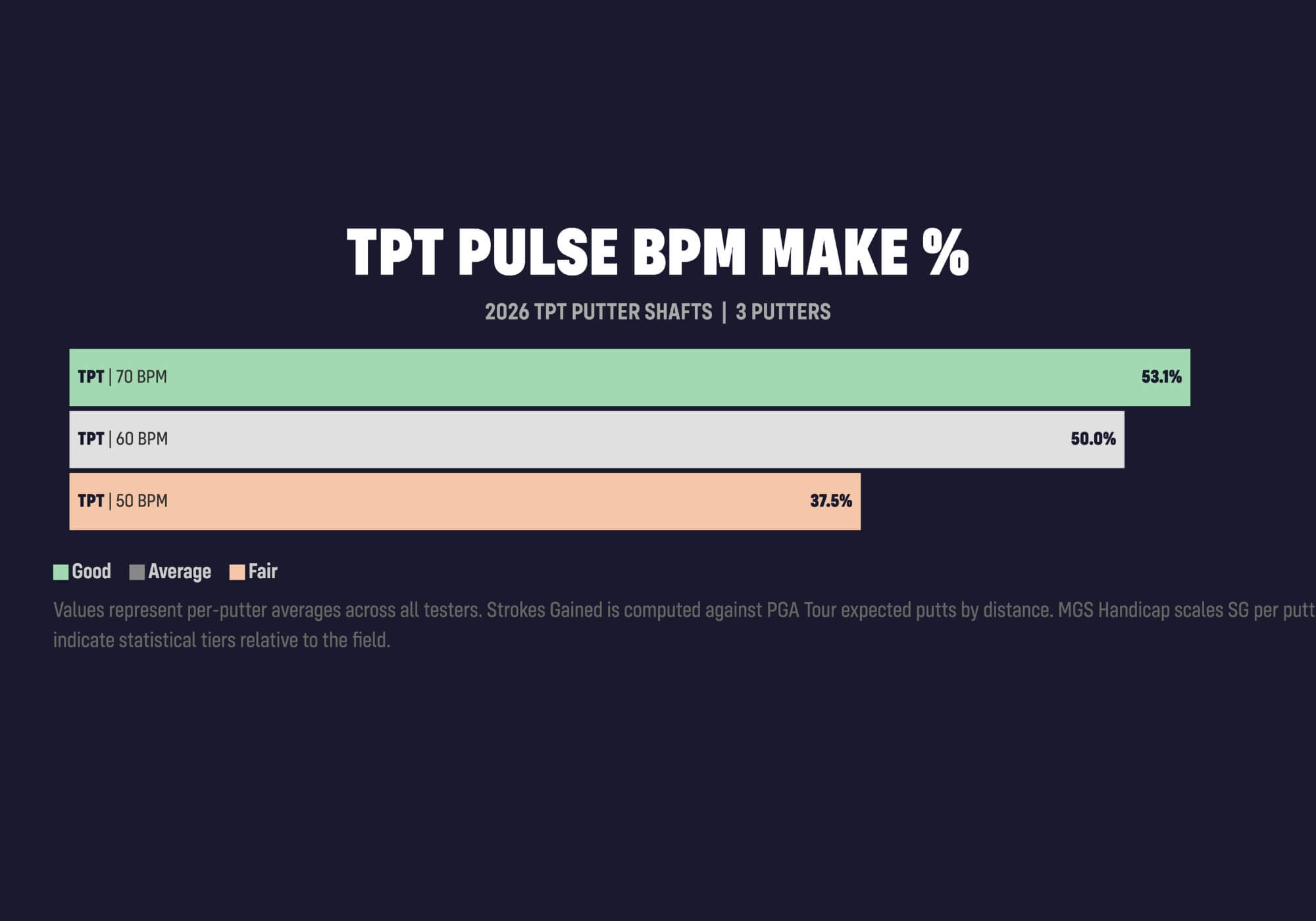
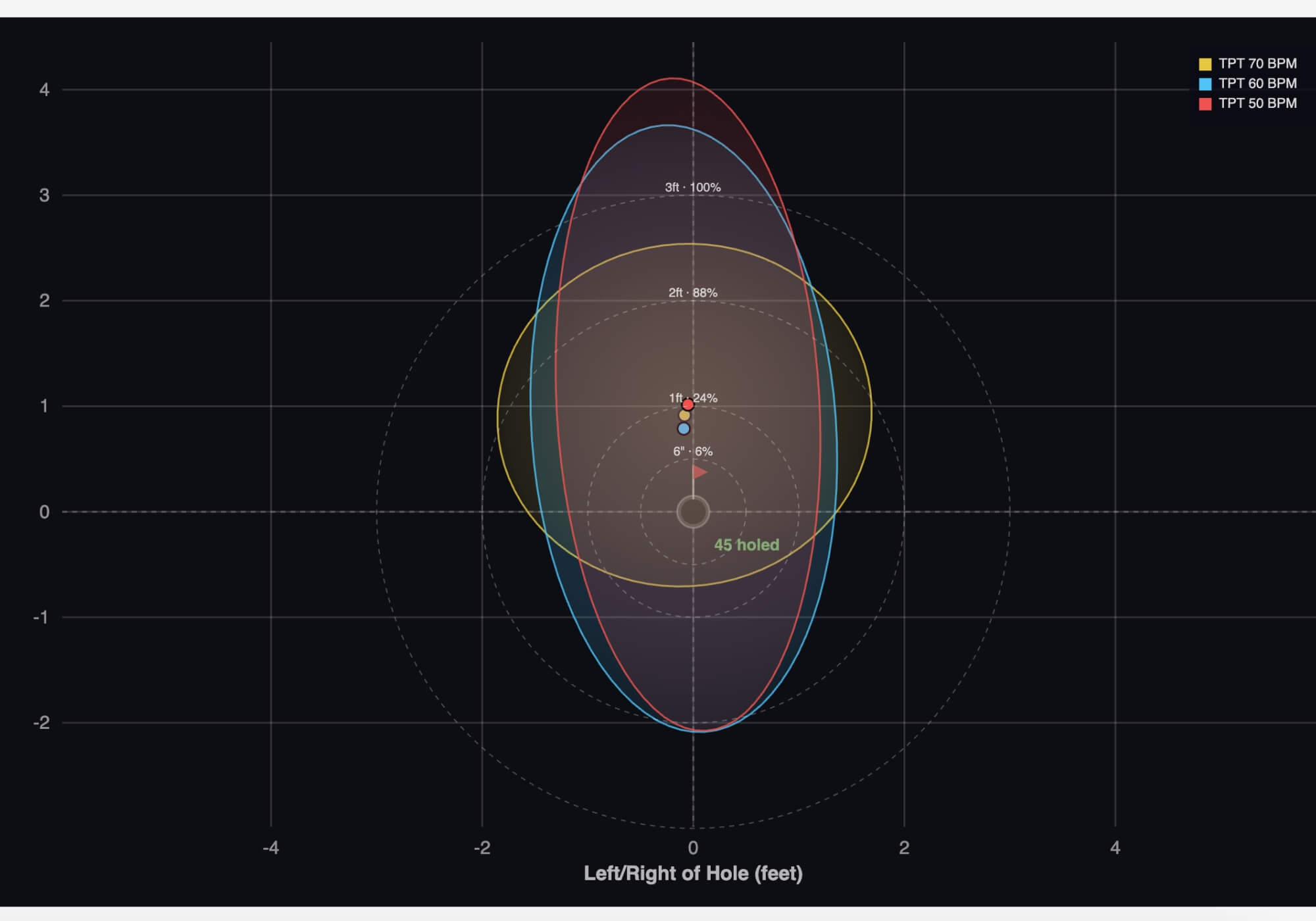
I felt more comfortable using this shaft option. My speed control was the clearest improvement, which led to better results overall. My make percentage increased and proximity to the hole improved.
With the Pulse 60bpm, my PuttView Handicap jumped to -7.2 over the 50bpm. This was assisted by better performances on short and long putts.
TPT Pulse 70bpm
The TPT Pulse 70bpm, the firmest option, provides immediate feedback and exceptional stability—it’s an understatement to call it merely “firm.”
This model was, by far, my top performer. My putting stroke is characterized by relatively quiet hands which perfectly aligns with the Pulse 70bpm’s design, as described by TPT.
With the Pulse 70bpm, I achieved a -9.1 PuttView Handicap. Long putts lead the way with a -14.6 PuttView Handicap and I ended up with an overall make percentage of 53 percent.
Consequently, my PuttView metrics improved, moving closer to my typical, expected numbers. The Pulse 70bpm instilled confidence and delivered better speed control. This overall boost in consistency, which I consider the most critical element in putting, resulted in the reliable outcomes.
Which TPT Pulse putter shaft is right for you?
Choosing the right golf equipment, including a putter shaft, is a highly personal decision with no single “correct” answer. Every golfer has unique needs and preferences regarding performance traits and a one-size-fits-all approach simply doesn’t work.
Based on testing, I found that the Pulse 60bpm and Pulse 70bpm shafts both performed well and felt comfortable. However, the slightly better feel and performance of the 70bpm would be my personal choice.
Here’s a simple guide for selecting the TPT Pulse Putter Shaft that might be right for you:
- Pulse 50bpm: Consider this if you often struggle with distance control and need more “pop” to get the ball to the hole.
- Pulse 60bpm or 70bpm: These are good options if you prioritize greater stability, a firmer feel and already have reliable speed control.






Veda
5 months ago
I use all TPTs except for the irons and putter cuz while it provides a nice feedback after 100 test putts it didn’t improve from my current putter one bit.