


Missing a few short putts can make you start questioning your entire putting stroke. Maybe the face is open, your path is off or your tempo has changed.
Before you start changing anything, there’s a much easier variable to test: Where are your eyes focused as the putter reaches the ball?
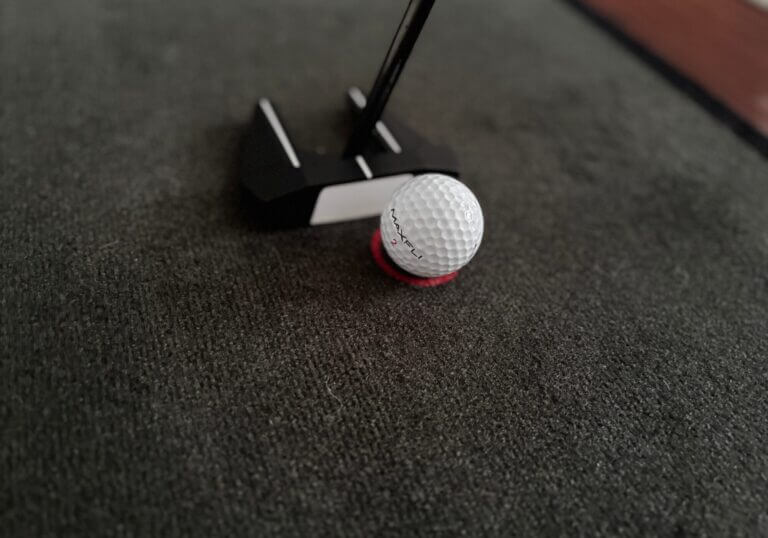
On your next short putt, move your focus to the front half of the golf ball, the half closest to the hole, and keep it there through impact.
It sounds almost too simple to matter but there’s a good reason to try it.
Your eyes can leave before the putter gets there
Research on putting has found differences in the way better and less-skilled putters coordinate their head and putter during the stroke. Lower-handicap golfers do a better job of keeping those movements independent while less-skilled golfers are more likely to let the head move along with the putter.
Visual focus matters here, too. Research on the “quiet eye,” the final fixation before and during the stroke, has shown that better putters tend to maintain that focus longer. Pressure and anxiety can shorten it.
That becomes especially relevant on short putts.
When you really want to see whether a three-footer is going in, your eyes can start moving toward the hole before the putter has finished its job. Your head can follow that movement and now you’ve introduced another variable right around impact.
It doesn’t take much. A small change in face angle, path or strike can be enough to turn a made three-footer into a miss.
That’s what this experiment is trying to prevent.
Why the front of the ball?
Instead of looking at the center or back of the ball, move your attention to the front half.
The idea is that giving your eyes a specific point on the target side of the ball may make it easier to keep your visual focus there until the putter has made contact. You’re not trying to hold your head perfectly still or force yourself to stare at the ground forever. You’re simply trying to keep your attention from jumping ahead to the result.
There may also be a timing benefit. Focusing slightly farther forward could make your brain anticipate contact a fraction later which may help prevent that early glance toward the hole.
Either way, the goal is the same. Let the putter get to the ball before your eyes start chasing it.
Try it for 10 putts
Find a straight putt from about three feet and set up normally.
Hit 10 putts while focusing on the front half of the golf ball. Keep your eyes there through impact and notice whether it feels easier to keep your head from moving toward the hole.
Then hit 10 more using your normal visual focus.
Don’t judge the experiment only by how many you make. Pay attention to whether your eyes leave earlier with one method, whether your head feels quieter and whether you notice any difference in strike or start line. I noticed a difference in my head stability almost immediately.
If nothing changes, you haven’t lost anything.
But if focusing on the front of the ball makes you realize how quickly you normally look toward the hole, you may have found a variable worth fixing before you start changing your putting stroke.
For something that takes about 10 seconds to understand and costs nothing to try, it’s worth a shot.








Bill
1 month ago
My 1st ever golf instructor, Jack Conger, told me years ago to imagine my ball was resting on a dime and see the dime before you track the ball. Possibly 2 different ideas without a distinction.
Thank you for the reminder Brittany.