


Like many of you, I admire what Mizuno does. While I’m often wrong, I’m fairly certain most of you will agree that Mizuno makes very, very good irons.
However, I’m not one of those who bends a knee at Mizuno’s altar. The fact that it makes very, very good irons puts Mizuno in elite company.
The key word here, friends, is company. There are other members of that elite society.
I’m not sure if you’ve been paying attention but the golf industry is trending toward a new iron category. We’re seeing a new style of club that isn’t a player’s cavity-back. They’re a skosh too large, more forgiving and many don’t even have a cavity. On the other hand, they’re a skosh smaller, less forgiving and weaker lofted, so they don’t really qualify as player’s distance irons.
It’s a fine line to toe, something Wilson managed to pull off with its Staff Model XB. Curiously, and perhaps appropriately, Wilson put a name on the category, calling the XB a “player’s performance” iron.
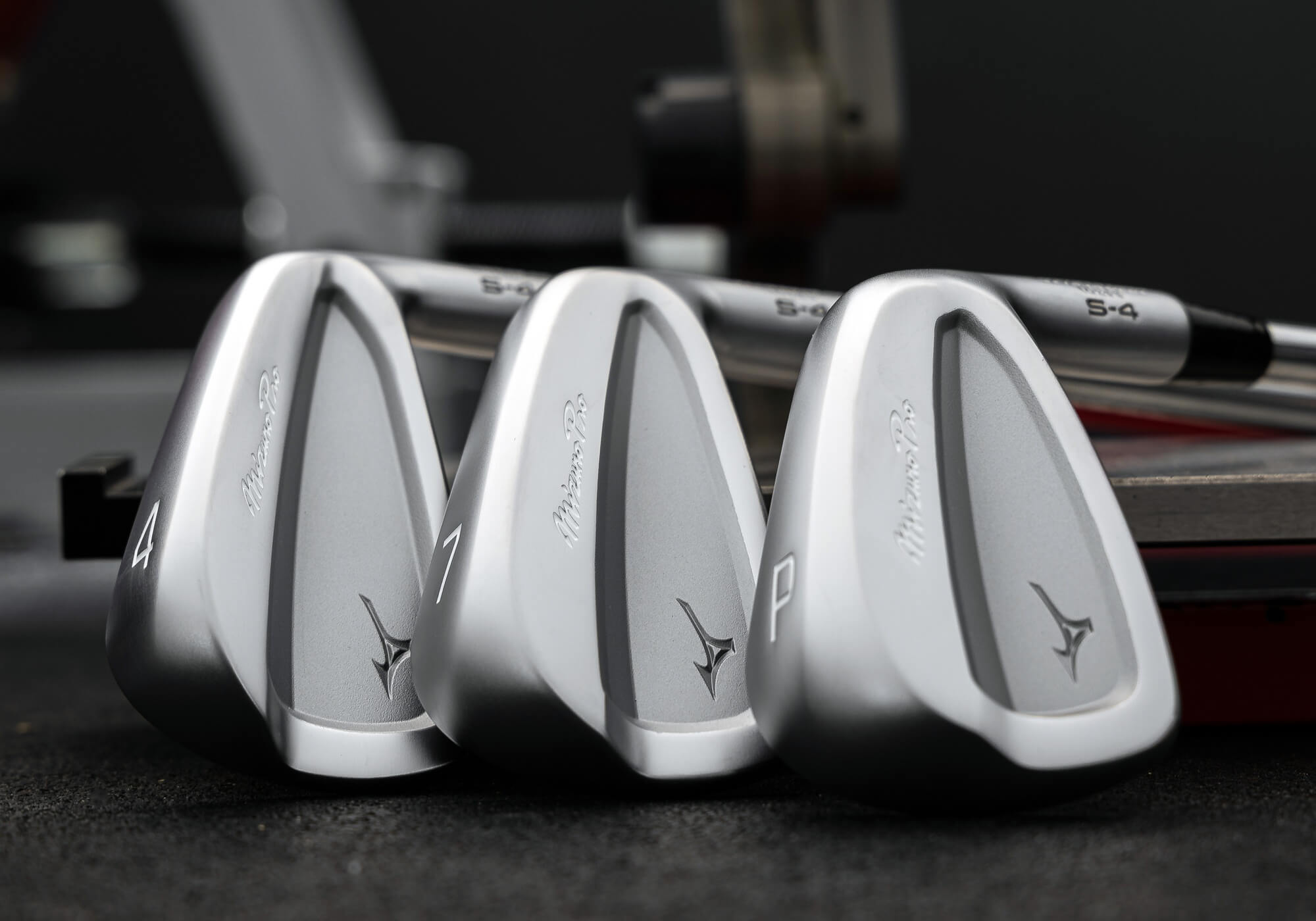
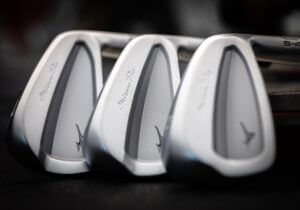
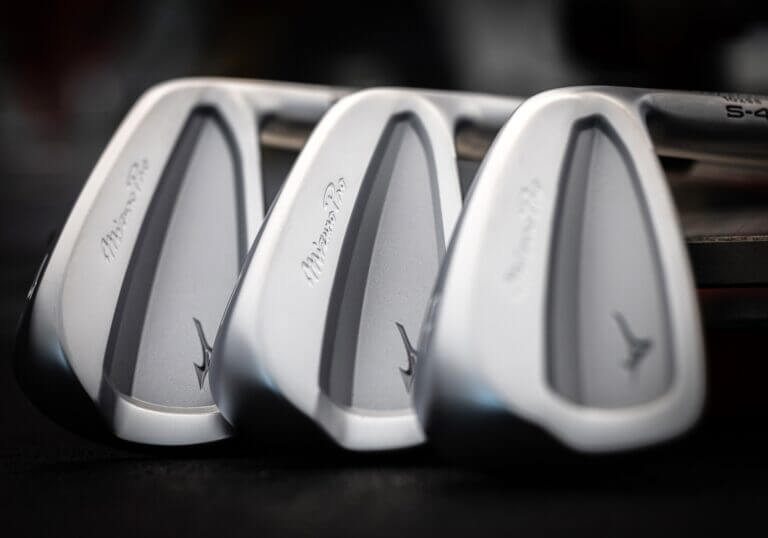
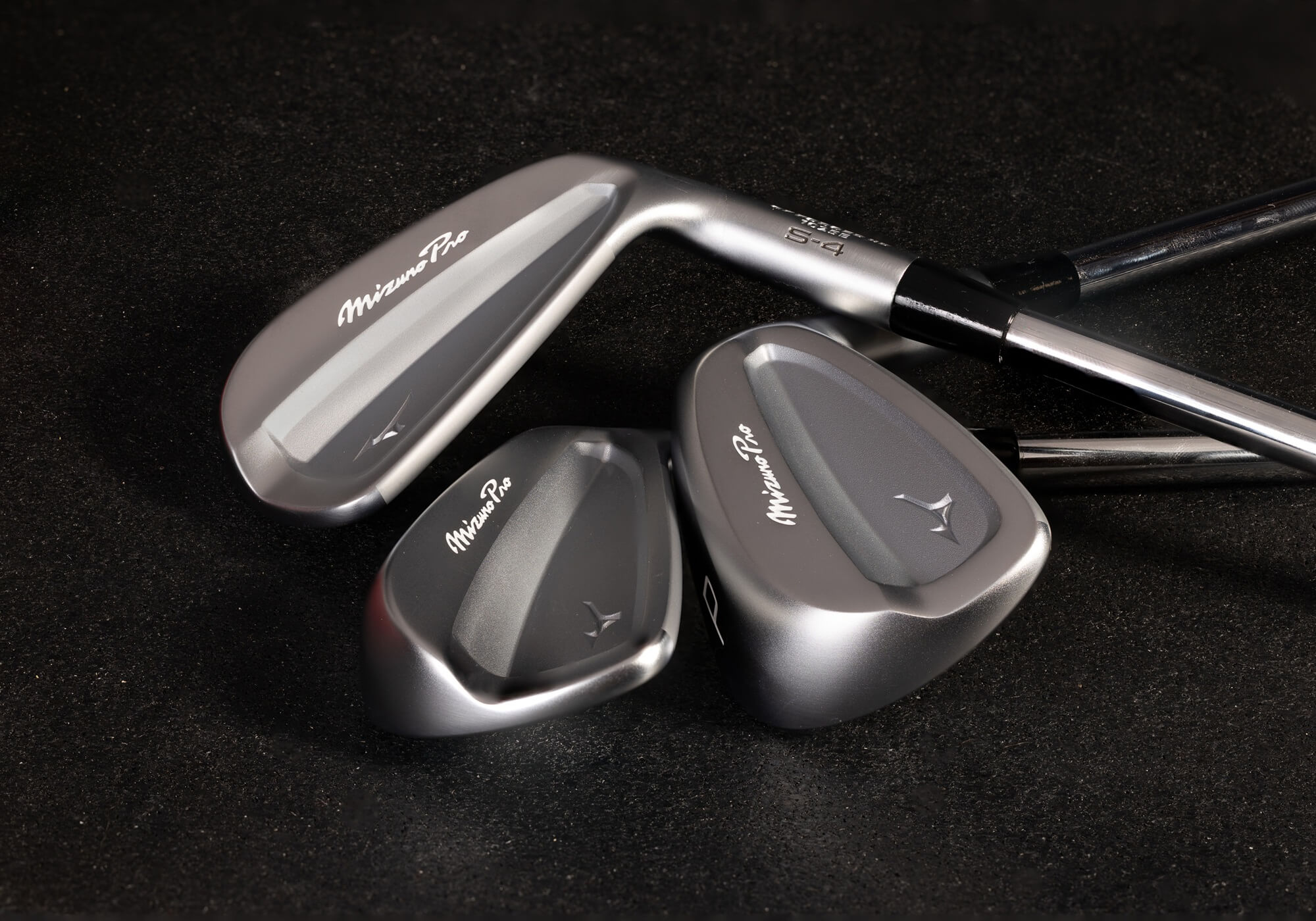
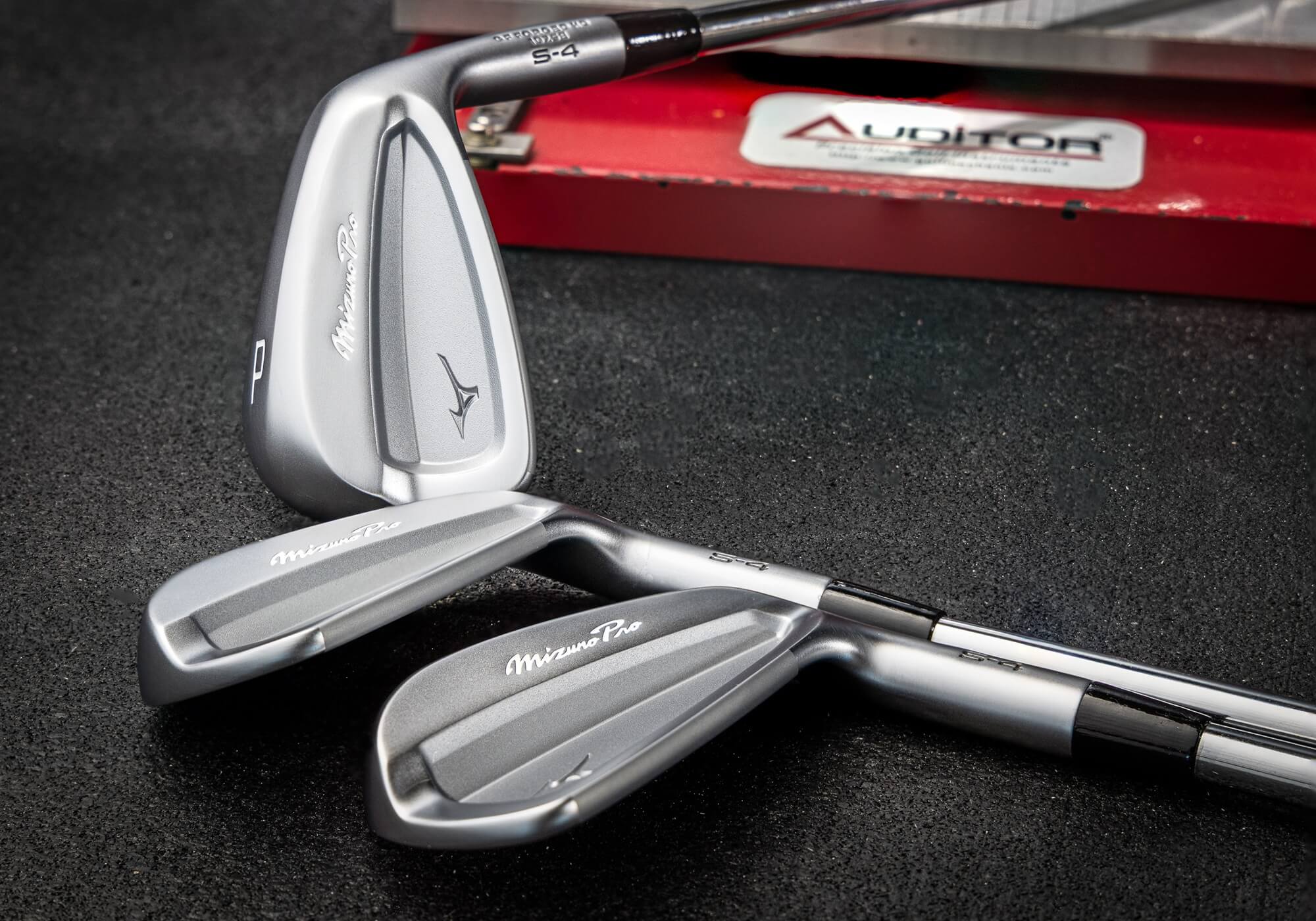
That appears to be where the new Mizuno Pro S-4 iron is sitting. As with any Mizuno forging, it’s a compelling stick. And even though it’s an extension of the Mizuno Pro Signature line, what makes it more compelling is the growing trend it represents.
Mizuno Pro S-4 Irons: What is “player’s performance?”
To be clear, Mizuno isn’t calling the new S-4 a player’s performance iron. I am. Spec-wise and intent-wise, the S-4 fills a gap. When there’s more than one or two irons filling that gap, that gap becomes a category.
In golf, emerging categories get names.
Player’s performance sits between player’s cavity-back and player’s distance. Player’s cavity-backs, we can all agree, are better-player irons. They’re compact with just a hint of forgiveness. They’re for ball strikers who realize blades, while fun, are for the truly insane.
Player’s distance irons are aimed at two subsets of golfers. First is the emerging player graduating from game-improvement irons. They’re getting better and want something more compact but still with enough forgiveness and firepower.
The other subset is the better player who’s a little long in the tooth and doesn’t generate the same power as in the good old days. They’ve played better-player irons forever and have an expectation of what an iron should look like. Father Time, however, has taken away speed and distance. Player’s distance irons make them feel young again.
The problem with player’s distance irons, however, is playability. The recipe is almost always the same: Hollow-body construction, low center of gravity, a thin face and strong-ish lofts for ball speed. What you get is an iron that goes like hell but doesn’t spin very much. They rely on descent angle to hold greens.
They’re more precise than game-improvement irons but low spin puts a cap on playability.
With the new S-4 irons, Mizuno is taking a page from the Wilson playbook. And, yes, we can say that. Wilson came out with the XBs in January. Mizuno is doing it in September.
Deal with it.
The S-4 are loaded with Mizuno DNA
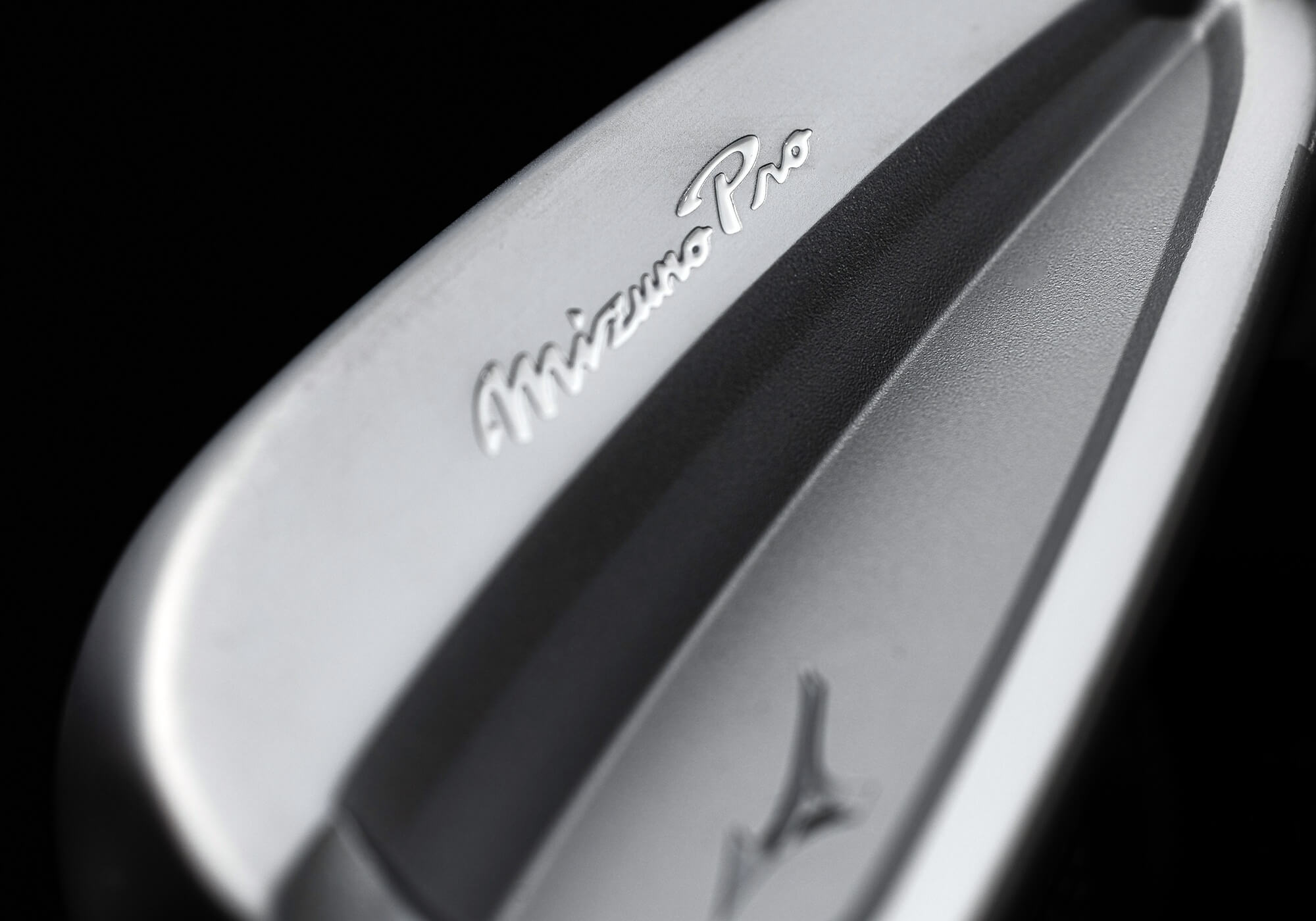
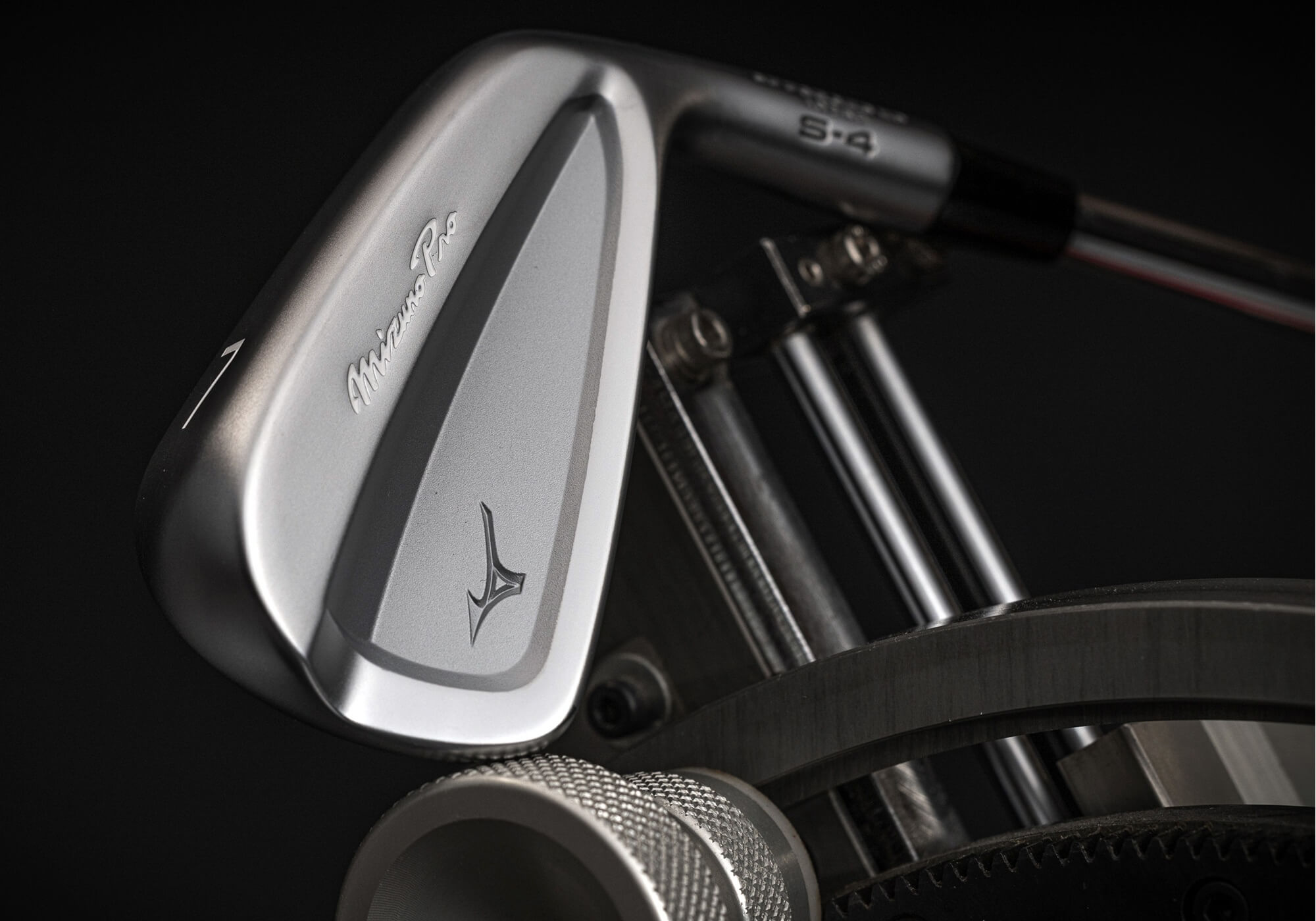
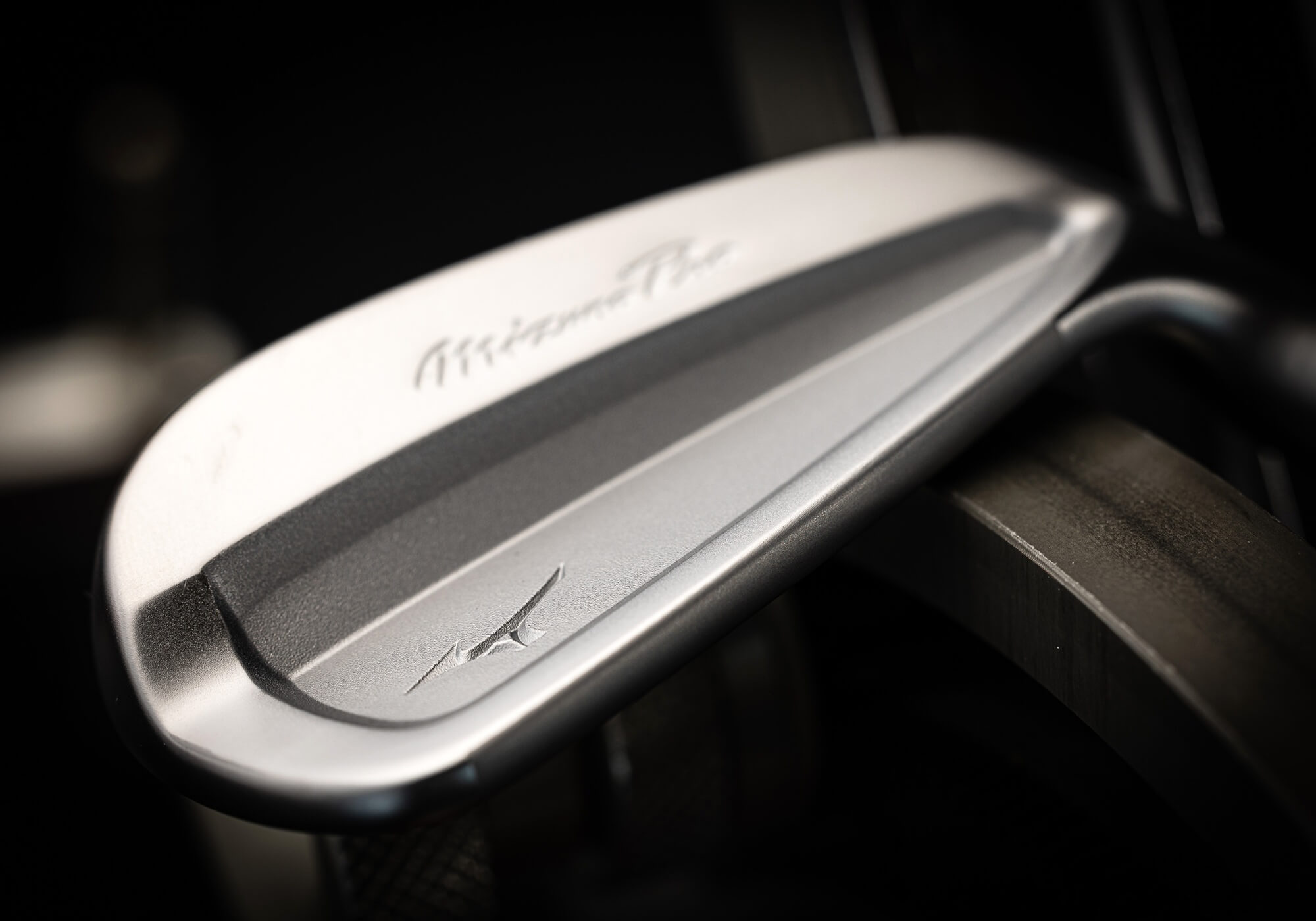
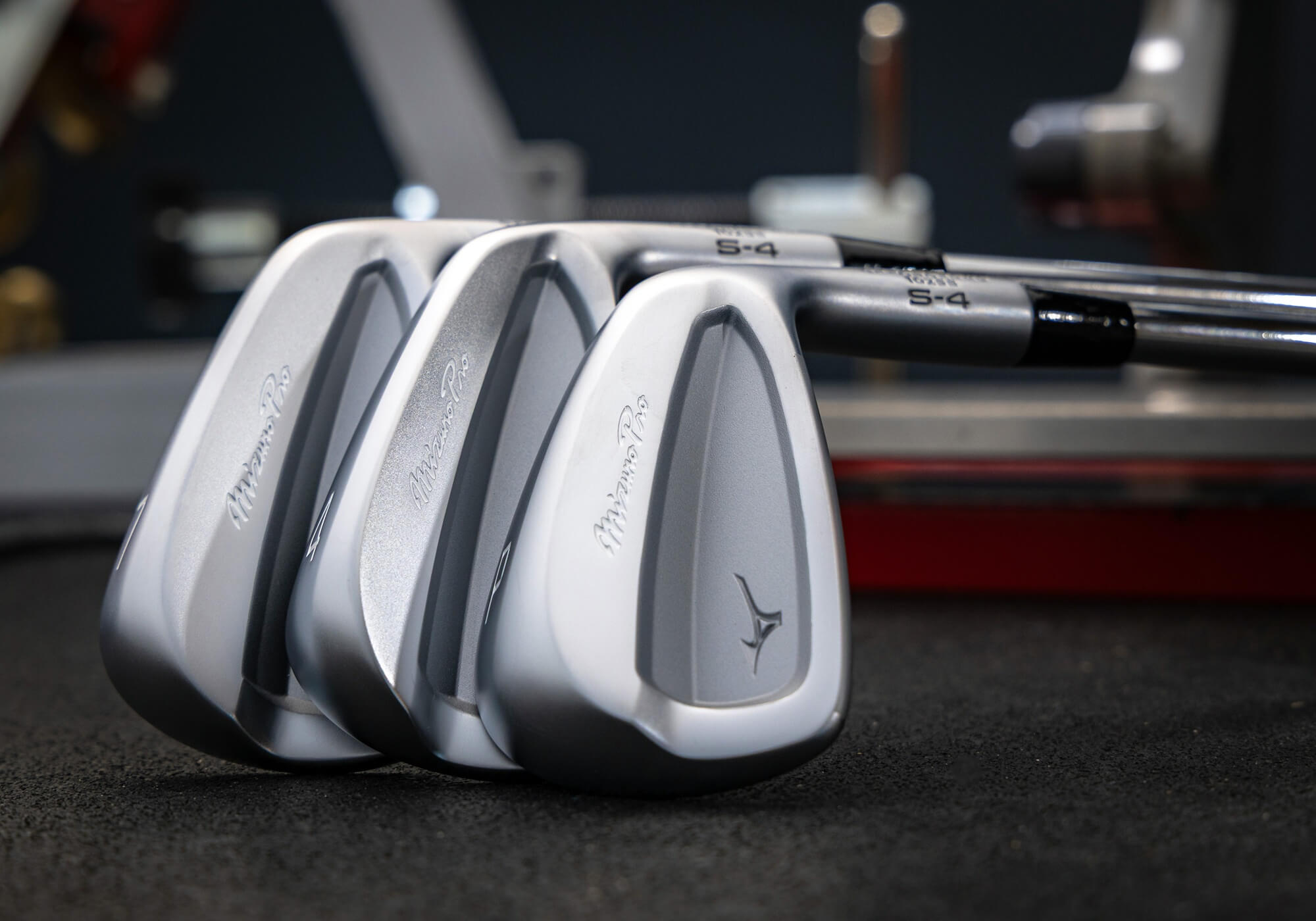
Unlike the hollow-body Wilson Staff Model XB, the Mizuno Pro S-4 is all Mizuno. It’s a single-piece 1025E grain flow forging with Mizuno’s signature copper underlay to enhance feel. There’s just a hint of cavity along with a muscle feature to concentrate mass low in the head. For all the world, it’s reminiscent of the circa 2011 Mizuno MP-59.
The lower CG, along with a wider sole than its slimmer brother, the S-3, helps promote a higher launch. Higher launch, boys and girls, usually leads to a steeper descent angle.
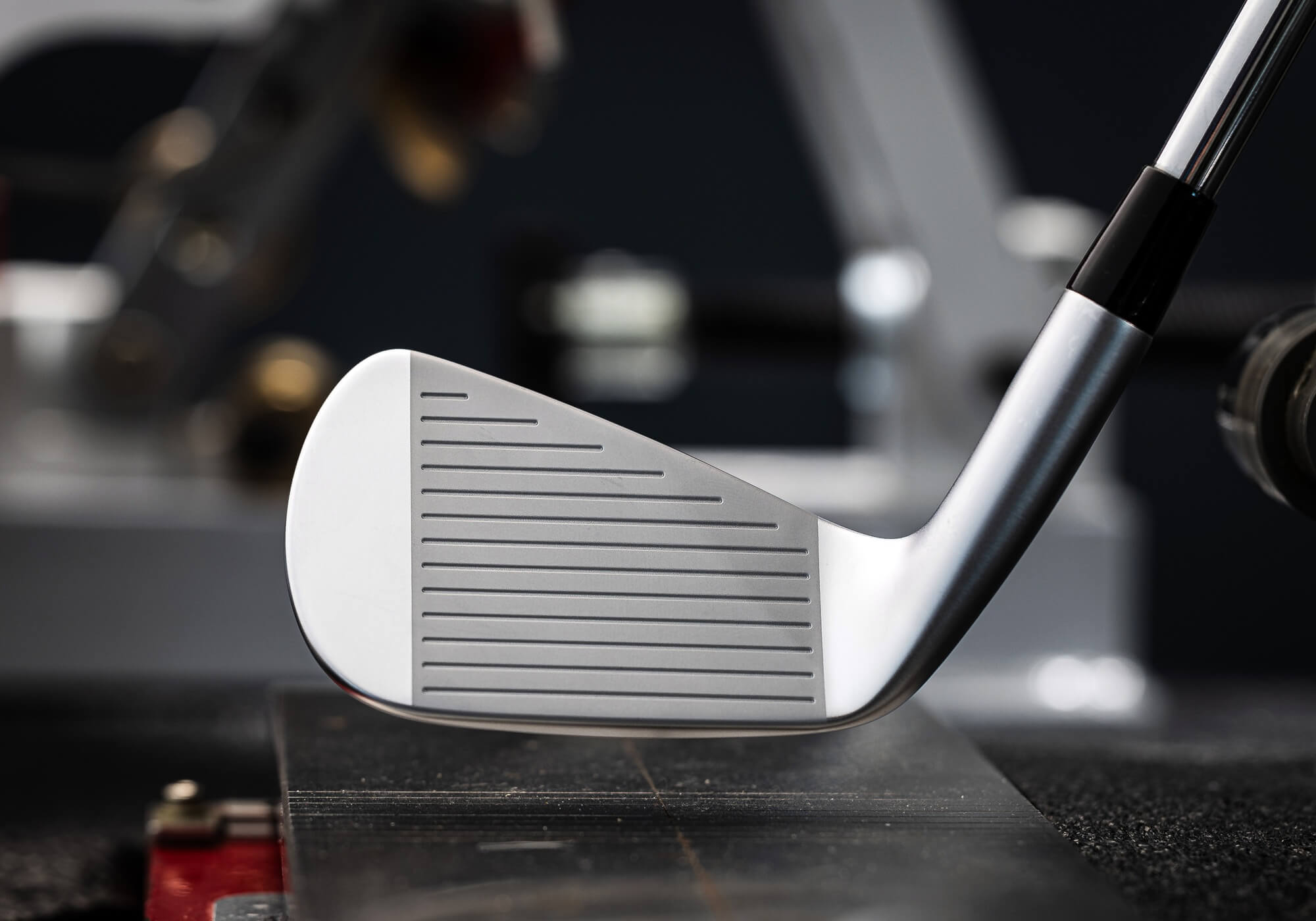
The wider sole and subtle perimeter weighting adds a nice dose of stability and forgiveness. Where the Mizuno Pro S-4 gets interesting, however, is in its loft structure. Like the Wilson XB irons, the S-4 loft matrix is noticeably weaker than those of standard player’s distance irons. The 7-iron clocks in at 34 degrees whereas a standard player’s distance iron is in the 29- to 30.5-degree range. If you tested the S-4 head-to-head with a TaylorMade P790 or PING i540, it won’t win on distance.
The combination of a low CG with what we might call “traditional” lofts gives the Wilson XB an intriguing combination of loft and spin. That should apply to the Mizuno Pro S-4 as well. Additionally, the S-4 is outfitted with progressive head geometry. That means the longer irons feature increased offset, wider soles and a deeper CG. It’s no secret that ball-striking success rates get spotty once you hit the 5- or 6-iron, even for better players. Wider soles, deeper CGs and more offset can only help.
The sound and the fury
No matter how hard you try, you can’t separate feel from sound. Our senses try to tell us otherwise but our senses lie. In golf, we feel what we hear. Mizuno, the proclaimed kings of feel, know this as well as anyone.
Mizuno has invested heavily in what it calls Harmonic Impact Technology, HIT. When Mizuno develops an iron, the entire design focuses on precisely tuning vibrations characteristics. The goal is to create a solid, refined impact sensation which is primarily sound-focused.
The science of HIT is to control vibrations so they don’t last very long and hit only the right frequencies, typically below the 6,000 hertz range. Through careful study, Mizuno has learned that the 6,000 to 7,000 hertz range leads to a sound golfers characterize as “harsh” or “clicky” as opposed to “soft” or “solid.”
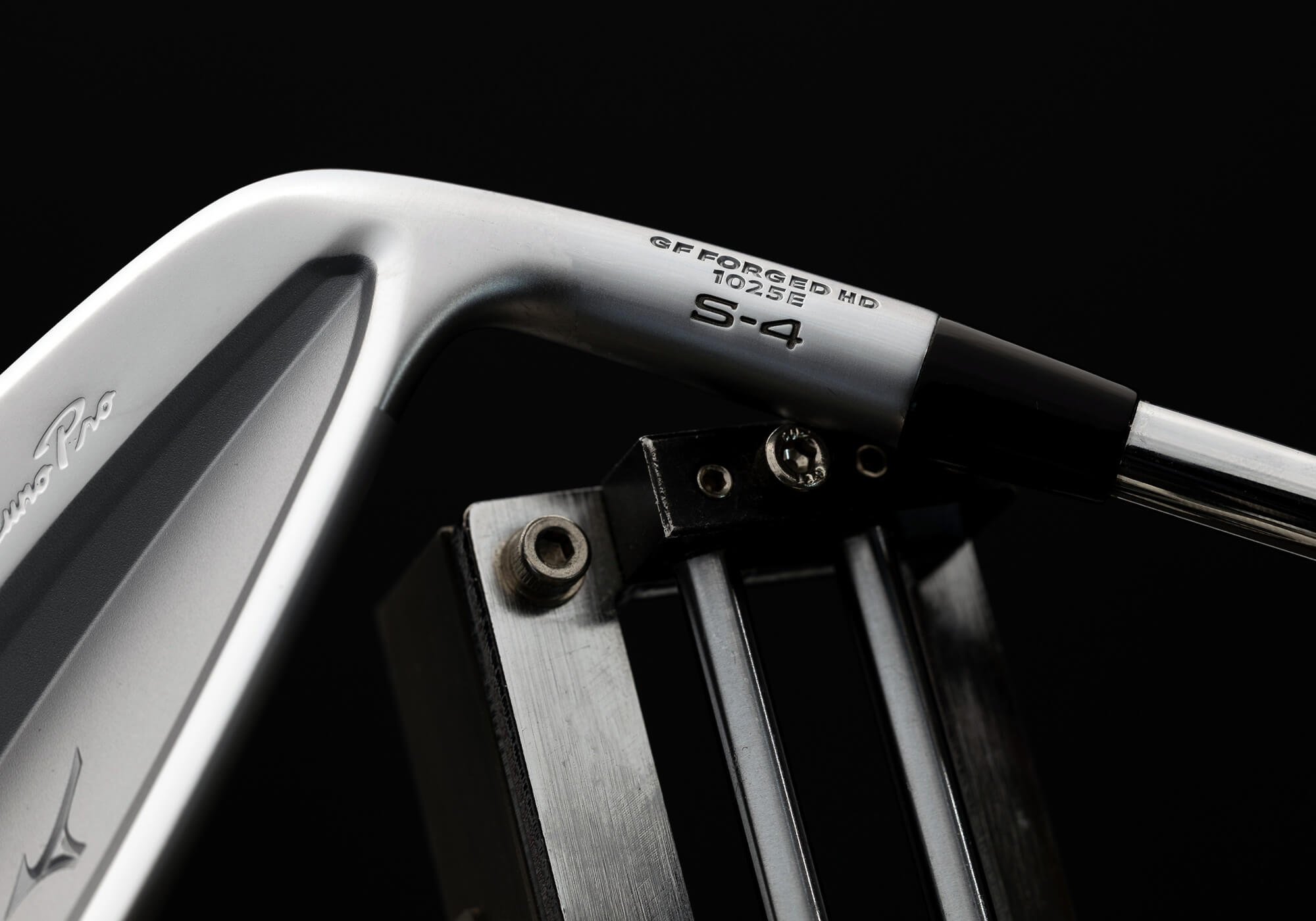
The combination of materials (the single-billet 1025E carbon steel), the process (Mizuno’s exclusive Grain Flow HD forging) and geometry (specifically around the topline) each play key roles is achieving a solid, forged feel at impact.
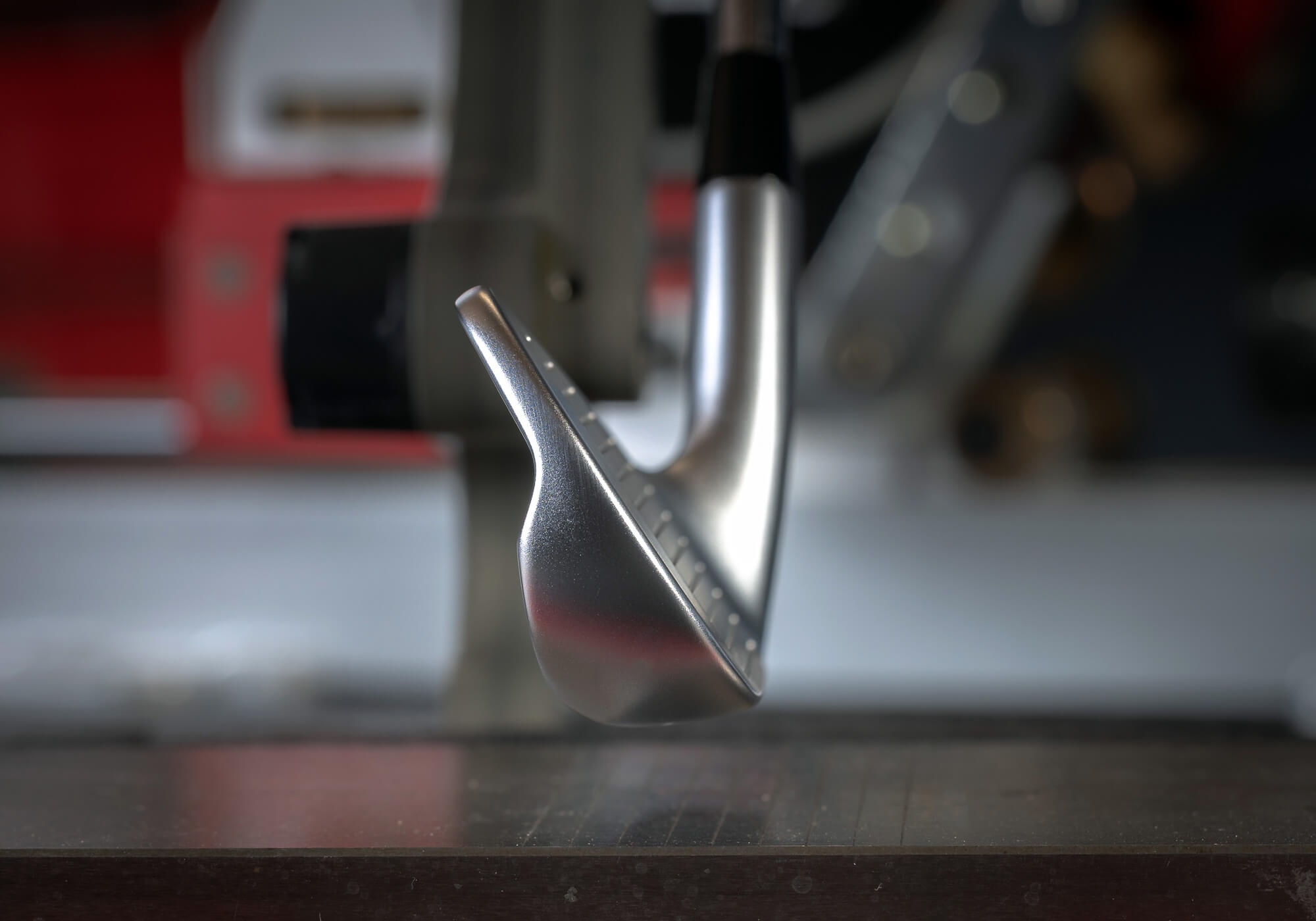
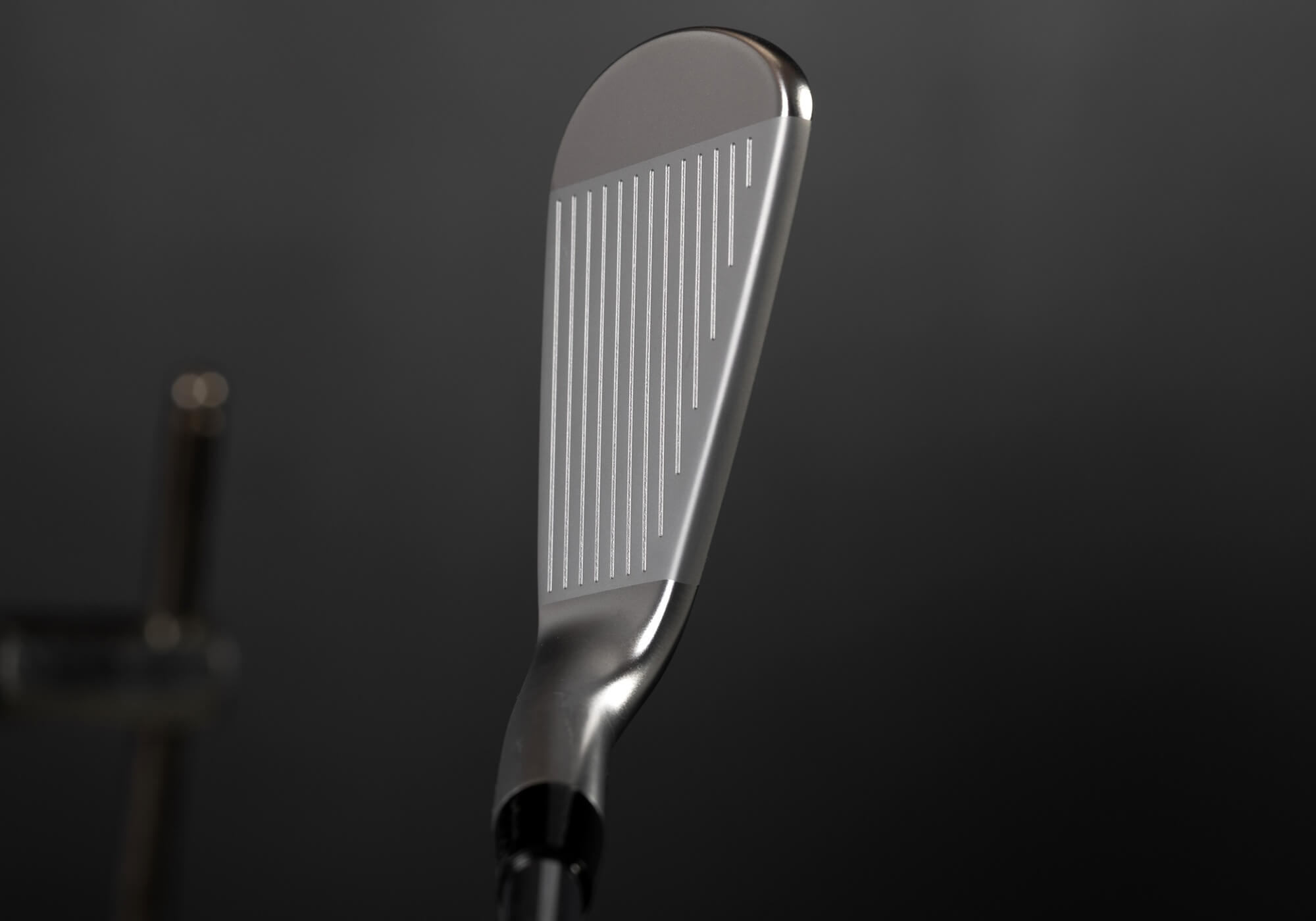
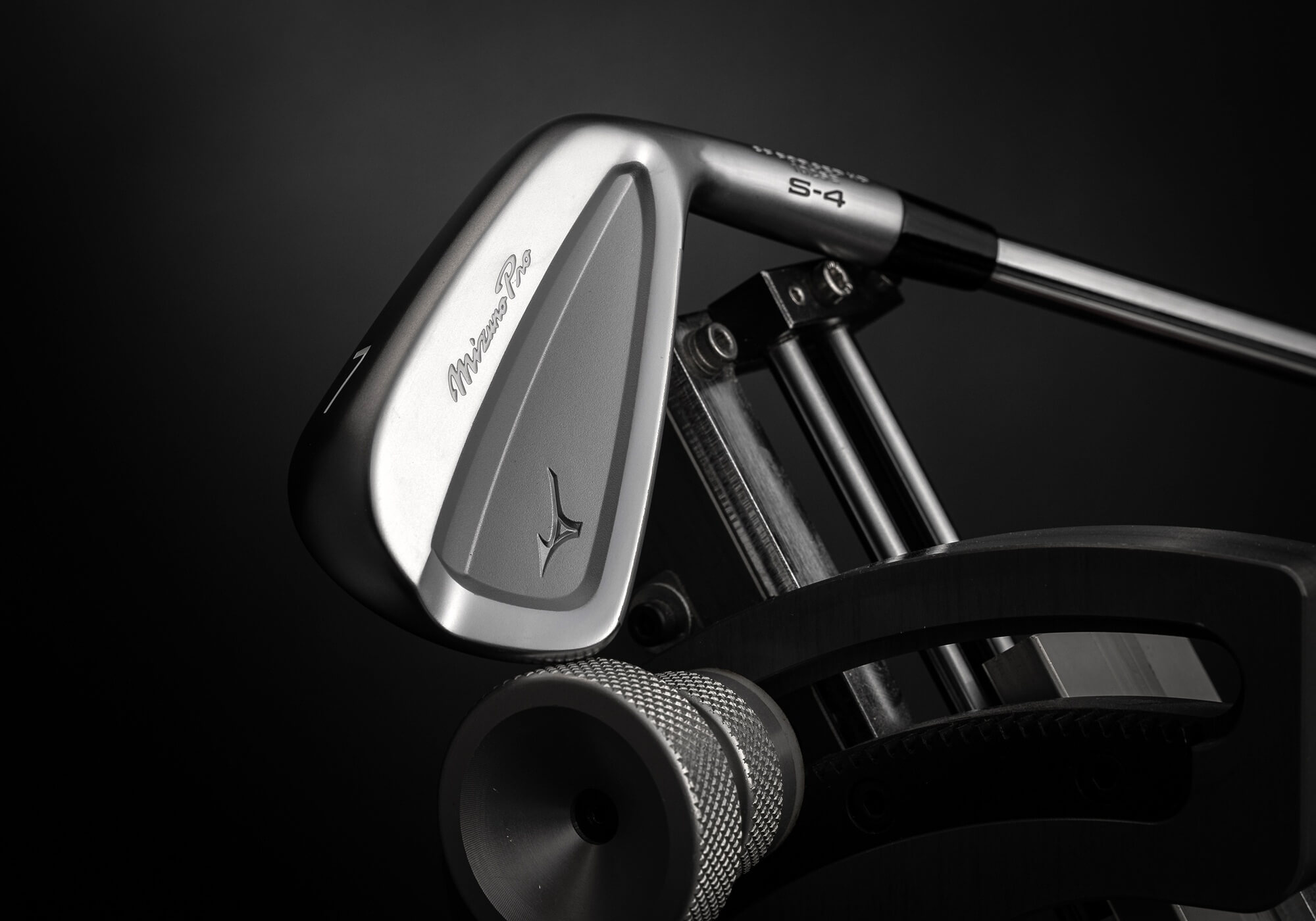
As with the rest of the Mizuno S-series, the new S-4 features a V-shaped sole it calls Triple Cut. The Triple Cut sole features a high-bounce leading edge, reduced camber in the middle for a kind of flatter midsole and aggressive trailing-edge relief. Think of it as a wedge grind on an iron.
The idea is to improve turf interaction, creating a sole that will enter and exit the turf a little more cleanly. The design helps with transition through the set, allowing Mizuno to keep the sole widths more uniform as the irons get shorter.
Built to combo?
Those uniform sole widths make combo sets a heck of a lot easier to pull off as does a consistent loft matrix. The new Mizuno Pro S-4 shares the same lofts with its S-series brothers, the S-1 blade and S-3 cavity-back. Consistent sole widths make the transition from S-4 to S-3 and S-3 to S-1 considerably less hinky-looking and more playable.
We can only guess where the missing S-2 model could fit.
Speaking of models, do you realize that as of right now, Mizuno has a total of nine iron models in its offering? That’s right, Mrs. Buehler, nine irons.
What in the name of Callaway is going on here?
Well, it’s important to understand that Mizuno is focusing more on intent and player desires than merely checking off category boxes. Mizuno says the S lineup is its Signature series, ideally focusing on the Tour and better players. It also considers the Signatures series to be “timeless.” That means they’re not technology-dependent because technology evolves. The line also is intended to have a four-year life cycle.
The M-13 and M-15 irons, launched earlier this year, is considered “timely.” Those irons are more technology-focused with complex multi-material construction and design elements that chase ball speed, trajectory and other launch monitor-inspired metrics. Mizuno says those will have a more industry standard two-year life cycle.
The JPX line flexes into the high-single digit to higher-handicap crowd. It’s a mainstream offering that also features multi-material construction and Mizuno’s highest technology. The JPX line includes the JPX 925 Forged and the power trio of the JPX 925 Hot Metal, Hot Metal Pro and Hot Metal HL.
Is nine a lot? It sounds like a lot
I don’t care who you are, nine iron models are a lot of iron models. Mizuno, however, has been consistent in its talking points. It says there’s no single iron profile that can satisfy every golfer’s needs, which is kind of obvious. But behind the curtain, we should also understand there’s no single iron profile that can satisfy every golfer’s wants. Nine models cover both needs and wants, especially for the ever-persnickety better player.
You want a clean, timeless-looking iron that doesn’t rely on ever-evolving technology? Mizuno has the S-series. You want clean-looking with the latest tech? The M-series has you covered. If you want forgiveness, versatility, options and the latest tech, you have JPX written all over you.
Mizuno Pro S-4 irons: Specs, price and availability
Hey, lefties, great news. The Mizuno Pro S-4 irons are almost available in a full set for you.
Almost.
Righties get the full spectrum in 3-iron through pitching wedge. Lefties will have to be content with 4-iron through pitching wedge.
The stock shaft is True Temper’s DG Mid 115 with the Golf Pride Z-Cord the standard grip. Mizuno has traditionally offered one of the widest arrays of no-upcharge shafts and grips in the business.
Pricing is indicative of our modern world. The S-4 will run $215 per stick, the same as the S-1 and S-3 (not to mention the M-13 and M-15). They’ll be available online and at retail starting Sept. 17.
For more information, visit MizunoGolf.com.






WYBob
1 month ago
Glad to see Mizuno getting back to their roots with the Pro S series of irons forged from solid billets of 1025 carbon steel (with no chromoly and boron anywhere in sight). These Pro S-4s remind me of the MP-30s from 20+ years ago which were incredible feeling irons. These seem to fit between the S-3 and the M-13- more forgiving than the S-3s and better feeling than the multi-material construction of the M-13s. I am hoping to get to hit the S-4 on Sept. 14. I hit the new (2027) Srixon ZXi7s and ZXi5s last week which are also great feeling irons. IMHO the Mizuno’s S-3s feel slightly better with very similar performance. There looks to be many excellent options going into 2027.