

Jim Furyk’s Solution to the Distance Problem Would Have Minimal Impact
News

Jim Furyk’s Solution to the Distance Problem Would Have Minimal Impact

Support our Mission. We independently test each product we recommend. When you buy through our links, we may earn a commission.

Jim Furyk’s Solution to the Distance Problem Would Have Minimal Impact

Tour pros say the darndest things.

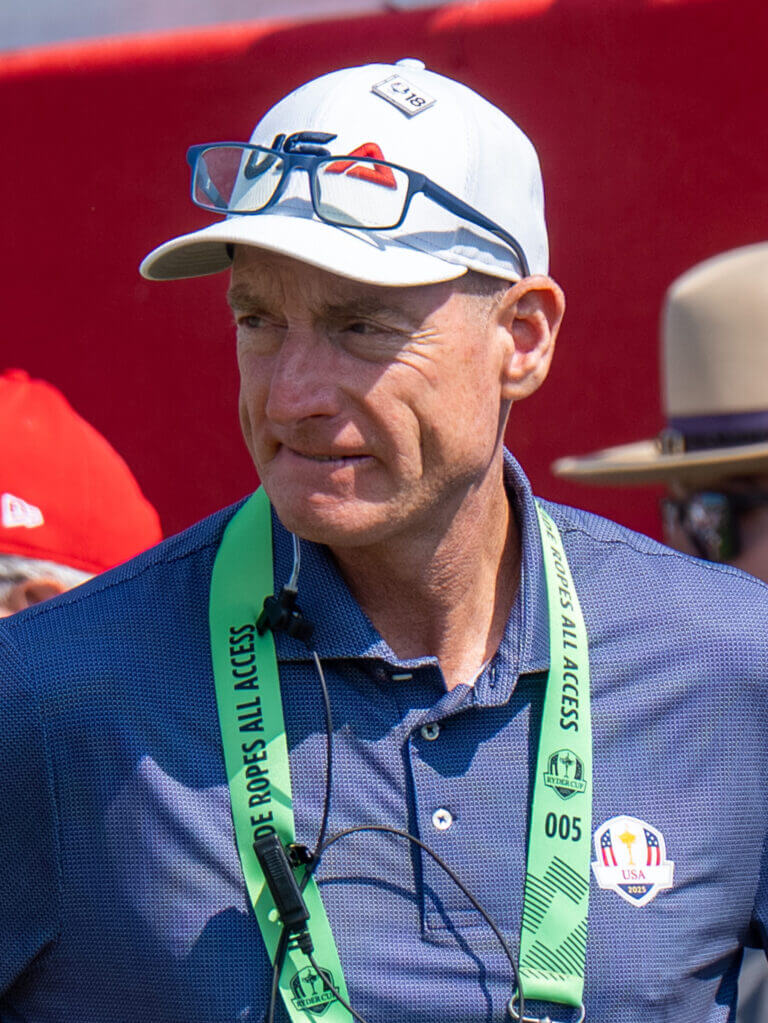
Speaking on the Straight Facts Homie podcast ahead of the 2026 Arnold Palmer Invitational, Jim Furyk proposed what he acknowledges is an unpopular idea: reduce the maximum size of driver heads for professional golfers.

Yeah. I don’t love that idea.

“I’m not going to be very popular for this, but I would reduce the size of the driver head,” Furyk said. “Maybe not necessarily for the average golfer, but I would do that for the golf professional. Because you can hit it all over the face right now and it’s pretty forgiving.”

He’s not entirely wrong. Modern 460cc drivers are remarkably forgiving. High-MOI designs have made off-center hits far less punishing than they were even a decade ago, and the result is that elite players can swing aggressively without fearing the consequences of a miss. Furyk’s argument is essentially that the equipment has removed too much of the penalty for imprecision.

Fair enough. But would shrinking the head actually solve the problem he’s describing?

Probably not.

Shrink the driver

Furyk pointed to his own mini driver as evidence. “I play a mini driver in my bag for my three wood. And when I hit that mini good, it goes darn near just as far as my driver. It’s less than 10 yards difference. But if I mishit it, if I hit it a little thin, a little on the toe, a little on the heel, I lose a bunch of yardage.”

Here’s the thing: the reason Furyk’s mini driver goes nearly as far as his full-sized driver on a good strike isn’t because the head is smaller. It’s because the shaft is shorter. And the reason it’s more punishing on a miss is largely due to the head size and the MOI reduction that comes with a smaller footprint. That becomes less important with shorter shafts tend to produce more centered contact for most golfers.

If the USGA were to cap head size at, say, 400cc or 350cc, the predictable response from manufacturers would be longer mini drivers. The current generation of mini drivers sits around 43 to 44 inches. Give equipment companies a reason to stretch that to 45 or 45.5 and you’d recover most of the lost distance while also benefiting from a smaller, more aerodynamic head that moves faster through the air. Assuming the USGA wouldn’t also further restrict shaft length, a smaller head mandate might actually produce more distance, not less.

And then there’s the MOI question. Yes, a smaller head is inherently lower MOI, which theoretically means a bigger speed penalty for missing center. But it’s worth noting that a lot of the “small head, bigger miss” thinking dates back to a time of persimmon woods and wound balls. Modern materials and face technologies have changed the equation significantly.

Is MOI still relevant? Definitely. Is the penalty as dramatic as some believe? Nope. Once equipment optimization and player ability are factored in, the net effect on distance may be minimal. Top-end hitters—your Knapps, your Finaus—would probably still produce similar driving distances with a 340cc head optimized for their swing.

The idea also assumes players are swinging out of their shoes, but many of the longest hitters on tour generate elite speed without overswinging. They’re efficient, not reckless. A smaller head doesn’t change that.

Grow the grass?

If the actual objective is to penalize the miss and reward precision—and I think that’s what Furyk is really getting at—there’s a simpler, cheaper, and more immediately effective solution: grow the rough.

Lou Stagner’s research on the topic reveals some interesting details. According to his analysis, the penalty for hitting into the rough on the PGA Tour cost approximately 0.31 shots per hole in 2004-06. By 2017-18, that number had dropped to roughly 0.26 shots. The rough has literally gotten easier. In most tournament situations today, it simply isn’t penal enough to put fear in anybody.

You want to separate the best ball-strikers from the guys who are just bombing and gouging (I’m not entirely convinced that’s a real thing)? Bring the rough back to heights we saw a decade or more ago. That’s a course setup decision, not an equipment rule change, and it would have an immediate, measurable impact on scoring.

The bifurcation problem

Furyk also suggested that a head-size restriction could apply only to professionals, not amateurs. The USGA and R&A have been steadfastly opposed to bifurcation, and while I don’t hate the concept in theory, golf is unique in that the lines between professional and amateur are often blurry. US Open qualifiers, mid-am competitors, college players—where do you draw the line? Having two sets of equipment rules would add complexity to a sport that already has more than enough of it.

We’ve already facing one rollback (we don’t need another)

That said, when it comes to equipment changes, the governing bodies aren’t exactly sitting idle. And while I continue to believe the ball rollback is one of the more ridiculous decisions they’ve made in recent memory, revised golf ball testing conditions—initially slated for 2028—now appear to be getting pushed back to 2030, and the USGA and R&A are actively studying driver forgiveness—specifically MOI limits—though nothing has been finalized on that front.

Look, Furyk’s instinct isn’t wrong. The modern driver is absurdly forgiving and the gap between a perfect strike and a mediocre one has never been smaller. But the solution he’s proposing would likely trigger an innovation arms race that recovers most of the lost performance within a product cycle or two. Equipment companies are very, very good at finding speed. It’s literally what they do.

If you want to make driving accuracy matter again, the answer probably isn’t in the equipment rule book. It might not even require a rule change at all. But if we’re going to have the conversation—and apparently we are—let’s at least make sure we’re solving the right problem.

For You

For You

Best Super Game-improvement irons of 2026 Best Super Game-improvement irons of 2026
Buyer's Guides
Jun 5, 2026
Best Super Game-Improvement Irons of 2026
Buyer's Guide
Jun 5, 2026
I Tested 5 Complete Golf Sets From $199 To $1,599. Here’s Where to Spend Your Money
News
Jun 5, 2026
Scratch by 50: How I Started Practicing Better
Tony Covey

Tony Covey

Tony Covey

Tony is the Editor of MyGolfSpy where his job is to bring fresh and innovative content to the site. In addition to his editorial responsibilities, he was instrumental in developing MyGolfSpy's data-driven testing methodologies and continues to sift through our data to find the insights that can help improve your game. Tony believes that golfers deserve to know what's real and what's not, and that means MyGolfSpy's equipment coverage must extend beyond the so-called facts as dictated by the same companies that created them. Most of all Tony believes in performance over hype and #PowerToThePlayer.

Tony Covey

Tony Covey

Tony Covey

Tony Covey

Tony Covey


    This site is protected by reCAPTCHA and the Google Privacy Policy and Terms of Service apply.

      Craig

      3 months ago

      Growing the rough is a terrible idea, it just makes really unattractive golf and limits the skills. Furyks idea of reducing the headsize is spot on, but making it 350cc is laughable. It needs to be less than 200cc.

      Reply

      Dex Razor

      3 months ago

      How does the rough “limit” skills? Isn’t the skill that should be rewarded hitting the fairway or at worst the second cut? Maybe along with the rough being taller, the second cut and the fairway could be as well? This would speak to limiting the insane amount of bounce and rollouts.

      Reply

      Fake

      3 months ago

      The pros still struggle. That’s why the leaderboards look different during every tournament, big names miss the cut, etc. I think that what the fans think they meant, which is more varied club selection, doesn’t make for more interesting TV. It’s just watching players swing clubs.

      Reply

      ericsokp

      3 months ago

      If distance is a problem at the pro level (it’s certainly not at the amateur level!), I think a much easier solution is to just limit the number of clubs allowed to 12. I’m guessing most pros would leave the driver at home, as well as possibly a 3 wood, and use mini-drivers instead. They might also eliminate one of their four wedges, which might actually speedup play as they wouldn’t endlessly debate whether to hit their 58* or 60*!

      Reply

      RehoBob

      3 months ago

      Grow the rough and also grow the fairway’s grass longer, less run out.

      Reply

      David

      3 months ago

      How about just shortening the length of the wooden tees the balls get launched from. Tough to carry the bunker at 300yds when the apex is not in the stratosphere.

      Reply

      albatrossx4

      3 months ago

      I love the simplistic mindset, grow the rough, yet you dont understand that it is not as easy as that, the USGA for the open takes 2 years or more of intensive grooming, no way can tournament sites do this, use more water more chemicals ( sell more balls) to keep the rough up almost year round. Also we can not afford the land, water and chemicals to keep lengthening golf courses, so you think the non golfing environazi’s will just sit aside, there is already been push back regarding the resources golf uses. The USGA proposed a bifurcated ball rule and the MFC’s said hell no, they were not going to do a tour ball they could not sell to the public. And I will bet anyone that when this ball rule goes into effect the MFC’s (at least 1, who will then dominate the am market) will have a conforming ball that goes just as far at lower swing speeds.

      Reply

      Joey5Picks

      3 months ago

      Not to mention, growing the rough only further advantages the long hitters. Hitting an airsoft shot from the rough with a PW after a 325-yard drive is a lot easier than hitting it if the right with a 7-iron. Short and average hitters will fall even further behind.

      Limit driver size. The game is already bifurcated. Pros don’t ride in carts or use range finders, they have caddies and play courses 1,000 yds longer.

      Reply

      Scott

      3 months ago

      A zero cost solution. Pro’s (and perhaps anyone with a + handicap) not allowed to tee the ball up.

      Reply

      ZL

      3 months ago

      What you are proposing with longer rough creates an environment where people hit the ball as far as they can and if they miss in the rough, they hack it out. If they hit fairway it’s a short wedge onto the green. That’s a very boring brand of golf to watch. Wouldn’t we rather see the best players in the world have to hit longer irons into greens to see who is the best all around player?
      Also, telling all the courses and superintendents to do the work of planting trees or changing rough is like asking the MLB parks to move all their walls back. Change your ballparks because the bat manufactures and players don’t want to use wooden bats anymore.

      Reply

      WL

      3 months ago

      In reality, to roll back the pros, you would have to go back to the days when Tiger entered the fray. 42.5″ steel shafted driver and he still hit the ball 320 yards.

      Reply

      LD

      3 months ago

      One thing this article does not touch upon is shaft lengths… THAT PROS USE. Many (most?) use 44″ or under. Do you really think pros are going to go to LONGER shaft lengths with a smaller head? Especially if, supposedly / according to the article, distance won’t otherwise be impacted.

      Really doing a lot of heavy lifting to find “logic” be opposed to the equipment and distance problem that the USGA, R&A, and Augusta National are all in favor of. Odd that such an independent organization falls so directly in line with the OEMs and tour and club pros (who are all paid by the OEMs).

      Looking forward to more tee boxes at Augusta and St. Andrews each year…

      Reply

      Gary Ahlert

      3 months ago

      Part of the fun of any sporting endeavor is to fantasize about playing like a pro. It’s part of the game and it’s what makes it wonderful. What’s maddening is the fact that all the attention on the rollback has been made about the ball. Nonsense. Pro golfers, and other athletes too, are in far better physical shape, the equipment they use is better and in general their approach to the game and how it is played has gotten better too. Roll back the ball? Shrink the head size of a club? You will only destroy the game. Bi-furcation the same thing will happen and is utter nonsense. I want to go out and hit the ball like my hero…or at least pretend I can do so. Same with clubs. I know pro’s clubs are tweaked – so what. They’re still a Callaway, Ping or whatever. Why is that the governing bodies and others continue to do things which only hurt the game of golf rather than help or grow it? You want to make courses less accessible to long hitters? Narrow the fairways, grow the rough, more hazards and so on. Stop trying to destroy our great game. Among the insane and silly rules changes, rules which are unenforced all the time, the pettiness and infighting on the tours, the whole LIV issue and everything else golf is eating itself alive – which is why I watch less pro golf than I ever have before.   

      Reply

      Joey5Picks

      3 months ago

      You just admitted the game is bifurcated (pros play “tweaked clubs, so what?”). And, yes it is bifurcated…pros can’t take carts, can’t use rangefinders, one-ball rule, play courses 1,000 yards longer with firm, fast greens.

      Every other sport is bifurcated. NFL has different rules than college and even the ball is different. NBA 3-point line is different. MLB uses wood bats and has some different rules…

      Reply

      Andrew the Great!

      3 months ago

      You said Furyk was wrong because the smaller margin of error with smaller driver heads would be made up with longer shafts. And therein lies the answer you overlooked: maxx out the shaft length for the (smaller) driver heads at 43/44. If longer shafts would negate the smaller heads’ smaller margin of error, then don’t allow the longer shafts. Restore a better balance between skill and raw power.

      Seems to me the answer is fourfold: smaller driver heads, limit shaft length of those drivers, longer grass, shorter tees.

      On a completely separate note, I was very pleased with Furyk’s on-air commentary last week. Seems like a good addition to the broadcasts.

      Reply

      Eric

      3 months ago

      Good strikes with his mini driver go almost as far as his driver because the shaft is shorter?? That is a fascinating concept that doesn’t make any sense. Also, Furyk’s point was about mishits, you decided to focus on speed because he mentioned distance once. And if manufacturers could pack all the forgiveness of a 460cc driver into a 420cc head they would’ve done it already, at least for prototype models for pros to use. I’d rather play a 420cc driver if it has the same forgiveness, I’m guessing many pros would too.

      Reply

      Clay Rouse

      3 months ago

      I have always thought the solution is to require the balls to spin more at driver speeds. Today’s players can go at it REALLY fast and not worry about the ball spinning off the planet. If elite players were forced to dial it back to keep the ball in play then the distance issue would be solved. Smaller drivers would help some. And, I see no problem with bifurcation. The manufacturers could still sell distance to recreational players and we wouldn’t need 7000 yard courses. Thirty years ago, I was a member at a course that was built in 1917. There were no par 4’s over 400 yards, we used balata balls and persimmon drivers. I assure you it was just as enjoyable to play in that environment as it is today.

      Reply

      Scott

      3 months ago

      MLB and MiLB use wooden bats when every other level of baseball uses metal and ceramic. Why? Because elite players don’t need the added forgiveness and velocity you lose with wood bats. A similar equipment handicap is a possible solution (I’m in favor of making holes tighter, greens smaller, and rough longer).

      The problem is that the manufacturers won’t go for a change to equipment. They drive the market and manipulate everyday hackers by flooding our attention spans with heavily marketed and sponsored visibility. You can’t just be a paid Callaway player – the bag has to say ELYTE on the side, even when you don’t play ELYTE models.

      Reply

      WiTerp50

      3 months ago

      That bifurcation doesn’t already exist is a joke. Less than 100 courses need to worry about the bombers. Augusta solves the problem, but how many can even play the members tees? The USGA/RA are looking to put a change in place that needlessly punishes 99% of golfers. Guess if we paid as much as the televised rights, they would hear us while actually listening. All this to protect legacy courses that, again, more than 99% of us will never have the opportunity to play. Now if they would just confirm they represent elite clubs and not the average golfer.

      Reply

      Craig

      3 months ago

      The proposed rules dont effect average golfers.

      Reply

      Randall Robbins

      3 months ago

      Growing rough with smaller fairways would go a long way. I played a fairly short course in Illinois once that hosted a mini tour event, and they had grown the rough to at least ankle depth and had narrow fairways, and that kept scoring down. I played it the day after the tournament, and they had cut the rough back for the public, and it looked like you could bale it up for hay

      Reply

      Mike P

      3 months ago

      You said Furyck was wrong then proceeded to explain he is right. Smaller heads have smaller margin of error. Smaller head mis hits have bigger deviations.

      Reply

      Andrew the Great!

      3 months ago

      Yes, but he said Furyk was wrong in practice, because the smaller margin of error would be made up with longer shafts. And therein lies the answer he overlooked: maxx out the shaft length for the (smaller) driver heads at 43/44. If longer shafts would negate the smaller heads’ smaller margin of error, then don’t allow the longer shafts.

      Seems to me the answer is fourfold: smaller driver heads, limit shaft length of those drivers, longer grass, shorter tees.

      Reply

      ZL

      3 months ago

      You can say the longer shafts would negate the reduced distance of the smaller head but you are missing the fact that that longer shafts would also make it harder to consistently strike the center of the club face. If they have to use longer shafts to keep distance, it would give the skilled players an opportunity to separate themselves from the rest.

      Dean D

      3 months ago

      Looks like Furyk succeeded in sparking debate. My main issue is slow play so longer rough bothers me. I’ve played Torrey day after & the rough is too long for Johnny Average already without forecaddies.

      Shorten the shaft limit the head size & grow the fairways longer for tour events & cut them narrower for the big boys. Watch Shell golf matches & check out fairway lengths from earlier times.

      Reply

      Tom Forsythe

      3 months ago

      By all means, let the rough grow. And if you really want to avoid ‘bifurcation’, make the pros find their own errant shots – no help from the crowd or the cameras. People would scream about pace of play, but that would certainly make pros more cautious off the tee.
      I have no idea how this would be possible – or even if it’s truly desirable. It’s really just pointing out that the aspect of needing to find your ball already separates the pros from us amateurs.

      Reply

      Mike

      3 months ago

      I don’t play in any usga-sanctioned events. So I’ll continue to use my current stock of Pro V1’s (I have a lot) until they run out. If that’s in 2033, who cares.

      So, when there’s the rollback, will course adjust their tee boxes to account for this? No. So I’ll be shooting worse golf as I get older. How exciting… Another TOTAL fumble by the usga. I burned my usga card years ago & when I receive the annual membership offering via snail mail, I can’t throw it in the garbage fast enough!

      Reply

      Sean

      3 months ago

      Why does anyone care about bifurcation?
      As an amateur I don’t have stands, crowds, referees, caddies, free equipment, lavish hospitality, equipment vans, courtesy cars etc laid on for me when I play a medal at my club.

      Pro golf is not the same as club golf and we should stop pretending they are the same thing.

      Reply

      Will

      3 months ago

      There is no “distance problem.” I’ve yet to see a single convincing argument that handicapping distance would improve anything about the game. Tournament broadcasts are still going to be boring even if the pros can’t reach a par 4 without hitting driver off the deck for their second shot. You want exciting, go watch Bryson hit a putter off the tee on YouTube.

      Reply

      WYBob

      3 months ago

      In knocking Furyk’s suggestion, you may have hit upon a potential solution- limit the golf shaft in length and torque. This could be achieved through a Model Local Rule for professional and elite golf tournaments and not affect the amateur game. There is already a total length limit set at 46 inches, so the MLR could reduce that further to a total length limit that achieves the desired distance roll back. Regarding bifurcation, it already exists between the professional and amateur game. An example is the specialty balls professionals have access to via programs like Titleist Custom Performance Options. Others include Circle T or Tour Only putters and drivers like “dot” models that make the UDGA conforming lists but never see the light of day at retail. Very few avid golfers like the idea of a ball roll back, but a shaft length limit for elite golfers might be more palatable. Combined with more penal rough, you might just achieve what the USGA and R&A are striving for at elite tournaments. Just a rim shot from the fringe.

      Reply

      Paul C

      3 months ago

      I know many don’t like the idea of bifurcation, but honestly it seems like the only way. Depending on where you look, it’s estimated 50% of golfers don’t break 100 consistently; only 25% break 90, and 5% break 80 consistently.

      Are we really going to make the harder, and most likely take longer, for the clear majority of regular golfers?

      Reply

    Leave A Reply

    required
    required
    required (your email address will not be published)

    This site uses Akismet to reduce spam. Learn how your comment data is processed.

    Best Super Game-improvement irons of 2026 Best Super Game-improvement irons of 2026
    Buyer's Guides
    Jun 5, 2026
    Best Super Game-Improvement Irons of 2026
    Buyer's Guide
    Jun 5, 2026
    I Tested 5 Complete Golf Sets From $199 To $1,599. Here’s Where to Spend Your Money
    News
    Jun 5, 2026
    Scratch by 50: How I Started Practicing Better