



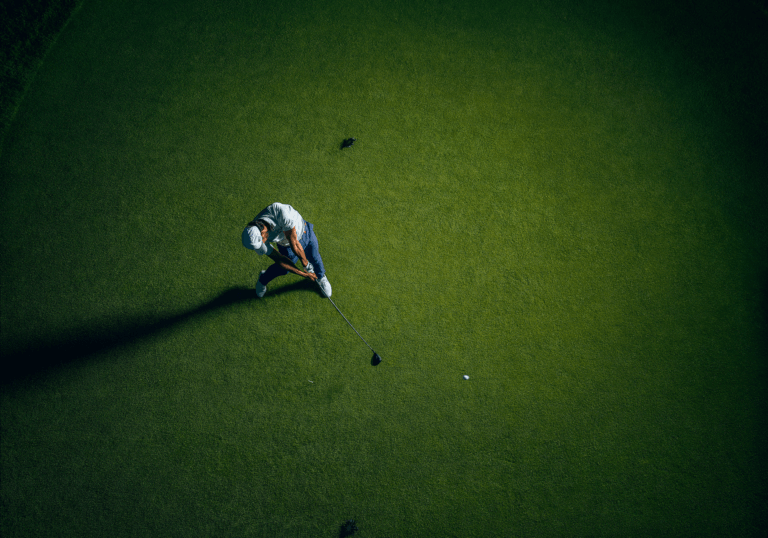
For most golfers, missing the fairway is more common than hitting it. Ask a right-handed golfer about their biggest struggle off the tee and many will say the slice. Every year, golf manufacturers roll out a new draw-biased driver designed to help higher-handicap players straighten out their shots. But is the right-side miss really the most common? We took a closer look at Shot Scope data to find out.
Overall miss patterns by handicap (All clubs off the tee)
Looking at all clubs off the tee (including driver, woods, hybrids, long irons), the data shows:
- 0 handicap: Left miss 23%, Fairway 50%, Right miss 23%
- 5 handicap: Left miss 22%, Fairway 51%, Right miss 24%
- 10 handicap: Left miss 25%, Fairway 48%, Right miss 24%
- 15 handicap: Left miss 24%, Fairway 47%, Right miss 25%
- 20 handicap: Left miss 26%, Fairway 45%, Right miss 26%
- 25 handicap: Left miss 19%, Fairway 46%, Right miss 27%
Notice that for higher handicappers (25+), right-side misses start to edge out left-side misses. Before that, the left versus right miss percentage is almost identical.
Driver-only miss patterns by handicap
When isolating just the driver, the data shows:
- 0 handicap: Left miss 25%, Fairway 48%, Right miss 25%
- 5 handicap: Left miss 23%, Fairway 49%, Right miss 24%
- 10 handicap: Left miss 24%, Fairway 49%, Right miss 25%
- 15 handicap: Left miss 23%, Fairway 47%, Right miss 26%
- 20 handicap: Left miss 25%, Fairway 46%, Right miss 25%
- 25 handicap: Left miss 19%, Fairway 47%, Right miss 28%
For the 25 handicap group, there’s a clear tendency to miss right versus left with the driver (28 percent right miss). For lower handicaps, the split remains fairly even.
The big takeaway
Yes, higher handicappers are more prone to missing right off the tee. Lower-handicap players generally have a more balanced distribution or are slightly more likely to miss left.
What does this mean for you? Start tracking your fairway hit percentage but, more importantly, which side of the fairway you are missing your tee shot. So many golfers struggle with a severe slice. To keep that slice at bay, they aim left and consequently miss the fairway left.
Use Shot Scope CONNEX to get accurate information and data about your tee shots. If you don’t have CONNEX, make a note on your scorecard for fairways hit and left versus right misses. The results can be eye-opening.
Tips to fix your tee shot miss
I recently talked with a friend about left-versus-right misses off the tee. He said when he started tracking his data, while he was hitting about 50 percent of the fairways, his right miss percentage was 38 percent. That’s a problem that needs some attention and when you start tracking stats, these problems often reveal themselves.
Here are a few tips if you find some glaring issues like a 38 percent tendency to miss right.
If your more common miss is left
Check your alignment
Sometimes a persistent left miss comes simply from aligning too far left of your target. Use alignment sticks when you practice.
Focus on clubface control
A shut (closed) clubface at impact is often the culprit for a hard left miss. Work on a more neutral grip (instead of strong) and feel the clubface staying square through impact.
Adjust your ball position
If the ball is too far forward in your stance, you may catch it when the face has already rotated closed. Try moving it slightly back so it is in line with or just inside the lead heel.

If your more common miss is right
Square up your shoulders
Many right misses are caused by an “over-the-top” or open-shoulder setup. At address, ensure your shoulders match your target line.
Learn to control the clubface
A right miss often indicates a clubface that’s open at impact. Practice shorter swings (even without the driver) to learn to square the clubface through the impact zone. If you can’t do it when swinging waist high to waist high, you’ll have a hard time with a driver swinging at full speed.
Strengthen the grip
If you naturally leave the face open, consider strengthening the grip. It’s easier to rotate the face to a square or slightly closed position when you give the trail hand a little more control.

Final thoughts
I’ll admit that when I looked through this data, I expected to see a much higher percentage of right misses versus left. While every golfer is different, this is at least a starting point or reminder to start tracking not just whether you hit the fairway but also whether it’s a left or right miss. You’ll know what to practice the next time you head to the driving range and have an easier time picking a spot to aim your drives.





Leave A Reply