



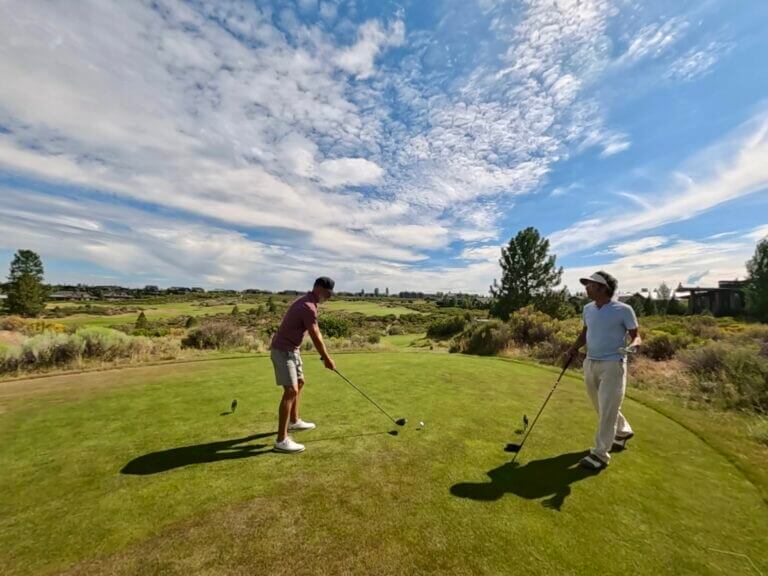
Graham Averill has turned 50 this year and he’s freaking out. Instead of buying a motorcycle or getting a tattoo, he’s decided to try to get really, really good at golf. He started this project as a 13 handicap attempting to reach scratch in a year. He is now a 10. Welcome to his midlife crisis.
I’m standing on the first tee of a notoriously challenging course in the high desert of Central Oregon and I don’t know where to aim. That’s not true. I know where to aim, I just don’t know how to aim. My alignment is off. I’m playing a practice round with my coach, Sam Hahn, and he spots it as soon as I address the ball. I think I’m aiming down the center of the fairway but he takes his driver and lays it down in front of my feet. He has me step back to see where I was actually aiming which is so far right I’m pointing at Idaho.
I have alignment issues and this is not the course to have alignment issues.
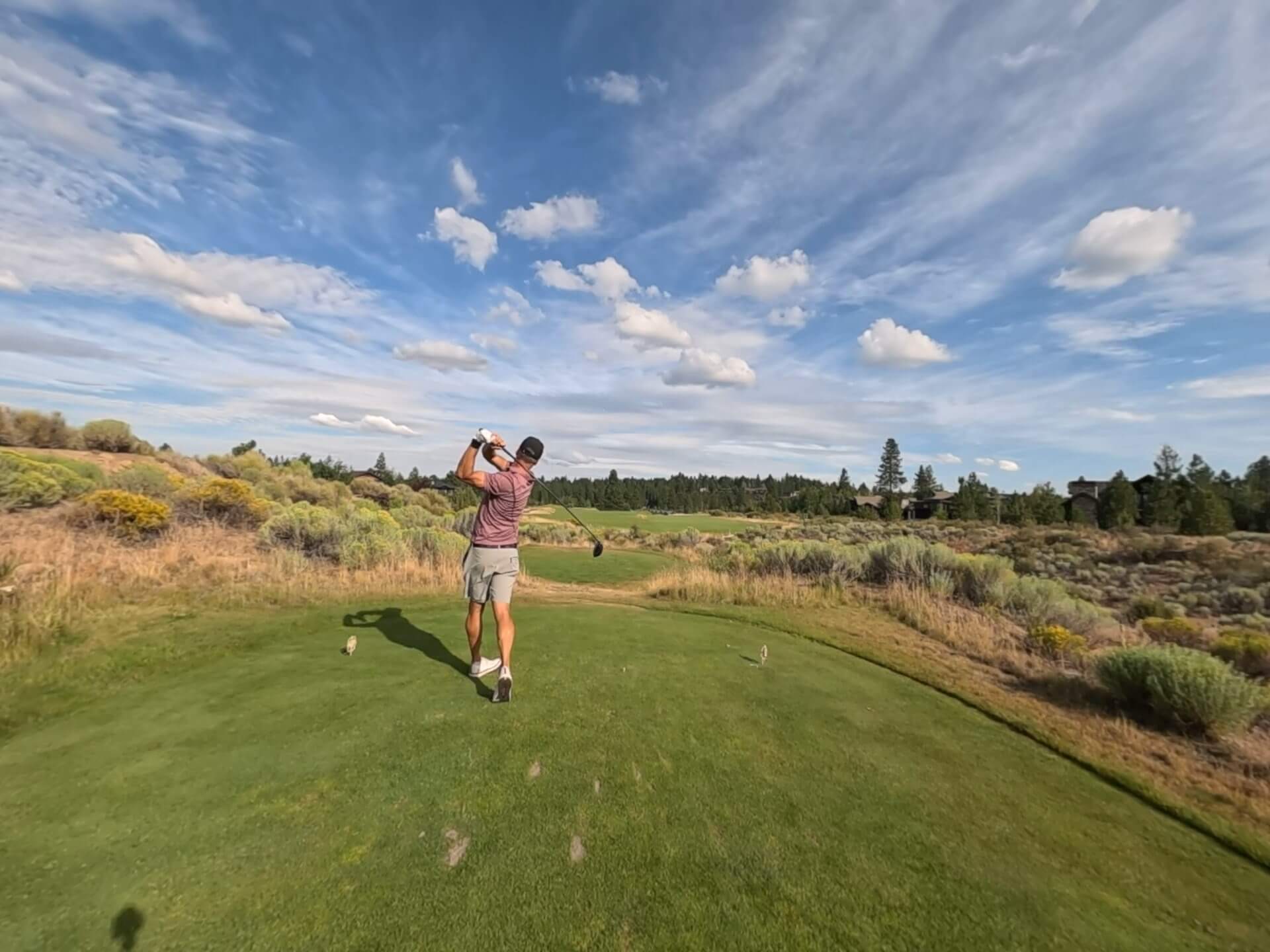
We’re playing Tetherow Resort, a much-lauded course designed by David McLay Kidd of Bandon Dunes fame. I’ve never played Bandon but Sam tells me Tetherow is a more sinister version with bunkers and these tall grass “eyebrows” scattered throughout landing areas. It’s a fine example of links-style golf in that the ball rolls forever and anything outside of the fairway is certain death. And then you have the greens. You know that Salvador Dali painting where the clocks are melting and dripping off a table? The greens are like that.
My future promises lost balls and three-putts but I’m just grateful to be here, to be able to play a demanding course under the tutelage of my golf coach.
Sam has been asking me to play a round with him since we started this project more than four months ago and I was finally able to make it happen. The video lessons have been great but he thinks we can get some solid work accomplished in a short amount of time if we play in person.
And he’s right. We work through a variety of things as we play 18 holes. He adjusts my grip slightly, he shifts the ball position at set up, he wants me to start sticking the follow-through to make sure I’m rotating through the ball … but the most in-depth work is on my alignment at address.
Aiming the ball should be the easiest, most straightforward part of golf and yet I literally don’t know where my body is pointing. I’m not alone. The alignment sector of golf training aids is thriving and for good reason. Sam says if your alignment is off, everything else is off, too. Bad alignment promotes bad swings as your body will subconsciously adjust to the situation. I see this playing out with my driver more and more recently. I aim so far to the right that my body pivots during the downswing and I come across the ball which creates either a pull hook or a massive slice.
I’ve been plagued by that two-way miss with the big stick and Sam thinks the biggest issue is how I’m addressing the ball. So he checks my alignment throughout the round, shifting me more left every time. It’s uncomfortable—I feel like I’m going to pull the ball into the expensive houses that line the fairways. But the alignment shift actually frees up my body to swing through the ball on an inside-to-out path instead of coming across it from the outside. It’s not magic. I still hit some big misses but opening my stance and aiming to the left side of each fairway unlocks a beautiful, soft fade off the tee that plays really well, even on the demanding fairways of Tetherow.
“When your lines are matched up—the clubface, your feet, your shoulders—it’s easier for good things to happen,” Sam says.
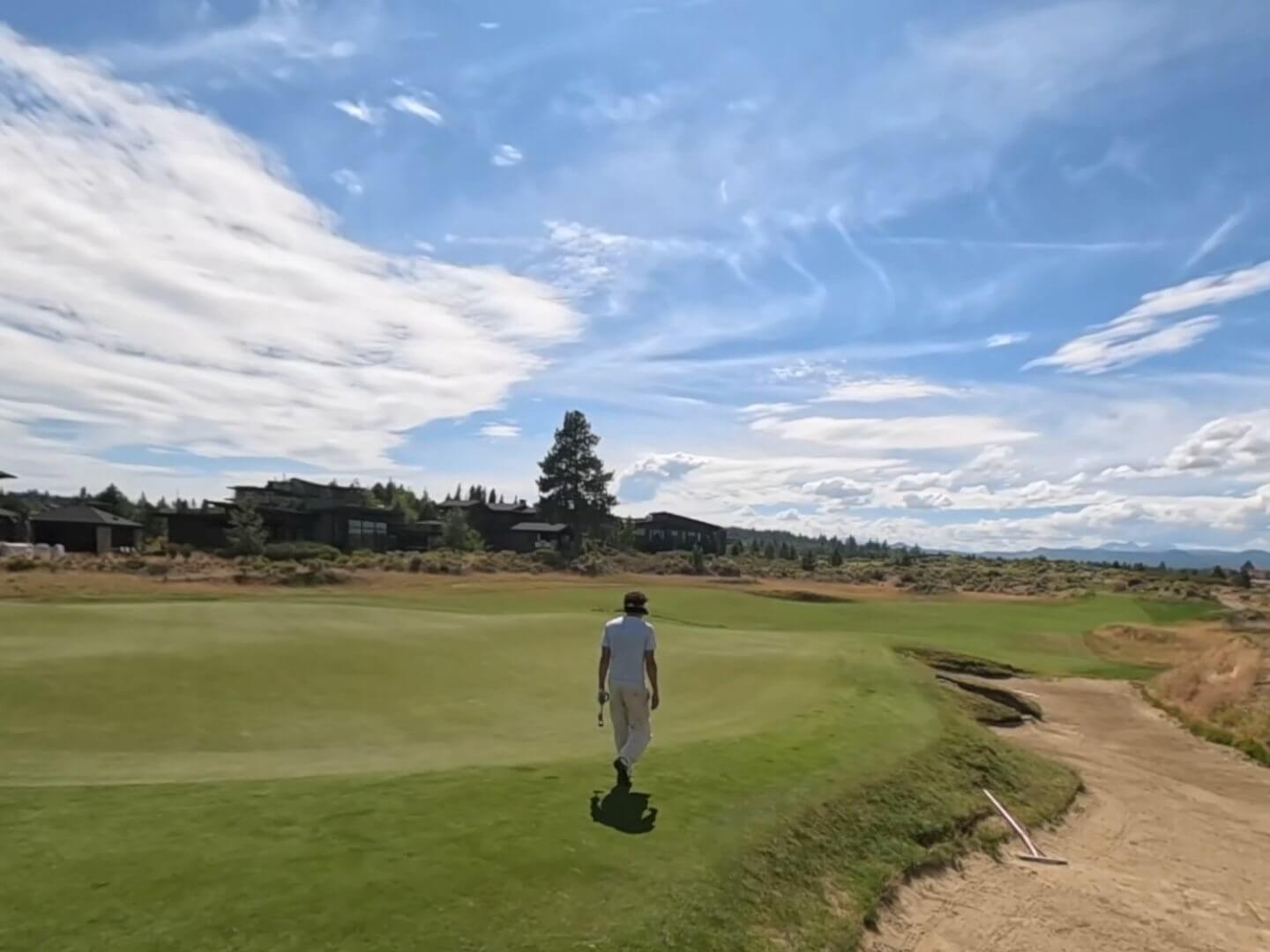
He helps me through some other issues with the driver (that I’ll get into in another article) and he sends me off with some marching orders on a variety of aspects of my swing. But I was amazed at how much progress we could make in a single afternoon.
I love the convenience of online coaching platforms. That’s essentially what Sam and I are doing: sending questions, videos and instructions back and forth via video and text. It’s great. I’ve made a lot of progress using this and if there’s an online coaching platform that you’re curious about, you should give it a try. But there’s nothing like hitting a ball while a coach watches and then the two of you make adjustments on the fly. You can experiment. The student can ask questions and get answers in real time. And the coach can see your swing in context which isn’t always possible when you’re trading videos.
You can get better with either model but mixing in some in person lessons is way more efficient.
Dig deeper into one golfer’s struggle to get better at golf in middle age and read last week’s Scratch By 50 where Graham details his putting stroke overhaul.





Sean
3 months ago
Probably should have been something you looked at before starting the challenge, a bit cart before the horse to look at it now.