


For years, TaylorMade staffers have been spotted with competitive wedges in their bags—particularly when it comes to lob wedges. It’s one of those open secrets that makes equipment geeks cringe and begs the question: if your own guys won’t play your wedges, why should anyone else?
The answer, at least partially, has been TaylorMade’s historically limited grind offerings. While the MG series has earned multiple Most Wanted awards and built a case as perhaps the most underrated clubs in all of golf, the lack of grind variety has been a legitimate knock against an otherwise exceptional product line.
The limited release of the MG Proto wedge suggests that’s about to change.

From tour van to your bag
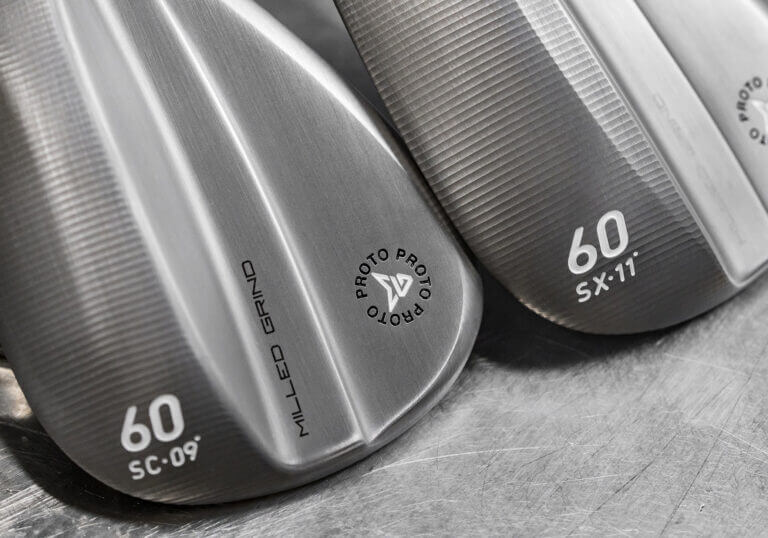
Previously exclusively for Tour athletes, the fully forged TaylorMade MG Proto is now available in limited quantities. Billed as genuine tour parts, the MG Proto represents something of a rarity in the equipment world—an actual tour prototype making its way to retail.
The Proto features a raw finish and comes stock with a Dynamic Gold Wedge 115g shaft and Golf Pride Z-Grip. More importantly, it introduces two new grind options that should help address TaylorMade’s historic weakness in wedge fitting.
While TaylorMade isn’t saying much officially, the Proto release feels like a limited preview of what’s likely coming with the full MG5 launch later this year. Think of it as a beta test where serious golfers get first access to the new grinds.

New (and interesting) grinds
The SC and SX grinds represent a significant expansion of TaylorMade’s wedge fitting options, each designed to solve specific problems around the greens.
The SC grind offers a cambered sole with softened heel, toe, and trailing edge. It’s designed for players who like to manipulate the face and hit a variety of shots. I’m talking about the kind of golfer who opens the face for flop shots and squares it up for bump-and-runs. The medium-low bounce profile provides versatility across different lies and playing conditions. For those of you familiar with the Vokey ecosystem, a cursory glance suggests TaylorMade’s SC grind is in the same general family as a V or D Grind.
The SX grind is a bit different. Billed as offering “unmatched consistency from the bunker”, it reads a bit like a Vokey K Grind with unique trailing edge relief, which TaylorMade describes as a Reverse-C (grind). The intent is to allow you to maintain consistent bounce as you manipulate the face in the bunker and presumably around the green. Think of it as more versatile take on a grind otherwise designed to excel from the bunker.
Both the TaylorMade MG Proto SC and SX grinds are available in 58- and 60-degrees.

The forged dilemma
Perhaps the most intriguing aspect of the Proto is that it’s fully forged. While it’s possible TaylorMade will carry this over to future retail versions, it seems unlikely given the durability demands of wedge play. Golfers love forged wedges and many argue they feel softer, but they’re also more prone to wear.
That’s fine if you get your wedges for free (as tour players do), but if you’re paying out of pocket, durability is important. Raw wedges are also more prone to rust, which—contrary to popular myth—does not improve spin and can actually hinder it over time.
Perhaps the forged construction of the Proto explains why TaylorMade boasts of “unmatched feel and precision”, but without the tour-level replacement schedule, long-term durability concerns should probably outweigh the allure that comes with the combination of proto, forged, and raw.

The underrated excellence problem
TaylorMade’s challenges in the wedge category aren’t about performance. The MG series has consistently delivered exceptional results in testing, earning multiple Most Wanted awards along the way. The problem has been perception and options.
When most golfers think of wedges, they think Vokey, Cleveland, or maybe Callaway. TaylorMade, despite its success in drivers and irons, has struggled to break through in the short game.
The introduction of the SC and SX grinds suggests TaylorMade is serious about competing across the full spectrum of wedge preferences and fitting needs.
For TaylorMade, the Proto release serves dual purposes: it gives serious golfers access to genuine tour specifications while building credibility for the broader wedge franchise. If these limited releases generate buzz and positive reviews, it could accelerate the acceptance of TaylorMade wedges among better players.

The bigger picture
The MG Proto represents more than just a new wedge release—it’s TaylorMade’s statement of intent in a category where they’ve been undervalued despite consistent performance. The expanded grind options address legitimate fitting concerns, while the forged construction and tour pedigree provide the credibility that performance alone hasn’t delivered.
At $199.99, the Proto isn’t cheap, but it’s positioned competitively against other premium wedge offerings. More importantly, the limited availability creates urgency around a product that might otherwise get lost in the crowded wedge market.
Whether this translates to keeping more TaylorMade staffers in company wedges remains to be seen, but the expanded fitting options certainly help the cause. For golfers willing to look beyond traditional wedge brands, the MG Proto offers tour-tested performance with some compelling new grind offerings.
The question isn’t whether TaylorMade can make excellent wedges; they’ve been doing that for years. The question is whether golfers will finally pay attention.
TaylorMade MG Proto wedges are available now at TaylorMadeGolf.com.









jade proud
1 year ago
Dr Tee, Go away