


Not everyone buys a fairway wood for the same reason. Some golfers want a safety net off the tee, a reliable alternative for the days the driver won’t cooperate. Others buy one because the par-4s they play every week are long enough that a fairway wood is the approach club.
If you’re in the first group, distance and forgiveness do most of the work. If you’re in the second, the question is simpler and tougher: When the ball lands on the green, does it stay there?
I took a look at the data from our 2026 Best Fairway Woods testing to find the fairway woods that had the best change of stopping on the green based on descent angle, backspin and roll-out.
What we looked at
- Descent angle: A steeper landing gives the ball less forward momentum when it hits. The field average is 39.3 degrees.
- Backspin: More spin helps the ball bite. The field average is 3,422 rpm.
- Roll-out: Total distance minus carry so how far the ball keeps going after it lands. The field average is 10.3 yards.
Callaway Quantum Max D
The Quantum Max D came in with the steepest descent angle in the test at 41.9 degrees, 2.6 degrees above the field average. Add 3,826 rpm of backspin and an 8.8-yard roll-out and it’s built to land softly.
What sets it apart is that it doesn’t ask you to give up carry. At 204.6 yards, it carries a little farther than the field average of 203.3 and it had the highest Straight Shot percentage in the test with the smallest average offline miss. If you want one club that holds greens without coming up short, this is it.
Takomo IGNIS D2
The IGNIS D2 lands has one of the highest spin rates in the test and rolls out 9.1 yards. It also had the highest Playable Shot percentage of any club here at 93.3 percent so the good results show up often.
The tradeoff is distance. Its 195.9-yard carry is the shortest in the field, about nine yards behind the Quantum Max D.
Tour Edge Exotics Max
The Exotics Max matches the IGNIS D2 on the key numbers: a 40.7-degree descent, the most backspin in the test at 3,907 rpm and a 9.3-yard roll-out. Where it pulls ahead is proximity.
However, like the IGNIS D2, it gives up some carry, 197.0 yards or about 7.5 yards behind the Quantum Max D. For golfers who care about getting the ball close and stopping it, that’s a fair trade, but it’s worth doing some yardage gapping to make sure it fits in your bag.
Titleist GTS3
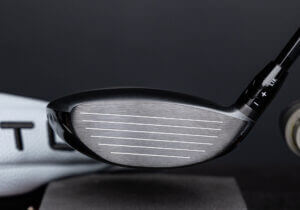
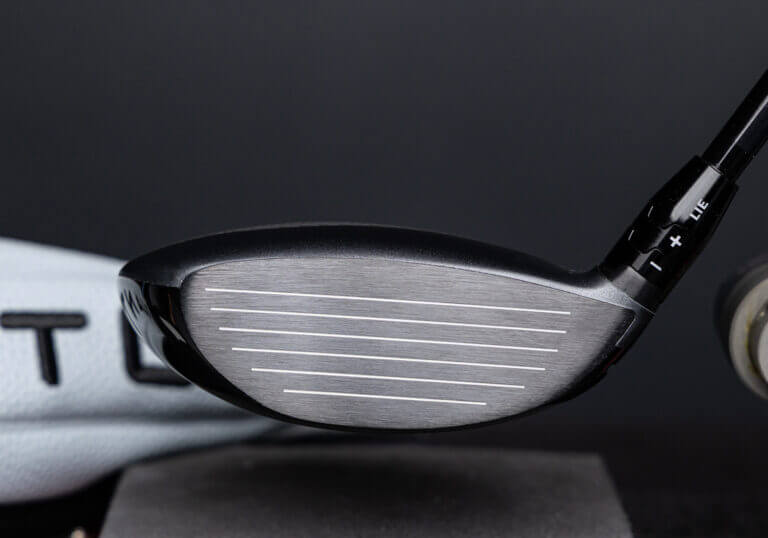
The GTS3 had the shortest roll-out of any club in the test at 8.0 yards. It lands at 40.1 degrees and it still carries 207.1 yards, fourth-longest in the field.
It stops quickly without relying on a high-spin, higher-launch design. The catch is forgiveness. Its proximity (47.1), playable shot percentage (86.9%) and straight shot percentage (45.7%) all sit below the field averages so it rewards good strikes more than the other three.
If you’re already a high spin player and you need something you will reliably hit in the center of the face, the GTS3 is a good choice.
Final thoughts
These four fairway woods offer you a good place to start. Maybe more importantly, when you buy a fairway wood, consider how you use it and look a little deeper into data that can help you lower and improve your scores.








Leave A Reply