


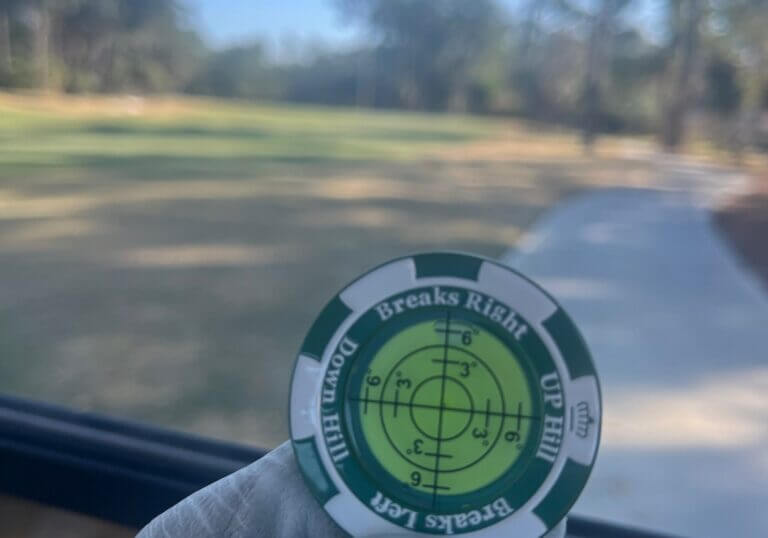
The thing that really got me about this ball marker wasn’t the technology. It was how many people were buying it.
There are dozens of green-reading ball markers on Amazon and this one keeps popping up. The reviews range from people saying it’s “amazingly helpful” to others calling it a complete joke. When something that simple creates that much controversy, I had to see it for myself.
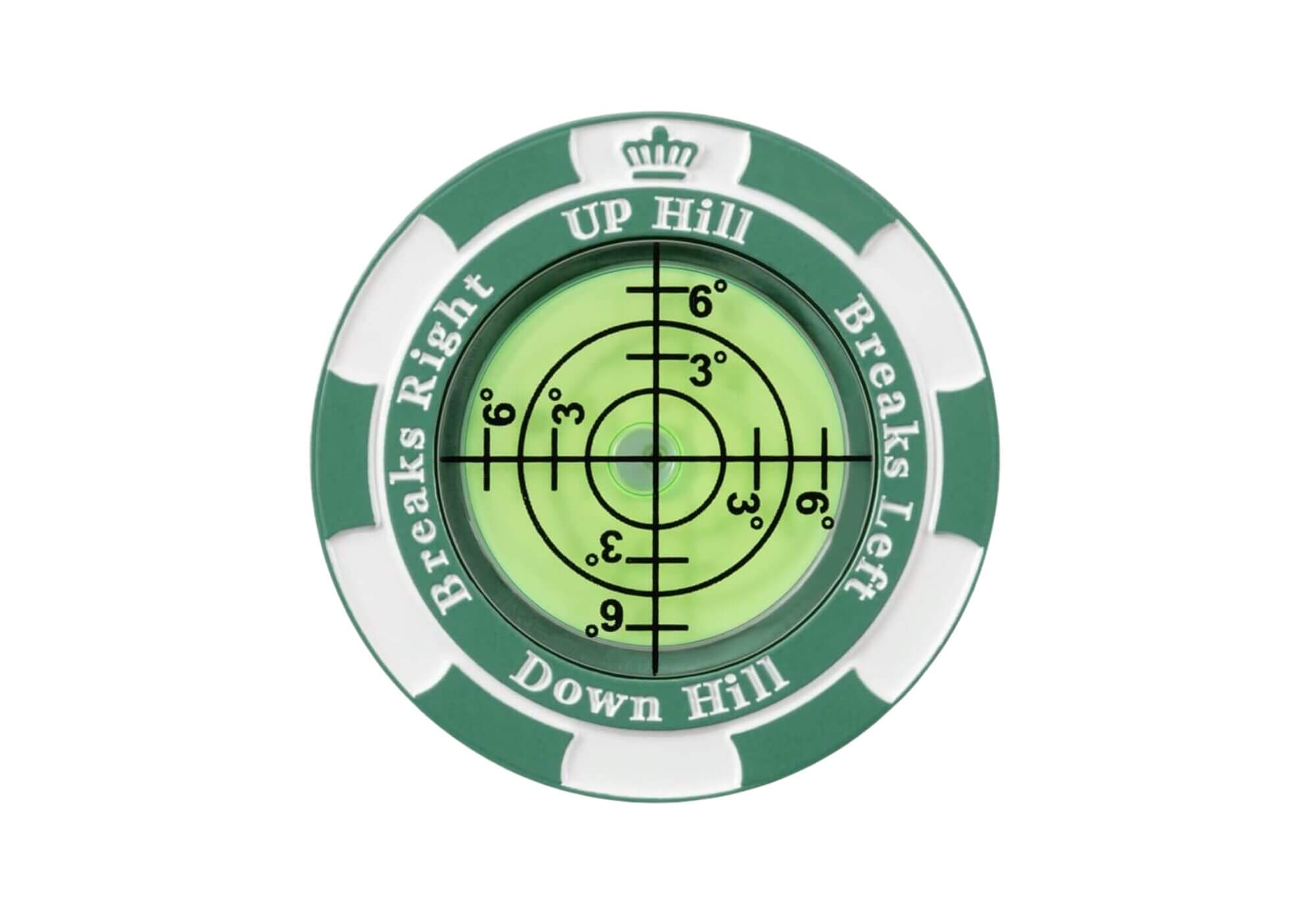
What it is and what it claims
This is a ball marker with a small bubble level and directional arrows built in. The idea is that it helps you read slope on the green and in turn aim your putts better.
It also makes a bold claim on the packaging that it can help you save up to three strokes per round.
The instructions are simple: “Place the ball marker on the green close to where you want to make your putt.”
How it’s supposed to work
Based on the directions, the assumption is that you place the marker near the hole and use it to read the slope at the cup. In theory, that tells you how the ball might behave as it finishes.
The problem is that greens don’t work in isolated sections.
The slope near your ball and the slope near the hole are often very different. To read a putt properly, you need some sense of how the entire path from ball to hole behaves, not just one spot.
To follow the logic fully, you would need to keep moving the marker closer to the hole and checking slope in multiple locations. That slows things down and it’s not a situation I want to be part of or stuck behind during a round.
Take a look at any golf professional using the AimPoint method. They test the slope in several locations.
What happened on the course
I took it out during a casual round with my kids. They were pretty excited about the idea of a ball marker that could read greens.
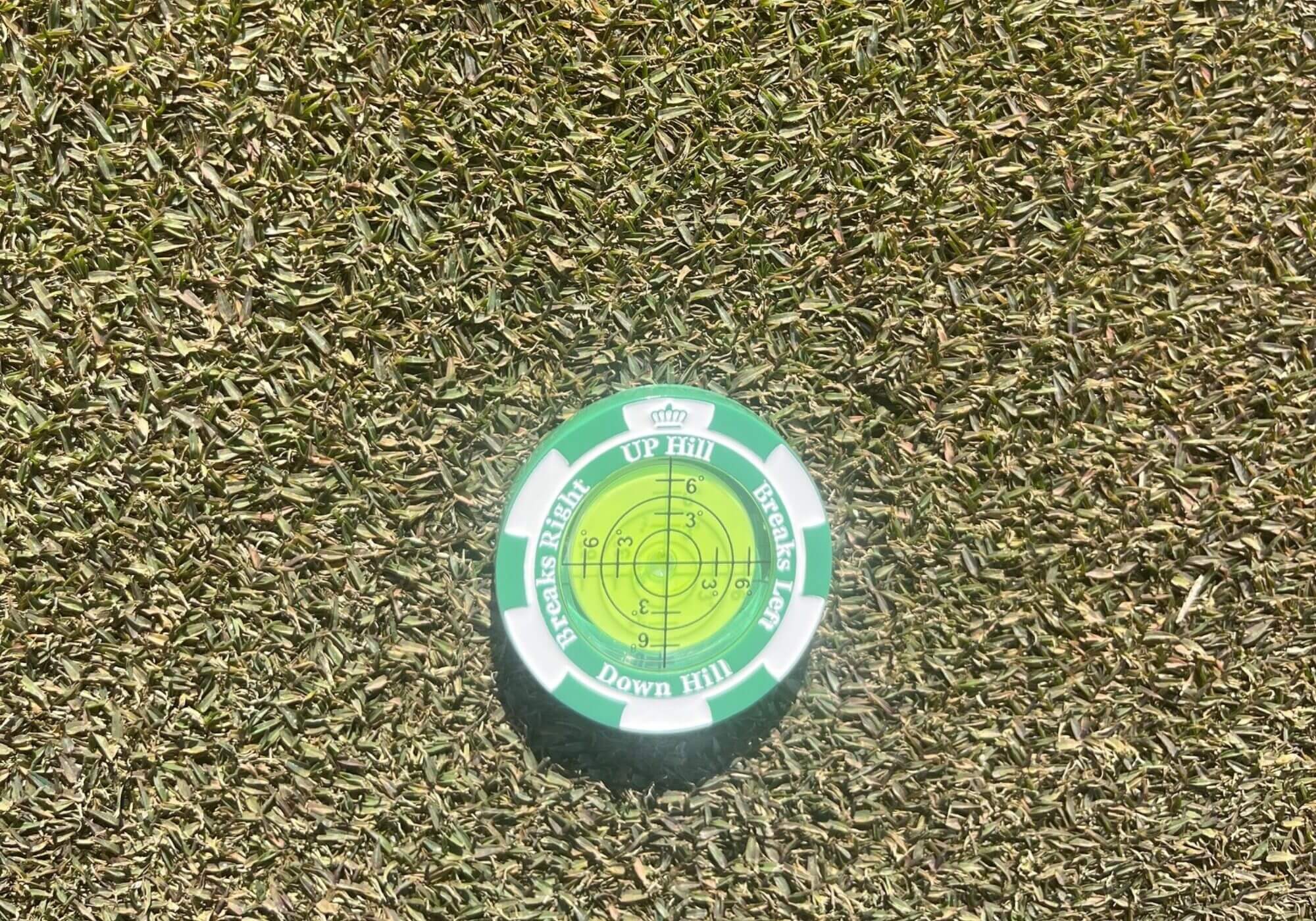
On the first hole, my putt had very little break and the marker showed nothing.
On the next hole, there was noticeable slope between the ball and the cup. Placing the marker in that area barely registered any change. It takes a fairly extreme slope for the marker to react or offer any directional guidance.
The problem is that it doesn’t pick up the subtle movement that golfers who struggle with green reading need the most.
The “save three strokes” claim
Saving three strokes per round is a big promise for any putting aid.
After using this on the course, it’s hard to connect that claim to what the marker provides
How most people are using it
Many of the review videos show players placing the marker directly behind their ball, determining that the putt is downhill and calling it helpful.
Most golfers already know when a putt is uphill or downhill. The challenge is figuring out how much it breaks and where that break happens. Even structured green-reading systems test slope in several locations because one data point is rarely enough.
This marker gives you a single snapshot.
The positives
As a ball marker, it’s fine. It looks clean. It feels solid. It’s available in a wide range of colors. If you like gadgets, it’s a cheap purchase that falls more into the novelty category.
One thing worth keeping in mind is that you can’t use something like this in tournament play although I’m not sure it would make or break your tournament experience.
Better ways to learn green reading
Green reading is something you learn through time and repetition.
If you’re trying to understand basic break and undulation at your home course, digital tools used during practice rounds can help. Apps like GolfLogix show slope across an entire green, giving you a better picture of how putts want to move. You wouldn’t use them in competition but they can be useful when you have time to experiment.
I’m still a believer in learning green reading the old-fashioned way. Spend time on the putting green beyond straight 10-footers. Look for areas with more break, pick specific spots and pay attention to how pace changes the read. It takes time but it pays off.
Final thoughts
This is a less-than-$10 golf gadget that was worth trying.
It doesn’t solve green reading or read the full putt. It certainly doesn’t deliver on the idea that you’ll save multiple putts per round.
If you buy it, buy it for fun. Buy it because it looks interesting. Buy it because your kids want to mess around with it. Green reading is still an art and, in my opinion, one that comes from experience more than tools.








Joejoe
9 months ago
Those are illegal in tournaments.
Northside
9 months ago
Ai will catch up with reading greens accurately. It’s just a matter of time.