



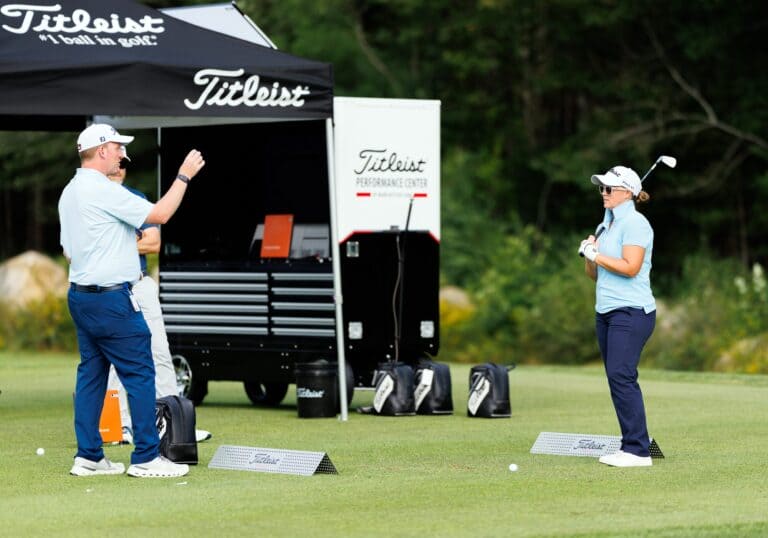
I’ve been playing golf for more than 30 years. It’s been part of my life for almost as long as I can remember.
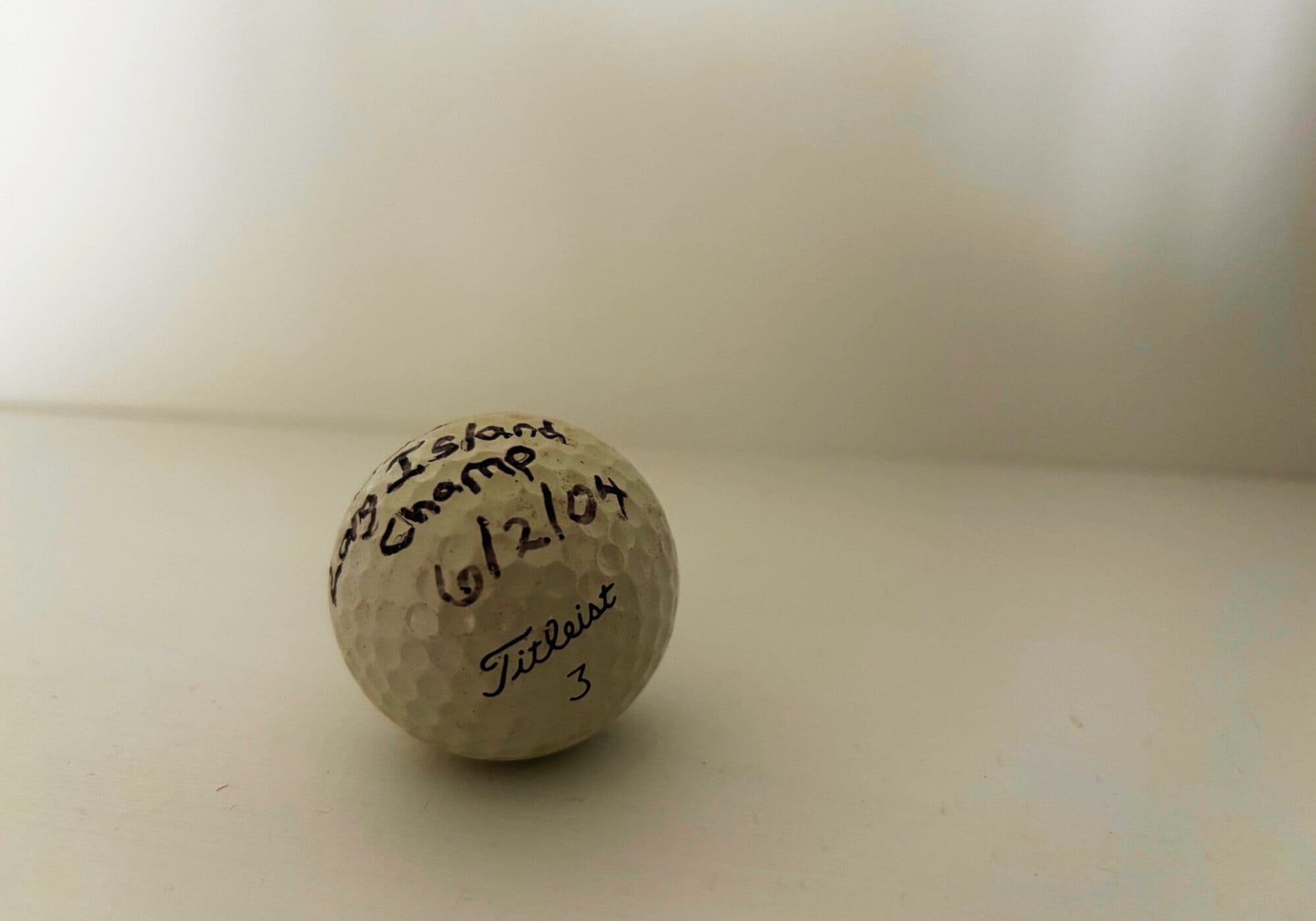
For most of that time, there has been a Titleist golf ball somewhere in the picture. I played the DT SoLo when I was a kid and eventually switched to the Pro V1. Every junior tournament I won, every high school championship and even my Division I college wins came with a Titleist golf ball.
I’ve hit thousands of them. When the score mattered, I trusted the Titleist ball. If you had asked me why, though, I’m not sure I could have given you a very good answer beyond the fact that I liked how they performed.
Then I spent a day with Titleist in Massachusetts.
Making a really good golf ball better is harder than I appreciated
We started in R&D and that ended up being one of the parts of the day I talked about most when I got home.
I told my husband that I’ve always considered myself a relatively smart person. Notice I said I told him that rather than asking for his opinion.
After spending time with the Titleist R&D team, my standard for what qualifies as smart has been seriously raised.
These are people thinking about chemistry, materials, aerodynamics, construction, speed, spin and flight, and trying to understand how changing one affects everything else.
What I probably underappreciated before the trip was how difficult their job gets when the product is already really good.
Titleist has been making the Pro V1 for more than 25 years. At this point, improvement isn’t about finding an obvious problem and fixing it. It’s finding something that can be made better without giving something up somewhere else.
An idea has to be built, tested, measured and compared. Then, assuming it worked, you have to make sure it didn’t create an unintended change somewhere else.
That gave me a much greater appreciation for how hard small improvements can be.
I also found it interesting that the numbers aren’t the only feedback that matters. Titleist tests and validates golf balls with golfers ranging from Tour players to recreational players, and player feedback is part of the development process. Elite players can pick up subtle changes in flight, feel or reaction around the green that help determine whether a change that looks good in testing is useful on the golf course.
From R&D to the ball plant
From there, we headed to the ball plants to watch the manufacturing process.
Titleist says there are about 90 product and process quality checks for Pro V1 and about 120 for the dual-core Pro V1x. Those checks happen throughout manufacturing, not just when a finished ball reaches the end of the line.
One of the details I found most interesting is that every Pro V1 and Pro V1x is X-rayed before it is packaged. That practice has a fitting connection to Titleist’s history. Founder Phil Young’s interest in building a more consistent golf ball started after he had a ball X-rayed and found the core was off-center. Today, X-raying is still part of the process used to check the internal construction before a ball leaves the plant. They do this hundreds of thousands of times a day.
Manchester Lane
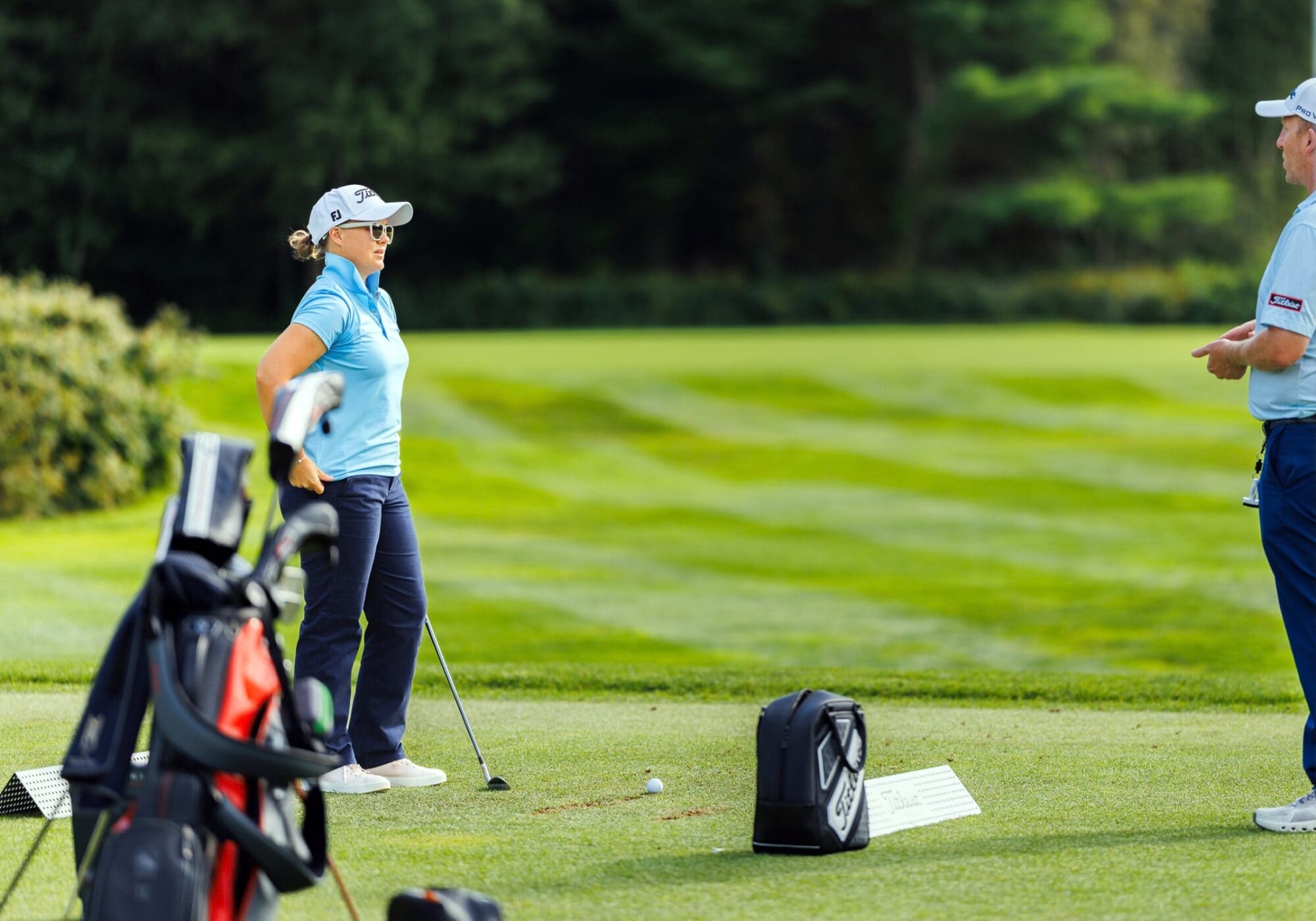
We finished the day at Manchester Lane in Acushnet, Mass.
Manchester Lane is Titleist’s golf ball research and testing facility and serves as the proving ground for its golf ball products. It also operates as a Tour fitting center and offers golf ball and club fittings.
We had spent hours talking about construction, aerodynamics, spin, testing and manufacturing. Now I could go back to being a golfer and pay attention to the part I’ve known for quite some time: what the ball does when I hit it.
The people were what stuck with me
There was plenty I learned spending the day at Titleist but the people were what I kept thinking about afterward.
Yes, they are incredibly smart. I think I’ve established that.
What stood out more was how much they cared about what all of this work eventually means for the golfer. All of the research, prototypes, manufacturing checks and player testing eventually end up with somebody putting a golf ball in play and expecting it to perform.
That golfer could be on Tour. They could also be trying to win their club championship, shoot their lowest round or finally break 100.
I knew there were engineers developing golf balls and people responsible for manufacturing them. I had just never spent much time thinking about how invested those people were in what happened after the ball left the factory.

Can you experience some of this yourself?
Titleist offers Ball Plant 3 tours in New Bedford, Mass., where Pro V1 and Pro V1x are produced. The tours are available to Team Titleist members, Titleist’s free golfer community and current tours are limited to eight visitors.
Golfers can also book fittings at Manchester Lane. Titleist offers a Tee-to-Green fitting along with individual driver, fairway wood, iron and wedge fittings.
I finally understood the “why”
I test plenty of golf balls and that isn’t going to change.
This season alone, I’ve seen some really good things from Maxfli. I’ve put Bridgestone balls in the bag for stretches because I wanted to understand their product line better. If I’m going to tell you a ball performs well around the greens, I want to know what that looks and feels like when I hit those shots myself.
Testing and tinkering are part of what I do.
What this trip changed was my understanding of my own history with Titleist.
For more than 30 years, when a tournament mattered, when my score mattered or when I was trying to shoot the lowest round I could, a Titleist golf ball was the ball I had in play.
I knew I trusted it. I just don’t think I could have clearly explained why.
After spending a day with the people developing the golf balls, seeing the testing behind them and watching the checks built into manufacturing, it finally made more sense.
Maybe what I had trusted all along was consistency.
I wasn’t thinking about centered cores, X-rays or manufacturing tolerances when I was playing golf. I didn’t know any of that. I just knew what I expected when I hit a good shot.
Now I had seen some of what went into making that expectation possible.
And after all those years of putting a Titleist golf ball in play, I now know why.








Jon Compton
4 weeks ago
I get that the author is a very accomplished golfer and loves Titleist. But with the perception that MyGolfSpy still favors certain OEMs, this piece (very informative) hasn’t reduced public perception of your brand as biased.