



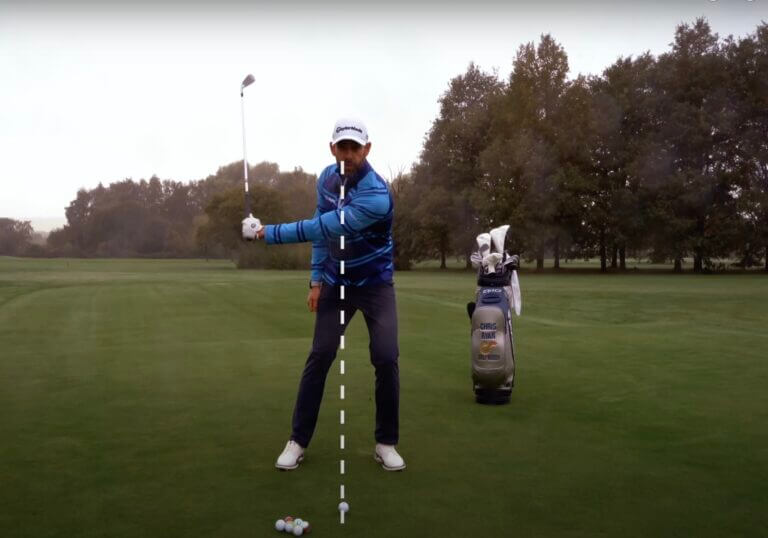
There are a lot of myths in golf. One of them is so common that the majority of golfers still believe it.
We’ve all been there before. Maybe you are playing with someone inexperienced or maybe you are a beginner yourself. Someone in the group makes poor contact with the ball and an immediate assessment is made:
“You need to keep your head down.”
I would venture a guess that this advice and all of its permutations is the most offered swing adage of them all.
You might assume that the popularity of the saying means that it has to be right.
Nope. Trying to keep your head down isn’t helpful. In fact, it’s a swing ruiner.
Why trying to keep your head down is harmful
I am no instructor or golf swing expert so I enlisted some help for this story.
One of my favorite YouTube instructors is Chris Ryan over in the U.K. (you might remember him from this story on the top instruction channels), so I reached out to Ryan to get his perspective.
Ryan has likely heard the saying more than anyone reading this story. He calls it the most common self-analysis for beginners.
“What baffles me is they can hit the ground three inches behind the ball and they will still say they are lifting their head,” Ryan said.
I’m an 8-handicap nobody. Although I recognize that telling another golfer to “keep their head down” is poor advice that more experienced players would scoff at, explaining exactly why tends to put my brain in a pretzel.
Ryan has no such issues. He is one of the top instructors in the world and this isn’t his first rodeo explaining the concept.
So what gives? Why is telling someone to keep their head down so damaging?
For starters, Ryan explains, the head will naturally move during the golf swing. It won’t be perfectly still. He uses the word “steady” to describe head movement. It will move but not excessively.
But head movement is supposed to be an effect. It’s something that happens because we make other movements in our swing.
Thinking about our head not moving—or keeping it down through impact—comes at the cost of everything else we need to do to make great contact. Namely, our body needs to rotate and flow freely through the ball.
“The focus really is not to keep the head still,” Ryan said. “The idea of keeping the head still or staying down really locks up the body for the movements that we do want. We want to allow the head to be free.”
When I asked Ryan where this cliche swing advice comes from, he gave a phenomenal answer that I hadn’t fully considered in my three decades playing this game.
“When I ask great amateurs or pros whether they have ever seen the club make contact with the ball, they all say no,” Ryan explains. “They’ve never seen that collision happen because it’s so high speed.
“And I think when many amateurs start the game, they also don’t see that collision happening, and it’s almost like, ‘Oh, I must not have been looking in the right place to hit the ball.’ They are thinking they need to see the club hit the ball when the reality is that will never happen.”
It’s counterintuitive, isn’t it? You are told as a young kid to keep your eye on the ball. The assumption is that you are supposed to see the club hit the ball. But, in reality, that process happens too fast to process. You are feeling impact but not seeing it.
And if you are hellbent on seeing the club hit the ball—or have other reasons for “keeping your head down”—your body won’t be doing what it’s supposed to be doing.
OK, so what is my body supposed to be doing?
Instead of thinking about what your head should be doing, the focus should be on transfer of pressure.
Ryan says good players put pressure on their lead leg (left leg for a right-handed player) by the start of the downswing. The head naturally dips down an inch or two when you do this but it’s just an effect of that pressure being added to the front leg.
On the other side, worse players tend to keep too much pressure on their trail foot by the time they reach the top of their backswing—to the point where they sway off the ball and get too much weight behind the ball.
Their head often rises because of that. It’s a symptom of the bigger issue as the body is not in the proper position to get the downswing started.
Imagine your feet are on two scales as you start the golf swing. You should start around 50 percent for each foot. As you start the backswing, pressure (but not the weight of your upper body) will come into your trail foot but, by the top of the backswing, you should have returned to around 50-50 on each foot.
As you start your backswing, Ryan tells his students that he wants to picture their lead foot to read higher than 100 percent of their weight. That movement usually causes your head to go down naturally but, once again, it’s an effect of the right move.
“You aren’t just trying to shift your weight forward—you are trying to push down into that left foot,” Ryan said. “In almost all cases, the head will go down a little bit.
“In a funny kind of way, golfers do need to keep their head down more. But it’s about phrasing. Telling someone to keep their head down suggests the head is going to stay down through impact, which would be too long.”
If you are more of a visual learner, try out this video by Ryan.
Basically, the goal is to drive that lead foot into the ground. A lot of golfers believe their weight is supposed to be on the trail leg by the top of the backswing and then come forward but that easily leads to problems like being stuck in a reverse pivot or relying too much on timing to make solid contact.
Here is a visualization that Ryan uses with his students:
Imagine a hula hoop on the ground around you as you step into the ball at address. Picture the hula hoop moving with you during the swing.
“Great players will move that hula hoop slightly toward the target and slightly underground to hit down on the ball and take a divot,” Ryan explains. “I like to see in your transition something that moves that circle down and forward. But the key part of that message is that you have to push up and out of that on your follow-through. This is what we want the circle to do and your head just needs to allow that to happen.”
Once again, your head is an effect. Saying you “lifted up too quickly” with your head is a misguided diagnosis. Your head is supposed to come up as a result of your body transferring weight through the follow-through.
The head isn’t something to fight in the swing. It can actually help if you utilize it correctly.
Jack Nicklaus and Nick Faldo are two famous examples of golfers who had pre-set head rotation, almost looking at the ball through their left eye. That allows the shoulders to turn more while still encouraging that pressure on the lead foot.
Here is an exercise Ryan gives his students: Stand up straight with your hands across shoulders. Turn your head to look over your left shoulder and then rotate your shoulders to the right.
You’ve become stuck, right? But if you turn your head to look over your right shoulder, there is a lot more freedom in that rotation to the right.
Just a touch of head rotation—before the swing even begins—helps encourage you to put more pressure to the lead foot by the time you start the downswing. But, once again, the head is simply an effect of what your body should be doing getting pressure into that lead leg.
“I wouldn’t say to someone, ‘Hey, I want your head to move down by an inch on the backswing,'” Ryan said. “That’s not the goal. The goal is to shift, to put pressure into the ground. If you do that correctly, you often get the head going down.”
When you put too much weight onto your trail leg, Ryan says that “it’s very hard to recover from that” because of the amount of force involved in the downswing.
You have to slide over to the left (for right-handers) and try to get that hula hoop driving down into the ground but matching all of that timing is very difficult from that position. When you put pressure into the lead leg coming down, you are set up to rotate freely through the ball with fewer unnecessary movements.
The head will come up and through the ball as part of the impact. Not only is there no need to keep it down but doing so prevents you from getting all the way through the ball and onto that lead foot after impact.
So what should I say instead of “keep your head down”?
The head is a byproduct of how your body should be moving. When you tell someone (or yourself) to “keep your head down”, it’s sending a message that your body can’t rotate through impact because your head has to stay still.
That is the absolute worst thing for a beginner or for anyone looking to make solid contact. You need your body facing the target after impact. Your head should go down to start the backswing but it’s going to be coming up and through as you make impact.
So what else can you say to offer advice?
Focus on pressure transfer.
“Press into your lead leg at the top of your backswing” is a much better thing to say. If you can feel that pressure on your front foot, your next thought will be trying to drive that hula hoop down and then up.
As for the head, it’s only along for the ride.









GNP
2 years ago
xxxbetturkey.com – your website is rock! nice for girl :D