
7 Things Scratch Golfers Do That You Should, Too
Alternate Golf

7 Things Scratch Golfers Do That You Should, Too

Support our Mission. We independently test each product we recommend. When you buy through our links, we may earn a commission.

7 Things Scratch Golfers Do That You Should, Too

Scratch golfers share habits and strategies that set them apart. These aren’t gimmicks or tricks. They are practical approaches that help keep scores down. If your game has room for improvement, here are seven things scratch golfers do that you should, too.

They keep their equipment clean

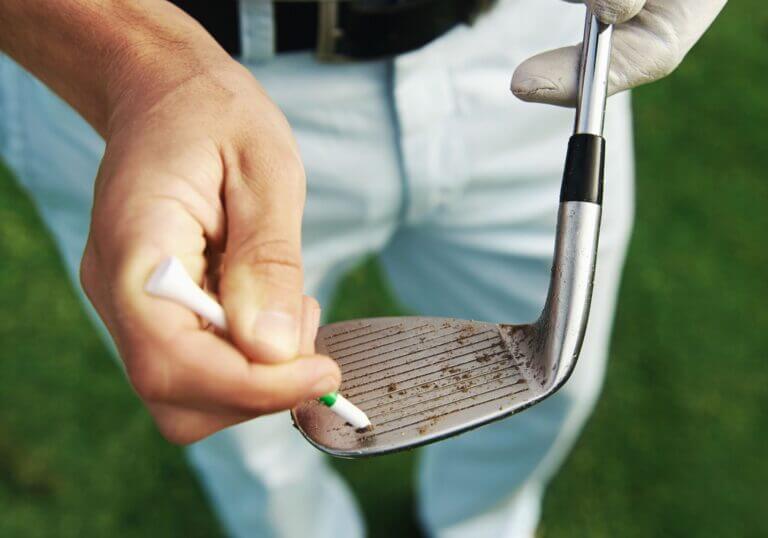
Scratch golfers know that keeping golf balls and clubs clean will decrease the chance of dirt, grass or even moisture impacting ball flight and spin. A dirty clubface could cause an unpredictable shot and things like mud and sand can impact trajectory or roll.

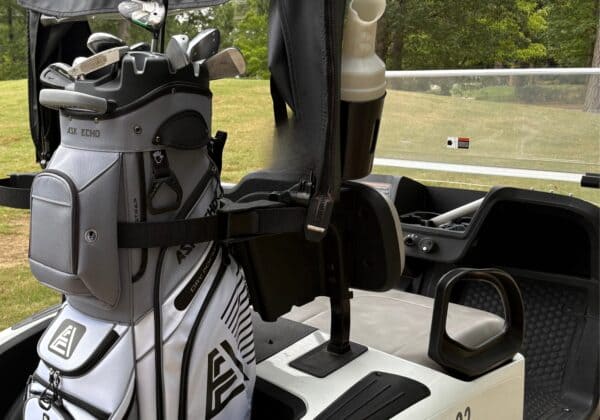
Keep a towel (or two) on your golf bag with a wet and dry section. Wipe down the clubface after every shot and clean the golf ball every chance you get.

When things go wrong, they don’t overreact

Many higher-handicap players overreact when their game starts to head south. They hit one slice and start reworking their swing plane on the next tee.

Scratch players focus on minor adjustments. They first check to make sure there are no grip or setup-related tweaks they could make to fix the issue.

They are better at damage control than higher-scoring players.

If your game starts to go bad mid-round, start with the basics like posture, setup, aim and ball position. Leave the technical fixes for the driving range.

They focus on the next shot

The tee shot that ended up in the water hazard or the three-footer you missed on the last green are all in the past. The only shot you now have control over is the one you are about to hit.

Scratch golfers can’t let their minds linger on those bad shots. They have learned how to reset and focus on the next task at hand. One good shot at a time.

You can start applying this to your game by developing a pre-shot routine in which you clear your mind and focus on the task ahead.

All par-5s are par-4s

A par-5 is an opportunity for a birdie. Scratch golfers look at a par-5 as a long par-4 and they do whatever they can to make a four on the hole. Higher-handicap players often think this is impossible because of the lack of distance in their golf shots.

However, scoring low on the par-5 is also about shot positioning.

Get good at hitting your driver off the tee and then try to get as close as possible on the second shot. Shot Scope collected data regarding approach shots and found that your best strategy is to get as close to the hole as possible.

Treat the par-5 like a long par-4 where you have to get up and down to save your score.

(Kyle Lanzer/Cleveland Metroparks)

They use data to learn about their game

Not all scratch golfers love data. You won’t see them all fine-tuning their performance on the range with a launch monitor. However, they have at some point used data to get fitted for clubs, learned that their weakness is their 100-yard shot or realized that a softer golf ball spins too much for their game.

Data is valuable.

You don’t have to track every single round. However, using shot-tracking tools like Arccos or Shot Scope to monitor club distances and your tendencies on the course will help you play smarter golf.

Distance control with wedges is a strong point

Scratch golfers can control their wedge distances. From 50 yards and under, the scratch golfer gets up and down about half the time (according to Shot Scope data), while the 25-handicap player gets up and down only a quarter of the time.

From the 100-yard mark, the scratch golfer takes an average of 2.98 shots to finish and the 25-handicap takes almost a full shot more.

A lot of this has to do with distance control on wedge shots. The better players know how to hit 50-, 60-, 70- and 80-yard shots on demand. Try setting targets at 10- or 20-yard intervals when you practice shots under 100 yards. Learn what club/swing length you need to hit each of these targets.

They play one primary shot shape

We talk a lot about how it’s good to know how to hit a draw or a fade because you can run into situations where you need it on the course. However, don’t think that great players change their shot shape on every swing they take.

They don’t.  

Scratch golfers have a go-to shot shape they trust and use as often as possible.

Although they have the ability to hit a variety of shots, consistently executing one shot shape simplifies decision-making. It also helps you trust your swing under pressure.

Many higher handicappers struggle with inconsistent shot shape. Sometimes, it’s a matter of not pushing yourself too far away from what’s natural. If a fade is natural for you, play it.

Final thoughts

These seven characteristics of scratch golfers may seem simple but implementing them can lower your scores and help you help you play more confidently in 2025. Whether you are looking to become a scratch golfer or just shave a few shots off your game, this is a good place to start.


For You

For You

News
Jun 5, 2026
Three Reasons Your Handicap Is Lower Than It Should Be
First Look
Jun 4, 2026
How Much Larger Is The New TaylorMade Spider ZT Max?
First Look
Jun 4, 2026
Can The New Odyssey Ai-DUAL Jailbird Cruiser Fix Your Putting Problems?
Brittany Olizarowicz

Brittany Olizarowicz

Brittany Olizarowicz

Britt Olizarowicz is a scratch golfer, former teaching professional and one of MyGolfSpy’s leading voices on equipment testing and golf performance. She has spent more than 15 years working at private clubs in New York and Florida and now specializes in translating test data and swing mechanics into practical advice for everyday golfers. Britt began playing at age 7 and has never left the game. When she’s not writing, you’ll find her on the course, playing pickleball, cooking, running or out on the boat with her family.

Brittany Olizarowicz

Brittany Olizarowicz

Brittany Olizarowicz


    This site is protected by reCAPTCHA and the Google Privacy Policy and Terms of Service apply.

      Gary

      11 months ago

      I played golf the other day with my son who’s a professional and trying to get his tour card. And we talked a lot about these 50 yard shots and the concept behind it. What he pointed out is that many of the places around the Green trying to hit a shot from 45 or 50 yards put you in a place with very difficult lies or very difficult angles to the green. You may be below the hole behind a bunker to attack flag or you might be on very uneven lie Whereas if you’re further back, say 100 yards out the odds are that you’re gonna be more in the fairway and might have a better lie and a better angle. Just being close and always the best thing you have to consider what kind of lie what kind of shot you have.

      Reply

      John

      1 year ago

      My thoughts; Come to play. Dress well to play. Mentally prepared. Enjoy the day and your friends.

      Reply

      Bob

      1 year ago

      I’ve played college, then minitour for a few years, and became a teaching pro, my two cents…

      1) Line up your ball when you putt and tee off
      2) Keep your clubs clean and headcovers on when not in use
      3) Pay more attention to your misses and factor them into your target
      4) Hit a bunch of putts from 3 and 6 feet in around the hole from different angles on the practice green before playing
      5) Know the rules
      6) Play fitted clubs
      7) Have a preshot routine (see point 1)
      8) Play the game you have that day

      These are some traits that separate many 0 and 20 handicaps.

      Reply

      don

      1 year ago

      You need to get it close to the green, close enough to putt. TO DO THAT
      You need to hit it far enough in play to get a chance to reach every par 4 in 2.
      You need to be able to hit your irons within about 20yds everytime. Thats both left/right n front/back. If you can’t do that with the 7 iron you need to hit the driver better so you can hit an 8 iron or less.
      They stay in play, and get back in play. They keep the chance for par alive even if its an up/down

      Reply

      John S

      1 year ago

      Two of the things I learnt getting down to scratch were expectation management and never hitting ‘full’ wedge shots. We all know that when you miss an eight foot putt it’s not the end of the world – PGA tour pros on the best greens only hole on average 50%. A good approach shot can be on the green 20 foot from the pin. With wedge shots it’s better to hit an easy gap wedge than try to blast a sand wedge. Also try to hit your wedges with a low trajectory, say 28 to 30 degrees so you control spin and distance.

      Reply

      David

      1 year ago

      “Get good at hitting your driver off the tee and then try to get as close as possible on the second shot.” This analysis is pure gold! I’m gonna start turning par 5’s into par 4’s right… about… now.

      Reply

      RC

      1 year ago

      That wedge tip is money. I had to laugh at this line – they found that “your best strategy is to get as close to the hole as possible.” No kidding…

      Reply

      League Golfer

      1 year ago

      Another thing I see is they usually don’t go for the nearly impossible hero shot when they are in jail. When that doesn’t work out, golfers are still in jail. They punch out instead and hope for a good next shot and then a one putt, or a two putt at worst and therefore, they avoid a blow up hole.

      Reply

      Mark R

      1 year ago

      Most low-handicap golfers (except John Daley) properly warm up and stretch before the round.

      When I get to the first tee box, I need to be ready. Can’t wait to “find” my game on the 4th hole.

      Reply

      Dr Tee

      1 year ago

      All low handicappers KNOW THE RULES and use them to their advantage-especially avoiding penalty situations or optimizing recovery positions from a penalty–example: knowing options of where to drop after losing a ball in a red stake penalty zone.

      Reply

      Sean

      1 year ago

      I like and agree with the idea of having a routine. By sticking to a routine, it slows me down, helps me breathe & keeps me looking ahead – not dwelling on the last shot.

      Reply

      JRDuck40

      1 year ago

      Agreed on all fronts. Another one to add would be add an extra 5 minutes to your pre-round routine. An extra 5 on chipping and putting will very much assist in dialing in the green speeds for that round. Always a big assist!

      Reply

      RPD3

      1 year ago

      Great point. I’m on the higher handicap side and I tend to arrive early to hit a few range balls. However, I rarely leave myself enough time to put or chip a few and then I end up spending the first few holes figuring out the green speed.

      Reply

      Dick Read

      1 year ago

      After several million years of golf, I’ve rarely found course green speed and practice green speed close to matching. Chipping, absolutely, but with pre-round putting, I focus on short putt stroke.

      Now, I fight the yips. The better stroke I can get on practice green, less yips bite me when faced with 3 foot putt on course.

      Just adding my two cents worth here, everyone is different.

    Leave A Reply

    required
    required
    required (your email address will not be published)

    This site uses Akismet to reduce spam. Learn how your comment data is processed.

    News
    Jun 5, 2026
    Three Reasons Your Handicap Is Lower Than It Should Be
    First Look
    Jun 4, 2026
    How Much Larger Is The New TaylorMade Spider ZT Max?
    First Look
    Jun 4, 2026
    Can The New Odyssey Ai-DUAL Jailbird Cruiser Fix Your Putting Problems?