


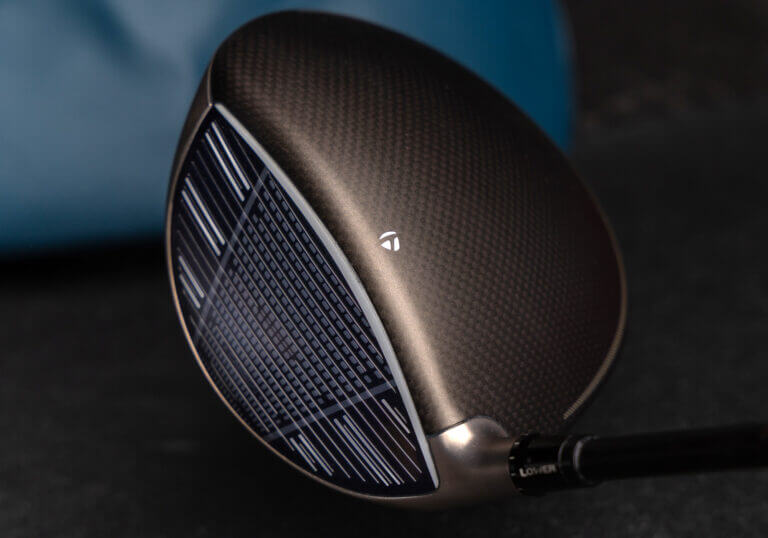
When you test 42 drivers, somebody has to finish first and somebody has to finish last.
That part is a given.
What’s more interesting is why. What makes a driver finish at the bottom of the rankings? Is it speed? Distance? Accuracy? Forgiveness? Or is it a combination of small issues that start to add up?
In our 2026 driver test, the TaylorMade Qi4D finished as the best driver overall. The COBRA OPTM Max-D finished last.
So I dug deeper into the data to see where the real separation was. The answer was not quite as simple as “one was long and one was short.”
Here are the real differences between the first-place driver and the last-place driver.
First versus worst: Key numbers
The first thing that stood out was that the gap was not about club speed.
The COBRA OPTM Max-D actually produced slightly more club speed than the TaylorMade Qi4D. But the Qi4D turned that speed into more ball speed, more carry, more total distance and much better shot outcomes.
| Metric | TaylorMade Qi4D | COBRA OPTM Max-D |
|---|---|---|
| Club speed | 98.57 mph | 99.11 mph |
| Ball speed | 141.26 mph | 139.36 mph |
| Carry | 234.59 yds | 225.17 yds |
| Total | 249.17 yds | 236.99 yds |
| Straight shot % | 56.12% | 41.28% |
| Playable shot % | 87.75% | 74.31% |
| Fairway % | 67.26% | 52.75% |
| Penalty % | 2.67% | 7.80% |
The Qi4D was about 12 yards longer in total distance. It also produced more straight shots, more playable shots, more fairways, fewer penalties and a much better average proximity.
The bigger problem was accuracy
The Qi4D produced a straight shot rate of 56.12 percent. The COBRA OPTM Max-D was at 41.28 percent.
The playable shot rate showed a similar gap: 87.75 percent for the Qi4D compared to 74.31 percent for the COBRA.
Fairway percentage was also clearly in favor of the Qi4D. It hit 67.26 percent of fairways compared to 52.75 percent for the COBRA.
That is where the last-place finish starts to make more sense.
A driver can be a little shorter and still work if it keeps the ball in play. But when it is shorter and less accurate, the penalty becomes much harder to ignore. To me, this is the most important part of the story. The Qi4D did not just go farther. It put golfers in better places more often.
What if swing speed changes?
This is where the story gets a little more interesting.
The COBRA OPTM Max-D did not perform equally poorly for every swing speed. At slower speeds, the gap was much smaller. In a few shot outcome categories, the Max-D held its own.
| Swing speed | Driver | Total | Fairway % | Playable % |
|---|---|---|---|---|
| Slow | Qi4D | 198.46 | 79.53% | 94.49% |
| Slow | COBRA Max-D | 191.71 | 78.33% | 95.00% |
| Mid | Qi4D | 251.36 | 66.15% | 92.82% |
| Mid | COBRA Max-D | 240.24 | 43.08% | 67.18% |
| High | Qi4D | 296.50 | 56.69% | 73.23% |
| High | COBRA Max-D | 276.67 | 42.98% | 65.29% |
The COBRA was not equally bad for every golfer. But once speed increased, the weaknesses showed up in distance and shot outcome.
What makes a driver finish last?
The COBRA OPTM Max-D did not finish last because of one number.
It finished last because too many important categories moved in the wrong direction. It gave up carry, total distance, playability and fairways and golfers weren’t gaining anything.
Here is a complete look at all of our 2026 driver data: Best Golf Drivers of 2026.







Andrew
2 months ago
These metrics you’ve used to describe the driver are brilliant, this is the level of detail needed in the main driver test results, rather than slughtly ambiguous “forgiveness” and “accuracy”. Fairways hit, playable ball, straight shot and penalty are real stats that translate directly to what we see and think about on the course. I’d love it if these can be used in future along side the clubhead speed, ball speed & spin rate data