

Not All Zero-Torque Putters Are Designed To Do the Same Thing
Buyer's Guide

Not All Zero-Torque Putters Are Designed To Do the Same Thing

Support our Mission. We independently test each product we recommend. When you buy through our links, we may earn a commission.

Not All Zero-Torque Putters Are Designed To Do the Same Thing

Zero torque is one of the fastest-growing concepts in putter design. The premise is simple: reduce unwanted face twist and help golfers return the face to square more consistently.

In our 2025 putter-type comparison, the top zero-torque model and the top mallet finished in a statistical tie for best overall PuttView Handicap. The leading blade trailed both. That tells us zero torque isn’t a gimmick. It performs at a high level against traditional designs.

But performance at the category level is only part of the story.

Inside the zero-torque category itself, the data shows meaningful separation in performance of each model.
What zero torque actually does

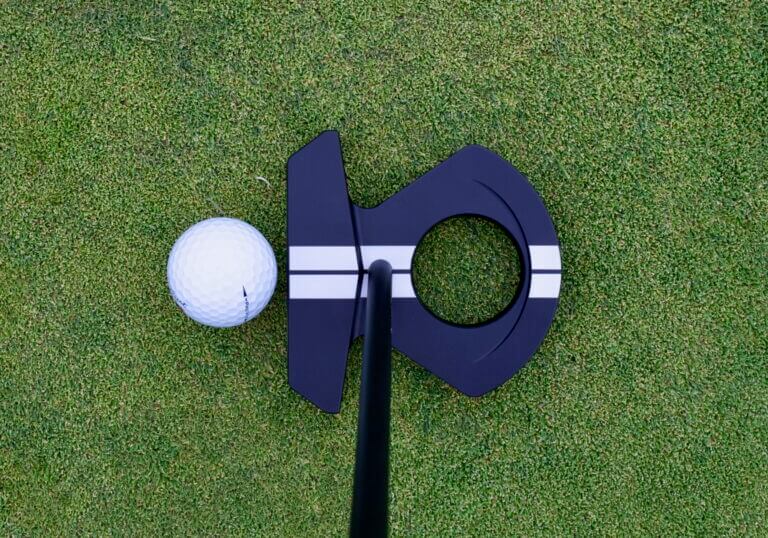
Zero-torque designs are engineered so the putter head resists twisting during the stroke. Instead of feeling like you have to time the release or manually square the face, the head wants to stay more stable.

If you struggle with open-face misses or inconsistent start lines, that stability can help. It can reduce face-rotation and make your stroke feel more repeatable.

What zero torque does not automatically control is speed, leave distance or how a putter performs from specific ranges.

And that’s where our 2025 PuttView data becomes important.

What the 2025 data shows

In our 2025 Most Wanted Zero-Torque Putter test, we logged 10,880 putts across 17 models using PuttView Handicap as the scoring metric. Every putter in the field produced a negative PuttView Handicap, meaning each performed better than the benchmark.

However, performance inside the category was not uniform.

Some models separated at short range. Others excelled at medium distance. If zero torque created one consistent performance profile, those differences wouldn’t be as extreme.

Here’s a simplified look at how several of the top models split by distance:

PutterShortMediumLong
L.A.B. OZ.1i-8.1-5.8-8.7
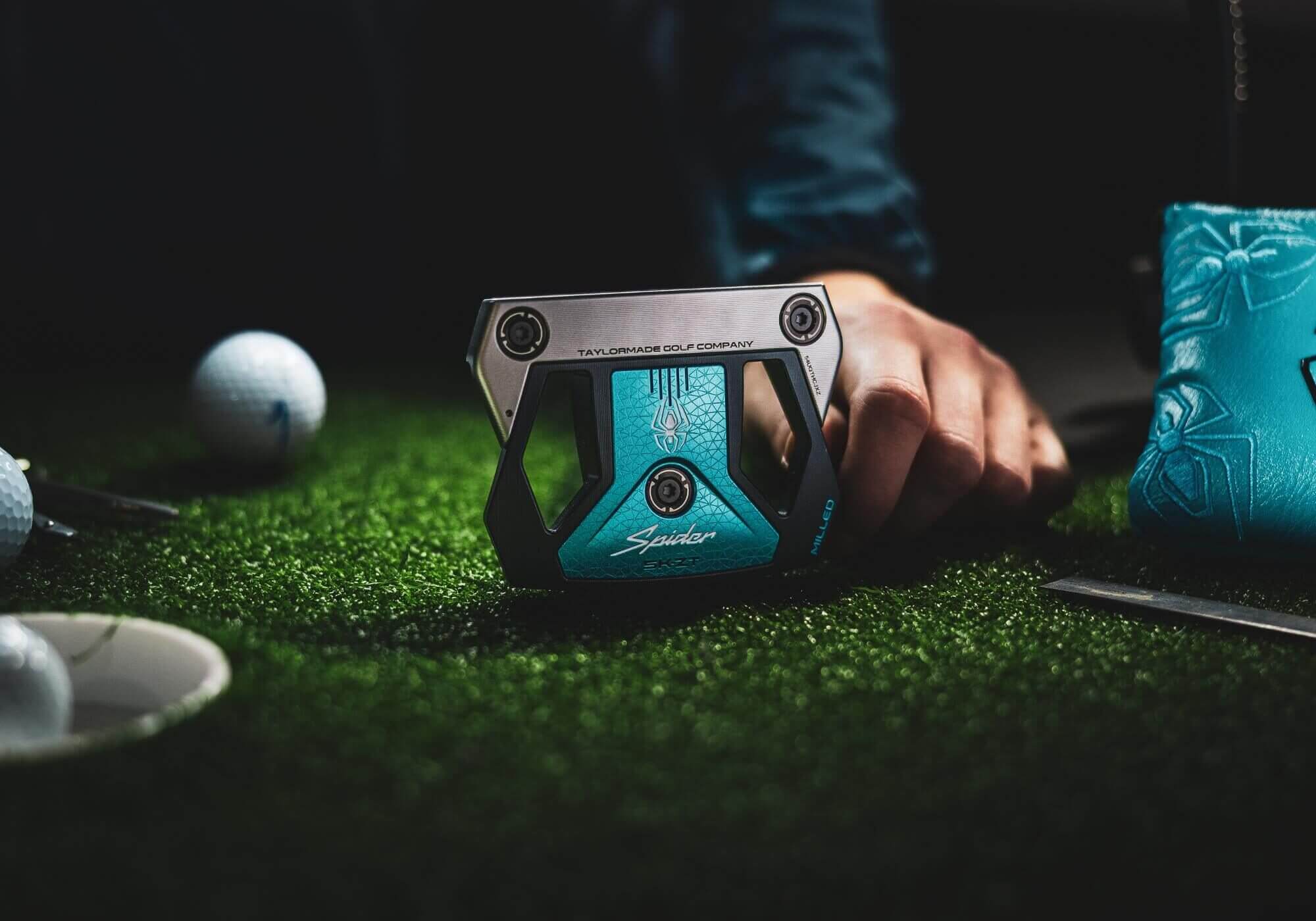
TaylorMade Spider 5K ZT-5.5-7.0-10.2
Bettinardi Antidote SB2-6.4-7.7-6.0
PXG Allan-8.0-2.6-8.3

Negative numbers represent Strokes Gained relative to the PuttView benchmark. More negative is better.

The TaylorMade Spider 5K ZT dominated long putts. The Bettinardi Antidote SB2 separated itself at medium range. The L.A.B. Golf OZ.1i showed strong short and long performance. The PXG Allan excelled short and long but dipped significantly at medium distance.

Medium-range performance also showed the largest separation in the full test pool. That range has historically been one of the biggest scoring differentiators in putter testing.

Zero torque stabilizes the face. It does not eliminate performance variation within the category.

What golfers should take from this

The more golfers I talk to, the more I hear zero torque described like it’s the magic trick on the greens.

There’s no question it offers a benefit. Reducing face twist can help certain players start the ball on line more consistently. Our testing shows the category performs well and can compete directly with the best mallets on the market.

But after more than 10,000 putts in our 2025 test, zero torque is not the whole story. Even within the same design concept, performance still varies.

That’s why getting fitted for a putter is so important.

Zero torque can be a powerful tool but it isn’t a universal fix.

img

MyGolfSpy Testing Toolkit

World-class testing requires world-class equipment. This is the gear we trust to help us fulfill our Most Wanted testing.

For You

For You

News
Jun 19, 2026
USGA Spot On With Shinnecock Setup During Blustery Opening Day
News
Jun 19, 2026
PAYNTR’s Rise Is No Accident: Five MyGolfSpy Members Tested The Reserve Classic Tour RS
News
Jun 19, 2026
Scratch By 50: I Switched From The Worst-Rated Driver To The Best-Rated Driver
Brittany Olizarowicz

Brittany Olizarowicz

Brittany Olizarowicz

Britt Olizarowicz is a scratch golfer, former teaching professional and one of MyGolfSpy’s leading voices on equipment testing and golf performance. She has spent more than 15 years working at private clubs in New York and Florida and now specializes in translating test data and swing mechanics into practical advice for everyday golfers. Britt began playing at age 7 and has never left the game. When she’s not writing, you’ll find her on the course, playing pickleball, cooking, running or out on the boat with her family.

Brittany Olizarowicz

Brittany Olizarowicz

Brittany Olizarowicz

Brittany Olizarowicz

Brittany Olizarowicz


    This site is protected by reCAPTCHA and the Google Privacy Policy and Terms of Service apply.

      CD Osborne

      4 months ago

      Where are all the details? Seems like most of Brittany’s articles lack the details or are just a rehash of information from a previous article.

      Reply

      HackerBill

      4 months ago

      This all kind of baffles me… how the heck does anyone get putter head twisting during the stroke when… putting? Sometimes my putts are long but never have I taken a full swing with my putter. Wait a minute. Maybe that’s my problem. I need to try it off the tee box!
      My 1.8 putting average with my Odyssey Double-wide Stroke Lab twist just fine for me. I just need to be a better mother putter.

      Reply

      Jay

      4 months ago

      What are the distances for the Short, Medium, and Long?

      Reply

      Mackdaddy

      4 months ago

      Well your fitting comment hit the most true for me. I have played a zero torque P2 from Positive Putters for over 20 years. I was custom fit by the original designer at a golf show and it is the best putter I have ever gamed. I have both a Lab Oz.1 i hs and Evnroll Z2s zero torque that were not fitted to me. Both are off just a small amount for my comfort and confidence.

      Reply

      Steve

      4 months ago

      I putted with nearly every ZT putter in Spring of 2025 and settled on an Evnroll Z5S. I did not try PXG and the Spider was not out yet. All seemed great on short putts but the Evnroll was best for me on lags.

      Reply

      Trusty Rusty

      4 months ago

      Well done, But I do have one question, mostly for curiosity’s sake. Q. I wonder how many face-balanced malet putter users have gone to zero-torque putters. Seems to me those that are are just chasing missed putts that they were lined up wrong or underestimated a read.

      BTW TM’s original daddy long legs is probably the closest to ZT putters today Over 10000 moi . Brian Harmon played with ones for years.

      Reply

      Bob

      4 months ago

      Love to see some data on the new Lazarus zero torque putters I just ordered one

      Reply

      Fake

      4 months ago

      I’m curious myself. I know someone else here on MGS reviewed it a while back.

      Reply

      Jim Hopson

      4 months ago

      No mention of the new Void putters?

      Reply

      Chris F

      4 months ago

      Well done article, nicely supported with the Puttview data. Not all zero torque putters are created equal and while helpful to many they are not a magic wand. You still need to have proper mechanics, be able to read greens and judge distance/distance control, alignment, etc. All require work and practice. The putter is just one piece of the puzzle and face control is the key. Getting fit for a putter on Quintic can be an eye opening and very beneficial experience.

      Reply

      JBR

      4 months ago

      I can easily understand how a putter could be less accurate relative to the competition as distance increases or decreases. I can even understand how the rate of change relative to the competition increases with distance. But I don’t understand how the PXG Allan can be worse in the middle than with short and long putts. That doesn’t sound like a design issue to me but rather variability in the strokes of the testers.

      Reply

      BT

      4 months ago

      IMHO, I have always found that weight/MOI of a putter influences distance control the most with dynamic loft contributing a small amount. Head shape and design characteristics (sightlines, etc) influence accuracy. Again, not scientific, just a ton of putts hit with a ton of different putters built a lot of different ways.

      BT

      Reply

    Leave A Reply

    required
    required
    required (your email address will not be published)

    This site uses Akismet to reduce spam. Learn how your comment data is processed.

    News
    Jun 19, 2026
    USGA Spot On With Shinnecock Setup During Blustery Opening Day
    News
    Jun 19, 2026
    PAYNTR’s Rise Is No Accident: Five MyGolfSpy Members Tested The Reserve Classic Tour RS
    News
    Jun 19, 2026
    Scratch By 50: I Switched From The Worst-Rated Driver To The Best-Rated Driver