



Bad golf advice is everywhere. The more time I’ve spent in this game, the more I think some of it is not always bad. It’s just misunderstood.
Telling one golfer to keep their left arm straighter could clean up a collapsed backswing. Tell another golfer the same thing and suddenly they’ve locked their arm so hard the swing looks more like a windmill than an athletic motion.
Most tips are not wrong for everyone. They are wrong when they are applied to the wrong player, exaggerated or followed without understanding what they are supposed to fix.
To accept and process golf advice from other people, you need at least a basic understanding of your swing and your tendencies. Otherwise, a tip that solves one issue can quickly create more.
Here are four common pieces of golf advice, what they are trying to fix and what can go wrong if you take them too far.
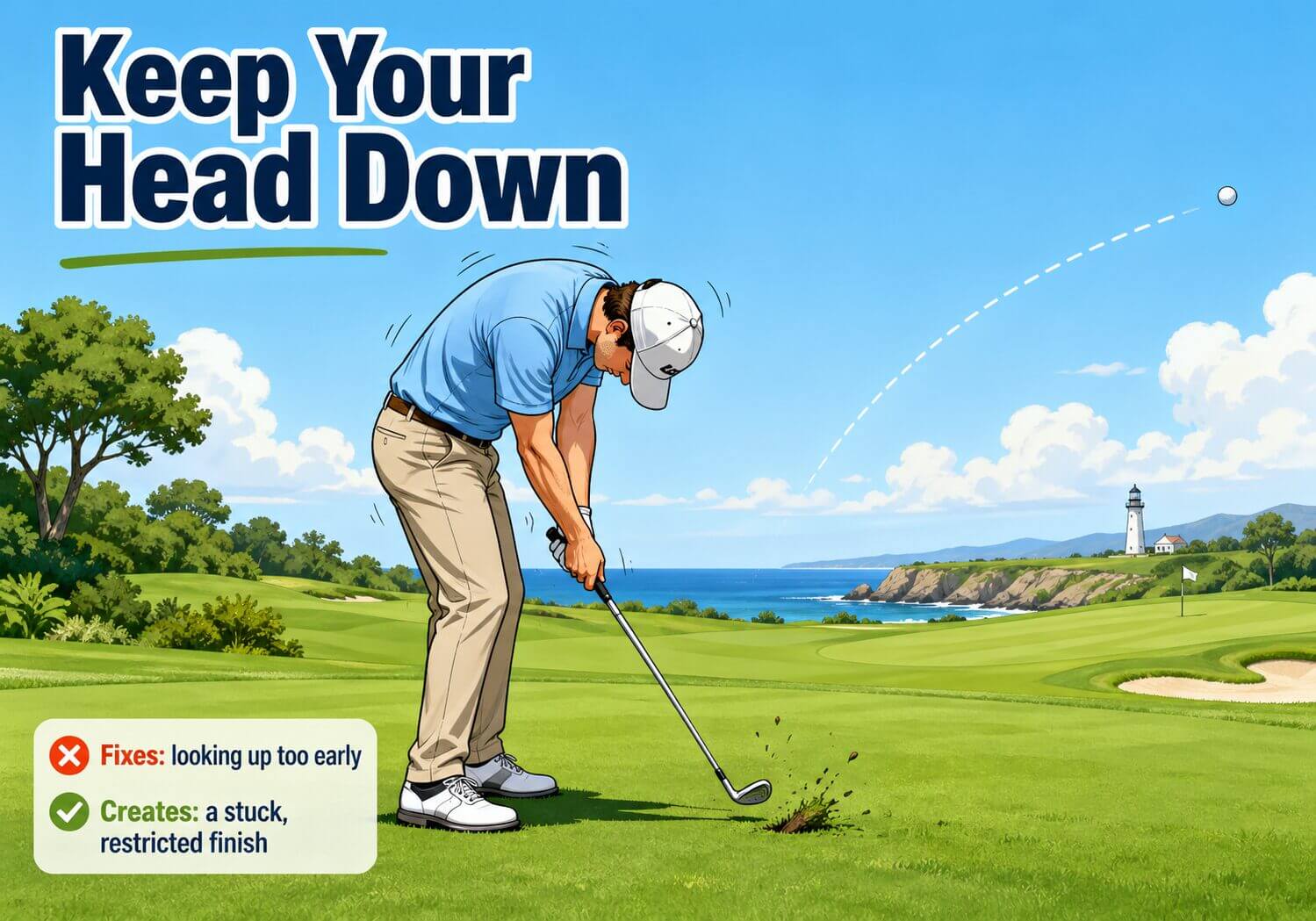
“Keep your head down”
This one usually shows up when a golfer tops the ball, hits it thin or looks up early to see where the shot went. The idea is simple: keep your eyes on the ball long enough to make clean contact.
Forcing yourself to keep your head down can quickly turn into keeping your entire body down.
When golfers take this advice too literally, they stay in their posture too long. The chest stays pointed at the ground, the body stops rotating and the finish gets restricted.
Instead of making a free, athletic move through the ball, they freeze over it.
There’s still some value in the “head down” advice. If you are lifting up before impact, you probably do need to be more aware of the ball and where the club is bottoming out. But that doesn’t mean your head should stay buried and restrict your movement.
The better advice: Watch the club hit the ball, then let yourself turn and watch the ball fly. You need awareness at impact. You don’t need to trap your head, chest and body over the ground long after impact.
“Hold your lag”
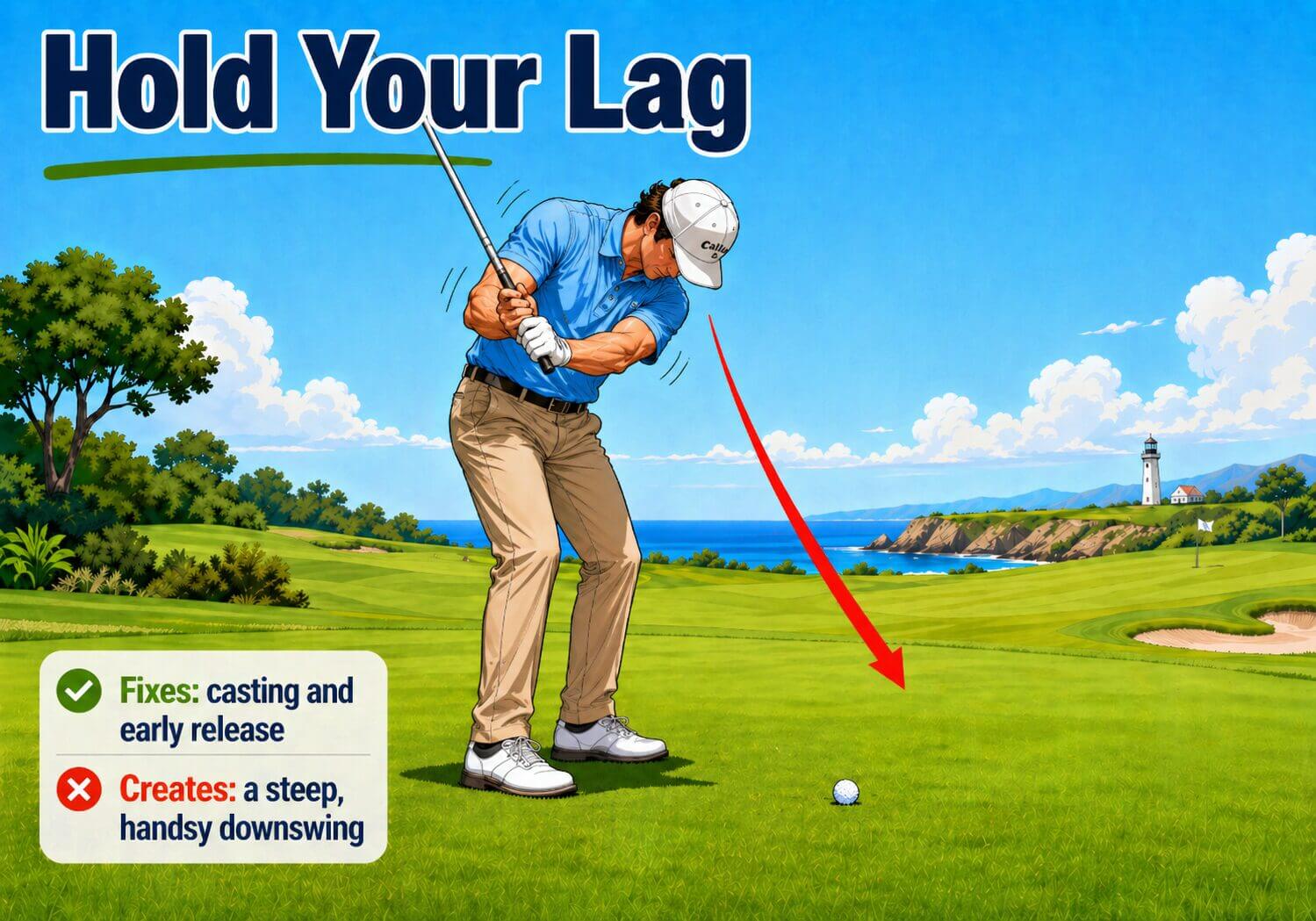
Lag sounds great because most golfers associate it with power, compression and shaft lean. If you cast the club early, flip at the bottom or lose speed before impact, learning to create a better sequence in transition can help.
Trying to hold lag usually makes golfers get steep and release the club too late.
Lag is not something you want to lock in and force yourself to preserve. At some point, that angle has to release. If it doesn’t, you either miss the ball, leave the face open or make a last-second compensation with your hands.
The better advice: Start the downswing by letting the hands lower while your body begins to rotate, then let the club release naturally through impact. Don’t pull the handle straight down just to keep the angle. If the club gets steep or you feel like you have to save the shot with your hands, you’re holding lag too long.
“Keep the clubface square through impact”
If you hit shots that start right, curve too much or feel like the face is wide open, trying to keep the clubface square sounds like a logical fix.
However, forcing anything in the golf swing is tough to make work long term, even if the intention of squaring the clubface is a good one.
The clubface is supposed to rotate. Your body is rotating, your arms are moving and the club is traveling around you on an arc. Trying to hold the face square through impact can make the swing stiff, slow and overly controlled.
The better advice: Focus on squaring the clubface at impact, not holding it square for as long as possible. Check your grip, make sure your wrists can move naturally and let the club release through the ball instead of trying to control it throughout the swing.

“Turn your hips for more power”
Using the arms instead of the body is one of the most common mistakes I see from amateur golfers. When a player is all arms, giving them the feel of turning the hips can help them understand that power comes from more than just lifting the club up and throwing it back down.
The issue is that hip turn is really easy to exaggerate.
A huge hip turn can make the backswing look bigger but it doesn’t automatically make the downswing better.
In fact, too much hip turn going back can make it harder to get through impact. If you turn everything away from the ball but don’t have the ability to rotate back through, you are probably going to rely on your hands and arms to save the shot.
The better advice: Use your body better so the arms are not doing all the work. Turn enough to create a complete backswing, then make sure you can still rotate through the ball with balance and control.

Final thoughts
Most golf tips are built for a specific player, a specific problem and a specific moment. That’s why the same advice can help one golfer and hurt another.
Take some time to understand how your golf swing works and the strengths and weaknesses you have and from there you can work towards improving your game the correct way.








Andrew the Great!
4 months ago
Finally, someone “gets” the true nature of “keep your head down”, and it’s NOT meant to be taken literally all the way to the finish.
“When golfers take this advice too literally, they stay in their posture too long…There’s still some value in the “head down” advice. If you are lifting up before impact, you probably do need to be more aware of the ball and where the club is bottoming out…The better advice: Watch the club hit the ball 6″…”
The feel (in the feel ain’t real sport) should be to keep your head down…THROUGH IMPACT, and then let the head and body follow through to the finish. I find when I think about looking at the spot under the ball after impact, I stay down on the ball just incrementally longer, and I make much better contact. And my head and body still move through to the finish.
The thing is, NO ONE means it literally. It’s a swing thought designed to keep you down *through impact*. And only through impact.